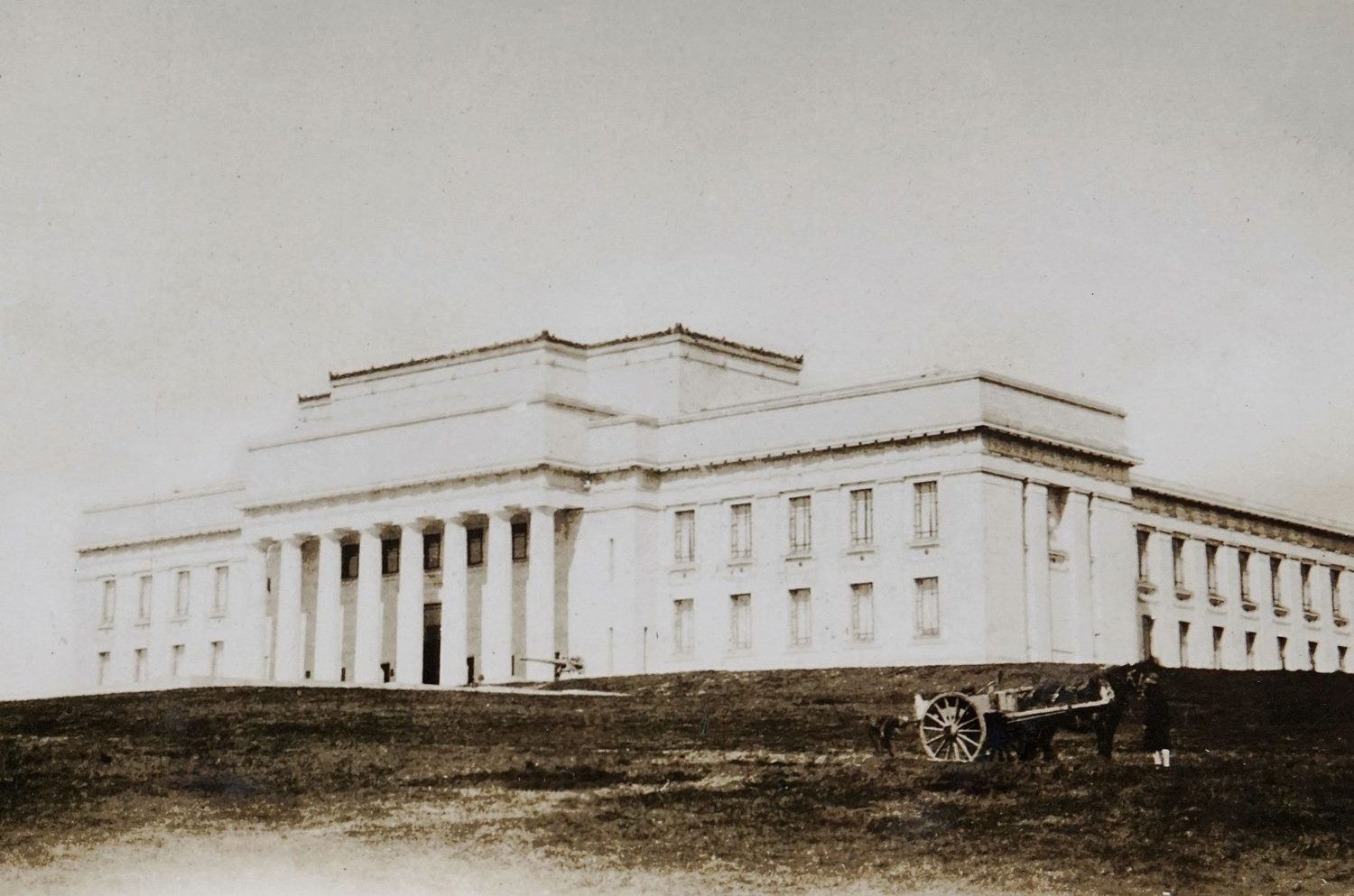
Set on a hilltop in the centre of Auckland Domain — the city’s oldest park — the Auckland War Memorial Museum (Tāmaki Paenga Hira) is one of New Zealand’s most important cultural institutions and the single best place in the country to learn about Māori, Pacific and natural heritage. The neoclassical 1929 building houses three floors of internationally significant collections, daily Māori cultural performances, and a moving war memorial that reaches all the way back to the New Zealand Wars of the 1840s.

This complete Auckland Museum guide covers everything you need: ticket prices, opening hours, the must-see exhibits, the daily Māori cultural performance, how long to spend, accessibility, kid-friendly highlights, the on-site cafés, the gift shop, and how to combine your visit with the rest of Auckland Domain. Whether you have an hour between meetings or a whole afternoon to lose to the collection, this guide will help you make the most of it.
Quick facts
- Address: The Auckland Domain, Parnell, Auckland 1010
- Opening hours: 10am–5pm daily (open every day except Christmas Day)
- Free entry for Auckland residents (rates apply to NZ residents and international visitors)
- International visitor admission (2026): $32 adult / $16 child (5–15) / $80 family (2 adults + up to 3 children)
- NZ resident admission: Donation-based ($10 suggested)
- Combined ticket with Māori cultural performance: $55 adult / $28 child
- Best time to visit: Weekday mornings (10am–11:30am) — quietest, best light through the gallery skylights
- Time needed: 2–4 hours (3 hours typical)
- Wheelchair accessible: Yes — full accessibility, lifts, accessible toilets, wheelchairs available free of charge
- Parking: Limited paid parking on-site; free street parking 5–10 min walk; closest train station is Parnell (15 min walk)
- Phone: +64 9 309 0443
- Website: aucklandmuseum.com
Auckland Museum tickets and prices (2026)
Pricing is tiered by residency. Auckland ratepayers (residents) get free general admission as part of their council rates — bring photo ID with an Auckland address. New Zealand residents from outside Auckland are admitted on a donation basis. International visitors and visitors from outside Auckland to the museum’s special exhibitions pay the standard ticket price.
Standard general admission
- Adult: $32
- Child (5–15): $16
- Child under 5: free
- Family (2 adults + up to 3 children): $80
- NZ resident: donation ($10 suggested, free for Aucklanders)
- Senior / student / community services card: $24
Combined cultural performance ticket
The combined ticket adds the daily Māori cultural performance to general admission for $23 more — by far the best-value option. Performances run at 11am, 12pm, 1:30pm and 2:30pm and last 30 minutes. The combined ticket is $55 adult / $28 child / $140 family. We recommend the combined ticket to almost every first-time visitor — the performance is one of the most authentic Māori cultural experiences in Auckland and rivals what you’d see in Rotorua.
Special exhibition tickets
Special exhibitions (recent examples: Ancient Egypt, Pompeii, Tūrangawaewae: A Place to Stand) are usually $30 adult / $15 child on top of general admission, or $50 adult / $25 child as a standalone ticket. These exhibitions sell out at peak times — book online ahead.
How to buy tickets
Buy at the front desk on arrival, or online at aucklandmuseum.com. Online booking lets you skip the queue at peak times (school holidays, summer weekends, cruise ship days). Third-party platforms like Klook, GetYourGuide and Viator sometimes offer marginal discounts but rarely beat the museum’s own website.
A brief history
The museum was founded in 1852, making it one of the oldest in the country. The current building, designed by Grierson, Aimer & Draffin in a grand neoclassical style, opened in 1929 as a memorial to Auckland soldiers who died in the First World War. After the Second World War, the museum became a memorial to the dead of both wars and subsequent conflicts. The Holocaust memorial Wall of Remembrance and the names listed in the Hall of Memories are some of the most affecting parts of the visit.
The museum has expanded twice — the dome atrium added in 2007 brought a soaring central public space, and the 2024 refurbishment of the Pacific Lifeways gallery is a current highlight. The collection now numbers more than 4.5 million items, of which only a small fraction is on display at any time.
The must-see exhibits

Te Toki a Tāpiri — the great waka taua
The single most spectacular object in the museum. Te Toki a Tāpiri is a 25-metre-long waka taua (war canoe) carved from a single tōtara tree felled around 1830. Built for the Ngāti Kahungunu chief Te Waaka Perohuka, it could carry 100 warriors. Today it dominates the entire south-eastern wing of the ground floor — its sheer scale is hard to convey from photographs. Spend a few minutes reading the carvings: the prow figure (tauihu) and stern (taurapa) are layered with whakapapa (ancestral lineage).
Hotunui — the carved meeting house
The fully carved whare rūnanga (meeting house) named Hotunui was built in 1878 by Wepiha Apanui at Whakatāne for his daughter Mereana. Every interior surface — walls, ceiling, rafters — is decorated with carvings, woven panels (tukutuku) and painted designs (kōwhaiwhai). Visitors are welcome to enter after a brief karakia and explanation. Take your shoes off, observe quietly, and photograph respectfully (no flash). It’s one of the most complete carved houses outside a marae anywhere in New Zealand.

Pacific Lifeways
Reopened in 2024 after a major refurbishment, this gallery covers the cultures of the Pacific Islands — Samoa, Tonga, Fiji, the Cook Islands, Niue, Tuvalu, Tokelau, French Polynesia and beyond. New Zealand has the largest Polynesian population of any country, and Pacific Lifeways is one of the world’s most important Pacific cultural collections, with thousands of objects and stories told largely in the words of Pacific community members. Particular highlights: the Tongan ngatu (decorated bark cloth), Cook Islands wooden gods, and the Samoan fale (traditional house).
Weird and Wonderful natural history
The first floor’s natural history galleries cover New Zealand’s strange, isolated wildlife: extinct moa skeletons (some 3 metres tall), the giant Haast’s eagle, dinosaur fossils, gigantic squid, and the iconic kiwi. The “Weird and Wonderful” interactive section is particularly popular with kids. The Origins gallery walks through New Zealand’s geological birth from Gondwana to the present.
Volcanoes
Auckland sits on top of 53 volcanoes — they’re not extinct, just dormant. The volcanoes gallery on the ground floor includes a simulated eruption experience inside a recreated suburban living room as a Rangitoto-style eruption unfolds outside the window. It’s surprisingly intense and a useful lesson in why Auckland Council monitors the volcanic field so closely. (Don’t worry — the field is currently rated low risk by GeoNet.)
Scars on the Heart — the war galleries
The top floor is dedicated to memorialising New Zealand’s wartime experiences from the New Zealand Wars (1845–1872) through both World Wars and on to peacekeeping operations. The Hall of Memories is a quiet, reverent space inscribed with the names of more than 30,000 Auckland servicemen and women who died on overseas service. The Spitfire suspended above the gallery and the recreated WWI trench bring the personal stories home. Allow at least 45 minutes to do this floor justice.
The Cenotaph
Outside the main entrance, the Cenotaph is the focal point of Auckland’s annual ANZAC Day dawn service (25 April). Inscriptions list the conflicts, and the steps lead the eye out across the city below. Worth a few quiet minutes after your visit.
The Māori cultural performance

Performances run four times a day (11am, 12pm, 1:30pm, 2:30pm) in the Māori Court alongside Te Toki a Tāpiri and Hotunui. Each lasts about 30 minutes and includes:
- Pōwhiri — formal welcome and karanga
- Mihi — introduction and explanation of cultural protocols
- Waiata — traditional songs
- Poi — women’s dance with tethered weights
- Stick games — rākau
- Storytelling about Te Toki a Tāpiri and Hotunui
- Origins and meaning of the haka
- Live haka performance — full vocal and physical performance
- Q&A with the performers
- Photo opportunity at the end
The performances are delivered by a rotating company of Māori performers, many of whom are kapa haka competitive performers in their own right. They actively encourage audience participation — be ready to stand for the pōwhiri, sing along to the waiata, and respond to the haka with a shaky-handed wiri of your own. Don’t be embarrassed; everyone tries, no one is graded.
If you’re choosing between the Auckland Museum performance and a Rotorua-based experience like Te Pā Tū or Mitai Māori Village, the Auckland Museum version is shorter and lower-key but excellent value, particularly if you’re not heading south. For a full-evening hāngī (earth-cooked feast) and longer cultural immersion, Rotorua remains the gold standard.
Suggested visit itineraries
The 90-minute highlights tour
- 10–10:15 — Arrive, ticket, brief look around the dome atrium
- 10:15–10:45 — Māori Court (Te Toki a Tāpiri, Hotunui)
- 10:45–11:15 — Pacific Lifeways highlights
- 11:00 — Cultural performance (book the 11am)
- 11:30 — Quick top-floor war memorial visit
- 12:00 — Café or onward
The half-day deep dive (3–4 hours)
- 10:00 — Ground floor: Māori Court, full reading of Te Toki a Tāpiri panels
- 11:00 — Cultural performance
- 11:30 — Pacific Lifeways
- 12:30 — Lunch at the museum café or nearby Wintergarden Café
- 1:30 — Volcanoes and natural history first floor
- 2:45 — Top floor: Scars on the Heart and Hall of Memories
- 3:30 — Gift shop, Cenotaph, walk back through Auckland Domain
With kids (2–3 hours)
- 10:00 — Cultural performance (the haka grabs kids’ attention immediately)
- 10:45 — Discovery Centres on the ground floor (hands-on, Māori- and Pacific-themed)
- 11:30 — Weird and Wonderful first floor: dinosaurs, moa, giant squid
- 12:15 — Volcanoes simulator (loud, exciting, safe for over-fives)
- 12:45 — Café lunch
- 1:30 — Outdoor: Auckland Domain Wintergardens duck pond, sports fields
Getting to Auckland Museum
By public transport
The closest train station is Parnell — about a 15-minute walk uphill through the Domain. Buses 64, 70, 75 and 75A stop on Parnell Road, a 10-minute walk away. The most direct option from CBD hotels is the Link bus (Inner Link, every 15 mins) which stops at Parnell Road. Use an AT HOP card or contactless card for $2 fares from the CBD.
By car
Limited paid parking is available on-site (rates from $4/hr) — these spots fill by 11am on weekends. Free street parking is available on Maunsell Road (10-min walk) and around the Domain on most weekdays. Do not park on the parking restricted Domain roads — fines are heavy.
By foot
From the Britomart end of Queen Street, the museum is a 25-minute uphill walk (about 2 km) through Albert Park, across Symonds Street and into the Domain. From a Parnell hotel, it’s a 10–15 minute downhill walk. Auckland Domain itself is one of Auckland’s best walking parks — allow time before or after to explore the Wintergardens, sports fields and the Pukekawa volcano cone.
Auckland Domain — the museum’s setting

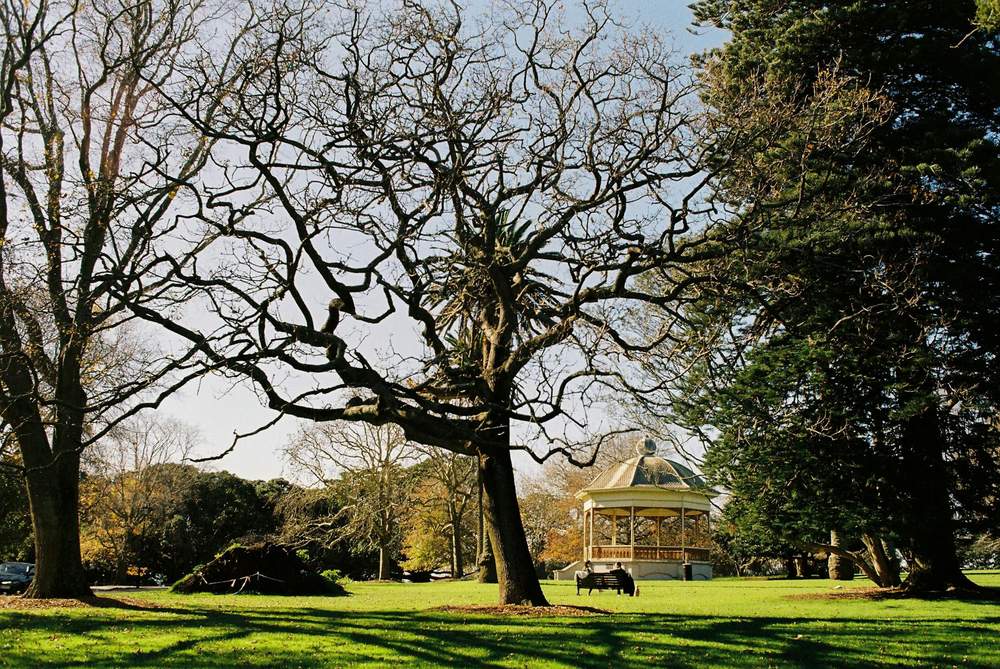
The 75-hectare Auckland Domain (Pukekawa) is the city’s oldest park, set on the slopes of an old volcanic crater. Beyond the museum, the Domain offers some of central Auckland’s best walking trails, the Wintergardens (free entry; tropical and temperate glasshouses), Auckland Bowling Club, sports fields used by Auckland Cricket and rugby clubs, and a duck pond that’s a favourite with kids. Allow at least an hour to walk around if the weather is good.
The Domain regularly hosts major events: Lantern Festival (February), Christmas in the Park (December — the largest open-air concert in New Zealand), Music in Parks free summer concerts, and ANZAC Day dawn service. Check the events calendar before visiting; many events involve temporary closures or paid ticketing.
Where to eat at Auckland Museum
The on-site café (level 1, accessed from the dome atrium) serves coffee, light meals, sandwiches, salads and cakes. Quality is good, prices are museum-standard ($14 for a sandwich, $7 for a flat white). The Wintergarden Café (in the Domain about 5 minutes’ walk away) offers more substantial meals and brunch in a beautiful glasshouse setting — book ahead at weekends.
For a longer lunch off-site, walk down to Parnell Road and try Cibo (modern bistro, lunch from $32), Domain Bay Brewing (craft beer and wood-fired pizza), or Roukai Lane Eatery (Asian fusion). Britomart restaurants are a 20-minute downhill walk and offer Auckland’s most concentrated dining scene.
The gift shop
The museum shop is genuinely better than most. It stocks Māori-designed jewellery, woven kete (handbags), pounamu (greenstone) carvings authenticated for fair trade, books on New Zealand history and Māori language, art prints, and quality souvenirs that make the airport gift shop look like a service station. Prices are mid-range — pounamu pieces start around $80 and rise sharply for larger or more intricate carvings. Look for the toi iho mark for genuine Māori-made items.
Accessibility and visitor tips
- The museum is fully wheelchair accessible: lifts to all floors, accessible toilets on every level, free wheelchair loans at the front desk
- An accessible drop-off zone is on the south side of the building
- Service animals are welcome
- Audio guides are available in English, Māori, Mandarin, Korean, Japanese and German for $5
- Sensory-friendly visiting hours run on the first Sunday of each month — 9:30–10am, before general opening
- Kids’ backpacks (free) include a museum trail and crayons; pick up at the desk
- Lockers are available for large bags ($2 coin)
- Photography is welcome (no flash) except in some special exhibitions
- Wifi is free throughout the building — connect to “AucklandMuseum_Free”
Best time to visit
The museum is busiest from 11am to 2pm on weekends, school holidays, and cruise-ship days. Aim for a 10am–11am arrival on a weekday for the quietest experience and the best gallery light. Tuesday and Wednesday mornings are usually the calmest. Rainy days send everyone indoors — if the forecast is showers, expect bigger crowds.
Late afternoon (3–4pm) is also a good window — most school groups have left by then, and the Domain’s golden-hour light through the gallery skylights is gorgeous. The museum closes at 5pm sharp, so don’t arrive after 3:30pm if you want to see the major collections properly.
Special exhibitions and events
Auckland Museum runs a strong rolling programme of special exhibitions on top of its permanent collection. Recent shows have included Ancient Worlds: Egypt, Pompeii: The Cursed Empire, Tūrangawaewae: A Place to Stand, and Voices of the Pacific. Special exhibitions usually run 3–6 months and require an additional ticket on top of general admission. Check the museum’s online calendar before booking to time your visit with a major show, or to avoid them if you’d prefer a quieter day in the permanent galleries.
The museum also runs a regular events programme: lunchtime curator talks (free, Wednesdays), school holiday workshops for kids, late-night Friday openings during summer, ANZAC Day dawn service (25 April, attended by 10,000+ people), Matariki celebrations in late June or early July (Māori New Year), and a wide range of public lectures. Most events are listed at aucklandmuseum.com/whats-on.
Combine your visit with these nearby attractions
- Auckland Domain Wintergardens (5 min walk) — free entry, two heritage glasshouses with tropical and temperate plants, Edwardian sunken courtyard, café
- Parnell Village (15 min walk downhill) — boutique shopping, Cathedral of the Holy Trinity, La Cigale French Market on weekend mornings, Cibo for fine dining
- Newmarket (15 min by Inner Link bus) — Auckland’s premier shopping district with Westfield Newmarket and Broadway
- Auckland Botanic Gardens at Manukau — different gardens, 30 minutes away by car, free entry
- Mount Eden / Maungawhau (15 min by car) — volcanic crater with the city’s best 360° viewpoint
- Auckland Art Gallery Toi o Tāmaki (20 min walk) — Australasia’s largest collection of NZ art, free entry to permanent galleries
Auckland Museum vs Te Papa
New Zealand has two world-class national museums — Auckland Museum and Te Papa Tongarewa in Wellington. They’re complementary, not competitive. Auckland Museum is the country’s flagship for Māori, Pacific and natural history collections, with strong war and military galleries. Te Papa is the national museum and focuses more on contemporary New Zealand identity, Treaty of Waitangi history, an enormous earthquake simulator, and visiting blockbuster international shows. If you have time, see both. If you only see one and you’re an Auckland-only visitor, the Māori Court alone justifies the visit.
Auckland Museum FAQs
How long should I spend at Auckland Museum?
Two to four hours is typical, three hours is ideal. Quick highlights tours can be done in 90 minutes. A complete deep-dive across all three floors and a special exhibition will fill a full half-day. Add 30 minutes for the cultural performance.
Is Auckland Museum free?
Free for Auckland residents (with proof of address). New Zealand residents from outside Auckland are admitted on a donation basis. International visitors pay a standard ticket price ($32 adult). Children under 5 are free for everyone. Special exhibitions usually carry an additional fee.
Can I bring my pram or buggy?
Yes. The museum is fully pram-accessible, with lifts between floors and parent rooms with baby change facilities on each level. Pram parking is available outside the dome atrium for those who prefer not to navigate the lifts.
Is there a coat check?
No formal coat check, but $2 coin-operated lockers in the foyer are large enough for a backpack, jacket and umbrella. Larger bags can be left at the front desk on request.
Are dogs allowed?
Only certified service animals are allowed inside the building. Dogs are welcome in the surrounding Auckland Domain on leads, with off-lead areas available at certain times — check Auckland Council’s dog access rules for the Domain before visiting.
When is the best time to visit?
Weekday mornings 10–11:30am are quietest. Aim to arrive at opening, see the cultural performance at 11am, and finish before the school groups arrive after 12pm. Avoid weekends in summer and the period 11am–2pm on rainy days.
Can I take photographs?
Yes, photography is welcome in all permanent galleries (no flash, no tripods without prior permission). Some special exhibitions and certain Māori taonga (treasures) are marked “no photography” — respect the signage. The Hotunui meeting house is photographable but visitors are asked to be quiet and respectful inside.
Is the cultural performance worth it?
Yes — it’s one of the best-value cultural experiences in Auckland for $23 extra. The performance is intimate (30–60 audience members), the performers are highly skilled, and the haka is delivered live at full volume. If you’re not heading to Rotorua, this is the most accessible way to experience kapa haka on your Auckland visit.
Is there food on-site?
Yes, the museum café serves coffee, sandwiches, salads, cakes and light meals. Wintergarden Café in the Domain offers more substantial brunch and lunch in a glasshouse setting. Parnell Road restaurants are a 10-minute walk for a longer sit-down meal.
Is Auckland Museum suitable for kids?
Yes. Discovery Centres on the ground floor offer hands-on activities for ages 4–10. The natural history galleries (dinosaurs, moa, giant squid) capture younger imaginations. The Volcanoes simulator is exciting but loud — best for ages 5 and up. The cultural performance is engaging and brief enough for short attention spans. Free children’s trails and activity backpacks are available at the front desk.
Can I combine the museum with other Auckland Domain attractions?
Yes. Plan to spend a half-day combining the museum with the Wintergardens (10 minutes’ walk away — free), the Domain Wintergarden Café for lunch, and a walk along the Domain’s tracks. The walk to the summit of Pukekawa (the volcanic cone the museum sits on) takes 5 minutes from the front entrance and offers good city views.
Insider tips from a frequent visitor
- Buy tickets online to skip the foyer queue — particularly important on cruise-ship days when the queue can stretch outside
- Start at the top floor (war memorial) and work down — the war galleries are emotionally heavy and best tackled while fresh
- Bring a refillable water bottle — fountains are on every level
- The acoustics of the dome atrium are superb — listen for the live string performances on busy weekends
- Don’t miss the small but moving Holocaust memorial just off the Hall of Memories
- The Pacific Lifeways gallery is the museum’s quietest spot mid-afternoon — perfect for a contemplative break
- If your performance is at 11am, line up at the Māori Court ten minutes early for the best seats
- The museum’s library and research centre is free for visitors with a query, with strong genealogy resources for descendants of Auckland soldiers and early settlers
The bottom line
Auckland War Memorial Museum is one of the very few “must-do” stops on any Auckland visit. The Māori and Pacific collections are world-class, the cultural performance is genuinely moving, and the building itself is one of the city’s architectural highlights. Combine a weekday-morning visit with the cultural performance and a stroll through Auckland Domain afterward, and you have a perfect three-to-four-hour anchor for your Auckland day.
Plan the rest of your trip with our complete things to do in Auckland guide, dive into Auckland’s culture, history and Māori heritage, browse the Auckland CBD guide, and check the Auckland events calendar for upcoming festivals and exhibitions.