Tag: Maori Culture

  • Auckland Māori Culture, History & Heritage: The 2026 Visitor’s Guide

    Auckland Māori Culture, History & Heritage: The 2026 Visitor’s Guide

    Auckland’s English name came in 1840. Its Māori name — Tāmaki Makaurau, “Tāmaki desired by many” — is nearly 800 years older, and it describes the place more honestly. Long before it was New Zealand’s biggest city, this isthmus of 14 volcanic cones, two harbours, and fertile lava-soil gardens was the most-fought-over piece of land in Aotearoa, because it was the most valuable. Today, that deep Māori history isn’t hidden away in a museum corner. It shapes how Aucklanders greet each other (kia ora), the names of our streets and suburbs (Remuera, Orākei, Ōtāhuhu, Takapuna), the maunga we walk up every weekend, and the way the city celebrates Matariki as a national holiday. This is the definitive 2026 guide to Auckland’s Māori culture, history, and heritage experiences — where to go, what to do, and how to engage respectfully.

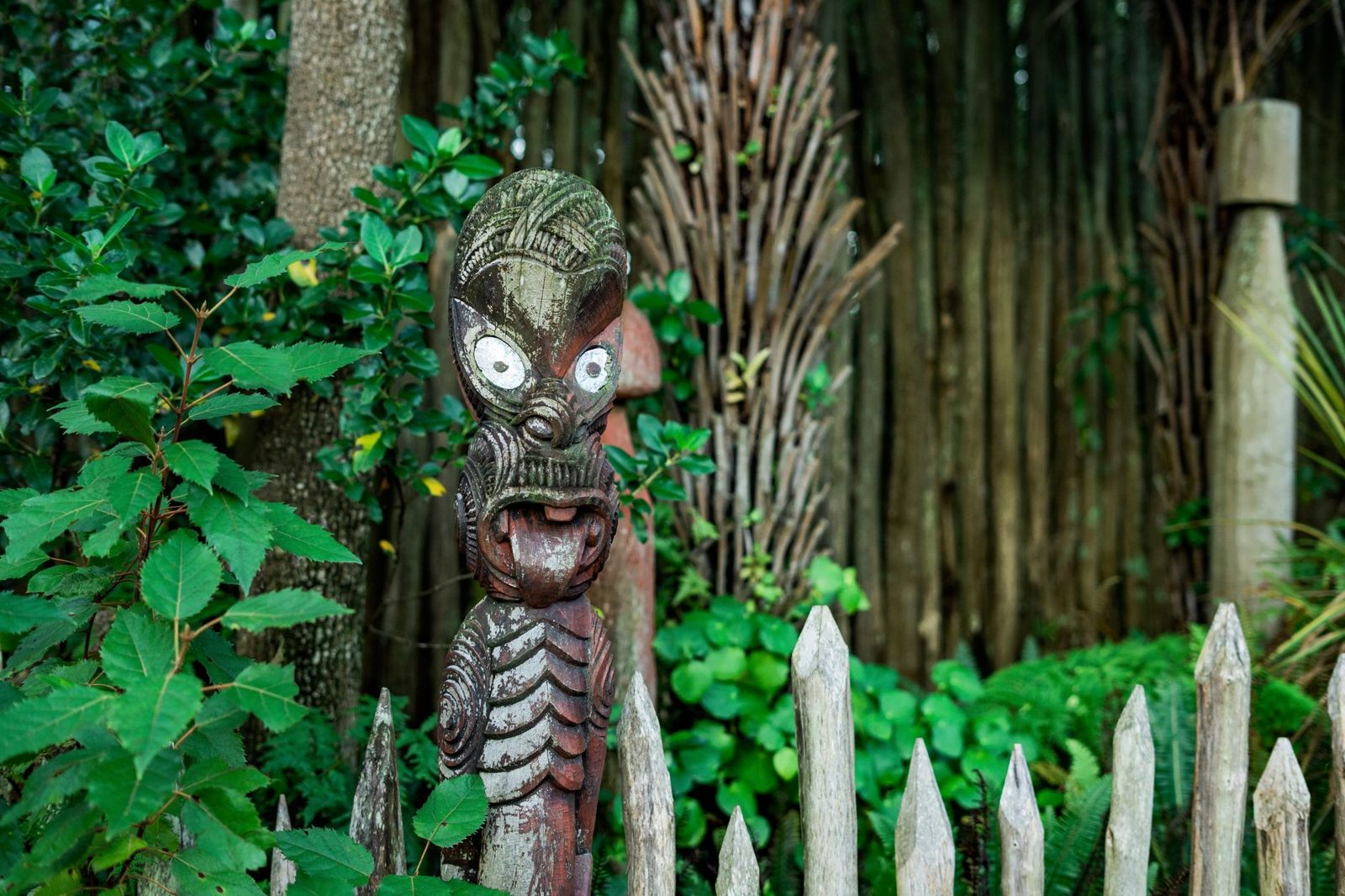
    Intricate Maori wood carving representing Tamaki Makaurau heritage
    Māori whakairo (carving) tells the ancestral stories of Tāmaki Makaurau through every curve and spiral.

    Tāmaki Makaurau: why Auckland’s Māori name matters

    “Tāmaki Makaurau” translates literally as “Tāmaki of a hundred lovers” — a poetic phrase for a place so desirable that countless iwi (tribes) wanted to hold it. The name acknowledges that Auckland’s volcanic soils, sheltered harbours, and position on the narrowest part of the North Island made it the most contested territory in pre-European New Zealand. You’ll see Tāmaki Makaurau everywhere: on government signage, Auckland Council branding, the sides of buses, in news broadcasts. Learning to say it (roughly “tah-mah-kee mah-kow-row”) is the first courtesy visitors can extend to the city.

    The mana whenua (tribal groups with customary authority) of central Tāmaki Makaurau today include Ngāti Whātua Ōrākei, Ngāti Pāoa, Ngāti Te Ata, Te Kawerau ā Maki, Te Ākitai Waiohua, and Ngāi Tai ki Tāmaki, among others. Each holds specific ancestral connections to different parts of the region. In 2026, more than 25% of Auckland’s population identifies as Māori or Pacific Islander, making the city one of the largest Polynesian metropolises on earth.

    A brief history of Māori Auckland

    Māori arrived in Aotearoa aboard waka hourua — double-hulled voyaging canoes — from East Polynesia roughly 750 years ago. The waka most strongly associated with Tāmaki Makaurau is Tainui, whose landing near modern-day Takapuna is still commemorated annually. Over subsequent centuries, iwi built extensive pā (fortified settlements) on the region’s volcanic cones, cultivated kumara (sweet potato) gardens in the rich basalt soils, and harvested the Hauraki Gulf’s abundant seafood. At peak, the cones of Maungakiekie (One Tree Hill), Maungawhau (Mt Eden), Takarunga (Mt Victoria), and Maungarei (Mt Wellington) were all major fortified villages with populations running into the thousands.

    Volcanic cone tupuna maunga in the Auckland region
    Auckland’s 14 tūpuna maunga (ancestral volcanic cones) are co-governed by mana whenua and Auckland Council.

    The late 18th and early 19th centuries brought devastating inter-tribal conflict known as the Musket Wars. The isthmus was largely depopulated by the 1820s as Ngāpuhi raids from the north displaced many Tāmaki iwi. When Governor William Hobson chose the site as the new capital of the British colony in 1840, negotiating with Ngāti Whātua chief Apihai Te Kawau, much of the surrounding land was effectively uninhabited — which is one reason, though not the only one, the site was chosen.

    The following 150 years saw Ngāti Whātua Ōrākei lose almost all their ancestral land at Ōrākei and Takaparawhau (Bastion Point) through a series of government purchases and confiscations. The 1977–78 Bastion Point occupation, in which 222 protesters were arrested on day 507 of a peaceful occupation, became one of New Zealand’s defining Māori rights protests. It eventually led to the 1987 return of Takaparawhau to Ngāti Whātua and set the stage for the Treaty of Waitangi settlements that reshape the city today.

    Auckland Museum: the world’s best Māori collection

    Auckland War Memorial Museum holds one of the world’s finest collections of Māori taonga (treasures) and should be the single anchor point for any visitor wanting to engage with Māori culture in Auckland. Three key galleries occupy the entire ground floor. Te Ao Tūroa presents the Māori natural world; Māori Court displays more than 1,000 taonga including the magnificent 25-metre waka taua “Te Toki a Tāpiri” (the last great war canoe, c.1836); and Tāmaki Herenga Waka tells the story of Auckland’s own iwi and their relationship to the land.

    Museum display of Maori taonga artifacts and heritage items
    Auckland Museum’s Māori galleries hold the world’s most significant collection of taonga.

    The star of the collection is Hotunui, a fully intact 19th-century wharenui (meeting house) inside the museum — one of only two such carved meeting houses on permanent indoor display anywhere. You can walk inside (remove your shoes first, as you would on any marae) and sit beneath carvings that have been watching visitors since 1878. This alone is worth an hour.

    Daily Māori cultural performances run three times a day (11:00 am, 12:30 pm, and 1:30 pm) in a dedicated performance space. A 30-minute programme covers powhiri (welcome), waiata (song), poi, haka, and a brief explanation of each element. Tickets are around NZ$35 adult / $18 child in 2026 and are worth the price even for families who’ve never seen Māori performing arts. Book online — sessions frequently sell out in peak summer. Photography is permitted during the finale haka.

    Takaparawhau (Bastion Point) and Ngāti Whātua Ōrākei

    Takaparawhau — the headland east of the CBD overlooking Ōrākei Basin and the inner Waitematā — is the single most politically important piece of land in modern Māori Auckland. It is the ancestral papakāinga (home village) of Ngāti Whātua Ōrākei, the 1977–78 occupation site, and today hosts Michael Joseph Savage Memorial Park, a public walking reserve, and the Takaparawhau Reserve. The views back across the harbour to the CBD are spectacular.

    Visiting respectfully: walk the Tahuna Tōrea Reserve coastal track which skirts the headland and includes interpretive panels telling Ngāti Whātua’s story. The Savage Memorial is a national monument; take a moment. For a deeper engagement, Ngāti Whātua Ōrākei offers guided cultural tours of Ōrākei marae a few minutes’ walk inland — bookings through their tribal office at orakei.maori.nz. In 2026 they run a popular Tāmaki Herenga Waka harbour tour that departs from the Viaduct, explaining Auckland’s history from mana whenua perspective on the water.

    Matariki 2026: the Māori New Year

    Matariki — the rising of the Pleiades star cluster in mid-winter — became New Zealand’s first indigenous public holiday in 2022. In 2026, the Matariki public holiday falls on Friday, 10 July. The observance is deeply tied to remembrance, celebration of the past year, and hopes for the year ahead. Auckland’s Matariki programme is the country’s largest, running from late June through mid-July.

    Traditional Maori cultural performance at Auckland Museum
    Auckland Museum’s daily Māori cultural performances are a reliable first experience for visitors.

    The signature event is the Matariki hautapu ceremony at Takaparawhau on 10 July 2026. Hosted by Ngāti Whātua Ōrākei and broadcast live by TVNZ and RNZ, it is the nationally televised dawn ceremony where the names of those who died the previous year are read to the rising Matariki stars. Attendance is free; the ceremony begins at approximately 6:30 am. Dress warmly — Auckland July dawns are around 7°C with dew on the grass — and bring a torch. Expect 2,000–5,000 attendees. Parking fills by 5:30 am; take an Uber.

    Other key Auckland Matariki 2026 events: the Matariki Festival at the Auckland Domain (free, late June weekend); Manu Aute Kite Day at Bastion Point (traditional kite-making, second Sunday of July); Matariki Light Trail at Auckland Botanic Gardens (evening walking trail with installations by Māori artists, ticketed, sells out); Auckland Art Gallery late-night openings with Matariki-themed exhibitions; SkyCity Sky Tower Matariki light display (seven coloured beams for the seven Matariki stars). Most events are free. Start at nzmatariki.com for the official programme and book ticketed events weeks in advance.

    The 14 tūpuna maunga: Auckland’s ancestral mountains

    Auckland is built on a volcanic field of more than 50 cones and craters, 14 of which are classified as tūpuna maunga (ancestral mountains). In 2014, ownership of all 14 was returned to mana whenua as part of the Tāmaki Collective Treaty settlement, and they are now co-governed by the Tūpuna Maunga Authority — a 50/50 partnership between iwi and Auckland Council. Visiting one of these maunga is the most direct way to walk through Auckland’s Māori heritage.

    The most visited is Maungawhau (Mt Eden) — 196 metres, 10 minutes from the CBD, with a deep crater “te ipu-a-Mataoho” (the bowl of the volcano-god Mataoho) and 360-degree views. The summit road has been closed to private vehicles since 2018 out of respect for the maunga; walk up via the grassed path from Mt Eden Road (15 minutes). Maungakiekie (One Tree Hill) is the largest and most significant of the maunga, with Cornwall Park’s free-roaming sheep, 182-metre summit obelisk, and elaborate 19th-century terracing still visible on its flanks. Takarunga (Mt Victoria) in Devonport has historic military tunnels at its base and views back to the CBD. Maungarei (Mt Wellington) is the highest (135 metres) with the most intact pā terraces. Ōwairaka (Mt Albert) and Maungauika (North Head) round out the accessible list.

    Visiting etiquette: these are sacred places, not just parks. Don’t sit on the summit stones or terraces, don’t eat lunch at the summit (eat on the approach instead), keep dogs on leash, remove rubbish, and approach in a spirit of respect. Guided tours of the maunga are available through Ngā Mana Whenua o Tāmaki Makaurau and several tourism operators.

    Māori guided experiences in and around Auckland

    Beyond Auckland Museum, there are a handful of excellent mana-whenua-led experiences worth booking in advance.

    Potiki Adventures

    Potiki Adventures is a Māori-owned tour company running half-day and full-day cultural tours around Auckland. Their signature Mana Whenua Māori Tour visits Mt Eden, takes in the stories of Tāmaki Makaurau, and includes waiata and karakia at significant sites. Around NZ$150 adult / $75 child. The company has won the Supreme Māori Tourism Award multiple times.

    TIME Unlimited Tours — Maunga Hikoi

    TIME Unlimited is a long-established Māori-led operator with full-day Auckland tours combining Auckland Museum, Mt Eden, and a cultural meal. They also run “Te Ara Manawa” waterfront walking tours focused on pre-European Tāmaki stories. From NZ$220 pp full-day.

    Waka experience on the Waitematā

    Auckland Sea Kayaks and Ngāti Whātua Ōrākei occasionally run waka (canoe) paddling experiences on the Waitematā Harbour using traditional waka ama (outrigger canoes). When running, these are extraordinary. Bookings erratic — check with Ngāti Whātua Ōrākei’s tourism arm or Waka Eco Tours closer to your travel dates.

    Polynesian voyaging waka hourua on a harbour
    Waka hourua (voyaging canoes) are the vessels that carried Māori to Aotearoa from East Polynesia.

    If you want more: Rotorua as a cultural day trip

    Auckland is the best place in New Zealand for Māori history, archaeology, and urban cultural experiences. For full-immersion evening cultural shows — the classic powhiri, hāngī (earth-oven) dinner, and concert format — Rotorua, 2.5 hours south, is still the best destination. Mitai Māori Village, Tamaki Māori Village, and Te Puia are the three major operators. You can do it as a two-day Auckland + Rotorua combination: drive down Saturday morning, see a cultural evening, stay overnight, return Sunday via Hobbiton. InterCity buses and organised coach tours run daily from Auckland.

    This is not a criticism of Auckland’s offering — it’s a recognition that Rotorua’s cultural tourism infrastructure is older and more developed. But for visitors with a week in Auckland, the city’s own Māori heritage is substantial and doesn’t require a road trip.

    Auckland Art Gallery Toi o Tāmaki holds New Zealand’s most significant collection of contemporary Māori art alongside its historic Goldie and Lindauer portrait collections. The gallery’s ongoing exhibition Toi Tū Toi Ora: Contemporary Māori Art — first shown in 2020–21 as the largest-ever Māori contemporary art exhibition — seeded a permanent Māori-centred curatorial programme. Key artists in the collection include Ralph Hotere, Robyn Kahukiwa, Shane Cotton, Lisa Reihana, and Colin McCahon.

    Entry is free for New Zealand residents; international visitors pay NZ$20 (under 14s free). The gallery sits in Albert Park at the top of Queen Street, open 10am–5pm daily. The historic Charles Goldie portraits of Māori elders painted in the early 20th century are housed in the Mackelvie Gallery and are among the most-reproduced Māori images anywhere — worth the visit alone.

    Karanga-a-Hape Station: history under Queen Street

    When Auckland’s City Rail Link opens in late 2026, one of its new underground stations will be named Karanga-a-Hape. The station sits beneath the famous K Road and is named after the rangatira (chief) Hape, who according to oral tradition was the first ancestor to stake a claim to the isthmus. The public art programme commissioned by CRL features major works by contemporary Māori artists including Reuben Paterson, Lisa Reihana, and Maureen Lander. These aren’t subway decorations — they’re some of the most ambitious public art installations anywhere in Australasia, and visiting them will be free once the stations open.

    The other new underground station, Te Waihorotiu, beneath Aotea Square on Queen Street, takes its name from the ancient Waihorotiu stream that once flowed openly down what is now Queen Street before being culverted in the 19th century. The stream still flows beneath the city today. Both names were gifted by mana whenua as part of the CRL project’s partnership with Ngāti Whātua Ōrākei, Ngāi Tai ki Tāmaki, and Te Ākitai Waiohua.

    Visiting a marae: what to expect

    A marae is the ceremonial meeting ground of an iwi or hapū, centred around a wharenui (meeting house) and often including a wharekai (dining hall), ablutions block, and urupā (cemetery). Marae are active community and ceremonial spaces, not tourist attractions — you cannot simply walk in. Access requires an invitation, and usually a pōwhiri (formal welcome).

    Traditional Maori wharenui meeting house at a marae
    The wharenui is the carved meeting house at the heart of a marae, embodying ancestral stories.

    The best way for visitors to experience a marae is through a guided cultural tour. Potiki Adventures and TIME Unlimited both occasionally include a marae visit by arrangement with Ngāti Whātua Ōrākei’s Ōrākei marae. If you’re invited to a marae visit, dress modestly (long pants / dress, covered shoulders), bring a gift of food for the wharekai, remove shoes before entering the wharenui, and follow your host’s lead on when to speak, sing, and eat. A powhiri typically involves a karanga (formal call by a kuia, or female elder), whaikōrero (speeches by male elders), waiata (song), hongi (pressing of noses — a greeting of shared breath), and a shared meal.

    Auckland hosts dozens of marae, including Ōrākei Marae (Ngāti Whātua Ōrākei, accepts visiting groups), Mataatua Marae at Unitec (educational), Ōrākei College Marae, Hoani Waititi Marae in West Auckland, Papatūānuku Kōkiri Marae in Māngere (strong environmental kaupapa), and many more. Individual visitors should not turn up unannounced.

    Māori craft and language workshops

    Visitors keen to learn a specific Māori craft or practice have surprising options in Auckland. Raranga (flax weaving) workshops run at Te Wānanga o Aotearoa’s Manukau campus and occasionally at the Auckland Museum education wing — half-day sessions where you weave your own putiputi (flax flower) or kete (basket). Ta moko (traditional tattooing) studios like Te Uhi a Mataora and various others on K Road can discuss the meaning and tikanga of moko, though receiving one requires a longer consultation. Te Reo Māori (Māori language) crash courses for visitors run at Te Wānanga o Aotearoa and the Auckland Central Library.

    Traditional Maori flax weaving (raranga) at a cultural workshop
    Raranga — Māori flax weaving — is taught at weekend workshops across Auckland.

    Even a basic vocabulary changes how Auckland feels: kia ora (hello), tēnā koe (formal hello to one person), ka pai (good), whānau (family), kai (food), waiata (song), whenua (land), moana (sea), haere rā (goodbye). Auckland Council publishes a free guide to pronunciation and everyday te reo greetings on its website.

    Māori food and kai in Auckland

    Māori cuisine — centred around hāngī (food cooked in an earth oven), seafood, kumara, and native herbs like horopito and kawakawa — is finally stepping out of the community-dinner space and into Auckland’s restaurant scene. Two restaurants lead the way.

    Kai Eatery in multiple Auckland locations (CBD, Newmarket, Manukau) is a fast-casual chain serving hāngī bowls, rewena (traditional Māori sourdough bread), and fry bread tacos. A hāngī bowl is around NZ$20. Hiakai (in Wellington, but worth mentioning for national context) set the template for fine-dining Māori cuisine. In Auckland, look for Hāngī-themed events at MKR Eatery in South Auckland and pop-up dinners at Hōhepa in the CBD. For proper hāngī, several South Auckland marae host public hāngī dinners during Matariki and on Treaty weekend.

    Native-ingredient-forward restaurants (not strictly Māori but using rongoā Māori herbs and native kai) include Ahi (Commercial Bay), Onslow (CBD), Amano (Britomart), and Cazador (Dominion Road). Try horopito-smoked fish, kawakawa cocktails, kina (sea urchin), pāua (abalone), and crayfish when in season.

    How to engage respectfully with Māori culture as a visitor

    The short version: be curious, be respectful, ask before photographing, don’t touch taonga or sacred sites, and follow your Māori guide’s lead. The slightly longer version:

    • Photography: Always ask before photographing people, performers, or ceremonial items. Never photograph inside a wharenui without explicit permission. Photography of taonga in Auckland Museum’s Māori galleries is permitted but think about how you’d feel if someone photographed your grandmother’s wedding ring without asking.
    • Touch: Do not touch any taonga, carving, or sacred stone unless invited to. The concept of tapu (sacred/restricted) applies to many objects and places.
    • Maunga: Don’t sit on summit stones; stay on marked paths; don’t eat or drink at the summit.
    • Language: Learn and attempt te reo greetings. Māori speakers routinely correct pronunciation kindly — accept corrections graciously.
    • Donations: Marae and tribal cultural programmes run largely on koha (gift/donation). Asking “is there a koha?” at any Māori cultural event is good form. $20 per person is a reasonable baseline.
    • Selfies with performers: Always ask first. Post-performance photos are normally welcome; mid-performance are not.

    A 2-day Māori heritage itinerary in Auckland

    If you have two full days to focus on Māori culture and history in Auckland, this is the itinerary that consistently draws the most positive feedback.

    Day 1: Auckland Museum and Takaparawhau

    Start at Auckland Museum at 10am. Spend 2 hours in the Māori galleries (Te Toki a Tāpiri, Hotunui, Tāmaki Herenga Waka). Attend the 11am cultural performance. Lunch at the museum café. Walk down through the Auckland Domain, bus or drive 15 minutes to Takaparawhau (Bastion Point). Walk the Tahuna Tōrea coastal track, visit the Savage Memorial, and read the interpretation panels. Sunset at the Bastion Point lookout — extraordinary views back to the CBD. Dinner at Kai Eatery Newmarket (hāngī bowl, rewena bread).

    Day 2: Maunga hīkoi and Art Gallery

    Morning: walk Maungakiekie (One Tree Hill) from Cornwall Park, then Maungawhau (Mt Eden) — both before lunch. Lunch in Mt Eden village (Kokako or Circus Circus). Afternoon: Auckland Art Gallery Toi o Tāmaki for the Māori art collection and current exhibitions (2–3 hours). Evening: if in July, catch a Matariki light event at the Botanic Gardens or a Māori cultural performance at one of Auckland’s theatres; otherwise dinner at Ahi, Amano, or Onslow with native-ingredient-forward menus.

    Frequently asked questions: Māori culture in Auckland

    How do I pronounce Māori words correctly?

    Māori pronunciation is phonetic and consistent. Five vowels: a (as in “car”), e (“ten”), i (“see”), o (“taught”), u (“too”). The digraph wh is pronounced like an English “f” in most dialects (“Whangārei” = “Fahn-gah-ray”). The digraph ng is pronounced as in “singer”, not “finger”. Macrons (the bar over vowels like ā, ē, ī, ō, ū) indicate long vowels. Tāmaki Makaurau = “Tah-mah-kee Mah-kow-row”.

    Who are the mana whenua of Auckland?

    Multiple iwi hold mana whenua status across Tāmaki Makaurau: Ngāti Whātua Ōrākei (central Auckland including the CBD and Ōrākei), Ngāti Pāoa (Hauraki Gulf islands and east Auckland), Te Kawerau ā Maki (west Auckland), Ngāi Tai ki Tāmaki (east coast and Motutapu), Te Ākitai Waiohua (south Auckland), and several others. The Auckland Council formally recognizes 19 iwi and hapū with mana whenua interests.

    What is the Treaty of Waitangi and why does it matter?

    The Treaty of Waitangi (Te Tiriti o Waitangi), signed in 1840 between representatives of the British Crown and over 500 Māori chiefs, is New Zealand’s founding document. It established the terms of British settlement and promised Māori continued rangatiratanga (sovereignty/self-determination) over their lands and taonga. Breaches of the Treaty — particularly land confiscations — drove a century of Māori protest and, since 1975, a formal claims process through the Waitangi Tribunal. Treaty settlements have returned land, co-governance of maunga and waterways, and cash compensation to iwi across New Zealand, including the Tāmaki Collective settlement that restored the 14 tūpuna maunga to mana whenua.

    Are Māori cultural events free to attend?

    Many public-facing Matariki events are free (hautapu ceremony, kite day, community celebrations). Auckland Museum’s daily cultural performances are ticketed. Mana-whenua-led tours (Potiki Adventures, TIME Unlimited) are paid. As a general principle, free events run on koha (donations) and offering a small donation is always appreciated.

    Should I hongi (press noses) when greeting?

    Only in formal contexts and only when invited to by a Māori host. The hongi is the shared breath of life (hā) and is reserved for the end of a pōwhiri. Visitors are typically shown when and how to hongi by their host. A handshake, kia ora, and direct eye contact is perfectly appropriate in everyday Māori-Pākehā interactions.

    Can I photograph Māori carvings and performances?

    Generally yes, with consent. Auckland Museum’s Māori galleries allow photography (no flash). During cultural performances, wait until the performers invite photography — usually at the finale. Inside a wharenui, ask the host first. Do not photograph tangihanga (funeral proceedings) at a marae. Be especially careful around urupā (cemeteries) — these are tapu and should not be photographed.

    What’s the single best Māori cultural experience in Auckland?

    For first-time visitors with limited time, the Auckland Museum Māori gallery + daily cultural performance combination is the most reliably excellent. For those with more time and appetite for depth, a mana-whenua-led tour with Potiki Adventures or TIME Unlimited adds the personal storytelling that a museum cannot. If you’re in Auckland in July, attending the Matariki hautapu ceremony at Takaparawhau is a once-in-a-lifetime experience.

    Is Māori cultural content appropriate for children?

    Yes — Auckland Museum’s daily cultural performances are specifically designed to be family-friendly and children regularly cite them as a trip highlight. Matariki public events are child-focused. The 14 tūpuna maunga are all family-friendly walks. Kite day at Takaparawhau is an especially kid-oriented Matariki event. The only content to handle carefully is tangihanga (funeral) imagery, which is sometimes part of museum exhibits.

    What’s the difference between Māori and Pacific Islander culture?

    Māori are the indigenous people of Aotearoa New Zealand, who arrived from East Polynesia roughly 750 years ago. Pacific Islanders in Auckland include Samoans, Tongans, Cook Islanders, Niueans, Fijians, Tuvaluans, Tokelauans, and others who have migrated in larger numbers since the 1950s. Māori and Pacific peoples share deep ancestral, linguistic, and cultural ties (all are descendants of the broader Polynesian/Austronesian voyaging cultures), but they are distinct peoples with distinct tikanga, languages, and histories. Auckland celebrates both — Matariki (Māori) and Pasifika Festival (Pacific) are the biggest annual cultural events.

    Where can I buy authentic Māori art and crafts?

    For authenticity, look for toi iho-marked works (the official Māori authenticity mark) or buy directly from Māori artists. Reliable sellers in Auckland include the Auckland Museum shop, Auckland Art Gallery shop, Pauanesia (Britomart), Native Agent (Britomart), and Elephant House on K Road. Avoid airport gift shops, which often stock cheap imports. Prices for genuine carved pounamu (greenstone) pendants start at NZ$150; authentic woven kete from around NZ$80; bone carvings from $60. If in doubt, ask to meet the artist or see authenticity paperwork.

    Tāmaki Makaurau is still a Māori city

    Auckland’s demographic picture can obscure the fact that this is, and always was, a Māori place. Beneath the glass towers and motorways, the maunga are still the maunga; Takaparawhau still watches the harbour; the CRL stations carry Ngāti Whātua names; and every July, Matariki rises over the city and a dawn ceremony at Bastion Point gathers thousands to remember the year past. As a visitor, engaging with Māori culture isn’t a checkbox on a tourist itinerary — it’s how you come to understand what Tāmaki Makaurau actually is and always has been. Take your time, be curious, ask questions, and accept the answers that are given.

    Come back to this guide. We update it annually in July with current Matariki programmes, new mana-whenua-led experiences, museum exhibition schedules, and newly-opened public art installations around the city.