Tag: mount eden auckland

  • Auckland Volcanoes: Geological History & 53 Volcanic Cones (2026)

    Auckland Volcanoes: Geological History & 53 Volcanic Cones (2026)

    Auckland is the only major city in the world built on an active volcanic field. Beneath its skyline, harbours and suburbs lies a network of 53 volcanoes — collectively known as the Auckland Volcanic Field — that have erupted, reshaped the landscape, and quietly slept again over the past 200,000 years. The youngest, Rangitoto, is a mere 600 years old. Understanding Auckland’s volcanic geology is essential to understanding the city itself: every park, every viewpoint, every sweeping harbour vista owes its drama to fire and earth. This complete 2026 guide covers Auckland’s volcanic history, the must-visit volcano sites, and the science behind the field.

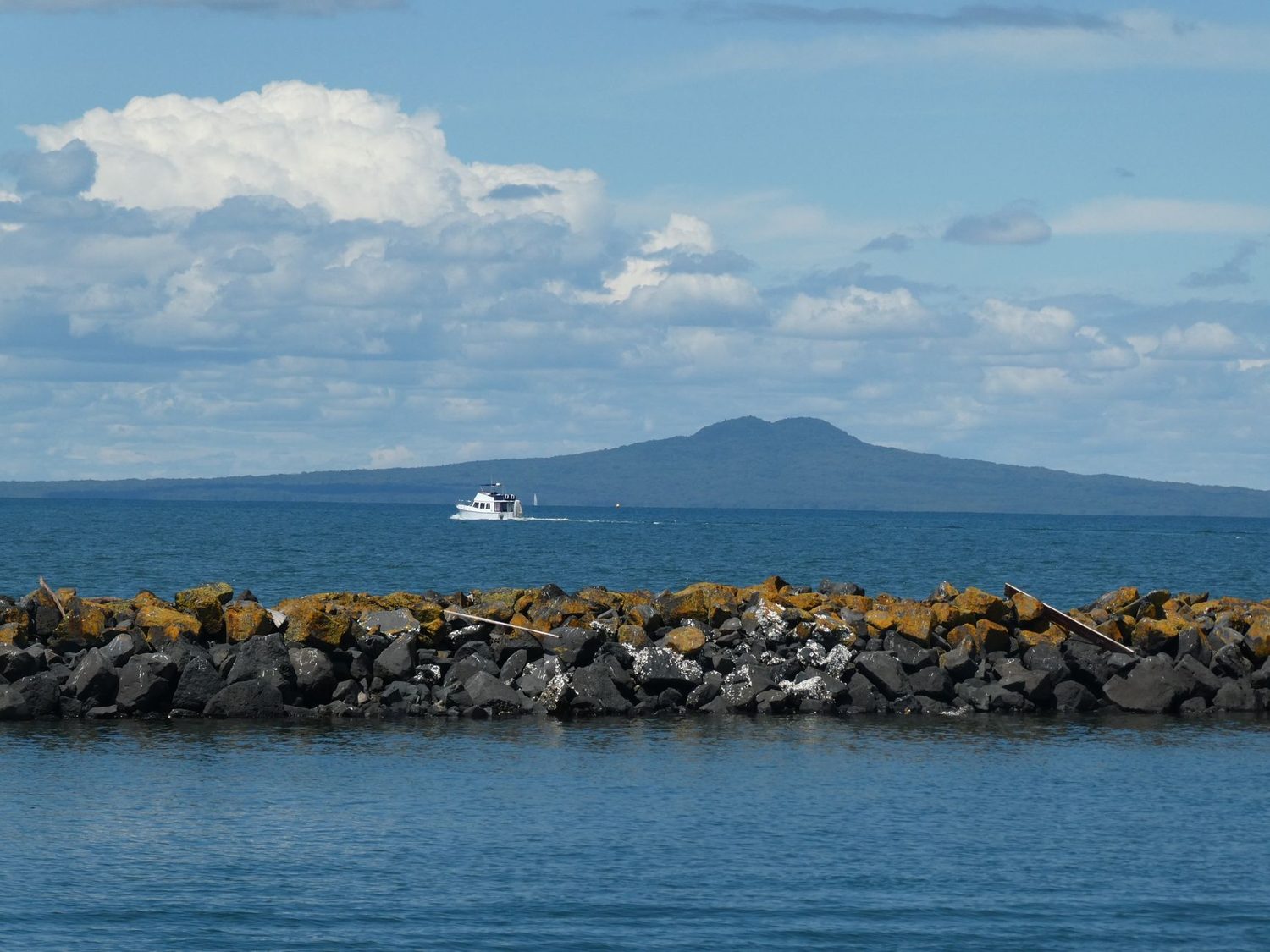
    Rangitoto Island — youngest volcano in the Auckland volcanic field
    Rangitoto erupted just 600 years ago — the youngest volcano in the Auckland field.

    What is the Auckland Volcanic Field?

    The Auckland Volcanic Field (AVF) is an area of monogenetic volcanoes covered by much of metropolitan Auckland. It contains approximately 53 separate volcanic centres distributed across the Auckland isthmus and surrounding harbours. The field stretches roughly 360 square kilometres — from Lake Pupuke and Rangitoto Island in the north to Matukutururu (Wiri Mountain) in the south, and from Mount Albert in the west to Pigeon Mountain in the east.

    What makes the AVF different from New Zealand’s other volcanic regions (think Mount Ruapehu and Lake Taupō) is that it’s entirely basaltic — fed by relatively gentle, low-silica magma rather than the explosive subduction-driven volcanism of the central North Island. AVF eruptions tend to be smaller and more localised, but the field has produced everything from gentle scoria cones to violent phreatomagmatic explosions.

    The Geological History: 200,000 Years of Fire

    Geological dating of 47 of the 53 volcanic centres has revealed that the AVF first erupted approximately 193,000 years ago and last erupted around 500–600 years before present — the eruption that created Rangitoto Island. Across these 193,000 years, the field has produced eruptions in pulses rather than at a steady rate, and most volcanoes erupted only once.

    With one major exception (Rangitoto), no volcano in the field has erupted more than once. This is what defines a "monogenetic" field — each eruption builds a new cone, then dies. The next eruption, hundreds or thousands of years later, will likely build a completely new volcano somewhere else in the field. Past eruptions have lasted from a few weeks to several years.

    Volcanic Types in the Field

    The AVF contains a remarkable diversity of volcanic landforms in a small area:

    • Scoria cones — the most common type, formed when frothy lava builds steep-sided mounds. Mount Eden, One Tree Hill, Mount Albert.
    • Maars — explosion craters formed when rising magma met groundwater, creating violent steam-driven blasts. Lake Pupuke, Orakei Basin, Pukekawa (Auckland Domain), Onepoto.
    • Tuff rings — low circular ridges of volcanic ash and rock surrounding maars.
    • Lava flows — the field has produced voluminous lava flows that cover much of the Auckland isthmus.
    • Lava caves — more than 50 lava tubes have been discovered, including the 290-metre Wiri Lava Cave.
    • Lava shields — broad, gentle volcanoes like Rangitoto.

    The 8 Best Auckland Volcanoes to Visit

    1. Maungawhau / Mount Eden (196m)

    Mount Eden Maungawhau — Auckland volcanoes guide
    Mount Eden (Maungawhau) is Auckland’s highest natural point at 196m.

    Auckland’s highest natural point and most visited volcano. Mount Eden’s near-perfectly preserved scoria cone has a deep, grass-lined crater and offers 360° views over the city, harbour, Rangitoto and the Hauraki Gulf. Free to visit, walking access only (cars no longer drive to the summit). Allow 30 minutes for the walk up. Maungawhau is sacred to Ngāti Whātua and the wider Tāmaki Māori — visitors are asked to stay on tracks and not enter the crater.

    • Age: ~28,000 years
    • Height: 196m
    • Crater: 50m deep, 150m diameter
    • Address: 250 Mount Eden Rd

    2. Rangitoto Island (260m)

    The youngest, largest and most visually iconic volcano in the AVF. Rangitoto erupted just 600 years ago, then erupted a second time about 50 years later — making it the only AVF volcano known to have erupted more than once. The 25 sq km lava shield is now a pest-free Department of Conservation island, accessible by ferry from downtown Auckland. The summit walk takes 60–75 minutes one way. Bring water and sturdy shoes — the lava field is rough.

    • Age: ~600 years
    • Height: 260m
    • Ferry: 25 mins from Downtown Ferry Terminal
    • Cost: NZ$45 return ferry (Fullers360)

    3. Maungakiekie / One Tree Hill (182m)

    Set in Cornwall Park, One Tree Hill is a perfectly preserved scoria cone with a wider crater than Mount Eden. The summit features the obelisk monument to Sir John Logan Campbell, "the father of Auckland." Cornwall Park, the parkland surrounding the cone, is one of Auckland’s loveliest open spaces with grazing sheep and lambs. Drive to the summit (free), or walk through the park.

    • Age: ~67,000 years
    • Height: 182m
    • Address: Greenlane West, One Tree Hill

    4. Lake Pupuke (Maar)

    Auckland’s only freshwater lake within easy reach of the CBD, Lake Pupuke fills a circular maar crater on the North Shore. The lake is roughly 1.2km across and 57m deep. Look at it on a map — it’s a perfect circle, formed when rising magma met an underground water table 200,000 years ago, vaporised the water, and exploded outward. The lake has no inflowing or outflowing streams. Walking and kayak hire available.

    • Age: ~200,000 years (one of the oldest in the field)
    • Diameter: 1.2km
    • Depth: 57m
    • Address: Takapuna, North Shore

    5. North Head (Maungauika, 65m)

    A coastal scoria cone at the entrance of Waitematā Harbour, riddled with WWI and WWII military tunnels open for free exploration. The summit gives panoramic harbour views — and the underground military tunnels add a fascinating layer of human history to the volcanic geology. 12-minute ferry ride from the CBD to Devonport, then 25-minute walk uphill.

    • Age: ~50,000 years
    • Height: 65m
    • Highlights: WWI/II tunnels, harbour entrance views

    6. Mount Victoria (Takarunga, 81m)

    Sister volcano to North Head and Devonport’s other commanding viewpoint. Mount Victoria delivers among Auckland’s best skyline views — looking back at the city across the Waitematā Harbour. Walking access only.

    7. Mount Albert (Ōwairaka, 135m)

    One of the most pristine scoria cones in the field — Mount Albert (Ōwairaka) sits in a leafy West Auckland park. Climb the 135m summit on the walking track for views of the Manukau and Waitematā harbours.

    8. Mount Wellington (Maungarei, 135m)

    The youngest mainland volcano in the field at around 9,000 years old. Mount Wellington’s lava flows extend over 6km — they form much of the underlying geology of southeast Auckland. Drive or walk to the summit for sweeping eastward views.

    Auckland volcanic field crater — 53 volcanoes geological history
    The Auckland volcanic field has 53 separate volcanic centres.

    The Most Important Volcanoes You’ve Never Heard Of

    • Pukekawa (Auckland Domain) — The Auckland Domain, in the heart of the city, is itself a maar volcano. The Domain’s flat playing fields fill the maar, ringed by gentle volcanic hills.
    • Orakei Basin — A tidal maar visible from the train line into the CBD, now a popular kayaking spot.
    • Onepoto Basin — Another maar, now a sportsground in Northcote.
    • Mt Smart (Rarotonga) — Heavily quarried for road metal, now home to Mt Smart Stadium. Almost the entire cone has been removed.
    • Pigeon Mountain (Ōhuiarangi) — Eastern Auckland scoria cone, partially quarried.
    • Three Kings (Te Tatua-a-Riukiuta) — Three small volcanic cones once stood here; quarrying has reduced them.

    Auckland’s Volcanic History and Quarrying

    For most of European Auckland’s history, the city’s volcanic cones were treated as raw materials. Volcanoes were quarried for scoria (used for road base, concrete and ballast). Mount Smart, Three Kings, and Mount Roskill have all lost significant portions of their cones to quarrying. The practice was largely halted in the 1970s as Aucklanders began to value the cones as natural and cultural taonga (treasures).

    In 2014, the 14 most important Tāmaki Māori volcanic cones were transferred from Council ownership to the Tūpuna Maunga Authority — a co-governance body of Tāmaki tribes and Auckland Council. The Maunga (sacred mountains) are now actively managed for ecological restoration, cultural protection, and continued public access.

    Volcanoes and Māori Heritage

    For centuries before European arrival, Auckland’s volcanic cones were intensively occupied as (fortified villages) by Tāmaki Māori. The terraces still visible on Mount Eden, One Tree Hill, North Head and other cones are the earthworks of these pā — defensive ramparts, food storage pits and house platforms. At their peak, Auckland’s volcanic field hosted the largest Māori population in pre-European New Zealand.

    When you visit Auckland’s maunga today, you’re walking on a landscape of profound cultural significance. Look for:

    • Terracing — flat ridges cut into the slopes for housing and gardens
    • Pits — circular or rectangular hollows used for kūmara (sweet potato) storage
    • Defensive ditches and palisades — outlines visible especially in low-angle sun
    • Sacred areas — many summits and crater rims are tapu (sacred); stay on tracks

    Will Auckland Erupt Again?

    Auckland lava flows volcanic field geology
    The volcanic field has produced lava flows covering much of the Auckland isthmus.

    Yes — eventually. The Auckland Volcanic Field is officially classified as active, not extinct. Geologists agree that the field will erupt again at some point in the geological future. They cannot predict where, when, or how violent. The good news: monitoring and warning systems are excellent, and any new eruption would be preceded by weeks of detectable seismic activity.

    GeoNet, New Zealand’s geological monitoring network, runs a permanent array of seismographs and ground sensors around Auckland. The Auckland Volcanic Field Contingency Plan is well-developed: in the event of imminent eruption, residents within a defined zone would be evacuated. The likely warning window is days to weeks, not minutes.

    Statistical estimates suggest the next eruption could occur anywhere from tomorrow to thousands of years from now. The field has been actively studied by Auckland University researchers and GNS Science for decades — the work has produced one of the world’s most detailed volcanic-hazard models for any major city.

    Best Volcano Walks for Visitors

    • Mount Eden summit walk (30 mins return) — easiest, most spectacular views
    • One Tree Hill summit and Cornwall Park (45 mins) — relaxed, sheep, monuments
    • Rangitoto Summit Track (3 hours return) — committed but spectacular volcano hike
    • North Head and Mount Victoria, Devonport (3 hours combined) — ferry ride + two cones + WWII tunnels
    • Lake Pupuke loop (45 mins) — flat lakeside walk
    • Coast to Coast Walkway (4 hours, 16km) — links 5 volcanic cones across the isthmus

    Coast to Coast Walkway: The Volcano Marathon

    Auckland’s Coast to Coast Walkway is a 16km route that crosses the isthmus from Waitematā Harbour to Manukau Harbour. The walk passes over (or near) several volcanoes including Mount Eden, One Tree Hill, Mount Albert and Mount Roskill. Allow 4–5 hours and pack water — there are limited refilling points. The walk is signposted; pick up a map at the Auckland i-SITE.

    Auckland Volcanoes by Age

    • 200,000 years — Lake Pupuke (oldest dated)
    • 67,000 years — One Tree Hill
    • 50,000 years — North Head
    • 28,000 years — Mount Eden
    • 9,000 years — Mount Wellington
    • 600 years — Rangitoto Island (youngest, only multi-eruption volcano)

    Volcano Visitor Centres & Education

    • Auckland War Memorial Museum — has a strong section on AVF volcanoes including 3D models, lava samples, and interactive displays. NZ$28 admission.
    • Stardome Observatory (One Tree Hill) — covers Auckland geology alongside astronomy. NZ$18.
    • Rangitoto Heritage Trail — self-guided trail with interpretation panels at key viewpoints.
    • GNS Science Centre online — virtual exhibits about NZ volcanism (free).

    Volcano-Themed Day Itineraries

    Auckland city built on volcanic field — geological history
    Auckland is the only major city built on an active volcanic field.

    The Volcano Day (8 hours)

    • 9am — Auckland War Memorial Museum, Volcanic Field exhibit
    • 11am — Mount Eden summit walk
    • 12:30pm — Lunch at Cornwall Park, then walk One Tree Hill
    • 3pm — Rangitoto ferry from Downtown
    • 5:30pm — Return to CBD, dinner with view of Rangitoto from the Viaduct

    North Shore Volcano Trail (5 hours)

    • 10am — Ferry to Devonport
    • 10:30am — Mount Victoria summit and views
    • 12pm — North Head summit and WWII tunnels
    • 1:30pm — Lunch at Devonport
    • 3pm — Drive to Lake Pupuke for a circuit walk

    Volcano Safety

    Auckland’s volcanoes are tourist attractions, not danger zones. The summit walks are safe and well-formed. Stay on tracks (both for safety and to protect the cultural sites). Be aware that wet weather can make grass slopes slippery on Mount Eden and One Tree Hill — wear shoes with grip. On Rangitoto, the walking track crosses raw lava field — closed-toe shoes are essential.

    Photography Tips

    • Mount Eden at sunrise — eastward views over the city as the sun rises
    • Rangitoto at sunset — silhouette across the harbour from the CBD waterfront
    • One Tree Hill in low afternoon light — terraces and earthworks become visible
    • Lake Pupuke from above — the perfect circle is best appreciated from a drone or aerial

    Frequently Asked Questions

    How many volcanoes are in Auckland?

    53 separate volcanic centres make up the Auckland Volcanic Field. They range from tiny vents to substantial cones like Mount Eden and Rangitoto.

    Is the Auckland Volcanic Field active?

    Yes. It’s classified as active — the most recent eruption (Rangitoto) was only 600 years ago. Future eruptions are expected at some unknown point.

    What’s the youngest Auckland volcano?

    Rangitoto Island, which erupted around 600 years ago and again about 50 years later — the only AVF volcano known to have erupted twice.

    Can you visit Auckland’s volcanoes?

    Yes — most are public parks. Mount Eden, One Tree Hill, Mount Victoria, North Head, Lake Pupuke and Rangitoto are all freely accessible. Most have summit walks of 30 mins to 3 hours.

    What’s the highest volcano in Auckland?

    Maungawhau / Mount Eden at 196m. Rangitoto Island reaches 260m, but it’s offshore.

    Why is Auckland called the "City of Volcanoes"?

    Because the city is built directly on top of an active volcanic field of 53 volcanoes — the most volcano-dense major city in the world.

    Final Take: A City Born From Fire

    Auckland’s volcanic geology isn’t a footnote — it’s the central organising fact of the city. Every harbour was shaped by a volcano. Every viewpoint sits on a cone. Every park is an old crater. And in 600 years’ time, somewhere in the field, the lava will rise again.

    Spend a day climbing Mount Eden, walking Cornwall Park, and ferrying to Rangitoto, and you’ll never look at Auckland the same way. The volcanoes are the city.