Category: Transport

Getting to and around Auckland.

  • Auckland Trains Guide: Lines, Fares & Stations (2026)

    Auckland Trains Guide: Lines, Fares & Stations (2026)

    Auckland’s commuter rail network is fully electric, modern, and one of the most useful tools for tourists exploring the city. Four lines radiate from Britomart Train Station in the lower CBD — connecting Newmarket, Mt Eden, Manukau, Henderson and the wider Auckland suburbs. The 2026 City Rail Link opening adds two new underground stations and doubles the network’s capacity. This complete Auckland trains guide covers the four lines, the major stations, fares with the AT HOP card, City Rail Link impact, and the best train rides for sightseeing in the city.

    Modern Auckland commuter train at station platform
    Auckland’s electric train network operates 4 lines from Britomart with the City Rail Link opening 2026.

    Auckland trains at a glance

    • Operator: Auckland Transport (AT)
    • Lines: 4 — Western, Southern, Eastern, Onehunga
    • Hub station: Britomart Train Station (lower CBD)
    • Hours: 5:00am–11:00pm (later Friday/Saturday); reduced Sunday
    • Frequency: 10-15 minutes peak; 20-30 minutes off-peak
    • Fares: NZ$2.20 (1 zone HOP) to NZ$7.10 (5+ zones); contactless +20%
    • Daily fare cap: NZ$20
    • Weekly fare cap: NZ$50
    • Payment: AT HOP card (best value), contactless card, Apple Pay, Google Pay
    • Rolling stock: all electric (since 2015)
    • Length: ~94 km of track across four lines
    • City Rail Link: opens late 2026 with new Aotea and Karangahape stations

    Auckland’s four train lines

    Auckland urban train tracks and infrastructure
    All four Auckland train lines are fully electrified — no diesel trains in passenger service.

    Western Line — Britomart to Swanson

    The Western Line runs from Britomart through the inner-west suburbs to Henderson and Swanson. Tourist-relevant stations:

    • Britomart — the hub station; integrated with the cruise terminal and Britomart shopping precinct.
    • Newmarket — 8 minutes from Britomart; connects to Westfield Newmarket shopping; transfer hub for the Onehunga and Western lines.
    • Grafton — 12 minutes from Britomart; closest to Auckland War Memorial Museum (15-min walk).
    • Mt Eden — 18 minutes from Britomart; 10-min walk to Mt Eden volcano summit.
    • Kingsland — 22 minutes from Britomart; closest station to Eden Park Stadium.
    • Mt Albert — 28 minutes from Britomart; 10-min walk to MOTAT and Auckland Zoo.
    • Henderson — 35 minutes; West Auckland mall and city.
    • Swanson — 50 minutes; gateway to the Waitākere Ranges.

    Southern Line — Britomart to Pukekohe

    The Southern Line runs from Britomart through Newmarket, the inner-southern suburbs, to South Auckland and beyond to Pukekohe. Tourist-relevant stations:

    • Britomart — hub.
    • Newmarket — 8 minutes; major transfer station.
    • Greenlane — 12 minutes; closest to Greenlane Hospital and Cornwall Park.
    • Ellerslie — 14 minutes; suburban Auckland with horse racing at Ellerslie Racecourse.
    • Penrose — 17 minutes; transfer to the Onehunga Line.
    • Manurewa — 35 minutes; South Auckland.
    • Papakura — 50 minutes; outer south.
    • Pukekohe — 1 hour; the Southern Line’s southern terminus.

    Eastern Line — Britomart to Manukau

    The Eastern Line runs from Britomart eastward through Sylvia Park to Manukau. Useful for shopping mall access and South Auckland exploration:

    • Britomart — hub.
    • Glen Innes — 18 minutes; suburban Eastern Auckland.
    • Panmure — 22 minutes; bus interchange to North Shore.
    • Sylvia Park — 25 minutes; integrated station with NZ’s largest shopping mall.
    • Otahuhu — 30 minutes; major bus interchange.
    • Manukau — 35 minutes; the Eastern Line’s southern terminus; close to Manukau City and the Lantern Festival venue.

    Onehunga Line — Britomart to Onehunga

    The Onehunga Line is the smallest of the four — Britomart to Onehunga via Newmarket and Penrose. Useful for Onehunga Bay and Cornwall Park access:

    • Britomart — hub.
    • Newmarket — 8 minutes; transfer station.
    • Greenlane — 12 minutes; Cornwall Park access.
    • Penrose — 17 minutes; transfer to the Eastern Line.
    • Te Papapa — 22 minutes.
    • Onehunga — 25 minutes; gateway to Onehunga Bay; transfer to Manukau Harbour ferries.

    Britomart Train Station

    Modern underground train station with vaulted architecture
    The City Rail Link 2026 expansion adds new underground stations at Aotea and Karangahape.

    Britomart Train Station is the central hub for Auckland’s rail network. All four lines arrive and depart from Britomart’s underground platforms. The station is integrated with:

    • Britomart Pavilion (the heritage 1910 train station building above)
    • Britomart Bus Terminus (major bus interchange)
    • Britomart shopping precinct (NZ designer flagships)
    • Commercial Bay shopping mall
    • The cruise ship terminal at Princes Wharf (5-min walk)
    • Sky Tower (10-min walk)
    • Auckland CBD core (immediate walking access)

    Britomart is the country’s most-used train station — 27 million passengers per year. Trains arrive every 10-15 minutes during peak hours; 20-30 minutes off-peak. The station has multiple ticket machines, AT HOP card top-up locations, customer service desk, free wifi, and accessible facilities including lifts to all platforms.

    City Rail Link — opening late 2026

    The City Rail Link (CRL) is Auckland’s largest infrastructure project ever — a 3.5 km underground rail tunnel through the CBD with two new stations, doubling rail capacity through the city centre. Scheduled to open in late 2026, the CRL will dramatically improve Auckland’s rail network for both commuters and tourists.

    New stations

    • Aotea Station — at Aotea Square in the CBD; will become Auckland’s busiest train station, serving the central CBD, Queen Street, Aotea Centre, and the Town Hall.
    • Karangahape Station — at the K Road end of the CBD; serves the creative precinct, Karangahape Road bars, restaurants, and the southern CBD.

    Network impact

    The CRL converts the rail network from a “dead-end at Britomart” arrangement to a through-running network. Trains will pass through the CBD rather than terminating, doubling capacity and shortening journey times. Mt Eden, Karangahape, Aotea and Britomart all become accessible without changing trains. The Western Line in particular will benefit dramatically — direct trains to the central CBD without the current Newmarket reversal.

    Construction has caused intermittent disruptions on Albert Street and the wider CBD since 2018. Check current status at AT.govt.nz before riding through Britomart during construction-final phases.

    Auckland’s train history

    Auckland’s first passenger train ran in 1873, making the city’s rail network one of the oldest in the Southern Hemisphere. Through the 20th century the network grew to cover most of the city’s southern and western suburbs but suffered chronic underfunding. By the 1990s the system was running diesel trains on poorly maintained tracks. The 2003 opening of Britomart Train Station was the first major modernisation in 40 years; the 2008-2014 electrification project converted the network from diesel to electric and dramatically improved frequency. The 2026 City Rail Link opening represents the biggest single investment in the network’s history — a NZ$5 billion project that will transform Auckland’s rail system from a peripheral commuter network into a true urban metro.

    Auckland train fares (2026)

    Auckland trains use a zone-based fare system across 9 fare zones. The price depends on how many zones you cross, not how long you travel.

    • 1 zone (CBD/Newmarket only): NZ$2.20 HOP / NZ$2.65 contactless
    • 2 zones: NZ$4.05 HOP / NZ$4.85 contactless
    • 3 zones: NZ$5.30 HOP / NZ$6.35 contactless
    • 4 zones: NZ$6.30 HOP / NZ$7.55 contactless
    • 5+ zones: capped at NZ$7.10 HOP / NZ$8.50 contactless

    Daily and weekly caps

    • Daily cap: NZ$20 — once you’ve spent NZ$20 in a calendar day, the rest of your travel is free.
    • Weekly cap: NZ$50 (Mon-Sun) — once you hit NZ$50 in a week, the rest of the week is free.

    Children’s fares

    • Under 5: free with a paying adult.
    • 5-15 with registered HOP card: 40% off adult fares Mon-Fri; FREE on weekends and public holidays.
    • 5-15 cash fare: NZ$1 per zone, max NZ$3 (cash accepted on trains, NOT on buses).

    How to use Auckland trains

    Passengers waiting on Auckland train platform
    Britomart Train Station is the central hub where all four Auckland lines arrive and depart.
    • Step 1 — get an AT HOP card (NZ$5 + credit) or use contactless card.
    • Step 2 — tap on at the train station ticket gates.
    • Step 3 — board the train; trains stop at every station unless explicitly express services.
    • Step 4 — tap off at your destination station ticket gates. Failure to tap off charges max 4-zone fare.
    • Step 5 — for transfers, tag off the first service and tag on the second within 30 minutes for a single fare.

    Cash payment available on trains (NOT on buses) but contactless and HOP card are faster and cheaper. Bus drivers don’t accept cash; train tickets at the conductor are an option but most riders use HOP card.

    Major train station amenities

    • Britomart — 27 million passengers/year; multiple ticket machines; AT customer service desk; cafés; toilets; wheelchair accessible; integrated with cruise terminal.
    • Newmarket — the second-busiest station; integrated with Westfield Newmarket mall; cafés; ticket machines; wheelchair accessible.
    • Manukau — South Auckland’s main station; integrated with Westfield Manukau mall; bus interchange; ticket machines; wheelchair accessible.
    • Sylvia Park — integrated with NZ’s largest shopping mall; ticket machines; cafés; wheelchair accessible.
    • Henderson — West Auckland’s hub; ticket machines; wheelchair accessible; integrated with bus interchange.
    • Mt Eden — ticket machine; basic facilities; pedestrian crossing to Mt Eden Road.
    • Grafton — ticket machine; basic facilities; pedestrian access to Auckland Domain.

    Best train rides for tourists

    Modern train interior with commuter seating
    Auckland’s electric trains are fully air-conditioned with comfortable bench seating.
    • Britomart to Newmarket (8 min) — for shopping, restaurants, Westfield Newmarket.
    • Britomart to Mt Eden (18 min) — for the volcano summit walk and city skyline views.
    • Britomart to Mt Albert (28 min) — for Auckland Zoo and MOTAT (10-min walk from station).
    • Britomart to Sylvia Park (25 min) — for NZ’s largest shopping mall.
    • Britomart to Onehunga (25 min) — for Onehunga Bay and Manukau Harbour ferry.
    • Britomart to Kingsland (22 min) — for Eden Park Stadium events.
    • Britomart to Henderson (35 min) — for West Auckland mall and city.
    • Britomart to Swanson (50 min) — gateway to the Waitākere Ranges and west-coast beaches.

    Train + bus combinations

    Many tourist destinations require a train + bus combination. Within 30 minutes of tagging off the first service, transfers count as a single journey for fare-cap purposes. Useful combinations:

    • Auckland Zoo — Western Line to Mt Albert, then 10-min walk OR transfer to bus 18.
    • MOTAT — Western Line to Mt Albert, then 10-min walk.
    • Auckland War Memorial Museum — Western Line to Grafton, then 15-min walk.
    • Cornwall Park / One Tree Hill — Onehunga Line to Greenlane, then 10-min walk OR bus 30.
    • Mission Bay beach — Western Line to Britomart, then Tāmaki Link bus.
    • Devonport — Western Line to Britomart, then ferry from Princes Wharf.
    • Manukau Lantern Festival venue — Eastern Line direct to Manukau Station.
    • Eden Park — Western Line direct to Kingsland Station.

    Auckland’s busiest train stations by passenger volume

    • 1. Britomart — 27 million passengers/year; the country’s busiest train station.
    • 2. Newmarket — 6 million passengers/year; major transfer station.
    • 3. Manukau — 4 million passengers/year; South Auckland hub.
    • 4. Henderson — 3 million passengers/year; West Auckland.
    • 5. Papakura — 2.5 million passengers/year; outer south.
    • 6. Sylvia Park — 2 million passengers/year; mall integration.
    • 7. Mt Eden — 1.5 million passengers/year; the inner-suburban hub.
    • 8. Grafton — 1 million passengers/year; near Auckland Hospital.

    The 2026 City Rail Link opening will dramatically alter these rankings — Aotea Station is projected to become the country’s busiest train station, overtaking Britomart by 2028.

    Auckland train accessibility

    • All Auckland trains are wheelchair accessible with level boarding.
    • All major train stations (Britomart, Newmarket, Manurewa, Papakura) have lifts.
    • Some smaller stations have steps only — check AT.govt.nz/accessibility for full station list.
    • Service animals welcome.
    • Audio announcements at every stop.
    • Visual displays show next stop on all trains.
    • Free wheelchair loans at Britomart customer service.
    • Total Mobility scheme provides discounted taxi vouchers for disabled NZ residents.

    Train safety and etiquette

    • Auckland trains are safe and well-policed, day and night.
    • Avoid late-night trains alone (after 10pm) — sit near the conductor’s compartment if possible.
    • Standing for elderly passengers and pregnant women is expected courtesy.
    • Eating and drinking on trains is allowed but discouraged for hot food.
    • Bikes ride free on trains (off-peak only — 9am-3pm and after 7pm weekdays, all day weekends).
    • Dogs not permitted except certified service animals.
    • Quiet zones available on some trains (front carriage typically).
    • Talk quietly on phones — Auckland riders are generally quiet.

    FAQs

    How many train lines does Auckland have?

    Four lines: Western, Southern, Eastern, Onehunga. All radiate from Britomart Train Station in the CBD. The City Rail Link 2026 opening adds two new central stations (Aotea, Karangahape).

    When does the Auckland City Rail Link open?

    Late 2026. The CRL adds 3.5 km of underground rail through the CBD with two new stations (Aotea Square and Karangahape Road) and doubles network capacity.

    How much does it cost to ride Auckland trains?

    NZ$2.20-7.10 per journey with HOP card (20% off contactless). Daily cap NZ$20; weekly cap NZ$50.

    Can I use cash on Auckland trains?

    Yes, conductors accept cash; HOP card and contactless are cheaper and faster. Buses don’t accept cash.

    Are Auckland trains 24-hour?

    No. Trains run 5:00am-11:00pm most days; later Friday/Saturday (until 12:30am); reduced Sunday hours. After hours: use Uber, taxi, or wait for the next morning’s first train.

    Are trains the cheapest way to get around Auckland?

    For longer journeys (Mt Albert, Manukau, Henderson) yes. For inner-CBD trips, walking is free and faster. Buses are similar price; trains are usually faster than buses for cross-city journeys.

    Can I take a bike on the train?

    Yes — bikes ride free on trains during off-peak hours (9am-3pm and after 7pm weekdays, all day weekends). Limited to 4 bikes per carriage.

    Where do Auckland trains stop?

    43 stations across the four lines. Britomart is the central hub. Newmarket is the largest non-Britomart station. Major tourist-relevant stops: Mt Eden (volcano), Mt Albert (zoo), Grafton (museum), Sylvia Park (mall), Manukau (Lantern Festival venue), Kingsland (Eden Park).

    Are Auckland trains punctual?

    Generally yes. AT publishes 90-day on-time performance reports — typically 90%+ punctuality. Friday afternoon and Sunday evening services have the most variability.

    Is wifi available on trains?

    Free wifi at Britomart Station. Trains themselves don’t have wifi but most travellers use mobile data; coverage is reliable across the network.

    When is rush hour on Auckland trains?

    Morning rush: 7:00-9:30am inbound to Britomart. Evening rush: 4:30-6:30pm outbound. Trains run every 10-15 minutes during these periods. Outside rush hours, trains run every 20-30 minutes.

    Tips for Auckland train tourists

    • Get an AT HOP card on day one — saves 20% per journey.
    • Plan train trips around the daily NZ$20 cap if doing multiple journeys.
    • Britomart is a 5-minute walk from the cruise terminal — convenient for cruise visitors.
    • The Western Line through Newmarket is the slowest but most convenient route to inner suburbs.
    • The Eastern Line direct to Sylvia Park is the fastest cross-city route.
    • Eden Park match days — special services run from Britomart and Manukau.
    • Always tag off at your destination — failure charges max 4-zone fare automatically.
    • Download the AT Mobile app for live arrival times and trip planning.
    • Quieter than buses for longer journeys — useful for digital-nomad work.
    • City Rail Link opens late 2026 — bookmark to check schedules during the transition.

    Auckland train tickets and HOP card

    The AT HOP card remains the country’s most useful transport tool. NZ$5 for the card plus credit; available at all major train stations, Auckland airport, and many CBD retailers. The card delivers 20% off all train (and bus and ferry) fares plus the daily/weekly cap. Register online at AT.govt.nz/hop for protection if the card is lost. Auto top-up is the most painless option for stays of 4+ days. Refunds available at any AT customer service centre on departure (small fee for unused balance under NZ$50).

    Auckland trains vs buses vs ferries

    • Trains — faster on the four electrified lines. Best for Mt Eden, Newmarket, Ellerslie, Manukau, Western suburbs.
    • Buses — most flexible, most routes, slower. Best for inner-city and Ponsonby/Parnell connections.
    • Ferries — photogenic and necessary for harbour destinations. Devonport, Bayswater, Birkenhead, Half Moon Bay.

    Use trains primarily for cross-city journeys; buses for inner-city and Ponsonby/Parnell; ferries for harbour day trips.

    Auckland trains for events and matches

    • Eden Park (Western Line to Kingsland) — All Blacks tests, Football Ferns, ICC Cricket internationals; special services run match days from Britomart and Manukau.
    • Mt Smart Stadium (Western Line + bus) — Warriors NRL matches; train to Westfield Sylvia Park then short bus.
    • Spark Arena (Britomart, 5-min walk) — concerts, sporting events; no train transfer needed.
    • Auckland Domain events (Western Line to Grafton) — Lantern Festival, Music in Parks, Christmas in the Park.
    • Manukau Sports Bowl (Eastern Line to Manukau) — 2026 Lantern Festival venue.
    • Auckland Marathon (last Sunday October) — route passes Britomart; trains continue with extended services.

    For event days, AT typically runs additional services. Special event tickets often include free public transport — check the event ticket for details. Eden Park has the strongest train integration with extended Western Line services into the late evening.

    A train-only Auckland day

    • 9:30am — Britomart breakfast at Daily Bread.
    • 10:00am — Western Line to Mt Eden Station; 10-min walk to Mt Eden volcano summit.
    • 11:30am — Mt Eden village brunch.
    • 12:30pm — Western Line to Mt Albert; 10-min walk to Auckland Zoo.
    • 3:00pm — Auckland Zoo afternoon.
    • 5:00pm — Western Line back to Newmarket; Westfield Newmarket browse.
    • 6:30pm — Onehunga Line to Britomart; dinner in CBD.

    Total transport spend: ~NZ$8.80 (4 short-zone journeys with HOP card, well under the NZ$20 daily cap). Three major Auckland attractions plus shopping in one day, all by train.

    The bottom line

    Auckland’s electric train network is one of the most useful tourist tools in the city — fast, frequent, and cheap with a HOP card. The four lines connect the CBD to most major suburbs; the 2026 City Rail Link opening adds two new central stations (Aotea, Karangahape) that will make rail even more central to Auckland’s tourist transport. Combine trains with buses and ferries for full-network coverage, and you’ll be navigating Auckland like a local in days.

    Plan more transport with our complete getting around Auckland guide, our Auckland public transport guide, and our Auckland buses guide for the full network picture.

  • Auckland Buses for Tourists: Best Routes & Tips (2026)

    Auckland Buses for Tourists: Best Routes & Tips (2026)

    Auckland buses are the workhorse of the city’s public transport network — 80+ routes operated by Auckland Transport (AT), connecting the CBD with the inner suburbs and out to the airport, North Shore, and far-west regions. For tourists, the bus network is genuinely useful, particularly the colour-coded “Link” loop services that connect the most visitor-friendly precincts. This complete Auckland buses guide covers everything tourists need to know — the best routes for sightseeing, fares, the four Link buses, the Northern Express to the North Shore, the AirportLink, and how to use the AT HOP card to ride.

    Modern Auckland city bus on a city street
    Auckland’s bus network is the workhorse of the AT public transport system, with 80+ routes.

    Auckland buses at a glance

    • Operator: Auckland Transport (AT)
    • Number of routes: 80+ across the Auckland region
    • Operating hours: 5am-12am most routes; some 24-hour services on key corridors
    • Fares: $2.20 (1 zone HOP) to $7.10 (5+ zones HOP); contactless +20%
    • Daily fare cap: $20
    • Weekly fare cap: $50 (Mon-Sun)
    • Payment: AT HOP card (best value), contactless card, Apple Pay, Google Pay
    • Cash: NOT accepted on buses
    • Best for tourists: Inner Link, City Link, Outer Link, NX1 Northern Express, AirportLink
    • Real-time tracking: AT Mobile app, Google Maps

    The Link buses — Auckland’s tourist loops

    Double-decker city bus with tourists
    The NX1 Northern Express runs to the North Shore on Auckland’s only dedicated busway.

    Auckland Transport runs four colour-coded “Link” loop bus services that are designed to circle key visitor precincts. They’re the easiest way for tourists to get around without a rental car.

    CityLink (Red Bus) — the Queen Street loop

    The CityLink runs every 7-15 minutes from 7am-11pm and does a tight loop through the CBD core. The route runs from Wynyard Quarter through Britomart up Queen Street to Aotea Square, on to Karangahape Road, returning through Myers Park and Queen Street to Wynyard Quarter.

    • Fare: $1 flat fare (cash equivalent); free with HOP card if transferring from another AT service.
    • Frequency: Every 7-15 minutes
    • Hours: 7am-11pm daily
    • Best for: short hops along Queen Street; Britomart to K Road

    Inner Link (Green Bus) — the inner-suburbs loop

    The most useful tourist bus. The Inner Link runs every 10-15 minutes from 7am-11:30pm in a circular route. The route circles Britomart → Parnell → Newmarket → Karangahape Road → Ponsonby Road → Victoria Park → Britomart. Single zone fare ($2.20 with HOP card).

    • Fare: $2.20 with HOP card / $2.65 contactless
    • Frequency: Every 10-15 minutes
    • Hours: 7am-11:30pm daily
    • Connects: Britomart, Parnell (for Auckland Museum), Newmarket (for Westfield Newmarket), K Road (creative precinct), Ponsonby Road
    • Best for: getting from CBD to Auckland Museum, Newmarket shopping, Ponsonby brunch — all the major tourist precincts

    Outer Link (Amber Bus) — the broader loop

    The Outer Link runs every 15 minutes through a wider route — Wellesley Street CBD, past the universities, through Parnell, Newmarket, Epsom, Balmoral, Mt Eden, St Lukes, Mt Albert (for MOTAT and the Auckland Zoo via short walk), Westmere, Herne Bay, and back to Wellesley Street.

    • Fare: $2.20-$4.05 with HOP card depending on zones travelled
    • Frequency: Every 15 minutes
    • Hours: 7am-10pm daily
    • Best for: reaching MOTAT, Auckland Zoo, Mt Eden volcano, Epsom, Westmere

    Tāmaki Link — to Mission Bay

    The Tāmaki Link runs from Britomart along Tāmaki Drive to Saint Heliers via Mission Bay. The bus to take to East Coast beaches.

    • Fare: $2.20 with HOP card
    • Frequency: Every 15 minutes peak; every 30 mins off-peak
    • Best for: Mission Bay beach trips, St Heliers Bay walks, Kelly Tarlton’s

    Northern Express (NX1 / NX2) — the North Shore busway

    The Northern Express buses are Auckland’s only true rapid-transit buses, running on a dedicated busway separated from regular traffic. They’re fast, frequent, and the easiest way to reach the North Shore.

    • NX1 — Britomart to Albany; full express service.
    • NX2 — Britomart to Hibiscus Coast (Silverdale); slightly fewer stops.
    • Frequency: Every 5-10 minutes peak; every 15 minutes off-peak
    • Hours: 5am-1am most routes
    • Fare: $4.05-$5.30 with HOP card depending on stops
    • Travel time: 25 mins to Akoranga, 35 mins to Albany, 50 mins to Silverdale
    • Best for: Devonport (transfer to ferry), Takapuna Beach, Westfield Albany, North Shore beaches

    AirportLink — Auckland Airport bus

    The AirportLink is Auckland Transport’s public bus from Auckland Airport to the CBD. It’s the cheapest airport-to-CBD option, though not the fastest.

    • Route: Auckland Airport → Manukau → Eastern Line train to Britomart (one-bus, two-mode journey)
    • Fare: $18 with HOP card / $22 contactless
    • Frequency: Every 15-30 minutes from 5:30am to 11pm
    • Travel time: 60-65 minutes to Britomart
    • Stops: Domestic and International terminals; major bus changes at Manukau station

    For most travellers, the AirportLink is fine for solo or two-person budget trips. For families with luggage or anyone in a hurry, Uber/SkyDrive ($80-110, 35-50 mins) is faster.

    Auckland buses fare structure

    AT HOP transit card and contactless payment
    AT HOP card delivers 20% off most bus fares — buy one before your first ride.

    Auckland buses use a zone-based fare system across 9 fare zones. The price depends on how many zones you cross, not how long you travel. The CBD is part of “Zone 1” — covering Britomart, Wynyard Quarter, K Road, Ponsonby and Newton.

    2026 fares (after 1 February 2026 increase)

    • 1 zone (CBD only): $2.20 HOP / $2.65 contactless
    • 2 zones: $4.05 HOP / $4.85 contactless
    • 3 zones: $5.30 HOP / $6.35 contactless
    • 4 zones: $6.30 HOP / $7.55 contactless
    • 5+ zones: capped at 4-zone fare for the same journey ($7.10 HOP / $8.50 contactless)
    • CityLink: $1 cash equivalent / FREE with HOP card if transferring

    Daily and weekly fare caps

    • Daily cap: $20 — once you’ve spent $20 in a calendar day, the rest of your travel is free.
    • Weekly cap: $50 (Mon-Sun) — once you hit $50 in a week, the rest of the week is free.

    Children’s fares

    • Under 5: free always with a paying adult
    • 5-15 with registered HOP card: 40% off adult fares Mon-Fri; FREE on weekends and public holidays
    • 5-15 without registered HOP card: child cash fares only available on trains and ferries (buses don’t accept cash)

    How to ride an Auckland bus

    Modern bus interior with passenger seats
    Auckland buses are mostly low-floor, accessible and air-conditioned.
    • Step 1 — stand at the bus stop. Put your hand out as the bus approaches. Buses don’t stop unless you signal.
    • Step 2 — board through the front door. Tap your HOP card on the reader inside the door.
    • Step 3 — bus drivers don’t accept cash and don’t issue tickets. HOP card or contactless card only.
    • Step 4 — for your stop, press the red “Stop” button on the handrails — buses don’t automatically stop at every stop.
    • Step 5 — tap your HOP card again on a reader inside the bus before stepping off. Forgetting to tag off charges you the maximum 4-zone fare.

    Don’t expect a “Thanks driver” cheer like in some cities — but many local riders do thank the driver as they get off. It’s a small Auckland courtesy worth adopting.

    A perfect bus-only Auckland day

    If you want to see the city without renting a car or paying for Ubers, here’s a one-day bus-only itinerary that hits the major precincts:

    • 9am — board Inner Link from Britomart toward Parnell.
    • 9:15am — alight at Parnell Road; walk to Auckland Museum (10 mins).
    • 11am — Māori cultural performance at the museum.
    • 12pm — walk to Parnell Village for lunch at Cibo or Rosie.
    • 1:30pm — Inner Link from Parnell to Newmarket; browse Westfield Newmarket.
    • 3pm — Inner Link to K Road; explore the creative precinct.
    • 4pm — Inner Link to Ponsonby; afternoon coffee at Bambina.
    • 5:30pm — Inner Link back to Britomart for dinner.

    Total bus cost: $20 daily cap reached. All major tourist precincts touched. No rental car or Uber required. The Inner Link is genuinely the best $20 you’ll spend on Auckland transport.

    Where to catch buses in the CBD

    Modern bus stop with passengers waiting
    Auckland’s main bus interchange is at Britomart Transport Centre in the CBD.
    • Britomart Transport Centre — the main bus interchange. Connections to Inner Link, Outer Link, Tāmaki Link, NX1, NX2, AirportLink, plus dozens of suburban routes.
    • Wellesley Street Bus Hub — the secondary interchange for Outer Link, university buses, and central CBD routes.
    • Aotea Square — a key central stop on multiple routes including CityLink and many western routes.
    • Parnell Road — stops at multiple points, particularly for Inner Link and Outer Link.
    • Ponsonby Road — Inner Link and Outer Link stops every 200-300 metres.
    • K Road — Inner Link and CityLink interchange.

    Bus journey times — CBD to key destinations

    • Britomart to Sky Tower: 5 min walk (no bus needed)
    • Britomart to Auckland Museum (Parnell): 12-15 min via Inner Link bus + 10-min walk
    • Britomart to Newmarket: 12 min via Inner Link bus or 15 min via Western Line train
    • Britomart to Ponsonby Road: 15-20 min via Inner Link bus
    • Britomart to Mt Eden volcano: 20 min via Western Line train + 10-min walk
    • Britomart to Mission Bay: 25 min via Tāmaki Link bus
    • Britomart to MOTAT: 30 min via Outer Link or Western Line + walk
    • Britomart to Westfield Albany: 50 min via NX1
    • Britomart to Auckland Airport: 60 min via AirportLink
    • Britomart to Westgate: 40 min via WX1
    • Britomart to Karangahape Road: 5-7 min via CityLink
    • Britomart to Aotea Square: 5-7 min via CityLink or 10-min walk

    Best Auckland bus routes for tourists

    • Inner Link — for Auckland Museum, Parnell, Newmarket, K Road, Ponsonby. The single most useful tourist bus.
    • Outer Link — for MOTAT, Auckland Zoo (Mt Albert area), Mt Eden volcano, Westmere.
    • Tāmaki Link — for Mission Bay, St Heliers Bay, Kelly Tarlton’s.
    • NX1 Northern Express — for Devonport (transfer to ferry), Takapuna, Westfield Albany.
    • AirportLink — for Auckland Airport.
    • WX1 Western Express — for Westgate, Henderson, North-West shopping.
    • 30 / 31 / 32 series — from CBD to Onehunga (for Onehunga Bay, ferry to Cornwallis).
    • 23 / 25 series — from CBD to Mt Eden village and Eden Park.

    Night buses and 24-hour services

    Auckland’s bus network has reduced overnight services. Most buses stop running between 11pm and midnight; some key corridors (NX1, Inner Link) run until 1am Friday and Saturday nights. After buses stop, Uber, taxis, or 24-hour CityHop on-demand services are your only options.

    • Last buses Britomart to Ponsonby: 12:15am (Inner Link)
    • Last buses Britomart to Albany: 12:30am (NX1)
    • Last buses Britomart to Mission Bay: 11:30pm (Tāmaki Link)
    • Last AirportLink: 11pm (last departure to airport from Britomart)

    Hop on hop off tourist buses

    Auckland Explorer is a private hop-on hop-off bus aimed specifically at tourists. The double-decker red bus runs a circular route hitting all major attractions — Sky Tower, Auckland Museum, Parnell, Mission Bay (with Kelly Tarlton’s), Auckland Domain, Auckland Zoo, MOTAT, and back to the CBD.

    • Single-day ticket: $54 adult / $30 child
    • Two-day ticket: $89 adult / $48 child
    • Departures: every 30 minutes from Princes Wharf 9am-3pm summer, less frequent winter
    • Multilingual commentary: 8 languages including English, Mandarin, Japanese, German
    • Best for: first-time visitors, cruise-ship one-day visitors, those who want flexibility without learning the AT bus system

    The hop-on hop-off bus is more expensive than AT public buses but more convenient for first-time visitors who want a guided audio commentary tour combined with the flexibility to disembark at major attractions. For visitors with 3+ days in Auckland, the AT public bus network is significantly better value.

    AT Mobile app — your bus toolkit

    The AT Mobile app (free, iOS and Android) is essential for navigating Auckland buses:

    • Live arrival times for every bus stop
    • Trip planner with real-time alerts
    • HOP card balance check and tap-to-top-up
    • Saved favourites for stops you use regularly
    • Plain-text journey instructions including transfers
    • Service alerts and disruption notifications
    • Real-time bus-on-map tracking

    Google Maps integrates AT data and works well for planning. Apple Maps in NZ also includes public transport directions.

    Common Auckland bus mistakes to avoid

    • Forgetting to tag off. Auckland’s biggest visitor mistake — automatically charges max 4-zone fare. Always tap off, even at the same stop.
    • Trying to pay cash. Bus drivers don’t accept cash. Get a HOP card or use contactless before boarding.
    • Mixing payment methods. Tagging on with a HOP card and tagging off with contactless breaks the 30-minute transfer rule. Use the same payment for the whole journey.
    • Missing the last bus. Last buses depart between 11:30pm and 1am depending on route. Check before late-night plans.
    • Not checking which bus serves which destination. Some routes branch (NX1 vs NX2; East 70 vs West 70). Verify on the front of the bus, not just the route number.
    • Boarding the wrong direction. Inner Link runs both clockwise and counter-clockwise — check the destination on the front-of-bus screen.
    • Buying a HOP card with low balance. Make sure you start with at least $20 credit if your first trip is the AirportLink.
    • Forgetting to register your card. Unregistered HOP cards lose their balance if lost. Register online at AT.govt.nz on day one.

    Buses vs trains vs ferries

    • Buses — most flexible, most routes, slower. Best for inner-city and suburb-to-CBD trips.
    • Trains — faster on the four electrified lines. Best for Mt Eden, Newmarket, Ellerslie, Manukau, and outer southern suburbs.
    • Ferries — photogenic and necessary for harbour destinations. Devonport, Bayswater, Birkenhead, Half Moon Bay.

    Use buses primarily; trains for cross-city to Newmarket or Mt Eden; ferries for harbour day trips.

    Bus accessibility in Auckland

    Auckland Transport has invested significantly in accessibility over the past decade. All AT buses are low-floor and equipped with ramps for wheelchair users, who travel free with a Total Mobility scheme card. Drivers will deploy the ramp on request without hesitation. Service animals are universally welcome. For visually impaired passengers, audio announcements are standard on most buses, calling out upcoming stops; visual displays show next-stop information at the front of the bus. Most major bus stops have tactile ground surface indicators and braille information panels. Hearing-impaired passengers can use the AT Mobile app’s text-based trip planning. The Total Mobility scheme provides discounted taxi vouchers for residents with mobility-affecting conditions; tourist eligibility is limited but disabled visitors with a recognised international card may apply.

    Auckland buses FAQs

    How much do Auckland buses cost?

    $2.20 for a 1-zone HOP fare (CBD only); $7.10 for the longest fare. Daily cap is $20; weekly cap is $50.

    Can I pay cash on Auckland buses?

    No — bus drivers don’t accept cash. HOP card, contactless card (Visa, Mastercard, Apple Pay, Google Pay) only.

    How do I buy an AT HOP card?

    $5 plus credit at any AT customer service centre, train station ticket machine, or participating retailer (most BP, Z service stations and corner shops). Most retailers sell pre-loaded $25 cards ($5 card + $20 credit).

    Is the Inner Link bus free?

    No — the Inner Link is $2.20 with HOP card. Only the CityLink (Red Bus) has a free transfer benefit when used after a paid HOP card service.

    Are Auckland buses safe at night?

    Yes — generally very safe. Late-night buses (after 11pm) can have fewer passengers but no specific safety concerns. Sit near the front near the driver if you prefer extra visibility.

    What’s the best bus to get to Auckland Museum?

    The Inner Link bus stops on Parnell Road, a 10-minute walk from Auckland Museum. Tāmaki Link is an alternative.

    Can I take a bike on a bus?

    No — bikes aren’t allowed on Auckland buses. Bikes are welcome on most trains (off-peak weekday and all-day weekend) and on most inner-harbour ferries.

    Are Auckland buses wheelchair accessible?

    Yes — all AT buses are low-floor and wheelchair accessible. Drivers will deploy the ramp on request. Service animals are welcome.

    What’s the airport bus from Auckland?

    The AirportLink is the AT public bus, $18 with HOP card. SkyDrive is a private shuttle, $32. Uber/taxi $80-110.

    Can I transfer between buses for one fare?

    Yes — within 30 minutes of tagging off your first bus, transfers count as a single journey for fare-cap purposes. Use the same HOP card or contactless device for all legs.

    Where can I find Auckland bus routes?

    AT.govt.nz has a complete map. The AT Mobile app shows live timetables. Google Maps integrates AT routes for trip planning.

    Buses for major events

    Auckland Transport runs additional bus services for major events. NRL Nines, Auckland Marathon, Splore Festival shuttles, Lantern Festival shuttles, and All Blacks/Football Ferns matches at Eden Park all see expanded bus services. Special event tickets often include free public transport — check the event ticket details. Eden Park has a dedicated Western Line train service from Britomart on match days, plus charter buses from the CBD. Stadium events at Mt Smart Stadium and Spark Arena have direct bus services from Britomart. AT publishes event-specific timetables 1-2 weeks ahead.

    Tips for using Auckland buses

    • Buy a HOP card on day one and load $40-60. Saves topping up mid-trip.
    • Download the AT Mobile app before your first ride.
    • Use the Inner Link to reach all major tourist precincts.
    • Avoid morning peak (7:30-9am) on key corridors; buses are crowded.
    • Always tag off — failure to do so charges max 4-zone fare automatically.
    • Press the “Stop” button at least 100 metres before your stop.
    • The CityLink is essentially free with a HOP card if you’ve already used it once that day.
    • For the longest day-trip needs, the $20 daily cap means cap-stacking your travel.
    • Check the front of the bus before boarding — some routes branch (NX1 vs NX2).
    • Auckland bus stops are well-spaced; expect to walk 200-400 metres to your start stop.

    The bottom line

    Auckland’s bus network is genuinely tourist-friendly once you understand the four Link buses and the major route corridors. With an AT HOP card in hand and the AT Mobile app on your phone, you can reach every major tourist precinct from the CBD without renting a car. For longer day-trip needs (Rotorua, Hobbiton, west-coast beaches), pair buses with rental car or organised tours; for everything inside the city limits, buses cover the territory affordably.

    Plan more transport with our complete getting around Auckland guide, our Auckland public transport guide, and our Auckland airport to CBD options. For broader trip planning, our how many days in Auckland guide ties together transport choices with itinerary planning, and our Auckland CBD guide shows what’s within walking and short-bus distance of central hotels.

  • Auckland Public Transport & AT HOP Card: A Tourist’s Guide (2026)

    Auckland Public Transport & AT HOP Card: A Tourist’s Guide (2026)

    Auckland’s public transport network is run by Auckland Transport (AT) and links 1.7 million people across 1,100 km² with buses, trains and ferries. For visitors it’s a genuinely useful, generally reliable network — and far cheaper than taxis or rental cars, particularly inside the CBD. The single most important tool for using it is the AT HOP card, a rechargeable smart card that gives you 20% off most fares versus paying contactless and stops you fumbling for cash on every ride. This complete Auckland public transport guide walks you through everything you need: how to buy a HOP card, the fare system, how each mode works, the best routes for tourists, day passes, weekly caps, accessibility, and the airport options.

    Modern city bus representing Auckland public transport network
    Auckland Transport (AT) operates the buses, trains and ferries that move the city.

    Fares quoted are 2026 levels, effective from 1 February 2026 (the date of AT’s most recent 5.1% weighted-average fare increase). Children under 5 always travel free with a paying adult. Children 5–15 travel free on weekends and public holidays with a registered HOP card.

    The 60-second summary

    • Buy an AT HOP card on arrival ($5 plus credit, total $25 from any AT customer service centre, train station ticket machine or many convenience stores).
    • Tag on at the start of each trip and tag off at the end — including bus journeys (bus drivers don’t issue tickets).
    • Most CBD-area trips cost $2.20 (one zone). Longest cross-Auckland journeys cap at $7.10.
    • Daily fare cap is $20. If you spend more than $20 in a single day, the rest of your trips are free.
    • Weekly cap is $50. Once you spend $50 in a calendar week (Mon–Sun), the rest of your travel that week is free.
    • You can also pay contactless (Visa, Mastercard, Apple Pay, Google Pay) — same caps but ~20% higher fare on each trip.
    • Check journeys at AT.govt.nz or the AT Mobile app for live timetables and disruptions.

    The AT HOP card

    AT HOP transit card with contactless payment technology
    The AT HOP card costs $5 plus credit and gives 20% off most fares versus contactless.

    How much does an AT HOP card cost?

    The card itself costs $5 (non-refundable purchase fee). On purchase, you load credit on top — most retailers sell the card pre-loaded with $20, making the total $25. You can top up online, at any AT customer service centre, train station ticket machine, or at any participating retailer (look for the AT HOP sticker — most BP service stations, Z petrol stations, and Asian-owned dairies and supermarkets in central Auckland).

    Where to buy a HOP card

    • Britomart Customer Service Centre — at Britomart Transport Centre. Best for first-time visitors arriving by train from the airport or bus from the cruise terminal.
    • Newmarket Customer Service Centre — for visitors staying in Newmarket or Parnell.
    • AT.govt.nz online — order, ship to your home address (best if buying ahead, allow 5–7 days delivery internationally).
    • Train station ticket machines — at Britomart, Newmarket, Parnell, Grafton, Mt Albert, Manurewa, Papakura. Cards available, top-ups available.
    • Retailers — many corner shops display the AT HOP sign. CBD coverage is excellent.

    Registering your HOP card

    You don’t have to register. But registering (free, at AT.govt.nz) gives you several benefits: balance protection if your card is lost, online top-up, online travel history, child concessions, and access to the AT Mobile app’s “set a low balance reminder” feature. Registration takes 5 minutes online with your card number and a verified email address.

    Topping up

    • Online (registered cards): instant top-up via debit/credit card; minimum $5, maximum $250 balance.
    • AT Mobile app: tap-to-top-up using NFC — most useful in-the-moment option.
    • Train ticket machines: cash, EFTPOS or credit card.
    • Retail vendors: cash or EFTPOS.
    • Auto top-up: set automatic $20 top-ups when balance falls below $10. The most painless option for longer stays.

    Refunding unused balance

    If you’re leaving and want your unused balance back, refunds are processed at any AT customer service centre. The $5 card fee is non-refundable. Allow 10–15 minutes — staff will need to validate the card and process the refund (cash or bank transfer for amounts over $50). For amounts under $20 most visitors simply leave the card with friends or family for next time.

    Auckland’s fare zones

    Auckland is divided into 9 fare zones for bus and train travel. The price you pay depends on how many zones your journey crosses. The CBD is part of “Zone 1” — the same zone covers Britomart, Wynyard Quarter, K Road and the inner suburbs of Ponsonby and Newton.

    2026 fares (after 1 February 2026 increase)

    • 1 zone (e.g. CBD only): $2.20 HOP / $2.65 contactless / $4.00 cash (no cash on bus)
    • 2 zones (CBD to Mt Eden, Ponsonby to Newmarket): $4.05 HOP / $4.85 contactless
    • 3 zones (CBD to Westmere, Mt Albert): $5.30 HOP / $6.35 contactless
    • 4 zones (CBD to outer suburbs): $6.30 HOP / $7.55 contactless
    • 5–9 zones (CBD to outer Auckland — Manurewa, Albany, Henderson): $7.10 HOP / $8.50 contactless (capped at 4 zones for transfers)

    Fare cap

    Even if you travel further than 4 zones in a single tap-on/tap-off journey, the maximum charge is the 4-zone fare ($6.30 HOP). Transfers within 30 minutes between bus, train and inner-harbour ferry count as a single journey for fare-cap purposes.

    Day cap and weekly cap

    The daily HOP card cap is $20 — you’ll never spend more than that in a calendar day on AT services (bus, train, inner-harbour ferry). The weekly cap is $50, calculated Monday to Sunday. After hitting $50 in a single calendar week, the rest of your travel is free until the following Monday morning. Both caps apply automatically with no action needed.

    Children’s fares

    • Under 5: free always with a paying adult (no card needed).
    • 5–15 with registered HOP card: 40% off adult fares on weekdays. Free on weekends and public holidays.
    • 5–15 without registered HOP card: child cash fares ($1 per zone) — but bus drivers don’t accept cash, so the card-registration step is essential for kids riding buses.

    Auckland buses

    Auckland’s bus network is the workhorse of the system — 80+ routes across the city, frequent services on the main corridors, and the only way to reach many residential suburbs. Most CBD-area buses run every 5–15 minutes from 6am to 11pm Mon–Fri, with reduced services Saturday and Sunday.

    The most useful bus routes for visitors

    • Inner Link (Inner Loop): a circular route through the CBD, Auckland Museum, Parnell, Newmarket, Karangahape Road and back. The most useful tourist bus. Every 10–15 minutes, 7am–11:30pm daily. Single zone fare ($2.20).
    • Outer Link: Britomart to Mt Eden, Mt Albert, Pt Chevalier, Westmere and Ponsonby. Useful for non-CBD attractions. Every 15 mins.
    • Tāmaki Link: Britomart to Saint Heliers via Mission Bay. The bus to take to East Coast beaches.
    • NX1 / NX2: Northern Express from CBD to North Shore (Albany, Hibiscus Coast). Dedicated busway, fast and frequent.
    • WX1: Western Express from CBD to Westgate. Faster than the equivalent train route.
    • City Link: short loop through K Road, Queen Street, Britomart and Wynyard Quarter. $1 flat fare. Useful for very short hops.

    How to ride an Auckland bus

    • Stand at the bus stop and put your hand out as the bus approaches. Buses don’t stop unless you signal.
    • Board through the front door. Tap your HOP card on the reader inside the door.
    • Bus drivers don’t accept cash and don’t issue tickets. HOP card or contactless card only.
    • For your stop, press the red “Stop” button on the handrails — buses don’t automatically stop at every stop.
    • Tap your HOP card again on a reader inside the bus before stepping off. Forgetting to tag off charges you the maximum 4-zone fare automatically.
    • Don’t expect a “Thanks driver” cheer like in some cities — but many local riders do thank the driver as they get off.

    Auckland trains

    Modern commuter train at an Auckland train station
    Auckland’s electric trains run on four lines from Britomart through the suburbs.

    Auckland’s commuter rail network is fully electric, modern and reliable. Four lines radiate from Britomart in the CBD: Western (to Henderson and Swanson), Southern (to Papakura and Pukekohe), Eastern (to Manukau via Panmure), and Onehunga (to Onehunga). The Western Line is the most useful for tourists — it stops at Mt Eden (for the volcano), Kingsland (for Eden Park stadium), Mt Albert (for the unitec/MOTAT area) and New Lynn.

    Trains run every 10–20 minutes during peak times (7–9am, 4–7pm Mon–Fri), every 20–30 minutes off-peak, and hourly evenings and weekends. Last trains depart Britomart between 11:30pm and midnight depending on line.

    CRL — the City Rail Link

    The City Rail Link is Auckland’s largest infrastructure project ever — a 3.5 km underground rail tunnel through the CBD with two new stations (Aotea Station and Karangahape Station). Scheduled to open late 2026, the CRL will roughly double train capacity and add direct CBD connectivity to neighbourhoods around K Road and Queen Street. Construction has caused intermittent disruptions on Albert Street since 2018; check current status at AT.govt.nz before riding through Britomart.

    Useful train stations for visitors

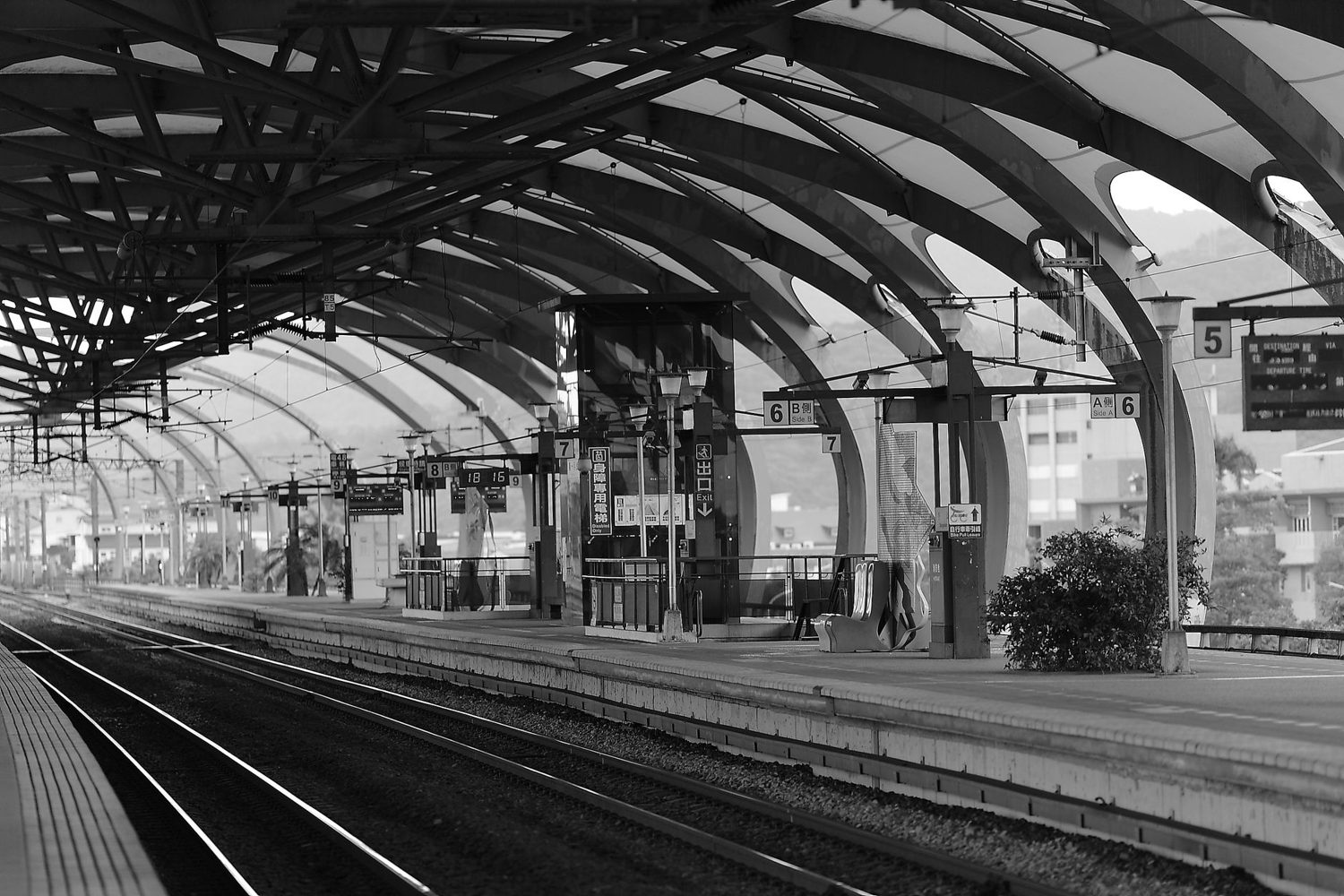
    Modern train station platform in Auckland CBD
    Britomart Transport Centre is Auckland’s CBD hub for trains, buses and Waiheke ferries.
    • Britomart: the central CBD station, integrated with bus terminals and the cruise terminal next door
    • Newmarket: change here for the Onehunga and Western lines; surrounded by Westfield Newmarket shopping
    • Parnell: 15-minute walk from Auckland Museum and Auckland Domain
    • Mt Eden: 10-minute walk to Mt Eden volcano summit
    • Kingsland: match-day train for Eden Park (rugby, cricket, occasional concerts)
    • Onehunga: for Cornwall Park / One Tree Hill volcano walk

    Auckland ferries

    Auckland ferry at the downtown harbour terminal
    Ferries to Devonport, Waiheke and Rangitoto depart from the downtown ferry terminal.

    Ferries are Auckland’s most photogenic transport mode and a destination in their own right. The downtown ferry terminal sits beside Britomart and runs services to:

    • Devonport (12 min, every 15–30 min): the most popular tourist ferry. $9 return on HOP card. Daily 6am–11:30pm.
    • Bayswater (25 min, hourly): for the North Shore marina district.
    • Half Moon Bay (45 min, every 30 min): for east Auckland and Pakuranga.
    • Birkenhead and Northcote Point (15–20 min, every 30 min): for the harbour suburbs.
    • Hobsonville Point and West Harbour (40 min): for the Hobsonville waterfront.
    • Waiheke Island (40 min, hourly): via Fullers360 (NOT included in HOP card universal fare; separate $62 return ticket).
    • Rangitoto Island (25 min, several daily): Fullers360 service to the iconic volcano cone in the Hauraki Gulf.

    Important: inner-harbour ferries (Devonport, Bayswater, Birkenhead, Half Moon Bay, Northcote Point, Hobsonville) are part of the standard HOP card fare system. Ferries to Waiheke and Rakino are separately ticketed and operate by Fullers360. Standard HOP card discounts and caps don’t apply to those services.

    Airport to CBD options

    Auckland Airport doesn’t have a direct rail link yet (planned for the 2030s). Current options:

    • AirportLink bus: AT public bus service, $18 with HOP card / $22 contactless. Every 15 mins from 5:30am to 11:00pm. Goes via Manukau and takes about 50–60 minutes to reach Britomart.
    • SkyDrive shuttle: private shuttle service, $32 single / $54 return. About 45 mins to CBD hotels.
    • Uber / taxi: $80–110 to CBD depending on traffic and time. 35–50 mins.
    • Rental car: all major rental companies at the airport. About 35 mins to CBD via the Southern and Central motorways.

    The AirportLink is the cheapest option but not the fastest. For a single traveller on a budget, it’s fine. For two travellers with luggage and a hotel commitment in the CBD, Uber/SkyDrive often work out faster and barely more expensive per person.

    Getting to Auckland’s main attractions by public transport

    • Sky Tower: walk from any CBD hotel (5–15 minutes) or take any bus to Customs Street.
    • Auckland Museum / Domain: Inner Link bus to Parnell Road and walk 10 mins, or train to Parnell Station and walk 15 mins.
    • Mt Eden volcano summit: Western Line train to Mt Eden Station, then 10-minute walk uphill.
    • One Tree Hill / Cornwall Park: Onehunga Line train to Onehunga, then 15-min walk; or bus 30 from Britomart.
    • Mission Bay beach: Tāmaki Link bus from Britomart, 25 minutes.
    • Devonport: ferry from downtown terminal, 12 minutes.
    • Waiheke Island: Fullers360 ferry from downtown terminal, 40 minutes (separate ticket, not on HOP).
    • Eden Park stadium: Western Line train to Kingsland, then 5-minute walk. Special services on match days.
    • MOTAT (Museum of Transport & Technology): Western Line train to Mt Albert Station, then 10-min walk.
    • Auckland Zoo: bus 18 from Customs Street; or 25-minute walk from Mt Albert Station.
    • Kelly Tarlton’s: Tāmaki Link bus from Britomart, alight at Orakei Drive.
    • Auckland Botanic Gardens: Southern Line train to Manurewa, then bus 365 (about 15 mins).

    AT Mobile app

    The AT Mobile app (free, iOS and Android) is genuinely useful for visitors. Features include:

    • Live arrival times for every bus stop, train station and ferry terminal
    • Trip planner — type your destination, get bus/train/ferry options with walking directions
    • Service alerts and disruption notifications
    • HOP card balance check and tap-to-top-up
    • Saved favourites for stops you use regularly
    • Plain-text journey instructions including transfer times

    Google Maps integrates AT data and works well for trip planning if you don’t want to download another app. Apple Maps in New Zealand also includes public transport directions.

    Accessibility

    • All Auckland trains are wheelchair accessible with level boarding
    • All buses are low-floor and wheelchair accessible — drivers will deploy the ramp on request
    • Ferries are wheelchair accessible at major terminals (downtown, Devonport, Half Moon Bay)
    • Major train stations (Britomart, Newmarket, Manurewa, Papakura) have lifts
    • Some smaller stations are step-only — check AT.govt.nz/accessibility for full station list
    • Total Mobility scheme provides discounted taxi vouchers for residents with mobility-affecting conditions; tourist eligibility is limited
    • Accessible toilets at all major stations and ferry terminals
    • Audio announcements on trains and ferries; visual displays show next stop on most modern buses

    Safety and etiquette

    • Auckland public transport is safe day and night, including for solo travellers
    • Avoid empty CBD trains very late at night — most riders sit near the conductor’s compartment
    • Standing for elderly passengers and pregnant women is expected courtesy
    • Talk quietly on phones — Auckland riders are generally quiet
    • Eating and drinking on trains and buses is allowed but discouraged for hot food
    • Bikes ride free on trains (off-peak only — 9am–3pm and after 7pm weekdays, all day weekends) and most ferries
    • Dogs are not permitted on buses or trains except certified service animals (and some inner-harbour ferries by exception)

    Common visitor mistakes (and how to avoid them)

    • Forgetting to tag off: automatically charged max 4-zone fare. Always tag off, even at the same stop.
    • Trying to pay cash on a bus: not accepted. Get a HOP card or use contactless before boarding.
    • Tagging on with a different payment method on transfer: breaks the 30-minute transfer rule. Use the same HOP card or contactless device for the whole journey.
    • Missing the last train: last departures from Britomart are 11:30pm–midnight depending on line. Check before late-night plans.
    • Boarding the wrong bus on the same route: some routes branch (e.g. NX1 vs NX2). Check the screen on the front of the bus, not just the route number.
    • Buying a HOP card at the airport with low balance: the AirportLink fare is $18 (HOP), so make sure you start with at least $20 credit if your card is brand-new.

    FAQs

    Is Auckland public transport good?

    Adequate. CBD-area services are frequent and reliable. Cross-city trips often need a transfer (bus to train or vice versa) and can take 45–60 minutes for what’s a 20-minute drive. The City Rail Link opening in late 2026 will significantly improve cross-city travel times and station coverage.

    Should I get a HOP card or use contactless?

    HOP card if you’ll be in Auckland 3+ days or use public transport more than once. The 20% discount on every fare repays the $5 card fee in 2–3 trips. Contactless if you’re in Auckland for a day or two and unlikely to ride more than 4 times. Same caps apply either way.

    Can I use my international debit/credit card?

    Yes. Visa and Mastercard contactless work; foreign-issued cards may incur a small foreign-transaction fee from your bank ($0.20–0.50 per ride). Apple Pay and Google Pay also work.

    How do I get to Waiheke Island?

    Fullers360 runs ferries from the downtown ferry terminal — about 40 minutes, $62 adult return. The HOP card 20% discount and fare caps don’t apply. Ferries run every 30–60 mins 6am–11:30pm.

    Are there day passes?

    Not formally — but the daily $20 fare cap effectively functions as a day pass. Once you tap on at $2.20 fares about 9 times, the cap kicks in and the rest of the day is free.

    Can I ride for free if I have a Senior or Total Mobility card?

    SuperGold cards are issued only to NZ residents 65+ and provide free off-peak travel (after 9am Mon–Fri, all day weekends). Tourists are not eligible for SuperGold or Total Mobility discounts.

    Where can I top up my HOP card?

    Online via AT.govt.nz (registered cards only), the AT Mobile app (NFC top-up), train station ticket machines, AT customer service centres, and many participating retailers. Look for the “AT HOP” sticker on the door at convenience stores, BP and Z service stations.

    Do trains and buses run on Christmas Day?

    Most services don’t run on Christmas Day, Good Friday, or ANZAC Day morning (services resume from 1pm). Check AT.govt.nz/holidays for the full list. Saturday timetable runs on most other public holidays.

    Is there a tourist transport pass?

    Auckland doesn’t have a true tourist pass equivalent to London’s Oyster Visitor Card. The HOP card is the universal pass — buy one, top up, ride freely.

    What if I lose my HOP card?

    If your card is registered, log into AT.govt.nz, mark it lost, and the balance is transferable to a replacement card ($5 fee). If unregistered, the balance is gone — register your card on day one to avoid this.

    Is Auckland public transport clean?

    Trains and ferries — yes, generally very clean. Buses — varies by route and operator. Inner Link and central CBD buses are well-maintained. Outer-suburb services occasionally show wear.

    Public transport vs other options

    Public transport is excellent value but not the right choice for every situation. Here’s a quick guide to when to switch modes.

    • CBD-only stay: walk most places. Public transport for trips beyond walking range.
    • Going to West Coast beaches (Piha, Karekare, Bethells): rental car only — limited or no public transport.
    • Day trip to Waiheke Island: ferry to the island, then on-island bus, taxi or e-bike.
    • Family of 4 with luggage: Uber or shuttle is often cheaper and faster than 4 separate transport fares.
    • Late-night trips (after 11pm): Uber. Last buses and trains have left for the night.
    • Multi-stop suburban day: rental car or Uber adds up; HOP card capped at $20/day.
    • Travelling with mobility impairment: Total Mobility taxis where available; otherwise accessible buses and trains both work.

    Tips for stress-free Auckland public transport

    • Buy your HOP card on day one and load $40–60 to start. You’ll cover most short trips without topping up again.
    • Download the AT Mobile app before your first ride. The trip planner is reliable and live.
    • Use the Inner Link bus to get to Auckland Museum, Parnell, Newmarket and Karangahape Road from the CBD without thinking.
    • For Waiheke ferry, walk to the downtown ferry terminal and buy your ticket directly from Fullers360 — don’t try to use HOP for these services.
    • Avoid morning peak (7:30–9am) on the Western Line if you can — services are frequent but very crowded.
    • Keep your HOP card in an easy-to-reach pocket. Tagging on/off is a one-second action and the readers don’t always make a clear noise.
    • Set a low-balance reminder ($10) in the app so you don’t run out unexpectedly during a journey.
    • If you’re travelling further than one zone often (e.g. North Shore to CBD), consider whether the weekly $50 cap will hit before your trip ends — for 5+ day stays it usually does.

    Auckland transport in 2026 and beyond

    Auckland’s transport network is in the middle of its biggest transformation in 50 years. The City Rail Link tunnel and two new underground stations (Aotea and Karangahape) open in late 2026, doubling rail capacity through the CBD and creating direct rail access to K Road and Queen Street neighbourhoods for the first time. Mid-2027 sees the start of construction on the Northwest Rapid Transit busway extension, and AT plans to roll out battery-electric buses across the entire fleet by 2030. The contactless payments system launched in November 2024 will likely be expanded to include EFTPOS and bank-account-linked options in late 2026.

    For visitors, this means continued service improvements but also intermittent disruption. If you’re visiting late 2026 or early 2027, check the AT.govt.nz disruption page on arrival to spot any service replacements or closures that might affect your itinerary. Where buses replace trains during planned closures, the HOP card fare and capping rules still apply.

    The bottom line

    Auckland’s public transport network — HOP card in hand, Inner Link bus on tap, Britomart trains for cross-city trips, ferries for harbour adventures — is by far the best-value way to explore the city. Spend the first ten minutes setting up a HOP card and downloading the AT Mobile app, and the rest of your trip becomes much easier and substantially cheaper than relying on Uber.

    Plan the rest of your trip with our complete getting around Auckland guide, our Auckland airport to CBD options, and our deeper Auckland CBD guide for what to do once you’ve arrived.

  • Auckland Airport to CBD: All Transfer Options (2026 Guide)

    Auckland Airport to CBD: All Transfer Options (2026 Guide)

    Auckland Airport (AKL) sits roughly 20 km south of the CBD in the Māngere suburb, and the drive in normally takes 30-45 minutes outside of peak traffic. There are six practical ways to get between the airport and downtown Auckland: the SkyDrive express bus, the AirportLink bus-to-train combo, a ride-share or taxi, a private shuttle, a hire car, or a pre-booked hotel transfer. Each is very different in cost (NZ$7.80 to NZ$180+), time (30 min to 90+ min), and comfort. This is our working, updated 2026 guide to the Auckland Airport to CBD transfer, with live fares, timetables, pick-up points, and the specific advice most guides miss.

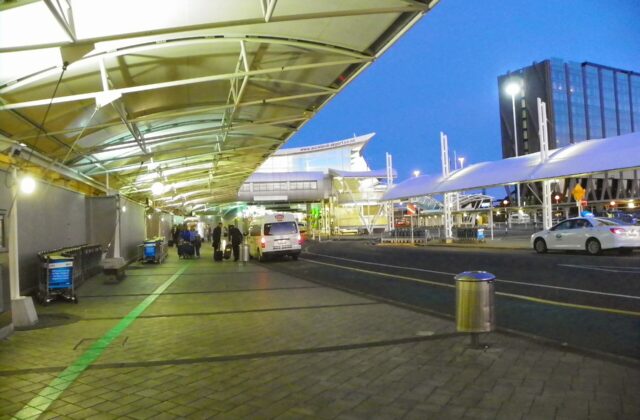
    Airport terminal with travelers and luggage similar to Auckland Airport
    Auckland Airport (AKL) is 20 km south of the CBD and is served by six main transfer options.

    Auckland Airport to CBD: Quick Comparison Table

    OptionCost (NZD)TimeFrequencyBest For
    SkyDrive Express Bus$20 one-way / $35 return50-65 minEvery 30 min, 5 am-10:30 pmSolo / couples on a budget
    AirportLink + Train$7.80 with AT HOP card65-85 minEvery 10-15 min, 4 am-1 amCheapest; light luggage
    Uber / Ride-share$55-95 (surge up to $120)30-45 minOn demand, 24/72-4 people with luggage
    Metered taxi$75-9530-45 min24/7 at arrivalsLate arrivals / no app
    Super Shuttle / Green Cabs$38 first pax, $9 each add’l45-75 minOn demandLarge groups / door-to-door
    Rental car$45-120/day plus fuel & parking30-45 min drive24/7Onward roadtrips
    Private transfer (luxury)$150-25030-40 minBy bookingBusiness / VIP / hotels

    Bottom line: SkyDrive is the best single-option default for most tourists — fixed fare, direct to SkyCity in the CBD, luggage-friendly, and cheaper than a taxi. AirportLink + train is cheapest if you can manage the short walk and one transfer. Uber/taxi is fastest for 2+ adults with bags, and the per-person cost is competitive once split. We break down each below.

    Auckland Airport Layout (International vs Domestic)

    Auckland Airport has two passenger terminals around 500 metres apart: the International Terminal (long-haul flights) and the Domestic Terminal (Air New Zealand, Jetstar, and other internal carriers). A free inter-terminal shuttle bus runs every 15 minutes from 5:30 am to 10 pm; outside those hours a clearly-marked walking path (10-12 minutes) connects the two with green footprints painted on the ground. A new combined terminal is being built to merge them, with initial stages opening from late 2026 onwards, but for all of 2026 the current two-terminal layout is what travellers will encounter.

    All ride-share, taxi, SkyDrive, and AirportLink pickups happen at the Transport Hub — a purpose-built covered loading zone adjacent to both terminals. Rental car branches are on the lower ground floor of the International Terminal and at a dedicated lot near the Domestic Terminal. Free Wi-Fi is available throughout both terminals, and there’s a 24-hour currency exchange counter in International arrivals.

    Option 1: SkyDrive Express Bus (Best All-Round Value)

    Modern city bus similar to the SkyDrive Auckland Airport express
    SkyDrive runs every 30 minutes between AKL and SkyCity for a flat $20 one-way fare.

    SkyDrive is the privately-operated express bus between Auckland Airport and SkyCity in the CBD. It replaced the older SkyBus service in mid-2023 and is now the default airport bus for most tourists. Buses run every 30 minutes from 5 am to 10:30 pm, seven days a week, with additional night services on weekends.

    • Fare: NZ$20 one-way adult, NZ$35 return, NZ$10 one-way child (5-15), under 5 free.
    • Route: Direct from both International and Domestic terminals (Transport Hub bay 3) to SkyCity Terminal on Hobson Street in the CBD. No intermediate stops.
    • Time: 50-65 minutes — faster than the train route, slightly slower than a direct Uber because the bus uses bus lanes and makes a single stop at SkyCity.
    • Luggage: Under-bus hold with no limit on bag count. Drivers handle loading. Bikes and surfboards are accepted as space permits.
    • Wi-Fi and power: Free onboard Wi-Fi and USB charging at every seat.
    • Booking: Walk-up tickets at the Transport Hub kiosk, on the bus (contactless card), or pre-booked online at skydrive.co.nz (small discount for pre-paid).
    • Accessibility: All SkyDrive buses are wheelchair accessible with low-floor loading.

    From SkyCity Terminal the major CBD hotels are all a 5-15 minute walk or a NZ$10-15 short taxi ride. Hotels within a walking radius of SkyCity include Cordis, Pullman, SO/ Auckland, Hotel Britomart, Sofitel Viaduct, Park Hyatt, The Grand by SkyCity, and SkyCity itself. For hotels in Ponsonby, Parnell, Newmarket, or Mission Bay, take a quick Uber from SkyCity — the marginal cost on top of the bus fare is NZ$15-25.

    Option 2: AirportLink Bus + Train (Cheapest Transfer)

    Commuter train at a station platform similar to Auckland's Puhinui Station
    AirportLink connects to the Southern Line train at Puhinui Station for a NZ$7.80 fare to the CBD.

    The AirportLink bus is a dedicated shuttle between Auckland Airport and Puhinui Station (5 km / 10 minutes). At Puhinui you transfer to the Southern Line train into Britomart Station at the north end of the CBD. The combined fare is NZ$7.80 one-way when paid with an AT HOP card — by a large margin the cheapest airport transfer in Auckland.

    • Fare: NZ$7.80 one-way with AT HOP card (NZ$5 card purchase + load); NZ$11 with contactless card / cash. Children 5-15 at child concession rate; under 5 free.
    • Route: Airport → Puhinui Station (AirportLink bus, 10-12 min) → Britomart Station (train, 35-45 min). One transfer.
    • Time: 65-85 minutes total door-to-door including transfer wait.
    • Frequency: AirportLink bus every 10 minutes, 4 am to 1 am. Southern Line trains every 10-20 min depending on time of day.
    • Where to catch: AirportLink loads at the Transport Hub bay 2, directly opposite SkyDrive’s bay 3.
    • AT HOP card: Buy at the AT customer service kiosk at the Transport Hub (open 6 am-10 pm) or at the AT Customer Centre at Britomart. Tag on and tag off at all buses and trains.
    • Luggage: Full-size luggage is allowed but there are no dedicated luggage racks on the train. For more than one check-in bag per traveller, SkyDrive or a ride-share is easier.
    • Accessibility: All trains and AirportLink buses are wheelchair accessible. Lift access at Britomart.

    This option became much more attractive after the City Rail Link (CRL) opens in late 2026 — the new Te Waihorotiu Station in the heart of the CBD will be the first stop after Britomart, cutting walking distance to most CBD hotels in half. For travellers arriving before the CRL opens, Britomart Station is still only a 5-10 minute walk from Hotel Britomart, the Ferry Building, Soul Bar, and most Britomart/Viaduct hotels; an Uber from Britomart to anywhere else in the CBD is NZ$10-15.

    Option 3: Uber, Taxi & Ride-Share

    Taxi rank at airport arrivals similar to Auckland Airport Transport Hub
    Uber and metered taxis queue at the Transport Hub next to the arrivals doors.

    Uber, Zoomy, and Ola are the three main ride-share apps operating at Auckland Airport. All three use dedicated pickup zones at the Transport Hub — the driver app will guide the pickup. The fare from AKL to the CBD ranges NZ$55-95 depending on surge pricing, with a modest NZ$5 airport fee tacked on. At peak times (7-9 am and 4-7 pm on weekdays, Sunday evenings during cruise season) surge can push fares to NZ$100-130.

    • Uber: NZ$55-95 typical. UberX, Uber Comfort, Uber XL (6-seater), and Uber Pet available. UberX is the default for two passengers with one or two bags each.
    • Zoomy: Local competitor, fares NZ$50-90. Often a few dollars cheaper than Uber in off-peak hours.
    • Ola: Less inventory in NZ; fares broadly similar to Uber.
    • Metered taxi: Auckland Co-op Taxis, Corporate Cabs, Alert Taxis, and Green Cabs hold the rank outside arrivals. Fares run NZ$75-95 to the CBD, with a $4 airport surcharge. Taxis accept credit cards and charge a ~3% surcharge for non-cash payment.
    • Time: 30-45 minutes via the SH20 motorway and Waterview Tunnel, longer at peak. Many drivers will route via SH1 at peak times to avoid the motorway merge.

    For groups of 2-4 people with luggage, a single Uber or taxi is often the best value — two SkyDrive fares are NZ$40, a single Uber is frequently NZ$60 and door-to-door to any hotel in the CBD or inner suburbs. The app-based fare visibility also removes the taxi-driver-takes-a-scenic-route risk that used to be a minor Auckland problem before ride-share arrived.

    Option 4: Super Shuttle & Private Shuttles

    Super Shuttle runs a shared door-to-door shuttle service from the airport to any Auckland address. The first passenger pays NZ$38, each additional passenger in your party pays NZ$9, and the driver will drop you at your hotel after potentially picking up or dropping off other travellers. For groups of 3-5 with moderate luggage this is often the cheapest door-to-door option available.

    • Cost: NZ$38 first passenger, NZ$9 each additional to the same address. For 4 people = NZ$65 total.
    • Time: 45-75 minutes — it varies depending on how many stops the shuttle makes before yours. Expect to be the first or last drop depending on luck.
    • Booking: Online at supershuttle.co.nz, or by phone after you land. Walk-up often available but pre-booking guarantees a seat.
    • Luggage: Generous under-bus space. Good for families with multiple bags.
    • Accessibility: Accessible vehicles by request when booking.

    Green Cabs, JetBus, and a handful of smaller operators also run shared shuttles at similar price points. All of them load at the Transport Hub next to SkyDrive and AirportLink.

    Option 5: Rental Car

    Motorway highway driving toward a city similar to SH20 into Auckland
    SH20 and the Waterview Tunnel connect AKL to the CBD via SH16 or SH1 in 25-30 minutes without traffic.

    A rental car makes sense if you’re leaving Auckland for a road trip — the Bay of Islands, Rotorua, the Coromandel — but it is a poor choice for travellers staying in the CBD. The reasons are simple: the CBD has world-class public transport, all the attractions are walkable, and CBD hotel parking costs NZ$45-70 per night. If you must rent a car for the city, rent it for the day of departure only.

    • Major brands at AKL: Avis, Budget, Hertz, Europcar, Thrifty, Jucy, Apex, Enterprise, Ezy, and GO Rentals. All have counters in the International Terminal rental car lobby and separate collection points at the adjacent rental lot.
    • Typical daily rate: NZ$45-90 for compact and mid-size cars; NZ$80-150 for SUVs and 7-seaters; NZ$120+ for campervans. Add insurance excess reductions and fuel.
    • Drive to CBD: 25-30 min via SH20 north, through the Waterview Tunnel, onto SH16 and off at the Fanshawe/Customs exits. Clear signage the entire way.
    • Parking in CBD: Most hotels NZ$45-70 per night. Wilson Parking and Tournament Parking offer public garages at NZ$25-35 per day.
    • Driving rules: Drive on the LEFT. International licence translations are required if your licence isn’t in English. Blood alcohol limit 0.05% (0.00% for under-20s). Speed limit 100 km/h motorways, 50 km/h urban, often 30-40 km/h in the CBD.

    If you’re heading straight out of Auckland — for example, flying in and driving north to Bay of Islands the same day — pick up the car at the airport and skip the CBD leg entirely. For travellers spending 2-3 days in the city first, rent the car on the day you leave (most agencies deliver to central hotels for a small fee, or you can grab an Uber back to the airport and pick up there).

    Option 6: Private Transfer & Hotel Limo

    Private chauffeur transfers run NZ$150-250 for a CBD drop, typically in a BMW 5-Series, Mercedes E-Class, or a Tesla Model Y. Operators include Blacklane, Auckland Luxury Tours, Executive Car Services, and Transfer Auckland. Bookings are made online in advance; the driver meets you in arrivals holding a name placard. Most high-end CBD hotels (Park Hyatt, Cordis, InterContinental, Sofitel, Hotel Britomart) can arrange a limousine transfer for their guests at similar rates — this is the easiest option if you want to skip the logistics entirely.

    Private transfers are worth the money for late-night arrivals with significant luggage, cruise passengers arriving with check-in bags plus cabin luggage, and business travellers on a schedule. Outside of those specific cases the marginal comfort over a regular Uber is probably not worth the NZ$100 premium.

    Airport-to-CBD Time Estimates (Peak vs Off-Peak)

    Time of DayUber/TaxiSkyDriveAirportLink+Train
    Weekday peak (7-9 am, 4-7 pm)45-75 min55-80 min70-95 min
    Weekday off-peak30-40 min50-60 min65-80 min
    Weekends30-45 min50-65 min65-85 min
    Late night (10 pm+)25-35 minSkyDrive ends 10:30 pmTrains to 1 am
    Early morning (before 5 am)25-35 minFrom 5 amFrom 4 am

    Night Arrivals & Early Flights: What’s Open

    Late arrivals are common in Auckland because many long-haul flights from the US and Asia land between 4 am and 7 am or between 10 pm and midnight. Here’s what runs late and early:

    • Uber / Zoomy / Taxi: 24/7, always the easiest late-night option.
    • AirportLink bus: 4 am to 1 am — handles all but the deepest overnight windows.
    • Southern Line trains: First Britomart-bound train from Puhinui is approximately 4:30 am weekdays, 5:30 am weekends. Last train approximately 11:45 pm Sun-Thu, 1:30 am Fri-Sat (via the Papakura service with timed connections).
    • SkyDrive: 5 am to 10:30 pm, with some weekend late services. Not an option for overnight arrivals.
    • Super Shuttle / private transfers: 24/7 on booking.
    • International Terminal: Fully open 24/7; check-in counters typically open 3 hours before departure. A handful of cafés, bars, and the convenience store run until midnight and reopen at 4 am.
    • Domestic Terminal: Closed to non-passengers from roughly 11 pm to 4:30 am; limited retail after 9 pm.

    If your flight lands between 1 am and 4 am — which is uncommon but possible on some US West Coast arrivals — Uber is your only practical option. Most drivers will accept the trip; surge pricing is typically mild at that hour because Auckland has low overnight demand.

    CBD to Auckland Airport (Reverse Journey)

    Going back to the airport is almost identical to the inbound journey with one important twist: allow extra time for peak traffic. The southbound motorway (SH1 south and SH20 east) is often slow between 3 pm and 7 pm on weekdays, and Sunday afternoons during summer can be unexpectedly heavy with holiday traffic.

    • SkyDrive: Departs SkyCity Terminal every 30 minutes, 4:30 am to 10 pm. Book online or pay at the kiosk. Aim for a bus 3-3.5 hours before an international flight departure.
    • AirportLink + train: From Britomart, Southern Line to Puhinui (every 10-20 min), then AirportLink to AKL. Total 55-80 min. Board the train at least 3.5 hours before an international flight.
    • Uber / taxi: NZ$55-95 to AKL. Pre-book for 6-8 am departures (common US/Asia flight window) or request the Uber as you leave the hotel to avoid a wait.
    • Hotel concierge: Most CBD hotels will pre-book a taxi for a specific pickup time — always the easiest option for early-morning flights.

    The general rule of thumb: for international flights, be at the airport 3 hours before departure (check-in usually opens 3 hours out). For domestic, 1.5 hours. Add an extra 30 minutes of travel buffer during weekday peak or Sunday evenings.

    Auckland Airport Services & Amenities

    • Left luggage: Located in both International and Domestic. NZ$12-25 per item per day depending on size. Open 5 am to 10 pm.
    • SIM cards: Spark, One NZ, and 2degrees kiosks in International arrivals; $35-60 for a tourist SIM with generous data.
    • Currency exchange: Travelex 24/7 in International arrivals. Bankrate is mediocre — use an ATM or a travel card if you can.
    • ATMs: ANZ, ASB, BNZ, and Westpac machines at both terminals. Most accept international cards with a NZ$3-5 surcharge.
    • Food: Best Ugly Bagels, Wendy’s, Café Sierra, Urban Project, and Jacks Point operate landside; there’s also the usual airside food court. Landside dining is limited after 10 pm.
    • Wi-Fi: Free unlimited Wi-Fi airport-wide.
    • Shower: Available in the International departures area for an hourly fee (around NZ$15).
    • Sleep pods: Minute Suites-style sleep pods are planned for 2026 in the new integrated terminal; not yet available in 2026.
    • Lounges: Emirates, Air New Zealand, Qantas, Strata (Priority Pass), and Plaza Premium all operate airside in International departures.

    Cruise Passengers & Ferry Terminal Transfers

    Auckland’s Princes Wharf Cruise Terminal is at the heart of the CBD waterfront, a 10-minute walk from SkyCity and Britomart. If you’re flying in and boarding a cruise, SkyDrive drops right at SkyCity (then walk 10 minutes or grab a NZ$10 Uber to Princes Wharf). If you’re disembarking and flying out the same day, private transfer companies specifically cater to cruise passengers with guaranteed pickup from the terminal at around NZ$120-180 for a direct AKL drop including luggage handling. Some cruise lines include coach transfers to the airport as an add-on.

    Accessibility at Auckland Airport

    • All terminals are step-free with full lift and ramp access.
    • SkyDrive, AirportLink, and all Southern Line trains are wheelchair accessible.
    • Total Mobility scheme discount taxis are available — prearrange with Auckland Co-op Taxis or Corporate Cabs.
    • Accessible toilets and Changing Places facilities on every level.
    • Visual and hearing-impaired services include induction loops at check-in and service counters; service animals welcome.
    • Airport-wide assistance is available via the Ambulatory Assistance desk at each terminal entrance — book 48 hours ahead through your airline for guaranteed meet-and-greet at the aircraft door.

    Traveller Recommendations by Group Type

    Traveller TypeBest OptionWhy
    Solo budget travellerAirportLink + train$7.80 fare unbeatable
    Solo / couple, light bagsSkyDrive$20-40 with zero transfers
    Couple with 2+ check-in bagsUberSingle trip door-to-door
    Family (3-5) with bagsSuper ShuttleCheapest door-to-door group option
    Business travellerUber / private transferTime certainty
    Cruise passengerPrivate transfer or SkyDrive + walkLuggage handling
    Road-tripping onwardRental car from AKLSkip CBD entirely
    Late-night arrivalUber or 24/7 private transferOnly 24/7 options

    Tips for a Smooth Auckland Airport Transfer

    1. Buy an AT HOP card if staying a week-plus — it saves 25-30% off all bus, train, and ferry fares, not just the airport transfer.
    2. Pre-download Uber, Zoomy and the AT Metro app before you arrive — trying to set these up on hotel Wi-Fi is an avoidable headache.
    3. SkyDrive is now at SkyCity only — the old Britomart stop was discontinued. If your hotel is in Britomart/Viaduct, AirportLink+train gets you closer.
    4. Check the Waterview Tunnel status — rare closures are announced on nzta.govt.nz and can add 20-30 min.
    5. Avoid rental cars in the CBD — parking is expensive and traffic is slow. Rent on the day you leave.
    6. Book airport arrival Uber in advance for 6-7 am weekday departures — surge is usually moderate but not guaranteed.
    7. Don’t tip drivers — New Zealand doesn’t have a tipping culture.
    8. Biosecurity is strict — don’t carry food, plant material, wood products, or dirty hiking boots without declaring them.

    Frequently Asked Questions

    What is the cheapest way from Auckland Airport to the CBD?

    AirportLink bus + Southern Line train with an AT HOP card — NZ$7.80 one-way. It takes 65-85 minutes door-to-door to Britomart Station and runs 4 am to 1 am.

    How long does it take from Auckland Airport to the city centre?

    30-45 minutes by Uber or taxi in normal traffic, 50-65 minutes by SkyDrive express bus, or 65-85 minutes via AirportLink bus + Southern Line train. Add 20-30 minutes during weekday peak hours (7-9 am and 4-7 pm).

    Is there a train from Auckland Airport to the CBD?

    There is no direct train. The AirportLink bus runs from the airport to Puhinui Station (5 km, 10 min), where you transfer to the Southern Line train to Britomart. Combined fare NZ$7.80 with AT HOP. A direct rail link to the airport is planned but not expected before the 2030s.

    Does Uber work at Auckland Airport?

    Yes, Uber operates 24/7 at AKL. The pickup zone is at the Transport Hub adjacent to both terminals. Expected fare to the CBD is NZ$55-95 depending on surge. Zoomy and Ola also operate from the same pickup area.

    How much is a taxi from Auckland Airport to the city?

    A metered taxi from AKL to the CBD is typically NZ$75-95 plus a NZ$4 airport surcharge. All major CBD hotels are covered at that price range. Fares are slightly higher overnight (10 pm-5 am) and during public holidays.

    Do I need to tip taxi or Uber drivers in Auckland?

    No — tipping is not expected in New Zealand. Rounding the fare up to the nearest dollar for excellent service is appreciated but optional.

    Is SkyDrive better than Uber?

    For solo travellers and couples, SkyDrive (NZ$20 one-way) is usually cheaper than Uber (NZ$55-95). For 2+ adults with luggage, Uber is often cheaper per person once split, and always faster door-to-door. Pick SkyDrive for predictability, Uber for speed.

    Can I use AT HOP card for the airport transfer?

    Yes — AT HOP card works on the AirportLink bus and Southern Line train for a combined NZ$7.80 fare. SkyDrive does NOT accept AT HOP (it’s a private operator; use cash, card, or pre-booked ticket). Ride-share apps and taxis don’t use HOP.

    Are there luggage limits on Auckland’s public transport?

    Buses and trains have no hard luggage limit but have no dedicated luggage racks. One piece of check-in baggage plus carry-on per person is manageable. Two-plus check-in bags per person — take SkyDrive (under-bus hold) or a ride-share.

    Is Auckland Airport open 24 hours?

    The International Terminal is open 24/7. The Domestic Terminal closes to non-passengers from approximately 11 pm to 4:30 am. There’s always security and some food/beverage available landside at International, and all airside is open around flight times.

    The Verdict — Best Way to Get from AKL to the CBD

    For most travellers, SkyDrive is the safe default — NZ$20, direct to SkyCity, under an hour, no app required. If you’re counting dollars or want practice with Auckland’s public transport, use the AirportLink + Southern Line combination at NZ$7.80; it’s easy, reliable, and gets you to Britomart in the heart of the CBD. If you’re two or more travellers with real luggage, an Uber at NZ$55-95 split between you is fast, door-to-door, and usually the best blend of cost and convenience. Once you land and figure out your onward plans, our getting around Auckland guide covers buses, trains, ferries, and Waiheke Island transfers; our best areas to stay guide covers which CBD precincts suit your trip; and our best time to visit Auckland guide helps plan around traffic-heavy holiday weekends.

  • Getting Around Auckland: The Complete 2026 Transport Guide

    Getting Around Auckland: The Complete 2026 Transport Guide

    Auckland is a city of 1.7 million people spread across an isthmus between two harbours, three volcanic cones inside the central suburbs, and dozens of islands out in the Hauraki Gulf. That geography makes getting around Auckland a different proposition from most cities its size — more ferries than most, a train network that is about to double its central capacity with the opening of the City Rail Link in 2026, a fast North Shore busway, and a serious congestion problem on the Harbour Bridge at peak times that no amount of planning has yet solved.

    The good news for visitors is that the inner zone of the city — the CBD, Ponsonby, Parnell, Newmarket, Mount Eden, and the inner bays — is genuinely well served by public transport, particularly once you have an AT HOP card. This is the complete 2026 guide to getting around Auckland: how to use the train, bus, and ferry network; what a rental car actually costs; when to choose an Uber versus a taxi; how the airport transfer options compare; what’s changing in 2026; and the practical tips that will save you time and money.

    Traffic crossing a harbour bridge similar to Auckland Harbour Bridge
    Auckland Harbour Bridge traffic is the city’s most famous bottleneck.

    What’s Changing in 2026: The City Rail Link and Fare Rises

    The single biggest transport change in Auckland’s modern history arrives in 2026 with the opening of the City Rail Link (CRL). The CRL is a 3.45-kilometre twin-tunnel underground rail line that runs beneath the CBD and connects Britomart station back around to Mount Eden, doubling the central city’s rail capacity and cutting travel times significantly. Two new underground stations — Te Waihorotiu (under Aotea Square, between the Civic and the Auckland Art Gallery) and Karanga-a-Hape (on Karangahape Road, with entrances on Mercury Lane and Beresford Square) — open with the line. A refurbished Maungawhau / Mount Eden station serves as the western interchange. For visitors, the result is that train travel from Britomart to K’ Road, Mount Eden, and the western suburbs becomes meaningfully faster and more frequent.

    The second change is a fare adjustment that took effect on 1 February 2026. Auckland Transport lifted bus and train fares by approximately 10–25 cents per journey and ferry fares by 40–60 cents. AT HOP card holders still pay less than cash fares, and the $50 weekly cap and $20 daily cap for bus and train travel remain in place — meaning most visitors will still find public transport good value. Auckland Transport also expanded contactless payment at bus and train gates across the network from November 2024, so Visa and Mastercard taps now work almost everywhere (at roughly the same price as AT HOP card fares).

    AT HOP Card: How to Pay for Public Transport in Auckland

    Public transport bus on an Auckland city street with passengers boarding
    Auckland’s bus network is the backbone of the city’s public transport.

    The AT HOP card is Auckland Transport’s reusable smart card and the default way to pay for buses, trains, and ferries. It costs NZ$5 to buy (non-refundable), and you top it up with credit. HOP fares are approximately 20–30% cheaper than cash fares, and the $50 weekly cap (Monday–Sunday) means that once you’ve spent NZ$50 on bus and train travel in a single calendar week, every additional bus and train journey that week is free. This makes HOP the obvious choice for anyone staying more than two or three days.

    You can buy AT HOP cards at the ticket desks in most train stations, including Britomart and Maungawhau / Mount Eden, at the Ferry Building, and at many convenience stores and 7-Eleven outlets. Top up at the same locations, at any AT HOP top-up machine, through the AT Mobile app, or automatically online.

    The alternative, for shorter visits, is contactless payment. From November 2024, Auckland Transport has rolled out contactless Visa and Mastercard taps at gates and on-board readers across buses, trains, and ferries. The fare you pay is the same as the HOP fare, and no card purchase is required — just tap your bank card or phone (Apple Pay / Google Pay) at the reader. It is the easiest option for a one- or two-day visit.

    Auckland Trains: Routes, Frequency, and the City Rail Link

    Modern train station platform similar to Britomart in downtown Auckland
    Britomart is Auckland’s central train station.

    Auckland has four electric rail lines: the Western Line (Britomart to Swanson, via Mount Eden, Kingsland, and Morningside), the Southern Line (Britomart to Papakura, via Newmarket), the Eastern Line (Britomart to Manukau, via Panmure and Sylvia Park), and the Onehunga Line. Trains run roughly every 10–15 minutes on weekdays (less often on weekends and evenings), and every line currently terminates at Britomart. Once the City Rail Link opens later in 2026, the Western and Southern lines will run as continuous services through Te Waihorotiu and Karanga-a-Hape stations, with greatly improved frequency.

    For visitors, the most useful train journeys are: Britomart to Mount Eden and Kingsland (for Eden Park and Mount Eden cafes); Britomart to Parnell (single stop, for the Domain and Auckland Museum walk); Britomart to Newmarket (one stop past Parnell, for shopping); and Britomart to Sylvia Park (for the country’s largest shopping centre). A single zone one journey on HOP is NZ$2.30; a two-zone journey (e.g. Britomart to Kingsland) is NZ$3.80.

    Auckland Ferries: The Best Way to Travel Across the Harbour

    Commuter ferry at a terminal like Auckland Downtown Ferry Terminal
    Commuter ferries serve the North Shore and Hauraki Gulf islands.

    Auckland’s ferry network is one of its great pleasures. Most services depart from the Downtown Ferry Terminal next to Britomart, in the heart of the CBD. Core commuter and visitor routes include Devonport (12 minutes; essential short trip), Bayswater, Birkenhead, Northcote Point, Half Moon Bay, Stanley Bay, Hobsonville Point, and West Harbour. Scenic and island services go to Waiheke Island (40 minutes; the country’s best wine-island day trip), Rangitoto Island (25 minutes; a short volcanic hike), Motutapu, Tiritiri Matangi (75 minutes; a predator-free bird sanctuary), and Great Barrier Island (four to five hours; a more ambitious day or overnight trip).

    A single ferry to Devonport with HOP is approximately NZ$8.80; Waiheke is around NZ$30 return on the Fullers360 service. For visitors, the Devonport return is the single best short ferry ride — 24 minutes of harbour views round-trip and an immediate change of scene at the other end. Ferries run roughly every 30 minutes through the middle of the day and more frequently at commuter peaks.

    Auckland Buses: The Frequent Network and the Link Routes

    The Auckland bus network is run by Auckland Transport and covers everywhere the train and ferry don’t. For visitors, the easiest buses to understand are the three Link routes: the City Link (a free inner-city loop between the Ferry Building and Karangahape Road), the Inner Link (a loop that connects the CBD with Ponsonby, Herne Bay, Parnell, and Newmarket), and the Outer Link (a larger loop out to Grey Lynn, Kingsland, Mount Eden, and back). The Link routes run every 7–15 minutes and are marked in distinctive colours on every stop — red for City, green for Inner, orange for Outer.

    Beyond the Link routes, the Frequent Network — a set of bus routes that run every 15 minutes or better, seven days a week — is the backbone of the city. Key Frequent Network routes include the NX1 and NX2 Northern Busway expresses (Takapuna, Albany, Silverdale), the 70 and 75 to Botany and Howick, the 27H and 27W to Three Kings, and the 18 down Great North Road. The AT Mobile app is the best way to plan a route and see real-time arrival boards.

    The Northern Busway: Auckland’s Fastest Route to the North Shore

    The Northern Busway — a dedicated bus corridor that runs parallel to the motorway from Akoranga to Albany — is the single most efficient piece of public transport in Auckland. NX1 buses run every 5–10 minutes at peak and every 10–15 off-peak, connecting the Britomart bus station to Smales Farm, Sunnynook, Constellation, and Albany. A journey from the CBD to Takapuna takes about 20 minutes regardless of traffic — a remarkable result on a route that can take an hour in a private car when the Harbour Bridge jams.

    For visitors staying in Takapuna, Albany, or anywhere north of the bridge, the NX1 should be your default for trips into the CBD. An extension of the busway to the north, the Penlink project, will open a new connection from Whangaparāoa to the motorway — expected to be fully operational during 2026 — though this is mostly relevant for those doing day trips to the Hibiscus Coast.

    Auckland Airport Transfers: How to Get to and From AKL

    Airport arrivals area like Auckland International Airport terminal
    Auckland International Airport is 21 km south of the CBD.

    Auckland International Airport (AKL) is 21 kilometres south of the CBD in Mangere. Your options for getting into the city, in rough order of cost:

    SkyDrive Bus

    The SkyDrive Airport Express is the fastest direct bus service between the international and domestic terminals and central Auckland. Journey time is typically 30–45 minutes; tickets cost around NZ$20 one-way and NZ$30 return. Buses run every 15–20 minutes from roughly 4 am to 10 pm. This is the best-value option for most visitors travelling solo or as a couple.

    Public Bus (AT Metro)

    Route 380 AirportLink connects the airport to Manukau or Papatoetoe train stations, where you can transfer to a train to Britomart. A full AT HOP journey from the airport to the CBD is around NZ$10–$12 and takes 65–90 minutes. It’s the cheapest option but only worth it if you’re travelling on a very tight budget.

    Uber and Rideshare

    Uber and the local rideshare app Ola operate at the airport. A standard Uber from AKL to the CBD typically costs NZ$50–$65, plus a NZ$5.50 airport pickup fee. UberX is the most-used option; Uber Comfort or Uber Premier are available at higher rates. Journey times are usually 30–45 minutes, longer in peak traffic.

    Taxi

    Metered taxis from the airport rank are typically NZ$75–$95 to the CBD — a bit more expensive than Uber but straightforward and reliable. Co-op and Corporate Cabs are the two biggest fleets at the airport.

    Private Transfer and Shuttle

    Several private shuttle companies run door-to-door services to hotels across Auckland. Expect NZ$30–$45 per person; they’re cheapest when the shuttle is shared with other passengers. Companies like Super Shuttle are bookable online in advance and are often the best choice for families or those with heavy luggage.

    Uber, Rideshare, and Taxis in Auckland

    Inside the city, Uber is the default rideshare option. Typical inner-city fares: NZ$12–$18 for a short CBD-to-Ponsonby ride, NZ$18–$28 for CBD to Newmarket, and NZ$22–$35 for CBD to Mount Eden or Takapuna. Surge pricing kicks in on weekend nights and during events. Ola is the main alternative and is often a few dollars cheaper. Didi, the Chinese rideshare service, also operates in Auckland. Local taxi fleets like Corporate Cabs, Co-op Taxis, and Alert Taxis provide traditional metered services and are a reliable pre-book option for early airport trips.

    Renting a Car in Auckland: When It’s Worth It

    Rental car driving on a scenic New Zealand road on an Auckland road trip
    A rental car opens up day trips from Auckland to the west coast and beyond.

    If you plan to stay in central Auckland for three or four days of sightseeing, a rental car is more trouble than it’s worth. Parking in the CBD is expensive (NZ$35–$55 for overnight valet at most hotels), the city centre is congested at peak times, and trains, ferries, and Ubers cover most tourist needs. But if you’re planning day trips — Waitakere Ranges, Piha and Muriwai beaches, Hibiscus Coast, Matakana wine country, the Coromandel — a rental car is the best way to do it, and often the only way.

    Expect to pay NZ$80–$120 per day for a compact rental from the major chains (Avis, Budget, Hertz, Europcar, Enterprise, Thrifty) in peak season, or NZ$55–$85 in shoulder months. Local operators like Go Rentals, Jucy, and Apex are typically 15–30% cheaper. All offer unlimited kilometre packages; check the insurance excess carefully — standard excess levels are NZ$3,000–$5,000 unless you buy a reduced-excess package (typically NZ$20–$35 per day extra).

    Where to Pick Up a Rental

    Most visitors pick up their rental at the airport, which has depots for all the major and local chains. City depots exist but are often harder to reach and no cheaper. If you’re only renting for a day trip, booking from the airport and then driving straight out of the city at the start of your day works well. Many Auckland visitors skip the rental entirely during their CBD days and rent only for a 1–3 day side trip.

    Driving Rules Visitors Should Know

    New Zealand drives on the left. The urban speed limit is 50 km/h unless posted otherwise; rural roads are 100 km/h; motorways vary between 80 and 110 km/h, signed clearly. You must carry your licence while driving; international visitors can use a valid overseas licence or an international driving permit for up to 12 months. Seatbelts are compulsory for all passengers, and using a phone in hand while driving is illegal and heavily fined. Drink-driving limits are strict: 0 for drivers under 20, and 250 mcg/litre breath alcohol (approximately 0.05% BAC) for everyone else. Fuel runs approximately NZ$2.70–$2.90 per litre for 91 regular in 2026.

    Tolls and Congestion

    Auckland has several toll roads. The most relevant for tourists is the Northern Gateway Toll Road (SH1 between Orewa and Puhoi, relevant if you’re driving north to Matakana or the Bay of Islands) at around NZ$3 per car. Tolls are paid online, not at booths — look up your registration at nzta.govt.nz within five days of travel. A new time-of-use congestion charge for central Auckland is also under discussion and may roll out during 2026; if you’re driving into the CBD, check the latest Auckland Council and Waka Kotahi guidance before your visit.

    Parking in Auckland

    Parking in central Auckland is almost entirely paid — either on-street via the AT Park app or via a pay-and-display meter, or in one of the many city car parks. Typical CBD meter rates are NZ$4–$6 per hour between 8 am and 6 pm, Monday to Saturday; free on Sundays and public holidays in most zones. Downtown Car Park, Civic Car Park, and SkyCity Car Park are the three biggest CBD garages, charging NZ$5–$7 per hour with an NZ$25–$40 daily cap. If you’re parking for several days, booking a space at a Park & Ride near Albany, Akoranga, or Sylvia Park and taking the bus or train in is dramatically cheaper.

    Walking and Cycling in Auckland

    Cyclist on an e-bike riding along a city waterfront path like Auckland
    Auckland’s waterfront cycleways are the easiest way into the cycling network.

    Central Auckland is very walkable once you accept the hills. From Britomart you can reach the Viaduct (5 minutes), Commercial Bay and the Ferry Building (3 minutes), Aotea Square (10 minutes), Albert Park and the Auckland Art Gallery (12 minutes), and the base of the Sky Tower (8 minutes) all on foot. The walk up Queen Street to K’ Road is 20 minutes and is one of the best gentle introductions to the city’s geography.

    Auckland’s cycling infrastructure has improved substantially. The Northwestern Cycleway connects the CBD through Point Chevalier to the West; the Tamaki Drive waterfront cycleway takes you from the CBD along the harbour to Mission Bay, St Heliers, and Saint Georges Bay; the Te Ara I Whiti / Lightpath is a stunning, pink-illuminated elevated cycleway that takes you from Upper Queen Street to Karangahape Road; and the Northcote Safe Cycle Route connects Akoranga bus station to Northcote Point. Bike shares include Beam and Lime e-scooters and e-bikes, available across the CBD — download the apps, scan the QR code, and go. Expect NZ$1 to unlock plus NZ$0.40–$0.55 per minute.

    Traditional bike hire from shops like Adventure Cycles and Bike the Bridge runs NZ$35–$55 per day for a road bike or hybrid. For e-bike rentals the rate is typically NZ$75–$95 per day. Several operators offer guided Waiheke Island bike tours that combine the ferry trip with a day of winery riding.

    Getting to the Islands: Ferry Services and Water Taxis

    The Hauraki Gulf islands are one of Auckland’s defining attractions. Your options:

    Fullers360 operates the main visitor ferry network — Waiheke (Matiatia Bay), Rangitoto, Motutapu, Tiritiri Matangi, and some private charters. SeaLink operates car and passenger ferries to Waiheke (Kennedy Point) and Great Barrier Island — the only way to take a rental car to Waiheke. 360 Discovery runs gulf cruises to Tiritiri Matangi and the Coromandel Peninsula. For bespoke transfers, Auckland Water Taxis and Explore Group offer private water taxi services to and from any harbour pick-up point.

    Book ferry tickets online in advance in peak summer, especially for weekends — Waiheke sailings can sell out on sunny Saturdays and Sundays. The SeaLink car ferry needs to be booked at least 24–48 hours ahead.

    Day Trips From Auckland: Transport Choices

    A handful of day trips shape how visitors think about transport. Here’s how to do each:

    Waiheke Island: Ferry only (no bridge exists). Fullers360 from Downtown Ferry Terminal, 40 minutes, return NZ$30 with HOP. On the island, take the 1, 50A, or 50B bus, a taxi, a rental car from Waiheke Rentals at Matiatia, or book an organised wine tour. Rangitoto Island: Ferry only, 25 minutes from downtown; pack water, sunscreen, and walking shoes for the one-hour summit hike. Waitakere Ranges, Piha, and Muriwai: Rental car is the best option; no direct public transport reaches the beaches, and the windy roads are part of the experience. Matakana and the Hibiscus Coast: One hour by car on SH1 north; no rail connection, and buses are slow. A rental is essentially mandatory. Hobbiton: Two hours south of Auckland in Matamata; book a tour bus from Auckland that includes transport (most tours depart the CBD around 7:30 am and return by 6 pm).

    Accessibility on Auckland Transport

    Auckland Transport has made significant accessibility improvements over the past decade. All current electric trains are step-free between platform and carriage; all buses on the Frequent Network are low-floor with ramps; most ferry services have step-free boarding at Downtown Ferry Terminal and major wharves. Mobility scooter users and wheelchair travellers should contact Auckland Transport directly for route advice and any needed ferry ramp support. The AT Mobile app has step-free journey planning built in. All new City Rail Link stations (Te Waihorotiu, Karanga-a-Hape, and the refurbished Mount Eden / Maungawhau) are fully accessible.

    Frequently Asked Questions About Getting Around Auckland

    How much does public transport cost in Auckland?

    With an AT HOP card or contactless payment, a zone-one bus or train journey is NZ$2.30; a two-zone journey is NZ$3.80. The $50 weekly cap and $20 daily cap for bus and train travel mean most visitors pay less than expected. Ferries are priced separately, with the Devonport return around NZ$8.80 and Waiheke around NZ$30 return.

    Should I rent a car in Auckland?

    Only if you’re doing day trips outside the inner city (Waitakere Ranges, Piha, Muriwai, Matakana, Hibiscus Coast, Coromandel) or if you’re staying in the outer suburbs. For a central-Auckland-only trip of three to five days, public transport, walking, and the occasional Uber cover everything you need at a much lower cost.

    Is Uber available in Auckland?

    Yes. Uber, Ola, and Didi all operate in Auckland. Uber is the most common. Inner-city fares run NZ$12–$18 and airport-to-CBD fares run NZ$50–$65 plus a NZ$5.50 airport pickup fee.

    What is the best way to get from Auckland Airport to the CBD?

    For solo and couple travellers, the SkyDrive Airport Express bus is the best value at around NZ$20 one-way and 30–45 minutes travel time. For groups of three or more, an Uber (around NZ$55–$70 with the airport fee) is often cheaper per person. For budget travellers with light luggage, the AirportLink bus + train combination costs around NZ$10–$12.

    Can I use a contactless card on Auckland public transport?

    Yes. From November 2024, contactless Visa and Mastercard taps (including Apple Pay and Google Pay) work across Auckland buses, trains, and ferries. The fare is the same as an AT HOP fare. No pre-purchase required — just tap your bank card or phone at the reader.

    When does the City Rail Link open?

    The City Rail Link is scheduled to open in 2026, adding two new underground stations — Te Waihorotiu (Aotea Square) and Karanga-a-Hape (Karangahape Road) — and dramatically improving rail frequency and connectivity through the CBD. Check the CRL website or Auckland Transport for the current opening timeline.

    Are Auckland trains and buses safe at night?

    Yes. Auckland’s public transport network is well-patrolled and safe. Late-night services (after around 11 pm) run at reduced frequency, so check the timetable or the AT Mobile app. Most visitors use Uber or taxi for late-night journeys because services drop off rather than for safety reasons.

    Final Practical Tips

    Five tips that will save time and money. First, download the AT Mobile app before your trip — it handles top-ups, journey planning, and live arrival boards in one place. Second, always travel with your HOP card or a contactless card; buying paper tickets works but costs more and is slower. Third, take the ferry to Devonport at least once, even if you don’t need to — it’s the best 12-minute city tour anywhere in the southern hemisphere. Fourth, avoid driving across the Harbour Bridge at peak times (7:30–9 am and 4:30–6:30 pm on weekdays); take the NX1 bus or a ferry instead. Fifth, book Waiheke ferries online in advance on summer weekends; same-day standby tickets often sell out on sunny days.

    Auckland is a car-friendly city that works best for visitors when they don’t use a car. Lean into the trains, buses, and ferries, walk the inner-city loops, and save the rental for a day trip out to the west coast beaches or up to Matakana. Get that mix right and you’ll see more of Auckland, more comfortably, than most locals manage in a month.