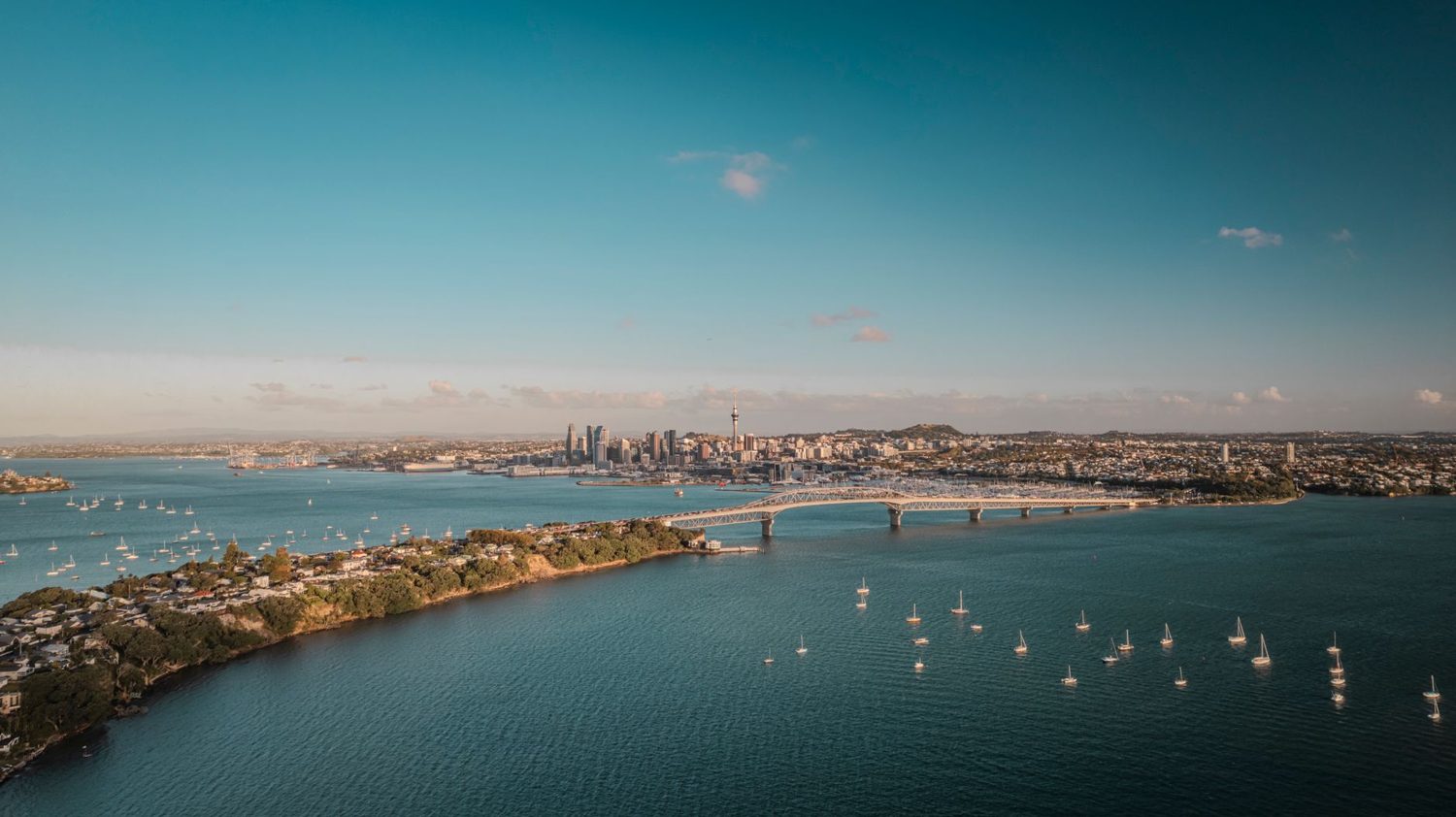
Auckland sits at 36° south in the warm-temperate subtropical band — which means the sea is swimmable for five months of the year, it rarely frosts, and the weather can pivot three times between breakfast and dinner. Picking the best time to visit Auckland comes down to what you want: bath-warm harbours, cheap hotel rates, music festivals, hiking trails that stay dry, or the kind of mild winter that still lets you sit outside at a café. This 2026 guide breaks the year down month by month — temperatures, rainfall, events, crowds, prices — and tells you straight which month is best for your trip style.

Best Time to Visit Auckland: The Quick Answer
For most travellers, the best time to visit Auckland is late February through March. The sea peaks at 21°C, rainfall drops to the year’s second-lowest, school holidays have ended, Pasifika Festival and the Auckland Arts Festival both fall in March, and hotel rates ease off the December-January peak by 20-30%. If you want beach weather with smaller crowds and softer prices, that four-to-six-week window is the sweet spot. Budget travellers should flip the calendar and come in May, June, or August, when airfares drop 30-40% and hotels run winter specials — Auckland’s winter is cold-ish and wet but never brutal, with averages around 14-15°C.
Auckland Climate at a Glance
Auckland’s climate is oceanic subtropical, moderated by harbours on both sides of the isthmus. The defining features: no extreme temperatures, year-round humidity, frequent but brief rainfall, and the famous “four seasons in one day” — you can leave Ponsonby in sun and arrive at Mission Bay in a squall twenty minutes later. The city averages 2,060 sunshine hours and 1,210 mm of rainfall annually, spread across roughly 137 rain days. Summer is warm and humid (January high 23.6°C, sea 20°C), winter is mild and wet (July high 14.4°C, sea 15.6°C).
Seasons are reversed from the Northern Hemisphere. Summer runs December-February, autumn March-May, winter June-August, spring September-November. UV is extreme — the ozone layer is thinner at these latitudes, so UV12+ readings are normal in January and sunscreen is essential year-round, even on overcast days. See our full breakdown of packing, layering and the region’s micro-climates in the Auckland events & festivals guide.
Auckland Weather by Month (2026 Data Table)
| Month | Avg High °C | Avg Low °C | Rainfall mm | Rainy Days | Sunshine hrs/day | Sea Temp °C |
|---|---|---|---|---|---|---|
| January | 23.6 | 16.6 | 75 | 8 | 7.5 | 20.0 |
| February | 24.1 | 17.0 | 65 | 7 | 7.0 | 21.0 |
| March | 22.6 | 15.5 | 85 | 8 | 6.0 | 20.5 |
| April | 19.9 | 13.1 | 100 | 11 | 5.0 | 19.4 |
| May | 17.5 | 11.3 | 115 | 12 | 4.5 | 18.0 |
| June | 15.2 | 9.2 | 125 | 15 | 3.5 | 16.6 |
| July | 14.4 | 8.2 | 145 | 16 | 4.0 | 15.6 |
| August | 14.9 | 8.8 | 120 | 15 | 4.5 | 15.1 |
| September | 16.4 | 10.2 | 105 | 13 | 5.0 | 15.1 |
| October | 17.6 | 11.7 | 100 | 12 | 5.5 | 15.6 |
| November | 19.4 | 13.2 | 85 | 10 | 6.5 | 16.8 |
| December | 21.7 | 15.3 | 95 | 9 | 6.5 | 18.5 |
Data sourced from NIWA (New Zealand’s National Institute of Water and Atmospheric Research) 30-year averages. Sea temperature becomes comfortable for swimming (≥18°C) from December through April. UV index peaks December-February at 12+ (extreme) and sits at 6-7 (high) even in June.
Auckland Month-by-Month Guide
January in Auckland — Peak Summer, Peak Prices
Kiwis call this the summer. Schools are on holiday until late January, offices are empty, and Aucklanders crowd the beaches and campgrounds. Expect warm days (23.6°C average high, 28-30°C on heat peaks), long daylight (sunrise 6am, sunset 8:45pm), and the year’s highest UV. The water is swimmable, the Hauraki Gulf is full of yachts, and the city hums with outdoor dining. Downsides: this is the most expensive month for flights and hotels (+30-50% above annual average), big attractions book out, and traffic out of the city on weekends can be grim.
Key January 2026 events: ASB Classic tennis (WTA 5-11 Jan, ATP 12-17 Jan) at the ASB Tennis Arena; Auckland Anniversary Day Regatta (26 Jan, Waitematā Harbour) — a century-old sailing spectacle that doubles as a public holiday; Splore Festival (late Jan or early Feb) — boutique music + arts on Tāpapakanga Beach. Best for: beach lovers, sailors, families with kids on summer break.
February in Auckland — The Warmest Month
February is Auckland’s warmest and driest month — 24.1°C average high, sea at 21°C, only 65 mm rainfall. It’s also the busiest month for cruise ships, as the southern summer circuit swings through. Hotel prices stay elevated until schools return mid-February, then crowds thin. This is prime Waiheke Island wine-tour season: vineyards are harvesting, cellar doors stay open late, and the ferry leaves every 30 minutes.
Key February 2026 events: Waitangi Day (6 Feb, public holiday, commemorations at Ōkahu Bay); BNZ Auckland Lantern Festival (26 Feb – 1 Mar at Manukau Sports Bowl) — thousands of Chinese lanterns for the Lunar New Year, Year of the Horse in 2026. Best for: warmest sea swimming, wine tours, couples.

March in Auckland — The Sweet-Spot Month
If you only read one paragraph of this guide, read this one. March is arguably Auckland’s best month for visitors — warm enough (22.6°C high, sea at 20.5°C), dry enough (85 mm, 8 rain days), prices easing, cruise season still running, and the city’s biggest cultural festivals clustered together. The evenings begin to cool by late March, but days remain beach-friendly.
Key March 2026 events: Auckland Arts Festival (Te Ahurei Toi o Tāmaki) 5-22 March — 18 days of international theatre, dance, music and visual art across the Aotea Centre, Q Theatre, Civic, and harbourside pop-ups; Pasifika Festival 14-15 March at Western Springs — the world’s largest Pacific cultural festival, free entry, seven island villages with food, music and dance; ASB Polyfest 18-21 March (Diversity & Pacific stages) and 30 March – 2 April (Māori stage) at Manukau Sports Bowl — the world’s largest secondary-schools Polynesian dance festival. Best for: culture vultures, festival-hoppers, first-time visitors wanting the full Auckland taster.
April in Auckland — Shoulder Season
The first true shoulder month. Temperatures drop to 19.9°C, rainfall picks up to 100 mm, and school holidays split the month in two — Easter weekend is a mini-peak, the rest of April is quieter and cheaper. Autumn foliage hits Cornwall Park and the Auckland Domain late in the month. Hiking the Coast to Coast Walkway is perfect in April: cool enough for the full 16 km, dry enough most days.
Key April 2026 events: Royal Easter Show (3-6 April weekend) at ASB Showgrounds — rides, rodeo, agricultural displays; ANZAC Day (25 April) — dawn service at the Auckland War Memorial Museum on Mt. Eden, one of Auckland’s most moving civic events. Best for: hikers, families wanting the Easter Show, travellers on a shoulder budget.

May in Auckland — The Best Value Month
May is the value traveller’s secret weapon. Temperatures still hit 17.5°C — perfectly fine for sightseeing, cafés, galleries, and vineyards — while airfares drop 15-25% and hotels run winter-early-bird rates. Crowds evaporate. The flip-side is rising rainfall (115 mm, 12 rain days) and shorter days (sunset 5:30pm by month’s end). Bring a waterproof layer and you’ll have Auckland mostly to yourself.
Key May 2026 events: Auckland Writers Festival (Waituhi o Tāmaki) 12-17 May at Aotea Centre — the southern hemisphere’s biggest literary festival, 200+ authors, nearly all events ticketed but many free. Best for: budget travellers, culture/literary fans, couples on long stays.
June in Auckland — Winter Begins, Prices Bottom Out
Winter proper. Averages drop to 15.2°C high, 9.2°C low. Rainfall picks up to 125 mm across 15 rain days, sunshine drops to 3.5 hours/day. It’s Auckland’s gloomiest month — but it’s also the cheapest. Hotels run at 40% below peak rates, airfares from Australia and the Pacific drop to sale levels, and big attractions (Auckland Zoo, Kelly Tarlton’s, Sky Tower) are quiet. Day trips become weather-dependent; book a few indoor plan-B options.
Key June 2026 events: NZ International Film Festival (Whānau Mārama) starts mid-June at the Civic and the Event Cinemas chain — 150+ international and NZ films. Best for: film buffs, budget travellers, travellers who prioritise museums and galleries over beaches.
July in Auckland — Matariki & the Coldest Month
July is Auckland’s coldest (14.4°C high, 8.2°C low) and wettest (145 mm, 16 rain days). It’s also culturally one of the richest months — Matariki, the Māori New Year public holiday (Friday 10 July 2026), triggers two weeks of hautapu ceremonies, light shows, storytelling nights, and free public events across the city. The Sky Tower and Harbour Bridge are illuminated in themed colours; Ngāti Whātua Ōrākei host a dawn hautapu at Takaparawhau (Bastion Point).
Key July 2026 events: Matariki Festival Auckland 4-19 July, citywide; Auckland Restaurant Month opening events (main festival in August); skiing/snowboarding day trips become viable to Mt Ruapehu or the family Snowplanet indoor dome. Best for: culture travellers, Matariki experience, indoor-attractions fans. See our Auckland culture, history & Māori heritage guide for Matariki customs.

August in Auckland — Restaurant Month
Still winter (14.9°C high), still wet (120 mm), but August is Auckland’s foodie month. Restaurant Month (1-31 August) runs 150+ participating restaurants offering set menus, beverage pairings, chef collabs, and one-off pop-ups. This is when you can eat at three-hat flagships (Ahi, Cassia, Masu) on a $75 prix fixe. It’s also rugby season, with All Blacks home tests at Eden Park drawing big crowds.
Key August 2026 events: Auckland Restaurant Month 1-31 August; Bledisloe Cup rugby (dates TBC) at Eden Park if scheduled at Auckland. Best for: foodies, budget travellers wanting fine dining, rugby fans.
September in Auckland — Spring Returns
Spring officially starts 1 September. Temperatures climb to 16.4°C, daylight extends to 12 hours, and rainfall eases slightly (105 mm, 13 rain days). Kōwhai and cherry trees bloom mid-month, the Auckland Botanical Gardens burst into colour, and school-holiday breaks fall in late September. Sea is still cold (15.1°C, not swimmable) but hiking and cycling are excellent — the Twin Coast cycleway, Rotoroa Island day trips, and Goat Island snorkelling (wetsuit required) all come alive.
Key September 2026 events: Auckland Heritage Festival late Sep to mid-Oct — free heritage walks, historic house openings, Māori pā site tours across the region. Best for: shoulder-season travellers, hikers, gardeners, history buffs.
October in Auckland — Shoulder Warmth
October is the northern spring equivalent — 17.6°C high, 12 rain days, and a genuine sense the city is waking up for summer. Cafés open their courtyards, Viaduct bars get their first warm nights, and vineyards across Kumeu and Matakana reopen for cellar-door tastings. Hotel rates are still well below peak (-15 to -20%). Labour Day weekend (around 27 Oct) is the first domestic-travel spike.
Key October 2026 events: Diwali Festival mid-October at Aotea Square — free, enormous, Indian community-hosted festival of lights, dance, food. Best for: shoulder-season couples, cyclists, wine tours, cultural festival hoppers.
November in Auckland — Pre-Summer Warm-Up
November is genuinely lovely — 19.4°C high, 85 mm rainfall, and the sea climbing back to 16.8°C (wetsuit swimming). It’s the last shoulder month before December’s peak: prices are normal, crowds are moderate, and the city is at its outdoor-social best. This is the best month for the Barfoot & Thompson Auckland Marathon (Sunday 1 November 2026, 35th edition) — the iconic run across the Harbour Bridge from Devonport to Victoria Park, with 5k, 11k, half and full-marathon distances.
Key November 2026 events: Auckland Marathon (1 Nov); Farmers Santa Parade (last Sunday of November, Queen Street) — an Auckland institution since 1933, free, family-focused. Best for: runners, fitness travellers, families, pre-summer couples.
December in Auckland — Summer & the Christmas Peak
Early December is arguably better than January — 21.7°C high, sea at 18.5°C, prices still manageable, and festivities ramping up. Then school breaks up around 20 December and everything changes: hotels hit peak rates, domestic flights fill, Aucklanders head to the holiday homes, and the city runs on half-staff between Christmas and New Year. New Year’s Eve brings the Sky Tower fireworks — 2025→2026 featured a major pyrotechnics and projection show; 2026→2027 is expected to do the same.
Key December 2026 events: Coca-Cola Christmas in the Park Saturday 12 December at Auckland Domain — free outdoor Christmas concert plus fireworks, 200,000+ attendees; New Year’s Eve 31 December — Sky Tower fireworks, viewable citywide, best viewing spots include Mt Eden summit, Bastion Point, and the Viaduct. Best for: festive atmosphere, firework hunters, travellers combining Auckland with a Pacific onwards trip. Book 4+ months out.
Best Time to Visit Auckland by Season
Summer in Auckland (December–February)
The headline season. Warmest weather (21-24°C), longest daylight, warmest sea (18-21°C), and the biggest calendar of beach events, sailing, festivals and al fresco dining. Also the most expensive, most crowded, and occasionally humid (January can feel tropical). Book flights and hotels at least 4 months ahead. Sunscreen is not negotiable.
Autumn in Auckland (March–May)
Many Aucklanders’ favourite season. March is still summer-feeling, April brings autumn foliage, May is cool but dry enough for sightseeing. Prices normalise in March, drop meaningfully by May. Best balance of weather, crowds, and cost for non-beach travellers. Pack layers — you’ll want both a T-shirt and a warm jacket in April/May.
Winter in Auckland (June–August)
Mildly cold and wet. Averages 14-16°C, no snow (it has never snowed at sea level in Auckland in recorded history), but plenty of rain and wind. The upside: rock-bottom prices, empty attractions, Matariki culture, Restaurant Month, and the kind of quiet city mornings regulars love. Pack waterproofs, a warm jacket, and an umbrella. Indoor-heavy itineraries work well (museums, galleries, restaurants, the Sky Tower, Weta Workshop Unleashed, thermal pools at Parakai).
Spring in Auckland (September–November)
Auckland blooms. Temperatures climb from 16°C to 19°C, the sea starts warming, daylight extends, and the city shifts outdoors again. Shoulder prices through October, normal prices in November. Great for hiking, cycling, wine tours, and pre-peak visits. Pack for variability — morning frost is gone but cold fronts can still bring wind/rain.
When to Visit Auckland by Traveller Type
| Traveller Type | Best Months | Why |
|---|---|---|
| Overall best weather | February – March | Warmest sea, lowest rainfall, long days |
| Families with kids | Mid-Jan to early Feb, or school holidays (mid-Apr, early-Jul, late-Sep) | Beach-warm water, all attractions open, holiday events |
| Couples / romance | March, October – November | Vineyards open, shoulder crowds, dining deals |
| Budget travellers | May – August | Flights and hotels 30-40% off; Restaurant Month in Aug |
| Outdoor adventure / hiking | November – April | Dry trails, long daylight (up to 14.5 hrs in Dec) |
| Beach / swimming | December – March | Sea ≥18°C; lifeguards on patrol at Piha, Muriwai, Takapuna |
| Wine / Waiheke | February – April | Harvest season; warm sunny cellar-door weather |
| Whale watching (Hauraki Gulf) | Year-round for Bryde’s whales; June – Nov for orcas/humpbacks migrating | Different species by season |
| Cultural / Māori experience | July (Matariki) | Public holiday, festival, traditional ceremonies |
| Festival hoppers | February – March | Lantern + Arts Fest + Pasifika + Polyfest stack |
| Foodies | August | Restaurant Month, 150+ venues with set menus |
| Runners | November | Auckland Marathon + cool mornings |
| Digital nomads / long-stay | April – May or September – October | Mild, cheap, not wet yet / drying out |
| Avoiding crowds | May, June, September | Lowest visitor volume |
| Sailing / regatta fans | January – March | Regatta season, consistent winds |
Cheapest Time to Visit Auckland
The cheapest months to fly to Auckland are May, June, and August — airfares from Australia, the Pacific, North America, and Europe drop 30-40% below annual averages. June is typically the absolute lowest. Avoid: 20 December – 10 January (+40-70% on flights, +50-70% on hotels) and Easter weekend (mini-spike). Hotels follow the same curve — midweek June-August nights in four-star Auckland hotels can drop as low as NZ$150-180 versus NZ$350-450 in late December.
Additional ways to save: book 90-120 days ahead for summer; use Tuesday/Wednesday flight departures (cheaper than weekend); combine Auckland with lower-demand South Island cities (Christchurch is often much cheaper in peak season than Auckland). For hotel pricing by area, see our best areas to stay in Auckland guide.
Peak Season vs Shoulder vs Low Season — What to Expect
| Period | Crowds | Flight Prices | Hotel Prices | Notes |
|---|---|---|---|---|
| 20 Dec – 10 Jan | Highest | +40% above avg | +50 to +70% | Book 6 months ahead; most Kiwis on leave |
| 11 Jan – 28 Feb | High | +20 to +30% | +20 to +40% | Warmest, driest; school returns late Jan |
| March | Medium | Average | Average | Best weather-to-crowd ratio |
| April | Medium (Easter spike) | Slight dip | Slight dip | Easter weekend a mini-peak |
| May | Low to Medium | -15 to -25% | -20% | Writers Festival bump |
| June – August | Lowest | -30 to -40% | -30 to -40% | Wet; great hotel deals; Matariki + Restaurant Month |
| September – October | Low to Medium | -15 to -25% | -15 to -20% | Spring shoulder; school holidays bump late Sep |
| November | Medium | Average | Average | Marathon + pre-Christmas |
| 1-19 December | Medium to High | Rising | Rising | Good balance before holiday surge |
Auckland 2026 Events Calendar

| Month | Event | Dates 2026 | Venue |
|---|---|---|---|
| Jan | ASB Classic Tennis (WTA/ATP) | 5-17 Jan | ASB Tennis Arena |
| Jan | Auckland Anniversary Regatta | 26 Jan | Waitematā Harbour |
| Jan/Feb | Splore Festival | Late Jan/early Feb | Tāpapakanga |
| Feb | Waitangi Day | 6 Feb | Ōkahu Bay |
| Feb/Mar | BNZ Lantern Festival | 26 Feb – 1 Mar | Manukau Sports Bowl |
| Mar | Auckland Arts Festival | 5-22 Mar | Multi-venue CBD |
| Mar | Pasifika Festival | 14-15 Mar | Western Springs Park |
| Mar | ASB Polyfest | 18-21 Mar / 30 Mar – 2 Apr | Manukau Sports Bowl / Due Drop |
| Apr | Royal Easter Show | 3-6 Apr | ASB Showgrounds |
| Apr | ANZAC Day | 25 Apr | Auckland Museum |
| May | Auckland Writers Festival | 12-17 May | Aotea Centre |
| Jun | NZ International Film Festival | Mid-Jun to early Jul | Civic & others |
| Jul | Matariki public holiday | 10 Jul | Nationwide |
| Jul | Matariki Festival Auckland | 4-19 Jul | Citywide |
| Aug | Auckland Restaurant Month | 1-31 Aug | Citywide |
| Sep/Oct | Auckland Heritage Festival | Late Sep – mid-Oct | Citywide |
| Oct | Diwali Festival | Mid-Oct | Aotea Square |
| Nov | Auckland Marathon | 1 Nov | Harbour Bridge |
| Nov | Farmers Santa Parade | Last Sun Nov | Queen St |
| Dec | Christmas in the Park | 12 Dec | Auckland Domain |
| Dec | New Year’s Eve Fireworks | 31 Dec | Sky Tower |
What to Pack for Auckland (by Season)
Summer (Dec-Feb): Lightweight layers, swimwear, sandals, UV-protective sunglasses, SPF 50+ sunscreen, sunhat, a light rain jacket (showers arrive fast), reef-safe mineral sunscreen for beaches, refillable water bottle. A warm layer for breezy harbour evenings.
Autumn (Mar-May): Layering pieces — T-shirts, long-sleeves, a warm jumper, a waterproof jacket, comfortable walking shoes, light scarf for evenings. Swimwear still useful through April for warmer days and heated pools.
Winter (Jun-Aug): Waterproof jacket (essential), umbrella, warm sweater, thermal base layer for early mornings, waterproof shoes, beanie/gloves for exposed days, layers for indoor heating which varies widely in NZ buildings. It never gets below freezing in Auckland, so you don’t need parka-grade warmth.
Spring (Sep-Nov): Same layering as autumn — weather is variable. By November you can pack swimwear, sunscreen, and light summer clothes alongside a warm jacket for evenings.
Year-round essentials: hiking shoes if you plan to walk any of the Waitākere or tūpuna maunga trails, a waterproof bag cover, NZ plug adapter (Type I, 230V), contactless bank card or AT HOP for public transport, and a sense of humour about weather surprises.
Worst Time to Visit Auckland
Honestly, no month is a total write-off — but if we had to rank:
Late June to mid-July: Wettest, coldest, shortest days. If you need sunshine and beach access, this isn’t the window. Late December to early January: Peak prices, peak crowds, peak traffic, half the CBD shut for holidays between Dec 25-Jan 5. Cyclone tail season (Jan-Mar): Ex-tropical cyclones occasionally reach the upper North Island bringing heavy rain and wind — not destructive at Auckland latitude but can disrupt ferries, outdoor events, and Waiheke trips. Track forecasts at metservice.com during a visit.
Frequently Asked Questions
What is the best month to visit Auckland?
For most travellers, late February to March — warmest sea temperatures (20-21°C), driest weather (65-85 mm rainfall), lowest-crowds-of-summer, and three major festivals (Lantern, Arts, Pasifika). Late March is the single best week.
What is the cheapest month to fly to Auckland?
May, June, and August. Airfares from Australia, North America, Asia, and Europe typically run 30-40% below annual averages. June is usually the absolute lowest.
Is Auckland worth visiting in winter?
Yes — if you’re flexible. Winter delivers Matariki festival, Restaurant Month (August), NZ International Film Festival, empty museums/galleries/Sky Tower, and the lowest prices of the year. The trade-offs are wetter weather, shorter days, and 15°C temperatures. Pack waterproofs and plan indoor-heavy days.
How many days do you need in Auckland?
Three days covers the CBD highlights (Sky Tower, Auckland Museum, Viaduct, Mt Eden). Five days lets you add Waiheke, a West Coast beach day (Piha or Muriwai), and Devonport. Seven days lets you slot in Waitākere Ranges hiking, Matakana wine country, and a Hauraki Gulf island (Rangitoto or Tiritiri Matangi).
What is the rainiest month in Auckland?
July, averaging 145 mm across 16 rain days. June and August are close behind. The good news: Auckland rain is usually showery rather than all-day — a 30-minute downpour followed by sun is the classic winter pattern.
Can you swim in Auckland in June / October / March?
March is peak swimming (sea 20.5°C). October is not swimmable without a wetsuit (15.6°C). June is definitely not swimmable (16.6°C and falling). Auckland’s swimmable window is December through April, with February-March optimal.
Is February or March better for visiting Auckland?
Both are excellent. February is warmer (24.1°C vs 22.6°C) and drier (65 mm vs 85 mm) — pick it for pure beach weather. March is cheaper, less crowded, and has all three major festivals. March wins for culture and value; February wins for sun.
What should I pack for Auckland weather?
Layering is the whole answer. Even in summer, pack a light rain jacket. In winter, bring waterproofs and an umbrella. Year-round, bring SPF 50+ sunscreen (NZ UV is extreme), comfortable walking shoes, and at least one warm layer. Auckland’s “four seasons in one day” is real.
When is whale-watching season in Auckland?
Bryde’s whales live in the Hauraki Gulf year-round. Orcas appear in summer (Dec-Mar) hunting stingrays in the shallows. Humpback whales migrate through the outer gulf June-November. For reliable sightings, book a Hauraki Gulf marine tour in February or March.
Is Auckland crowded at Christmas / New Year?
The CBD is actually quiet between Dec 25 and Jan 2 — most Aucklanders head to beaches and holiday homes elsewhere. But beach suburbs, Waiheke, and the Coromandel peninsula (a few hours east) are packed. Expect sparse cafés in the city, full beaches on the coast. New Year’s Eve in the Viaduct and around the Sky Tower is crowded but festive.
The Final Verdict — Our Pick for Best Time to Visit Auckland
If we had to book one week blind, it would be the third week of March: sea still at 20°C, daytime highs 22°C, Pasifika Festival on the 14-15th, Auckland Arts Festival closing out on the 22nd, hotel rates 25% below January peak, and long enough daylight for beach mornings and late dinners. Book flights and accommodation 90-120 days out, fly into Auckland Airport on a Tuesday, stay in Britomart or Viaduct for walkability, and fill your calendar with one festival, one beach day, one vineyard trip, and one CBD dining crawl. That’s the Auckland sweet spot.