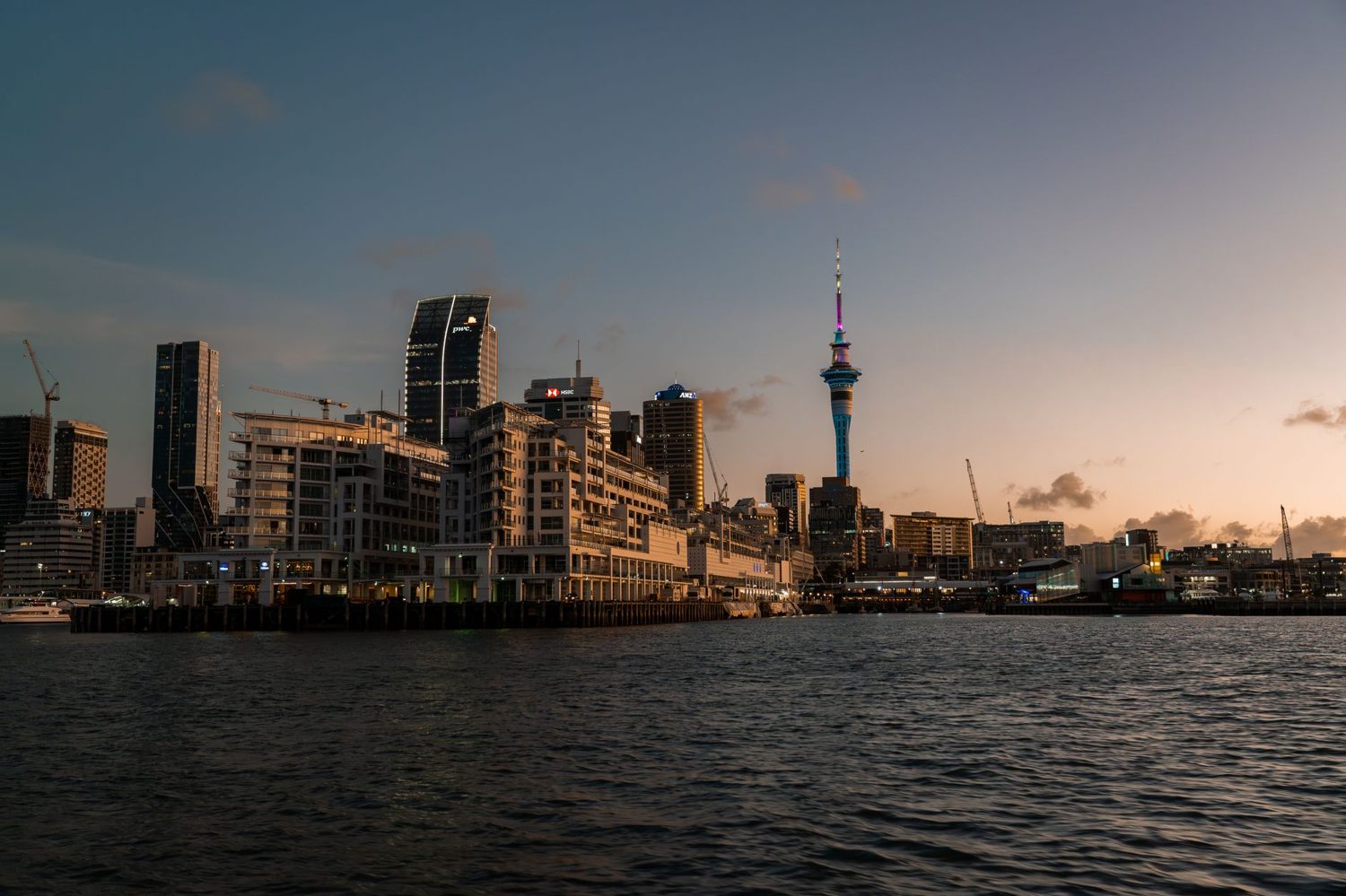
Auckland’s Central Business District is the compact, walkable core where most international visitors start their New Zealand trip — and where many of them spend their whole Auckland stay. It stretches from the ferry terminals on Quay Street up the Queen Street valley to Karangahape Road, and takes in about a dozen distinct precincts along the way: Britomart, Viaduct Harbour, Wynyard Quarter, Commercial Bay, Downtown, Queen Street, High Street/Fort Lane, Aotea, Federal Street, Victoria Park, and K Road. This guide walks through every CBD precinct, what to do in each, how to get around, where to stay, and the local tips that turn a standard 48-hour CBD visit into a trip you remember.
Auckland is unlike any other CBD in Australasia in that it is hemmed in by water on three sides — the Waitematā Harbour to the north, the Viaduct to the north-west, and Freemans Bay to the west — so almost every precinct feels the ocean. Anywhere you stand in the CBD you are less than ten minutes’ walk from a ferry terminal, a marina, a beach or a harbour-side park. This is the single most useful thing to know about Auckland: treat the city like a harbour town rather than a generic downtown and you will plan a better trip.

Auckland CBD at a glance
The CBD covers roughly 4.3 square kilometres but feels smaller because the main visitor spine — the waterfront to Aotea Square — is about 1.2 kilometres end to end and almost entirely flat along Quay Street. Beyond that spine the CBD climbs two ridges: Queen Street is the valley, Symonds Street to the east sits on a low ridge with the University of Auckland, and Hobson/Nelson Street runs the western ridge. The Sky Tower is the orientation landmark — if you can see it, you can find your way back.
Auckland’s CBD is the densest residential area in New Zealand, home to roughly 50,000 people, which gives it a very different feel from the daytime-only downtowns of many other cities. Restaurants, bars and shops are open late, and there’s a genuine seven-day rhythm across Britomart, the Viaduct and Wynyard Quarter. That said, the edges of the CBD — particularly sections of upper Queen Street and parts of Karangahape Road — are quieter and less polished than the waterfront core.
How to get to and around the CBD
From Auckland Airport, the cheapest options are the SkyDrive coach (NZ$20 adult, runs every 15 minutes, about 50 minutes to Waitematā/Britomart Station) or AirportLink bus + train (NZ$7.80 with an AT HOP card, roughly 70 minutes). An Uber or taxi costs NZ$55–95 depending on traffic and takes about 40 minutes in free-flowing conditions. If you’re arriving by cruise ship, you dock right at Queens Wharf — you’re already in the CBD the moment you step off the gangway.
Once you’re downtown the CBD is genuinely walkable, and the free City Link bus (Route 202, red buses) loops every seven to ten minutes between Wynyard Quarter, the waterfront, Queen Street and Karangahape Road from about 6am to 11pm. The CityLink is free inside the CBD zone and is the single best tool for visitors who want to save their legs. An AT HOP card (NZ$5 deposit) gives you cheaper fares on every train, bus and ferry across Auckland and is essential if you’re planning to go beyond the CBD.
Auckland’s long-awaited City Rail Link is scheduled to open in late 2026, adding two new underground stations inside the CBD — Te Waihorotiu (under Wellesley Street) and Karangahape — and turning Britomart into a through-station renamed Waitematā. Trains will run every few minutes between the CBD and the suburbs. Visitors arriving after the opening will find public transport dramatically faster than anything described in older guidebooks.
Britomart: the polished heritage precinct

Britomart is the 18-square-block district bounded by the waterfront, Queen Street, Customs Street and Britomart Place. Two decades ago it was a tired warehouse quarter; today it’s Auckland’s most polished mixed-use precinct, where heritage red-brick warehouses share streets with sleek new towers, and cobblestone laneways host a rotating line-up of New Zealand and international designers. It’s the easiest place in the CBD to wander aimlessly and stumble into a perfect lunch.
Waitematā Station (the underground rail hub formerly called Britomart) sits at the southern edge in the beautifully restored Chief Post Office building. Above ground, Takutai Square is a lawn where workers sprawl at lunchtime and concerts play in summer. The restaurant line-up is strong across price points: Amano for Italian, Ortolana for garden-to-plate brunch, Kingi for seafood in the Hotel Britomart, and Cafe Hanoi for Vietnamese in an old warehouse. For a Kiwi-only souvenir, check Karen Walker, Deadly Ponies and Kate Sylvester, all clustered in the precinct.
Viaduct Harbour: superyachts, seafood and sunset bars

Walk west along Quay Street from Britomart, cross the Te Wero pedestrian bridge, and you’re in the Viaduct — a horseshoe-shaped marina that was the America’s Cup village in 2000 and still feels like Auckland’s celebration zone. It’s ringed with waterfront restaurants (Soul Bar is the see-and-be-seen classic, Harbourside serves seafood on a heritage first floor) and buzzier bars pitched at after-work crowds. A walk around the boardwalk after sunset, with superyachts lit up and the Harbour Bridge glowing, is one of the CBD’s signature free experiences.
The New Zealand Maritime Museum sits at the Viaduct’s western end — a worthwhile hour for anyone interested in Polynesian voyaging, America’s Cup history or Auckland’s harbour past. It runs short harbour sails on a historic scow most summer days, included with museum admission. Just beyond it, the Viaduct Events Centre hosts the Auckland Seafood Festival every January and rolling trade and consumer shows through the year.
Wynyard Quarter: the family-friendly waterfront

Cross the Wynyard Crossing lift-bridge from the Viaduct and you’re in the CBD’s newest precinct, Wynyard Quarter — a former tank farm that’s been redeveloped into a waterfront neighbourhood with one of Auckland’s best public playgrounds at Silo Park, an outdoor cinema in summer, and a line of restaurants along North Wharf with harbour-side outdoor seating. It’s the CBD’s most family-friendly zone, with dozens of water features, a skatepark, and wide traffic-free boardwalks that take you right to the water’s edge.
Highlights include the Saturday morning Silo Park markets (October to March), the Karanga Plaza tidal steps (kids can swim in summer at high tide), Auckland Fish Market for harbour-side sashimi, and a rotating series of free pop-up events on Jellicoe Street. At the northern tip, the Wynyard Point headland is being transformed into an expanded public park over the next few years — parts are already open as lawn and walking tracks, and the rest will progressively open through 2026 and 2027.
Queen Street: the CBD’s central spine

Queen Street runs north–south from the ferry terminals up to Karangahape Road and is the CBD’s historic retail and tram spine. Several sections have recently been converted into streetscape-upgraded zones with wider pavements, cycle lanes and new trees ahead of the 2026 City Rail Link opening. It’s a workable shopping strip — Farmers, Smith & Caughey’s heritage department store, Whitcoulls, Chemist Warehouse, Glassons and all the fast-fashion chains — but for higher-end fashion and local labels head to Britomart, Commercial Bay or High Street instead.
Aotea Square, halfway up Queen Street, is the civic heart of the CBD. The Auckland Town Hall, Aotea Centre and Civic Theatre form a cluster of major venues (check what’s on before you visit). Further up, Myers Park drops down a gully to the south and is a pleasant green shortcut to Karangahape Road, though it can feel quiet after dark.
High Street and Fort Lane: boutique shopping and bars
Between Queen Street and the Viaduct, the parallel streets of High Street, Shortland Street and O’Connell Street are Auckland’s best walkable shopping district. Local designers (Zambesi, Workshop, Storm), specialist bookshops, Unity Books, indie jewellers and art galleries are packed into heritage buildings along a short stretch. Fort Lane and Vulcan Lane are narrow laneways lined with bars that come alive after 6pm — you can barhop your way back to Britomart in an evening without ever catching a bus.
Commercial Bay and Downtown
Commercial Bay opened in 2020 and is the CBD’s newest flagship retail and dining centre, carved into the base of the Commercial Bay tower on Quay Street. There are about 120 stores across three levels — international luxury (Gucci, Tiffany, Rimowa), New Zealand fashion, and a Harbour Eats food hall on the lower level with 11 food stalls that’s the CBD’s best lunchtime value. Just east sits the Ferry Building (1912) where Fullers360 departs for Devonport, Waiheke, Rangitoto and the gulf islands; just west is the Downtown precinct which flows into the Viaduct via the Te Wānanga waterfront terrace.
Federal Street and the SkyCity precinct
Federal Street is a short two-block strip at the base of the Sky Tower that has evolved into one of the city’s best food precincts, with Peter Gordon’s The Grill, Masu Robata Grill, Depot Eatery and Sean Connolly’s operation all within 100 metres of each other. The Sky Tower itself (NZ$32–40 for the observation deck) offers 360-degree views of the Hauraki Gulf, and is the platform for SkyWalk (the outdoor walk around the 192m-high pergola) and SkyJump (a base-jump-by-wire from 192m). The SkyCity complex also houses two hotels, a convention centre and the NZ International Convention Centre which opens from 2026.
Victoria Park and the western edge
Victoria Park is the CBD’s large flat sports reserve, home to the Victoria Park Market complex (a converted Victorian-era rubbish incinerator tower houses a food hall and boutique shops). The surrounding Freemans Bay is Auckland’s oldest residential suburb — a short walk west takes you into Ponsonby via the College Hill climb.
Karangahape Road (K Road)
Karangahape Road is the southern boundary of the CBD and Auckland’s alt-culture heart — independent design stores, vintage boutiques, rainbow-strung LGBTQ+ bars, brunch cafés, live music venues and some of the city’s best cheap-eats strips. It feels grittier and more bohemian than the waterfront. The new Karangahape Station opens on the City Rail Link in late 2026, which will bring K Road three minutes from Britomart and is already triggering a wave of new openings.
A suggested 48-hour CBD itinerary
Day 1 (arrival): Land, drop bags, and start at Britomart — lunch at Ortolana or Amano, then walk the waterfront via Commercial Bay and Princes Wharf to the Viaduct. Book a late-afternoon Sky Tower observation deck ticket (views are best at about 4pm–5pm in summer when the sun shifts west), then head back to the Viaduct for a sunset drink at Soul Bar or Ostro. Dinner at Kingi or Cafe Hanoi in Britomart; nightcap at Caretaker or Jack Tar.
Day 2 (full day): Morning coffee and pastry at Odettes Eatery in City Works Depot, then take the 10am Devonport ferry (NZ$8.80 return with HOP). Climb North Head for city views, browse Devonport Village, grab a pie at The Patriot. Back to the CBD by 2pm. Spend the afternoon at the Auckland Art Gallery (free) and a walk through Albert Park to Karangahape Road. Early dinner on K Road (Coco’s Cantina or Cotto) and live music at The Wine Cellar or Whammy Bar before heading back down to Britomart.
Top things to do in Auckland CBD
- Sky Tower observation deck — 360° views of the Hauraki Gulf, Orbit 360° revolving restaurant on level 52.
- Auckland War Memorial Museum — in the Domain park just east of the CBD; Māori and Pacific galleries are world-class.
- Auckland Art Gallery Toi o Tāmaki — free entry to New Zealand’s biggest art collection, on Kitchener Street.
- New Zealand Maritime Museum — Viaduct end, great short harbour sails on a historic scow.
- Walk the waterfront — Wynyard to Britomart loop, about an hour with coffee stops.
- Devonport ferry day trip — 12-minute ferry from the Ferry Building; best value half-day in the CBD.
- Rangitoto Island day trip — 25 minutes by ferry; hike to the summit for the best view of Auckland.
- Harbour bridge climb or bungy — book at Auckland Bridge Climb, meet at Westhaven.
- Viaduct waterfront sunset drink — Ostro or Soul Bar’s terrace is the CBD classic.
- K Road evening — dinner and live music on a weekend night.
Where to stay in Auckland CBD
For first-time visitors, Britomart is the most polished base: walking distance to ferries, the main train station, restaurants and shopping. Top picks are Hotel Britomart (Auckland’s first 5 Green Star hotel), The Hotel Britomart and QT Auckland. The Viaduct and Wynyard Quarter put you in the waterfront thick of it — Park Hyatt at the Viaduct is the CBD’s top luxury address, The Sebel Auckland Viaduct is a solid mid-range apart-hotel.
Mid Queen Street and Federal Street have a cluster of large hotels (Grand Millennium, The Grand by SkyCity, Hilton on Princes Wharf) that tend to be better value than Britomart or the Viaduct but further from the atmospheric strips. Upper Queen Street is where most budget hotels and backpackers sit — avoid the stretch above Mayoral Drive if street noise and a rougher late-night feel bother you. See our full best areas to stay in Auckland guide for a neighbourhood-by-neighbourhood breakdown.
Best times of year to visit the CBD
The CBD is a year-round destination but feels very different by season. Summer (December–March) is peak — long warm evenings on outdoor terraces, regular free events on the waterfront and at Silo Park, and the big annual fixtures like the Auckland Anniversary Regatta, ASB Classic tennis and the Lantern Festival. Book hotels well ahead for mid-January to mid-February. Autumn (April–May) is the sweet spot for travellers who want mild weather without crowds, and autumn colour in Albert Park and the Domain. Winter (June–August) is cooler (10–16°C) and wetter but still pleasant; hotel rates drop and restaurant reservations are easy. Spring (September–November) brings warmer days and an active events calendar ahead of summer, and the gardens in the Domain are at their best.
Where to eat in Auckland CBD
The CBD has New Zealand’s densest restaurant scene and serves every cuisine at every price point. Headline fine-dining names include Ahi (contemporary NZ, Commercial Bay), Kazuya (modern Japanese, Symonds Street), and Paris Butter (neo-bistro, Herne Bay just west of the CBD). For mid-range eats with a view, Harbourside, Kingi, Ostro and Amano are all reliable choices. Our full best restaurants in Auckland CBD article breaks down fine dining, brunch, budget eats and cuisine-by-cuisine picks.
For fast, high-quality lunches on a budget, Harbour Eats in Commercial Bay, the Britomart Pavilions lane, Auckland Fish Market and the many food courts in the Atrium on Elliott, Chancery and the Downtown complex all deliver quality meals under NZ$20. Federal Street and Fort Lane are the best after-work bar strips; the Viaduct is louder and pricier; K Road is where the late-night crowd heads for live music.
Shopping in the CBD
For international luxury head to Commercial Bay. For New Zealand designers, Britomart and High Street are the strongest strips — Karen Walker, Kate Sylvester, Zambesi, Workshop, Storm, World and Ingrid Starnes all have flagship stores clustered within a 10-minute walk. Smith & Caughey’s on Queen Street is the historic flagship department store. K Road is where to go for vintage, upcycled and indie-designer gear. For food and souvenirs, the Auckland Fish Market, Auckland’s Night Markets (several locations, check the calendar) and the Wynyard Quarter’s weekend markets are all worth a browse.
Parking in Auckland CBD
If you’re driving in, expect to park in a building — on-street parking is metered, scarce and limited to two hours on most blocks. Reliable CBD parking buildings with frequent early-bird and weekend rates include Downtown Car Park (Customs Street), Victoria Street Car Park, Civic Car Park (Mayoral Drive), Wilson Parking’s many locations and Tournament Parking Britomart. Weekend flat rates are typically around NZ$8–12 for a full day. If you’re staying in a CBD hotel, note that most charge NZ$35–60 per night for valet parking — an early-bird at a commercial building nearby is often much cheaper.
Getting out of the CBD for a day
One of the CBD’s great strengths is how easily you can leave it for a day. The Ferry Building on Quay Street is the starting point for some of Auckland’s best half-day and full-day trips: 12 minutes to the Victorian seaside village of Devonport, 25 minutes to volcanic Rangitoto Island for the summit hike, 40 minutes to the vineyards and beaches of Waiheke, and longer sailings to Tiritiri Matangi bird sanctuary, Great Barrier Island and Kawau. For west coast beaches (Piha, Bethells, Muriwai), a rental car is essential — budget 45 minutes to an hour of driving each way. See our Piha guide and Waiheke day trip guide for full details.
Is Auckland CBD safe?
The CBD is generally safe by international standards, including at night on the main strips — the waterfront, Britomart, the Viaduct, Wynyard Quarter, Commercial Bay, High Street and Federal Street all have consistent foot traffic until late. Upper Queen Street (above Wellesley Street) and the connecting side streets are quieter and occasionally have rough-sleeping and boisterous behaviour, especially late on Friday and Saturday nights. Stick to well-lit main streets, keep valuables out of sight, and take an Uber for anything more than a 10-minute walk after midnight. Women travelling solo generally feel comfortable in the CBD, but the usual big-city common sense applies.
Best CBD walks and free activities
- Waterfront loop — Wynyard Quarter to Britomart via the Viaduct; 2–3 km, flat, free.
- Albert Park and University — Victorian park, statues, an easy climb from Queen Street.
- The Domain — 75-hectare inner-city park, the Wintergardens, the Museum; 15 minutes walk from Britomart.
- Takutai Square to K Road — up the Queen Street ridge via Aotea Square; a full CBD cross-section in 45 minutes.
- Auckland Art Gallery — free entry, two hours easily.
- Wynyard Quarter to Westhaven Marina — waterfront, less touristy, great at sunset.
Frequently asked questions
Is Auckland CBD worth visiting?
Yes. It’s New Zealand’s only genuine downtown at scale and packs the country’s best waterfront, urban dining and a cluster of free attractions (Art Gallery, Wynyard Quarter, waterfront, Albert Park) into a tight walkable core. Most first-time visitors spend at least 2–3 nights in the CBD even when touring the rest of the country.
How many days do I need in Auckland CBD?
Two nights is enough to see the main precincts and key museum. Three nights lets you add a ferry day trip to Devonport or Rangitoto. Four nights gives you a comfortable Waiheke or west-coast beach day on top.
What’s the best area of the CBD to stay in?
Britomart for atmosphere and walkability, Viaduct/Wynyard for waterfront views, Federal Street/SkyCity for Sky Tower access, mid-Queen Street for better-value mid-range hotels.
Is Auckland CBD walkable?
Very — the waterfront-to-Aotea Square core is flat and about 1.2 km. Getting up to K Road is the one hill, about 15–20 minutes on foot. The free City Link bus loops the whole CBD.
What’s the closest CBD attraction to the cruise terminal?
You step off the gangway on Queens Wharf and you’re already at the Viaduct entrance and Commercial Bay. The Sky Tower is a 10-minute walk; Britomart is across the road.
When does the City Rail Link open?
Late 2026. When it opens, Britomart becomes Waitematā Station and two new underground stations — Te Waihorotiu (under Wellesley Street) and Karangahape — come online. Journey times across Auckland will drop substantially.
Where is the best sunset spot in the CBD?
Wynyard Point and Silo Park look due west over the Waitematā Harbour. The Viaduct boardwalk and the Sky Tower observation deck are both excellent paid alternatives.
What’s the best free thing to do in the CBD?
The Auckland Art Gallery and the waterfront walk are both free and excellent. If it’s hot, head for the Silo Park tidal steps or the Wynyard Quarter playground with kids.
Can I drink tap water in Auckland CBD?
Yes — Auckland tap water is some of the highest quality in the world and free drinking fountains are common along the waterfront.
Are there free things to do in Auckland CBD for families?
Yes — the Silo Park playground, Karanga Plaza tidal steps, Wynyard Quarter waterfront, Albert Park and the free Auckland Art Gallery all work well for kids. Our best kid-friendly activities in Auckland guide has more options citywide.
For a broader look at when to plan your trip, see our best time to visit Auckland guide, and for day-trip ideas that are easy to add onto a CBD-based stay, our Waiheke day trip, Piha Beach and Sky Tower guides are the most popular starting points.