Auckland Airport International to Domestic Transfer Explained
Auckland Airport terminal transfer explained: the free shuttle, the green line walk, how long it really takes, and the minimum connection time on one ticket or two.
This article contains advertising. Our booking links are routed through a partner that adds commission tracking automatically, so if you book through one we earn a commission from the provider, at no extra cost to you. It never affects what we recommend. Affiliate disclosure
There is a particular expression people wear in the Auckland arrivals hall at six in the morning, somewhere between confusion and dawning horror, when they discover that their connecting flight to Queenstown leaves from a building a kilometre away. Nobody told them. The booking engine sold them a 75-minute connection as though it were a walk down a corridor. The Auckland Airport terminal transfer is the single most misunderstood thing about this airport, and it is responsible for more missed flights than weather, strikes and mechanical delays combined.
This guide explains exactly how the transfer works in 2026, how long each version of it genuinely takes, how much time you need to leave between flights depending on how your tickets are booked, and what to do when it goes wrong. Timings were checked in September 2026; treat the numbers as the right order of magnitude and always give yourself more than the minimum, because the minimum assumes nothing goes wrong and something usually does.
The Transfer at a Glance
| Question | Answer |
|---|---|
| Are the terminals connected indoors? | No. Two separate buildings about 1 km apart, until the integrated terminal opens between 2028 and 2029 |
| Free shuttle | Yes — roughly every 15 minutes, about 10 minutes’ ride, marked bays outside both terminals |
| Walking | About 1 km on a signposted green line, roughly 10 minutes unhurried, 15 with a big bag. Outdoors and exposed. No trolleys |
| Realistic door-to-door | 30 minutes walking, 40 minutes if you wait for and ride the shuttle |
| Minimum connection, one ticket | 2 hours 30 minutes international to domestic. 3 hours is comfortable |
| Minimum connection, separate tickets | 4 hours. You are collecting bags, clearing the border and checking in from scratch |
| Domestic to international | Simpler and faster, but still allow 2 hours 30 minutes to be at the international gate calmly |
| Cost | Nothing, for both the shuttle and the walk. A taxi between terminals is a waste of NZ$20 |
Why the Terminals Are Separate at All
Auckland has run its international and domestic operations from different buildings since 1977. It is a historical accident that hardened into infrastructure: the international terminal grew where the international apron was, the domestic terminal grew where the domestic apron was, and the gap between them filled up with car parks, service roads and freight sheds rather than a connecting concourse.
That is finally being fixed. A terminal programme in the region of NZ$3.9 billion is building a new domestic jet terminal as an eastward extension of the existing international building, due to open between 2028 and 2029. When it does, the transfer becomes an indoor walk of about five minutes, and a new pier — A1 — will give twelve domestic jet stands proper airbridges instead of stair-and-tarmac boarding.
Until then, you are transferring between two buildings, outdoors, in Auckland weather. Everything below assumes that. Our Auckland Airport guide covers the wider rebuild and what else it is changing.
Your Two Options: The Shuttle and the Green Line
The free inter-terminal shuttle
A free bus loops between the terminals, running roughly every 15 minutes and taking about 10 minutes end to end. It stops at clearly marked bays outside the international arrivals area and outside the domestic terminal. There is no ticket, no tap, no booking — you get on.
The honest number is not 10 minutes, though. It is 25. That is the wait for the next departure, plus loading a bus full of people with suitcases, plus the ride, plus getting off at the other end. If you arrive at the bay just as one pulls away, you can add another fifteen. Plan on 25 and be pleasantly surprised.
Take the shuttle if you have children, a stroller, a wheelchair, more than one large bag, or if it is raining. It is also the right choice at night, when the walking route is quiet and poorly lit in places.
The green line walk
A green line is painted into the footpath the entire way between the terminals, and following it is genuinely foolproof — it turns where you need to turn and there are signposts at every decision point. The distance is about a kilometre and the flat, unhurried walking time is around 10 minutes. Add five if you are pulling a large case.
The catch is that it is entirely outdoors and entirely exposed. Auckland can produce sunshine, a squall and a headwind inside the same ten minutes, and the route runs past car parks and construction hoarding rather than anything pleasant. Luggage trolleys are not permitted on it, so whatever you are carrying, you are carrying.
Walk it if you have hand luggage, reasonable mobility and it is not pouring. It is faster than the shuttle more often than not, and after a long-haul flight the fresh air does more for you than another twenty minutes sitting down.
What not to do
Do not take a taxi between the terminals. It costs around NZ$20 for a journey that is free two other ways and, at busy times, the queue for the rank plus the drive is slower than walking. The only case where it makes sense is heavy luggage plus heavy rain plus a shuttle that has just left, and even then it is a comfort purchase rather than a time saving.
How Much Connection Time You Actually Need
This depends almost entirely on how your tickets are booked, and the difference is large.
One ticket, international arriving to domestic departing
On a single booking — most commonly an international arrival connecting to an Air New Zealand domestic sector — your bag is normally checked through to your final destination. You still clear immigration and biosecurity in Auckland, because everyone entering New Zealand does, but you do not re-check your bag. There is a dedicated domestic transfer bag drop for this, and it is a genuine time saver.
Sequence: disembark, walk to arrivals processing, eGate or staffed passport desk, collect your bag from the belt, biosecurity and customs, hand the bag straight back at the domestic transfer desk, then shuttle or walk to the domestic terminal, then domestic security, then the gate.
Allow two hours thirty minutes. Three is comfortable. The airline may sell you 90 minutes. That works on a good day with an eGate and a light arrivals hall, and it fails on a morning when four widebodies land together. The difference between a two-hour connection and a three-hour connection is one coffee; the difference between making the flight and not is a night in Auckland.
Separate tickets
If your international and domestic flights were booked separately — a long-haul fare plus a cheap Jetstar hop, say — nothing is through-checked and nobody is responsible for you if the first flight runs late. You collect your bag, clear the border with it, transfer terminals with it, and check in from scratch against that airline’s own cut-off.
Allow four hours. That is not conservative, it is realistic. Domestic check-in cut-offs are typically 30 minutes for jets and can be tighter for regional services, and a delayed inbound flight is entirely your problem. Every year people buy a two-hour self-transfer to save NZ$60 and spend NZ$300 on a replacement fare.
Domestic arriving to international departing
This direction is easier, because there is no border to clear on the way in. You land domestically, collect your bag from the belt — or keep it, if it has been checked through on a single ticket — transfer to the international terminal, check in, then clear security and outbound passport control.
It is simpler, but it is not instant, and international check-in cut-offs are strict. Allow two hours thirty minutes between your domestic landing and your international departure. During the rebuild, with check-in split across the main hall, self-service kiosks and the temporary Zone T pavilion, the check-in stage takes longer than it used to.
International to international
If you are connecting between two international flights, both are at the same terminal, and the transfer question does not arise. What matters instead is whether you clear the border or stay in the transit area — which depends on your route, your nationality and your ticketing, so ask your airline. Our Auckland Airport layover guide covers what to do with the time either way.
The Sequence, Step by Step
Here is the international-to-domestic transfer in order, with honest timings for each stage.
- Aircraft to arrivals hall — 5 to 10 minutes. Longer from a distant gate. There is no shortcut.
- Passport control — 2 to 40 minutes. Two if you are eGate-eligible and the hall is quiet. Forty if you are not and it is the 05:00–07:00 bank.
- Baggage reclaim — 15 to 40 minutes. Bags from a full widebody start appearing 15 to 20 minutes after the aircraft is on stand.
- Biosecurity and customs — 5 to 30 minutes. Fast if you declared nothing and nothing interests the detector dog. Slow if you are sent for an X-ray or a bag search.
- Domestic transfer bag drop — 5 minutes. Only if you are through-checked on one ticket.
- Terminal transfer — 25 to 30 minutes. Walking or shuttle; assume the pessimistic number.
- Domestic check-in, if required — 10 to 20 minutes. Kiosk and bag drop rather than a desk, usually.
- Domestic security — 5 to 15 minutes. Rarely the bottleneck.
- Security to gate — 3 to 5 minutes. The domestic terminal is small, which is its best feature.
Add the pessimistic column and you get roughly two hours forty minutes. Add the optimistic column and you get about an hour. Both are true; only one of them is a plan.
Transferring With Luggage, Children or Reduced Mobility
The transfer is where an already-long journey becomes genuinely difficult for some travellers, and the airport is better at helping than it is at advertising that help.
Reduced mobility. Assistance is arranged through your airline, not the airport, and it must be booked at least 48 hours ahead. Booked in advance it works well and covers the terminal transfer. Requested on the day, it is not reliably available, and the transfer is not a distance you want to discover you cannot manage. If in any doubt, book it.
Children and strollers. Take the shuttle. The green line walk is technically possible with a stroller but the kerb cuts are not consistently where you want them, and doing it with a tired toddler after a twelve-hour flight is an unforced error. Strollers are usually returned at the aircraft door on arrival, so you will have yours. Our guide to Auckland with kids has more on the flying-with-children practicalities.
Heavy or multiple bags. Trolleys are free throughout the terminals but are not permitted on the walking route, which is the single fact that decides this for most people. Two large cases plus hand luggage means the shuttle, and it means allowing for the fact that a full shuttle at a busy hour may not have room for you and your bags on the first attempt.
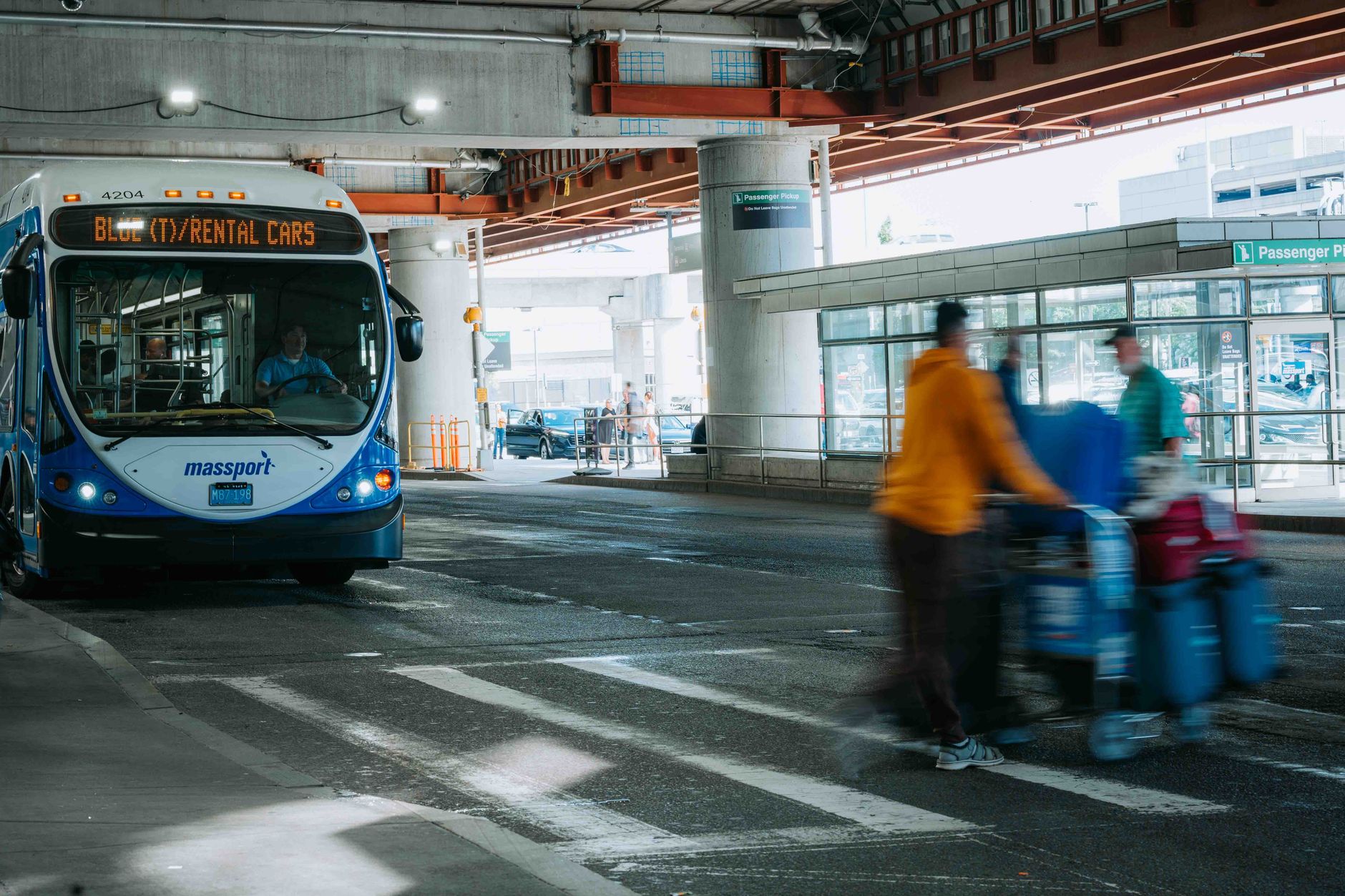
Finding the Shuttle Bay, Which Is Harder Than It Should Be
The most common small failure in this whole process is standing in the wrong place. Both shuttle stops are signposted, but the rebuild has moved kerbside arrangements more than once, and the signs occasionally lag the reality by a few weeks.
At the international terminal, walk out of arrivals and turn towards the covered forecourt. The shuttle bay is among the marked transport bays, alongside the taxi rank and the pick-up zones, and it is labelled for inter-terminal transfers rather than for any destination. If you find yourself among the rental car counters, you have gone the wrong way.
At the domestic terminal, the stop is directly outside the main doors on the kerbside loop. It is a shorter walk and harder to get wrong.
If the signage and your memory disagree, ask. Airport staff in high-visibility vests are stationed at exactly these pinch points during the works, and asking one of them costs you ten seconds and saves you the fifteen minutes of walking in a hopeful direction that a surprising number of people spend. The same applies to the start of the green line — it begins in the forecourt, and the first arrow is the one people miss.
How to Avoid the Transfer Altogether
The best solution to a difficult connection is not making it. Three approaches genuinely work.
Book the domestic sector on the same ticket as the international one. This is the single biggest improvement available. Your bag is through-checked, there is a dedicated transfer bag drop, and — crucially — if the inbound runs late, the airline rebooks you at no cost. The fare is often only slightly more than buying the sectors separately, and it buys away the entire category of risk.
Sleep in Auckland and fly on in the morning. If you are arriving off a long-haul flight in the early morning bank, connecting straight onto a domestic service means doing the hardest part of the journey at your worst. A night near the airport, or in the city, resets you completely — and it means the transfer happens on a fresh morning with hours of margin rather than at the end of a twenty-six-hour day. Our guides to Auckland Airport hotels and where to stay in Auckland cover both options.
Give Auckland a day. If your final destination is Queenstown or Christchurch, a day in Auckland on the way through is a better use of the stopover than a scramble between terminals — and it is the difference between seeing the country’s largest city and seeing its airport. Our guide to how many days in Auckland is a reasonable starting point for deciding whether one is enough.
When It Goes Wrong
Assume for a moment that your inbound flight lands 90 minutes late and your domestic connection is now impossible.
On one ticket, the airline owns it. Go to the transfer or service desk and you will be rebooked, usually onto the next available service, and on a long delay the airline is generally reasonable about meals and, if it comes to it, a bed. Do not join the queue and wait passively — phone the airline or open its app while you stand in line. Passengers who do both are frequently sorted before they reach the counter.
On separate tickets, nobody owes you anything, and the fastest route to a solution is usually buying a seat on the next flight yourself rather than negotiating. Domestic fares within New Zealand are not ruinous if bought a few hours ahead rather than at the gate. If the next flight is tomorrow, our comparison of Auckland Airport hotels covers the walkable options, and they fill quickly when a widebody goes late.
If your bag misses the connection but you do not, report it before leaving the baggage hall — the desks are past the belts and before biosecurity. A claim opened there is straightforward. Delayed bags are typically delivered within 24 to 48 hours, so give a forwarding address you will still be at rather than a hotel you are leaving in the morning.
The Honest Verdict
The Auckland terminal transfer is not difficult. It is a ten-minute walk or a free bus, both of which work, and thousands of people do it every day without incident. What makes it dangerous is that it is invisible at the point of booking: no flight search engine tells you that your 80-minute connection involves leaving one building, clearing an international border and walking to another building in the rain.
So the advice is simple and it is the only advice that matters. Two and a half hours on one ticket. Four hours on separate tickets. Never less. Everything else in this guide is detail; that sentence is the whole thing. In 2028 or 2029, when the integrated terminal opens and the transfer becomes a five-minute indoor walk, this article will be much shorter. Until then, buy the margin.
Frequently Asked Questions
How do I get from the international to the domestic terminal at Auckland Airport?
A free shuttle bus runs roughly every 15 minutes between marked bays outside both terminals and takes about 10 minutes. Alternatively, follow the green line painted on the footpath — about a kilometre, roughly 10 minutes on foot, outdoors the whole way, and no trolleys allowed.
How long does the Auckland Airport terminal transfer take?
Budget 30 minutes if you walk and 40 if you wait for and ride the shuttle. The bus ride itself is 10 minutes, but the wait plus loading routinely brings the real total to 25 minutes or more.
What is the minimum connection time between international and domestic at Auckland?
Two hours thirty minutes on a single ticket, and three hours to be comfortable. On separate tickets, allow four hours — you will collect your bag, clear the border with it, transfer terminals and check in from scratch.
Is the terminal transfer shuttle free?
Yes. There is no ticket and no booking. A taxi between the terminals costs around NZ$20 and is almost never worth it.
Do I have to collect my bags when connecting through Auckland?
Yes, if you are entering New Zealand — every arriving passenger collects their bag for biosecurity screening. On a single ticket with a through-checked bag, you hand it straight back at the domestic transfer bag drop immediately after customs.
Can I walk between the Auckland Airport terminals with a suitcase?
You can, but trolleys are not permitted on the walking route, so you will be carrying or wheeling everything yourself for a kilometre outdoors. With more than one large bag, take the shuttle.
When will Auckland Airport’s terminals be joined together?
Between 2028 and 2029, when the new integrated domestic jet terminal opens as an extension of the international building. The transfer then becomes an indoor walk of roughly five minutes.
Is the transfer different at night?
The shuttle runs to the terminals’ operating hours but less usefully in the small hours, and the walking route is quiet and dimly lit in places. For a late-night or pre-dawn transfer, use the shuttle and allow extra time.
Worth knowing if a delay leaves you stranded on the domestic side: there is no pay-per-use lounge in the domestic terminal at all, which is one of the few good reasons to make the crossing the other way. Our guide to Auckland Airport lounges sets out what is available in each building.
The clock on your connection starts the moment the aircraft is on stand, not when you reach the shuttle bay — and the arrival process eats 45 to 75 minutes of it. Our guide to arriving at Auckland Airport breaks that down stage by stage so you can see where the time actually goes.
A lot of the passengers making this transfer are heading straight on to Queenstown or Christchurch. If that is you, our guide to getting from Auckland to the South Island compares flying with the drive and the Cook Strait ferry, and explains how to plan an open-jaw road trip that flies in to one South Island airport and out of another.
Related Auckland Guides
- Auckland Airport (AKL): The Complete Traveller’s Guide
- Auckland Airport Layover Guide
- Auckland Airport Hotels
- Auckland Airport to CBD: Bus, Train, Taxi & Uber
- New Zealand Visa Requirements
- Auckland With Kids
- Getting Around Auckland
Photo Credits
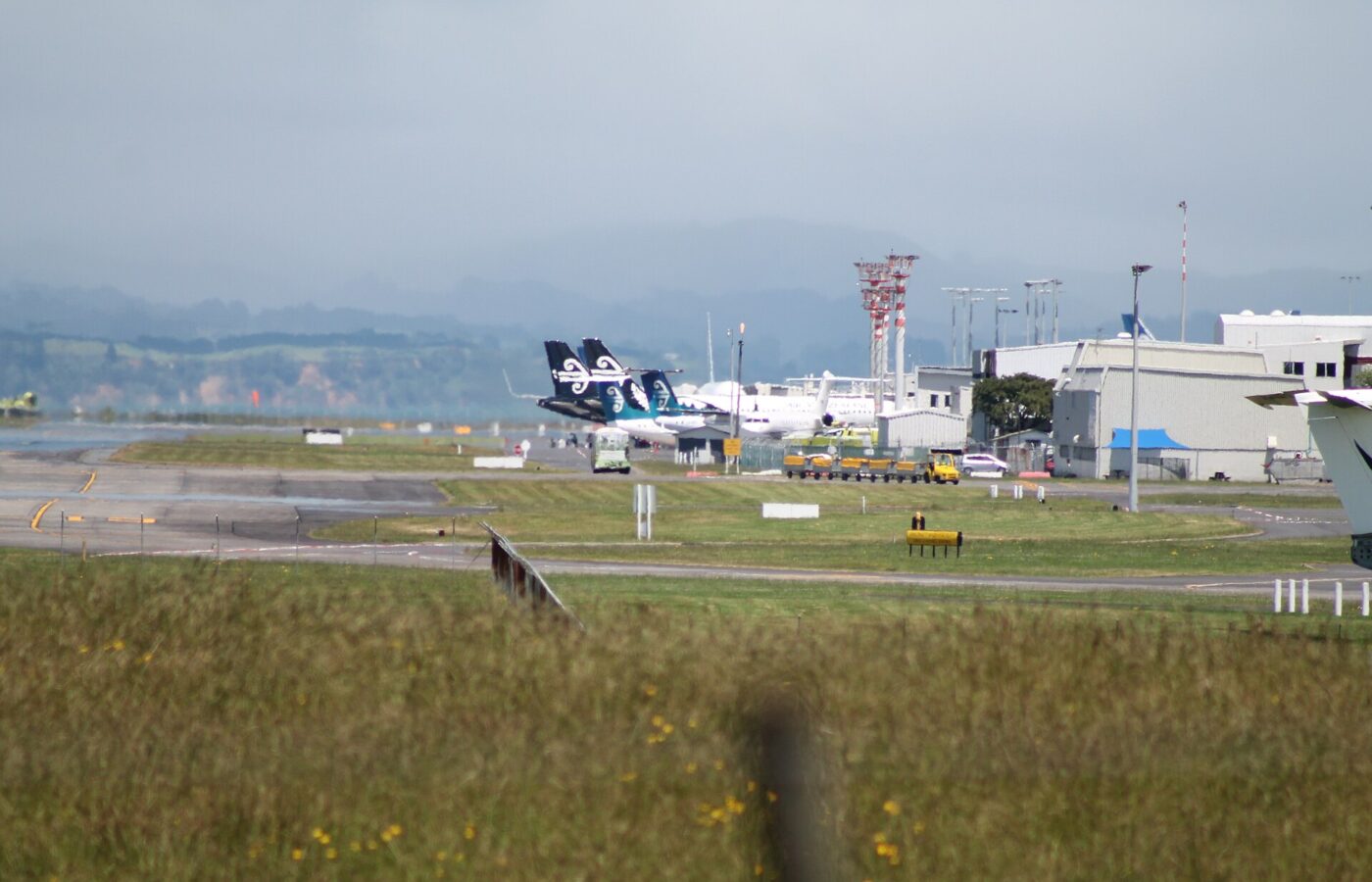
Air New Zealand turboprops on the apron at Auckland Airport’s domestic terminal: Auckland Domestic Terminal (16042780636) by Umedha Hettigoda, CC BY-SA 2.0, via Wikimedia Commons.
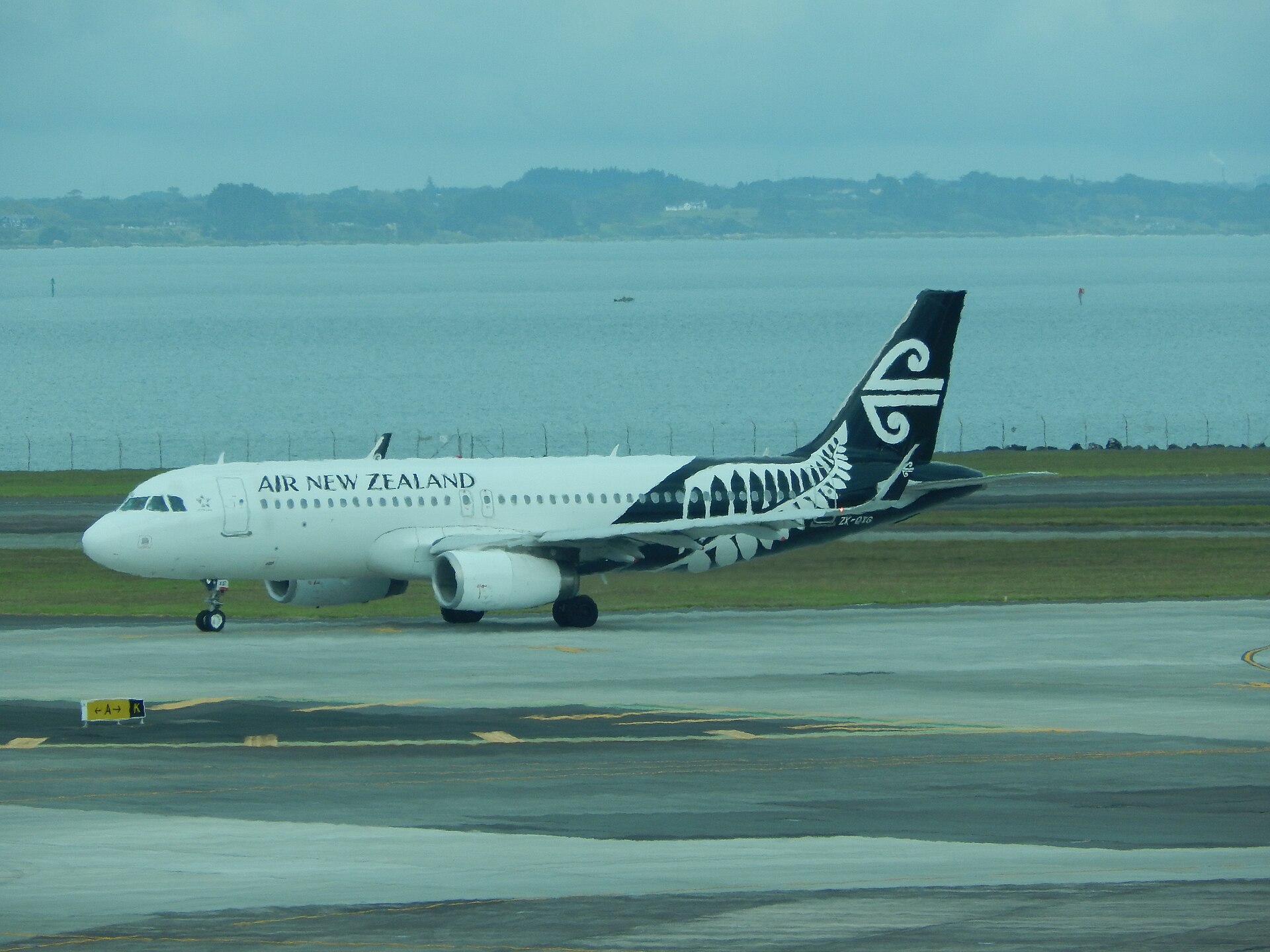
An Air New Zealand A320 taxiing at Auckland Airport: Air New Zealand A320 ZK-OXG at AKL (26166808440) by G B_NZ, CC BY-SA 2.0, via Wikimedia Commons.