Auckland Airport (AKL): The Complete Traveller’s Guide
Auckland Airport guide for 2026: the two-terminal split and rebuild, arrivals and biosecurity timings, NZeTA and IVL, transport into the city, parking and lounges.
This article contains advertising. Our booking links are routed through a partner that adds commission tracking automatically, so if you book through one we earn a commission from the provider, at no extra cost to you. It never affects what we recommend. Affiliate disclosure
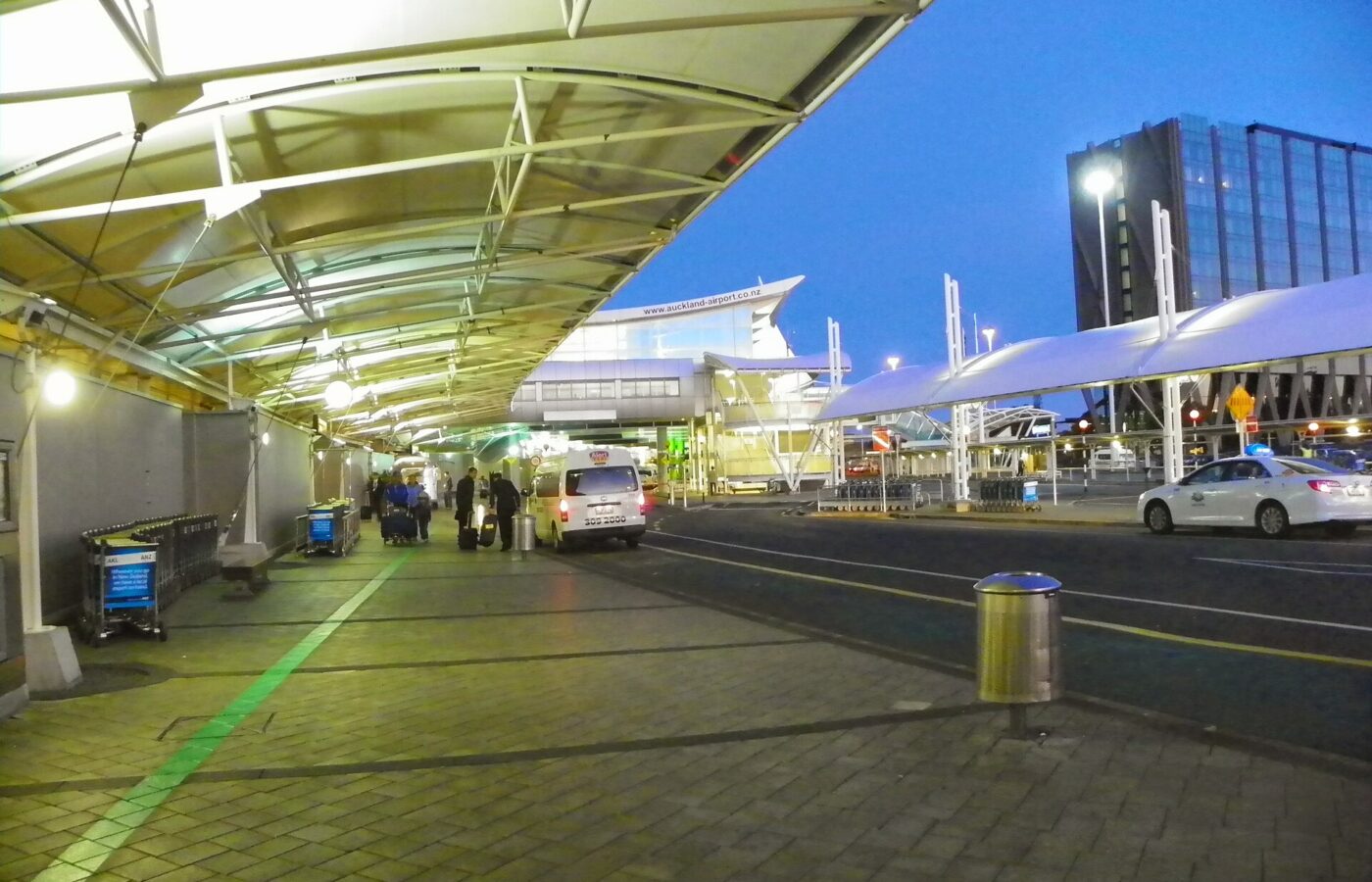
The green line painted into the footpath outside the international terminal is the most useful thing at Auckland Airport, and almost nobody notices it. It is the walking route to the domestic terminal, about a kilometre of pavement past car parks and hoardings, and every year thousands of people pay for a taxi to cover a distance they could have walked in the time they spent queuing for one. That green line is a fair summary of the place: an airport where the good options are all there, but nothing shouts. This Auckland Airport guide is the briefing nobody hands you on the plane.
What follows covers the layout of the two terminals and the enormous rebuild happening between them, what actually happens between your aircraft door and the taxi rank, the biosecurity rules that catch out more visitors than any other country’s border, the NZeTA and levy you need before you fly, and the honest answer on parking, lounges, food and where to sleep if your connection is brutal. Prices were checked in September 2026 and are in New Zealand dollars; treat them as the right order of magnitude rather than a quote, because airport pricing moves faster than any guide can.
Auckland Airport at a Glance
| Detail | What to know |
|---|---|
| Code | AKL — New Zealand’s main international gateway, on the Manukau Harbour at Māngere, about 21 km south of the city centre |
| Terminals | Two separate buildings in 2026: international, and a domestic terminal roughly 1 km away. They are being joined into one integrated terminal due to open 2028–2029 |
| Terminal transfer | Free shuttle bus, roughly every 15 minutes, about 10 minutes’ ride. Or walk the signposted green line, about 10 minutes at an unhurried pace |
| To the city | AirportLink bus to Puhinui Station then train, about NZ$6.50 adult on AT HOP for the three-zone journey; taxi or rideshare typically NZ$60–95 depending on time and traffic |
| Arrival time to allow | Three hours for international departures during the rebuild, two hours if you have carry-on only and a boarding pass. One hour for domestic jet, 30 minutes for turboprops |
| Landing to kerb | Typically 45–75 minutes on arrival, occasionally longer when several widebodies land together in the early morning |
| Before you fly | NZeTA plus the International Visitor Conservation and Tourism Levy for visa-waiver passport holders, and a New Zealand Traveller Declaration |
| Worst hour | 05:00–07:00 arrivals, when the long-haul bank lands together; and 17:00–19:00 departures |
The One Thing to Understand: Two Terminals, One Enormous Building Site
Auckland has run separate international and domestic terminals since 1977, and in 2026 it still does. They are not two wings of one building with a corridor between them. They are two distinct buildings with a kilometre of airport service road, car parks and construction hoarding in between. Every miserable AKL story you have read online — the missed connection, the sprint with a suitcase, the person who did not realise — comes back to this single fact.
That is changing, expensively. The airport is midway through a terminal programme costing in the region of NZ$3.9 billion, the centrepiece of which is a new domestic jet terminal built as an eastward extension of the existing international building. When it opens, somewhere between 2028 and 2029, domestic and international will sit under one roof for the first time in half a century, and the transfer that currently costs you a shuttle ride becomes an indoor walk of roughly five minutes. A new pier, A1, will hold twelve domestic jet stands, all with airbridges — no more walking across wet tarmac to a narrowbody in a Māngere southerly.
None of that helps you in 2026. What you get instead is the construction phase, and it is visible from the moment you arrive. A temporary check-in pavilion called Zone T opened on 26 March 2026, sitting between the Transport Hub and the international terminal — about 55 metres by 20, with 28 check-in counters in it. Traditional check-in desks are being progressively replaced by self-service kiosks and bag drops as the works eat into the old check-in hall. In September 2026 the airport also announced it is reordering the sequence of international departures processing ahead of the integrated terminal opening.
The practical advice that follows from all of this is dull and important: follow the signage on the day, not the layout you remember or the map you saw online. Things move month to month. Airport staff in high-visibility vests are stationed at the pinch points precisely because the wayfinding cannot keep up, and they are genuinely helpful. Ask.
How far apart the terminals really are
The walk is about a kilometre, signposted the whole way with that green line underfoot, and takes most people around 10 minutes. It is flat, it is outdoors, and it is exposed — Auckland weather can turn a pleasant stroll into a wet one in the space of the walk itself. With a big suitcase and a headwind it is closer to 15 minutes and considerably less charming. Trolleys are not permitted on the walking route.
The free inter-terminal shuttle runs roughly every 15 minutes, takes about 10 minutes end to end, and stops outside both terminals at clearly marked bays. The catch is that “every 15 minutes” plus a wait plus loading a full bus of people with luggage frequently comes to 25 minutes of your life. If you are travelling light and it is not raining, walk. If you have children, a stroller, or more than one large bag, take the shuttle and build the wait into your plan. The rule of thumb: allow 30 minutes terminal to terminal if you are walking, and 40 if you are waiting for the shuttle, and you will never be the person running.
Arriving: What Happens Between the Aircraft Door and the Kerb
New Zealand’s border process is genuinely stricter than most, and it is the biosecurity layer rather than the immigration layer that makes it slow. Here is the sequence, in order.
1. The walk to passport control
International arrivals disembark on level 1 and walk to the arrivals processing hall. It is a longer walk than it looks from the aerobridge — allow five to ten minutes if you are parked at a distant gate. There is no shortcut and no transfer buggy for most passengers; assistance is available if you have arranged it with your airline in advance.
2. eGates and passport control
New Zealand uses automated eGates for eligible ePassport holders, including New Zealand, Australian, British, US, Canadian, Irish and a long list of other nationalities. If you are eligible, you scan your passport at a kiosk, have your photo taken at the gate, and you are through in under two minutes. It is one of the more painless border systems in the world.
If you are not eligible for eGates — and eligibility depends on nationality, age and passport type — you queue for a staffed desk, and that queue can be genuinely long when several widebodies land in the same hour. The morning bank between 05:00 and 07:00 is the worst of it, because that is when the flights from Asia, the Middle East and North America all land within an hour of each other. There is no way to game this. If you have a choice of flights, an afternoon arrival is a calmer airport.
3. Baggage reclaim
Belts are directly beyond passport control. Bags from a full widebody typically start appearing 15 to 20 minutes after the aircraft is on stand and take another 20 minutes to fully unload. There are free trolleys throughout arrivals — unlike many airports, you are not being charged for the privilege of moving your own suitcase.
4. Biosecurity and customs
This is where the time goes, and it is the part that surprises people. Every arriving passenger passes a biosecurity check. Depending on what you declared, you may be waved through, sent to an X-ray machine, sent for a bag search, or met by a detector dog working the queue. Detector dogs at AKL are trained on food and plant material, not drugs alone, and they are very good at their job.
Budget 45 to 75 minutes from wheels-down to walking out the door as a realistic average. It can be 25 minutes with hand luggage, an eGate and nothing to declare, and it can be well over 90 minutes if you land in the morning bank, check a bag, and get sent for a search. Do not book a domestic connection or an airport transfer on the assumption of the fast case.
New Zealand Biosecurity: The Rules Visitors Get Wrong
New Zealand’s economy runs on agriculture and its ecosystems are unusually vulnerable to introduced pests, so its border is defended with a seriousness that visitors from elsewhere find startling. Instant fines are issued and they are not symbolic. Fruit forgotten in a daypack from the aircraft is one of the most common ways travellers get caught, and “I forgot” is not a defence.
The rule that keeps you out of trouble is simple and absolute: if in any doubt, declare it. Declaring something is free and costs you a conversation. Failing to declare something that turns out to be prohibited costs you an on-the-spot fine and a very bad start to a holiday. Border officers are, in our experience, entirely reasonable with people who declare and entirely unmoved by people who do not.
- Always declare food of any kind — including snacks, packaged goods, honey, dried herbs, spices, tea and supplements.
- Always declare plant material: wooden souvenirs, seeds, flowers, woven items, bamboo, straw hats.
- Always declare animal products: leather, feathers, bone, shell, wool, and traditional medicines.
- Always declare outdoor equipment — hiking boots, tents, golf clubs, fishing gear, bicycles. Boots with soil in the tread are a classic interception. Clean them before you pack.
- Always declare any recent contact with farms, livestock or rural land.
Clean your hiking boots properly before you leave home. It takes ten minutes with an old toothbrush and saves you a queue, a lecture and possibly your boots. For the definitive word on what gets confiscated, what gets treated and returned and what is genuinely banned, the Ministry for Primary Industries publishes the current list at biosecurity.govt.nz, and it is the only source that is never out of date.
Before You Fly: NZeTA, the Levy and the Traveller Declaration
Three pieces of paperwork stand between most visitors and a boarding pass, and all three are done online before you leave home.
The NZeTA — New Zealand Electronic Travel Authority — is required for citizens of visa-waiver countries and for cruise passengers and transit passengers of most nationalities. It is requested through the official Immigration New Zealand app or website, and it is normally granted within 72 hours, though it can take longer. Request it at least a week out. Airlines check it at the departure gate, and an NZeTA that has not come through is a very expensive missed flight.
The International Visitor Conservation and Tourism Levy, universally shortened to the IVL, is charged alongside the NZeTA or the visa application. It funds conservation and tourism infrastructure, and it is not optional.
The New Zealand Traveller Declaration replaces the old paper arrival card. It covers your biosecurity and customs declaration and is completed online — you can do it up to 24 hours before departure, and doing it on the aircraft with the free app is the standard move if you forgot. Completing it in advance genuinely speeds you through arrivals.
Fees change, eligibility lists change, and processing times change. Rather than quoting numbers that will be stale within months, check immigration.govt.nz directly. Apply through the official channels rather than the paid intermediary sites that dominate the search results — they charge a fee for filling in the same form. Our New Zealand visa requirements page covers who needs a visa rather than a waiver.
Getting From Auckland Airport Into the City
The airport sits at Māngere, about 21 km and — this is the number that matters — anywhere between 35 and 75 minutes from the city centre depending entirely on the motorway. Auckland traffic is not theoretical. A 4 pm departure from the airport on a Friday can double a 40-minute run.
| Option | Rough cost | Time to the CBD | Best for |
|---|---|---|---|
| AirportLink bus to Puhinui Station, then train | ~NZ$6.50 adult with AT HOP or contactless (three zones) | 50–65 min | Anyone with manageable luggage and no rush. The cheapest sensible option by a wide margin |
| Taxi from the rank | ~NZ$75–95 | 35–75 min | Late arrivals, groups of three or four, heavy luggage |
| Rideshare (Uber, Bolt, YourRide) | ~NZ$55–90, surges hard | 35–75 min | Anyone comfortable with an app and a short walk to the pick-up zone |
| Pre-booked shared shuttle | ~NZ$35–45 per person | 45–90 min with stops | Solo travellers who want a fixed price and a door-to-door drop |
| Rental car | From ~NZ$45/day plus fuel above NZ$3/litre | 35–75 min | Onward road trips. A liability if you are staying in the city centre |
The orange AirportLink bus is the piece most visitors miss. It runs between both terminals and Puhinui Station roughly every 10 minutes from about 4:30 am to 12:40 am, seven days, taking 13 to 17 minutes to the domestic terminal and 18 to 20 to international. At Puhinui you change to the train. With the City Rail Link having opened on 13 September 2026, the network now runs as three services, and the underground stations at Te Waihorotiu, Karanga-a-Hape and Maungawhau put far more of central Auckland within a short walk of a platform than was true a year ago.
Get an AT HOP card or simply tap a contactless bank card — both work, and both beat cash fares. The full route-by-route breakdown, including which train service to take for which part of town, lives in our Auckland Airport to CBD guide, and the wider network in getting around Auckland and the Auckland trains guide.
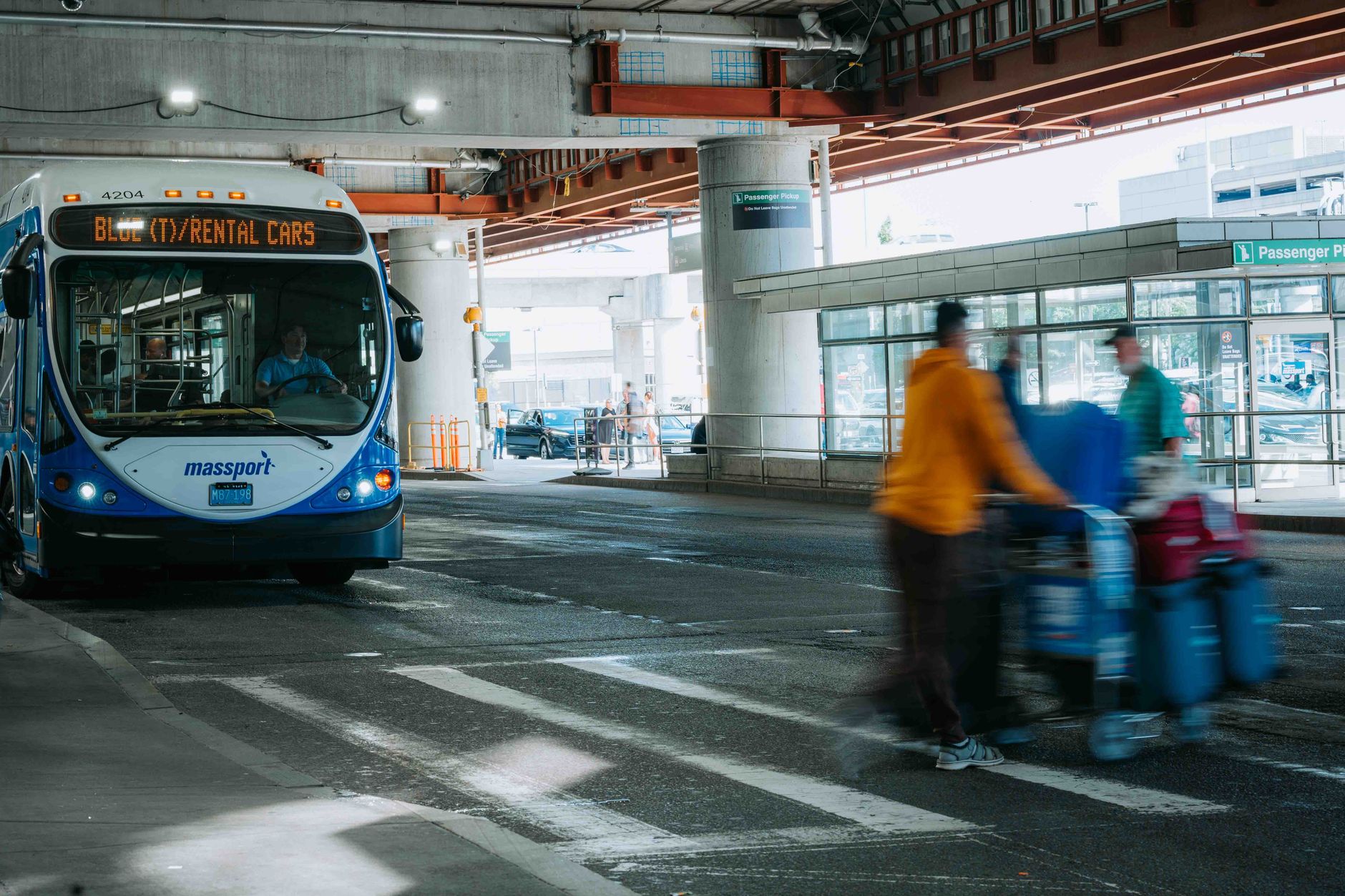
One caution on rideshare: Ola left New Zealand in 2024 and Zoomy became YourRide, so old advice naming them is out of date. Uber operates, Bolt launched in February 2026, and YourRide runs alongside them. Pick-up is from a designated zone rather than the arrivals kerb, and during construction that zone has moved more than once — read the in-app map rather than walking where you walked last time. Our rideshare and taxi guide has the current picture.
Departing From Auckland Airport
How early to arrive
The airport’s own advice has crept up during the rebuild, and it is worth taking seriously. Three hours for a long-haul international departure is the safe number in 2026; two is achievable if you have carry-on only and a boarding pass already on your phone, but it leaves you nothing if the check-in queue is having a bad morning. For domestic jet flights, an hour is comfortable. For regional turboprops from the domestic terminal, 30 minutes genuinely works — it is one of the last airports in the developed world where that is true.
Check-in and Zone T
Check-in for international departures has become a moving target. The permanent check-in hall is being progressively taken over by the works, self-service kiosks and bag drops are replacing staffed desks, and the temporary Zone T pavilion between the Transport Hub and the terminal now handles a share of the load with its 28 counters. Your airline’s app or your booking confirmation will tell you which zone you are in on the day. Check it the night before rather than assuming.
Security, and what has changed
New Zealand’s aviation security screening is standard: liquids in containers of 100 ml or less inside a one-litre clear bag, laptops and large electronics out, belts and jackets off. Domestic jet services are screened; some small regional turboprop services historically were not, which is why the domestic terminal can feel oddly relaxed. Do not rely on that — take the standard rules as your default and you will never be caught out.
There is no departure tax to pay at the airport in New Zealand. It is built into your ticket. If a website tells you to keep cash aside for one, that website is old.
Duty free, and whether it is worth it
Here is the honest verdict: Auckland’s duty free is unremarkable. Alcohol and tobacco pricing is genuinely competitive against New Zealand retail because domestic excise on both is high, so a bottle of spirits is a real saving. Cosmetics, sunglasses and electronics are not meaningfully cheaper than a city shop and are sometimes dearer. The arrivals duty free store — you can buy on the way in, which not every country allows — is where the spirits saving actually lands, because you are not carrying the bottle around Asia first.
Mānuka honey and merino at the airport carry a convenience premium of perhaps 20 to 30 per cent over a city shop. If souvenirs matter to you, buy them in town. Our Auckland souvenirs guide covers where locals actually buy them.
Inside the Terminals: Food, Seating and Somewhere to Wait
The international terminal
Landside, before security, the international terminal has cafés, a food court, pharmacies, currency exchange, luggage wrapping and left luggage. Airside, the offering is better than it was — a proper bar or two, a handful of sit-down restaurants, decent coffee. It is not Singapore. It is a mid-sized international terminal doing a competent job, and during the rebuild some spaces are closed or relocated behind hoardings.
Free wi-fi is available throughout and works well enough for messaging and maps. It is not reliable for a long video call. Power outlets exist but are unevenly distributed, and the good seats near them are taken by 6 am. If you have a long wait, the airside seating near the far end of the pier is quieter than the central concourse, and the food court landside is cheaper than anything past security.
The domestic terminal
The domestic terminal is smaller, simpler and — for now — quite pleasant in a low-key way. Cafés, a bar, a bookshop, and gates you can walk to in three minutes. Regional turboprops board from the tarmac, which means a short walk outside; in a Māngere winter southerly that is a genuinely cold thirty seconds, so keep a layer accessible rather than packed in the hold.
Lounges
Air New Zealand runs its own lounges in both terminals, accessible with an eligible fare, status or a Koru membership. The independent Strata Lounge in the international terminal sells entry to anyone and accepts several lounge programmes, which makes it the realistic option for a passenger flying economy on a long connection. Whether paying for it beats simply buying a good lunch airside depends on how long you have: under three hours, buy the lunch; over four, the lounge usually wins on showers and seating alone.
Parking, Drop-offs and Pick-ups
Auckland Airport parking is expensive at the terminal and reasonable further out, and the gap between the two is large enough to be worth planning around. Terminal and short-stay parking runs from roughly NZ$48 a day. Park&Ride, a shuttle ride from the terminals, comes in around NZ$92 for a week. Valet is up to about NZ$75 a day. Off-airport operators, of which there are many along the approach roads, start from roughly NZ$6 to $10 a day on longer stays and include a shuttle.
Two rules apply regardless of which you choose. Book online in advance — drive-up rates are substantially higher than pre-booked ones, and this is the single biggest saving available at this airport. And build in the shuttle time for anything off-airport: budget 20 to 30 minutes from car to terminal door, not the 10 minutes the operator’s website implies.
For drop-offs, the free time at the kerb is short and enforced by camera. Do not linger to say goodbye — there is a designated area for that, and the charges for overstaying the express drop-off are real. For pick-ups, the sensible move is a free waiting area away from the terminal where the driver waits until the arriving passenger texts, rather than circling. City parking is a different problem entirely, covered in parking in Auckland.
Renting a Car or Campervan at the Airport
For most visitors, Auckland Airport is where the New Zealand road trip begins, and picking the car up here rather than in the city is nearly always right — you avoid driving an unfamiliar car through the CBD, and you are already on the motorway network.
The major international brands have desks in or beside both terminals. Most of the vehicles, and essentially all campervans, are collected from depots a shuttle ride away in the surrounding industrial streets. Allow an hour from landing to actually driving away, and considerably more for a campervan, where the handover briefing is long and worth listening to properly.
Things that catch people out: New Zealand drives on the left; the give-way rules were changed years ago and any advice you find from before 2012 is wrong; petrol has run above NZ$3 a litre through 2026, so a large campervan is a substantial fuel bill; and the drive north or south from the airport begins on a busy motorway rather than an empty country road. Our guides to car rental in Auckland, driving in Auckland cover the detail on both.
Money, SIM Cards and Staying Connected
Airport currency exchange rates are poor, as they are everywhere. New Zealand is close to cashless — contactless cards work for practically everything including buses and trains, and you can genuinely spend a fortnight here without touching a note. If you want cash, use an ATM in the terminal for a small amount and get the rest from a bank ATM in town.
Tourist SIMs and eSIMs are sold in arrivals and are convenient rather than cheap. A local SIM from a supermarket or a phone shop in town costs less for the same data. If you want connectivity the moment you land — for a rideshare app or a booking confirmation — the airport SIM is worth the premium; otherwise wait. Our guide to SIM cards and wi-fi in Auckland compares the options, and money in Auckland covers cards, cash and fees.
Overnight, Early Starts and Long Waits
Auckland Airport is not a good airport to sleep in. It is not one of the ones that closes overnight and evicts you, but the seating is armrested, the lighting stays on, and the international terminal goes quiet and cold between about 1 am and 4 am. People do it, and people regret it.
The better options are the hotels within walking distance or a short shuttle of the terminals, which are priced for exactly this situation and range from budget to comfortable. If your flight leaves at 6 am, a room at an airport hotel almost always beats a night on a bench plus a taxi at 4 am. We compare them in Auckland Airport hotels. If you are committed to the terminal anyway, the landside food court stays lit and populated longer than the airside benches, and several of the nearest hotels sell day rooms by the block of hours rather than the night — always worth a phone call before you resign yourself to the floor.
Accessibility, Families and Special Assistance
Both terminals are step-free with lifts, accessible toilets and hearing loops at service counters. Wheelchair assistance is arranged through your airline rather than the airport, and it needs booking at least 48 hours ahead — it is not reliably available on the day. Assistance dogs are permitted subject to biosecurity clearance arranged in advance.
For families, the international terminal has parents’ rooms with changing and feeding facilities on both levels and a small play area airside. Strollers can be taken to the aircraft door and are returned at the door on arrival for most airlines. The inter-terminal shuttle takes strollers; the green line walk with a stroller is doable but the kerb cuts are not always where you want them. If you are travelling with children, the practical planning is in Auckland with kids.
What Auckland Airport Is Not Good At
An honest guide should say where a place falls short, and AKL has three real weaknesses.
The terminal split. Until 2028 or 2029, connecting between international and domestic is an outdoor transfer between separate buildings, and it is the single most common cause of a bad day here. Airlines will sell you a 90-minute international-to-domestic connection. Do not buy it. Two and a half hours is the minimum that is not gambling, and three is comfortable.
The construction. The rebuild is the right thing to be doing and it makes 2026 a worse year to travel through than 2024 was. Expect diverted walkways, relocated pick-up zones, closed shops and signage that lags reality by a few weeks.
The early-morning crush. The arrivals hall between 05:00 and 07:00 is the airport at its least impressive, and there is nothing you can do about it except choose a different flight where the schedule allows.
Set against that: the eGates are fast, the biosecurity staff are professional, the free wi-fi works, the trolleys are free, the domestic terminal is a pleasure by international standards, and public transport to the city is cheap and frequent. It is a competent airport in the middle of an awkward decade.
If Things Go Wrong: Delays, Missed Connections and Lost Bags
Auckland’s position at the bottom of the world means that when something breaks, the next flight is often a day away rather than an hour. That changes the calculus of what to do about it.
For a missed international-to-domestic connection booked on one ticket, the airline rebooks you and, on a long delay, is generally reasonable about accommodation. Booked on separate tickets, you own the problem entirely — which is the strongest argument there is for not booking a tight self-transfer through AKL in the first place. If your onward domestic flight is with Air New Zealand and your inbound was too, the through-check and the rebooking both happen without drama. Mixing carriers and tickets is where people end up buying a new fare at the counter.
For delayed or damaged baggage, report it before you leave the baggage hall. The desks are in the reclaim area, past the belts and before biosecurity, and a claim opened there is straightforward while one opened by email two days later is not. Delayed bags are usually delivered to your Auckland address within 24 to 48 hours; if you are heading straight out on a road trip, give them a forwarding address rather than a hotel you will have left.
For a cancelled outbound flight, the queue at the airline desk is almost never the fastest route to a rebooking. Phone the airline while you stand in it, or use the app. Passengers who do both are frequently rebooked before they reach the front of the line. If you are stuck overnight, the airport hotels fill fast when a widebody cancels — book a room the moment you know, and worry about who pays for it afterwards.
One genuinely useful local detail: New Zealand’s Consumer Guarantees Act gives domestic passengers rights that are more generous than most travellers expect for delays within the carrier’s control. It does not apply to international sectors. Keep receipts either way.
Around the Airport: What Is Actually Nearby
The airport sits in Māngere, on the northern edge of the Manukau Harbour, in a landscape of light industry, freight yards and hotel car parks. It is not scenic and there is no charming village at the gates. But if you have a few hours, a car and no wish to spend them in a terminal, there are three pieces of public land nearby that are genuinely worth the drive — all council-run, all free, and none of them dependent on a commercial operator still being in business when you turn up.
Ambury Regional Park, on the harbour shoreline north of the airport, is a working farm park: sheep and cattle in the paddocks, volcanic rock foreshore, and enormous flocks of wading birds on the tidal flats at low tide. The Manukau’s mudflats are internationally significant for migratory shorebirds, which is not something most airport neighbourhoods can claim. Fifteen minutes from the terminals and a far better use of two hours than a food court.
Ōtuataua Stonefields Historic Reserve, immediately west of the runway, preserves the stone walls, garden mounds and terraces of Māori horticulture worked over centuries in the volcanic soil, alongside later European farm walls. It is one of the last surviving landscapes of its kind in Auckland, and standing in it with a widebody on final approach overhead is a strange and memorable thing.
Māngere Mountain is one of the best-preserved volcanic cones in the Auckland field, with terracing from its time as a pā still legible on the slopes and a wide view over the harbour, the airport and the city from the rim. It is a twenty-minute walk up, and worth it on a clear day.
Whether any of this beats staying put depends on how long you have and how much you trust the traffic. With less than five hours between flights, stay in the terminal. With more, the city is genuinely reachable — roughly two hours of it will go on the round trip alone. The wider shortlist is in things to do in Auckland.
Frequently Asked Questions
How early should I get to Auckland Airport for an international flight?
Three hours during the 2026 rebuild. Two hours works with carry-on only and a mobile boarding pass, but it leaves no margin if check-in is busy or your zone has moved. For domestic jet flights, one hour; for regional turboprops, 30 minutes is genuinely enough.
How long does it take to get through customs at Auckland Airport?
Allow 45 to 75 minutes from landing to walking out. eGate-eligible passengers with hand luggage and nothing to declare can be out in 25 minutes. Landing in the 05:00–07:00 bank with checked bags and a biosecurity search can take over 90.
Are the international and domestic terminals connected?
Not indoors, not yet. They are separate buildings about a kilometre apart, linked by a free shuttle every 15 minutes or a signposted 10-minute walk along a green line. The integrated terminal that joins them is due to open between 2028 and 2029.
What is the cheapest way from Auckland Airport to the city?
The AirportLink bus to Puhinui Station and then a train — about NZ$6.50 for an adult on AT HOP or a contactless card, taking 50 to 65 minutes door to door. Nothing else comes close on price.
Can I bring food into New Zealand?
Some food is allowed and some is not, but all of it must be declared. Commercially packaged and sealed items are frequently fine; fresh fruit, meat, plant material, seeds and honey are the categories that cause problems. Declaring is free; failing to declare carries an instant fine.
Is there a departure tax at Auckland Airport?
No. It is included in your airfare. You do pay the International Visitor Conservation and Tourism Levy on the way in, alongside your NZeTA or visa, not on the way out.
Can I sleep in Auckland Airport overnight?
You can, but it is uncomfortable — armrested seating, lights on all night, and a cold quiet stretch between 1 am and 4 am. An airport hotel or a nearby budget room is usually worth the money for a pre-dawn departure.
How far is Auckland Airport from the city centre?
About 21 km, which is 35 minutes on a clear motorway and up to 75 in Auckland’s afternoon traffic. Plan on the pessimistic number if you have a fixed time to make.
Do I need an NZeTA if I am only transiting through Auckland?
Most transit passengers do need one, even without leaving the terminal. There are limited exemptions. Check immigration.govt.nz against your own nationality before you fly rather than assuming, because airlines enforce it at the gate.
Long waits at AKL are common enough to deserve their own plan. If you are looking at three hours, nine, or an unwanted overnight, our Auckland Airport layover guide works through how much time leaving the terminal really costs, what to do with each window, where to leave your bags, and the paperwork that decides whether you can walk out of the doors at all.
If your itinerary involves a domestic flight on either side of an international one, the gap between the two terminals is the part worth planning in detail. Our guide to the Auckland Airport terminal transfer sets out the free shuttle, the green line walk, honest stage-by-stage timings, and the minimum connection time on a single ticket versus two separate ones.
Only one lounge at AKL will sell entry to a passenger without status or a premium ticket, and knowing which before you walk up to the door saves both money and a wasted trip across the concourse. Our guide to Auckland Airport lounges covers all five — Strata, Air New Zealand, Qantas, Emirates and the domestic lounge — with access rules, prices and an honest verdict on when paying is worth it.
The arrival is the part of AKL that most rewards knowing what comes next. Our step-by-step guide to arriving at Auckland Airport walks the whole sequence — eGate eligibility, the Traveller Declaration, the baggage belts, the biosecurity check and the detector dogs — with honest timings for each stage and what to do the moment you are through the doors.
The item-level detail is worth reading before you pack rather than after you land. Our guide to the New Zealand biosecurity rules covers exactly what must be declared, why fresh fruit and honey are banned outright, and what happens at a bag search.
All of the pre-departure paperwork is done online and none of it is difficult, provided it is not left to the last week. Our guide to the NZeTA and the Traveller Declaration sets out the NZ$123 total, the 72-hour processing guideline, the two-year validity, and the traps that catch people out at check-in.
The gap between the default choice and the informed one is unusually wide here: two people leaving a car for a week can pay NZ$50 or NZ$400 for the same outcome. Our guide to Auckland Airport parking compares terminal, Park&Ride, valet and off-airport rates, explains the free Wait Zone, and sets out where the real savings are.
For most visitors the New Zealand road trip starts at a rental depot in the industrial streets behind the terminal rather than at the terminal itself. Our guide to picking up a rental car or campervan at Auckland Airport explains how the pickup works, what to check before you drive away, and why a dawn arrival is a poor moment to start driving.
If your connection strands you here overnight, it is worth knowing in advance what that involves — the terminal does not evict you, but the seats have armrests and the lights never go down. Our guide to sleeping at Auckland Airport compares the terminal, the nearby hotels and the day-room option.
One thing this guide only skims: the terminal’s food and retail, which is worth a page of its own because the good stuff is not where people assume. Most of AKL’s genuinely decent eating sits landside, before security, and the duty free operator has changed since a lot of older articles were written. Our guide to Auckland Airport food, shopping and duty free covers where to eat on each side of the barrier, the current Aelia stores including the one in arrivals, and which New Zealand souvenirs are worth buying here rather than in town.
Related Auckland Guides
- Auckland Airport to CBD: Bus, Train, Taxi & Uber
- Auckland Airport Hotels
- New Zealand Visa Requirements
- Getting Around Auckland
- Car Rental in Auckland
- First Time in Auckland: The Complete Guide
- Auckland Packing List
- Where to Stay in Auckland
Photo Credits
Auckland Airport’s international terminal forecourt at dusk, with the green walking line underfoot: AKL Airport, Auckland, Nueva Zelanda – panoramio by Nelson Pérez, CC BY-SA 3.0, via Wikimedia Commons.
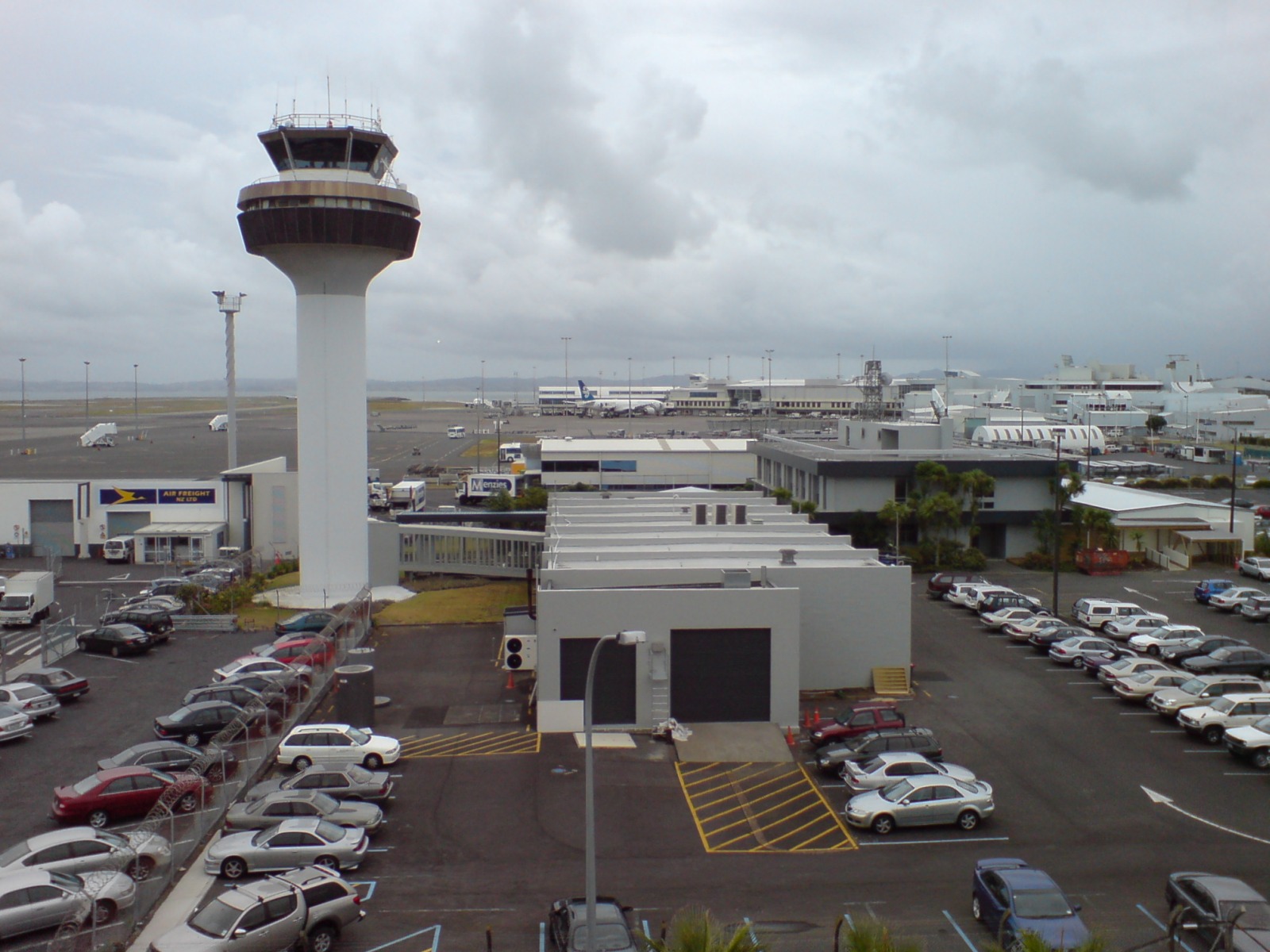
The control tower, apron and car parks at Auckland Airport: Auckland Airport Carparks Main by Ingolfson at English Wikipedia ( Original text: Uploader. ), Public domain, via Wikimedia Commons.