Auckland Airport Layover Guide: What to Do at AKL
Auckland Airport layover guide: how long you need to leave the terminal, what to do with 3, 6, 9 or 12 hours, bag storage, NZeTA rules and the trip into the city.
This article contains advertising. Our booking links are routed through a partner that adds commission tracking automatically, so if you book through one we earn a commission from the provider, at no extra cost to you. It never affects what we recommend. Affiliate disclosure
Somewhere between the fifth hour and the sixth, an airport stops being a building and becomes a state of mind. Auckland is a common place to hit that wall, because it sits at the bottom of a very long ocean and the connecting flights out of it are spaced hours apart rather than minutes. The good news is that an Auckland Airport layover is one of the more escapable ones in the world — the city is close, the transport is cheap, and the border is quick if your paperwork is in order. The bad news is that the terminal itself is a mediocre place to spend nine hours, and a lot of people spend nine hours in it without realising they had a choice.
This guide sets out exactly how much time you need before leaving the airport is worth it, what to do with three, six, nine and twelve hours, where to put your bags, and the paperwork that decides whether you can walk out of the doors at all. Prices and timings were checked in September 2026 and are in New Zealand dollars — treat them as the right order of magnitude rather than a quote, and check current fares before you travel.
Layover Options at a Glance
| Time between flights | Realistic verdict | What to do |
|---|---|---|
| Under 3 hours | Stay put | Don’t even consider leaving. If it is an international-to-domestic connection, you will need most of this to transfer terminals |
| 3–5 hours | Stay put, but move around | Eat landside where it is cheaper, walk the green line to the domestic terminal and back, use a lounge if you have four hours plus |
| 5–7 hours | Marginal — the local escape | Māngere Mountain, Ambury Regional Park, Ōtuataua Stonefields. Twenty minutes each way by car, no motorway risk |
| 7–10 hours | Go into the city | Two hours travelling, four or five hours in central Auckland. Realistic and worth it |
| 10+ hours or overnight | Definitely leave, or get a bed | The full city half-day, or a hotel room near the airport rather than a bench |
First: Can You Actually Leave?
This is the question that decides everything else, and it is worth settling weeks before you fly rather than at a desk in the arrivals hall.
To walk out of Auckland Airport you must clear New Zealand immigration and biosecurity, which means holding the right authority to enter. For most visitors that is an NZeTA — the New Zealand Electronic Travel Authority — requested online in advance, together with the International Visitor Conservation and Tourism Levy. Nationals of countries without visa-waiver access need an actual visa. Transit rules are their own category: many transit passengers need an NZeTA even without leaving the airport, and some nationalities need a transit visa instead.
Do not guess at this, and do not rely on a forum post about someone else’s passport. Check immigration.govt.nz against your own nationality and your specific itinerary, and confirm with the airline that is carrying you in. Airlines enforce these rules at the departure gate on the other side of the world, and a missing NZeTA does not become your problem in Auckland — it becomes your problem before you board. Our guide to New Zealand visa requirements covers who needs what.
Assuming you can enter, the second question is whether your bags come with you. On a single ticket with a through-checked bag, your luggage goes to the final destination and you walk out with hand luggage only, which is ideal. On separate tickets you will collect your bag, clear customs with it, and have to do something with it — which brings us to storage.
What to Do With Your Bags
There is a baggage storage service landside in the international terminal, priced by bag and by block of hours. It is the obvious answer if you are heading into the city and do not fancy wheeling a suitcase around the Viaduct. Two cautions: it does not run around the clock, so an overnight layover may not be covered, and during the terminal rebuild its location has moved more than once. Check the opening hours against your own timings before you build a plan around it, and ask at the information desk rather than assuming it is where a blog said it was in 2023.
If storage is closed or full, the fallback is a hotel. Several of the airport hotels will hold luggage for guests and, at some, for non-guests for a fee. If you are staying the night anyway, this is a non-issue — check in, drop the bag, go out. Our comparison of Auckland Airport hotels covers which ones are actually walkable from the terminals.
The Arithmetic: How Much Time Leaving Really Costs
People consistently underestimate this, so here it is in plain numbers, using the pessimistic end of each range because that is the one that makes you miss flights.
- Landing to walking out the door: 45–75 minutes. Longer if you land in the 05:00–07:00 bank.
- Airport to central Auckland: 50–65 minutes by AirportLink bus and train, or 35–75 by road depending on traffic.
- Central Auckland back to the airport: the same, plus the margin you should be adding for a motorway that can seize up without warning.
- Back at the terminal to boarding: 2 hours for an international departure during the rebuild, or 1 hour for a domestic jet.
Add those up honestly and a nine-hour layover buys you roughly four hours in the city. A seven-hour layover buys you two, which is enough for one thing done properly and nothing else. Under five hours, the travelling is longer than the being-there, and you are paying for the privilege of feeling rushed.
One more variable: which terminal you depart from. If you arrive international and leave domestic, add the terminal transfer at both ends of your excursion. The full detail on that connection is in our Auckland Airport guide.
Three to Five Hours: Making the Terminal Bearable
You are staying. The question is how to make it not miserable.
Eat landside, not airside
The food court and cafés before security are cheaper than the airside offering and have more seating. If you have cleared into the country and are re-checking in later, you have the run of both. A flat white and a decent counter meal landside costs meaningfully less than the same thing past the gates, and the seating is less contested.
Walk the green line
The signposted walking route between the international and domestic terminals is about a kilometre and takes ten minutes each way. It is not a beauty spot — it runs past car parks and construction hoarding — but it is outdoors, it is free, and after eleven hours in a pressurised tube it does more for you than another coffee. The domestic terminal at the other end is smaller, quieter and has a different set of cafés, which is its own small mercy.
Consider a lounge, but do the maths
Air New Zealand’s lounges require an eligible fare, status or Koru membership. The independent Strata Lounge in the international terminal sells entry to anyone and accepts several lounge programmes. Under three hours, buy a good lunch instead — you will not extract the value. Over four hours, the lounge usually wins on seating, showers and being able to work without hunting for a power outlet.
Shower and reset
Shower facilities are available in the lounges, and a shower at hour six of a twenty-four-hour journey is worth more than most people expect. If you are not in a lounge, an airport hotel day room is the reliable alternative — several sell rooms by the block of hours rather than the night, which is exactly the product a long layover needs.
Five to Seven Hours: The Local Escape
This is the window nobody writes about, and it is the most interesting one. You do not have time for the city, but you have plenty of time for Māngere — the suburb the airport sits in — which has three genuinely good pieces of public land within twenty minutes of the terminals. All are free, all are council-run, and none of them can be closed for refurbishment when you turn up.
Ambury Regional Park is a working farm park on the Manukau Harbour shoreline with sheep and cattle in the paddocks, a volcanic rock foreshore, and enormous flocks of wading birds on the tidal flats at low tide. The Manukau’s mudflats matter internationally for migratory shorebirds. Standing on that shore watching godwits feed, twenty minutes from a departure lounge, is a strange and very good way to spend an hour.
Ōtuataua Stonefields Historic Reserve sits immediately west of the runway and preserves the stone walls, garden mounds and terraces of Māori horticulture worked in the volcanic soil over centuries, alongside the later dry-stone walls of European farming. It is one of the last landscapes of its kind left in Auckland. Walking it with a widebody on final approach directly overhead is a genuinely memorable juxtaposition.
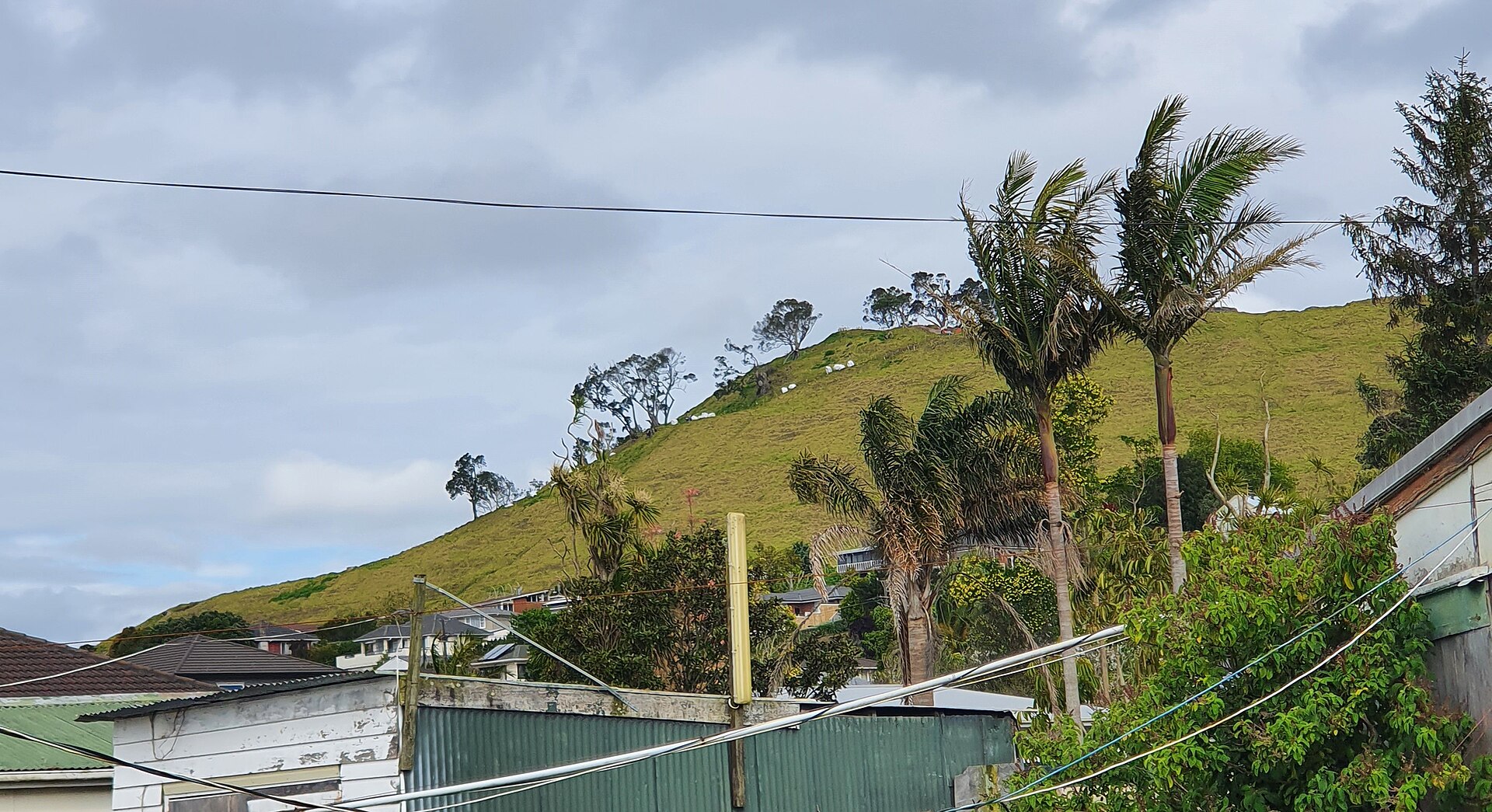
Māngere Mountain is one of the best-preserved volcanic cones in the Auckland field, with terracing from its time as a pā still visible on the slopes. It is about twenty minutes up on foot and gives you the harbour, the airport and the city skyline in one turn. On a clear day it is the best view you will get for the price of nothing.
You will need a taxi or rideshare for these — they are not on a useful bus route from the terminals — so budget NZ$25 to $40 each way and agree the return before you set off. Rideshare coverage in Māngere is decent but thinner than the city; do not assume a car will materialise in three minutes at Ambury on a Tuesday afternoon. Our rideshare and taxi guide has the current operators, and note that Ola left New Zealand in 2024 and Zoomy is now YourRide, so older advice is stale.
Seven to Ten Hours: Go Into the City
Now it is worth it. Two hours of travelling buys you four or five in central Auckland, which is enough to do one area properly.
Getting in
The cheapest sensible route is the orange AirportLink bus from either terminal to Puhinui Station, then a train into the centre. The bus runs roughly every ten minutes from about 4:30 am to 12:40 am, seven days, taking 13 to 17 minutes to the domestic terminal and 18 to 20 to international. The whole airport-to-city journey is a three-zone fare, around NZ$6.50 for an adult on an AT HOP card or a contactless bank card. Tap on, tap off, and do not pay cash — it costs more.
The City Rail Link opened on 13 September 2026, which changed this journey for the better. The network now runs as three services, Britomart is a through station rather than a dead end, and the underground stations at Te Waihorotiu on Queen Street, Karanga-a-Hape for K Road, and Maungawhau at Uptown put far more of the centre within a short walk of a platform. If your layover plan came from a guide written before September 2026, redo it. Our Auckland trains guide and the public transport guide have the post-CRL picture, and Auckland Airport to CBD compares every option including taxis.
Four hours in the city, three ways
The waterfront version. Train to the centre, walk down to Viaduct Harbour and Wynyard Quarter, eat lunch looking at superyachts, walk back up through Britomart. Flat, compact, entirely walkable, and it puts you within ten minutes of a station the whole time. This is the low-risk option and the one to pick if you are jet-lagged. See Viaduct Harbour and Wynyard Quarter.
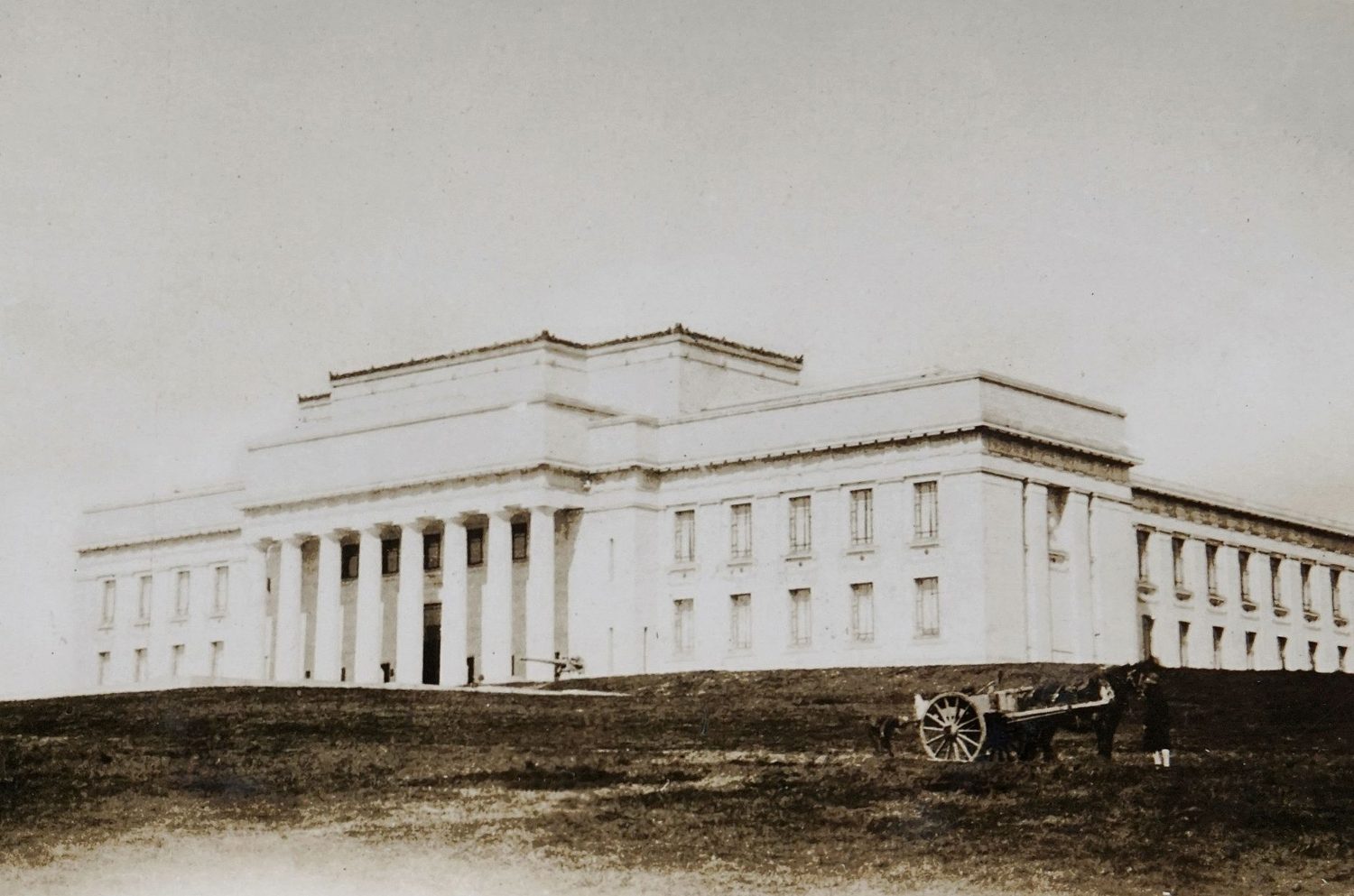
The one-big-thing version. Pick a single attraction and do it properly rather than skimming four. The Auckland War Memorial Museum in the Domain is the strongest choice — its Māori and Pacific collections are the best in the world and two hours there is a real experience rather than a box ticked. The Sky Tower is the alternative if you want the geography of the city explained to you in fifteen minutes from 220 metres up.
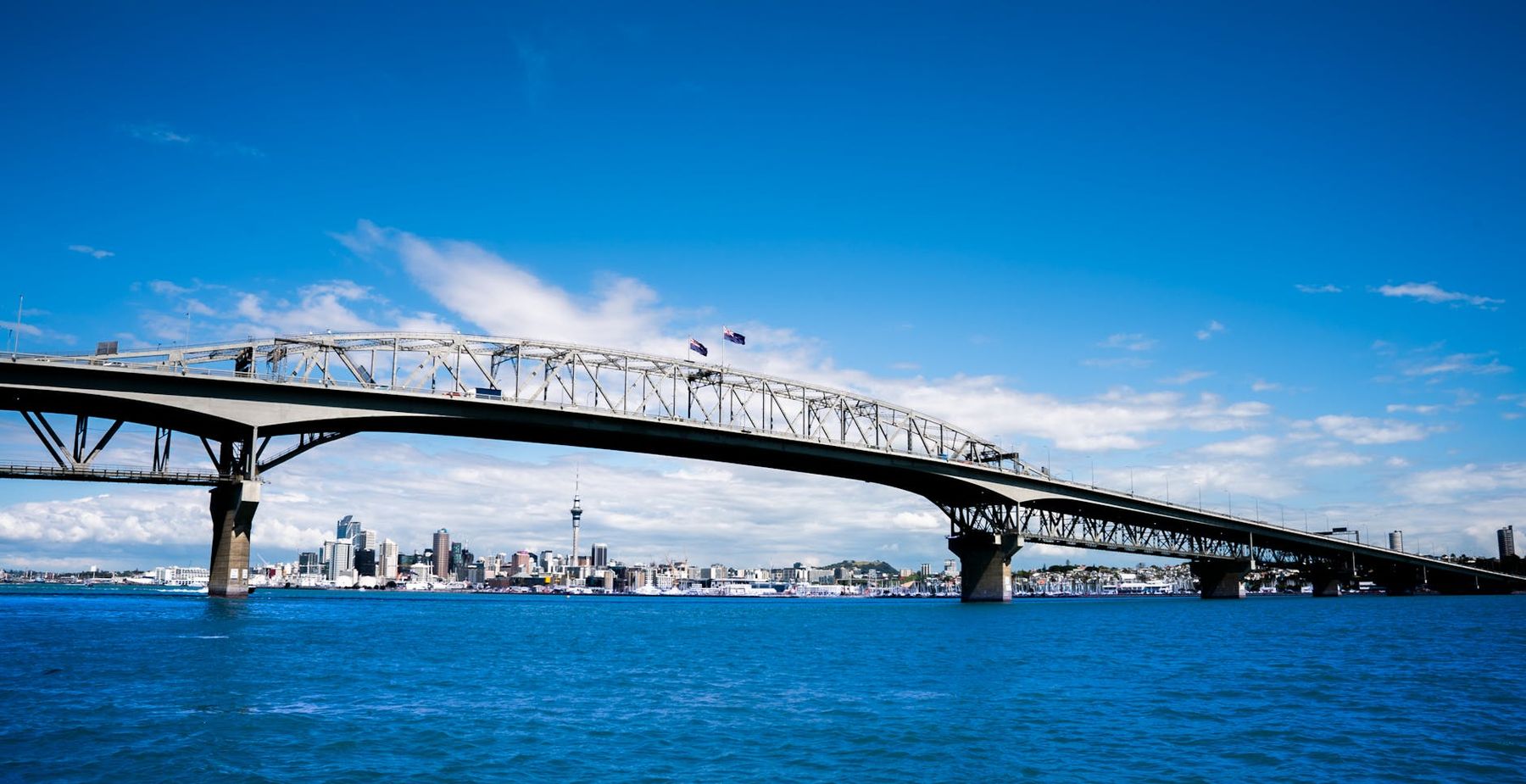
The ferry version. Train to the centre, walk to the downtown ferry terminal, take the twelve-minute crossing to Devonport, have lunch, walk up North Head or Mount Victoria for the harbour view, come back. It is the most Auckland thing you can do in four hours, and the ferry itself is half the pleasure. Our Devonport guide covers the timings.
The rule that keeps you on the plane
Set a hard turnaround time before you leave the airport, put it in your phone as an alarm, and obey it even when you are enjoying yourself. Work backwards: boarding time, minus two hours for international check-in and security, minus 75 minutes for the journey back, minus 30 minutes of margin. That is your alarm. Auckland’s motorway can add half an hour without warning between 3 pm and 7 pm, and the train, while reliable, is not frequent enough late in the evening to absorb a missed connection.
Ten Hours or Overnight
With ten hours or more you have a genuine half-day and should treat it as one. Do the city properly, eat a real meal, and come back rested rather than dazed. Our shortlist of things to do in Auckland is the place to pick from, and free things to do in Auckland is useful if you would rather not spend on a stopover.
An overnight layover is a different problem. Auckland Airport is not a good place to sleep — the seating is armrested, the lights stay on, and the international terminal goes cold and quiet between about 1 am and 4 am. People do it. People regret it. Unless you are travelling on the very tightest budget, a room at one of the hotels near the terminals is worth the money, and several are close enough to walk. If your onward flight is a pre-dawn departure, a bed plus four hours’ sleep beats a bench plus a 4 am taxi from town every time.
Practicalities That Save a Layover
Connectivity
Free wi-fi covers both terminals and is fine for messaging, maps and boarding passes. It is not reliable for a long video call. If you are heading into the city and depend on a rideshare app or live transport times, a local SIM or eSIM is worth it — airport SIMs are convenient rather than cheap, and a supermarket in town sells the same data for less. Our guide to SIM cards and wi-fi compares them.
Money
New Zealand is close to cashless. Contactless cards work on buses, trains, in cafés and at ticket machines, and you can complete an entire layover without touching a banknote. Airport exchange rates are poor, as everywhere. See money in Auckland for the detail.
Weather
Auckland’s weather changes fast and the city is exposed on two harbours. Whatever the forecast says when you land, take a layer and something waterproof out of your carry-on before you leave the terminal. A layover excursion ruined by rain is nearly always a packing failure rather than a planning one — see Auckland weather for what to expect by season.
Travelling with children
A long layover with kids is a different calculation: the transfer time that is merely tedious for an adult is genuinely hard with a toddler. Under seven hours, stay at the airport and use the play area airside in the international terminal. Over seven, the waterfront is the right choice — flat, walkable, plenty to look at, and never far from a toilet or a café. Our guide to Auckland with kids has more.
When the Layover Was Not Your Idea
Plenty of Auckland layovers are not planned at all. A delay out of Sydney, a cancelled connection to Christchurch, a schedule change six weeks before departure — and suddenly you have eleven hours you did not ask for. The rules change slightly when the layover is involuntary.
First, establish who owns the problem. If everything is on one ticket, the airline is responsible for rebooking you and, on a long delay, is generally reasonable about meals and accommodation. Ask at the transfer desk, but also phone the airline or use its app while you queue — passengers who do both are frequently rebooked before they reach the front of the line. If your itinerary is stitched together from separate bookings, nobody owes you anything and the sooner you accept that and buy your own solution, the better your day goes.
Second, decide quickly whether you are staying in the terminal. Airport hotel rooms near AKL sell out fast when a widebody cancels, and the difference between booking at 4 pm and 7 pm is often the difference between a bed and a bench. Book the room, keep the receipt, and argue about who pays afterwards.
Third, if the airline has handed you an unexpected daylight window and you already hold an NZeTA, use it. An involuntary nine-hour layover is functionally identical to a planned one, and the city does not care why you turned up. The only thing that changes is that you should be more conservative with your turnaround time, because a second disruption on the same day is not rare and you want to be at the airport when it happens rather than on a train.
A Note on Which Terminal You Are Sitting In
It matters more than it should. Auckland still runs separate international and domestic terminals about a kilometre apart, joined by a free shuttle and a signposted ten-minute walk, and they are genuinely different experiences.
The international terminal is bigger, has the wider food and retail offering, holds the baggage storage and the independent lounge, and is the one you want for a long wait. The domestic terminal is smaller, calmer and cheaper, with a handful of cafés and gates you can reach in three minutes — pleasant for two hours and thin for eight. If your layover is international-to-domestic, you have a choice about where to spend the middle of it, and unless you badly want quiet, the international terminal is the better place to sit. Just leave properly generous time for the transfer back, and remember that the free shuttle running “every 15 minutes” plus the wait plus loading often comes to 25.
The Honest Verdict
Auckland is a better layover airport than its terminal suggests, and a worse one than its city deserves. The terminal is competent, mid-sized and currently full of construction hoarding; nobody has ever enjoyed nine hours in it. But the city is genuinely close, the public transport into it is cheap and frequent, and the local option in Māngere is one of the most underrated hours available to any transiting passenger anywhere.
The mistakes to avoid are all versions of the same one: underestimating the transfer. Do not try the city on six hours. Do not assume the motorway will behave. Do not leave without checking that your NZeTA is in order. Get those three right and a long Auckland layover stops being something to endure.
Frequently Asked Questions
How long a layover do I need to leave Auckland Airport?
Seven hours is the realistic minimum for going into the city, and it buys you about two hours there. Five to seven hours works for the local Māngere options — Ambury, the Stonefields, Māngere Mountain — which are twenty minutes away rather than an hour.
Can I leave the airport during a layover in New Zealand?
Yes, provided you hold the right authority to enter — usually an NZeTA plus the levy for visa-waiver nationals, or a visa otherwise. You clear immigration and biosecurity exactly as an arriving passenger does. Check immigration.govt.nz for your own nationality, and note that many transit passengers need an NZeTA even without leaving.
Is there luggage storage at Auckland Airport?
There is a baggage storage service landside in the international terminal, charged by bag and by time. It does not operate around the clock and its location has moved during the rebuild, so confirm hours and position at the information desk rather than relying on an old blog post.
Can I sleep at Auckland Airport between flights?
You can, but it is uncomfortable — armrested seating, permanent lighting, and a cold quiet stretch after 1 am. For an overnight layover, a room at a hotel near the terminals is almost always worth the cost, and several sell day rooms by the block of hours.
How much does it cost to get from Auckland Airport to the city and back?
About NZ$13 return on public transport — the AirportLink bus to Puhinui plus the train is a three-zone fare of roughly NZ$6.50 each way with an AT HOP card or a contactless bank card. A taxi or rideshare is NZ$55 to $95 each way.
Is the Strata Lounge worth paying for on a layover?
Over four hours, usually yes — showers, proper seating, reliable power and food included add up. Under three hours you will not extract the value, and a good meal landside costs less and does much the same job.
What is there to do near Auckland Airport without going into the city?
Ambury Regional Park on the Manukau shoreline, Ōtuataua Stonefields Historic Reserve beside the runway, and Māngere Mountain. All three are free, council-run and within about twenty minutes of the terminals by car.
How early should I be back at the airport after a layover excursion?
Two hours before an international departure during the 2026 rebuild, one hour for a domestic jet — and add 75 minutes for the journey back plus 30 minutes of margin for Auckland traffic. Set the alarm before you leave and obey it.
One variable changes all of the above: whether your onward flight leaves from the same building. An international-to-domestic layover means an outdoor transfer at both ends of any excursion, and our guide to the Auckland Airport terminal transfer explains how much time that really costs.
The lounge question comes up on every long connection, and the answer depends almost entirely on how many hours you have. Our guide to Auckland Airport lounges does that arithmetic properly, and covers which programmes actually work at AKL — there is only one lounge here that takes Priority Pass.
An overnight wait is a different problem from a daytime one, because the lounges close, the shops shutter and the building gets cold. Our guide to sleeping at Auckland Airport covers whether the terminal closes, which parts are least awful, and when a room is worth the money.
If your layover keeps you landside — and it will, if you have not yet checked in for the onward leg — you are in the better half of the terminal for eating. The public concourse carries most of AKL’s cafés and sit-down options, which is exactly what you want when you have three hours and a laptop. See Auckland Airport food, shopping and duty free for what is where, and for the case against buying your duty free on the way out rather than on the way in.
Past about eight hours the calculation changes: you are no longer managing a connection, you are taking a short break in the journey, and that means clearing immigration, collecting bags and finding a bed. Our guide to the Auckland stopover covers that version — the NZeTA and IVL you will need, what one, two or three nights realistically holds, and how much buffer to leave for the onward flight.
Related Auckland Guides
- Auckland Airport (AKL): The Complete Traveller’s Guide
- Auckland Airport to CBD: Bus, Train, Taxi & Uber
- Auckland Airport Hotels
- Things to Do in Auckland
- Auckland War Memorial Museum Guide
- Devonport Day Trip Guide
- New Zealand Visa Requirements
- Getting Around Auckland
Photo Credits
Māngere Mountain seen from the streets below, near Auckland Airport: 20211022 Mangere Mountain by Prosperosity, CC BY-SA 4.0, via Wikimedia Commons.
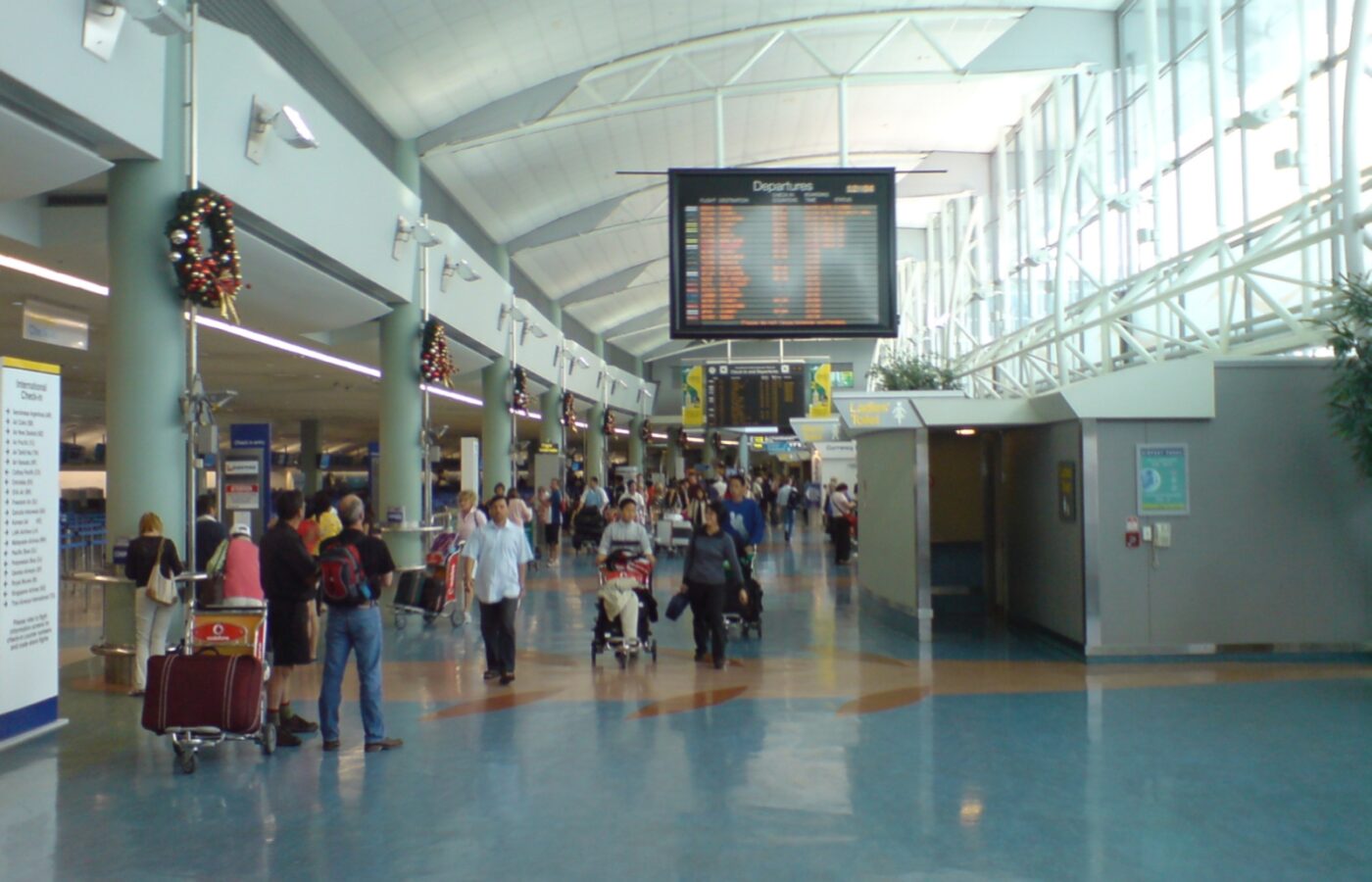
The main hall of Auckland Airport’s international terminal: Auckland Airport In Main Hall by Ingolfson, Public domain, via Wikimedia Commons.