Auckland Airport Food, Shopping & Duty Free
Where to eat, what the duty free actually is now the operator has changed, which New Zealand souvenirs are worth buying at AKL and which are a waste of money.
This article contains advertising. Our booking links are routed through a partner that adds commission tracking automatically, so if you book through one we earn a commission from the provider, at no extra cost to you. It never affects what we recommend. Affiliate disclosure
There is a particular kind of hunger that only happens in an airport. It is 5:40 in the morning, you have been awake since three, the bag drop queue has eaten forty minutes, and what you want is not a meal so much as evidence that the day is survivable. This is the moment Auckland Airport food either rescues you or quietly takes NZ$28 for a sandwich and a flat white you will not remember. Which of those happens is almost entirely a question of where you stand when you make the decision — and at AKL, unusually, the good options are mostly behind you rather than ahead.
This guide covers eating, drinking, shopping and duty free at Auckland Airport across both terminals: what is landside and what is airside, what the duty free actually is now that the operator has changed, what New Zealand souvenirs are genuinely worth carrying home, and the several things here that are simply not worth your money. Prices were checked in September 2026 and are best treated as the right order of magnitude rather than a menu — airport pricing moves, and outlet line-ups churn faster than any guide can keep up with. Where a specific store matters, we have said how to check it on the day rather than pretending a list stays true.
At a glance: where to eat and shop at AKL
| Where | What is there | Best for | Rough spend |
|---|---|---|---|
| International, landside (before security) | Around fourteen cafés, quick-service counters and pick-and-go outlets, plus a pharmacy, newsagent and convenience shopping | Real coffee, a proper sit-down meal, anyone meeting or farewelling someone | NZ$6-12 coffee, NZ$15-30 a meal |
| International, airside (after security) | Aelia Duty Free walk-through, luxury and NZ-brand retail, bars and a smaller cluster of eateries | Duty free, last-minute gifts, a drink before boarding | Highly variable |
| International, arrivals (before Customs) | A third Aelia store | Buying your allowance on the way in instead of carrying it | Within your NZ$700 concession |
| Domestic terminal | Cafés, bakery-style counters and grab-and-go both sides of screening; no duty free | A fast coffee and something to eat before a short hop | NZ$6-10 coffee, NZ$12-22 food |
| The Mall (online) | Pre-order across multiple airport retailers, one checkout, collect at the airport | Knowing the price before you are standing in the shop | Usually below walk-up |
The single most useful thing to understand about AKL
Auckland’s international terminal is unusual in that its landside concourse — the public area before security, where anyone can walk in off the street — carries a large share of the good food. There are roughly fourteen eateries and pick-and-go outlets on that side. Airside, past passport control, the emphasis swings hard towards retail: the duty free walk-through, fragrance, cosmetics, sunglasses, New Zealand-branded gift shopping, and a comparatively modest set of places to eat and drink.
The practical consequence is simple. If you arrive at the terminal with time in hand and you are hungry, eat before you go through, not after. If you are travelling with people who are not flying, that is where you say goodbye over a coffee anyway. And if you are running late, do not comfort yourself with the thought that there will be plenty on the other side — there is enough, but the choice narrows and the queues at peak departure banks are genuinely long.
The one caveat is the shape of the building itself. Auckland Airport is midway through a roughly NZ$3.9 billion terminal programme, and in September 2026 the airport confirmed it is reordering the international departures sequence ahead of the new integrated terminal opening between 2028 and 2029. Hoardings move, walkways divert, and outlets shuffle. Follow the signage on the day rather than a mental map from your last trip. For the wider picture of how the terminals work, the complete Auckland Airport guide is the place to start.
Coffee at Auckland Airport, and the honest verdict on it
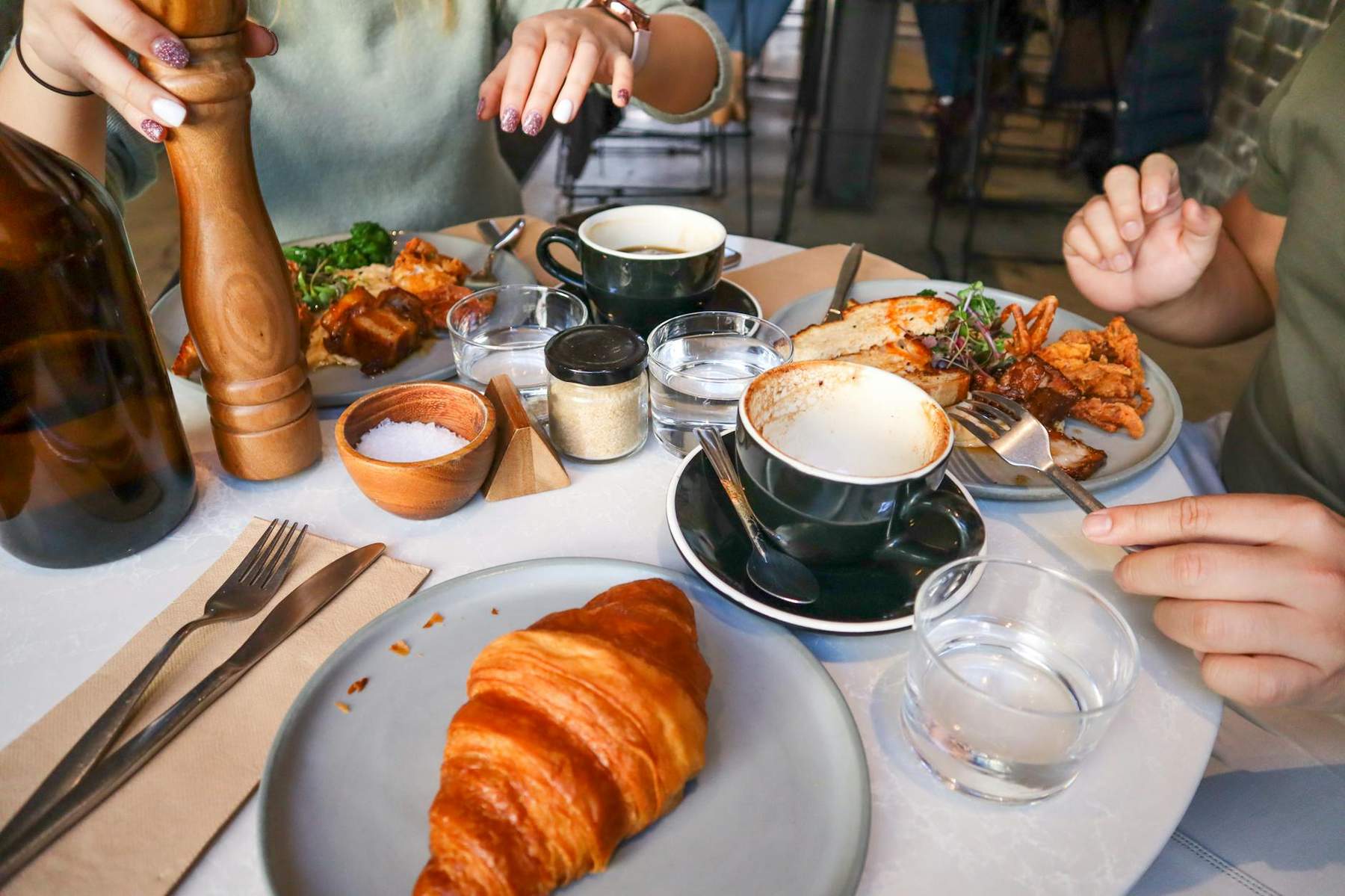
New Zealand takes coffee seriously enough that airport coffee becomes a small national embarrassment. Auckland does better than most airports and worse than almost any suburban café in the city. Expect to pay somewhere in the region of NZ$6 to NZ$8 for a flat white, more at the premium end, and expect the quality to be a function of how busy the counter is rather than which brand is above it. A machine being pulled hard through a 5am departure bank does not produce the same drink as the same machine at 10am.
If coffee matters to you
- Buy landside, not airside. The landside counters have more competition and more turnover, and the sit-down cafés will make you a drink to have at a table rather than in a paper cup on the move.
- Order a flat white, not a latte. It is the local default, every barista here makes hundreds a day, and it is the drink least likely to be assembled badly under pressure.
- Avoid the 5am to 7am and 4pm to 7pm crush if you can. Those are the two big international departure banks and every queue in the building doubles.
- On the way home, drink your last one in the city. Honestly. If you are heading out on a late-evening long-haul, a proper coffee in Britomart or Ponsonby before you leave for the airport is a better use of NZ$7 than anything you will buy at a gate. Our guide to the best cafés in Auckland has the places worth planning around.
Not worth it
The iced and blended sweet drinks at the grab-and-go counters are priced like coffee and are not really coffee. And the hotel-lobby coffee at the airport hotels is, with a couple of exceptions, worse than the terminal — if you are staying at an airport hotel before an early flight, walk to the terminal for breakfast rather than eating where you slept.
Eating at the international terminal
Landside: where the actual meals are
The public concourse is where you will find full cafés with table service, bakery counters, quick-service chains, sushi and salad-style pick-and-go, and a bar. This is where a family can sit down, where a solo traveller can spread out a laptop, and where the person seeing you off can stay with you until the last sensible moment. It is also where prices, while still airport prices, are closest to normal.
Two situations make landside indispensable. The first is a long wait: if you have arrived early because of a car return, a shuttle timetable or a rental drop-off, there is no reason to sit in a queue for immigration hours before you need to. The second is a layover where you have not yet checked in for the onward leg — you are landside by definition, and you should eat accordingly.
Airside: adequate, and priced accordingly
Past passport control and security you will find bars, a café or two, and quick options aimed at people who have twenty minutes and a boarding pass. It works. It is not a destination. If you are in a lounge you will do considerably better — see the Auckland Airport lounges guide, including Strata, the pay-per-use lounge that anyone on any airline can book from around NZ$69 and which very often beats buying a meal and two drinks airside on both quality and price.
Dietary requirements
- Gluten free is well handled at the bakery and salad counters; less reliably at the hot-food chains.
- Vegetarian is straightforward everywhere. Vegan is fine landside, thinner airside.
- Halal and kosher are not systematically catered for at the terminal. If this matters, eat before you come or arrange something in advance.
- Baby food and formula are sold at the pharmacy and convenience outlets, but the range is small and the pricing is captive. Bring what you need.
The domestic terminal
The domestic terminal is a smaller, simpler operation: cafés and grab-and-go counters on both sides of screening, aimed squarely at people making a short hop to Wellington, Christchurch or Queenstown. There is no duty free here, because domestic flights are not international flights — a surprising number of visitors go looking for it. If you want duty free and you are connecting from an international arrival to a domestic flight, you need to buy it before you leave the international building.
Domestic security screening for jet services is quick, so there is less pressure to eat landside than in the international terminal, and the airside options are perfectly reasonable. What does need planning is the walk or shuttle between the two buildings. They remain separate until the new domestic jet terminal opens later this decade; the free inter-terminal shuttle runs roughly every fifteen minutes and takes about ten, and the signposted green-line walk is about a kilometre. Allow more than the stated time, because construction keeps rerouting it. The terminal transfer guide goes through it properly, including how much buffer to leave.
Duty free at Auckland Airport: what it is now
This is the part most guides get wrong, because it changed. Auckland Airport has moved to a single-operator duty free model, and the operator is Aelia Duty Free. If you read somewhere that AKL has “The Loop”, that page is out of date — the Aer Rianta-operated Loop brand is no longer the airport’s duty free. Aelia runs three stores in the international terminal:
- The main departures store, a walk-through immediately after you clear security. This is the big one: liquor, fragrance, cosmetics, confectionery, New Zealand products.
- A smaller departures store near the gates, at the top of the escalator. Useful if you have already walked past the main one and changed your mind, though the range is narrower.
- An arrivals store, positioned before Customs and the baggage claim hall — so you can buy on the way in.
The departures walk-through also contains The Mixologist, a tasting bar with runway views showing off New Zealand gin, vodka and wine. If you have half an hour and any curiosity about NZ spirits, it is a more interesting use of the time than another scroll through your phone, and tasting before you buy a bottle you will carry 11,000 kilometres is a genuinely sensible move.
Buy on arrival, not on departure
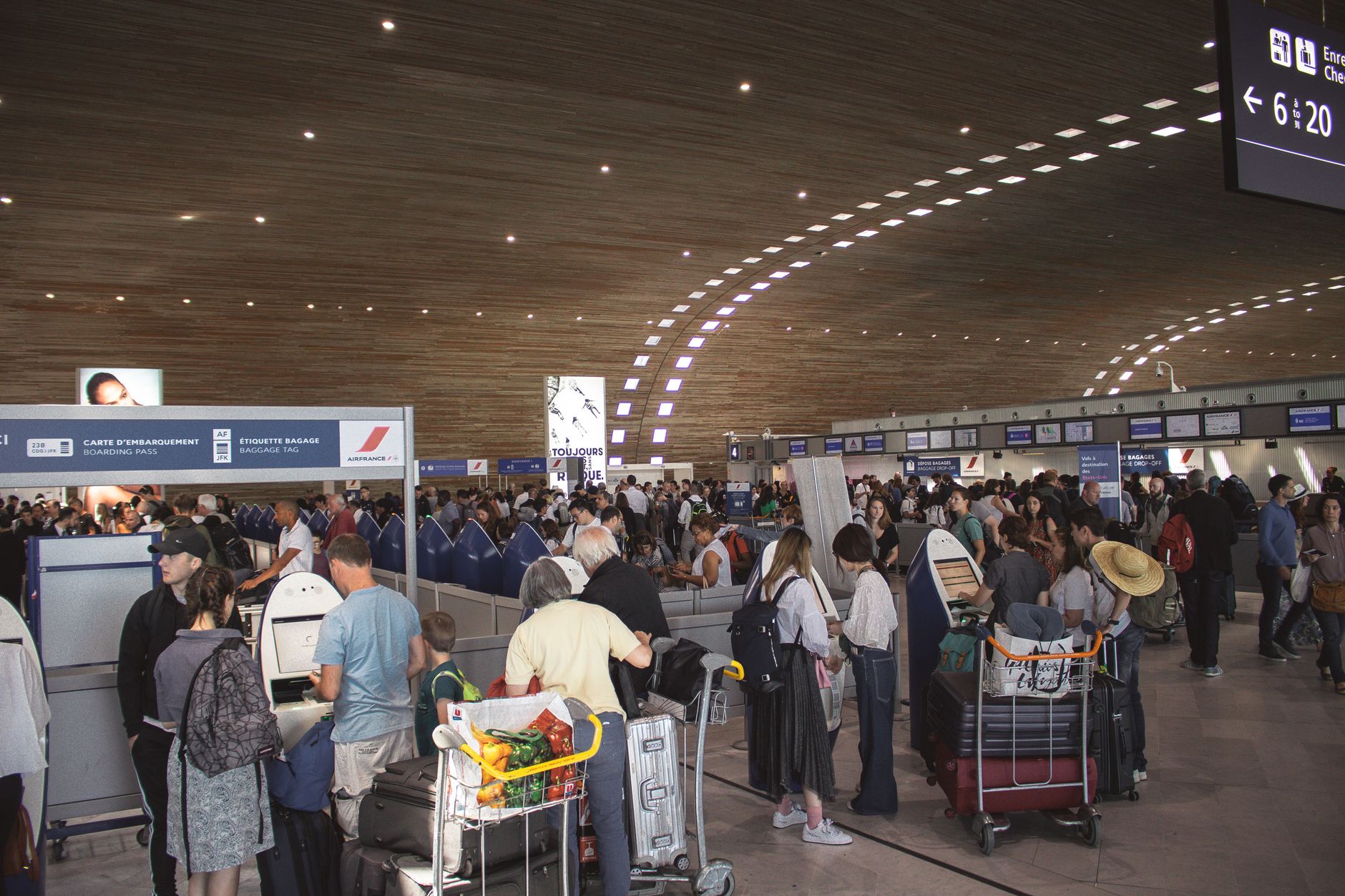
This is the single best piece of advice on this page. If you are coming to New Zealand and you want duty free alcohol for your trip, buy it at the arrivals store rather than at your departure airport. You avoid carrying bottles through a connection, you avoid the liquid restrictions that bite when duty free bought at a transit airport meets a second security screening, and you are buying within your New Zealand allowance at New Zealand prices.
Your New Zealand allowance
New Zealand Customs sets these, and you must be 17 or over to claim the alcohol and tobacco concessions:
| Category | Allowance per traveller |
|---|---|
| Spirits and liqueurs | 3 bottles, each up to 1.125 litres |
| Wine or beer | 4.5 litres |
| Tobacco | 50 cigarettes, or 50 g of cigars or tobacco products |
| Other goods | NZ$700 total value, GST and duty payable above that |
Two things people get caught by. First, the NZ$700 goods concession sits separately from alcohol and tobacco — it is not one pooled figure. Second, you cannot combine concessions between travellers. A couple cannot merge their allowances to bring in one NZ$1,400 item duty free. Check the current position on customs.govt.nz before you commit to a big purchase, because these thresholds do get reviewed.
Entirely separate from all of this is biosecurity, which New Zealand enforces with a NZ$400 instant fine and no interest whatsoever in whether you forgot. Duty free food is still food. Declare it. Declaring never results in a fine, even if the item is confiscated. The arrival guide walks through the declaration process, including the New Zealand Traveller Declaration everyone must now complete before reaching passport control.
Is airport duty free actually cheaper?
Sometimes, and less often than the signage implies. The honest breakdown:
- Spirits: usually yes. Excise on spirits in New Zealand is heavy, and duty free genuinely removes a meaningful chunk of the price. This is the category where the maths works.
- Fragrance and cosmetics: sometimes. Compare against what you would pay at home, not against the New Zealand retail price shown beside it. The saving on the tag is measured against the local RRP, which is not your baseline.
- New Zealand wine: usually no. You are in the country that makes it. A good bottle from a Ponsonby wine shop or straight from a cellar door will beat the duty free selection on both price and interest. If you are anywhere near Auckland’s wineries during your trip, buy there.
- Confectionery and snacks: no. Duty free chocolate is a convenience purchase priced as a gift purchase.
- Electronics and sunglasses: rarely. Compare online before you are standing in front of it.
The Mall: pre-order and collect
Auckland Airport runs an online store called The Mall, which lets you order across several airport retailers in one checkout and collect at the airport. Two reasons to use it: you see the price while you are sitting at home with the ability to compare, rather than under fluorescent light with a boarding call happening; and pre-order pricing is generally better than walk-up. If you know you want a particular bottle, ordering ahead is close to a free saving.
New Zealand souvenirs: what is worth buying at the airport
Airport souvenir shopping has a bad reputation, most of it earned. But there is a small category of genuinely good New Zealand product that is fine to buy here, and a much larger category that is not.
Worth it
- Mānuka honey, if you understand the grading — see below. It is heavy and it is a liquid for hand-baggage purposes, so buying it airside and carrying it on is actually convenient rather than lazy.
- New Zealand spirits. The country’s gin scene in particular has become good, and duty free pricing on spirits is the one place the discount is real.
- Whittaker’s chocolate, which New Zealanders are startlingly loyal to. Not cheaper at the airport, but light, packable and reliably well received.
- Merino and possum-merino knitwear if you genuinely did not get around to buying any and you want something warm. The airport range is limited and marked up, but the product is real.
Not worth it
- Anything greenstone or bone carved at a souvenir-shop price. Real pounamu is a serious object with real provenance and it is not cheap. Airport gift-shop pendants at NZ$30 are generally not New Zealand jade. If you want the real thing, buy it from a proper carver or gallery in the city — our Auckland souvenirs guide covers who to buy from and how to tell.
- Mass-produced “Māori design” homeware. Much of it is not made by Māori and not made in New Zealand. It is worth caring about this, and it is worth spending your money with the people whose designs these are.
- Kiwi-branded soft toys and novelty tea towels. You know.
- Anything you could have bought in the city for less, which is most of it. The airport is the last place to shop, not the best.
How to buy mānuka honey without being fleeced
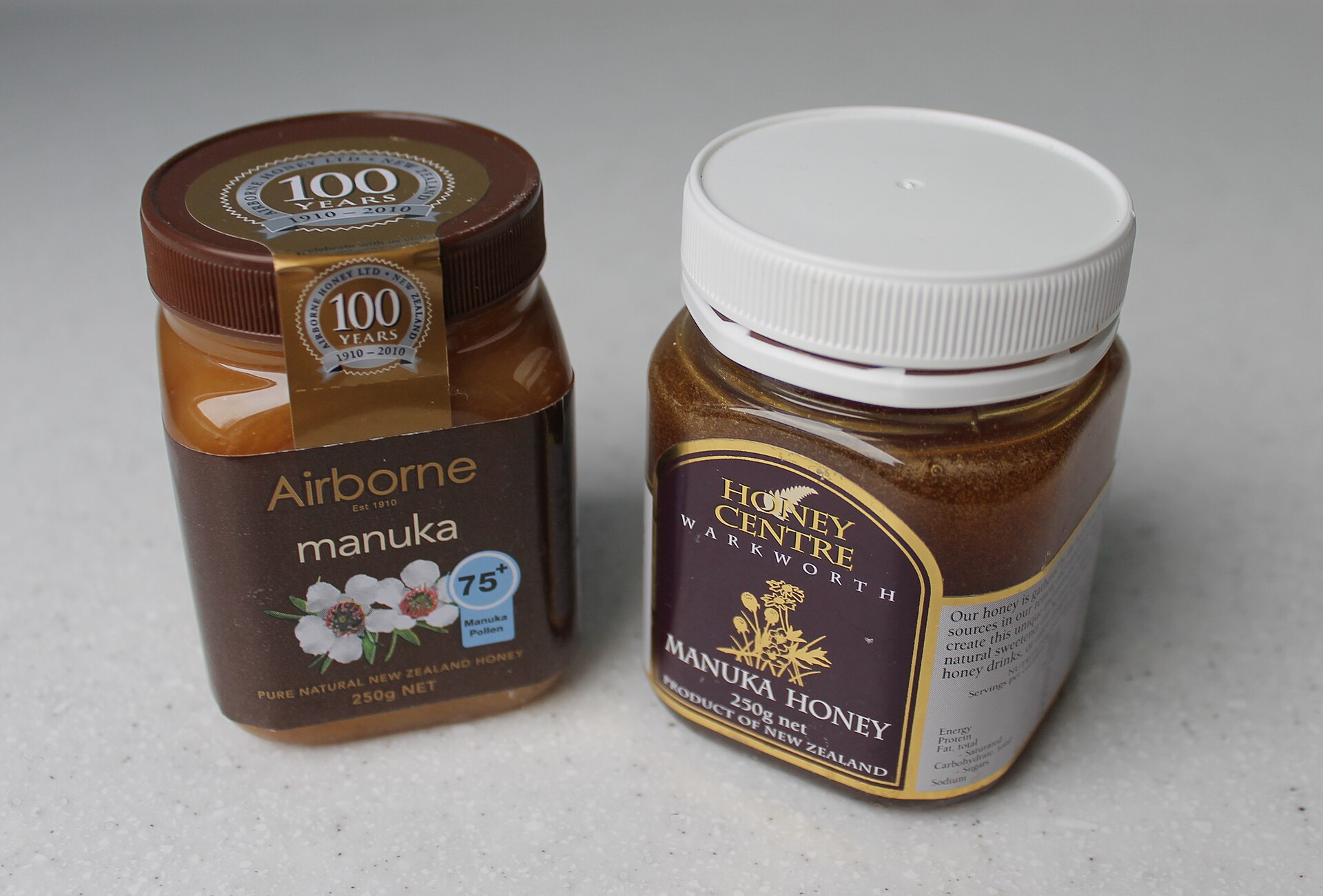
Mānuka honey is the single most commonly mis-bought New Zealand souvenir, because the pricing spans an enormous range and the labels are deliberately confusing. The short version:
- The number on the jar refers to a grading system measuring the compounds that make mānuka mānuka. Higher numbers mean more of them and a much higher price. A jar at the low end and a jar at the high end can differ by a factor of ten.
- Different producers use different rating scales, and the numbers are not interchangeable between them. Compare like with like, or compare price per 100 g at a similar grade.
- If you want it for toast, buy a low grade. The very expensive high-grade jars are bought for other reasons, and you will not taste the difference on a piece of toast.
- Check the net weight, not the jar size. 250 g in a chunky jar looks like more than it is.
- New Zealand honey cannot go the other way. Bringing honey into New Zealand is prohibited. Taking it out is fine, but check whether your destination country allows honey imports before you buy — Australia and several others have restrictions.
Practical things that will save you money or time
Water
New Zealand tap water is excellent and free. There are drinking fountains and bottle-filling points in both terminals past security. Bring an empty bottle through screening and fill it. A bottle of water airside costs several dollars for something that comes out of a tap fifty metres away.
Payment
Everything takes contactless. New Zealand has largely stopped using cash, and many outlets add a small surcharge to credit cards and to some contactless payments — it is legal and it is signposted, but it surprises visitors. There are ATMs and currency exchange in both terminals; airport exchange rates are, as everywhere, poor. If you are arriving, take out cash in the city or simply use your card.
Opening hours
Outlets open around the flight schedule rather than around a clock. The international terminal has food available from very early — the Air New Zealand lounge opens at 04:30, which tells you something about when the building wakes up — and the last outlets close after the final departure bank. The airport publishes an “open now” page listing which stores are trading at that moment, which is far more useful than any static list. If you are arriving on a late flight or facing an overnight, the sleeping at Auckland Airport guide covers what is actually open in the small hours.
Luggage and liquids
Duty free liquids bought at AKL are sealed in a security tamper-evident bag. Keep the receipt visible inside it and do not open the bag, or a subsequent security screening on a connection may take the contents. If your itinerary involves a transit with another security check, this matters — and it is another argument for buying on arrival rather than on departure.
Time budget
If you want to eat properly, shop without hurrying and still be at the gate calmly, add about 45 minutes to whatever check-in time your airline recommends. If you only want a coffee, the standard recommendation is fine. And if you are driving yourself, factor in the walk from the car — see the airport parking guide, where Park&Ride adds a shuttle leg of its own.
A better plan than airport shopping
Worth saying plainly: the best solution to airport shopping is to have done it already. Auckland has excellent food markets, good delis, serious chocolate, real greenstone carvers and wine shops with people who will actually talk to you about what you are buying. If you are leaving on an evening flight, an hour in the city on your last day will produce better gifts at lower prices than an hour at the gate.
The Auckland food markets guide is a good starting point for edible souvenirs, and Britomart is conveniently placed if you are heading to the airport from the city centre anyway — it sits directly above the train station, so you can shop and then take the airport connection from where you are standing.
Frequently asked questions
Is there food at Auckland Airport before security?
Yes, and this is where most of it is. The international terminal’s landside concourse has around fourteen cafés, quick-service outlets and pick-and-go counters, which is more than you will find airside. Anyone can use them, including people not flying that day.
Who operates duty free at Auckland Airport?
Aelia Duty Free, under a single-operator model. It runs three stores in the international terminal: a main walk-through after security, a smaller one near the gates, and an arrivals store before Customs. The Loop, which older articles still mention, is no longer the operator here.
Can I buy duty free when I arrive in New Zealand?
Yes. The Aelia arrivals store sits before Customs and baggage claim at the international terminal, so you can buy your allowance on the way in rather than carrying bottles from your departure airport. For most travellers this is the better option.
How much alcohol can I bring into New Zealand duty free?
If you are 17 or over: three bottles of spirits or liqueur up to 1.125 litres each, plus 4.5 litres of wine or beer. Above that you pay duty and GST. Allowances cannot be shared between travellers, and it is worth confirming the current figures on customs.govt.nz before a large purchase.
Is there duty free at the domestic terminal?
No. Duty free applies to international travel only, so the domestic terminal has cafés and shops but no duty free. If you are connecting from an international arrival onto a domestic flight, buy before you leave the international building.
Is Auckland Airport duty free cheaper than the shops in town?
For spirits, generally yes — New Zealand excise on spirits is high and duty free genuinely removes it. For New Zealand wine, almost never; you are in the country that produces it and city wine shops and cellar doors are better on both price and range. For fragrance and cosmetics it depends entirely on what you would pay at home. For chocolate and snacks, no.
What time do the shops and cafés open at Auckland Airport?
They open around the flight schedule rather than to a fixed timetable, with the international terminal active from before 05:00 for the early departure bank and outlets trading until after the last departure. The airport publishes a live “open now” listing, which is the only reliable way to check for a specific store on a specific day.
Can I take mānuka honey out of New Zealand?
Yes, taking honey out is fine — but check your destination country’s rules, because several restrict honey imports. Note that the reverse is not true: bringing honey or bee products into New Zealand is prohibited under biosecurity rules.
Is there anywhere to fill a water bottle?
Yes, there are drinking fountains and filling points past security in both terminals, and New Zealand tap water is safe and good. Take an empty bottle through screening rather than buying one on the other side.
Related Auckland Guides
- Auckland Airport (AKL): the complete traveller’s guide
- Auckland Airport lounges: which ones you can get into
- What to do on an Auckland Airport layover
- Transferring between Auckland Airport’s terminals
- Arriving at Auckland Airport: customs, biosecurity and eGates
- The best New Zealand souvenirs and gifts
- The best cafés in Auckland
- Auckland’s food markets
Photo Credits
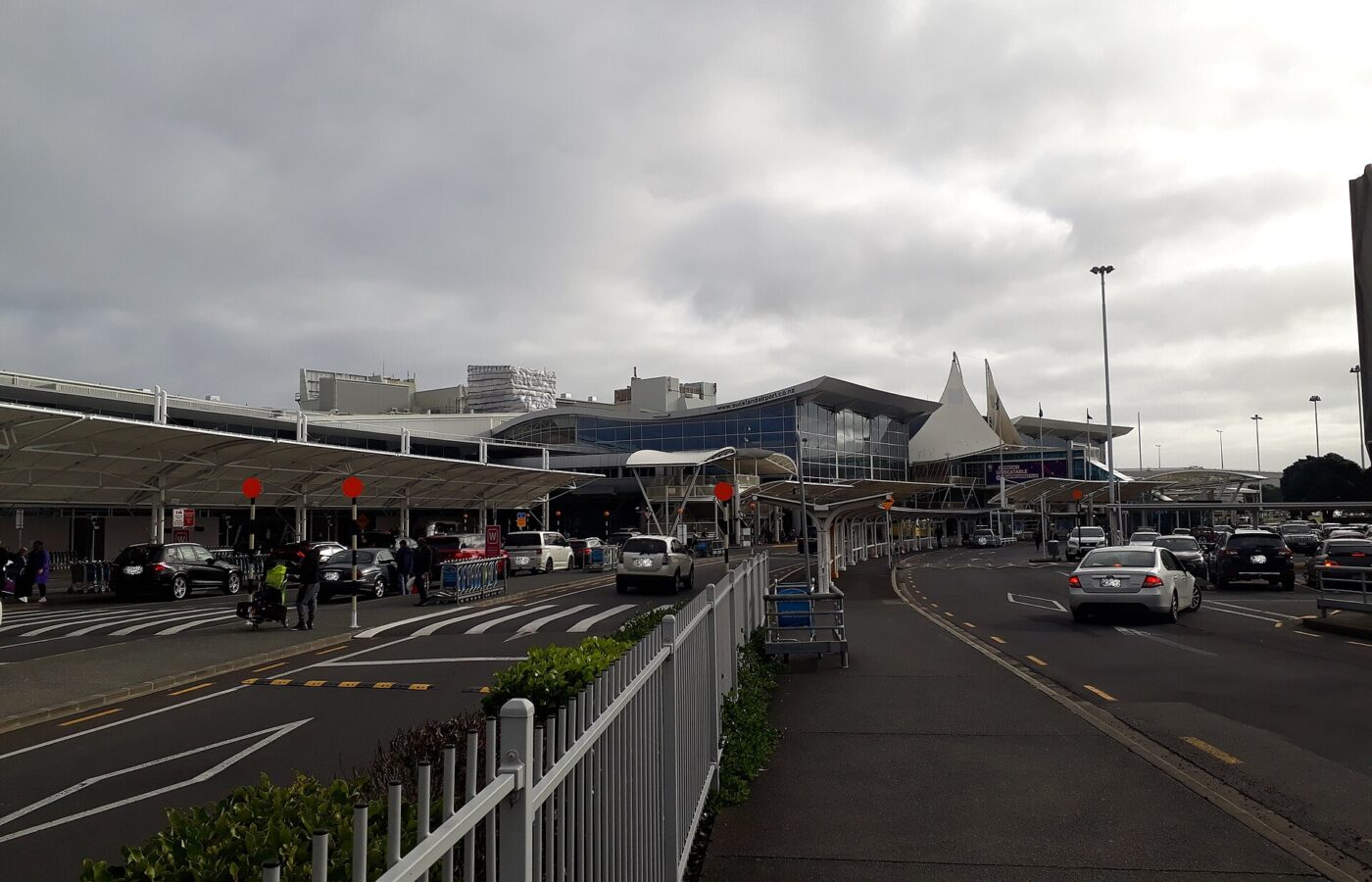
Auckland Airport’s international terminal frontage: AKL international terminal by Vitorabdala, CC BY-SA 4.0, via Wikimedia Commons.
New Zealand mānuka honey jars: Manuka Honey Examples by Grey Geezer, CC BY-SA 4.0, via Wikimedia Commons.