Sleeping at Auckland Airport: Overnight Options & Nearby Hotels
Sleeping at Auckland Airport: whether the terminal closes, which corners are least bad, what nearby hotels and day rooms cost, and when a bed is worth the money.
This article contains advertising. Our booking links are routed through a partner that adds commission tracking automatically, so if you book through one we earn a commission from the provider, at no extra cost to you. It never affects what we recommend. Affiliate disclosure
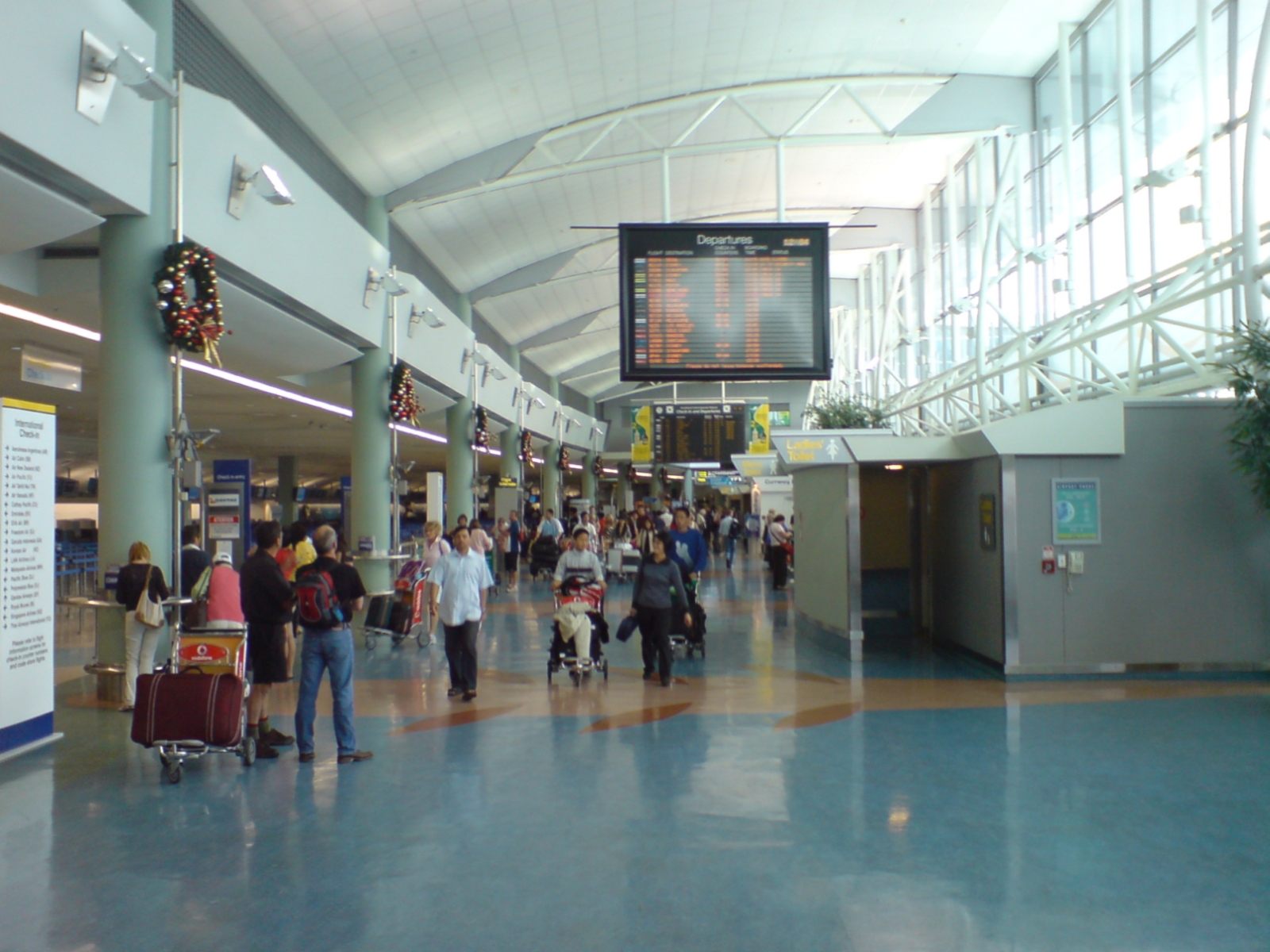
Between about one and four in the morning, Auckland’s international terminal goes quiet in a specific and unwelcoming way. The shops have their shutters down, the cleaning machines are out, the lights stay resolutely on, and the seats — every one of them — have armrests bolted between them. Somewhere among all this, a dozen or so people are attempting to sleep, and most of them are not succeeding. Sleeping at Auckland Airport is possible, it is legal, and it is very nearly always the wrong choice if you have any alternative at all.
This guide is the honest version: whether the terminal actually closes, which corners are least bad, what the alternatives cost, when a hotel is worth it and when it genuinely is not, and how to make an unavoidable night in the terminal as survivable as possible. Prices were checked in September 2026 and are in New Zealand dollars — indicative rather than quotes, so check before you book.
Your Options at a Glance
| Option | Rough cost | Verdict |
|---|---|---|
| Sleeping in the terminal | Free | Possible but genuinely unpleasant. Armrested seats, lights on, cold after 1 am |
| Airport hotel, full night | From roughly NZ$140–250 | The right answer for most people. Walkable or a short shuttle from the terminals |
| Airport hotel day room | Often NZ$100–160 for a block of hours | Excellent value for a long daytime wait. Ask; it is rarely advertised |
| Budget hotel or motel nearby | From roughly NZ$110 | Cheaper, needs a shuttle or taxi. Confirm the shuttle runs at your hour |
| Going into the city | ~NZ$13 return on public transport plus a room | Only worth it with 10+ hours and daylight at one end |
| Strata Lounge | From about NZ$69 | Not an overnight solution — lounges close with the last departures |
Does Auckland Airport Close Overnight?
The short answer is no — the international terminal is not one of those airports that clears the building and locks the doors, and people do stay in it overnight without being moved on. But “does not evict you” is a long way from “welcomes you”, and a few practical things change after the last departure bank.
Retail and food outlets close. Landside cafés shut earlier than you expect and the airside offering closes with the flights. Security screening does not run continuously through the night, so if you are landside you generally stay landside until check-in reopens in the small hours for the dawn departures. The airport gets cold — Auckland is temperate rather than warm, and a terminal at 3 am in July is a genuinely chilly place to be lying still.
And the lighting never goes down. This is the detail that surprises people most: airports are lit to a constant standard all night, and there is no dim corner to retreat to.
If You Have To Do It: Making the Terminal Survivable
Sometimes there is no choice — a cancelled flight at midnight, a pre-dawn departure with the budget already spent, a connection that simply does not work. If that is you, these things genuinely help.
Pick landside, not airside
Landside in the international terminal stays populated longer, has more seating, and keeps you near the check-in hall you will need in the morning. Airside empties out completely once the last flight goes and can feel unsettling as well as uncomfortable.
Find the edges
Seating density is worst in the central concourse near the main doors, which is also the coldest part because of the air movement. Walk the length of the building and look for seating away from the entrances and away from the cleaning routes. Benches without armrests do exist; they go first, so arrive at your chosen spot before midnight rather than at two.
Bring the right four things
- A warm layer. More than you think. The temperature drop after 1 am is real.
- An eye mask. The single highest-value item on this list, because the lights are the thing you cannot escape.
- Earplugs or noise-cancelling headphones. Cleaning machines, announcements, trolleys.
- A power bank. Outlets exist but are unevenly distributed and the good seats near them are taken.
Mind your bags
Auckland Airport is safe by international standards and this is not a warning about crime so much as about sleep. Loop a strap around your arm or a chair leg. Do not leave luggage unattended anywhere in the terminal at any hour — announcements about unattended bags are taken seriously and yours may be removed.
Set two alarms
People who have not slept properly for thirty hours miss alarms. Set one on your phone and one on a watch, and if you are travelling with someone, stagger them.
The Case for Just Booking a Room
Here is the arithmetic that changes most people’s minds.
A room at one of the hotels near the terminals runs from roughly NZ$140 to $250 depending on the property and the night. Against that, a night in the terminal costs you nothing in money and a great deal in everything else: you will not sleep more than an hour or two in fragments, you will start a long-haul flight or a first day in New Zealand already depleted, and you will probably spend NZ$40 on coffee and food during the night anyway to have somewhere to sit.
If your onward flight is at 6 am, the choice is not between a bed and a bench. It is between four hours of real sleep and a shower, or seven hours of lying awake under fluorescent light followed by a flight. For a difference of perhaps NZ$150, that is not a close call for most travellers.
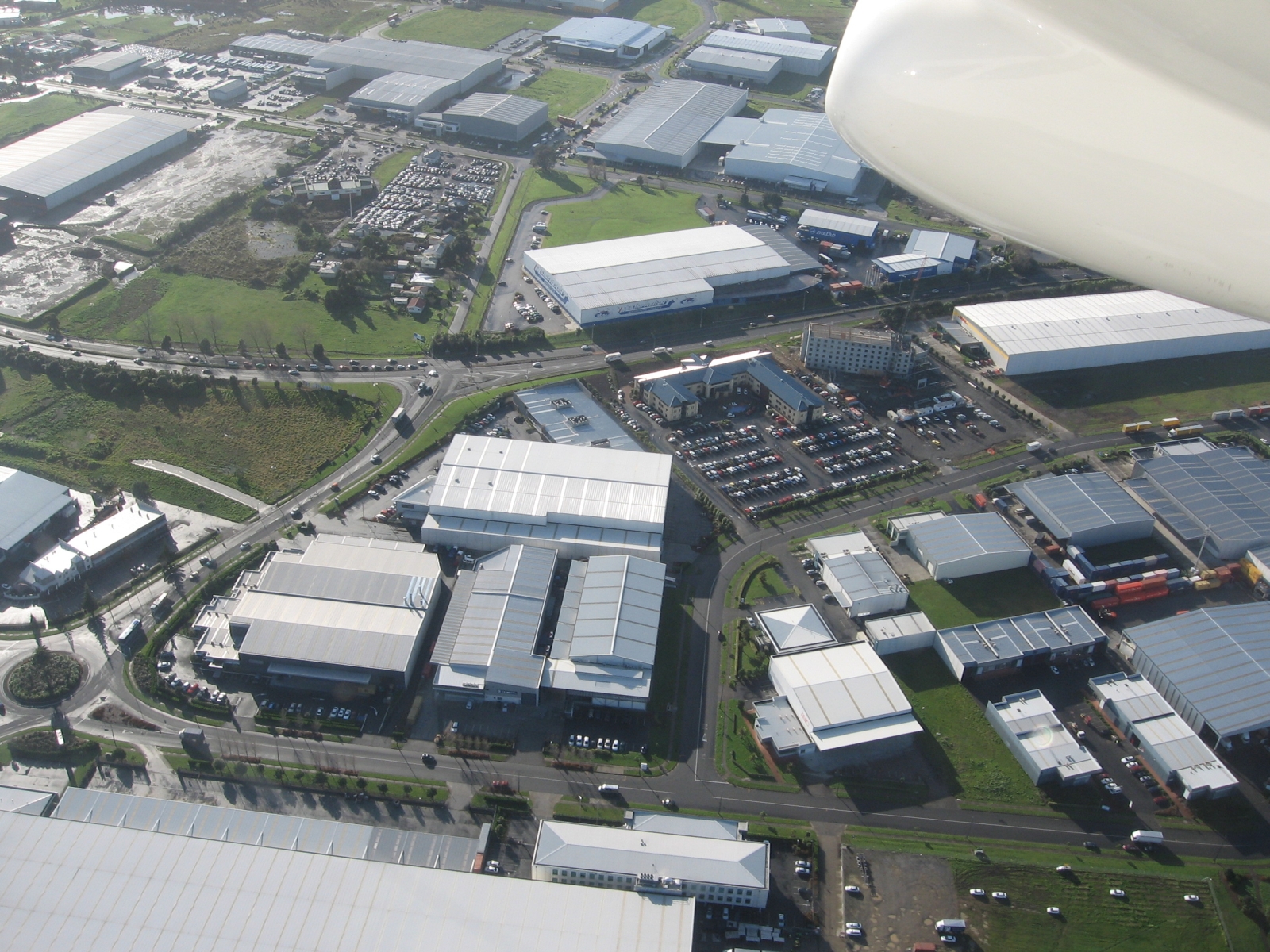
The hotels sit in the industrial grid immediately north of the terminals — unglamorous surroundings, but several are close enough to walk and the rest run shuttles. Our comparison of Auckland Airport hotels covers which are genuinely walkable and which need the shuttle, and budget hotels and hostels in Auckland covers the cheaper end.
Day rooms: the option nobody advertises
Several hotels near the airport will sell a room by a block of hours rather than for the night — typically something like six or eight hours during the day, at a meaningful discount to the overnight rate. It is rarely on the booking sites and it is almost always available if you telephone and ask.
For a long daytime layover this is the best value at Auckland Airport by a distance: a bed, a shower, a door that shuts and reliable wi-fi for less than two lounge entries. If your wait is six hours in the middle of the day, phone a hotel before you buy anything else.
When the Terminal Is Genuinely the Right Choice
To be fair to it, there are cases where staying put is correct.
A wait of five hours or less overnight. By the time you have travelled to a hotel, checked in, undressed and set an alarm, you would have two hours of sleep and a 4 am checkout. Stay, find a corner, doze.
You are airside on an international connection and cannot clear the border. If your nationality or ticketing means you are staying airside, a hotel outside is not available to you at all. In that case the terminal is your only option and the advice above is the whole of the plan.
The budget genuinely will not stretch. Long-term travellers do this routinely and survive it. If that is you, the eye mask and the extra layer matter more than any of the rest.
A cancelled flight at 1 am with the hotels full. When a widebody goes late the airport hotels sell out within the hour. If you were not quick enough, you are staying — and it is worth checking whether the airline is offering accommodation before you settle in, because on a delay within its control it frequently is.
Should You Go Into the City Instead?
Occasionally, yes. Central Auckland has far more accommodation at far more price points than the airport strip, and if you have ten or more hours overnight with daylight at one end, going in is a reasonable plan.
The transport works out at about NZ$13 return — the AirportLink bus to Puhinui Station and a train, around NZ$6.50 each way on an AT HOP card or contactless. The bus runs roughly every ten minutes from about 4:30 am to 12:40 am, seven days, which is the constraint: after 12:40 am you are taking a taxi at NZ$75 to $95, and the arithmetic collapses.
So the rule is simple. If you can get into town before midnight and back after 5 am on public transport, the city is cheaper and better in every respect. If your wait straddles the small hours in a way that forces two taxis, stay near the airport. Our Auckland Airport to CBD guide has the timetable detail, and where to stay in Auckland covers the city options.
The Pre-Dawn Departure Problem
A large share of Auckland’s international departures leave between 6 and 9 in the morning, which creates the specific problem this guide exists for: check-in opens somewhere around 3 or 4 am, you need to be there, and no form of accommodation in the city can get you to the airport at that hour without a taxi.
Three workable answers, in order of how well they work:
Stay at an airport hotel and walk or take the shuttle. Ten minutes door to check-in, no taxi, no anxiety about traffic. This is why airport hotels exist and why they are priced the way they are.
Stay in the city and take a taxi at 3 am. Costs NZ$75 to $95, requires booking the night before, and means being awake in the city at an hour when nothing else is. It works, but it is the expensive version of the first option with worse sleep.
Stay in the terminal. Free and awful. If your flight is at 6 am and you arrive at the airport at 11 pm the previous evening, this is the seven-hour version of the thing this guide keeps advising against.
One thing to sort regardless: know which terminal you are departing from. The international and domestic buildings are a kilometre apart and the free inter-terminal shuttle plus wait comes to about 25 minutes — not something to discover at 4 am. Our guide to the Auckland Airport terminal transfer covers it.
Showers, Food and the Small Hours
Showers. The lounges have them, and Strata sells entry from around NZ$69 — but lounges close with the last departure bank, so this is a solution for an evening or a daytime wait, not for 3 am. An airport hotel day room is the only reliable overnight shower. Our guide to Auckland Airport lounges covers who can get into what.
Food. Options thin out sharply overnight. Buy something before the outlets close rather than assuming you will find dinner at 2 am, and fill a water bottle after security rather than paying terminal prices for it at midnight.
Luggage. The baggage storage service in the international terminal does not run around the clock, so it is not a way to lighten an overnight stay. Check its hours before you plan around it.
Wi-fi and power. Free wi-fi covers both terminals and works well enough for messaging and video. Power outlets are unevenly distributed and the seats beside them are the first taken — a power bank is worth more than a good seat.
Sleeping in the Domestic Terminal
Almost everything written about overnighting at this airport assumes the international terminal, and the domestic building is a different proposition worth knowing about.
It is smaller, calmer and considerably quieter after the last flights, which makes it more pleasant in the early evening — and it is also more thoroughly shut down overnight, with fewer people around and less reason for staff to be there. Domestic flights do not run through the night, so there is no ebb and flow of passengers to make the building feel occupied.
If your onward flight is domestic and departs early, the practical answer is usually to overnight near the international terminal or at a hotel, and cross in the morning — the free shuttle plus the wait is about 25 minutes and the domestic check-in cut-off is generous compared with international. Camping out in a near-empty domestic terminal to save that 25 minutes is a poor trade.
What It Actually Feels Like Hour by Hour
For anyone deciding whether they can face it, here is the honest shape of a night in the international terminal.
10 pm to midnight. Still busy. The late departures are checking in, the food court is winding down but open, and there are plenty of people about. This is when to buy food and water, fill a bottle, and claim a seat somewhere away from the main doors.
Midnight to 1 am. The building empties fast. Shutters come down, the cleaning machines appear, and the temperature starts to drop as the doors keep opening onto a cooling night. Put your warm layer on now rather than at three, when you are already cold.
1 am to 4 am. The hard part. Nothing is open, the lighting is unchanged, the announcements continue at intervals, and it is cold. Most people manage broken stretches of forty minutes rather than actual sleep. This is where the eye mask and earplugs earn their place in your bag.
4 am to 6 am. The airport comes back to life for the dawn departures — check-in reopens, the first cafés open, and the building fills with people who have had a full night’s sleep and look it. If you have been awake since 1 am, this is when the exhaustion actually lands.
Read that back and consider the NZ$150 again. It is the most useful thing this guide can do.
Practical Checklist for an Unavoidable Night
- Buy food and fill a water bottle before 11 pm. Nothing is open in the small hours and terminal water prices at midnight are what you would expect.
- Confirm which terminal you depart from and how long the crossing takes, before you settle anywhere.
- Check the check-in opening time for your flight — usually around three hours before departure — so you know how long you actually have to fill.
- Charge everything while outlets are still available in the evening, rather than hunting for a socket at 2 am.
- Keep your passport and boarding pass on your body, not in a bag you are using as a pillow.
- Set two alarms on separate devices.
- Layer up before you get cold, not after.
- Move every couple of hours. A walk the length of the terminal restores more than another attempt at sleeping in the same position.
- Ask the airline first if the delay is theirs. On a disruption within its control, an airline will frequently provide a hotel — but only if you ask, and only while rooms remain.
The Honest Verdict
Auckland Airport is a middling place to spend a night and there is no trick that makes it a good one. It does not evict you, which is more than some airports offer, and the wi-fi works and it is safe. Everything else about it — the armrests, the lights, the cold after one in the morning, the shutters coming down on the last café — is designed for a building that empties at night, because that is what it mostly does.
For a wait of five hours or less, stay put, find the quietest corner you can, and use an eye mask. For anything longer, and particularly before a long-haul departure or a first day in New Zealand, book a room. The gap in cost between a bench and a bed near this airport is smaller than the gap in how you will feel about the following day, and that is the whole calculation. The rest of the airport is covered in our Auckland Airport guide, and what to do with a long daytime wait in our Auckland Airport layover guide.
Frequently Asked Questions
Can you sleep overnight at Auckland Airport?
Yes. The international terminal does not close and clear the building, and people stay overnight without being moved on. It is uncomfortable rather than prohibited — armrested seating, lights on all night, and a cold quiet stretch from about 1 am.
Does Auckland Airport close at night?
The terminal stays open, but retail and food outlets close, security screening does not run continuously, and the building is much colder and quieter after the last departures. Check-in for the dawn departures reopens in the small hours.
Are there sleeping pods at Auckland Airport?
There are no dedicated sleep pods in the terminals. The equivalents are the lounges, which have rest areas and showers but close with the last flights, and the airport hotels, several of which sell day rooms by a block of hours.
How much is a hotel near Auckland Airport?
Roughly NZ$140 to $250 for a full night at the hotels nearest the terminals, and from around NZ$110 at cheaper motels a shuttle ride away. Day rooms, where offered, are often NZ$100 to $160 for a block of hours.
Which Auckland Airport hotels can you walk to?
Several sit close enough to walk from the international terminal, with the rest running shuttles. Confirm walkability and shuttle hours when you book, especially for a pre-dawn departure when a shuttle may not be running.
Is it worth going into Auckland city on an overnight layover?
Only with ten or more hours, and only if you can travel both ways on public transport. The AirportLink bus runs from about 4:30 am to 12:40 am; outside those hours you need two taxis at NZ$75 to $95 each and the saving disappears.
Is Auckland Airport safe to sleep in?
Yes, by international standards. Keep your bags physically attached to you while you sleep, and never leave luggage unattended — unattended bags are treated seriously and may be removed.
Can I shower at Auckland Airport overnight?
Not reliably. Showers are in the lounges, which close with the last departures. For an overnight wait, an airport hotel room or day room is the only dependable option.
Related Auckland Guides
- Auckland Airport Hotels
- Auckland Airport Layover Guide
- Auckland Airport Lounges
- Auckland Airport (AKL): The Complete Traveller’s Guide
- Auckland Airport to CBD: Bus, Train, Taxi & Uber
- Budget Hotels & Hostels in Auckland
- Where to Stay in Auckland
Photo Credits
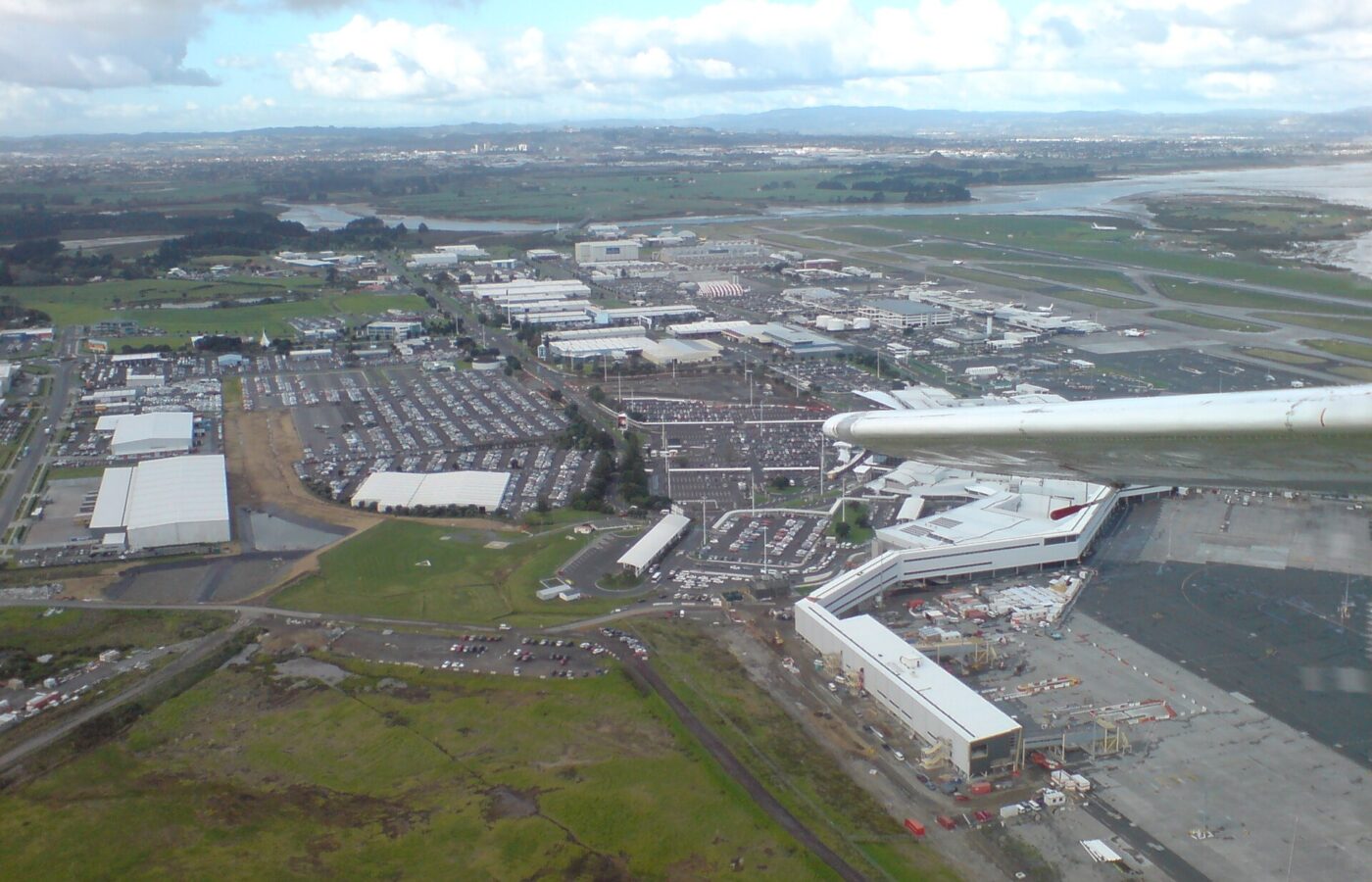
Auckland Airport and its surroundings from the air: Auckland Airport Seen From Light Plane 04 by Ingolfson, Public domain, via Wikimedia Commons.
The industrial area immediately north of Auckland Airport: Industrial Area North Of Auckland Airport by Ingolfson, Public domain, via Wikimedia Commons.