Auckland Souvenirs: 12 Best NZ Gifts to Take Home (2026)
The best Auckland souvenirs and NZ gifts: authentic pounamu, UMF manuka honey, Maori art, possum-merino wool and more, with where to buy and prices.

This article contains advertising. Our booking links are routed through a partner that adds commission tracking automatically, so if you book through one we earn a commission from the provider, at no extra cost to you. It never affects what we recommend. Affiliate disclosure
I’ve watched a lot of people at Auckland Airport, twenty minutes before boarding, panic-buying a fistful of kiwi keyrings that were almost certainly made overseas. I’ve been that person. The good news is that the best Auckland souvenirs and NZ gifts aren’t the airport clutter — they’re a short list of genuinely lovely, genuinely local things you can find without much effort if you know where to look. This guide is that short list, plus exactly where to buy each one and what you should expect to pay.
I’ve bought most of these myself, either for family overseas or for my own shelves, so I’ll be candid about which ones are worth the money and which shops I’d actually send you to. A quick note before we start: prices below are in New Zealand dollars (NZD) and are ballpark figures for 2026 — treat them as a guide, not gospel.
The short answer
The best Auckland souvenirs and NZ gifts are authentic pounamu (greenstone) jewellery, UMF-certified manuka honey, genuine Māori art, possum-merino wool, New Zealand wine, and Whittaker’s chocolate. Buy from museum shops, specialist stores and department stores rather than airport gift racks, and always check for authenticity marks on pounamu and Māori-made work.
Best Auckland souvenirs at a glance
| Souvenir | Rough price (NZD) | Best for |
|---|---|---|
| Pounamu (greenstone) pendant | $80–400+ | A meaningful gift for someone else |
| Manuka honey (UMF certified) | $30–240+ | A useful, quintessentially NZ present |
| Māori art or carving | $40–1,000+ | A lasting cultural piece |
| Possum-merino throw or garment | $50–600 | Warmth and genuine NZ craft |
| New Zealand wine | $20–80 a bottle | Wine lovers (mind your allowance) |
| Whittaker’s chocolate | $5–12 a block | Cheap, cheerful, universally loved |
| Kiwiana (Buzzy Bee, L&P, etc.) | $3–45 | Fun, nostalgic small gifts |
| All Blacks merchandise | $40–180 | Rugby fans |
Below I’ll go through each of these in more detail — what to look for, what to avoid, and the specific Auckland shops I’d point you to. Then I’ll cover where to shop by neighbourhood, the airport, customs rules for taking things home, and a few budget-based shopping plans.
Pounamu (greenstone)
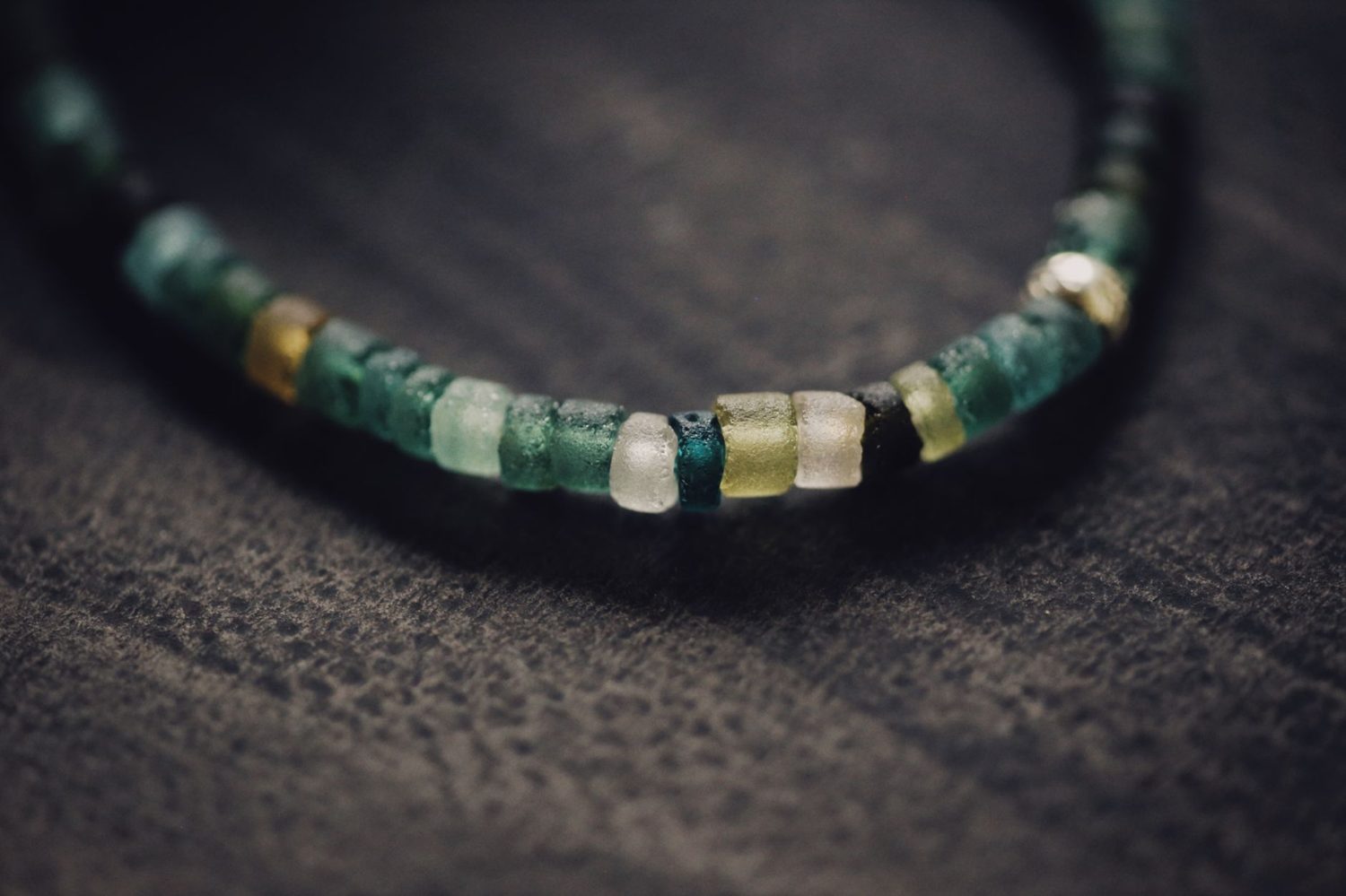
If you buy one meaningful thing in New Zealand, make it pounamu. It’s the country’s most spiritually significant taonga (treasure), and it carries a weight that no other souvenir here comes close to.
Pounamu — jade or greenstone — comes only from the rivers of the South Island’s West Coast, a region Māori call Te Tai Poutini. The South Island itself is known as Te Wai Pounamu, the “waters of greenstone,” which tells you how central this stone is. Today Ngāi Tahu, the main South Island iwi, are the legal owners and kaitiaki (guardians) of all pounamu in its natural state, under the 1997 Ngāi Tahu (Pounamu Vesting) Act.
The custom you should know
Here’s the part most guides skip, and it changes how you shop: traditionally, you don’t buy pounamu for yourself. Just as the stone was a gift from the land, carved pounamu is meant to be a gift passed between people. So if you’re drawn to a piece, the lovely thing to do is buy it for someone you care about — or, if it’s for you, have a travelling companion “gift” it. It’s a small ritual, but it’s the spirit of the thing.
Common designs and what they mean
- Hei matau (fish hook) — connection to the ocean and to Māui; brings prosperity and safe travel over water
- Koru — an unfurling fern frond; new beginnings, growth and harmony
- Toki (adze) — strength, determination and courage
- Hei tiki — the human form; often a family heirloom carrying an ancestral name, its mana growing as it’s passed down
- Single twist — the joining of two people or cultures; lasting friendship and eternal life
You’ll also hear about varieties by colour: kawakawa (a medium-to-dark green) is the most common, while kahurangi (pale and translucent) and tahutahi (rare, intense green flecked with white) were historically the most prized.
Where to buy pounamu in Auckland
- Auckland War Memorial Museum shop — a curated, trustworthy starting point, with carvings held to a high standard
- The Poi Room (Ponsonby) — a gallery-style store with strong ethical standards and a wide pounamu range, from pendants to rings and earrings
- Mountain Jade (Queen Street) — well-established greenstone specialists
- Aotea Gifts (city centre) — broad range, easy for a quick, reliable purchase
How to spot the real thing
This matters, because a lot of “greenstone” sold in tourist shops is imported jade — often raw stone from overseas, and plenty of it carved in China. Genuine New Zealand pounamu, especially authenticated Ngāi Tahu pounamu, comes with a mark of authenticity and a unique traceability code that identifies the origin and whakapapa of the stone. If a $25 pendant has no provenance and no code, assume it isn’t genuine NZ pounamu. Real carved pieces generally start around $80 and climb from there. To go deeper on the cultural side, our guide to Auckland Māori culture, history and heritage is a good companion read.
Manuka honey
Manuka honey is New Zealand’s most famous edible export, prized for its flavour and its antibacterial properties, and it’s one of the easiest quality gifts to bring home. The trick is reading the label.
Genuine manuka is graded by UMF (Unique Manuka Factor) or MGO (methylglyoxal content). Higher numbers mean stronger activity — and a steeper price. Roughly:
- UMF 5+ (250g): around $30–45 — everyday quality
- UMF 10+ (250g): around $60–90
- UMF 15+ (250g): around $120–180 — often considered medicinal grade
- UMF 20+ (250g): $240 and up
Buy from Comvita or Manuka Health stores, the Smith & Caughey’s food hall, or a decent supermarket — and only buy jars that carry a clear UMF or MGO number on the label. Honey without that certification may not be genuine manuka at all. For gifting, a UMF 10+ hits a nice balance of quality and price.
A couple of practical notes from experience. The number matters more than the brand, so don’t pay a premium for packaging alone — compare the UMF or MGO figure jar for jar. If you’re buying several as gifts, the 250g jars travel and share better than one big pot, and they spread the risk if a lid works loose in a bag. Multi-floral manuka blends are cheaper than mono-floral and perfectly nice for eating; the higher grades are really about the antibacterial claim rather than flavour, so a mid-range jar is usually the sweet spot for a present. And check the use-by date, because you’ll likely be gifting it weeks after you get home.
Māori art and carving
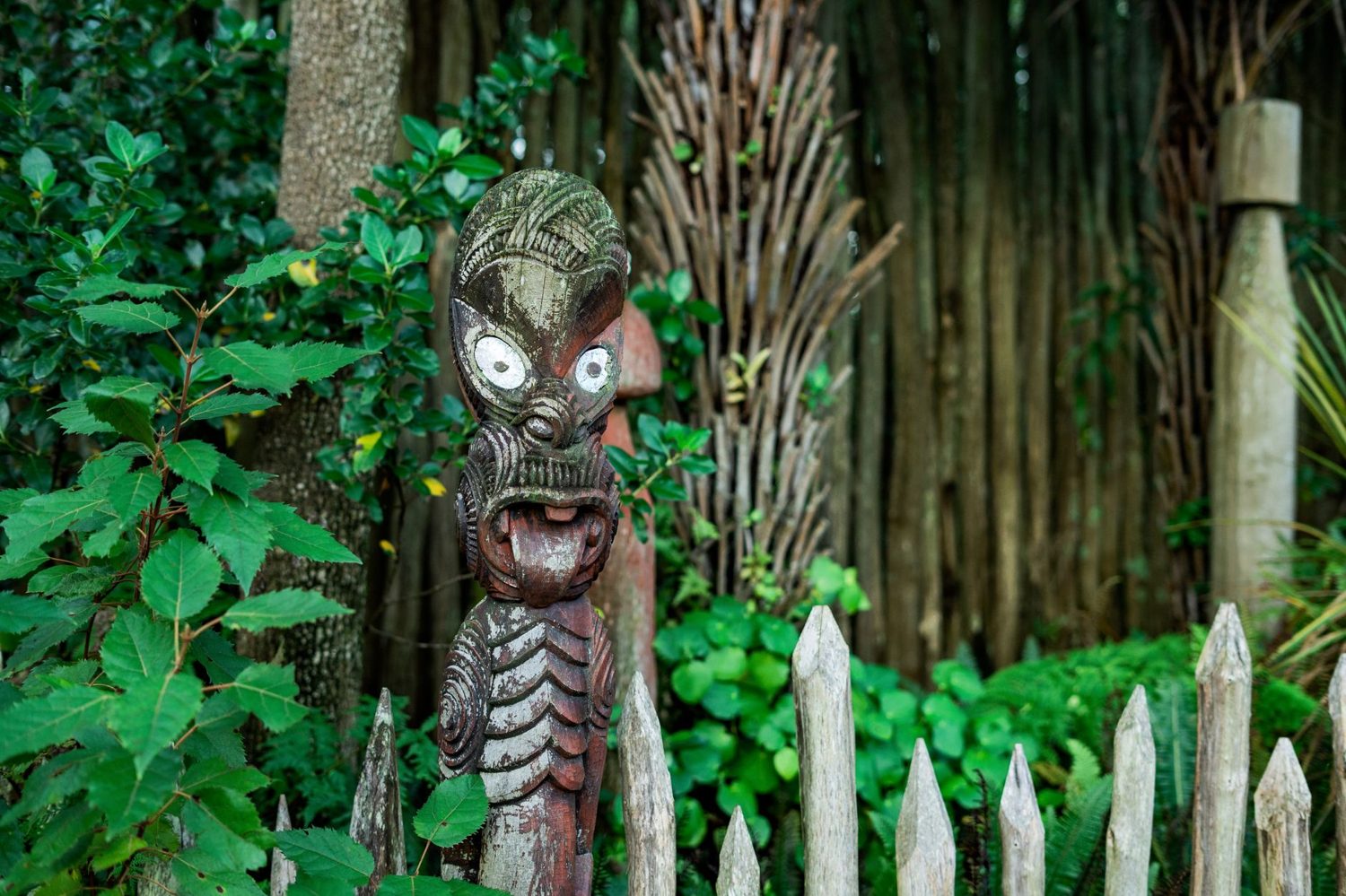
Beyond pounamu, New Zealand has a deep tradition of carving and weaving that makes for a lasting, characterful gift: wood carvings in native kauri, tōtara or rimu, the same forest giants you can walk among on the Waitākere Ranges bush tracks; bone carvings; and woven pieces like kete (bags) and, at the high end, korowai (feather cloaks).
As with greenstone, authenticity is the whole game. Look for work by named Māori artists and, where you can, the toi iho mark — a trademark that certifies authentic, quality Māori-made art. Steer clear of anonymous “Māori-style” pieces with no maker and no story; a lot of that is mass-produced overseas.
- Auckland Museum shop — authenticated pieces, a safe and well-curated choice
- Native Agent (K Road) — contemporary Māori artists
- The Poi Room (Ponsonby) — a strong range of ethically sourced work
- Aotea Gifts — a broader, more mid-range selection
Possum-merino wool

New Zealand runs on wool, and the star product for visitors is possum-merino — a blend of soft merino with warm, lightweight brushtail-possum fur that traps far more heat than merino alone. It’s light, it packs down small, and it’s genuinely nice to wear.
- Possum-merino throw or blanket: around $300–600
- Possum-merino jumper, scarf or beanie: around $80–250
- Merino socks: around $25–40
- Untreated sheepskin rug: around $80–150
One important caveat before you buy: the introduced possum is a serious pest in New Zealand, which is why using its fur is uncontroversial here — but a few countries restrict possum-fur products on biosecurity grounds, so check your home country’s rules before committing to a big blanket. For garments, look at Untouched World (Snowy Peak) and Standard Issue; for throws, Stansborough is a premium name. Smith & Caughey’s stocks a good cross-section.
New Zealand wine
New Zealand wine punches well above the country’s size — Marlborough Sauvignon Blanc and Central Otago Pinot Noir are the household names, and Auckland is the jumping-off point for Waiheke Island’s excellent reds. A bottle makes a lovely gift, with one big proviso: most countries limit how much wine you can bring in duty-free, so check your allowance before you load up. Often it’s around one bottle per traveller before duty applies.
- Glengarry Wines — Auckland’s main premium wine retailer, with a flagship in Mt Eden
- Caro’s Wine Shop (Newmarket) — a well-curated boutique
- Auckland Airport duty-free — convenient for international departures
- Waiheke wineries — many ship internationally, which sidesteps the packing problem entirely
If wine tasting is on your list, it pairs beautifully with a day trip — our guide to the best day trips from Auckland covers getting across to Waiheke, and the Auckland food and drink guide has more on the local wine and dining scene.
Whittaker’s chocolate
This is the gift I always default to when I need something quick, cheap and guaranteed to please. Whittaker’s is New Zealand’s beloved home-grown chocolate, and honestly it outclasses most of the international big names. A 250g block runs about $5–12 in any supermarket. Flavours worth seeking out:
- Hokey Pokey — studded with honeycomb, uniquely Kiwi
- L&P — lemony, tied to the iconic L&P soft drink
- Peanut Butter block — a genuine cult favourite
- Coconut — the classic dark-chocolate slab
- Macadamia — with locally grown nuts
Kiwiana and other treats
Kiwiana is the affectionate name for New Zealand’s kitschy cultural icons — the small, nostalgic stuff that makes fun, cheap gifts and stocking fillers.
- Buzzy Bee — the classic wooden pull-along toy that clicks and flaps its wings, a NZ staple since the 1940s ($25–45)
- L&P (Lemon & Paeroa) — the “world famous in New Zealand” soft drink, around $3 a can
- Pineapple Lumps — chocolate-covered chewy pineapple lollies
- Jaffas — orange-chocolate sweets, another Kiwi confectionery classic
- Marmite — the NZ version is its own distinct thing (and not the same as the British one)
- Jandals — what the rest of the world calls flip-flops
For these, supermarkets like Pak’nSave and Woolworths give you the best prices; Smith & Caughey’s and gift shops are handier if you want it all in one place.
All Blacks merchandise
The national rugby team is a global brand, and for a rugby fan back home an All Blacks gift is hard to beat.
- Replica jersey: around $130–180 from the official store
- Scarves, beanies and caps: around $40–80
- Training gear: around $80–200
A few tips if you’re jersey shopping. Sizing runs athletic, so the fitted “players” cut is snug — size up if you want room, or go for the looser replica. There’s also more than just the classic black home jersey: you’ll find the women’s Black Ferns range, kids’ sizes, retro designs and the occasional special-edition kit, so it’s worth browsing rather than grabbing the first one you see. Beyond apparel, a rugby ball, a cap or a good book on the team all travel more easily than a folded jersey and cost less.
The All Blacks Experience at SkyCity has a retail store attached and doubles as a genuinely fun attraction; Adidas on Queen Street and the airport also stock the range. If you’re building a city itinerary around this, our roundup of the best things to do in Auckland and the Sky Tower guide cover the SkyCity precinct nearby.
A few more NZ gifts worth a look
- NZ skincare — Antipodes, Trilogy (rosehip oil) and Linden Leaves are all quality local brands, roughly $25–120 a product, sold at Mecca and department-store beauty halls
- NZ books — Eleanor Catton’s The Luminaries, Witi Ihimaera’s Whale Rider, or a Kiwi cookbook; try Time Out Bookstore in Mt Eden or Unity Books on High Street
- NZ music — anything by Lorde (Auckland-born), Crowded House or Six60
- Food specialties — boutique NZ olive oil, Tip Top hokey pokey ice cream (eat before you fly), or premium smoked salmon
Where to shop for souvenirs in Auckland
Auckland’s souvenir shopping is spread across a handful of distinct areas, each with its own character. If you want the full picture of the city’s retail scene, the parent Auckland shopping and nightlife guide maps it all out.
One-stop shops
- Smith & Caughey’s (Queen Street) — a historic department store with a large NZ-products section; the easiest single stop for honey, wool, kiwiana and skincare under one roof
- Auckland War Memorial Museum shop — the best place for authenticated Māori work, plus NZ books and quality kiwiana
- Aotea Gifts — a reliable general souvenir store with a broad range
Neighbourhoods worth a wander
- Britomart — high-end New Zealand designers and premium gifts in a handsome restored precinct. Our Britomart shopping guide covers the boutiques and labels.
- Newmarket — Auckland’s fashion district, with boutique laneways plus a big Westfield mall. See the Newmarket shopping guide for the full rundown.
- Ponsonby — home of The Poi Room and a string of design-led stores
- K Road (Karangahape) — independent and edgier, with galleries like Native Agent
- Parnell and Devonport — established gallery and gift shops with a village feel
If you’d rather do your shopping indoors and in one hit, the best shopping malls in Auckland guide points you to the biggest centres. And to work out how to move between these areas efficiently, our getting around Auckland guide covers the trains, buses and the HOP card.
Markets
- Britomart farmers’ market (Saturday) — NZ produce, honey and condiments straight from the makers
- Otara Market (Saturday) — Pacific crafts and food, a lively local scene
- Avondale Sunday Market — multicultural and very affordable
Auckland Airport souvenir shopping
If you leave it to the last minute, the airport is better than it used to be — most of the big NZ brands have an airside presence. You’ll find Comvita manuka honey, Antipodes skincare, an NZ wine duty-free shop, an All Blacks store and plenty of kiwiana. Two honest caveats: prices aren’t always better than in town, and the mass-market wool and “greenstone” on the racks tends to be lower quality than what you’d get from a specialist. Allow yourself extra time if you plan to shop properly — international departures generally open around three hours before the flight.
What to avoid
- Fake pounamu — cheap “greenstone” with no traceability code or provenance is usually imported jade, not genuine NZ pounamu
- Anonymous “Māori-style” art — without a named maker or the toi iho mark, it may well be made overseas
- Uncertified “manuka” honey — no UMF or MGO number on the label means no guarantee it’s the real thing
- Made-in-China keyrings and snow globes — the classic airport trap; low quality and not actually local
- Bargain-bin wool — often inferior to what the specialist stores carry for not much more
Bringing souvenirs home: customs
Different countries have very different rules, so the golden rule is simple: if in doubt, declare it. Non-declaration fines are steep, and declaring costs you nothing.
- Honey: allowed into most countries, but Australia and the US generally want it in commercial, sealed packaging — buy branded, not loose
- Wool and sheepskin: usually fine, though strict-biosecurity countries like Australia may want it declared
- Possum-fur products: restricted in some countries — check before buying a large item
- Wine: most countries allow around one bottle duty-free per traveller; some allow more
- Wood carvings: pounamu and bone are straightforward, but timber items can occasionally need treatment certification
- Fresh fruit: almost universally banned — don’t try
Souvenir plans by budget
Under $30
A few blocks of Whittaker’s, some Pineapple Lumps, a can or two of L&P, a jar of NZ Marmite. Cheap, cheerful, and unmistakably Kiwi.
$30 to $150
A UMF 10+ manuka honey, a Buzzy Bee for a child, a merino beanie, a bottle of Marlborough Sauvignon Blanc, or a small entry-level pounamu pendant.
$150 to $500
A quality carved pounamu piece, a possum-merino throw, an All Blacks jersey, or an Antipodes skincare set — the sweet spot for a serious, lasting gift.
$500 and up
A master-carved pounamu taonga, a premium possum-merino blanket, or a piece of authenticated Māori art to keep for decades.
Frequently Asked Questions
What is the best souvenir to bring home from Auckland?
For most travellers it’s a toss-up between UMF-certified manuka honey, an authentic pounamu pendant, and a possum-merino throw. All three are quintessentially New Zealand, genuinely good quality, and easy to pack. If you want something with real cultural meaning to give to someone, pounamu is the standout choice.
Where can I buy authentic Māori art in Auckland?
The Auckland War Memorial Museum shop is the safest starting point for authenticated pieces. For contemporary Māori artists try Native Agent on K Road, and for a strong ethical range visit The Poi Room in Ponsonby. Wherever you buy, look for the toi iho mark or a named Māori artist, and for pounamu, a traceability code.
Can I bring New Zealand honey home?
In most cases yes — manuka honey is allowed into the majority of countries. Buy it in sealed commercial packaging, because Australia and the US in particular expect that rather than loose or repackaged honey. Always declare food items at customs when you arrive home; declaring is free, while failing to declare can bring heavy fines.
How do I know if pounamu is genuine New Zealand greenstone?
Genuine New Zealand pounamu, particularly authenticated Ngāi Tahu pounamu, comes with a mark of authenticity and a unique traceability code that records the origin of the stone. If a piece is very cheap and has no provenance or code, it’s probably imported jade rather than real NZ greenstone. Buying from museum shops or reputable specialists is your best protection.
How much should I budget for Auckland souvenirs?
For a modest bundle — a small pounamu piece, a jar of honey, some chocolate and a bit of kiwiana — budget roughly $150–250. If you want premium gifts such as a larger pounamu carving, a possum-merino blanket or a good wine selection, plan for something more like $400–800 all up.
Final thoughts
The best Auckland souvenirs aren’t the cheapest, and they’re rarely the ones on the racks by the departure gate. They’re the authentic ones — a pounamu pendant with a traceability code, a UMF-certified manuka honey, a possum-merino throw that someone will actually use for years. Spend a bit of your time at the Auckland Museum shop, Smith & Caughey’s, and the specialist stores in Britomart and Ponsonby, and you’ll bring home something that carries a real piece of New Zealand with it.
My one guiding rule: buy something the recipient will use and treasure, not something destined for the back of a cupboard. And if you’re buying pounamu, remember it’s meant to be given, not bought for yourself — which is a rather nice reason to think of someone else while you travel. For more on planning the rest of your trip, our complete Auckland travel guide ties it all together.
Last updated: July 2026. Written by the Auckland Tourism Guide team.
Photo credits
- Photo: Hert Niks via Pexels
- Photo: Alexey Demidov via Pexels
- Photo: Gaurav Kumar via Pexels
- Photo: Liz Tarquin via Pexels
If you have left it to the last morning, the airport is not a disaster — but it is not a bargain either. Spirits are the one category where duty free genuinely wins, mānuka honey is fine if you can read the grading, and the greenstone pendants in the gift shops are almost never real pounamu. We have written up the whole thing in Auckland Airport food, shopping and duty free, including what to avoid at the gate.