Campervan Hire in Auckland: Companies, Costs & What to Know
Campervan hire Auckland guide for 2026: the main companies and depots, real daily prices by season, insurance and extras, and the new freedom camping rules.
This article contains advertising. Our booking links are routed through a partner that adds commission tracking automatically, so if you book through one we earn a commission from the provider, at no extra cost to you. It never affects what we recommend. Affiliate disclosure
Drive past the depots around Auckland Airport on a summer morning and you will see them lined up in their hundreds: white motorhomes with awnings, purple-and-green vans, converted people-movers with a kitchen in the boot and a tent on the roof. Auckland is where most New Zealand campervan trips begin, and the choice is huge. Search for campervan hire Auckland and you get dozens of companies, hundreds of vehicles and prices that range from less than a hotel room to more than a good hotel, depending on the season, the van and the small print.
This guide cuts through it. It explains the types of campervan and which one you actually need, the main companies and how they differ, what hire really costs in 2026 once insurance and extras are added, how to pick up in Auckland, the freedom camping rules that changed in 2026, and whether a campervan is the right choice at all. Prices were checked in October 2026; treat them as the right order of magnitude, because campervan rates move with the season more than almost anything else in travel.
At a glance: campervan hire in Auckland
| Question | Answer |
|---|---|
| Daily cost | From about NZ$35-50 for a basic van in winter to NZ$500 or more for a large motorhome in peak summer |
| Cheapest months | May to September |
| Most expensive | December to February |
| Where the depots are | Mostly around Auckland Airport, with shuttles from the terminals |
| Licence | A standard car licence covers almost every rental campervan |
| Minimum age | Set by each hire company; check the age policy before you book |
| Freedom camping | Only in a certified self-contained vehicle with the green warrant |
| Cook Strait ferry | Depends on the company; confirm when you book, and you book the crossing yourself |
Which kind of campervan do you need?
The single most important decision is not the brand but the type of vehicle, and above all whether it is certified self-contained. That decides where you can legally sleep.
| Type | Sleeps | What you get | Freedom camping? | Best for |
|---|---|---|---|---|
| Budget sleeper van | Fewest | A bed, a basic kitchen, often in a converted people-mover | Usually not; no fixed toilet | Young travellers on campgrounds |
| Self-contained campervan | Few | Bed, kitchen and a fixed toilet, sometimes a shower | Yes, where allowed | Couples who want freedom |
| Motorhome | More | Toilet, shower, full kitchen and more space | Yes, where allowed | Couples who want comfort, small families |
| Large motorhome | Most | Separate sleeping areas, big kitchen and bathroom | Yes, where allowed | Families and groups |
Our advice: for most couples, a self-contained two-berth campervan or small motorhome is the sweet spot. It gives you the option of freedom camping and a toilet at night, without the fuel bill and parking headaches of a big motorhome. A budget sleeper van is fine if you are happy to stay in campgrounds every night — and in practice, with a shared shower and kitchen available, many people are.
The companies
The Auckland market is dominated by a few large operators, with a spread of smaller companies and a peer-to-peer platform around them. In practice, the vehicle, the insurance terms and the price matter far more than the logo on the side.
The thl group: maui, Britz, Apollo and friends
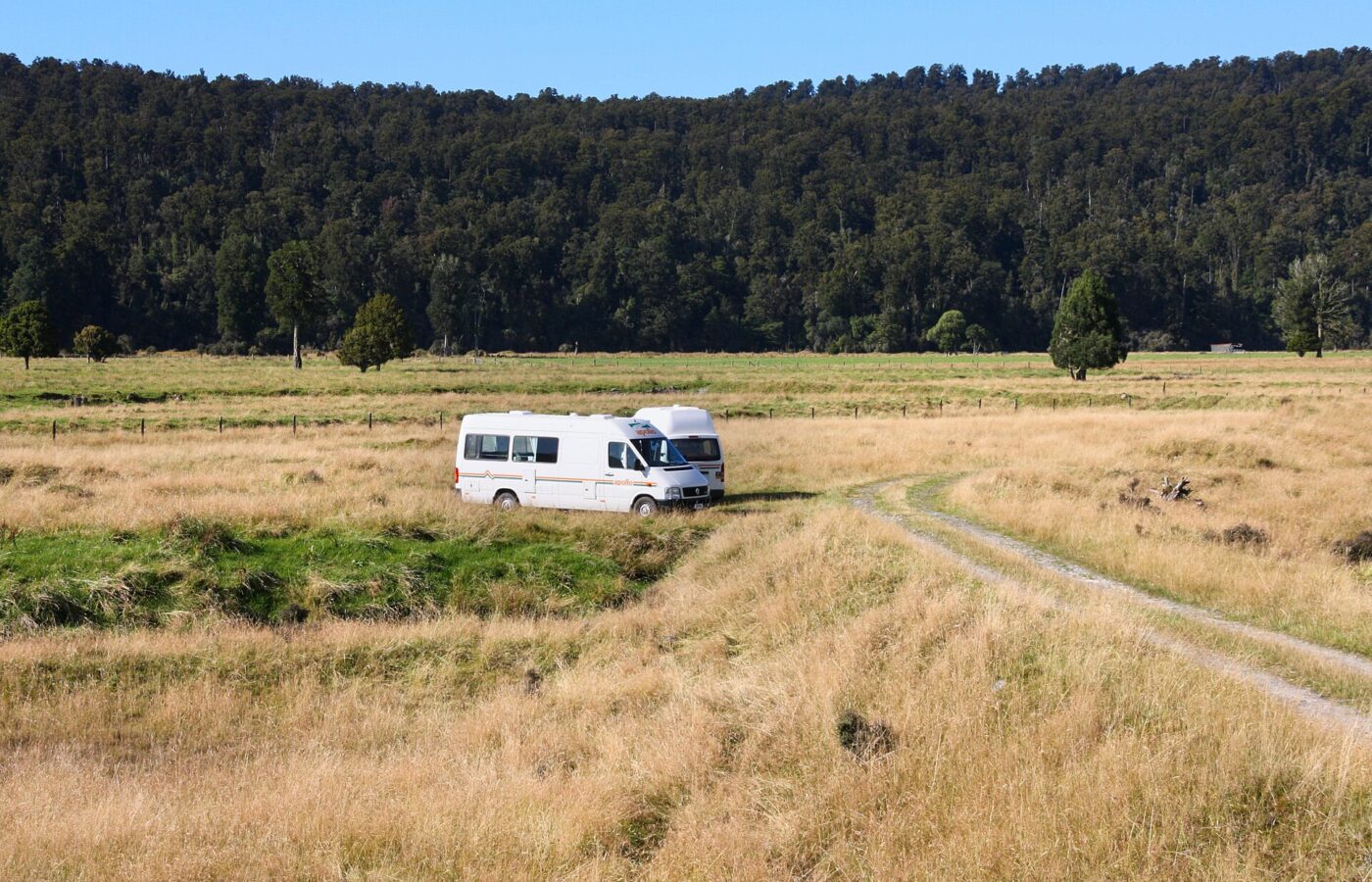
thl runs several brands from shared depots, including one on Oruarangi Road in Māngere, near Auckland Airport, with a transfer bus from the terminals. maui, Britz and Apollo are its premium brands, while Mighty, Cheapa Campa and Hippie Camper serve the value and youth end of the market. Between the premium three, compare vehicle layouts and quotes rather than the badge. The group has depots in Auckland, Christchurch and Queenstown, which makes one-way trips straightforward.
JUCY
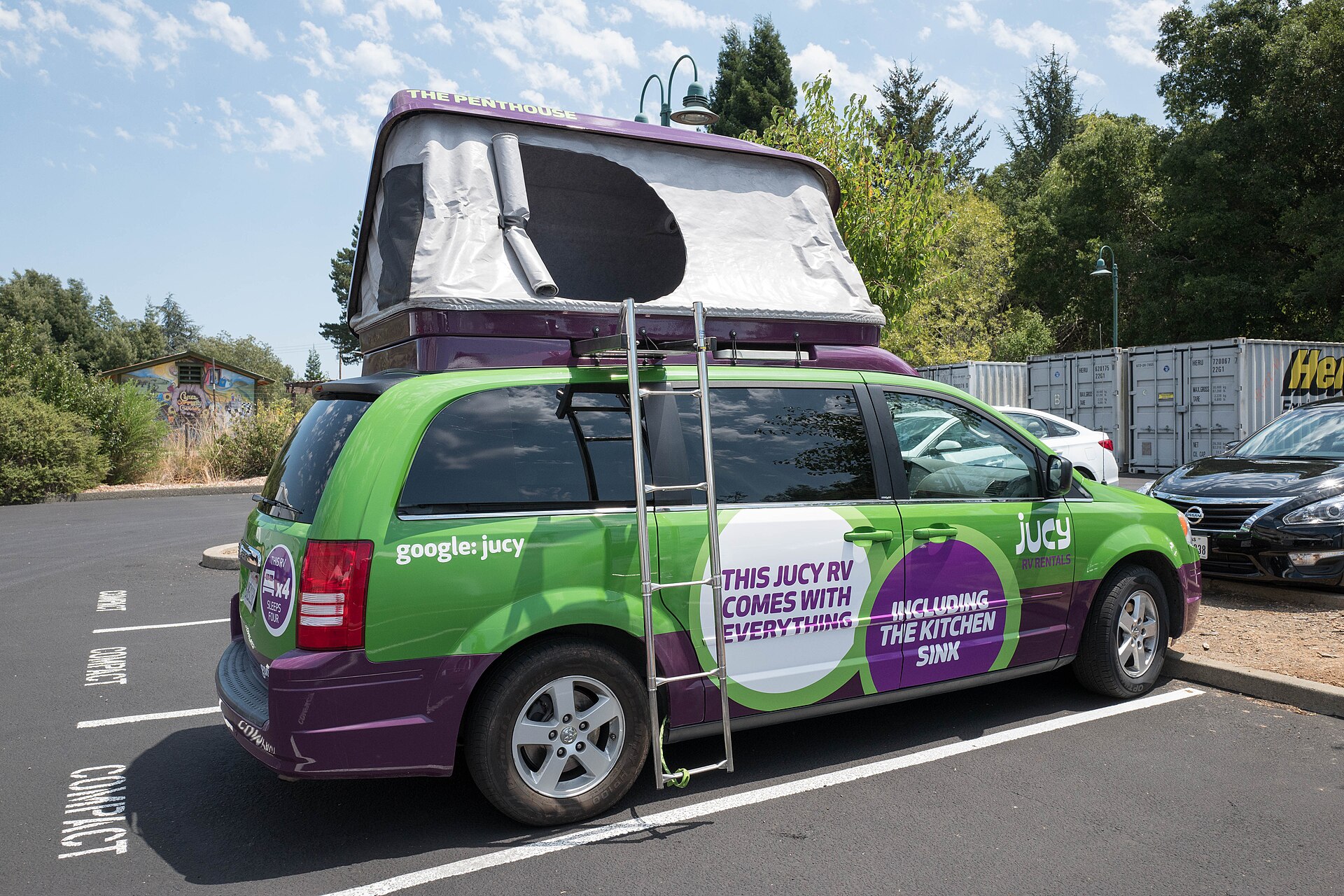
JUCY is a budget brand with green-and-purple vans and branches at Auckland, Christchurch and Queenstown airports. Its smaller vehicles are converted people-movers with a kitchen at the back and, on some, a tent on the roof; it also has larger campervans. It suits younger travellers and anyone on a budget, but check carefully which of its vehicles are self-contained if you plan to freedom camp.
Smaller and specialist operators
Wilderness is a premium motorhome company. Smaller local firms and converted-van specialists come and go, and some offer excellent value; read recent reviews and check the vehicle’s age and self-containment status before you book.
Peer-to-peer and brokers
Platforms such as Camplify let you hire privately owned campervans and motorhomes, often with more character and sometimes at lower prices. Check the insurance, the excess, whether the vehicle is certified self-contained, and where you collect it, since it may not be near the airport. Brokers and comparison sites list many companies side by side and are useful for checking prices, though it is worth comparing the final quote with booking direct.
What campervan hire costs in 2026
Campervan prices vary more with the season than with the company. The same van can cost several times more in January than in July. As a rough guide for 2026:
| Vehicle | Off-season (about May to September) | Peak (about December to February) |
|---|---|---|
| Budget sleeper van | From about NZ$35-50 a day | Much higher, and it sells out |
| Mid-range campervan | About NZ$50-100 a day | Commonly well over NZ$100 a day |
| Well-equipped campervan or motorhome | About NZ$100-250 a day | Toward the top of the range and beyond |
| Large motorhome | Varies widely | NZ$500 or more a day |
Spring and autumn sit in between, and are often the best value for the weather you get. Book early for summer: the cheapest vans go first, and last-minute peak prices can be eye-watering.
The extras that add up
- Insurance. The standard excess on a campervan runs to several thousand dollars and is often higher than on a car. Reducing it adds a daily charge. Given the narrow roads, the tight campsites and the height of the vehicle, most people reduce it.
- Road user charges. Diesel vehicles pay road user charges in New Zealand, and rental companies pass them on per kilometre. Check the rate in your quote; it adds up on a long trip.
- One-way fees. Dropping the van in a different city usually costs extra, although some routes are discounted when the company needs vehicles moved.
- Equipment. Bedding, towels, a kitchen kit, camping chairs and a table, a heater and a portable toilet are included by some companies and charged by others. Compare like with like.
- Child seats and extra drivers. Both usually cost extra per day. Every child under seven must travel in an approved child restraint.
- Campsites. A powered site at a holiday park typically costs NZ$45-75 a night; Department of Conservation campsites are cheaper and more basic.
- Fuel. A campervan uses far more fuel than a small car. Budget accordingly.
The honest verdict on cost: once fuel, campsites and insurance are added, a campervan rarely works out cheaper than a small hire car and holiday park cabins or motels. Choose one for the freedom and the experience. Our road trips from Auckland guide sets out the comparison in full.
Relocation deals
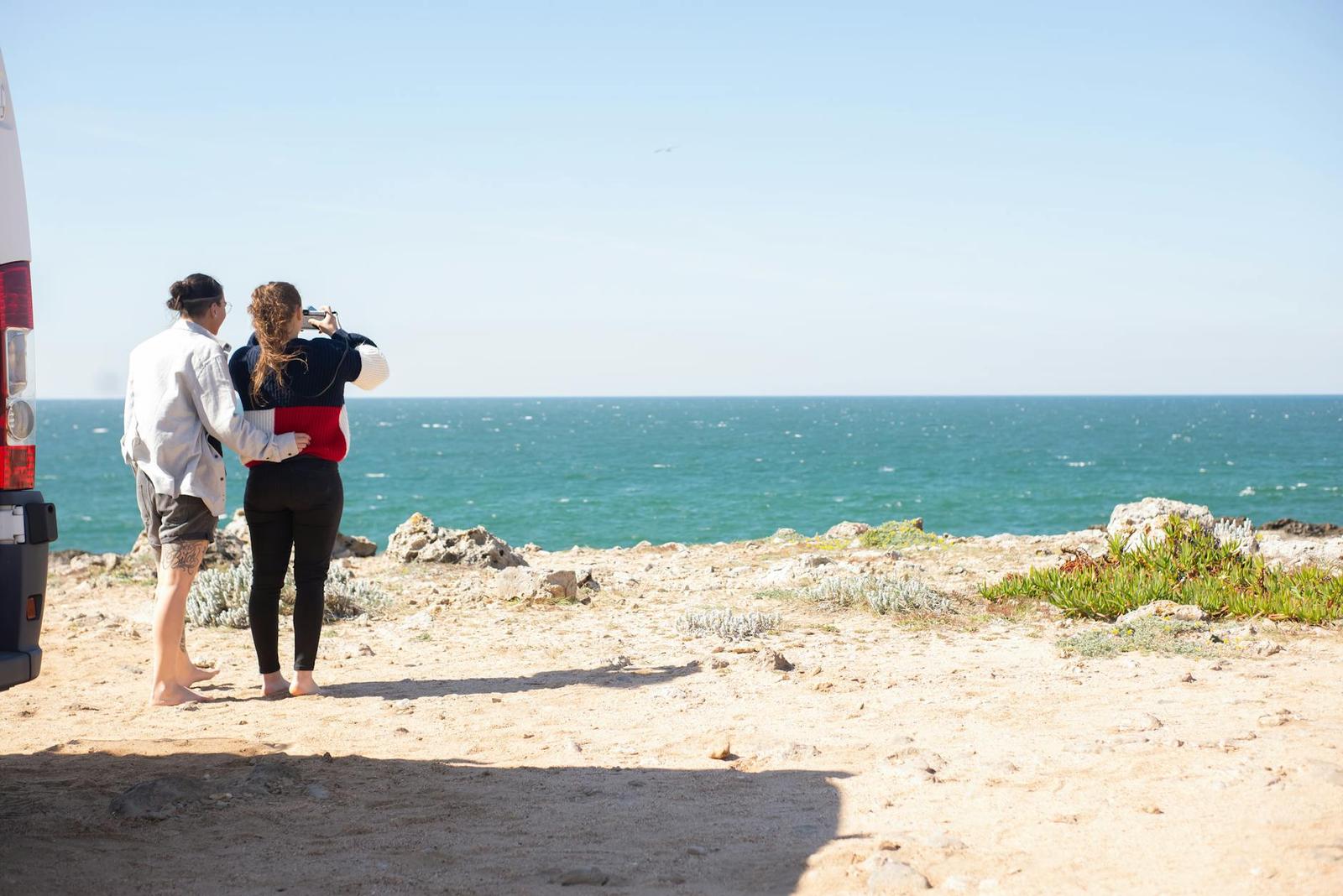
Campervan companies constantly need vehicles moved between depots, particularly between Auckland, Christchurch and Queenstown, and they offer relocation deals to anyone willing to drive a set route within a set number of days, sometimes at a nominal daily rate and occasionally with fuel or the ferry included. If your dates and route are flexible, they can work out very cheap. The catch is the time limit: you will be driving more and exploring less.
How to book without regrets
- Fix the route first. Decide where you will start and finish, and whether you are crossing to the South Island. That determines one-way fees and which companies suit you.
- Decide on self-containment. If you want to freedom camp, filter for certified self-contained vehicles with the green warrant, and nothing else.
- Compare the full quote, not the daily rate. Add excess reduction, road user charges, one-way fees, bedding and kitchen kits, extra drivers and child seats, and compare the totals. The cheapest daily rate is often not the cheapest trip.
- Check the vehicle’s age. Budget brands use older vehicles. That is fine if you know it, and frustrating if you expected something new.
- Read the insurance terms. Look at what is excluded — windscreens, tyres, the underbody and roof damage are common exclusions on basic cover — and what the reduced excess actually covers.
- Check the cancellation policy. Plans change, and peak-season bookings can be expensive to cancel.
- Book early for summer. The best-value vans in December to February sell out months ahead.
Picking up your campervan in Auckland
Most of the big depots are in the industrial areas around Auckland Airport, with shuttles to and from the terminals. That is convenient if you are flying in and heading straight out, but it creates a temptation to collect the van on the day you land. Resist it. Driving an unfamiliar, top-heavy vehicle on the left, on the motorway, after a long-haul flight is how many trips start badly. Spend a night in the city or near the airport first; our first-day plan explains why.
At the depot
- Allow an hour or more. Pick-ups involve paperwork, a briefing and a vehicle walk-round, and depots are busy in the mornings.
- Photograph everything. Walk around the van and photograph or film every scratch and dent before you leave, and make sure they are noted on the paperwork.
- Learn the systems. Ask how to empty the toilet cassette and the waste water, refill the fresh water, change the gas bottle, and switch the fridge between battery and mains power. Most companies have videos; watch them before you go.
- Check the certification. If you are planning to freedom camp, check the self-containment certificate and green warrant card are in the vehicle and in date.
- Stock up. The big supermarkets in south Auckland are close to the airport depots. Stock up before you head out of the city, because rural shops are smaller and dearer.
Your first night
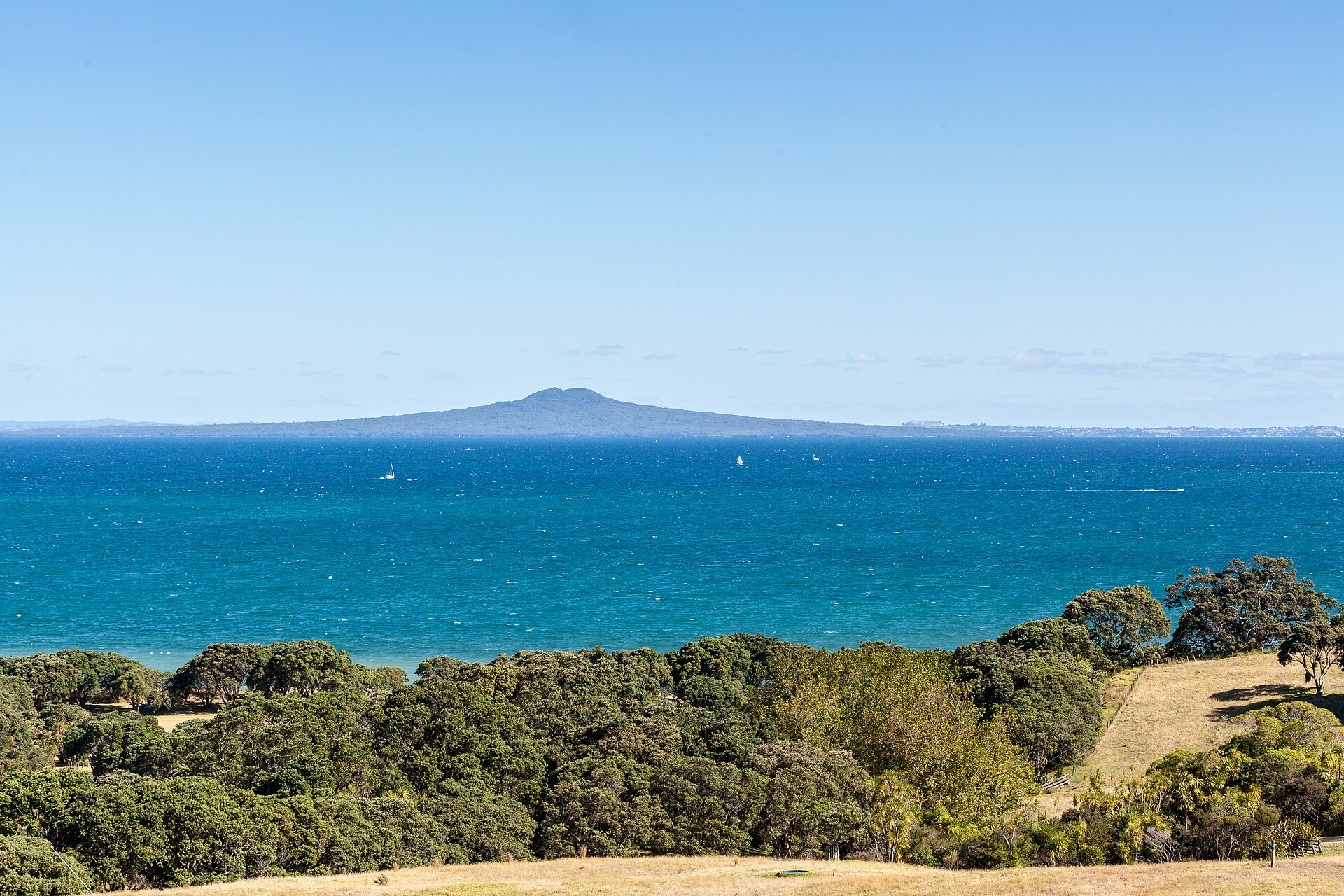
Keep the first day’s drive short. Holiday parks around the city and several of Auckland Council’s regional parks have campgrounds suitable for campervans, from the coast north of the city to farm parks near the airport. Shakespear Regional Park, at the tip of the Whangaparāoa Peninsula, is a lovely first-night option, with beaches, walks and views of Rangitoto. Book regional park campgrounds online in advance, especially in summer. Our guide to Auckland’s holiday parks compares the city’s campgrounds and their powered sites.
Driving a campervan: what is different
- Your licence is fine. A full car licence covers vehicles up to 6,000 kg, which includes almost every rental campervan and motorhome. If your licence is not in English, you need an approved translation or an International Driving Permit.
- Height and width. You are taller and wider than you are used to. Watch overhanging branches, low roofs at petrol stations and car parks, and the kerb on narrow bridges.
- Wind. High-sided vehicles are pushed around by crosswinds, and the Auckland Harbour Bridge is exposed; in strong winds, slow down and follow any restrictions signed for high-sided vehicles.
- Hills and speed. A loaded motorhome is slow on the climbs. Use the slow-vehicle bays and passing lanes to let traffic past, which is courteous, safer, and what the Road Code asks of slow drivers.
- Parking in the city. Central Auckland is not built for campervans. Park outside the centre and use public transport; our parking guide covers the options.
- Unsealed roads and beaches. Many rental agreements exclude them, and none will cover you on Ninety Mile Beach.
- Know the road rules. Our driving guide covers keeping left, giving way and one-lane bridges.

Freedom camping: the 2026 rules
Freedom camping means staying overnight somewhere other than a campground, and the rules tightened in 2026. Since 7 June 2026, only vehicles certified self-contained under the green warrant standard count as self-contained. That means a permanently fixed toilet, fresh and waste water storage, and rubbish containment for at least three days. The old blue warrants are no longer valid, and a portable toilet on its own does not qualify. Rental campervans used for freedom camping must carry the green warrant. The infringement fee for freedom camping in breach of a bylaw is NZ$400, and a court can impose up to NZ$1,200.
In Auckland, certified self-contained vehicles can freedom camp on most council-controlled land, including most roadsides, under the council’s freedom camping bylaw. Around 20 areas have extra restrictions, such as limits on the number of vehicles, set parking bays or overnight time windows, and some popular spots have been closed; Coxs Bay, for example, has been off-limits to freedom campers since 1 April 2026. Check the council’s maps for the rules at each site. If your van is not certified self-contained, use campgrounds and holiday parks.
Beyond Auckland, every council sets its own rules, and the Department of Conservation manages its own land separately. Popular spots near beaches and towns are often restricted or banned, while others are well set up for campers. The official council maps and the popular camping apps are the easiest way to find legal sites, dump stations and campgrounds as you go.
Life on the road: the practical bits
- Power. Most campervans have a separate house battery that runs the lights, water pump and often the fridge, charged by the engine while you drive and sometimes by solar panels. At a powered site you plug into mains power. After two or three nights off-grid, a powered site is usually needed.
- Water. Fill the fresh-water tank at campgrounds and marked taps, and carry drinking water separately if you are unsure of a source.
- The toilet. Self-contained vans have a cassette toilet, which you empty at a dump station — at a campground, or one of the many public dump stations around the country. Never empty it anywhere else. It is less grim than it sounds, and the depot will show you how.
- Waste water. Grey water from the sink and shower goes into a holding tank, emptied at dump stations too. Tipping it onto the ground is not allowed at freedom camping sites, and it is unpleasant for the next people to camp there.
- Gas. The stove, and on many vans the fridge and heater, run on bottled LPG. Ask how full the bottle is at pick-up and where to swap it; many service stations do.
- Rubbish. There are few bins at freedom camping sites. Carry your rubbish and recycling with you and dispose of it in towns.
- Laundry and showers. Holiday parks have both, which is one reason most campervan travellers book one every few nights.
Where to stay in a campervan
| Option | Rough cost | Good to know |
|---|---|---|
| Holiday parks | About NZ$45-75 a night for a powered site | Power, hot showers, kitchens and laundries; book ahead in summer |
| Department of Conservation campsites | Cheaper, and some are free | Often in the best locations; facilities range from basic to serviced |
| Auckland regional park campgrounds | Low nightly fees | Beautiful coastal and farm settings; some are for self-contained vehicles only |
| Freedom camping | Free | Certified self-contained vehicles only, where allowed; follow each council’s rules |
Most campervan travellers mix all four: a holiday park every few nights for power, laundry and a hot shower, and cheaper or free sites in between.
One-way hire and the ferry
Many companies offer one-way hires between their depots, so ask about any one-way fee when you book. Whether a campervan can go on the Cook Strait ferries between Wellington and Picton depends on the company, so confirm the policy when you book; you book and pay for the crossing yourself. Our guide to getting from Auckland to the South Island covers the ferry, and the North Island road trip guide has routes that work well in a campervan.
Mistakes campervan renters make
- Collecting the van on arrival day. Jet lag and an unfamiliar, top-heavy vehicle on the left-hand side of the road are a bad combination.
- Booking a van that is not self-contained, then planning to freedom camp. It can end with a NZ$400 fine.
- Trying to cover too much ground. Campervans are slow, and the joy of them is stopping. Plan on no more than three or four hours of driving a day.
- Ignoring the extras. Road user charges on a diesel van, fuel and campsite fees can together rival the hire cost itself on a long trip.
- Parking where signs say not to. Council enforcement officers patrol popular spots, particularly in summer, and the fines are real.
- Driving on beaches and gravel roads. Rental agreements commonly exclude them, and a stuck or damaged van is entirely your problem.
- Cutting it fine at the end. Returning late, dirty or with full waste tanks usually costs extra.
Returning the van
On your last morning, empty the toilet cassette and the waste-water tank at a dump station, refill the fuel to the level you collected it at, and give the inside a sweep and a wipe; most companies charge for vans that come back with full tanks or needing a deep clean. Allow plenty of time for the return inspection and the shuttle to the terminal, and do not book an international flight for the same morning if you can avoid it. The motorway to the airport can be slow, and a missed flight costs far more than a night in an airport hotel.
When to hire
- Summer (December to February): the warmest weather of the year. Book months ahead.
- Autumn (March to May): often the best balance of settled weather, warm seas and falling prices.
- Winter (June to August): the cheapest time to hire, with cold nights; choose a van with a heater, plan on powered sites, and check the snow risk on high roads.
- Spring (September to November): good value and greening landscapes, with changeable weather.
Is a campervan right for you?
Choose a campervan if you want to wake up by a lake or a beach, cook your own meals, travel slowly and keep plans loose, and you do not mind emptying a toilet cassette. Choose a car and cabins or motels if you want to cover ground quickly, park easily in towns, sleep in a proper bed and not think about water tanks. There is no wrong answer; it depends on the trip you want. For a car instead, see our car rental guide.
Frequently asked questions
How much does campervan hire in Auckland cost?
From around NZ$35-50 a day for a basic van in the winter off-season to NZ$500 or more a day for a large motorhome in peak summer. Mid-range campervans typically cost NZ$50-100 a day off-season and considerably more in summer, before insurance, road user charges and extras.
Do I need a special licence to drive a campervan in New Zealand?
No. A full car licence covers vehicles up to 6,000 kg, which includes almost all rental campervans and motorhomes. If your licence is not in English, carry an approved translation or an International Driving Permit.
Can I freedom camp in a rental campervan in Auckland?
Only in a certified self-contained vehicle with the green warrant. In Auckland, these can freedom camp on most council land, including most roadsides, but around 20 areas have extra rules and some spots are closed. If your van is not self-contained, use campgrounds.
What does self-contained mean for a campervan?
That the vehicle is certified to the green warrant standard, with a permanently fixed toilet and enough fresh water, waste water and rubbish storage for at least three days. Since 7 June 2026, the old blue warrants no longer count.
Which campervan company is best in Auckland?
It depends on your budget. maui, Britz, Apollo and Wilderness sit at the premium end, and JUCY, Mighty, Cheapa Campa and Hippie Camper at the budget end. Compare the vehicle’s age, self-containment, insurance terms and one-way fees rather than the brand alone.
Can I take a campervan on the Cook Strait ferry?
It depends on the company. Some allow their vehicles on the ferries between Wellington and Picton; you book and pay for the crossing yourself. Always confirm when you book.
Is a campervan cheaper than a car and motels?
Rarely, once fuel, campsite fees, road user charges and insurance are added. A campervan is worth it for the freedom and the experience rather than the savings.
What is the minimum age to hire a campervan?
It is set by each hire company, so check the age policy, and any extra charges or vehicle restrictions for younger drivers, before you book.
Related Auckland Guides
- Road Trips and Onward Travel from Auckland
- Car Rental in Auckland
- Auckland’s Best-Value Holiday Parks
- North Island Road Trip from Auckland
- Auckland to the South Island
- Picking Up a Rental Vehicle at Auckland Airport
- Driving in Auckland: Rules and Tips
Photo Credits
A campervan on New Zealand’s West Coast: 010 Freedom camping in New Zealand – parked campervan RVs in West Coast NZ by Marek Ślusarczyk ( Tupungato ) Photo portfolio, CC BY 3.0, via Wikimedia Commons.
A JUCY campervan: Jucy Car (20132108710) by Joi Ito, CC BY 2.0, via Wikimedia Commons.
Rangitoto from Shakespear Regional Park: Rangitoto from Shakespear Regional Park by russellstreet, CC BY-SA 2.0, via Wikimedia Commons.