Picking Up a Rental Car or Campervan at Auckland Airport
Auckland Airport car rental: where the depots are, how long pickup really takes, licence and insurance rules, and why the first drive is harder than it looks.
This article contains advertising. Our booking links are routed through a partner that adds commission tracking automatically, so if you book through one we earn a commission from the provider, at no extra cost to you. It never affects what we recommend. Affiliate disclosure
New Zealand road trips almost all begin in the same unglamorous place: a shuttle bus in an industrial street in Māngere, twenty minutes after clearing biosecurity, with everyone on board slightly too tired to be about to drive. That is the reality of Auckland Airport car rental, and it is nobody’s fault — the desks are at the terminal but the vehicles mostly are not, and the gap between the two is where the first hour of your holiday goes.
This guide covers how the pickup actually works, how long to allow, what the difference is between renting a car and a campervan here, the licence and insurance rules that catch overseas visitors out, and what to check before you drive away. Prices were checked in September 2026 and are in New Zealand dollars — treat them as indicative and confirm with the operator, because rental pricing moves with the season more than almost anything else in this country.
Airport Car Rental at a Glance
| Question | Answer |
|---|---|
| Where are the desks? | In or beside both terminals, international and domestic |
| Where are the cars? | Mostly at depots in the surrounding streets, reached by a free shuttle. Some majors have vehicles on site |
| How long from landing to driving? | About an hour for a car. 90 minutes to two hours for a campervan |
| Typical car rate | From around NZ$45 a day off-season; considerably more over summer |
| Fuel | 91 octane has run above NZ$3 a litre through 2026 |
| Licence | Valid overseas licence, in English or with an accurate translation or International Driving Permit. Valid for up to 12 months |
| Minimum age | Typically 21, with a young-driver surcharge under 25 |
| Which side? | Left. And the give-way rules changed in 2012, so ignore any advice older than that |
How the Pickup Actually Works
Finding the desk
The major international brands have counters in or immediately beside both the international and domestic terminals. Signage points you there from arrivals, though the rebuild has moved the route more than once — if what you see does not match what you remember, follow the signs rather than your memory, and ask a high-visibility vest if in doubt.
Smaller and budget operators frequently have no terminal presence at all. Instead you phone or text on arrival and a shuttle collects you from a designated pickup point. Find out which model your operator uses before you fly, and save the phone number offline. Standing in arrivals with no local SIM, trying to find a courtesy-phone number for a company whose desk does not exist, is a bad first fifteen minutes.
The shuttle
Most vehicles — and effectively all campervans — live at depots in the industrial grid around the airport, a five to ten minute drive away. The shuttle is free and runs frequently, but it is another queue, another load of luggage, and another wait.
The paperwork
Licence, credit card, booking reference. Then the upsell conversation about insurance, which is the part that takes the longest and is covered below. Then the walk-around, then the keys.
Allow an hour from landing to driving away for a car. That is on top of the 45 to 75 minutes of border clearance, so a 6 am landing realistically has you on the motorway around 8 am. For a campervan, allow 90 minutes to two hours, because the handover briefing is genuinely long and genuinely worth listening to.
Cars Versus Campervans
These are different products with different pickups, and choosing wrongly at booking is more consequential than choosing wrongly between brands.
Renting a car
Straightforward, quick, cheap to run, easy to park, and fine on every road you are likely to drive. If your plan involves hotels, motels or holiday parks with cabins, a car is the right answer and there is very little to think about beyond size.
Auckland’s car parks and city streets are not built for large vehicles. If you are spending time in the city, a small car is easier in every way. Our guide to parking in Auckland explains why.
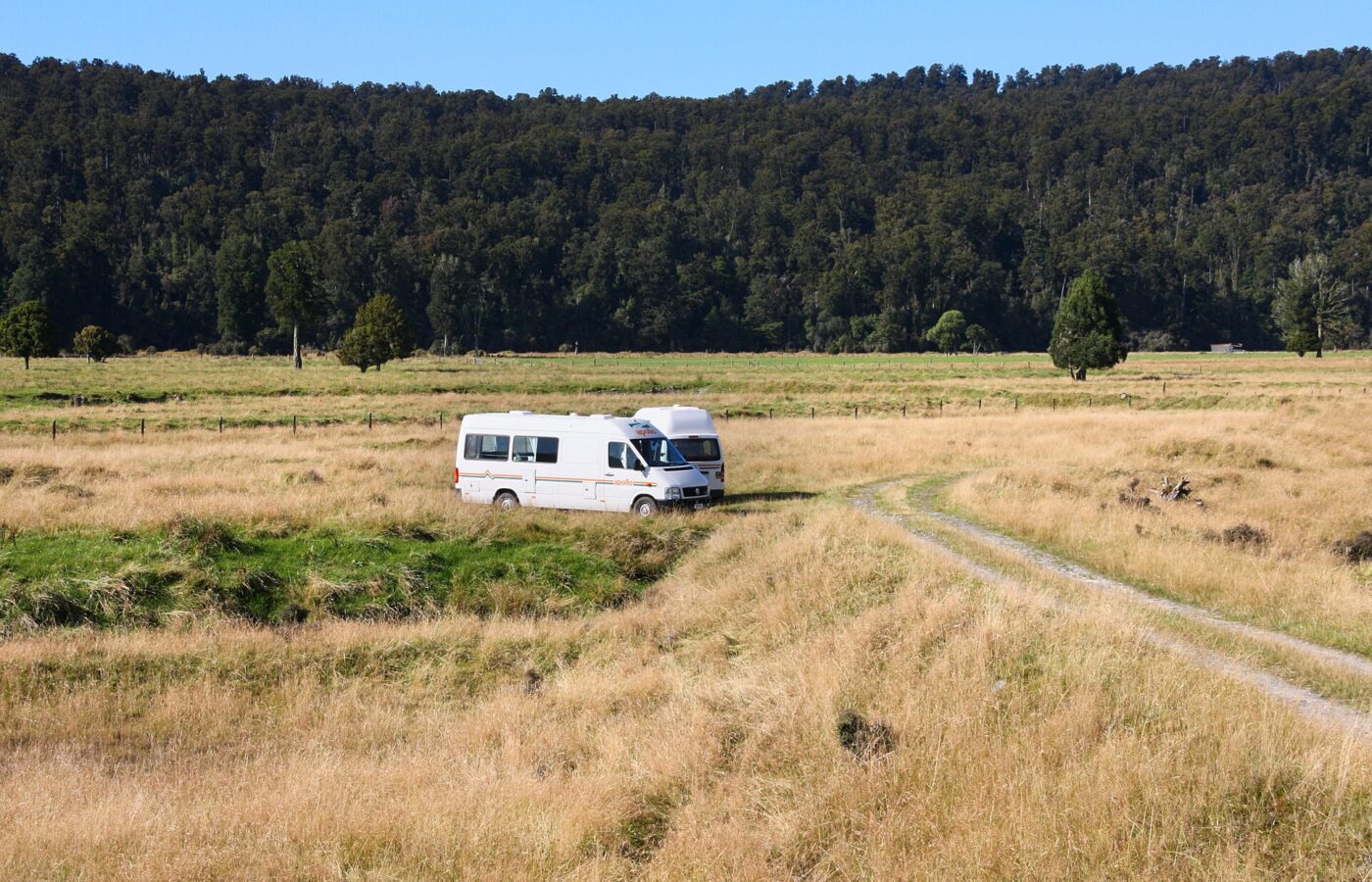
Renting a campervan
A campervan is a vehicle and an accommodation booking at once, and the economics only work if you actually sleep in it most nights. Two things to be realistic about.
The handover takes an hour or more. Water, waste, gas, power, the fridge, the levelling, what to do when it will not start. This briefing is the difference between a good fortnight and a series of phone calls from a layby, and doing it at the end of a twenty-six-hour journey is genuinely hard. Consider collecting the van the day after you land rather than the same morning.
Fuel is a real cost. With 91 octane above NZ$3 a litre through 2026, a large campervan doing 3,000 kilometres is a substantial bill. Diesel vehicles also pay Road User Charges, which the rental company either bundles into the daily rate or charges at the end based on the odometer — ask which, because it changes the comparison between petrol and diesel quotes.
Freedom camping is regulated, not free-for-all. Rules vary by council and are enforced with fines. Certified self-contained vehicles have far more options than those without, and the certification is a specific legal standard rather than a marketing phrase — check what your van actually holds before you plan around it.
Licences, Age and Insurance
Your licence
You can drive in New Zealand on a valid overseas driver licence or an International Driving Permit for up to 12 months from arrival. The licence must be in English, or accompanied by an accurate translation or an IDP. Carry the licence with you whenever you drive — not in the boot, not in the accommodation. Check the current requirements at nzta.govt.nz if your licence is in a non-Latin script.
Age
Most companies rent from 21, with a young-driver surcharge under 25 and restrictions on which vehicle categories younger drivers can take. A few operators go lower. Check before booking rather than at the counter, because it is not negotiable on the day.
Insurance, and the conversation you will have at the desk
This is where rental pricing gets slippery. The headline rate almost always comes with a large insurance excess — often NZ$3,000 to $5,000 — and the desk will offer to reduce it to zero for a daily fee that can rival the vehicle rate itself.
Three routes, honestly compared:
- Buy the operator’s excess reduction. Expensive, but simple: if something happens, you walk away. For a two-week trip this can add several hundred dollars.
- Use a credit card with rental cover. Free if you already have it, but read the terms — many policies exclude campervans, exclude gravel roads, and require the whole rental to be paid on that card.
- Buy standalone excess insurance from a third-party insurer before you travel. Usually far cheaper than the counter product, but you pay the damage first and claim it back, which requires having the excess available on a card.
Whichever you choose, decide before you arrive at the desk. The counter is designed to be a bad place to make that decision: you are tired, there is a queue behind you, and the person explaining the risk is the person selling the remedy.
Two exclusions to check in every policy, because they catch people out on exactly the roads visitors want to drive: unsealed roads, and damage to the underbody, tyres, windscreen and roof. Plenty of New Zealand’s best drives include gravel.
Before You Drive Away
Five minutes at the depot saves a great deal later.
- Photograph everything. All four corners, the wheels, the windscreen, the roof if you can reach it, and the odometer, with the timestamp on. Do the same when you return it.
- Check the existing damage against the sheet. If a scratch is not on the form, get it added before you leave, in writing.
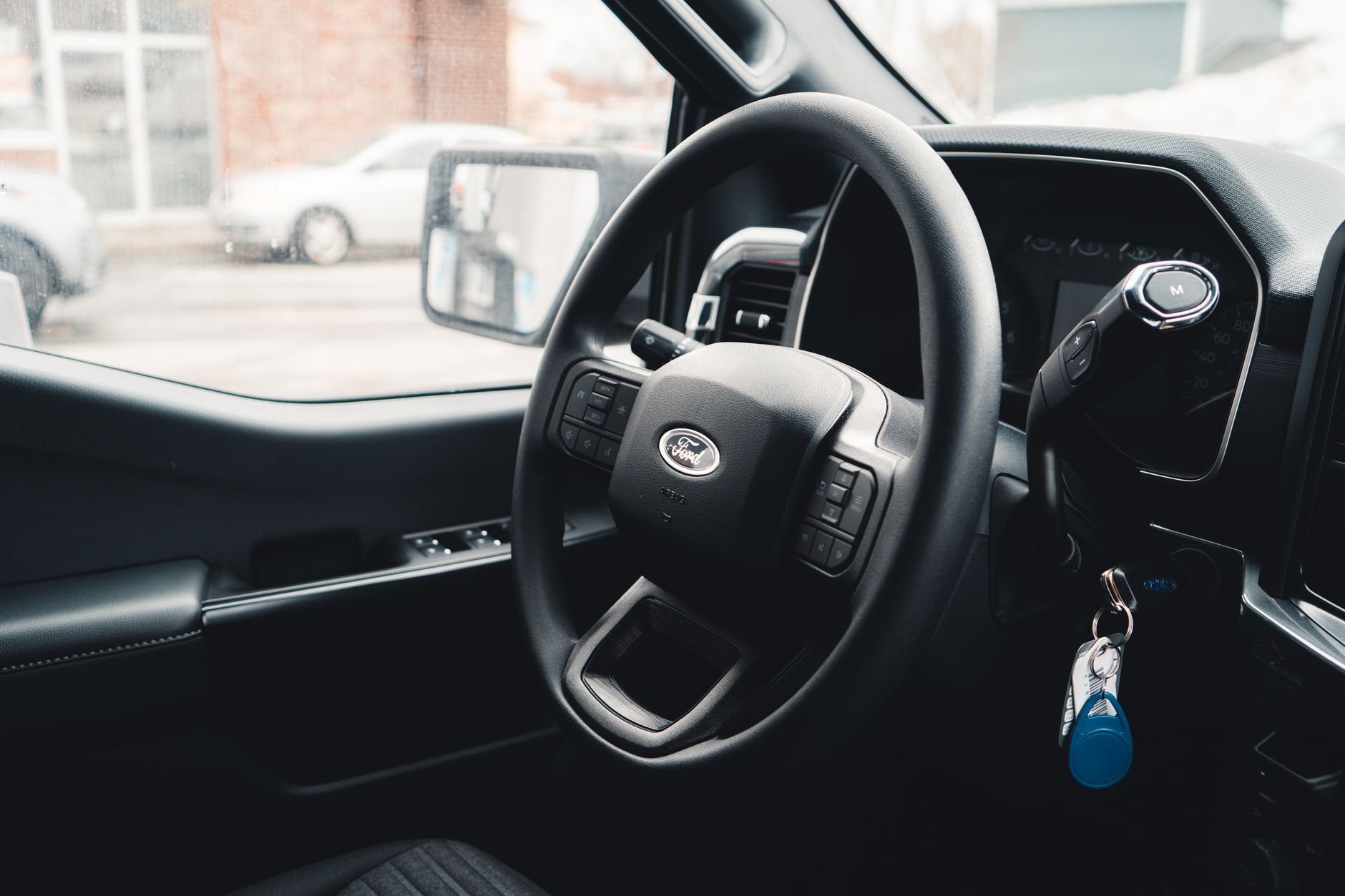
- Find the controls while stationary. Lights, wipers, indicators, hazard lights. In a right-hand-drive car the indicator and wiper stalks are frequently the opposite way round from what you are used to, which is how visitors end up washing the windscreen at every roundabout for a fortnight.
- Ask about the fuel policy and the fuel type. Petrol or diesel, and whether it takes 91 or 95. Putting the wrong fuel in a rental is an expensive, entirely avoidable mistake.
- Ask about Road User Charges if it is a diesel, and whether they are included or billed on return.
- Set up navigation before you move. The first turn out of the depot is onto a busy road and you do not want to be reading a screen.
The First Drive: What Nobody Warns You About

The road out of Auckland Airport is a motorway, and it is often busy. Whichever direction you are heading, your first twenty minutes in an unfamiliar car on an unfamiliar side of the road will be spent merging in multi-lane traffic — not easing into it on a quiet rural highway. That is the single biggest difference between how people imagine this drive and how it is.
Three things to have straight before you turn the key:
Keep left. Obvious until the first time you pull out of a car park at a rest stop with nobody else around, which is when almost every wrong-side incident happens. Put a note on the dashboard for the first few days if it helps; plenty of New Zealanders do it in reverse when they travel.
The give-way rule changed in 2012. A turning vehicle now gives way to a vehicle coming from the opposite direction that is going straight through or turning left. Any advice you find online from before 2012 describes the opposite and is wrong. If you learned New Zealand’s give-way rules on a previous trip a long time ago, relearn them.
Speed limits are enforced, and the tolerance is small. Open road is usually 100 km/h and urban usually 50, with variable limits on some routes. Speed cameras are common and rental companies pass tickets on with an administration fee attached.
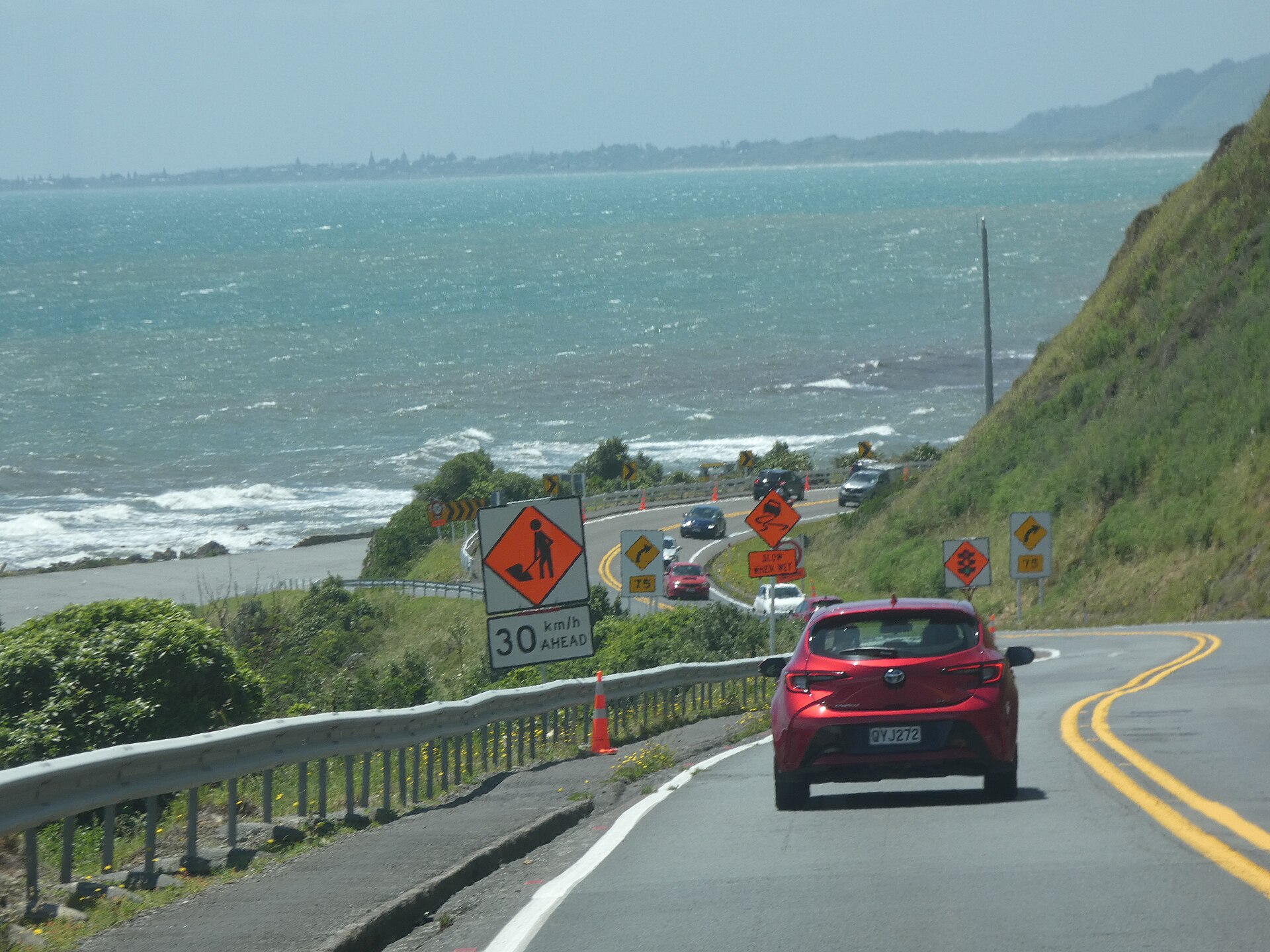
Beyond the city, the thing that catches out visitors is not the rules but the geography: New Zealand roads are narrow, winding and slower than the map distance suggests. A journey Google says takes three hours takes four with stops, and drives that look trivial on a map take real time. Our guide to driving in Auckland covers the local specifics, and Auckland scenic drives has routes worth the time.
Should You Even Collect It on Arrival Day?
Here is the contrarian advice, and it is the most useful thing in this guide for anyone flying in long-haul.
If you land at 6 am after twenty-six hours in transit, you will clear the border by half past seven, reach the depot by eight, sign the paperwork by half past, and be driving a strange car on the wrong side of the road through Auckland’s morning peak at nine — at what your body believes is the middle of the night. That is not a safety abstraction. Fatigue-related crashes involving newly arrived visitors are a recognised problem in New Zealand, which is why rental depots hand out leaflets about it.
Two better options. Collect the car the following day, spend the first day in Auckland on foot and public transport, and start the road trip rested — the AirportLink bus and train into the city costs about NZ$6.50 and takes under an hour. Or collect it in the afternoon rather than the morning, after a few hours’ sleep at an airport hotel.
Either way you lose most of a day you were probably going to waste anyway, and you gain a first drive taken in daylight with a functioning brain. Our guides to Auckland Airport hotels and how many days in Auckland both cover the arithmetic of giving Auckland a day.
One-Way Rentals and the South Island
Plenty of visitors want to drive Auckland to Christchurch or Queenstown, which means either a one-way rental or the Cook Strait ferry.
One-way domestic rentals within the North Island are usually straightforward with a relocation fee. Auckland to a South Island city is more complicated, because the vehicle has to cross Cook Strait.
Taking a rental on the ferry is permitted by some operators and prohibited by others. Where it is allowed, you book the vehicle onto the sailing yourself and it is not cheap. Confirm the policy in writing before you book the car.
The common alternative is to return the car in Wellington, fly or take the ferry as a foot passenger, and pick up a second rental on the other side. This is frequently cheaper than a cross-strait one-way and is what most operators will steer you towards.
Relocation deals are the enthusiast’s option: rental companies need vehicles moved back to where the demand is, and offer heavily discounted or nearly free one-way rentals to people willing to do it on their schedule. They come with tight timeframes and specific routes. If your plans are flexible, they are the best value in New Zealand car hire by a wide margin.
Returning the Car
Give yourself more time than seems necessary. The return depot is off-airport for most operators, which means a check-in inspection, then a shuttle, then the terminal — and international check-in during the 2026 rebuild wants you there three hours before departure.
Allow 45 minutes from the depot gate to the terminal door on top of your check-in time. Refuel before you arrive, because the rental company’s refuelling charge is punitive and the petrol stations near the airport know exactly who their customers are. Photograph the car again on return, including the fuel gauge and odometer. And check which terminal you are departing from — the two are a kilometre apart, and arriving at the wrong one costs you the free shuttle and about 25 minutes, as our guide to the Auckland Airport terminal transfer explains.
The Honest Verdict
Picking a car up at Auckland Airport is the right decision for almost anyone heading out of the city — you avoid driving an unfamiliar vehicle through the CBD, you are already on the motorway network, and the choice of operators is far wider than in town.
What people get wrong is the timing. They budget twenty minutes for a process that takes an hour, they make the insurance decision at the counter while exhausted, and they start driving at the worst possible moment in their own body clock. Book ahead, decide the insurance question at home, allow a full hour, and if you have flown long-haul, seriously consider collecting the car tomorrow instead. More on the wider process is in our Auckland Airport guide and our guide to car rental in Auckland.
Frequently Asked Questions
How long does it take to pick up a rental car at Auckland Airport?
Allow about an hour from landing to driving away for a car, and 90 minutes to two hours for a campervan. That is on top of 45 to 75 minutes clearing the border, because most vehicles are collected from depots a shuttle ride from the terminal.
Are the rental car depots at the terminal at Auckland Airport?
The desks are in or beside both terminals, but most vehicles — and effectively all campervans — are at depots in the surrounding streets, reached by a free shuttle. Some major operators have vehicles on site.
Do I need an International Driving Permit to drive in New Zealand?
Only if your licence is not in English. A valid overseas licence in English is accepted for up to 12 months from arrival; otherwise you need an accurate translation or an IDP. Carry it with you whenever you drive.
What age do you have to be to rent a car in New Zealand?
Typically 21, with a young-driver surcharge for those under 25 and restrictions on vehicle categories. A few operators rent to younger drivers. Check when booking rather than at the counter.
Should I buy the rental company’s insurance in New Zealand?
Decide before you get to the desk. Standard excesses run to NZ$3,000 to $5,000. The counter product is simple but expensive; standalone excess insurance bought in advance is usually much cheaper; credit card cover is free but often excludes campervans and unsealed roads. Check the exclusions either way.
Can I take a rental car on the Cook Strait ferry?
Some operators allow it and some prohibit it, and where allowed it is not cheap. Many travellers instead return the car in Wellington, cross as a foot passenger, and rent again in the South Island. Confirm the policy in writing before booking.
How much is petrol in New Zealand?
91 octane has run above NZ$3 a litre through 2026. Diesel vehicles also pay Road User Charges, which are either bundled into your daily rate or billed on return — ask which when you book.
Is it safe to drive straight after a long-haul flight to Auckland?
It is legal but it is not wise. Landing at 6 am puts you on Auckland’s motorway around 9 am at what your body thinks is the middle of the night. Collect the car the next day, or in the afternoon after some sleep.
Plenty of the cars collected here are heading straight south. If that is your plan, our Auckland to Wellington road trip guide covers the route, where to stop overnight, one-way fees and the Cook Strait car swap — and why, if you have just stepped off a long-haul flight, it is worth waiting a day before you set off.
Collecting a campervan rather than a car? Most of the big campervan depots are also near the airport, with shuttles from the terminals, and the same advice applies: do not pick it up on the day you land. Our campervan hire guide covers the companies, what to check at the depot and your first night on the road.
Related Auckland Guides
- Car Rental in Auckland
- Driving in Auckland: Rules & Tips
- Auckland Airport (AKL): The Complete Traveller’s Guide
- Auckland Airport Parking
- Auckland Scenic Drives
- Day Trips From Auckland
- Auckland Holiday Parks
Photo Credits
A rental campervan parked below native forest on the West Coast: 010 Freedom camping in New Zealand – parked campervan RVs in West Coast NZ by Marek Ślusarczyk ( Tupungato ) Photo portfolio, CC BY 3.0, via Wikimedia Commons.
A New Zealand state highway along the coast: State Highway 59 New Zealand 04 by Panamitsu, CC BY-SA 4.0, via Wikimedia Commons.