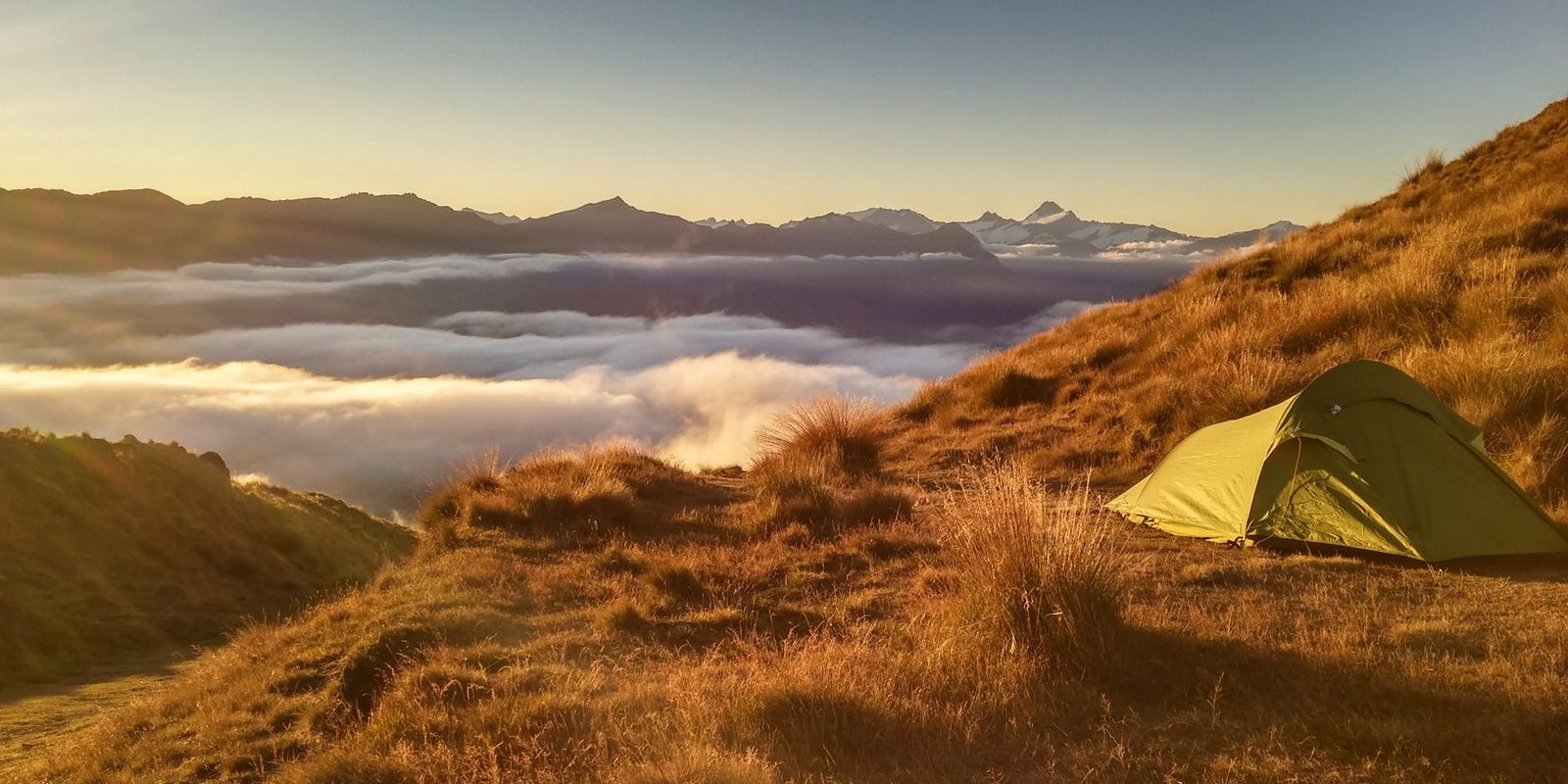
Road Trips & Onward Travel from Auckland
Road trips from Auckland, planned properly: drive times to every major North Island stop, the classic routes, car vs campervan vs train, costs and rules.
This article contains advertising. Our booking links are routed through a partner that adds commission tracking automatically, so if you book through one we earn a commission from the provider, at no extra cost to you. It never affects what we recommend. Affiliate disclosure
Auckland is built on an isthmus that is barely more than a kilometre wide at its narrowest point, where Māori once dragged waka overland between two harbours, and almost every journey in the top half of New Zealand starts by squeezing out of it. You go north over the Harbour Bridge towards Northland and the Bay of Islands, or south down the motorway and over the Bombay Hills towards everything else: the geysers, the lakes, the volcanoes of the Central Plateau and, eventually, Wellington and the ferry south. That geography makes road trips from Auckland unusually easy to plan. There are really only three ways out of the city, and each one leads somewhere worth going.
This is our hub for leaving Auckland for more than a day. It covers the main routes out of the city, drive times to every major North Island destination, the classic road trips and how long each one really needs, and a straight comparison of car, campervan, coach, train and plane. It also covers the rules and costs that catch visitors out, from freedom camping fines to one-way rental fees. Prices were checked in September 2026; treat them as the right order of magnitude, and check anything time-critical — road closures above all — before you set off.
At a glance: drive times from Auckland
Distances are by the usual route from central Auckland, and times are driving only, in normal traffic, with no stops. Add at least 20 per cent for stops, roadworks and the fact that New Zealand roads are slower than they look on a map.
| Destination | Distance | Driving time | Best done as | Minimum worth it |
|---|---|---|---|---|
| Hobbiton (Matamata) | About 160 km | About 2 hours | A day trip, or a stop on the way to Rotorua | Half a day |
| Raglan | About 170 km | About 2 hours | A short break | 1 night |
| Coromandel (Hahei, Whitianga) | About 175-200 km | 2.5-3 hours | A short break or a loop | 2 nights |
| Waitomo Caves | About 195 km | About 2.5 hours | An overnight, or a stop heading south | 1 night |
| Tauranga and Mount Maunganui | About 205 km | About 2.5 hours | A beach break | 2 nights |
| Rotorua | About 230 km | About 3 hours | A short break | 2 nights |
| Bay of Islands (Paihia) | About 230 km | 3-3.5 hours | A short break or a Northland loop | 2 nights |
| Taupō | About 280 km | About 3.5 hours | A stop on a longer trip, or a lake break | 2 nights |
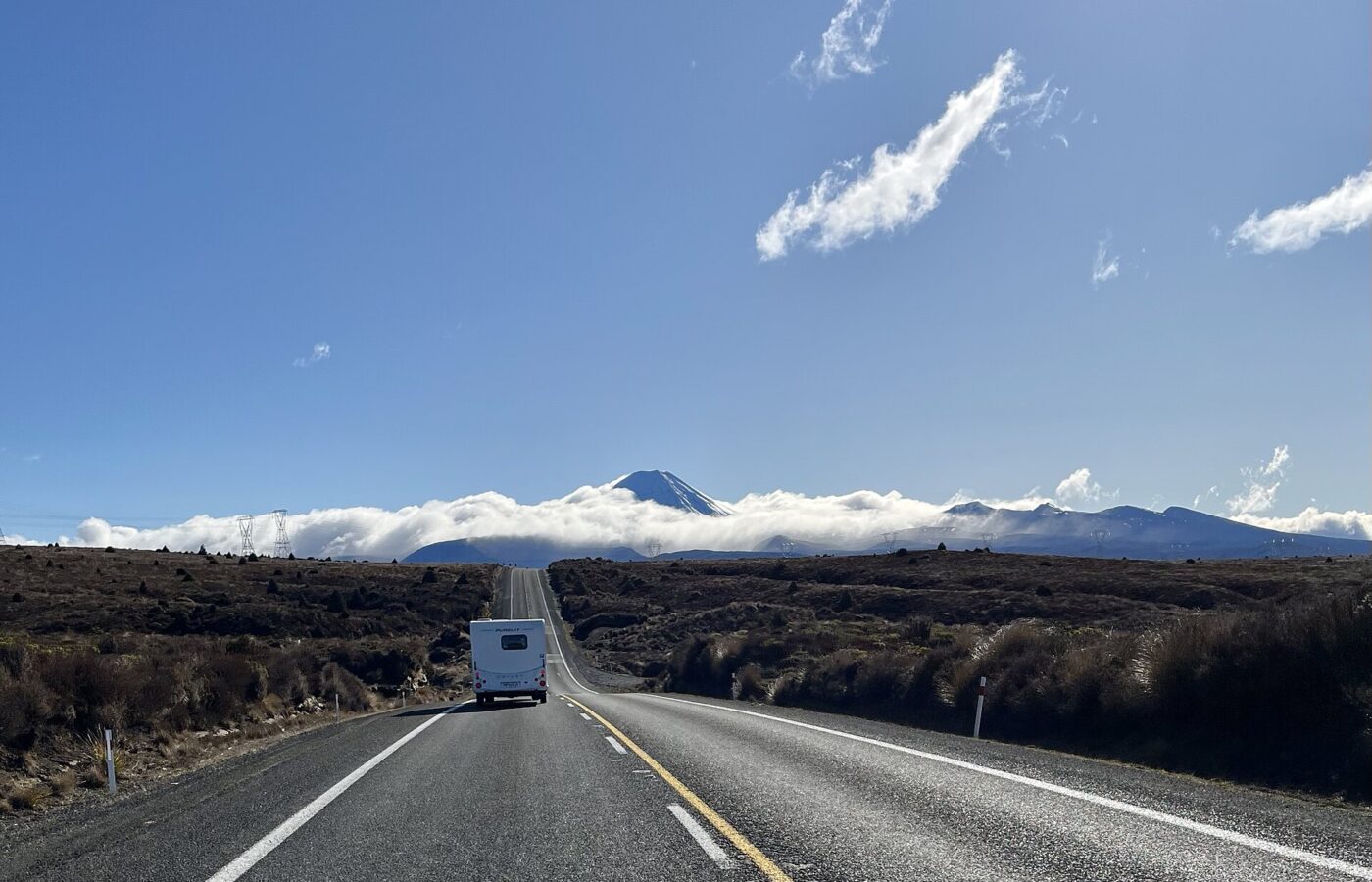
| Tongariro National Park | About 330 km | 4-4.5 hours | Part of a Central Plateau trip | 2 nights |
| New Plymouth (Taranaki) | About 355 km | About 4.5 hours | Part of a west-coast route south | 2 nights |
| Napier (Hawke’s Bay) | About 420 km | 5-5.5 hours | Part of an east-coast route south | 2 nights |
| Cape Reinga | About 430 km | 5.5-6 hours | Part of a Northland loop, never a day trip | 4 days for the loop |
| Wellington | About 640 km | About 8 hours | A multi-day journey, or one very long day | 3 days to do it properly |
The rule of thumb: anything more than about two and a half hours each way is better as an overnight than a day trip. A six-hour round trip in the car to spend four hours somewhere is how people end up seeing Rotorua through a windscreen.
Day trip, scenic drive or road trip?
This site splits leaving the city into three. Our day trips from Auckland guide covers places you can reach, enjoy and come back from in a single day: Waiheke, Rangitoto, Piha, Matakana, Hobbiton at a push. Our guide to Auckland’s scenic drives covers loops within an hour of the city — Tamaki Drive, the Waitākere Ranges, the Whangaparāoa Peninsula — where the drive is the point.
This page is about the third category: leaving Auckland for at least two nights, with a car, a campervan, a coach ticket or a boarding pass. It is also where to start if you are flying into Auckland and travelling on, because for most international visitors Auckland is the first stop on a longer New Zealand trip, not the whole of it.
The three ways out of Auckland
Knowing which way you are heading tells you which motorway you need, where the traffic will be and when to leave.
North: State Highway 1 towards Northland
Northbound trips cross the Harbour Bridge and follow the Northern Motorway up the North Shore. Past Silverdale you have a choice: the Northern Gateway Toll Road from Ōrewa to Pūhoi, which costs about NZ$3 for a car and is paid online, or the free coastal road through Ōrewa and Waiwera, which is slower but pretty. From Pūhoi the Ara Tūhono motorway, opened in 2023, bypasses the old winding road to Warkworth and is not tolled. Beyond Warkworth, State Highway 1 climbs over the Brynderwyn Hills, a slip-prone stretch that has been closed for repairs at times in recent years, then runs on to Whangārei and the Bay of Islands. Check the road status before you go; if the Brynderwyns are shut, the detour adds real time.
Northland has a signposted loop, the Twin Coast Discovery Highway, which runs up the east coast to the Bay of Islands and back down the west coast through the Hokianga and Waipoua Forest. It is the natural shape for a Northland road trip.
South: the Southern Motorway and the Waikato Expressway
Almost everything else starts the same way: down the Southern Motorway, over the Bombay Hills and onto the Waikato Expressway, which carries you past Hamilton at motorway speed. From there the routes fan out. State Highway 1 continues south through Cambridge and Tīrau to Taupō and the Desert Road; State Highways 27, 29 and 5 branch off for Matamata, Tauranga and Rotorua; State Highway 3 heads south-west for Waitomo and Taranaki; and State Highway 23 runs west from Hamilton to Raglan and the coast.
South-east: State Highway 2 towards the Coromandel
For the Coromandel Peninsula and the western Bay of Plenty, you leave the Southern Motorway at Pōkeno and take State Highway 2 across the Hauraki Plains. At Mangatarata the road splits: State Highway 25 heads for Kōpū, Thames and the Coromandel coast, while State Highway 2 carries on through Paeroa and the Karangahake Gorge towards Waihi and Tauranga.
When to leave the city
Auckland’s traffic is the one part of any road trip you cannot plan around with scenery. The southbound motorway is at its worst on weekday afternoons from about three o’clock, and a Friday afternoon before a long weekend can double the time it takes simply to get past the Bombay Hills. Northbound traffic is heaviest on the same days. The easy answers are to leave before seven in the morning, to go midweek, or to pick up your car on a Sunday and start on a Monday. On the way back in, avoid Sunday afternoons on holiday weekends, when the whole region seems to return at once.
The classic road trips from Auckland
These are the trips most visitors actually do, roughly in order of popularity. Each gets a short honest summary here; the detail — routes, stops and where to stay — belongs in the individual route guides.
The North Island loop (7, 10 or 14 days)
The classic North Island road trip runs south from Auckland through the Coromandel or the Waikato to Rotorua, then Taupō and the volcanoes of Tongariro, and on to Wellington — either returning up the east coast through Napier and Hawke’s Bay or the west coast through Taranaki, or flying out of Wellington and handing back the car. It is the best single road trip in the North Island because it strings together its three great landscapes: the coast, the geothermal belt and the volcanic plateau.
How long it needs is the question everyone asks, and our North Island road trip guide answers it with complete day-by-day routes. Seven days is enough for a one-way run from Auckland to Wellington with two nights each in Rotorua and Taupō, but it is a driving holiday and it feels like one. Ten days is the sweet spot: time for the Coromandel at the start, a proper day on the Tongariro Alpine Crossing or the lakes, and a return leg through Napier or Taranaki. Fourteen days lets you add Northland and the Bay of Islands, which otherwise tends to fall off the plan because it is in the opposite direction.
Auckland to Wellington
The Auckland to Wellington drive is about 640 km and eight hours of driving by the quickest route: State Highway 1 through the Waikato, down the eastern shore of Lake Taupō, over the Desert Road below Ruapehu and on through Taihape, the Manawatū and the Kāpiti Coast. Since Transmission Gully opened in 2022, the last stretch into Wellington is a proper motorway rather than the old coast road.
It can be done in a day, and people who have a ferry to catch sometimes have to. It is a long, tiring day, though, and it wastes some of the best scenery in the country. Split it at Taupō and it becomes two easy days with the lake, the Huka Falls and the Desert Road in daylight; take three or four days and you can add Rotorua or detour through Tongariro National Park and the tiny towns on the volcanic plateau. There are also two slower alternatives — the west-coast route through Taranaki and Whanganui, and the east-coast route through Napier and the Wairarapa — which are road trips in their own right. Our Auckland to Wellington road trip guide covers all three, leg by leg.
Auckland to Rotorua (and on to Taupō)
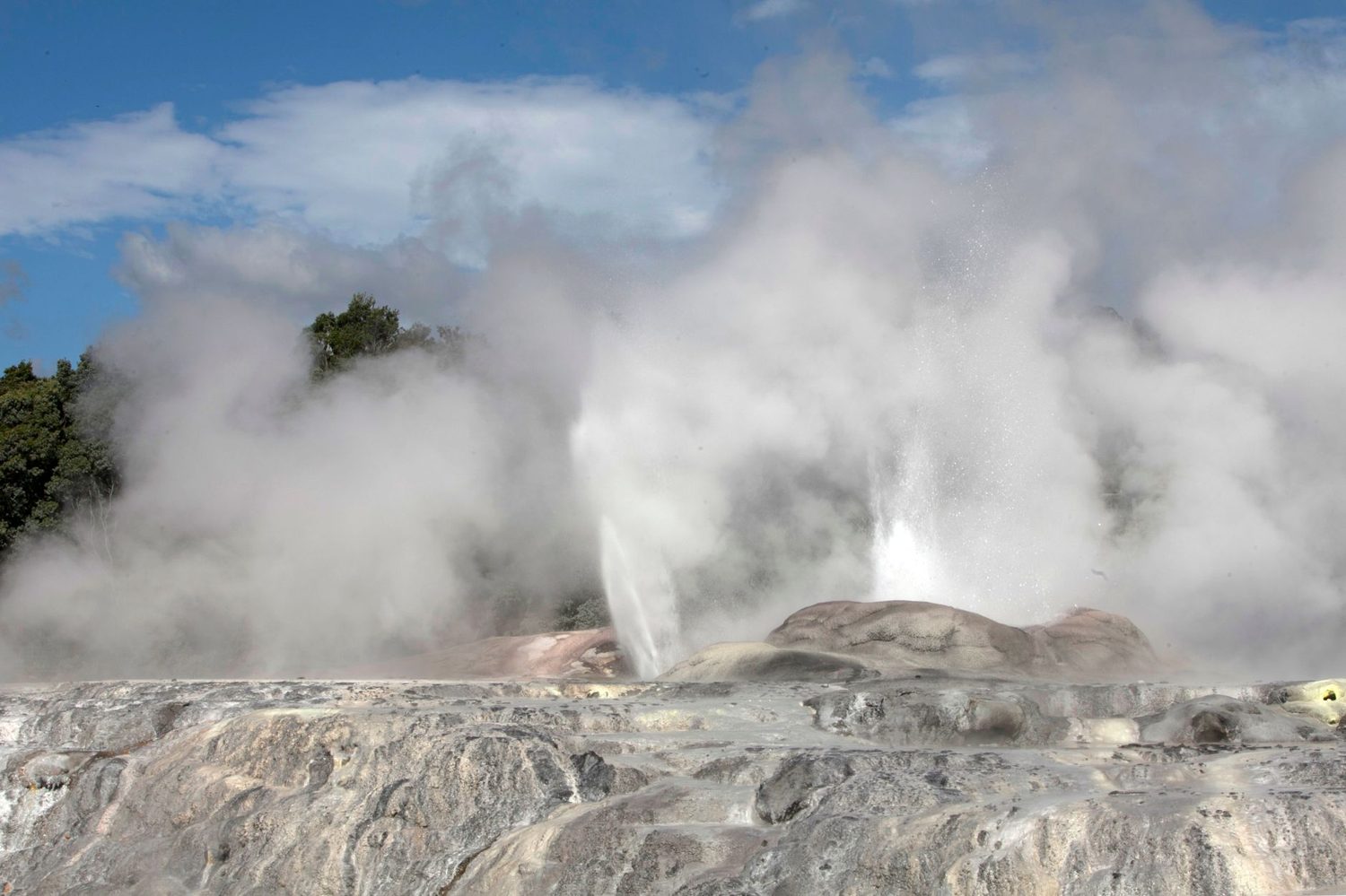
Rotorua is the most popular first stop on any southbound trip: geysers, bubbling mud, Māori cultural experiences, lakes and mountain biking in the redwoods, all about three hours from Auckland. There are two main ways there, plus a slower coastal route, and our Auckland to Rotorua drive guide covers all three with the best stops on each. The more common route runs via Hamilton and Cambridge, then through Tīrau — a small town that has built its visitor centre in the shape of a corrugated-iron dog — to Rotorua. The alternative leaves the expressway for State Highway 27 through Matamata, which puts Hobbiton directly on your route.
The honest verdict: you can do Rotorua as a day trip, and our Rotorua day trip guide explains how. But six hours in the car for five or six hours on the ground is a poor trade, and Rotorua’s evening experiences — a hāngī dinner and cultural performance, the lakeside hot pools — are some of its best. Two nights is the right minimum. Taupō is another hour south, and pairing the two makes an excellent four- or five-day trip.
Northland and the Bay of Islands
North of Auckland is a different New Zealand: subtropical, historic and much quieter. The Bay of Islands is the obvious target — Paihia, Russell and the Waitangi Treaty Grounds, where the country’s founding document was signed in 1840 — and it is about three to three and a half hours from Auckland. Stay two nights and you can take a boat out among the islands, walk Russell’s waterfront and give Waitangi the half-day it deserves.
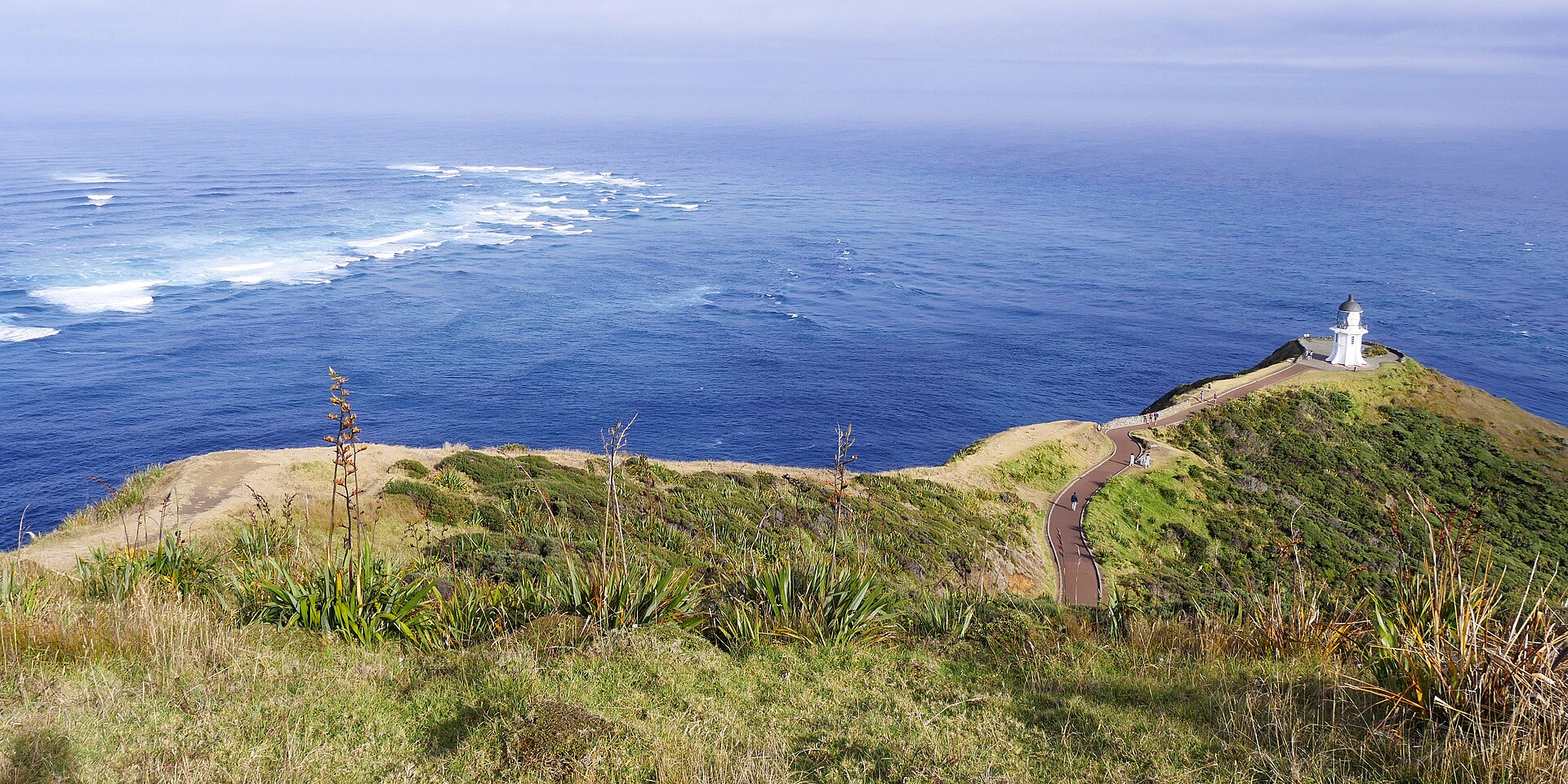
Push further and Northland becomes a loop. North of the Bay of Islands are Kerikeri, with the country’s oldest stone building, and the long drive up to Cape Reinga, where the Tasman Sea meets the Pacific and where, in Māori tradition, spirits of the dead depart for the ancestral homeland. Coming back down the west coast you pass the Hokianga Harbour and the giant kauri of Waipoua Forest, including Tāne Mahuta, the largest known living kauri. Allow four or five days for the full loop, which our Auckland to Bay of Islands road trip guide lays out day by day; our Bay of Islands day trip guide covers the shorter version.
Two warnings. Cape Reinga is not a day trip from Auckland — it is a twelve-hour round trip before you have stopped anywhere. And do not drive a rental car onto Ninety Mile Beach, however many other vehicles you see on it: rental cover commonly excludes beaches and unsealed roads, and a car stuck in the tide is entirely your problem. The specialist bus tours from the Bay of Islands are built for the sand; hire cars are not.
The Coromandel Peninsula
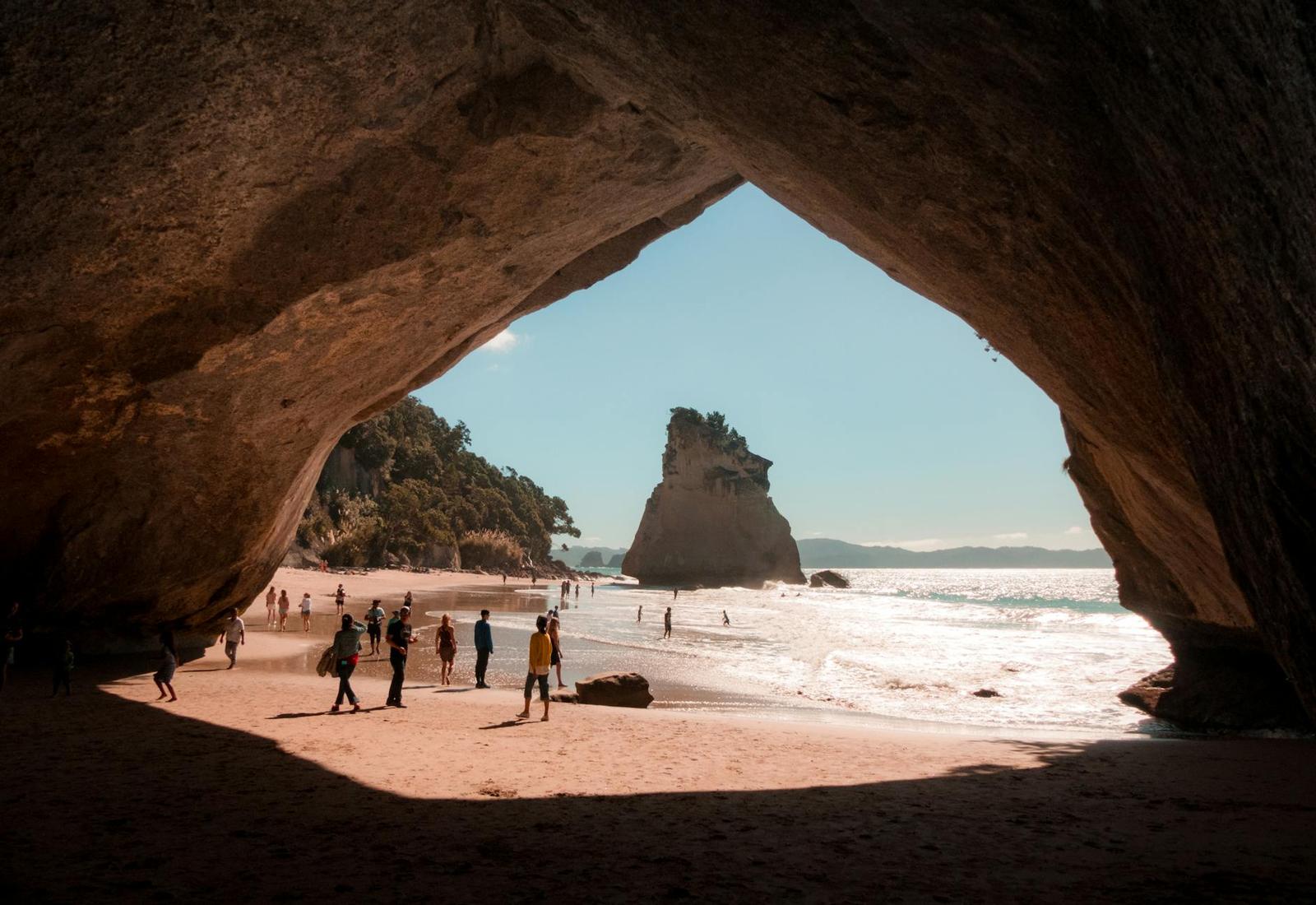
The Coromandel is Auckland’s summer playground: a mountainous, bush-covered peninsula with white-sand beaches on its eastern side, about two and a half hours away. The usual plan is a loop — up the Thames coast road, over to Whitianga, down to Hahei for Cathedral Cove and Hot Water Beach, then back across the middle on the Kōpū-Hikuai road (State Highway 25A). Hot Water Beach is best within a couple of hours either side of low tide, when you can dig a pool in the sand and sit in water heated from below.
It is tempting to do the Coromandel as a day trip, and our Coromandel day trip guide shows how. But the roads are narrow and winding, and the peninsula rewards slowing down. Two nights is the minimum; three lets you do the loop without rushing, and our Auckland to Coromandel road trip guide sets it out day by day, with the current Cathedral Cove parking arrangements. In January the whole peninsula fills with Aucklanders on holiday, so book well ahead.
Taupō and Tongariro
The Central Plateau is the most dramatic landscape in the North Island. Lake Taupō, the country’s largest lake, fills the caldera of an ancient supervolcano; just south of it rise the three active volcanoes of Tongariro National Park — Tongariro, Ngauruhoe and Ruapehu. This is where you come for the Tongariro Alpine Crossing, the 19.4 km one-way hike across the saddle between the craters, which many people rank as the best day walk in the country.
Taupō is about three and a half hours from Auckland, and the national park villages — Whakapapa, National Park and Ōhakune — another hour beyond. Allow at least two nights on the plateau if the Crossing is the goal, because it is weather-dependent and you want a spare day in case the first one is a write-off. The Crossing is also a one-way walk, so parking at the start is restricted and almost everyone uses a shuttle. In winter, the Desert Road section of State Highway 1 is regularly closed by snow and ice. Our Auckland to Taupō and Tongariro guide covers the Crossing logistics, the other walks and where to stay.
Waikato, Waitomo and Raglan
The Waikato is the region you drive through on the way to everywhere else, and it is easy to underrate. Waitomo, about two and a half hours from Auckland, is famous for its glowworm caves and is best as an overnight stop on a trip heading south to Taranaki or Tongariro; our Waitomo guide covers the caves themselves. Raglan, on the west coast, is New Zealand’s best-known surf town and a relaxed one- or two-night escape. Together with Hobbiton, they make a good short trip for visitors who want to see the countryside without committing to long days on the road.
Taranaki and the Forgotten World Highway
Taranaki is the North Island’s west-coast bulge, dominated by the near-perfect cone of Taranaki Maunga. It is about four and a half hours from Auckland via Waitomo and the Awakino Gorge, and it makes the best western route south to Wellington. The adventurous way in or out is the Forgotten World Highway (State Highway 43) between Taumarunui and Stratford: 150-odd kilometres of hill country, tunnels and gorges with a short unsealed section and the self-declared “Republic” of Whangamōmona halfway along. Fill up before you start, because there is almost nowhere to buy fuel, and check whether your rental agreement covers unsealed roads.
Hawke’s Bay and the East Coast
Napier, about five hours from Auckland via Taupō, was rebuilt almost entirely in Art Deco style after the 1931 earthquake, and the surrounding Hawke’s Bay region is one of the country’s major wine areas. It is the best eastern route south to Wellington. Further round, the East Cape and the Pacific Coast Highway (State Highway 35) form one of the most remote road trips in the North Island — beautiful, very quiet and hard on anyone in a hurry. Parts of the region’s roads were badly damaged by the storms of 2023, so check the current status before committing to the full loop.
The South Island from Auckland
For most visitors, the South Island is a flight rather than a drive. Queenstown is about an hour and fifty minutes from Auckland, Christchurch about an hour and twenty, and both have frequent flights from the domestic terminal. Driving means eight hours to Wellington and then the Cook Strait ferry to Picton — about three and a half hours on the Interislander or Bluebridge through the Marlborough Sounds, one of the great ferry crossings anywhere.
If you drive, know that most of the big international rental brands do not allow their cars on the ferry. The usual arrangement is to drop the car in Wellington, cross as a foot passenger, and collect a new car in Picton. Campervan companies are more flexible, but check before you book. The honest answer for a trip of two weeks or less: fly to the South Island, and road trip there instead. Our Auckland to South Island guide compares every option in detail.
Which road trip suits your time?
| You have | Do this | Skip |
|---|---|---|
| 2-3 days | Rotorua, or the Coromandel, or the Bay of Islands — one of them, properly | Trying to combine two |
| 4-5 days | Rotorua and Taupō, or a full Northland loop to Cape Reinga | Wellington |
| 7 days | Auckland to Wellington one way, via Rotorua, Taupō and Tongariro | Northland |
| 10 days | The North Island loop, with the Coromandel and a return via Napier or Taranaki | Driving to the South Island |
| 14 days | The North Island loop plus Northland, or a week in the North Island and a week flying south | Nothing, if you pace it |
Car, campervan, coach, train or plane?
| How | Rough cost | Best for | The catch |
|---|---|---|---|
| Hire car | NZ$45-75 a day off-peak for a compact, NZ$80-120 in peak summer, plus fuel | Flexibility at a sensible price | A NZ$4,000-6,000 insurance excess unless you reduce it |
| Campervan | Roughly NZ$120-280 a day, plus campsites and fuel | Slow trips, couples, summer | Freedom camping rules are stricter than most visitors expect |
| Coach | Cheapest if booked ahead | Solo travellers and anyone who would rather not drive | Slower, and nothing between the stops |
| Northern Explorer train | Check current fares | Auckland to Wellington as an experience in itself | Runs on selected days only |
| Domestic flight | Varies widely; book early | Wellington, the South Island, anywhere far | You see nothing on the way |
Hire car
For most visitors a hire car is the right answer: cheaper than a campervan, faster than a coach and flexible enough to stop wherever the view demands it. Our car rental guide compares the companies, but the headline numbers are these. A compact car runs roughly NZ$45-75 a day outside peak season and NZ$80-120 in summer, with February the most expensive month. The standard insurance excess is commonly NZ$4,000-6,000, and reducing it costs roughly NZ$18-46 a day — which, on New Zealand’s gravel-strewn rural roads, is usually money well spent. Dropping the car somewhere other than where you collected it adds a one-way fee of roughly NZ$50-250 or more within the North Island, so a trip ending in Wellington needs that in the budget.
Where to collect it matters too. If you are flying in and heading straight out of the city, the airport depots save a trip into town; our guide to picking up a rental car at Auckland Airport covers the process. If you are spending a few days in Auckland first, do not collect the car until the morning you leave, because you will not need it in the city and parking is expensive.
Campervan
A campervan road trip is a very New Zealand way to travel, and the country is set up for it: holiday parks everywhere, Department of Conservation campsites in the best locations, and dump stations on most main routes. It is not the budget option it looks like, though. Daily rates run roughly NZ$120-280 depending on the season and the vehicle, a powered site at a holiday park typically costs NZ$45-75 a night, campervans use a lot more fuel than a small car, and diesel vehicles carry road user charges that rental companies pass on per kilometre. Its real advantages are freedom and the experience itself, not the price. Our campervan hire guide compares the Auckland companies and what they really cost.
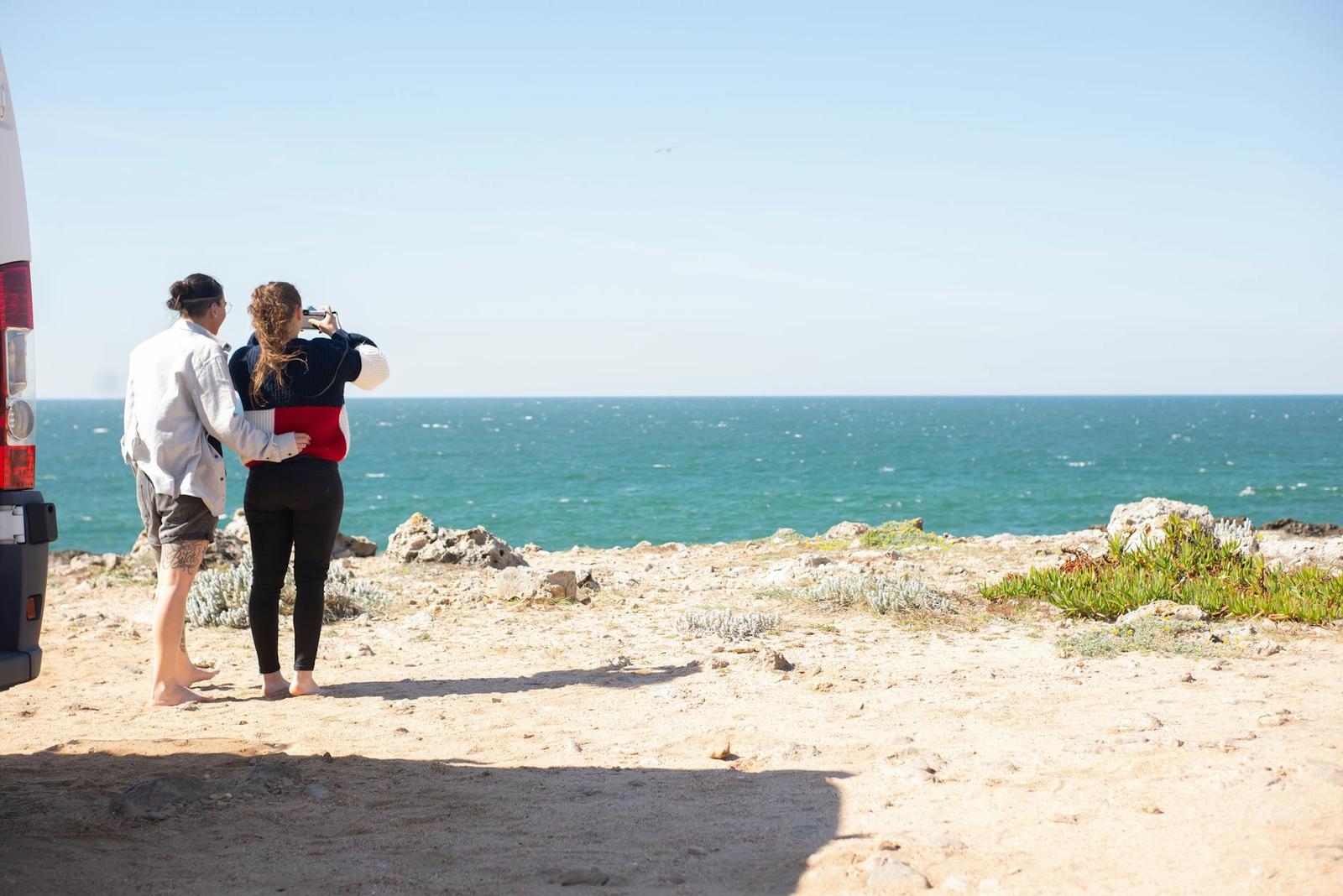
Freedom camping — staying overnight somewhere other than a campground — is where visitors get into trouble. Only vehicles certified as self-contained under the current green warrant can freedom camp where self-containment is required. That means a permanently fixed toilet, a sink, and fresh and waste water capacity for three days. The old blue warrants no longer count, and a portable toilet on its own does not qualify. The infringement fee is NZ$400, and a court can impose more. Every council sets its own rules about where you can stay, and many popular spots near beaches and towns are off-limits entirely. If you plan to freedom camp, hire a certified self-contained vehicle and check each council’s rules before you park up for the night.
Coach
InterCity runs the national coach network, with services from central Auckland to Rotorua, Taupō, Wellington, Paihia and most towns in between. It is the cheapest way to cover long distances, especially booked ahead, and it takes the stress out of the driving. The trade-off is that you only see what the coach stops at: the best parts of a North Island road trip are often the unscheduled ones, and places like Tongariro National Park and the Coromandel’s beaches are much harder to reach without a car.
Train
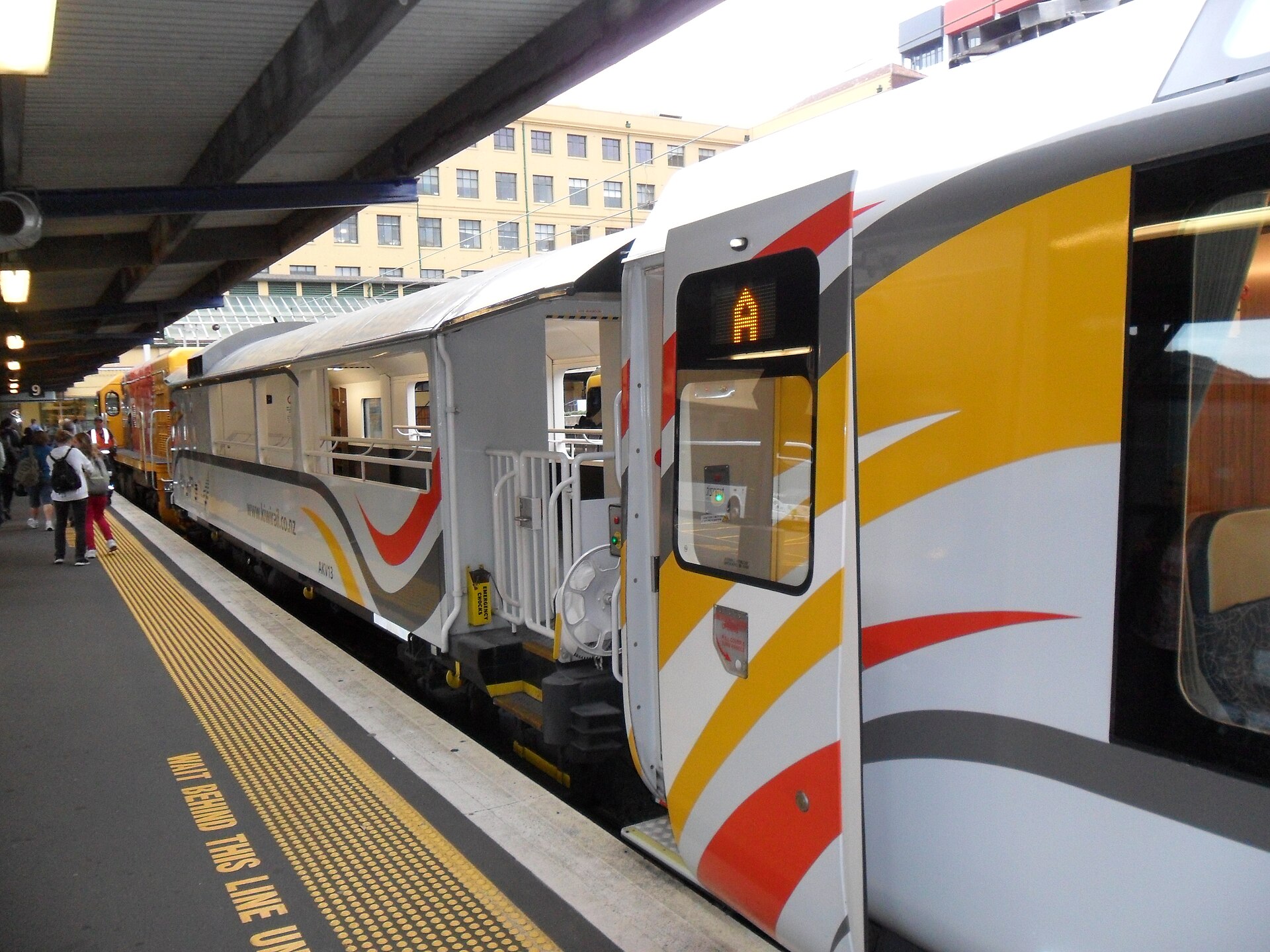
The Northern Explorer is KiwiRail’s scenic train between Auckland and Wellington, following the North Island Main Trunk line through the Waikato, the King Country and the volcanic plateau — including the famous Raurimu Spiral and the views of Ruapehu on the way through National Park. It is a full day’s journey and it runs on selected days of the week, so check the current timetable and fares on the Great Journeys New Zealand website before you plan around it. As a way of getting to Wellington it is slower than driving and dearer than the coach. As an experience, it is the most relaxing way to see the middle of the island, and a fine way to do one leg of a trip.
Domestic flights
Air New Zealand flies from Auckland to around twenty domestic destinations, and Jetstar covers the main trunk routes. Flying makes sense for Wellington if your time is short, and for the South Island almost always. The domestic terminal is a separate building from the international one, linked by a free shuttle or a signposted walk of about ten minutes, so allow for the transfer if you are connecting straight from an international flight. The combination many visitors land on is a road trip from Auckland to Wellington, then a flight or the ferry south.
Driving in New Zealand: what visitors get wrong
New Zealand’s roads are well signposted and mostly quiet once you are clear of Auckland. They are also narrower, twistier and more demanding than their numbers suggest. Our guide to driving in Auckland covers the rules in full; these are the points that matter most on a road trip.
- Distances deceive. Outside the motorways, averaging 70-80 km/h is realistic. Many “state highways” are two-lane roads with sharp bends, one-lane bridges and hill climbs. Trust the drive times in the table above, not the kilometres.
- Keep left, and look right first. It sounds obvious. It is easiest to forget when you pull out of a petrol station or a scenic lookout onto an empty road.
- Speed limits. The open-road limit is 100 km/h unless signed otherwise; a few expressway sections are signed higher and many rural roads lower. Urban limits are usually 50 km/h or less. Enforcement is strict.
- One-lane bridges. They are common in rural areas. A sign tells you who gives way; if the red arrow points your way, you wait.
- Let people pass. If a queue builds behind you, pull into a slow-vehicle bay or a passing lane and let it go. Locals will thank you, and it is safer for everyone.
- Fatigue. Stop every two hours. Jet lag and long days on unfamiliar roads are a dangerous combination, which is one reason we suggest you keep your first day in Auckland free of driving altogether.
- Your licence. A valid overseas licence lets you drive in New Zealand for up to 12 months. If it is not in English, you also need an approved translation or an International Driving Permit.
- Alcohol and phones. The limit is low for drivers 20 and over and zero for those under 20. Using a handheld phone while driving is illegal.
- Tolls. The Northern Gateway north of Auckland and two toll roads around Tauranga are paid online, not at a booth. Pay the toll yourself the same day, because a rental company that pays it on your behalf will add a processing fee that is often larger than the toll.
- Fuel. Regular 91 petrol has cost more than NZ$3 a litre through 2026. Fill up before remote stretches — the Forgotten World Highway, the East Cape, Northland’s west coast — because stations there are few and far between.
- Road status. Slips and roadworks close roads regularly, especially in Northland and on the Coromandel after heavy rain. Check the NZ Transport Agency’s journey planner on the morning you drive.
When to go
The North Island is a year-round road-trip destination, but the season shapes the trip.
- Summer (December to February) is peak season. The beaches are at their best, the evenings are long, and everything is busy — especially from Christmas to the end of the school holidays in late January, when half of Auckland heads to the Coromandel and Northland. Book accommodation and vehicles early.
- Autumn (March to May) is arguably the best time for a road trip. The weather is often settled, the sea is still warm, the crowds have gone and prices drop. Watch out for Easter, which falls from 26 to 29 March in 2027.
- Winter (June to August) is quiet and cheap everywhere except the ski fields on Ruapehu. Days are short, the Desert Road can close in snow, and the Tongariro Alpine Crossing becomes a mountaineering trip that needs a guide. Northland is mild all year.
- Spring (September to November) is green and changeable, with lambs in the fields and fewer visitors. Labour Weekend (Monday 26 October in 2026) is the first big getaway weekend of the season and the roads out of Auckland are busy.
Our guides to the best time to visit Auckland and Auckland’s weather month by month have more on the seasons.
What a road trip from Auckland costs
A rough guide for two people on a seven-day trip south from Auckland to Wellington, driving around 1,000-1,200 km including side trips. Treat these as ranges, not quotes.
| Item | Hire car and cabins | Campervan |
|---|---|---|
| Vehicle, 7 days | NZ$315-840 | NZ$840-1,960 |
| Excess reduction | NZ$125-320 | Often included in higher tiers; check |
| One-way fee (ending in Wellington) | NZ$50-250+ | Varies by company |
| Fuel | About NZ$200-260 for a compact car | Much more, plus road user charges on diesel |
| Accommodation, 6 nights | Holiday park cabins at NZ$95-185 a night: NZ$570-1,110 | Powered sites at NZ$45-75 a night: NZ$270-450 |
| Rough total, before food and activities | About NZ$1,250-2,800 | About NZ$1,500-3,200 |
The point of the comparison: a campervan and a car with cheap accommodation end up in the same range. Choose the campervan because you want the experience, not because you expect to save money. Our guide to Auckland’s holiday parks shows what the cabins and powered sites are like, and the Auckland travel budget guide covers the city end of the trip.
Where to stay on the road
Outside the cities, New Zealand’s accommodation looks very different from Auckland’s hotel towers, and knowing the types saves a lot of searching.
- Motels are the backbone of the New Zealand road trip and badly underrated by visitors. Almost every town has several: self-contained units with a kitchenette, a proper bed and a parking space outside the door. They are rarely glamorous, usually spotless, and often the best value for two people who want a real bed without a hotel price.
- Holiday parks combine campervan and tent sites with cabins and self-contained units, shared kitchens, laundries and, often, a pool and playground. Cabins typically run NZ$95-185 a night and powered sites NZ$45-75. National chains such as Top 10 keep standards consistent, but the independent parks are frequently in better spots.
- Department of Conservation campsites range from a patch of grass with a long-drop toilet to serviced sites with hot showers, and they are often in the most beautiful locations on the trip — beside lakes, at the end of gravel roads, on empty beaches. The popular ones must be booked online in summer.
- Holiday homes — baches, in New Zealand English — are rented out across the Coromandel, Northland and the lakes, and work well for families and groups staying several nights in one place. Summer weeks book up months ahead.
- Lodges, farmstays and B&Bs fill the gap at the top end and in rural areas, and a night on a working farm is one of the more memorable ways to break up a long drive.
Outside the summer holidays you can often book a day or two ahead as you go. From Christmas to the end of January, and on long weekends, book everything before you leave Auckland.
If something goes wrong
- Emergencies: dial 111 for police, fire or ambulance. It works from any mobile network, even where your own coverage is weak.
- Breakdowns: rental companies include roadside assistance; keep their number in your phone and on paper. If you stop on a narrow road, pull as far off as you safely can and turn on your hazard lights before you do anything else.
- No signal: large parts of Northland, the Coromandel, the Central Plateau and the Forgotten World Highway have patchy or no mobile coverage. Tell someone your route for the remote days, and download offline maps before you set off.
- Livestock and slow traffic: on rural roads you will meet tractors, logging trucks and, occasionally, a farmer moving sheep or cattle along the road. Slow right down and wait; they will clear a path.
- Weather: heavy rain brings slips and floods, especially on the Coromandel and in Northland, and snow closes the Desert Road in winter. If the forecast is bad, change the plan rather than pushing on. A day in Taupō waiting for the road to reopen is better than a night in a car on the Desert Road.
Leaving Auckland: the practical checklist
- Collect the car the morning you leave. Not on arrival day, and not on day one of a city stay.
- Stock up before you go. Supermarkets in the smaller towns are fine, but snacks, water and a paper map for the areas with no mobile coverage are easier to sort in the city.
- Download offline maps. Coverage is patchy in Northland, the Coromandel, the Central Plateau and the Forgotten World Highway.
- Check the road. The NZTA journey planner lists closures, slips and roadworks. Check it every morning of the trip.
- Book the first night. Even outside peak season, arriving somewhere at dusk with nowhere to stay is a poor start. Book ahead at least for the first night and anything in summer.
- Plan the return. If you are flying out of Auckland, return the car the day before or allow a very generous buffer. The Southern Motorway into the airport can be slow, and missing an international flight over a traffic jam is an expensive lesson.
Road trips from Auckland with children
New Zealand is an easy country for a family road trip, provided you keep the driving days short. Two to three hours is a sensible daily maximum with young children. Every child under seven must travel in an approved child restraint suited to their age and size; seven-year-olds must use one if it is available. Rental companies hire car seats for roughly NZ$10-20 a day, and bringing your own is often cheaper on a longer trip. Holiday parks are made for families, with playgrounds, pools and kitchens, and many have cabins that sleep four or more. Our guides to family day trips from Auckland and Auckland with kids cover the city end.
Frequently asked questions
What is the best road trip from Auckland?
For most visitors, the drive south to Rotorua, Taupō and Tongariro National Park, ending in Wellington. It links the North Island’s geothermal country, its largest lake and its volcanoes in about a week. If you have less time, the Coromandel Peninsula or the Bay of Islands makes a great two- or three-night trip.
How long does it take to drive from Auckland to Wellington?
About eight hours of driving for roughly 640 km, via State Highway 1 and the Desert Road. It can be done in a day, but it is far better split over two to four days, with overnight stops in Taupō, Rotorua or Tongariro National Park.
Can you do Rotorua as a day trip from Auckland?
Yes, but it is about three hours each way, so you spend as long in the car as you do in Rotorua. Two nights is a much better minimum, and it lets you see the evening cultural performances and hot pools.
Is it better to hire a car or a campervan in New Zealand?
A hire car with holiday park cabins or motels usually costs about the same as a campervan once fuel and campsites are included. Choose a campervan for the experience and the freedom; choose a car for speed, easier parking and more comfortable nights.
Can I freedom camp near Auckland?
Only in places where the council allows it, and in most of them only in a certified self-contained vehicle with a green warrant and a permanently fixed toilet. The fine for getting it wrong is NZ$400. Holiday parks and Department of Conservation campsites are the easy, legal alternatives.
Do I need an International Driving Permit?
Not if your licence is in English. A valid overseas licence lets you drive for up to 12 months. If your licence is in another language, you need an approved translation or an International Driving Permit alongside it.
Can I take a rental car on the Cook Strait ferry?
Usually not. Most of the big international rental brands do not allow their cars on the Interislander or Bluebridge ferries. The normal arrangement is to drop the car in Wellington and pick up another in Picton. Some campervan companies allow vehicles on the ferry, so check when you book.
How many days do I need for a North Island road trip?
Seven days covers a one-way trip from Auckland to Wellington via Rotorua and Taupō. Ten days is ideal for a loop that adds the Coromandel and Napier or Taranaki. Fourteen days lets you include Northland and the Bay of Islands.
Is there a train from Auckland to Wellington?
Yes. KiwiRail’s Northern Explorer runs between Auckland and Wellington on selected days of the week, a full day’s journey through the centre of the North Island. Check the current timetable and fares on the Great Journeys New Zealand website.
When is the best time for a road trip from Auckland?
Late summer and autumn, from February to April, usually offer the best mix of settled weather, warm seas and thinner crowds. Avoid the Christmas and January school holidays if you can, and the Friday afternoon of any long weekend.
Related Auckland Guides
- Day Trips from Auckland
- Auckland’s Best Scenic Drives
- Car Rental in Auckland
- Driving in Auckland: Rules and Tips
- Picking Up a Rental Car at Auckland Airport
- Rotorua Day Trip from Auckland
- Bay of Islands Day Trip from Auckland
- Coromandel Day Trip from Auckland
- Auckland’s Best-Value Holiday Parks
- Auckland vs Wellington vs Queenstown
Photo Credits
A campervan on the Desert Road, Tongariro National Park: Desert Road, Tongariro National Park by AnnWoolliams, CC BY-SA 4.0, via Wikimedia Commons.
Cape Reinga lighthouse and the meeting of the seas: Cape Reinga (Lighthouse) and Columbia Bank by Ulrich Lange, Bochum, Germany, CC BY 3.0, via Wikimedia Commons.
KiwiRail scenic carriages at Wellington Station: AK Carriages at Wellington Station by Jer.dv, CC BY-SA 3.0, via Wikimedia Commons.