Parnell Auckland Guide: Cafes, Heritage & Parks (2026)
An insider's guide to Parnell Auckland, the city's oldest suburb: Holy Trinity Cathedral, the Rose Gardens, heritage villas, best Parnell restaurants and cafes.
This article contains advertising. Our booking links are routed through a partner that adds commission tracking automatically, so if you book through one we earn a commission from the provider, at no extra cost to you. It never affects what we recommend. Affiliate disclosure
I’ve lost whole Saturdays in Parnell without meaning to. You go for a coffee, end up walking a block of timber cottages older than the country’s parliament, wander into a rose garden that smells like your grandmother’s garden times a thousand, and suddenly it’s mid-afternoon and you’re eating a warm brioche off a paper napkin outside a French market. This is Auckland’s oldest suburb, and it does that to people. Here’s how I’d spend a day here, and what I’d tell a friend flying in.
Parnell Auckland is the city’s oldest suburb, settled from 1841 and sitting about 2 km east of the CBD. It packs New Zealand’s largest cathedral, its most-loved public rose garden, a heritage-cottage shopping village along Parnell Road, a historic saltwater pool by the sea, and a Saturday French market into an area you can walk end to end in twenty minutes. Plan two to four hours, or a full day with the neighbouring Auckland Museum.
Parnell at a glance
| Detail | What to know |
|---|---|
| Location | 2 km east of Auckland CBD, between the city and Auckland Domain |
| Founded | 1841 — Auckland’s first suburb |
| Main streets | Parnell Road (the spine), Parnell Rise, St Georges Bay Road, Faraday Street |
| Known for | Heritage villas, Holy Trinity Cathedral, Parnell Rose Gardens, boutique shopping, specialty coffee, brunch |
| Time needed | 2–4 hours for highlights; a full day paired with Auckland Museum and the Domain |
| Best for | Heritage and history lovers, brunch people, garden visitors, design-led browsers |
| Getting there | 10-min walk from Britomart, short bus or Uber; Parnell train station on the eastern line |
| Cost to explore | Free — cathedral, gardens, market browsing, heritage walks all cost nothing |
If you only have a couple of hours, my shortlist is simple: coffee on Faraday Street, a slow lap of the cathedral and the little wooden church beside it, then the Rose Gardens if they’re in bloom. Everything below is the longer version.
A suburb that refused to be knocked down
Parnell was named after Sir Henry Parnell, a British politician, and grew up from 1841 as Auckland’s first proper suburb — timber villas thrown up for railway workers, dockhands and tradespeople. What makes it unusual is what didn’t happen next. While the rest of Auckland bulldozed and rebuilt through the 20th century, Parnell mostly held onto its old bones.
A lot of that comes down to one stubborn developer. In the 1960s and 70s, Les Harvey started buying up the tired Victorian cottages along Parnell Road and restoring them into shops rather than flattening them — the beginnings of what’s now Parnell Village. It was an odd bet at the time. It paid off. Today the suburb holds more scheduled heritage buildings than anywhere else in Auckland, which is why a walk here feels different from the glass-and-concrete CBD ten minutes away.
The strange charm of the place is that geography and character pull in opposite directions. You’re practically in the city. It feels like a village. For a wider read on how the inner suburbs fit together, the Auckland Neighborhoods Guide 2026: Where to Stay, Eat & Explore is a good place to orient yourself before you pick a base.
The Parnell Rose Gardens
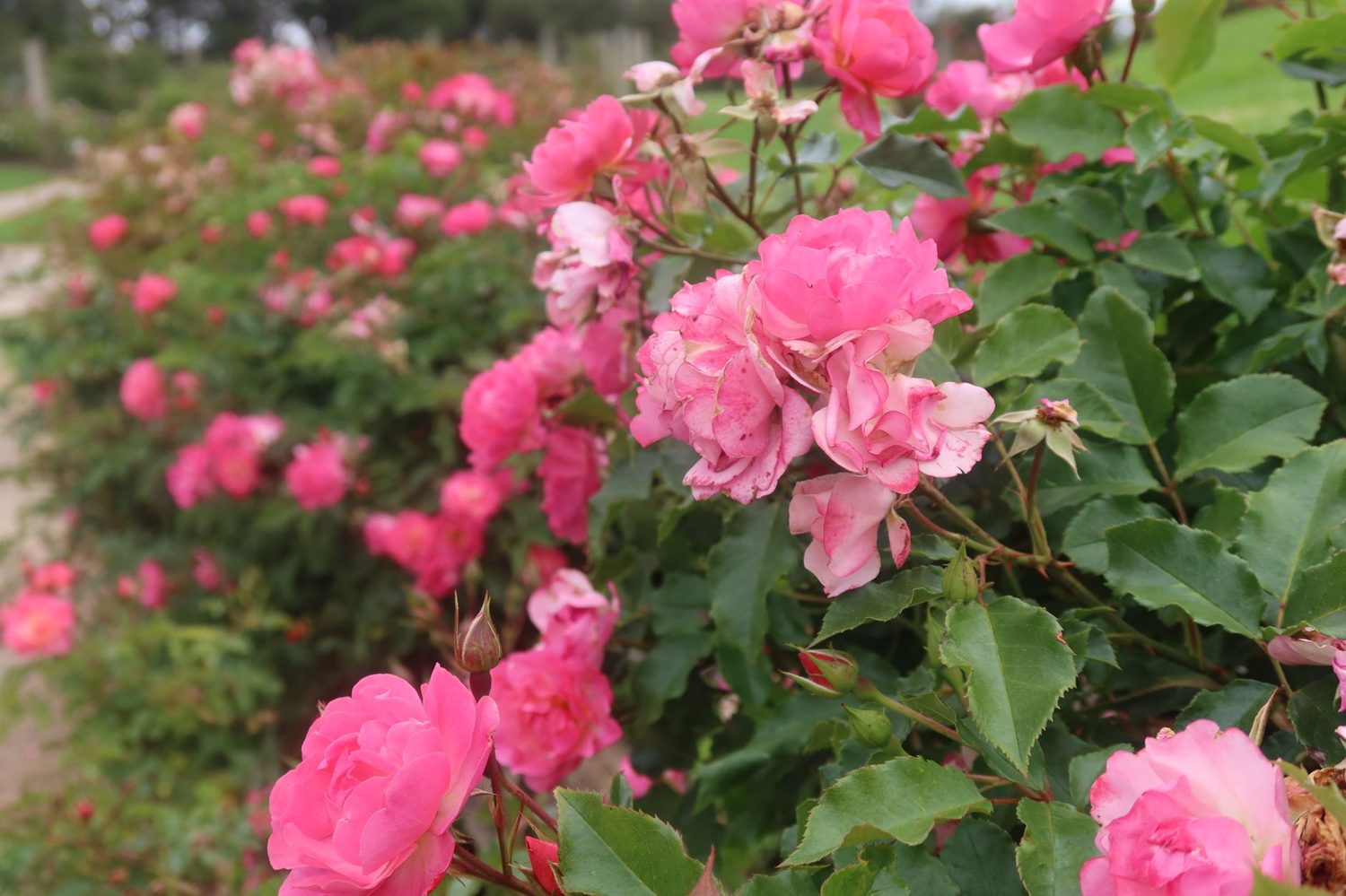
If you catch these in bloom, cancel your next appointment. The Parnell Rose Gardens spread across Dove-Myer Robinson Park, and the numbers are genuinely a bit silly — somewhere north of 5,000 rose plants across hundreds of varieties, plus the adjacent Nancy Steen Garden, which is given over to old heritage roses that predate 1900. It’s free, it’s open dawn to dusk, and it’s beautifully kept.
When to go
Roses in Auckland run roughly October through April, with the big show from November into March and often a lovely second flush in late February. Go outside those months and you’ll still get a pretty harbour-edge park with good picnic benches and city-skyline views — just fewer flowers. Come at golden hour if you can; the light off the water behind the beds is the kind of thing people stop and photograph without quite knowing why.
The Festival of Roses
The Parnell Festival of Roses lands on the second weekend of November most years — free entry, live music, food trucks, garden talks. It’s popular enough that parking near the gardens gets tight, so I’d walk in or budget extra time. On any normal day, though, you’ll have plenty of room to yourself.
| Rose Gardens | Detail |
|---|---|
| Address | 85–87 Gladstone Road, Parnell |
| Hours | Daily, dawn to dusk |
| Cost | Free |
| Peak bloom | November to March |
| Don’t miss | Nancy Steen Garden for the old heritage roses |
Holy Trinity Cathedral and the little wooden church
Holy Trinity on Parnell Road is New Zealand’s largest cathedral, and it’s described as the only example of Polynesian Gothic architecture — Gothic church design threaded through with Māori and Pacific elements. The main cathedral was completed in 1973, and the stained glass inside is worth going in for even if churches aren’t usually your thing. Entry is free; donations welcome.
But honestly, the building I’d tell you not to miss is the small one next door. St Mary’s-in-Holy Trinity dates to 1886–1897 and is one of the finest wooden churches in the country — all kauri timber and quiet light. Here’s the part visitors love: the whole church was physically lifted and rolled across Parnell Road to its current spot in 1982. An entire timber cathedral, on the move, across a suburban street. Stand inside and it’s hard to believe it went anywhere. If you want the deeper cultural context behind buildings like this, the Auckland Māori Culture, History & Heritage: The 2026 Visitor’s Guide is a solid companion read.
Opening hours for the cathedral run daytime most days, with services on Sundays, so if you want to go inside, aim for late morning or early afternoon rather than turning up at dusk.
Where to eat and drink in Parnell
Parnell has a reputation as one of Auckland’s more awarded independent dining pockets, and the range genuinely surprises people — you’ll find everything from Italian to Vietnamese to Indonesian within a few blocks. Here’s where I actually send people.
Brunch and cafes
Cibo is the grande dame — a restaurant tucked into a heritage villa off Parnell Road that’s been an Auckland institution for over 30 years and still shows up on the country’s top-restaurant lists. It does a serious brunch and an even more serious dinner. If you want one memorable meal in Parnell and don’t mind spending, this is it. Book ahead for dinner.
For everyday coffee and a plate, Faraday Street is where I’d start. It’s a short lane off Parnell Road that’s turned into a genuine specialty-coffee cluster, with roasters working on-site so the whole street smells faintly of coffee in the morning. Grab a flat white, watch the beans tumble in the roaster, and you’ve had a better cup than most of the CBD serves.
The La Cigale French market
On weekends, the La Cigale French Market runs at 69 St Georges Bay Road, and it’s the one thing I’d rearrange a Saturday for. Think fresh baguettes and pastries, French cheeses, smoked salmon, oysters, crepes cooked in front of you, and stalls of gourmet bits inspired by the markets of Provence. It’s been voted Auckland’s best food market year after year, and on a sunny morning it’s exactly the kind of unhurried, eat-as-you-wander scene that makes you like a city. (Note that the old standalone La Cigale shop and cafe closed back in 2021 — it’s the weekend market that carries the name now.) Go earlyish for the best of the bread.
Dinner and a drink
- Non Solo Pizza — long-running, wood-fired, reliably good Italian if you want casual.
- Domain Bay Brewing — craft beer and pizza; easy after a day of walking.
- Saigon Vietnam — dependable pho when you want something lighter and cheaper.
Dining in Parnell leans toward brunch and dinner rather than late-night, so if you’re after a bar scene that runs to the small hours, you’ll want the CBD or Ponsonby instead. The Auckland Food & Drink Guide 2026: Best Restaurants, Cafes & Bars maps the wider city if you’re hungry beyond Parnell.
Shopping the heritage village
Parnell’s shopping isn’t mall shopping, and that’s the point. Parnell Village is that restored block of 19th-century timber cottages along Parnell Road — you shop through a series of little heritage buildings rather than a food-court corridor. Expect boutique fashion, homewares, jewellery, gifts, and one of Auckland’s better concentrations of antique dealers if that’s your thing.
It’s browsy rather than efficient. You’re not here to knock out a shopping list; you’re here to potter, find something you didn’t know you wanted, and duck back out for a coffee. If you want proper flagship-store, big-brand retail, Newmarket is a short hop south and built for exactly that — the Newmarket Auckland: Shopping, Dining & Hotels Guide (2026) covers it in full. And for how Parnell sits against Auckland’s other browsing districts, the Auckland Shopping & Nightlife Guide 2026: Where to Shop & Party is worth a look.
Parnell Baths — the saltwater pool by the sea
This one gets missed, and it shouldn’t. Parnell Baths opened in 1914 and holds New Zealand’s largest saltwater swimming pool — the main lane pool runs 60 metres and was originally filled with seawater straight off the Waitematā Harbour. In the 1950s it was reworked into the seaside lido style you see today, and it still has that old-fashioned open-air-pool charm, with the harbour right there beyond the fence.
For families it’s a genuinely good afternoon — alongside the big pool there’s a heated lido pool, a toddler pool, spa pools and an aqua play area. It’s seasonal (summer months), so check it’s open before you make the trip. If you’re travelling with children, our Auckland with Kids 2026: Complete Family Travel Guide has a lot more in this vein.
The best free thing to do: a heritage walk
My favourite way to actually feel Parnell’s age is to walk the residential streets behind the main strip. A self-guided loop of an hour or so takes you past some of Auckland’s best-preserved Victorian and Edwardian villas — the New Zealand tourism board’s official Parnell historic walk is a good route to follow, and you can scale it from a gentle 1.5 km up to around 5 km depending on your legs.
What I like about it is that it’s the un-touristy Parnell. No ticket, no queue — just old timber houses with deep verandahs, mature trees, and the occasional plaque that stops you in your tracks. Do this bit slowly. It’s the part people remember.
A perfect half-day in Parnell
Here’s roughly how I’d string it together on a good day:
- Morning: Coffee and something baked on Faraday Street, then a slow wander down Parnell Road through the heritage village.
- Late morning: Holy Trinity Cathedral and the little wooden St Mary’s beside it.
- Midday: The Rose Gardens if they’re in bloom (and a picnic if the weather holds), or brunch at Cibo if it isn’t.
- Afternoon: Walk uphill to the Auckland War Memorial Museum and the Domain — allow a good two hours for the museum’s Māori and Pacific galleries.
- If it’s Saturday: Swap in the La Cigale market for late-morning.
Because Parnell sits right next to the Auckland Domain and the museum, it slots neatly into a bigger city itinerary. If you’re building out a full trip, the 65 Best Things to Do in Auckland (2026): An Insider’s Guide and the master Auckland Travel Guide 2026: The Complete Visitor’s Handbook will help you fit the pieces together.
Parnell’s coffee, in a little more detail
I keep coming back to the coffee because it’s genuinely one of the reasons to make the trip, not just a footnote. Faraday Street works because it’s compact — a handful of roasters and coffee bars close enough that you can taste your way along it in a morning. Some of them roast on-site, sourcing green beans direct from farms and rotating single-origins, so if you order a filter and ask what’s on, you’ll usually get a real answer rather than a shrug.
What I’d suggest, if you take coffee at all seriously: skip the first cafe you see on Parnell Road and walk the extra two minutes to the lane. Order a flat white or a batch-brew filter, take it outside, and give yourself ten minutes to just sit. It’s a small ritual, but it’s the one that makes Parnell feel like a neighbourhood rather than a stop on a list. Coffee culture spills into the wider suburb too — you’re a short walk from Newmarket’s cafes to the south if you want to keep going.
Parnell beyond the obvious
Once you’ve done the headline stuff, Parnell has a second layer that rewards a return visit. Ewelme Cottage is a preserved 1860s house museum that opens on limited hours — check ahead, but if the timing lines up it’s a lovely, quiet window into colonial Auckland. Parnell Library is worth a peek purely as a building; it’s one of the prettier branch libraries in the city. And the residential avenues like St Stephen’s are dense with the kind of grand old villas that make you slow your walk right down.
There’s also a strong thread of the outdoors here that people forget, because Parnell runs down toward the water. The walk along the harbour edge near the Rose Gardens and Parnell Baths gives you sea, city skyline and open sky all at once, and it connects into Auckland’s wider coastal walking. If that’s your thing, the Auckland Beaches & Outdoor Adventures: The Complete 2026 Guide is where I’d look next.
The Auckland Museum and Domain next door
You can’t really write about Parnell without the Auckland War Memorial Museum, because it sits right on the suburb’s doorstep in the Auckland Domain and it’s the single biggest reason many first-timers come this way. The collection runs to millions of items and the building itself is a landmark. The Māori and Pacific galleries on the ground floor are internationally significant — the carved meeting house and the great war canoe alone justify the visit — and there’s a daily Māori cultural performance included with entry that’s a genuine highlight for most people.
Budget at least two hours, more if a special exhibition is on. The Domain around it is Auckland’s oldest park, and the heritage Wintergardens glasshouses tucked inside it are free and worth ten minutes. Pairing a Parnell morning with a museum-and-Domain afternoon is, to my mind, the best full day the eastern side of the city offers. If you’re travelling with children, note the museum’s dinosaur and volcano galleries upstairs tend to win them over fast.
Events worth timing your visit around
Beyond the November Festival of Roses, Parnell has a low-key events calendar that’s easy to fold into a trip if the dates align — the odd food or design happening along Parnell Road, and the wider city’s festival programme is never far away. If you’re the sort of traveller who likes to build a trip around what’s on, the Auckland Events & Festivals Calendar 2026: Month-by-Month Guide is the reference I’d keep open. And if you fancy pairing Parnell with a wider escape, plenty of the region’s best 25 Best Day Trips from Auckland in 2026 (With or Without a Car) start from just a few minutes away.
Getting to Parnell and getting around
Parnell is close enough to walk to from Britomart — about ten minutes, though it’s uphill on the way there, so factor that in with kids or luggage. There’s a train station on the eastern line, buses run along the main road, and an Uber from the CBD is quick and cheap. Once you’re in Parnell, it’s a walking suburb; you won’t need a car for anything on this page. Parking exists but the main streets get busy on weekends, so I usually leave the car behind. For the full lay of the land, the Getting Around Auckland: The Complete 2026 Transport Guide covers HOP cards, ferries and the lot.
Where to stay
Here’s the honest version: Parnell doesn’t have much dedicated hotel stock. There’s a mid-range hotel or two and a scattering of small heritage B&Bs in restored villas, plus the usual short-stay apartments. Most visitors I know base themselves in the CBD — Britomart, the Viaduct, Wynyard Quarter — and treat Parnell as a short trip in, which is a ten-to-twelve-minute drive.
That said, if you specifically want the quiet, leafy, heritage-village feel to wake up in, a Parnell villa stay is lovely and you’ll be walking distance from the museum. Weigh it against how much city buzz you want on your doorstep. Our Where to Stay in Auckland: Best Neighbourhoods & Hotels for 2026 guide breaks down each area by traveller type.
How Parnell compares to nearby suburbs
People often ask me how Parnell stacks up against the other inner suburbs, so quickly: Ponsonby is louder, more of a bar-and-restaurant scene, and skews younger at night — the Ponsonby Guide: Auckland’s Coolest Neighbourhood (2026) has the detail. Mt Eden is more low-key village-cafe-and-volcano, covered in the Mt Eden Village Guide: Cafes, Shops & Hotels (2026). And the CBD itself is where the big-ticket attractions and nightlife concentrate — see the Auckland CBD Guide: Precincts, Attractions & Where to Stay (2026).
Parnell’s lane in all of this is heritage, gardens, brunch and browsing. It’s the calmest of the inner suburbs, and the one I’d send someone to who wants to feel Auckland’s history rather than its skyline.
Frequently Asked Questions
Is Parnell worth visiting in Auckland?
Yes, especially if you like heritage, gardens and a good brunch. It’s Auckland’s oldest suburb, home to the country’s largest cathedral and its best-known rose gardens, and it’s a ten-minute trip from the CBD. Two to four hours covers the highlights.
How do I get to Parnell from Auckland CBD?
It’s about a ten-minute walk from Britomart (uphill on the way there), or a quick bus, train or Uber. Parnell has its own station on the eastern train line. Once you arrive, everything on the main strip is walkable.
What are the best Parnell restaurants?
Cibo is the long-standing standout for a special meal, brunch or dinner. Faraday Street is the spot for specialty coffee and casual eats, and the weekend La Cigale French Market on St Georges Bay Road is worth planning a Saturday morning around.
Are the Parnell Rose Gardens free, and when do they bloom?
They’re free and open daily from dawn to dusk. Roses bloom roughly October to April, with the best displays from November to March and a second flush often appearing in late February.
What is there to do in Parnell besides shopping and eating?
Visit Holy Trinity Cathedral and the historic wooden St Mary’s church, walk the heritage residential streets, swim at the historic Parnell Baths saltwater pool in summer, and combine it all with the neighbouring Auckland War Memorial Museum and Domain.
Final thoughts
Parnell is the suburb I recommend when someone tells me they’ve “done” the Sky Tower and the waterfront and want to see the Auckland that locals actually love. It’s not a big-attraction day. It’s a slow one — coffee, old streets, a rose or two, a French pastry, a wooden church with a wild backstory. Give it a morning with no fixed plan and let it do its thing. That’s when it’s at its best, and it’s usually when people fall for it.
Last updated: July 2026. Written by the Auckland Tourism Guide team.
Photo credits
- Photo: Grant Larcom via Pexels
- Photo: Stephanie Perera via Pexels