Is Auckland Safe for Tourists? Travel Safety Guide (2026)
Is Auckland safe for tourists? Yes - an honest 2026 safety guide covering petty theft, car break-ins, areas to know at night, scams, natural hazards and 111.
This article contains advertising. Our booking links are routed through a partner that adds commission tracking automatically, so if you book through one we earn a commission from the provider, at no extra cost to you. It never affects what we recommend. Affiliate disclosure
I get asked this more than almost any other question about visiting Auckland, usually from someone who has never been to New Zealand and pictures it as either a Tolkien postcard or a place they secretly worry might be rougher than the movies suggest. So let me put it plainly before we go any further: Auckland is one of the safer big cities you can visit, and the overwhelming majority of trips here pass without a single problem. That does not mean nothing ever goes wrong, and I would rather give you the honest version than the brochure one. This is the real picture — where the actual risks are, which ones are overhyped, and the handful of habits that keep a good trip from turning into a story you tell for the wrong reasons.
Is Auckland safe for tourists? The short answer
Yes. Auckland is safe for tourists. Violent crime against visitors is rare, the central and waterfront areas are well-lit and walkable, and New Zealand sits near the top of global safety rankings. The real risks are petty ones — car break-ins at trailheads and lookouts, opportunistic theft in crowds — plus natural hazards like strong sun and ocean rips. Basic care handles almost all of it.
| Safety factor | The honest picture | What it means for you |
|---|---|---|
| Violent crime vs tourists | Rare; NZ has a Level 1 (lowest) US travel advisory | You do not need to be on edge |
| Petty theft | The main real risk — car break-ins, occasional bag-snatching | Never leave valuables in a parked car |
| Areas to be aware at night | Parts of Queen St and K Road after midnight on weekends | Stay with crowds; grab a rideshare home |
| Scams | Uncommon; mostly rental-car and online booking edge cases | Document your rental car; book through known sites |
| Natural hazards | Fierce UV, ocean rip currents, low-probability quakes | Sunscreen, swim between the flags, know the drill |
| Emergency number | 111 (Police, Fire, Ambulance) — free from any phone | Save it before you land |
| Solo, female, LGBTQ+ travellers | Widely reported as comfortable and welcoming | Standard big-city awareness is plenty |
How safe is Auckland, really?
Let me give you the context that actually matters, because “safe” is a slippery word without a comparison. New Zealand consistently ranks as one of the two or three most peaceful countries in the world on the Global Peace Index, usually trading the top spots with Iceland. The United States, the UK, Australia and most of Europe all place New Zealand at the lowest tier of their travel advisories — the equivalent of “exercise normal precautions.” That is the same rating those governments give to travelling within their own low-crime regions.
Auckland inherits that backdrop. It is the country’s biggest city, home to roughly a third of all New Zealanders, so it naturally records more incidents in raw numbers than a small town. But the kind of crime that frightens visitors — being mugged, being attacked, walking into a “no-go” district by accident — is genuinely uncommon here, especially in the parts of the city you are likely to spend your time. In more than a decade of sending people to Auckland and travelling it myself, the problems I hear about are almost always the same two: something taken from a car, or a scuffle outside a bar at 2am that had nothing to do with the tourist who happened to be walking past.
I want to be candid about one thing, though, because you will see it in local headlines if you go looking. Auckland, like a lot of cities, has had well-publicised stretches of retail crime — smash-and-grab thefts at shops, “ram raids” on stores overnight. Those grab attention because they are dramatic and caught on camera. They are also almost entirely aimed at commercial premises and property, not at people, and certainly not at tourists browsing during the day. It is worth knowing the context so a scary headline does not derail your plans: the thing being targeted is a till or a display case, not you.
The risks that are actually worth your attention
Here is where I would spend your worry budget, roughly in order of how likely you are to run into each one. Notice that violent crime is not on this list — that is deliberate.
Car break-ins (the number one real risk)
If something goes wrong on your trip, this is the most likely candidate by a wide margin. Thieves target parked cars — especially rentals, which are easy to spot — at scenic lookouts, trailhead car parks and beach car parks. It is fast and opportunistic: a window gets smashed, a bag on the back seat is gone in seconds, and the car is empty again before anyone notices. The classic Auckland hotspots are the west coast surf beaches (Piha, Karekare, Bethells), bush walk car parks in the Waitakere Ranges, and yes, even popular in-city spots like the Mount Eden summit car park.
The fix is simple and almost completely effective: never leave anything visible in a parked car, and better yet, take your valuables with you. Phones, laptops, passports, wallets, cameras — they come on the walk. Do not “hide” a bag in the boot while a thief watches you from across the car park; they will assume the boot is where the good stuff went. If your rental has nothing on show and nothing worth grabbing, you have removed the entire reason someone would break in.
Ocean rip currents and beach safety
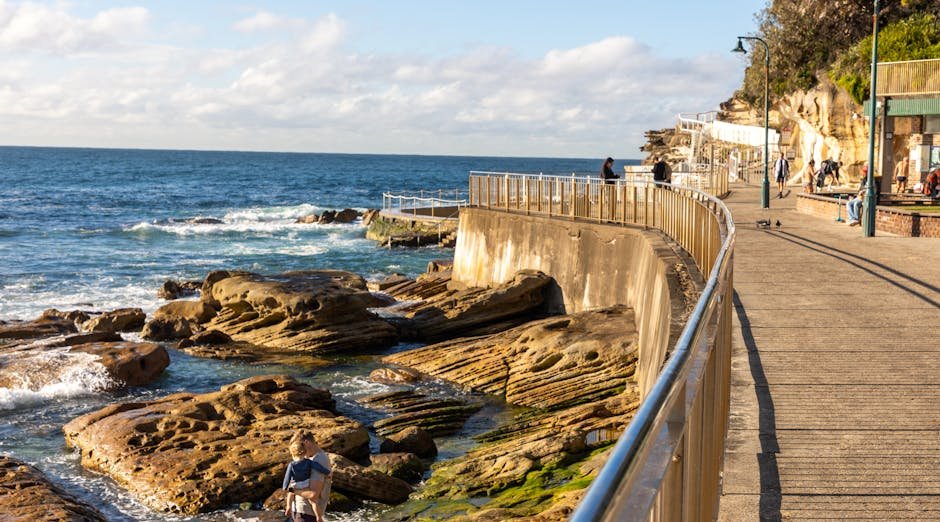
This one can be genuinely dangerous, and I do not say that lightly. Auckland’s dramatic west coast beaches — Piha, Karekare, Bethells (Te Henga) — face the open Tasman Sea and have powerful rip currents that pull swimmers out fast. People drown on these beaches most years, and they are not all careless tourists; strong swimmers get caught too. The black volcanic sand and rolling surf look spectacular, which is exactly why people underestimate the water.
The rule is non-negotiable: only swim between the red-and-yellow flags, and only when lifeguards are patrolling (summer, roughly late October through Easter, during daytime hours). Outside those flags and those hours, treat the west coast as a place to look, not to swim. If you ever feel yourself being dragged out, do not fight the current straight back to shore — you will exhaust yourself. Stay calm, raise an arm to signal for help, float, and swim parallel to the beach until you are out of the pull. Auckland’s east coast beaches (Mission Bay, Takapuna, Cheltenham) are the calm, family-friendly alternative with no rip problem.
New Zealand’s fierce sun and UV
Almost everyone underestimates this, and a lot of visitors go home peeling. The UV in New Zealand is savage — the summer UV index in Auckland regularly tops 11, which is “extreme” on the scale, driven by clean air, the country’s latitude and the thinner ozone layer over the Southern Hemisphere. You can burn in well under 20 minutes on a clear summer day, even when the temperature feels mild and there is a breeze.
Treat sun protection as everyday kit, not a beach-only thing. Broad-spectrum SPF 50, reapplied every couple of hours; a brimmed hat; sunglasses; and a shirt with sleeves for long walks or boat trips, all of which sit near the top of our Auckland packing list. The locals genuinely do this — “slip, slop, slap” is drummed into every Kiwi kid — so you are not being over-cautious by joining them.
Petty theft in crowds and nightlife
Pickpocketing is not the epidemic it is in some big European tourist cities, but opportunistic theft does happen — in packed bars, at busy transport hubs, and around events. The usual pattern is a phone left on a bar table, a bag hung on the back of a chair, or a wallet in an easy back pocket. Keep your bag in front of you or on your lap in crowded venues, keep your phone off the table, and keep your wallet zipped away. That is genuinely most of the defence you need.
Driving on the left
Not a crime, but a real hazard for visitors from countries that drive on the right. New Zealand drives on the left, which means the instinct that has kept you alive at every road crossing since childhood is now backwards. Pedestrians step off kerbs looking the wrong way; drivers drift to the wrong side after a roundabout. Look right first, then left, then right again — many central Auckland intersections have “look right” painted on the road for exactly this reason. If you are renting a car, give yourself a low-stakes first hour before you tackle motorway merges.
Alcohol-related trouble late at night
On Friday and Saturday nights, the late-night pockets of the CBD — parts of Queen Street, some of the K Road strip after midnight — get the same messy energy as any city’s nightlife district. Fights, when they happen, are almost always between intoxicated locals and rarely involve tourists, but you do not want to be the bystander who wandered into one. If you are out late, stay where the crowds and lights are, avoid stepping in when things get heated, and take a rideshare or taxi home rather than walking long, quiet stretches at 3am.
Areas to be aware of (and the ones that are just fine)
I want to be careful here, because this is where travel writing often goes wrong — either pretending every neighbourhood is identical, or slapping a scary “avoid” label on entire communities. Neither is honest. The truth for Auckland is that there is no district a tourist is likely to visit that counts as genuinely dangerous. What varies is how tourist-oriented a place is and how it feels late at night.
Where you will almost certainly be staying — and it is safe
The areas most visitors use are among the safest in the city, day and night: the Viaduct Harbour and Wynyard Quarter waterfront, the Britomart precinct around the main train station, Ponsonby’s café strip, Parnell, Newmarket, Devonport across the harbour, and the eastern bays like Mission Bay. These are well-lit, well-populated, and heavily used by families and visitors. If you are choosing a base, my full breakdown of the best areas to stay in Auckland walks through each one, and the broader Where to Stay in Auckland: Best Neighbourhoods & Hotels for 2026 pillar covers hotels by budget.
Where to keep your wits about you after dark
A few spots warrant a little more awareness at night rather than avoidance:
- The southern, upper end of Queen Street late at night. Fine during the day and evening; the small hours on weekends can attract a rowdier, sometimes unsettled crowd. Stay toward the busy, lit sections.
- Karangahape Road (K Road) after midnight. Auckland’s bohemian bar-and-club strip is genuinely great and perfectly fine when it is busy. The quiet side streets off it, in the early hours, are where I would keep more of an eye out.
- Empty parks at night. Auckland Domain, Albert Park and the larger green spaces are lovely by day and simply not places to wander alone late. That is true of parks in every city.
- Deserted transit spots after the last service. Trains stop around midnight and stations empty out. Rather than lingering, this is a rideshare moment.
South Auckland: the honest version
You will read online that you should “avoid South Auckland” — suburbs like Ōtara, Māngere and parts of Manurewa. Here is the fair version. These are primarily residential communities with crime statistics above the city average, and they are not set up for tourism, so there is little reason a visitor would base themselves there. But they are also home to some of the richest Pacific and South Asian culture in the country — extraordinary food, the famous Ōtara Market, warm communities — and characterising them as a “slum” or a “no-go zone” is both wrong and a bit insulting. By day, with normal awareness, you are fine. It is simply not where the tourist infrastructure is.
Scams: uncommon, but here is what to watch
Auckland does not have an entrenched tourist-scam culture the way some heavily touristed cities do — you are not going to be swarmed by fake petitioners or shell-game hustlers on the main streets. The handful of scams worth knowing are mostly at the edges:
- Rental-car damage disputes. The most cited one: a small operator claims you returned the car with a cracked windscreen or fresh scratch and charges an excess. Protect yourself by taking a dated phone video walking around the whole car — including the windscreen and wheels — at pickup and again at drop-off. Reputable big-name agencies rarely pull this, but it is a cheap habit either way.
- Dodgy online booking listings. As everywhere, fake or misrepresented accommodation listings pop up. Book through established platforms, be wary of anyone pushing you to pay by bank transfer off-platform, and check reviews.
- Overpriced or unlicensed “tours.” Stick to operators with a real web presence and reviews rather than someone selling a deal on the street.
- ATM and card skimming (rare). Use ATMs attached to banks where possible and shield your PIN. More on handling cash and cards safely is in our Money in Auckland: Currency, ATMs & Money Tips (2026) guide.
Natural hazards: earthquakes, volcanoes and storms
New Zealand is a young, geologically active country, and it is fair to want the straight story on the dramatic-sounding hazards. The reassuring reality is that these should shape your awareness, not your anxiety.
Earthquakes. New Zealand is seismically active and quakes can happen anywhere, but Auckland sits in a comparatively low-risk zone — it does not have the fault activity of Wellington or Christchurch. You are unlikely to feel anything more than a minor tremor. If the ground does shake hard, the drill every Kiwi knows is “Drop, Cover, Hold On”: get low, get under something sturdy like a table, and hold on until it stops.
Volcanoes. Auckland is built on a field of around 50 volcanic cones — those green hills you will climb for the views, like Mount Eden and One Tree Hill, are old volcanoes. The field is technically active, which sounds alarming until you learn it is monitored continuously by GeoNet, and any future eruption would come with days of warning signs rather than a surprise. The practical risk to your trip is effectively zero.
Tsunami. All of New Zealand’s coastline carries some tsunami risk. The waterfront in central Auckland has evacuation signage. The natural-warning rule worth remembering: if you are at the coast and feel a long or strong earthquake, or see the sea suddenly recede, do not wait for an official alert — move to high ground immediately.
Weather. Auckland’s bigger everyday hazard is simply the weather, which is changeable and can turn wet and windy fast, especially with the sub-tropical storms that sometimes roll through in autumn. Check the MetService forecast, and if you are hiking or heading to the coast, respect it. Our Auckland Weather: Month-by-Month Forecast & What to Pack (2026) and Best Time to Visit Auckland (Month-by-Month Guide for 2026) guides break down what to expect by season.
Who’s asking: safety for different travellers
Solo female travellers
Auckland is widely reported as comfortable for women travelling alone, including walking in the main tourist areas after dark. Many solo female travellers say they feel safer here than in comparable Australian or North American cities. The usual sensible habits still apply — stay aware, skip empty side streets in the small hours, and use a rideshare rather than a long late-night walk. Hostels in the city commonly offer women-only dorms if that is your preference.
LGBTQ+ travellers
New Zealand is one of the most LGBTQ+-friendly countries in the world — marriage equality since 2013, strong anti-discrimination protections, and broad cultural acceptance. Auckland has a visible community centred on Karangahape Road and Ponsonby, and the Auckland Pride festival lights up February. Holding hands or showing affection in public in central Auckland is a non-issue.
Families with kids
Auckland is a genuinely easy city to travel with children — abundant playgrounds, kid-welcoming cafés and restaurants, and low crime. The safety points for families are the same as for everyone, just dialled up: sun protection (that fierce UV again), beach discipline (east coast calm beaches for swimming, flags only on the west coast), and road-crossing care with left-side traffic. Our Auckland with Kids 2026: Complete Family Travel Guide goes deep on family logistics.
Solo male travellers
Also very safe. The main thing to sidestep is late-night, alcohol-fuelled friction outside bars on weekends. Keep out of confrontations that are not yours, and take a cheap rideshare home instead of walking a long quiet route after last call.
Emergency numbers and getting help
Save these before you arrive — it takes a minute and you will be glad they are there.
- 111 — the single emergency number for Police, Fire and Ambulance. Free from any phone, including mobiles with no local SIM.
- 105 — the non-emergency Police line, for reporting a theft after the fact or anything that is not urgent.
- Healthline: 0800 611 116 — free 24-hour health advice if you are unsure whether something needs a doctor.
- Auckland City Hospital — the main public hospital, with an emergency department, in Grafton just east of the CBD.
New Zealand’s police are unarmed in routine situations, notably approachable, and used to helping visitors with directions, lost property and minor problems. If you are the victim of a crime, call 111 if it is urgent or 105 if it is not — and get a report reference, because your travel insurer will want it.
Healthcare and travel insurance
New Zealand’s healthcare is high quality, but as a visitor you pay full price for non-emergency treatment, and it is not cheap. This is the single most important piece of practical advice in the whole guide: get comprehensive travel insurance before you come. For minor issues, pharmacies (Kiwis call them chemists) give free advice, and walk-in clinics like White Cross handle after-hours care for a per-visit fee. Auckland’s tap water is safe and clean, so no bottled-water worries there.
A simple safety checklist for Auckland
If you skim nothing else, this is the whole guide compressed into habits worth having:
- Never leave anything visible in a parked car — take valuables on the walk.
- Swim only between the flags at west coast beaches; use the calm east coast beaches for a relaxed swim.
- Wear real sun protection every clear day — the UV is extreme.
- Look right first when crossing roads; traffic drives on the left.
- Keep your bag and phone secure in crowded bars and at events.
- Take a rideshare or taxi home late at night rather than long solo walks.
- Save 111 (emergency) and 105 (non-emergency police) in your phone.
- Buy comprehensive travel insurance before you arrive.
- Photograph or video your rental car at pickup and drop-off.
- Keep digital copies of your passport and key documents, and sort your NZeTA and visa paperwork well before you fly.
With those in place, you have handled realistically every common thing that goes wrong here. For everything else about planning the trip — how long to come for, what it costs, how to get around — start with our Auckland Travel Guide 2026: The Complete Visitor’s Handbook, then dig into How Many Days Do You Need in Auckland? (2-7 Day Guide), the full Auckland budget guide, and Getting Around Auckland: The Complete 2026 Transport Guide.
Frequently Asked Questions
Is it safe to walk around Auckland at night?
In the central and waterfront areas most visitors stay — Viaduct, Britomart, Ponsonby, Parnell, Devonport — yes, walking at night is generally comfortable, and you will see plenty of other people doing it. The exceptions are the small-hours weekend crowd at the upper end of Queen Street and quiet side streets off K Road, plus empty parks. If you are out very late, stick to busy lit streets and take a rideshare for longer trips home.
What is the most common crime against tourists in Auckland?
Theft from parked cars, by a wide margin. Thieves smash a window and grab visible bags at trailheads, lookouts and beach car parks, often targeting rentals. It is almost entirely preventable: take your valuables with you and leave nothing on show. Violent crime against tourists is rare.
Are there any areas of Auckland I should avoid?
There is no district a typical tourist visits that is genuinely dangerous. Some southern suburbs (Ōtara, Māngere, parts of Manurewa) have higher crime rates and little tourist infrastructure, so there is simply little reason to base yourself there — but by day, with normal awareness, they are fine, and they have fantastic food and markets. Late at night, keep your wits about you around parts of Queen Street and K Road, and avoid empty parks.
Is the tap water safe to drink in Auckland?
Yes. Auckland’s tap water is safe, clean and pleasant to drink straight from the tap, so you can skip buying bottled water. Bring a reusable bottle and refill it — you will also dodge the strong sun by staying hydrated.
Do I need travel insurance for Auckland?
Strongly yes. New Zealand’s healthcare is excellent but visitors pay full cost for treatment, which can be expensive, and insurance also covers theft, cancellations and rental-car issues. Buy a comprehensive policy before you travel — it is the cheapest peace of mind you will buy for the whole trip.
Final thoughts
If you came to this page a little nervous, I hope you are leaving it reassured but clear-eyed. Auckland is a safe, easy, welcoming city, and the honest risks are small and manageable: look after your parked car, respect the ocean and the sun, keep normal city awareness after dark, and carry insurance. Do those things and the odds are heavily in favour of the only thing you take home being photos and a plan to come back. Now go and enjoy it — the harbour, the volcanoes, the food, the islands off the coast. That is what the trip is actually about, and it is well worth making.
Last updated: July 2026. Written by the Auckland Tourism Guide team.
Photo credits
- Photo: Mitchell Luo via Pexels
- Photo: Pak WanJanggut via Pexels