Auckland Travel Guide 2026: The Complete Visitor’s Handbook
Auckland travel guide for 2026: best time to visit, getting around, where to stay, top things to do, food, day trips, itineraries, costs and safety tips.

This article contains advertising. Our booking links are routed through a partner that adds commission tracking automatically, so if you book through one we earn a commission from the provider, at no extra cost to you. It never affects what we recommend. Affiliate disclosure
Auckland is the first place most people land in New Zealand, and a surprising number treat it as a night-one blur before racing south. I think that’s a mistake. Give the city three or four days and it quietly turns into one of the more rewarding stops on the whole trip. Our Auckland SIM cards, wifi and staying connected guide goes further on the practical detail.
This Auckland travel guide is the master plan for anyone visiting Auckland in 2026: when to come, how long to stay, how to get from the airport and around town, where to sleep, what to eat, and the ordinary practical stuff (SIMs, tipping, transport cards) that decides whether a trip feels smooth or stressful. I’ve built it from repeat visits and the most recent local information, and I’ll tell you the trade-offs instead of selling you the postcard. Pair this with our tipping in Auckland guide.
Auckland at a glance: the trip-planning cheat sheet
If you only read one thing, read this. Everything below is unpacked in detail further down the page.
| Question | Short answer |
|---|---|
| Best time to visit | Late November to April; March is the sweet spot (warm, drier, fewer crowds) |
| How long to stay | 3 days as part of a wider NZ trip, 5 if Auckland is the focus, 7 with day trips |
| Daily budget (per person) | Around NZ$130 backpacker, NZ$280 mid-range, NZ$550+ upscale |
| Getting around | Walk the centre; AT HOP card (around NZ$5) for buses, trains and ferries |
| Airport to city | Around 22 km; bus+train ~NZ$11, express coach ~NZ$20, Uber ~NZ$55-85 |
| Entry paperwork | NZeTA (around NZ$17-23) plus NZ$100 visitor levy for most visa-waiver passports |
| Currency and cards | New Zealand dollar; contactless everywhere, tipping not expected |
| Language and plugs | English (and te reo Māori); Type I plugs, 230V |
Prices and hours in this guide are all approximate and move with the seasons, so treat them as planning anchors and confirm the current figure before you book. For a granular cost breakdown, our full How Much Does a Trip to Auckland Cost? (Full Budget Guide 2026) runs the numbers line by line.
Is Auckland worth visiting, and who is it for?
Short version: yes, for most people, with one honest caveat. If your New Zealand itinerary is short and single-mindedly about alpine scenery, glaciers or Queenstown adventure, you can skip Auckland without ruining your trip. For pretty much everyone else, it earns its three to five days. Our Auckland vs Wellington vs Queenstown guide covers this in more depth.
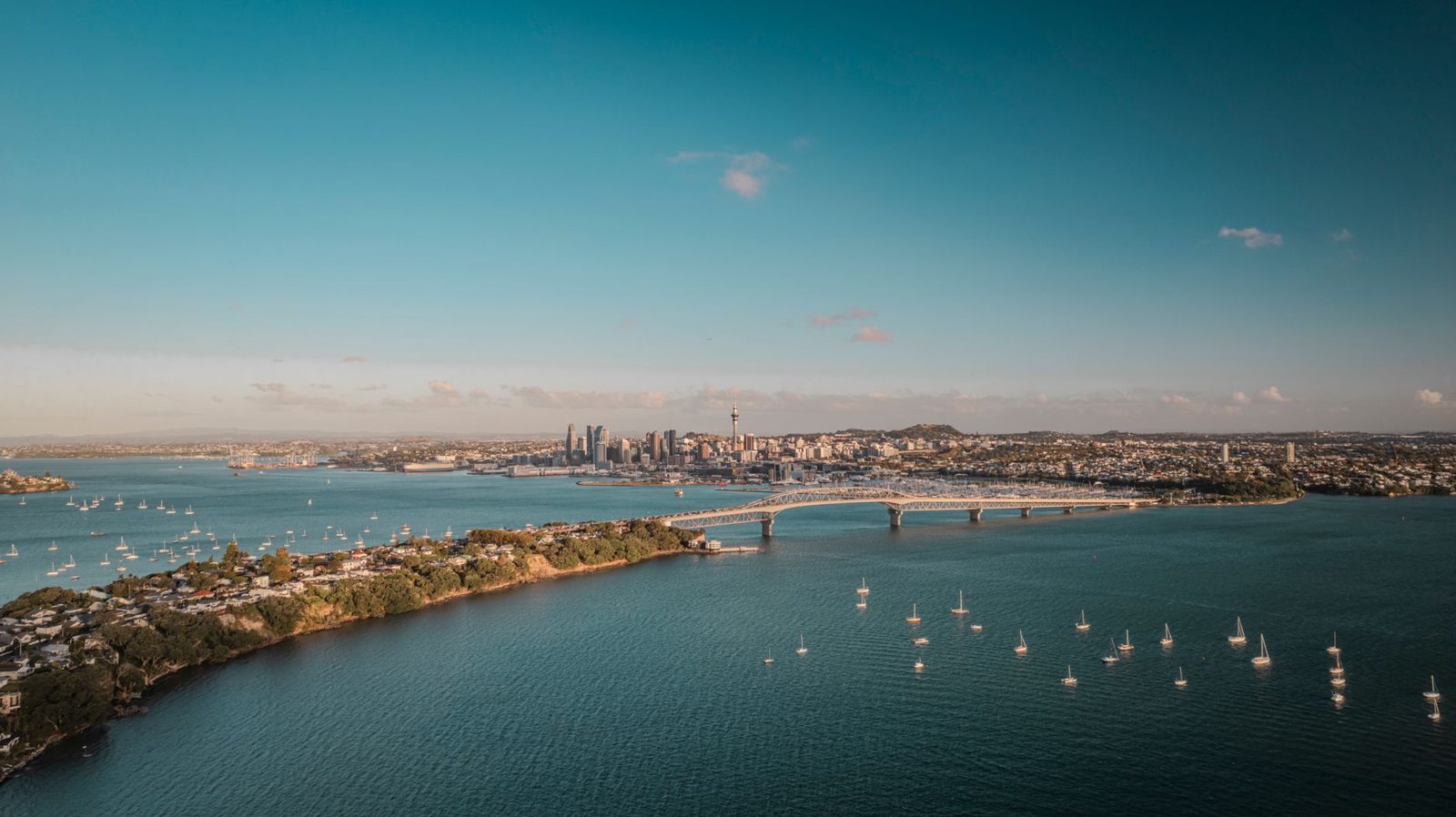
Here’s what makes it click. Auckland sits on a narrow isthmus between two harbours, the Waitematā and the Manukau, and it’s stitched together by 53 dormant volcanic cones. Around it lies the Hauraki Gulf, a marine park scattered with more than 50 islands. That geography means you can drink a flat white in a city laneway in the morning, take a 40-minute ferry to a wine island for lunch, and watch the sun drop behind rainforest by evening, all without leaving the region.
The city is also genuinely multicultural. Roughly 1.7 million people from more than 200 ethnic backgrounds live here, and Auckland has the largest Polynesian population of any city on earth. You feel it most at the table: this is one of the best-eating cities in the Pacific, with Pacific, Māori, Chinese, Korean, Malaysian, Indian and modern-NZ kitchens all firing.
Who loves Auckland: first-time New Zealand visitors easing into the country, food-and-wine travellers, families (calm harbour beaches, mostly free museums), and anyone who wants a city base with easy nature on the doorstep. If you want more on that side of things, see our first time in Auckland guide.
Who might feel lukewarm: travellers chasing only the dramatic South Island landscapes, or people expecting a dense, walk-everywhere European capital. Auckland sprawls, and it rewards a plan more than aimless wandering.
Why 2026 is a strong year to come: the City Rail Link, the biggest transport project in the country’s history, opens to passengers in the second half of the year. It adds two underground stations, Te Waihorotiu in the midtown shopping and theatre district and Karanga-a-Hape on Karangahape Road, and turns the rail network from a dead-end line into a proper cross-city metro. Do check the live opening status before you rely on it, since the timeline has already slipped once. Alongside that, the Wynyard Quarter waterfront keeps adding restaurants and public space, and the summer events calendar is packed.
Best time to visit Auckland
Auckland has a mild maritime climate. It rarely gets very hot, very cold or very dry, which makes it a year-round destination where the experience, not the viability, changes with the season. For a month-by-month deep dive, see our Best Time to Visit Auckland (Month-by-Month Guide for 2026), and pair it with the Auckland Weather: Month-by-Month Forecast & What to Pack (2026) for packing calls.
Summer (December to February): peak season
Summer is Auckland turned up loud. Daytime highs sit around 23-25°C, the sea is warm enough to swim, and every beach, island and rooftop is in use. It overlaps school holidays (mid-December to late January), so accommodation costs jump, Friday-afternoon roads clog, and ferries to Waiheke fill. If you come now, book hotels, Waiheke vineyards and Hobbiton tours weeks ahead. The upside is obvious: this is when the city’s outdoor side is at full strength.
Autumn (March to May): the sweet spot
Most locals I know quietly prefer autumn. Temperatures ease to a comfortable 18-22°C, the water stays swimmable well into April, crowds thin and prices soften. March is the pick of the year. It catches Pasifika Festival, one of the world’s largest Pacific cultural celebrations, the Auckland Arts Festival, and the tail of the Waiheke wine harvest.
Winter (June to August): quiet and moody
Winters here are mild by global standards, with highs around 14-16°C, but they are genuinely wet, so expect eight to fourteen rainy days a month. In exchange you get the cheapest flights and hotels, empty museums and galleries, and Matariki, the Māori New Year, now a public holiday in late June or early July and one of the most meaningful things on the calendar. Winter is also the best time for Waiheke wine tasting without the queues.
Spring (September to November): shoulder-season value
Spring weather is unpredictable (the “four seasons in one day” cliché is real here), but you get baby farm animals, budding pōhutukawa, smaller crowds than summer, and prices that haven’t spiked yet. By late November the beaches are warming up without the peak price tag.
How many days do you need in Auckland?
The honest rule of thumb: 3 days if Auckland is one stop on a bigger New Zealand loop, 5 days if it’s your main base, and 7 or more if you want to fold in two or three regional day trips. Our dedicated How Many Days Do You Need in Auckland? (2-7 Day Guide) maps out schedules for every length; here’s the compressed version.
- 1-2 days: enough for the Sky Tower, the Auckland War Memorial Museum, a waterfront walk and a Ponsonby dinner. Tight, but workable for a stopover.
- 3 days: add a full day on Waiheke and a half-day up a volcano (Maungawhau / Mount Eden or Rangitoto). This is the minimum comfortable stay.
- 5 days: add a wild west-coast day (Piha and the Waitakere Ranges) and a Devonport morning by ferry.
- 7 days: add Hobbiton and Waitomo as one long day trip, or an overnight in the Coromandel, plus time to revisit a favourite neighbourhood for a proper long lunch.
Getting to Auckland and from the airport
Flying in
Auckland Airport (AKL) is the country’s busiest international gateway, with direct flights from most Australian cities, major Asian hubs (Singapore, Hong Kong, Tokyo, Shanghai, Seoul), the US west coast (Los Angeles, San Francisco, Houston), Doha, Dubai, Vancouver and across the Pacific. It sits roughly 22 km south of the city centre.
Airport to city: the three main options
- AirportLink bus plus train — the cheapest public route at around NZ$10-12 with an AT HOP card. The bus runs frequently to Puhinui Station, where you catch a train into the central city. Budget roughly 55-70 minutes door to door.
- SkyDrive express coach — a direct coach to the CBD, around NZ$20 one-way, roughly 45-55 minutes depending on traffic.
- Uber or taxi — around NZ$55-85 depending on time and traffic, 35-55 minutes. Easily the least painful option with luggage or kids.
You can buy an AT HOP card (around NZ$5, plus a small minimum top-up) from machines at the airport terminals and retailers around town. If you’re only here a few days, contactless Visa and Mastercard now also work directly on buses, trains and ferries, though the HOP card usually works out a little cheaper per trip.
Getting around Auckland
You do not need a car to enjoy central Auckland. In fact a car is often a hindrance in the CBD, where parking runs around NZ$8-12 an hour and the motorways choke at peak. The public network is run by Auckland Transport, and with an AT HOP card you tag on and off buses, trains and ferries across the region on a single zone-based fare, with daily and weekly caps so you can’t overspend. For the full mechanics, our Getting Around Auckland: The Complete 2026 Transport Guide covers every mode and fare.
The City Rail Link: Auckland’s big 2026 upgrade
The single biggest change to how you move around the city since the Harbour Bridge opened is the City Rail Link. Two twin tunnels connect Waitematā (Britomart) and Maungawhau (Mount Eden) stations via two new underground stops, Te Waihorotiu (entrances on Victoria and Wellesley Streets, in the midtown shopping and theatre zone) and Karanga-a-Hape (entrances near Mercury Lane and Beresford Square, serving Karangahape Road). Once running, it turns a one-way city line into a frequent cross-town service and makes basing yourself in midtown or on K’ Road far more practical. It opens in the second half of 2026, so check the current status before you plan around it.
Buses, ferries and trains
- Buses are the most comprehensive mode and reach where trains don’t. Frequent routes run every 15 minutes or better through the day, and the cheap CityLink loop shuttles between Britomart, Queen Street, K’ Road and Wynyard Quarter for pocket change.
- Ferries are half the fun of Auckland. Regular sailings link downtown to Devonport (about 12 minutes), Waiheke (around 40 minutes) and Rangitoto (around 25 minutes), plus Half Moon Bay and Gulf Harbour, running frequently from early morning to late evening.
- Trains run on electric lines through Britomart. Once the City Rail Link is fully live, services run through the centre rather than terminating, sharply lifting peak frequency.
Driving, cycling and rideshare
Rent a car only for day trips west, north or into the Coromandel; return it or leave it parked while you’re in the centre. Uber, Ola and Didi all operate. Cycling keeps improving, with the Tāmaki Drive waterfront path and the shared paths across the Harbour Bridge among the more scenic rides.
Where to stay in Auckland: the best areas
Auckland’s character lives in its suburbs, and where you sleep shapes the whole trip. Below are the areas I’d actually recommend to a visitor. For the full rundown of neighbourhoods with hotel picks, see Where to Stay in Auckland: Best Neighbourhoods & Hotels for 2026, and for the character of each pocket of the city, the Auckland Neighborhoods Guide 2026: Where to Stay, Eat & Explore.
CBD and Britomart: best for first-timers
The waterfront end of the centre is the transport hub, it’s dense with restaurants, and it’s walkable to the Sky Tower, the Viaduct and the ferries. If it’s your first visit and you want minimum friction, stay here. It can feel a little corporate after dark, but you’re a short walk or ferry from livelier areas.
Ponsonby and Grey Lynn: brunch and boutiques
Victorian villas, independent shops, a serious concentration of restaurants and the Ponsonby Central food hall. This is the city’s cafe heartland and a lovely base if you’d rather live like a local than sleep above a lobby. You’ll rely on buses or short rideshares to reach the waterfront.
Parnell and Newmarket: leafy and central
Parnell is Auckland’s oldest suburb, quiet and tree-lined, next to the Auckland Domain and the museum. Newmarket, a short hop away, is the shopping district with good transport links. Both suit travellers who want calm streets within easy reach of the centre.
Devonport and the North Shore: village by the sea
Devonport gives you a Victorian seaside-village feel and a genuinely lovely 12-minute ferry commute that drops you straight into downtown. The wider North Shore, including Takapuna, adds locals’ beaches and frequent buses. Great for a slower, more residential stay.
Mission Bay and Tāmaki Drive: an urban beach base
A 15-minute bus from the CBD along the harbour brings you to a real city beach with gelato, fish and chips, and views out to Rangitoto. Good for families and anyone who wants sand within walking distance of the bed.
Top things to do in Auckland
This is my short list, the experiences I’d steer almost every visitor toward at least once. For the exhaustive version, our 65 Best Things to Do in Auckland (2026): An Insider’s Guide covers far more.
City icons
- Sky Tower — at 328 metres, the tallest freestanding structure in the Southern Hemisphere. Go near sunset for the double payoff: the city in daylight, then lit up. If you’ve got nerve, the SkyWalk (a guided walk on the outer ring) and the SkyJump base jump both leave from up top.
- Auckland War Memorial Museum — a superb collection of Māori and Pacific taonga (treasures), a live cultural performance that includes haka, and a moving war-memorial gallery. Entry is around NZ$30-32 for overseas visitors; the cultural show costs extra.
- Auckland Art Gallery Toi o Tāmaki — free general entry to a strong collection, with a particularly good contemporary Māori and Pacific programme.
- Viaduct and Wynyard Quarter — the restored waterfront, where 1990s America’s Cup swagger meets modern public space. Ideal for an evening stroll and a casual dinner.
Volcanoes and viewpoints
- Maungawhau / Mount Eden — the city’s tallest volcano, an easy 20-minute climb to a 360° view with the crater at your feet. It’s sacred to Māori, so stay on the paths and out of the crater.
- Cornwall Park and One Tree Hill (Maungakiekie) — a working urban farm with grazing sheep, a former pā site and a big summit view, ten minutes from the centre.
- Rangitoto Island — a 25-minute ferry to Auckland’s youngest volcano (about 600 years old) and a roughly two-hour walk to the summit crater through one of the largest pōhutukawa forests anywhere.
Neighbourhoods and culture on foot
- Ponsonby and Karangahape Road — the creative and hospitality heart. Saturday means Ponsonby brunch; Friday night means live music and eclectic bars on K’ Road.
- A Māori-led walking tour — a small-group hikoi around the volcanic landscape and the Māori story of the city. Short, genuine and one of the more memorable couple of hours you’ll spend here.
- Devonport by ferry — a 12-minute crossing to a heritage village with two walk-up volcanoes (Mount Victoria and North Head) and the best skyline photos going.
Adrenaline
- Auckland Harbour Bridge climb or bungy — walk the arch for a guided panorama, or jump straight off it. Among the best rushes in the city.
- Waiheke by day — the island doubles as a day trip and a highlight; see the day-trips section below.
Food and drink: what and where to eat
Auckland eats extremely well, and I’d argue food is the single most underrated reason to linger. The mix of Pacific Rim produce, a huge Polynesian and Asian population, and a coffee culture treated with near-religious seriousness means you rarely have a bad meal. For named restaurants sorted by budget and cuisine, see the Auckland Food & Drink Guide 2026: Best Restaurants, Cafes & Bars.
Dishes and drinks to try
- Flat white — the local coffee of record. Auckland baristas regularly place in world championships. Around NZ$5.50-6.50.
- Fish and chips — the coastal staple, usually snapper, trevally or tarakihi, best eaten straight from the paper on a beach.
- Hāngī — a traditional Māori earth-oven feast, often pork, chicken and kūmara, frequently paired with a cultural performance.
- Green-lipped mussels — large, endemic to New Zealand, and excellent with white wine and lemon.
- New Zealand wine — Marlborough Sauvignon Blanc and Central Otago Pinot Noir get the headlines, but Waiheke Syrah and Bordeaux-style reds are what a lot of locals actually pour.
- Pavlova, hokey pokey ice cream and L&P — the nostalgic Kiwi dessert-and-soft-drink trifecta.
Food districts to target
- Britomart — modern bistros and fine dining in restored early-1900s warehouses.
- Ponsonby Central and Commercial Bay — covered food halls and dining precincts, easy for groups who can’t agree.
- Karangahape Road — cheap, multicultural and open late: ramen, Malaysian, Ethiopian, vegan.
- Dominion Road — the city’s best Chinese and Taiwanese food, dumpling houses included.
- Sandringham — the South Indian and Sri Lankan strip.
- Wynyard Quarter — waterfront seafood and wine bars with Harbour Bridge views.

Beaches and nature
Auckland’s party trick is how quickly the city gives way to wild coast and rainforest. For the complete outdoor picture, including tracks and swimming spots, see the Auckland Beaches & Outdoor Adventures: The Complete 2026 Guide.
The wild west coast
Drive about 45 minutes west and you hit the black-sand surf beaches inside the Waitakere Ranges. Piha is the famous one, watched over by Lion Rock, with Karekare, Bethells (Te Henga) and Muriwai nearby. Muriwai also has a gannet colony you can watch from a clifftop walk. These beaches are dramatic and the surf is powerful, so swim only between the flags where lifeguards are on duty, and take rip currents seriously.
Calm harbour beaches
Inside the Waitematā Harbour the water is gentler and family-friendly. Mission Bay is the easy urban option, and the North Shore’s Takapuna, Milford and Narrow Neck are locals’ summer favourites, all around 20 minutes from the centre.
Islands of the Hauraki Gulf
Rangitoto gives you a volcanic summit walk through pōhutukawa forest. Tiritiri Matangi is an open wildlife sanctuary where a roughly three-hour loop track puts you among tūī, saddleback, bellbird and, with luck, kōkako. And Waiheke combines beaches, coastal walks and wineries in one ferry ride.
Best day trips from Auckland
Auckland is the best base in the country for day trips, because so much of the North Island’s headline scenery sits within two to three hours. Here’s my short list; the full comparison of drive times, prices and effort-to-reward lives in our 25 Best Day Trips from Auckland in 2026 (With or Without a Car).
- Waiheke Island — a 40-minute ferry to a subtropical wine island with 20-plus cellar doors, olive groves, galleries and beach restaurants. Easy to do independently by bus, or on a small-group wine tour.
- Hobbiton Movie Set — around two hours by coach to the Lord of the Rings filming location. Book ahead and take the organised transfer; the pick-ups are well run and it saves the drive.
- Waitomo Glow-worm Caves — roughly 2 hours 20 minutes, usually paired with Hobbiton as one big 12-hour day.
- Rotorua — about three hours to geothermal parks, a Māori cultural evening and mud baths. Honestly better as an overnight if you can spare it.
- Bay of Islands — around 3 hours 15 minutes north; the Treaty of Waitangi grounds and the Hole in the Rock boat trip are best enjoyed with a night up there.
- Coromandel Peninsula — roughly two hours to Thames, then winding roads to Cathedral Cove and Hot Water Beach.
- Piha and Karekare — 45 minutes west for the black-sand beaches and rainforest walks, if you’d rather stay close.

Māori culture, history and Tāmaki Makaurau
Auckland’s Māori name is Tāmaki Makaurau, roughly “the place desired by many,” a nod to the abundant food, canoe portages and commanding volcanic viewpoints that drew tribes to the isthmus centuries ago. Early settlers terraced the cones into fortified pā and cultivated vast kūmara gardens across the land.
That history is very present when you visit. The volcanoes you climb, Maungawhau, Maungakiekie and North Head, are all former pā. A Māori-led walking tour, the Māori collection at the Auckland War Memorial Museum, and the Matariki celebrations each winter are all good ways to engage with the living culture rather than just the scenery. For the full story, see Auckland Māori Culture, History & Heritage: The 2026 Visitor’s Guide.
Events and festivals worth planning around
Auckland runs a busy events calendar, and timing a trip to catch one often doubles the experience. Many are free or cheap. A few highlights: the ASB Classic tennis in January; the Lantern Festival and Laneway in February; Pasifika Festival and the Auckland Arts Festival in March; Matariki in June or July; Diwali in October; and the Auckland Marathon across the Harbour Bridge in November. The full year is mapped in our Auckland Events & Festivals Calendar 2026: Month-by-Month Guide.
Visiting Auckland with kids
This is one of the more family-friendly cities I cover. Most museums are free or cheap, playgrounds are excellent, the harbour beaches are calm, and nearly every major attraction has a family ticket. For young children, the big hitters are Auckland Zoo, MOTAT, Kelly Tarlton’s SEA LIFE Aquarium and the Wynyard Quarter playground. For teens, add the Sky Tower, a Devonport ferry and a Waiheke beach day. Book school-holiday programmes early if you’re visiting in late December or January. Our Auckland with Kids 2026: Complete Family Travel Guide has age-by-age picks.
Sample Auckland itineraries: 3, 5 and 7 days
These are frameworks, not rigid schedules; swap in a beach or a long lunch as the weather and your energy dictate.
3 days in Auckland (the recommended minimum)
- Day 1: walk the CBD, ride up the Sky Tower near sunset, dinner in the Viaduct or Wynyard Quarter.
- Day 2: ferry to Waiheke for a wine-and-beach day; back for a relaxed dinner.
- Day 3: early climb up Mount Eden, the Auckland War Memorial Museum, brunch in Ponsonby, then an evening on K’ Road.
5 days in Auckland (the comfortable city trip)
- Day 1: CBD, Sky Tower, Viaduct dinner.
- Day 2: Waiheke Island.
- Day 3: Devonport by ferry in the morning, Auckland War Memorial Museum in the afternoon.
- Day 4: Piha and the Waitakere Ranges (rent a car or take a tour).
- Day 5: Ponsonby brunch, Auckland Art Gallery, Mount Eden at sunset.
7 days in Auckland and surrounds
- Days 1-3: the city core, Waiheke and a volcano, as above.
- Day 4: Hobbiton and Waitomo as one long day trip.
- Day 5: Piha and the Waitakere Ranges.
- Day 6: a day trip or overnight in the Coromandel (Cathedral Cove, Hot Water Beach).
- Day 7: a slow morning in a favourite neighbourhood, Auckland Zoo or MOTAT, farewell dinner in Britomart.
Costs and budgeting
Auckland isn’t cheap by Southeast Asian or Eastern European standards, but it’s fair value next to Sydney, Tokyo or most European capitals. The rough daily per-person figures below assume accommodation, transport, food and one paid activity a day, and they’ll shift with the season, so verify before booking.
| Travel style | Accommodation | Food | Transport | Activities | Daily total |
|---|---|---|---|---|---|
| Backpacker | ~NZ$45 (dorm) | ~NZ$35 | ~NZ$10 | ~NZ$35 | ~NZ$125-140 |
| Mid-range | ~NZ$160 (3-star / private room) | ~NZ$70 | ~NZ$15 | ~NZ$45 | ~NZ$270-300 |
| Upscale | NZ$350+ (4-5 star) | ~NZ$130 | ~NZ$25 + taxi | ~NZ$80-150 | ~NZ$550-700 |
Some price anchors to calibrate against, all approximate: a flat white around NZ$5.50-6.50, a craft-beer pint around NZ$12-14, a restaurant main around NZ$28-42, Sky Tower entry around NZ$45, a Waiheke ferry return around NZ$63, and a Hobbiton day tour from Auckland from around NZ$120 (transfers often extra). The full breakdown is in the Auckland travel budget guide.
Safety and practical tips
Staying safe
Auckland is a safe city by international standards, and violent crime against visitors is rare. The realistic risks are mundane: car break-ins at beach and trailhead car parks (never leave bags visible, even for a minute) and dangerous swimming at the west-coast surf beaches (swim between the flags). Tap water is safe everywhere, and the UV is fierce, so the sun burns faster here than in Europe or Asia even under cloud. Emergency services are on 111; the non-emergency police line is 105. For a fuller treatment, see Is Auckland Safe for Tourists? Travel Safety Guide (2026).
Money, cards and tipping
The currency is the New Zealand dollar, and Auckland is close to cashless. Contactless Visa, Mastercard, Apple Pay and Google Pay work almost everywhere. Tipping is not part of the culture and not expected, though you can round up or leave around 10% for genuinely exceptional service. At an ATM, always choose to be charged in New Zealand dollars rather than your home currency. Our Money in Auckland: Currency, ATMs & Money Tips (2026) covers the details.
Entry paperwork
Most visa-waiver passport holders (US, UK, EU, Canada, Japan and others) need an NZeTA, the New Zealand Electronic Travel Authority, and must pay the International Visitor Conservation and Tourism Levy of NZ$100. The NZeTA itself is around NZ$17 through the official app or NZ$23 via the website, so budget somewhere around NZ$117-123 all in, valid up to two years. Apply through the official immigration site well before you fly. Australian citizens and some Pacific nationals are exempt; check your own status, and our full guide to New Zealand visa requirements for Auckland walks through the NZeTA, the levy and the traveller declaration.
SIM cards, power and time
- Connectivity: prepaid SIMs from Spark, One NZ and 2degrees start around NZ$29 for a week with plenty of data, and eSIM providers like Airalo work well if your phone supports them.
- Power: New Zealand uses Type I plugs (the same as Australia) at 230V, so bring an adapter.
- Time zone: UTC+13 in summer (daylight saving) and UTC+12 in winter.
- Driving: on the left; most overseas licences are valid for up to 12 months.
- Packing: layers, always. Even in summer you can hit 25°C at midday and 14°C and rainy by evening, so a light waterproof jacket earns its place year-round, alongside the rest of our Auckland packing list.
Frequently Asked Questions
Is Auckland worth visiting?
For most travellers, yes, and I’d give it three to five days. The draw is the combination: strong food, genuinely multicultural neighbourhoods and a free-to-enter art gallery on one side, and wine islands, rainforest, surf beaches and climbable volcanoes all within about an hour on the other. Only travellers on very tight itineraries chasing purely alpine scenery tend to skip it.
What is the best month to visit Auckland?
March is my pick: warm, drier than midsummer, less crowded, and it lands during Pasifika Festival and the Waiheke wine harvest. February and late November are also excellent, blending decent weather with slightly thinner crowds and prices. Deep winter is cheapest and quietest if you don’t mind rain and shorter days.
How many days do I need in Auckland?
Three days is the comfortable minimum, enough for the city icons plus a day on Waiheke and a volcano. Five days lets you add a west-coast beach day and a Devonport morning. Seven or more gives room for bigger day trips like Hobbiton and Waitomo, or an overnight in the Coromandel, without feeling rushed.
How do I get from Auckland Airport to the city?
The cheapest route is the AirportLink bus to Puhinui Station and a train into the CBD, around NZ$10-12 and roughly 65 minutes. The SkyDrive express coach runs directly to the centre in about 45-55 minutes for around NZ$20. An Uber or taxi costs around NZ$55-85 and takes 35-55 minutes, and is the easiest with luggage.
Do I need a car in Auckland?
Not for the city itself. Walking, ferries, buses, trains and the occasional rideshare handle central Auckland well, and CBD parking is expensive at around NZ$8-12 an hour. Rent a car only for day trips west to Piha, north toward Matakana and Goat Island, or east to the Coromandel, and consider parking it while you’re downtown.
Is Auckland safe for tourists?
Yes, it’s safe by international standards, with violent crime against visitors rare. The everyday risks are car break-ins at beach and trailhead car parks and strong rip currents at west-coast surf beaches, so keep valuables out of sight and swim between the flags. Emergency services are reached on 111.
Final thoughts
Auckland rewards the traveller who slows down just enough to notice it. Give the city a few unhurried days, let the ferries and the volcanoes and the long Ponsonby lunches do their thing, and it stops being the place you fly into and starts being one of the reasons you’re glad you came. Plan a little, verify the current prices and timetables, and the rest tends to fall into place.
Last updated: July 2026. Written by the Auckland Tourism Guide team.
Photo credits
- Photo: Ollie Craig via Pexels
- Photo: Ollie Craig via Pexels
- Photo: Akash Sudan via Pexels
- Photo: Christopher Solly via Pexels
- Photo: Tom Macret via Pexels
If you are at the stage of turning all of this into actual days, start with the geography. Auckland divides into six clusters — the centre, the inner suburbs, the cones, the gulf islands, the west coast and the north and east — and the shape of a good trip is mostly about how few times you move between them. Our guide to planning an Auckland itinerary lays out the framework, the day-shapes and the mistakes worth avoiding.