Auckland Weather: Month-by-Month Forecast & What to Pack (2026)
Auckland weather explained month by month: average temperatures, rainfall, seasons, sea temps, what to pack and the best time to visit for sunshine.

This article contains advertising. Our booking links are routed through a partner that adds commission tracking automatically, so if you book through one we earn a commission from the provider, at no extra cost to you. It never affects what we recommend. Affiliate disclosure
Here’s the thing nobody quite prepares you for: Auckland is a mild city, but a changeable one. The upside is there’s no real off-season here. The catch is that the forecast you check the night before is more of a suggestion than a promise. If you want more on that side of things, see our Auckland SIM cards, wifi and staying connected guide.
So let me walk you through Auckland weather the way I’d explain it to a friend flying in: what each month actually feels like, what the sea does, what to throw in your bag, and how to read the sky so a passing shower doesn’t wreck your afternoon. Temperatures here are drawn from long-run climate averages (NIWA and MetService), so treat them as a solid guide rather than a guarantee for any single day. Our first time in Auckland guide covers this in more depth.
The short answer
Auckland has a mild, ocean-influenced climate with warm, humid summers (December to February, highs around 23–24°C) and cool, damp winters (June to August, highs around 14–15°C). It rarely gets very hot or very cold, but it rains year-round and the weather shifts fast. Pack layers and a rain shell whatever the season.
Auckland weather at a glance
Here’s the quick version if you just want the numbers. These are typical long-term averages, rounded, and real days will wander either side of them.
| Month | Avg high | Avg low | Vibe |
|---|---|---|---|
| January | 23.9°C | 16.1°C | Peak summer |
| February | 24.4°C | 16.6°C | Usually the warmest month |
| March | 22.9°C | 14.9°C | Late summer |
| April | 20.4°C | 12.8°C | Autumn arrives, shorter evenings |
| May | 17.7°C | 10.8°C | First real chill, wetter |
| June | 15.5°C | 8.7°C | Winter begins, short days |
| July | 14.6°C | 7.7°C | Coolest and wettest |
| August | 15.2°C | 8.3°C | Late winter, slowly brightening |
| September | 16.5°C | 9.7°C | Spring stirs, blossom |
| October | 17.9°C | 11.3°C | Proper spring, windy spells |
| November | 19.6°C | 12.8°C | Warming up, pōhutukawa buds |
| December | 22.0°C | 15.0°C | Early summer, Christmas rush |
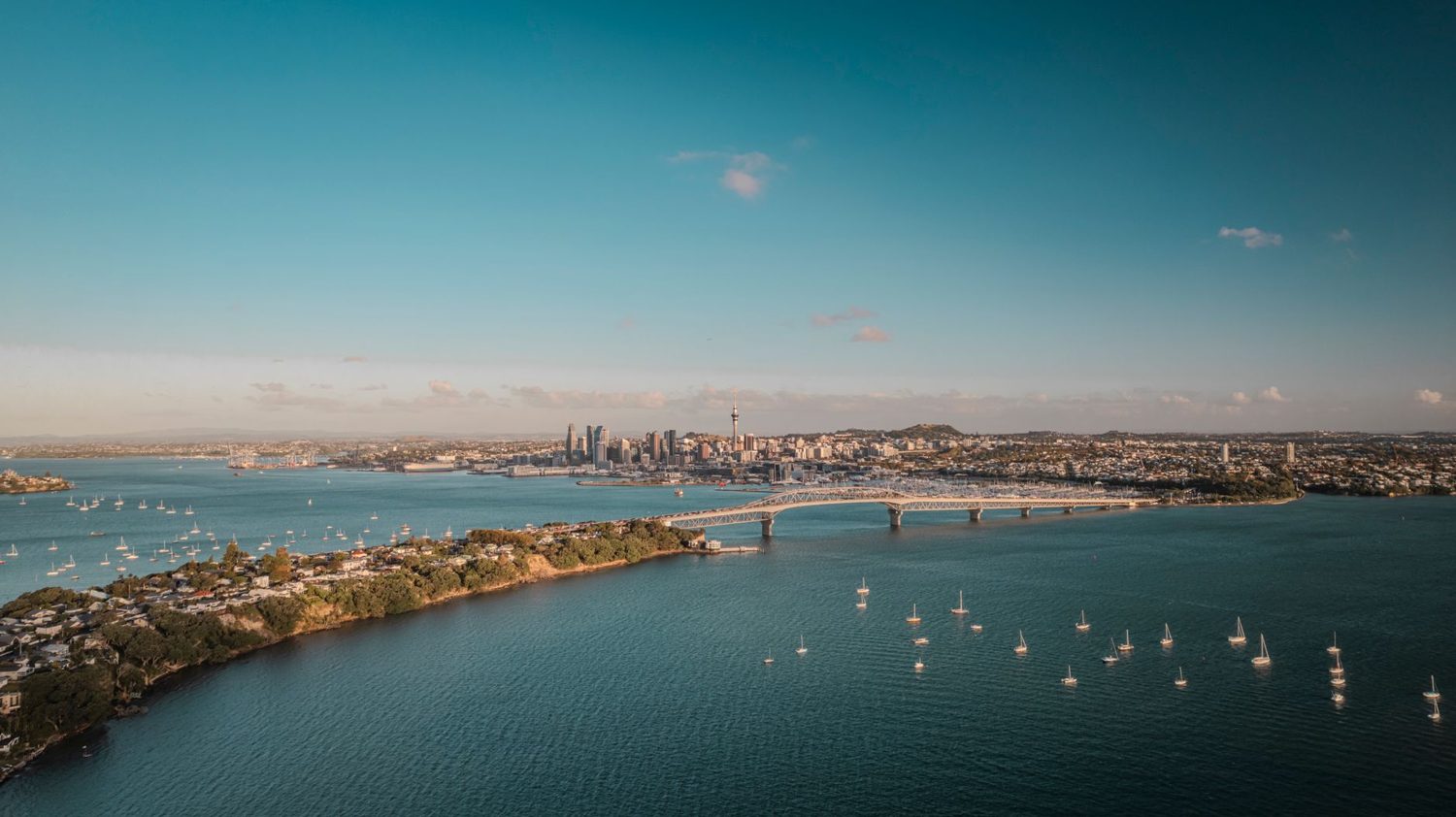
A couple of things worth knowing before we get into the detail. Auckland sits at about 37° south, wrapped on three sides by water, and that ocean is the whole story. It flattens out the extremes, so summers stay short of scorching and winters never really bite. It also feeds the rain. Auckland Airport averages about 1,119 mm of rain a year (1991–2020).
Snow? Extremely rare in the city, though it has happened: it lay 5 cm deep on top of Mt Eden in July 1939. Frost is rare in the central suburbs, a little more common out south. And if you’re coming from the Northern Hemisphere, the seasons are flipped: Christmas is a summer holiday, and July is the middle of winter.
Auckland’s four seasons
New Zealand runs daylight saving from late September to early April, so summer evenings stay light past 8:30pm while winter nights close in around 5:15pm. That shift changes how a day feels as much as the temperature does.
Summer (December to February)

This is the season everyone pictures: long warm days, the sea finally worth getting into, and the city half-emptying as locals decamp to the coast. Expect highs in the low-to-mid 20s, muggy nights, and the odd afternoon thunderstorm that clears as fast as it arrives. Humidity climbs, especially in January, but a sea breeze usually takes the edge off.
What I’d do: swim at Mission Bay, Takapuna or Cheltenham on the sheltered east coast, or brave the wilder west-coast surf at Piha. Catch a ferry to Waiheke for a lazy winery lunch. Keep an eye on the events calendar too, because January and February are packed. For the full run-down, our guide to the best time to visit Auckland breaks down the seasonal trade-offs in more depth.
What to pack: shorts, tees, two swimsuits so one’s always dry, a light jumper for evenings, and sun protection you actually respect. The UV here is fierce (more on that below), so bring SPF 50+, sunglasses and a hat with a brim.
Autumn (March to May)
Autumn is quietly my favourite. March often feels like summer with the crowds turned down. April cools gently, and by May you’ll notice the first proper chill and a jump in rainfall. The sea stays swimmable into March, then cools.
This is a lovely stretch for walking the Waitākere and Hunua tracks (cooler, fewer bugs) and for winery touring around Waiheke and Matakana during harvest. Crowds thin out noticeably, so you can often book accommodation a couple of weeks ahead rather than months. If you’re still mapping out the trip, our take on how many days you need in Auckland pairs well with picking your season.
What to pack: jeans and trousers, a mix of tees and long sleeves, a sweater, comfy walking shoes, and a packable rain layer for May. You’ll still want sunscreen in March.
Winter (June to August)
Auckland winters are mild by world standards but damp, and this is where the numbers matter less than the wind. Highs sit around 14–15°C, mornings can dip to single digits in the outer suburbs, and June through August bring the heaviest rain of the year. Days are short, and a southerly off the water can make 14°C feel a good bit colder.
It’s a genuinely good time to visit on a budget, though. Rooms are cheaper, the city is quieter, and there’s a cosy pleasure to whisky bars in Britomart and long café breakfasts in Ponsonby while it drizzles outside. Matariki, the Māori New Year, falls in late June or early July and brings light installations and cultural events across the city. If you want the full seasonal calendar, our Auckland events and festivals calendar lays out what’s on month by month.
What to pack: a waterproof jacket (non-negotiable), a warm fleece or sweater, closed-toe shoes you don’t mind getting wet, a scarf and beanie, and an extra layer for indoors. Which brings me to a genuine local warning: older New Zealand homes are famously under-insulated. Budget rooms can be colder inside than the street. Check for a heat pump before you book, or pack your warmest pyjamas.
Spring (September to November)
Spring is the wild card. It swings between warm, still days and sharp “spring storms” that can cancel ferries, sometimes in the same week. September is still cool, but by November the city has properly turned: gardens go off, the sea creeps back toward swimmable, and the pōhutukawa (New Zealand’s Christmas tree) starts reddening late in the month.
It’s a rewarding time for parks and gardens, whale and dolphin watching out in the Hauraki Gulf, and city life waking up after winter. Crowds stay manageable through September and October, then ramp up fast as the Christmas holidays approach.
What to pack: layers you can build up and strip off through the day, plus a sunhat and sunscreen for late spring. Closed shoes for windy harbour walks, trainers or sandals for the warm days.
Auckland month by month
If you already know roughly when you’re coming, here’s the closer look. I’ve kept the temperatures as approximate averages on purpose, because Auckland does love to surprise you.
January
Highs average 23.9°C and lows 16.1°C at Auckland Airport (1991–2020). Auckland Anniversary weekend at the end of the month fills the Waitematā Harbour with sails. UV is at its most extreme, so sunscreen genuinely isn’t optional.
February
Usually the warmest month of the year: highs average 24.4°C at Auckland Airport, and the sea is at its warmest, around 21°C. Humidity runs high, so pack light, breathable clothing and expect a sticky night or two.
March
Highs average 22.9°C at Auckland Airport, and March is a little wetter than February on the long-run figures (75.0 mm against 63.1 mm, 1991–2020). This is that sweet spot where the weather holds but the crowds have gone home. The sea stays swimmable and the beaches feel like yours. Wineries around Waiheke and Matakana come alive with harvest.
April
Highs easing to about 20°C, lows near 13°C, and rainfall creeping up. Daylight saving ends early in the month, so evenings shorten noticeably. ANZAC Day on 25 April brings dawn services around the city, including at the Auckland War Memorial Museum. Easter can land in March or April and closes a lot of shops on Good Friday and Easter Sunday.
May
The first real cold snap usually arrives, with highs around 17°C and lows near 10°C, and the rain picks up. It’s a strong month for value and for indoor culture, with the writers and comedy festivals running and restaurant deals starting to appear.
June
Winter proper: highs around 15°C, the shortest days of the year, and sunset before 5:15pm around the solstice. Matariki falls in late June or early July depending on the lunar calendar, bringing ceremonies and light events.
July
The wettest, coolest month, with highs averaging 14.6°C at Auckland Airport. The sea reaches its chilliest in August, near 14°C. Days are already lengthening after the solstice, though. This is the cheapest time to travel, especially mid-week, and a good excuse to lean into museums, galleries and long lunches.
August
A touch drier than July with slightly longer days and the first hints of spring colour late in the month. Restaurant Month brings set menus at some of the city’s best tables, which softens the winter mood considerably, and our August events guide runs through the rest of the month’s line-up.
September
Spring stirs: highs around 16°C, blossom in the botanic gardens and Cornwall Park, and daylight saving returning at the end of the month. If you’re aiming for a summer trip, this is when to lock in bookings, because the warm-weather rush starts building.
October
Proper spring, with highs near 17°C and lengthening evenings, though windy spells still blow through. Diwali lights up the city centre, the Auckland Marathon crosses the Harbour Bridge, and humpbacks pass through the Gulf on their way south.
November
Warming toward summer, with highs around 19°C and the pōhutukawa reddening late in the month. The sea is still on the cool side for most of us, though the local kids won’t be put off. Gardens and outdoor events hit their stride.
December
Early summer and a Christmas that confuses every first-timer: highs around 21°C, long light evenings, and the city winding down from around the 22nd. New Year’s Eve brings fireworks off the Sky Tower. Book Waiheke ferries and popular restaurants ahead, because weekends get busy.
When should you actually visit?
The honest answer depends on what you’re after, so here’s how I’d steer you.
- Warmest weather and swimming: February. Warmest month for both air and sea.
- Best value: May to August, when rooms can run a good deal cheaper than peak summer.
- Sweet spot without the crowds: March or November. Mild days, thinner crowds, and you’re not paying peak prices.
- Festivals and events: January and February for the big ones, plus Diwali in October and New Year’s Eve.
- Hiking and the outdoors: March to May or September to November, when it’s cooler and drier than midsummer.
For most visitors with flexible dates, late February through April is the reliable choice: the weather is at its steadiest, the city is humming, and you’re not fighting for a spot on the sand. It also helps to know what a trip actually costs across the year, so our full Auckland budget guide is worth a look before you commit to dates.
Weather quirks worth knowing
“Four seasons in one day” is real
This isn’t a slogan locals say to sound charming. Weather conditions can change quickly, and a calm morning can turn wet and windy as a front moves through. The local wisdom is “if you don’t like the weather, wait ten minutes,” and it’s not far off. Carry a thin warm layer and a rain shell no matter what the morning looks like.
The UV is genuinely brutal
Do not judge the New Zealand sun by the temperature. Thin ozone over this part of the world and famously clean air mean a lot of UV reaches the ground, and Auckland’s summer UV index regularly hits the extreme range where unprotected skin can burn in well under 15 minutes. Kiwis learn “slip, slop, slap, wrap” in childhood (slip on a shirt, slop on sunscreen, slap on a hat, wrap on sunglasses). Reapply broad-spectrum SPF 50+ every couple of hours outdoors, and again after swimming.
Two coasts, two micro-climates
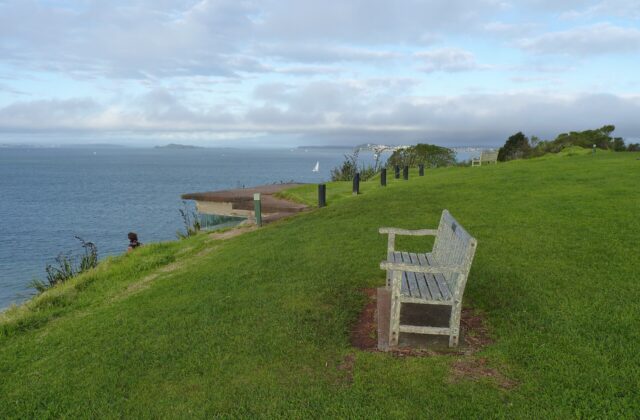
The city straddles two very different coasts. The west (Piha, Karekare, Muriwai, Bethells) faces the Tasman: wilder, windier, wetter, with pounding black-sand surf. The east (Mission Bay, St Heliers, Takapuna, Cheltenham) faces the sheltered Hauraki Gulf: calmer, sunnier, gentler swimming. If the west looks rough, the east is usually fine, and the CBD tends to behave more like the east coast.
Wind changes everything
Auckland is a windy city, especially in winter when westerlies and southerlies dominate. A 14°C day with a 30 km/h wind feels closer to 10°C. A wind-resistant outer layer will keep you more comfortable than a bulky coat that lets the gusts through at the neck and cuffs.
Planning activities around the weather
Most of what you’ll want to do here copes fine with a bit of weather if you plan sensibly. A few things are genuinely weather-dependent, so it helps to have a wet-day plan in your back pocket.
- Harbour and adventure activities: the Sky Tower’s SkyWalk and SkyJump run rain or shine but stop in high wind, so check before you book.
- Waiheke ferries: sailings can be cancelled or delayed in severe weather. Check Fullers360 service updates before heading to the terminal.
- West-coast beaches: skip them in heavy rain (the access roads get slippery), strong westerlies (dangerous surf) or thunderstorms.
- Bush walks: tracks stay open in light rain but close after big storms, and some remain shut for kauri dieback protection, so check the Auckland Council pages first.
- Rainy-day winners: the Auckland War Memorial Museum, the Art Gallery, MOTAT, Stardome and Kelly Tarlton’s all shrug off bad weather.
For a fuller list of what to slot into your days, our roundup of the best things to do in Auckland is a good companion, and if beaches are the plan, the Auckland beaches and outdoors guide covers which coast to pick on any given day. When the forecast turns, our day trips from Auckland can also help you chase clearer skies out of the city.
What to pack for Auckland
Year-round essentials
- A packable, breathable rain shell
- One thin warm layer, like a merino base or a light fleece
- Comfortable walking shoes
- Broad-spectrum SPF 50+ sunscreen and sunglasses
- A brimmed hat in summer, a beanie in winter
- A compact, wind-resistant umbrella as backup
- A reusable water bottle (Auckland tap water is excellent)
Summer add-ons
- Two swimsuits so one is always dry
- A quick-dry travel towel
- Jandals (that’s Kiwi for flip-flops) or sandals
- A light long-sleeve top for extra sun cover
Winter add-ons
- Waterproof shoes or boots
- A warm sweater and a scarf for cold mornings
- Thermals if you’re heading toward the ski fields down south
- Cosy sleepwear, for the under-heated-accommodation reasons above
Forecasts and apps I trust
For Auckland, I lean on MetService (the official national forecaster) and NIWA. The MetService app is free and handles the local detail well. WeatherWatch is a solid independent alternative with good commentary. Global apps often miss Auckland’s localised showers, so I wouldn’t rely on them alone, and a live rain-radar app is brilliant for timing a dash between cafés. For surf and tides, look at Surfline or the Coastguard NZ app.
Getting around in changeable weather is easier once you know the system, so it’s worth skimming our guide to getting around Auckland before you arrive.
Frequently Asked Questions
Does it snow in Auckland?
Extremely rare. The city’s coastal, subtropical climate keeps freezing temperatures rare, and meaningful snow in central Auckland is essentially unheard of in living memory. Brief flurries can reach the far outer suburbs in an extreme cold snap, but if you want real snow you’ll need to head to the central North Island mountains, roughly three-and-a-half hours’ drive south.
What’s the rainiest month?
July is typically the wettest, with June and August close behind. The driest stretch is high summer, around January and February, though summer showers, when they do arrive, can be intense and brief. Across the year the rain is fairly evenly spread, which is why a rain layer earns its place in your bag in every season.
Is the sea warm enough to swim?
Comfortable swimming runs roughly December to April. The sea is at its coldest in late winter, which is bracing without a wetsuit. Local surfers happily go year-round in the right suit, but for casual dips I’d stick to summer and early autumn.
When is the cheapest time to visit?
Broadly May to early September, when accommodation and flights tend to be well below the December-to-February peak, especially mid-week. The shoulder weeks of late April, October and November can also save you money without landing you in the depths of winter. Our Auckland cost guide digs into the numbers if budget is driving your dates.
Is Auckland warmer than the rest of New Zealand?
Generally, yes. Being near the top of the North Island, Auckland is milder and more humid than Wellington or the South Island cities, with fewer frosts and more warmth year-round. Head south and it gets cooler, windier and, in winter, properly snowy in places, which is exactly why Aucklanders drive south to ski.
Final thoughts
If there’s one thing to take from all this, it’s that Auckland’s weather is mild, mercurial and rarely a dealbreaker. There isn’t a bad time to come, just different flavours of the same easygoing climate. Layer up, keep a rain shell handy, take the sun seriously, and you’ll be set for whatever the harbour throws at you.
When you’re ready to build the rest of the trip, start with our complete Auckland travel guide, then sort out where to stay in Auckland and where to eat with the Auckland food and drink guide. A little planning around the season goes a long way here.
Last updated: July 2026. Written by the Auckland Tourism Guide team.
Photo credits
- Photo: Miguel Cuenca via Pexels
- Photo: Tom Macret via Pexels
Knowing that a front will pass through by lunchtime is useful; knowing what to do with the morning is more so. Our guide to indoor things to do in Auckland for adults is written for exactly that gap — galleries, breweries, hot pools that are actually still open, and the eating that ignores the forecast entirely.