Tiritiri Matangi Day Trip from Auckland (2026)
Complete 2026 Tiritiri Matangi day trip guide from Auckland — pest-free bird sanctuary, kokako, takahē, hihi, lighthouse, walking tracks and ferry details.

This article contains advertising. Our booking links are routed through a partner that adds commission tracking automatically, so if you book through one we earn a commission from the provider, at no extra cost to you. It never affects what we recommend. Affiliate disclosure
A Tiritiri Matangi day trip from Auckland is one of New Zealand’s most rewarding wildlife experiences — a pest-free island sanctuary in the Hauraki Gulf where some of the country’s rarest native birds (kōkako, takahē, hihi, kiwi, tīeke) live freely in restored native bush. It is about 80 minutes by ferry from Viaduct Harbour, and it gives you the kind of birdlife most visitors assume needs a flight to Stewart Island. This 2026 guide covers the ferry, the birds, the tracks, the biosecurity rules and how to actually plan the day.
What Is Tiritiri Matangi?
Tiritiri Matangi — usually translated as "looking to the wind" — is a 220-hectare island in the Hauraki Gulf, sitting just 4km off the tip of the Whangaparāoa Peninsula north of Auckland. Cleared for farming first by Māori and then by European settlers, it was replanted with more than 280,000 native trees by volunteers and stripped of introduced predators. The result is a sanctuary where rare native birds live and breed freely, often at remarkably close range.
Officially it is the Tiritiri Matangi Scientific Reserve, managed by the Department of Conservation in partnership with the Supporters of Tiritiri Matangi, a volunteer group formed in 1988 that still runs the guided walks and much of the ongoing work. Rangers live on the island year-round and around 20,000 people visit annually — which works out at roughly a hundred a sailing day, so you will not be fighting crowds. The reserve status also means removing anything is prohibited: no shells, no stones, no feathers.
Tiritiri Matangi Day Trip at a Glance
| Detail | What to know (checked July 2026) |
|---|---|
| Ferry operator | Explore Group — the only scheduled public service |
| Departs from | The Explore booking kiosk at Viaduct Harbour, with a pick-up at Gulf Harbour |
| Crossing time | About 80 minutes from Auckland, about 25 minutes from Gulf Harbour |
| Days | Wednesday to Sunday. Nothing runs Monday or Tuesday except public holidays |
| Fares | NZ$110 adult, NZ$55 child 5–15, under 5 free, NZ$275 family pass |
| Guided walk | NZ$15 adult, NZ$5 child — pre-booked with your ferry ticket |
| Time on the island | Roughly 4.5 hours midweek, closer to 6 hours at weekends |
| Food | None sold on the island. Bring lunch in a sealed container |
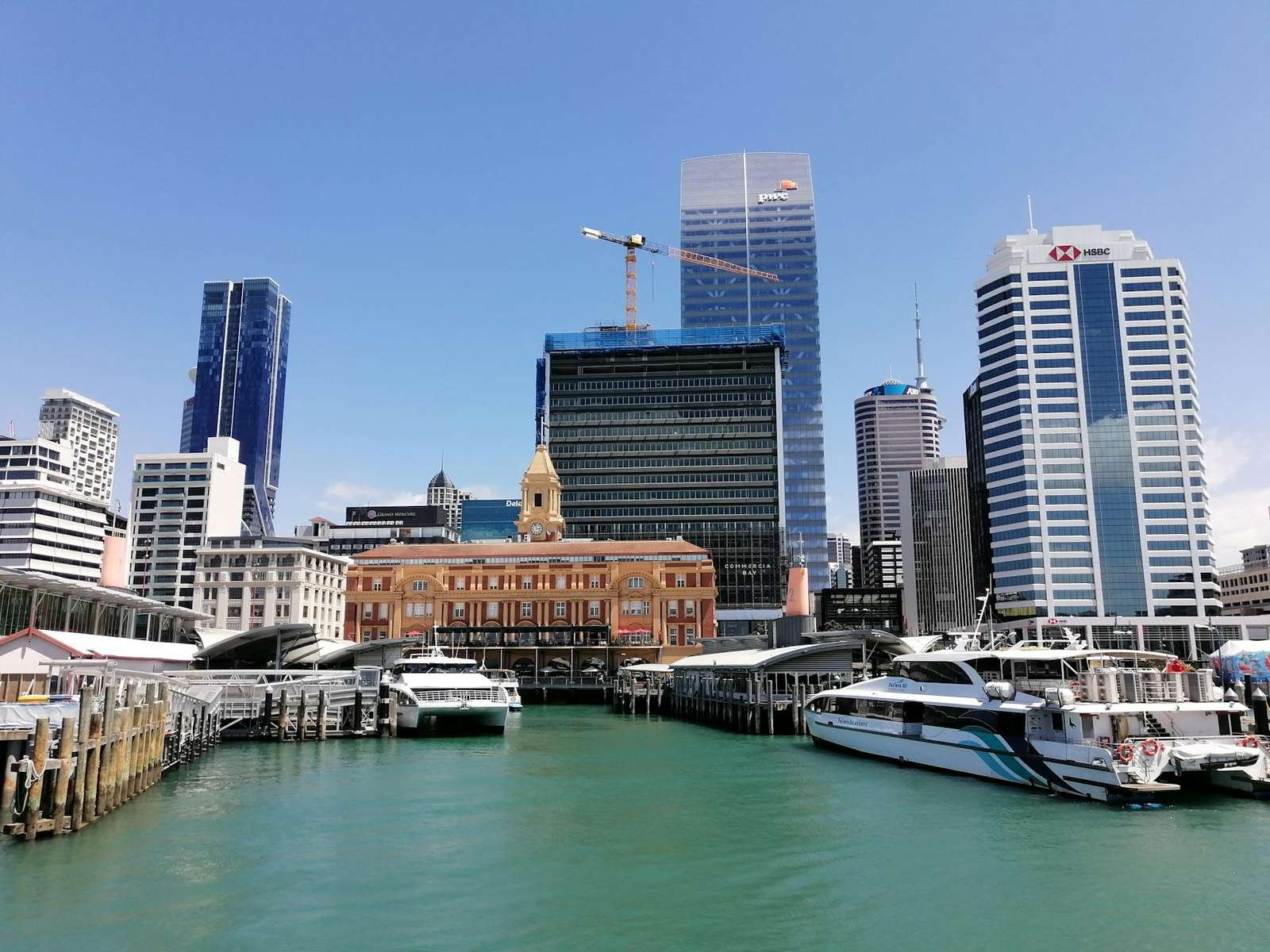
One correction worth making loudly, because older guides still get it wrong: the ferry is run by Explore Group and it leaves from Viaduct Harbour, not the downtown ferry terminal piers that serve the routes in our Auckland ferry routes and schedules guide. Check the meeting point on your ticket when you book.
Why Tiritiri Matangi Is Worth a Day
- See rare NZ native birds in the wild — kokako, takahē, hihi, saddleback, kiwi (overnight only), a very different bird day out from the gannet colony at Muriwai
- Unique pest-free environment — birds approach far closer than mainland NZ allows
- Beautiful scenery — restored native bush, dramatic coastal cliffs, the historic 1865 lighthouse
- Easy access — about 80 minutes by ferry from Viaduct Harbour, or 25 minutes from Gulf Harbour, and no permit required
- Conservation success story — globally significant restoration model
How to Get to Tiritiri Matangi

Explore Group operates the only scheduled public ferry to Tiritiri Matangi. Here is what the service actually looks like:
- Departure point: the Explore booking kiosk at Viaduct Harbour — not the downtown ferry terminal
- Crossing: about 80 minutes from Auckland, or about 25 minutes if you join at Gulf Harbour
- Fares: NZ$110 adult return, NZ$55 child (5–15), under 5 free, NZ$275 for a family pass covering two adults and two children
- Days: Wednesday to Sunday, plus public holidays. Nothing runs Monday or Tuesday
- Midweek timings: Auckland 9am, Gulf Harbour 9.55am, island 10.20am; back off the island at 2.40pm, Auckland by 4pm
- Weekend and public holiday timings: Auckland 8.30am, Gulf Harbour 9.25am, island 9.50am; back off the island at 4pm, Auckland by 5.20pm
- Booking: essential, online with Explore. A separate summer peak timetable runs from 26 December to the third weekend of January
- Guided walk: NZ$15 adult, NZ$5 child, added to your ferry booking
The crossing is not direct — it calls at Gulf Harbour on the Whangaparāoa Peninsula in both directions. If you are staying north of the bridge or driving up from the city, joining at Gulf Harbour cuts nearly an hour of boat time each way and there is parking there. From the city, the run past Rangitoto and Motutapu is a decent Hauraki Gulf cruise in itself, so take the outside deck.
Booking, weather and the days it does not sail
Sailings sell out well in advance from November through to April, and weekends go first. If your trip falls in that window, book the ferry before anything else on that day. The Wednesday-to-Sunday schedule means a fixed date is not always negotiable, and if your only spare day falls on a Monday or Tuesday you are better off saving Tiritiri for another visit and taking a Rotorua day trip instead.
Then there is the weather. This is an open Gulf crossing on a small vessel and sailings do get cancelled. DOC tells overnight visitors to ring +64 9 916 2241 after 7am on the morning of departure to check the boat is running, which is worth doing as a day visitor too if the forecast looks marginal. Charter boats can land, but commercial operators using the wharf need a Pest-Free Warrant and a landing permit. If you are weighing this against the other islands, our guide to day trips from Auckland lays them out side by side.
The Birds You’ll See

Star species (commonly seen)
- Kokako — endangered native crow with extraordinary haunting song. Seen daily on Tiritiri.
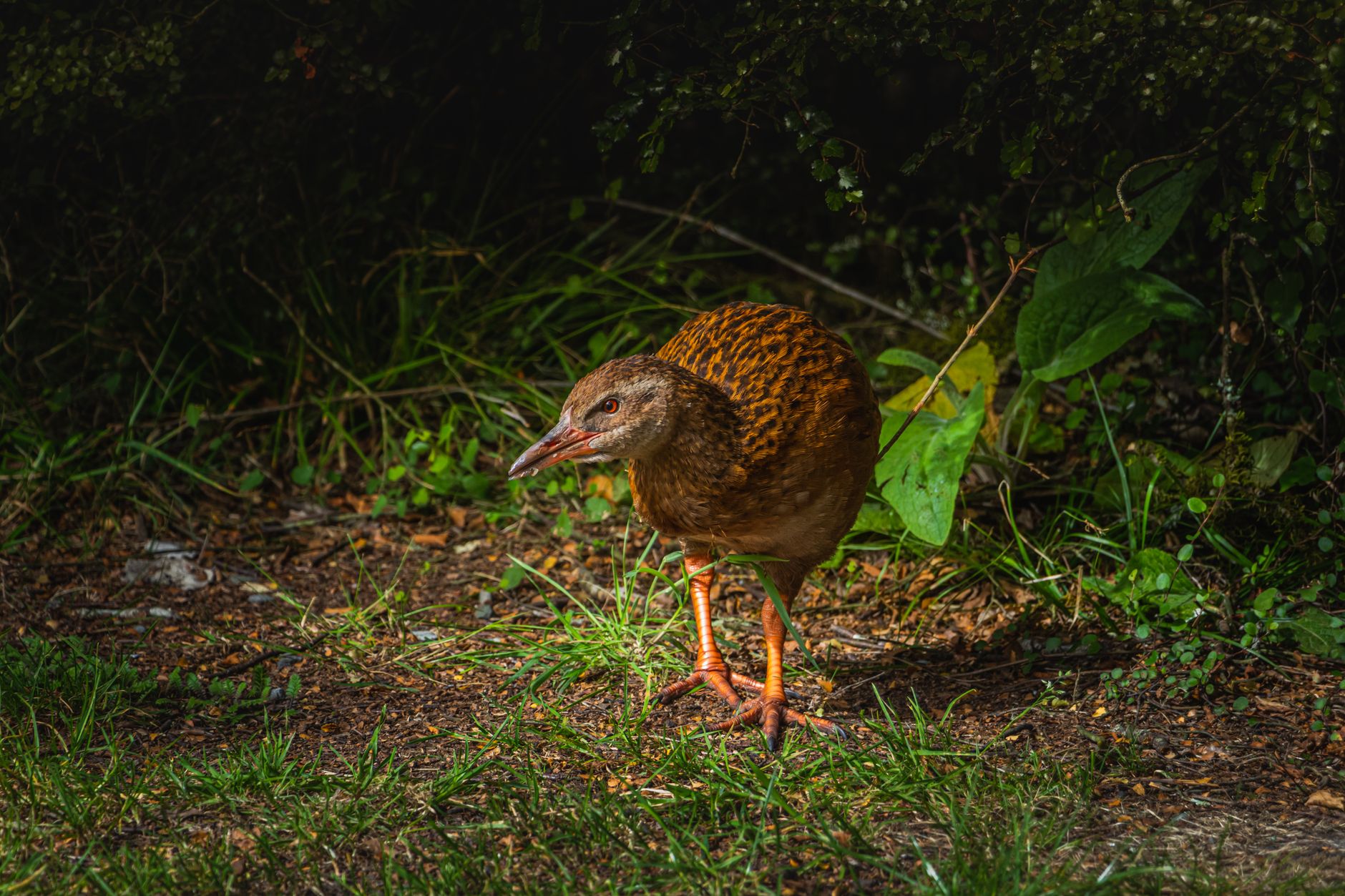
- Takahē — flightless swamphen, once thought extinct, now thriving on Tiritiri. Walking around the visitor centre.
- Hihi (stitchbird) — small native honeyeater, commonly seen at sugar-water feeders
- Saddleback (tieke) — black bird with chestnut saddle
- Tūī — large native honeyeater with white throat tuft
- Bellbird (korimako) — green honeyeater with bell-like song
- Kakariki (red-crowned parakeet)
- Kererū (NZ wood pigeon) — large iridescent green pigeon
- NZ robin — small endemic, very tame on Tiritiri
- Whitehead (popokatea) — small native bird
Special species (occasional sightings)
- Little spotted kiwi — Tiritiri’s smallest kiwi species, daytime sightings rare
- Brown kiwi — reintroduced, very rare daytime sightings
- Tuatara — ancient NZ reptile, occasionally seen near visitor centre
- NZ blue duck (whio) — periodic sightings near streams
Endangered kokako

Tiritiri’s kokako are the highlight for many birdwatchers. The kokako is endangered — fewer than 2,000 birds remain across NZ. On Tiritiri, the population has grown to roughly 100 birds, all individually colour-banded for monitoring. Best chance to see (and hear) them: dawn and dusk in the Wattle Valley track.
The Walking Tracks
- Wattle Track — wharf to lighthouse, about 40 minutes one way. Gravel and boardwalk through replanted and remnant bush, with water troughs and sugar-water feeders that draw tūī, tīeke and korimako. Several sets of steps, so buggies need lifting
- Hobbs Beach Track — wharf to Hobbs Beach, about 10 minutes. Rocky coastline, views across to Whangaparāoa, and kororā (little penguin) nest boxes beside the track whose inspection lids you may gently lift
- Kawerau Track — north end of Hobbs Beach up to Ridge Road, 30–40 minutes. Some of the oldest bush on the island, including massive pōhutukawa and a pūriri riddled with moth holes. Best odds for tītipounamu and kōkako. A 15-minute detour reaches the Tiritiri Matangi pā site
- Ridge Road — 25 minutes along the spine of the island to the lighthouse, with the parallel Cable Track offering a quieter bush alternative
- Ngāti Paoa, Northeast Bay and East Coast tracks — about 2 hours one way past Papakura Pā and Northeast Bay to the lighthouse. Steep in places and properly exposed
- The three-hour loop — circumnavigates the island with views to Rangitoto, Hauturu and the Coromandel
Tracks are well marked and mostly gravel or boardwalk, but they are not flat and the northern end is steep and exposed. How much you fit in depends on which day you come: a midweek sailing gives you about four hours and twenty minutes ashore, a weekend sailing closer to six. Midweek, take the Wattle Track up and the Kawerau and Hobbs Beach tracks back, and leave it there. On a weekend the three-hour loop is comfortable with time for lunch and a swim.
Stay on the tracks — ground-nesting birds and monitored plantings sit metres off the path. The surface is closer to the easier Auckland walks than a Waitākere bush route, but the steps still catch people out.
The Historic Lighthouse

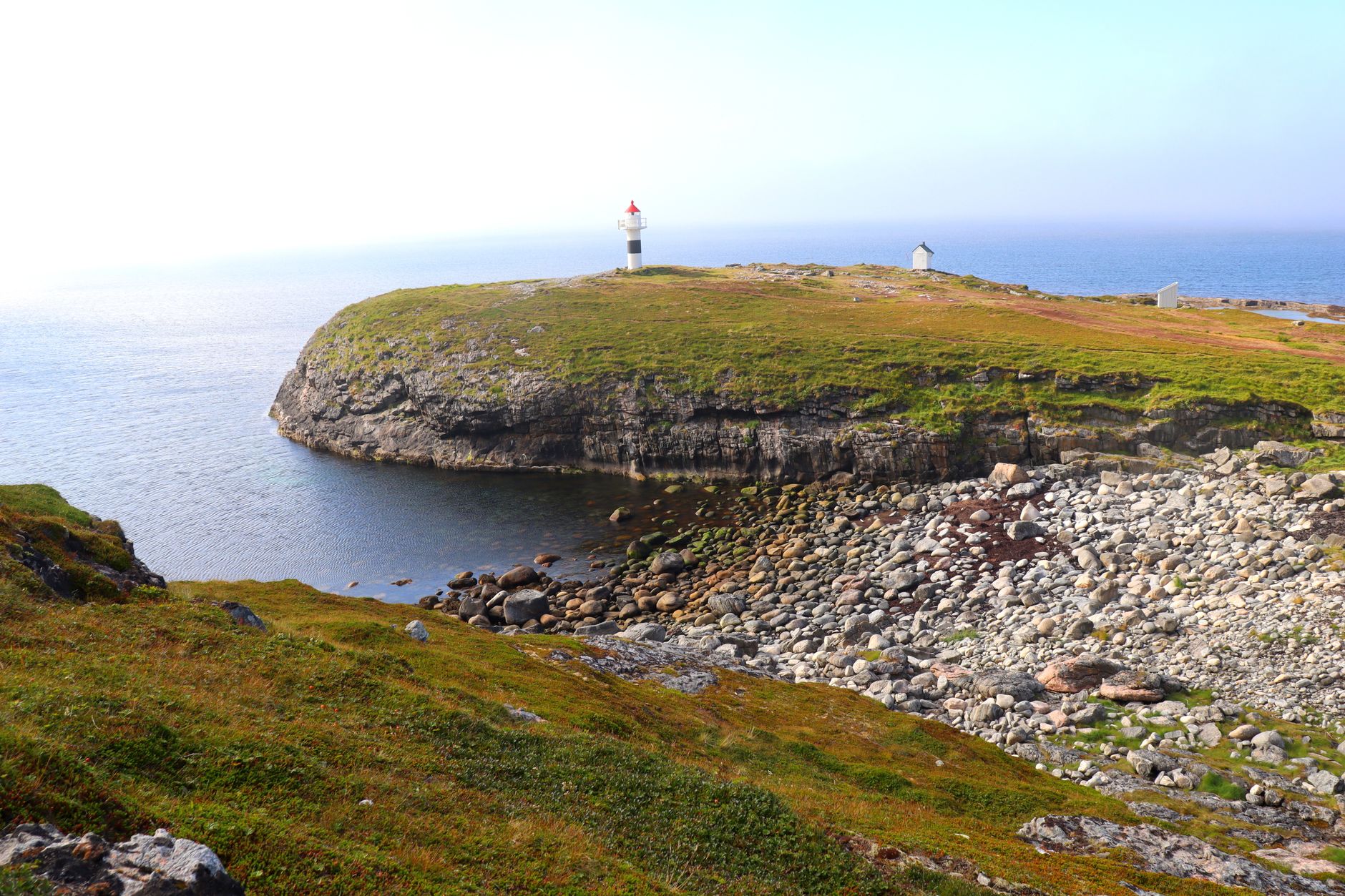
The 1865 Tiritiri Matangi lighthouse sits at the top of the hill at the southern end of the island, and it is the oldest lighthouse still working in New Zealand. Restored and now solar-powered, it anchors a small heritage precinct with the old keepers’ buildings, an outlying piece of the colonial heritage sites around Auckland.
The visitor centre beside it has displays and a small shop, normally open around 11am to 3pm on ferry days — but it sells gifts and cold drinks, not food. There is nowhere on Tiritiri Matangi to buy lunch, which is the most common mistake day visitors make. Toilets are better distributed than most guides suggest: at the wharf, at Hobbs Beach, in the lighthouse area and at Spaghetti Junction partway up. There is no public phone beyond emergency use, and mobile coverage is patchy once you are in the bush.
Sample Day Itinerary
- 8am — Arrive at the Explore kiosk, Viaduct Harbour. Bags already checked and zipped
- 8.30am — Ferry departs (weekend timetable)
- 9.25am — Gulf Harbour pick-up
- 9.50am — Arrive Tiritiri Matangi wharf. Biosecurity briefing on the wharf
- 10am — Guided walk sets off up the Wattle Track
- 11.30am — Reach the lighthouse and visitor centre. Takahē usually wandering about
- 12pm — Lunch on the grass by the lighthouse
- 12.45pm — Ridge Road and the Kawerau Track back down through the old bush
- 2pm — Hobbs Beach. Swim if it is warm, penguin boxes either way
- 3.15pm — Back along the coast to the wharf
- 4pm — Ferry departs the island
- 5.20pm — Back in Auckland
On a Wednesday-to-Friday sailing, compress that: skip the loop, take the guided walk up and the Kawerau Track down, and be back at the wharf by 2.30pm. The boat does not wait.
What to Bring
- Lunch — there’s no café on the island, only a small visitor centre shop with limited drinks/snacks
- Water — at least 1.5L per person
- Sturdy walking shoes — gravel paths, can be muddy after rain
- Layered clothing — exposed island, can be windy, so pack as our Auckland packing list suggests
- Rain jacket — even on sunny days
- Sunscreen and hat
- Camera with telephoto lens — birds are close but not always at touching distance
- Binoculars — recommended for bird-spotting
Pack food in a sealed container rather than a loose bag — a biosecurity requirement, not a suggestion. Add swimwear and a towel between December and March, because Hobbs Beach is a good swimming and snorkelling beach and almost nobody brings them. There are no rubbish bins on the island, so everything you carry on comes back off.
Is the Guided Walk Worth It?
Yes, and it is the cheapest good decision you will make on the trip. NZ$15 for an adult and NZ$5 for a child, booked with your ferry ticket, buys a small-group walk with a Supporters of Tiritiri Matangi volunteer — people who have often been coming to this island for twenty years and can pick a kōkako out of the canopy by a single call.
Three routes run depending on fitness: the Wattle Track (about 1.5 hours one way, gentlest, best for close encounters at the feeders), the Kawerau Track (about 2.5 hours, coastline and the oldest trees on the island), and the Moana Rua coast-to-coast route (about 2 hours, some steep sections). All finish at the lighthouse, leaving you free to wander back at your own pace.
Spaces are limited and go with the ferry seats, so add it when you book. The money goes to the volunteer group that does the conservation work.
Biosecurity Rules
Tiritiri Matangi is pest-free — strict biosecurity protects this status. Before boarding the ferry:
- Shake out your pack and check every pocket, then zip it fully shut for the crossing
- Check bags for holes — a hole is somewhere a mouse can be sitting
- Clean the soles, laces and tongues of your shoes. Seeds hide in all three
- Check woollen socks, jumpers and velcro closures for seeds
- Pack all food in sealed containers
- Overnight visitors must bring a completed DOC biosecurity checklist and hand it to the ranger
- Stay on the tracks, take all rubbish home, and don’t feed anything
The threats DOC actually worries about are less dramatic than people expect. Rodents are the headline risk, but plague skinks, Argentine ants and exotic weed seeds do as much damage and are far easier to carry in by accident. Gear that has been sitting in a garage is the classic offender.
Island rules that catch first-timers: no dogs, no bikes or scooters, no fires or portable barbecues, no camping, and smoking only in the designated areas at the wharf and behind the visitor centre.
Pre-ferry checks are taken seriously. Don’t risk introducing a pest to the sanctuary.
Best Time to Visit
- Spring (Sep–Nov) — best for bird breeding activity, courtship displays
- Summer (Dec–Feb) — busy ferry, warm weather, longer days
- Autumn (Mar–May) — settled weather, fewer crowds, fledged young birds
- Winter (Jun–Aug) — quietest, ferry runs reduced schedule, dramatic light
Spring (October especially) is the prime birdwatching time — courtship displays, breeding behaviour, abundant activity.
Overnight Stays on Tiritiri
The Department of Conservation runs a small bunkhouse near the lighthouse, and it is the only accommodation on the island. It is a communal facility used mainly by volunteers and researchers, so public availability is genuinely limited:
- Size: three public rooms with 15 bunk beds between them
- Fees per bunk: NZ$48 a night from 1 May to 30 September; NZ$56 weekdays and NZ$65 weekends from 1 October to 30 April; NZ$76 weekdays and NZ$87 weekends through the December to February peak
- Booking: online through DOC, and the summer season books out fast — the 2026/27 season opened at 9.30am on 16 June 2026
- Bring: all your own food, plus a sleeping bag, sheet and pillowcase. There is no linen and no laundry
- Kitchen: gas stove and oven, microwave, barbecue, two fridges and a freezer, and all the crockery and pots you need
- The reason to do it: kiwi calling after dark, and the dawn chorus before the day boat arrives
Book the bunkhouse and the ferry as a pair and check both are available before committing to either — they are separate systems and it is easy to end up with a bed and no boat. Overnight ferry tickets are arranged directly with Explore’s reservations team. Don’t book to arrive or leave on a Monday or Tuesday: with no ferry running, the ranger may not be there to brief you or shift your gear.
On arrival, leave your pack in the trolley on the wharf and the ranger takes it up; the walk is about 40 minutes. Bring an extra day’s food in case weather strands you — DOC doesn’t charge for unplanned extra nights. Explore also runs an occasional Dawn Chorus trip for the sunrise birdsong without the overnight.
Accessibility
Tiritiri Matangi has limited accessibility:
- The wharf has steep steps up to island level, and there is no vehicle transport for visitors
- Main tracks are gravel or boardwalk but uneven, with several sets of steps on the Wattle Track
- Buggies and prams can be managed on the Wattle Track if you are happy to lift them over steps
- The visitor centre and lighthouse sit at the top of the hill, roughly 40 minutes’ walk from the wharf
- Contact Explore Group before booking if mobility is a concern — the boat, the wharf and the climb all need thinking about together
Children & Families
Tiritiri is excellent for families with kids 5+:
- Kids love seeing wild birds at close range, closer than the aviaries at Auckland Zoo allow
- The walking tracks are manageable for primary-school kids
- The ferry crossing is part of the adventure, as it is on most family day trips from Auckland
- The takahē at the visitor centre are a guaranteed kid-favourite
- Pack snacks and lunch — limited food on island
Photography Tips
- Long lens recommended — 200–400mm for bird photography
- Wattle Valley — kokako and saddleback territory
- Visitor centre — takahē at very close range
- Sugar-water feeders — hihi and bellbird at touching distance
- Lighthouse — heritage architecture and ocean views
- The cliff coastal walk — dramatic landscapes
Conservation Story
Tiritiri Matangi’s transformation is one of conservation’s great success stories. From farmland in the early 1980s to thriving sanctuary today:
- 1984: 280,000 native trees planted by volunteers
- 1993: All introduced predators eradicated
- 1990s onwards: Endangered native birds gradually reintroduced
- Today: Self-sustaining populations of multiple endangered species
The Supporters of Tiritiri Matangi (a volunteer group) and DOC continue to manage the island. Visitors fund conservation through ferry fees and ranger tour donations.
Tiritiri vs Rangitoto Day Trip
- Tiritiri Matangi — wildlife focused, longer ferry (about 80 minutes), walking tracks and birdsong, NZ$110 adult return, sails Wednesday to Sunday only
- Rangitoto — volcanic landscape, much shorter ferry, summit hike and lava caves, cheaper fare, sails daily
With one spare day and restless teenagers, Rangitoto is the easier sell. If anyone in the group cares about birds even slightly, Tiritiri wins outright.
Tiritiri is the better wildlife day; Rangitoto the better volcano experience. Choose based on interests, or do both on different days — and if the group would rather have vineyards than birds or lava, a Waiheke Island day trip is the third option in the same gulf.
Frequently Asked Questions
How long is the Tiritiri Matangi ferry from Auckland?
About 80 minutes each way from Viaduct Harbour, where Explore Group’s booking kiosk is. If you join the same sailing at Gulf Harbour on the Whangaparāoa Peninsula, the crossing is only about 25 minutes.
How much is the Tiritiri Matangi day trip?
NZ$110 adult return and NZ$55 for children aged 5–15 on the Explore Group ferry, with under-fives free and a NZ$275 family pass covering two adults and two children. The guided walk is a NZ$15 adult or NZ$5 child add-on booked with your ferry ticket.
Will I see kiwi on Tiritiri Matangi?
Day visitors rarely see kiwi (nocturnal). Stay overnight at the bunkhouse for kiwi sightings on dawn tracks.
What’s the best Tiritiri Matangi walking track?
The Wattle Track from the wharf to the lighthouse is the one to do if you only do one — about 40 minutes each way, with feeders and water troughs that bring birds within a couple of metres. The Kawerau Track through the old bush is the better bet for kōkako and tītipounamu. Allow four hours minimum ashore.
Is there a café on Tiritiri Matangi?
No. There is a small visitor centre shop near the lighthouse, normally open around 11am to 3pm on ferry days, but it sells gifts and cold drinks only — no food at all. Bring lunch, snacks and at least 1.5 litres of water per person, packed in a sealed container for biosecurity.
Do I need a permit for Tiritiri Matangi?
No permit is needed for a day visit — a ferry ticket is enough. Explore Group runs the only scheduled public service. Charter operators can land but need a Pest-Free Warrant and a wharf landing permit, and DOC publishes the list of approved ones.
Is Tiritiri Matangi worth a day trip?
Yes, for anyone with even a passing interest in wildlife, and for families with children over about five. It is New Zealand’s most accessible native bird sanctuary, about 80 minutes by ferry from Viaduct Harbour.
What days does the Tiritiri Matangi ferry run?
Wednesday to Sunday, plus public holidays. There are no sailings on Mondays or Tuesdays, which is the single most common trip-planning mistake people make with this island. A separate summer peak timetable runs from 26 December to the third weekend of January, and sailings book out well ahead from November to April.
Can I get the Tiritiri Matangi ferry from Gulf Harbour?
Yes. The same sailing calls at Gulf Harbour on the Whangaparāoa Peninsula about 55 minutes after leaving Auckland, and the crossing from there is only about 25 minutes. If you are staying north of the harbour bridge or you have a car, this saves close to two hours of boat time across the day.
What happens if the ferry is cancelled?
Sailings are weather-dependent and cancellations do happen, particularly in winter. Check on the morning of departure rather than assuming — DOC gives +64 9 916 2241 as the number to ring after 7am. Leave a spare day in your Auckland plans if this is a trip you really want, and take a rain jacket regardless of what the forecast says.
Final Take: A Wildlife Day Like No Other
Tiritiri Matangi gives you a New Zealand wilderness experience usually reserved for people willing to fly to remote DOC reserves. Eighty minutes out of Viaduct Harbour, you can walk among kōkako, takahē, hihi and tīeke in bush that was bare paddock forty years ago — a conservation success story you can hear from the track.
Book the ferry first and everything else around it. Pack lunch in a sealed container, bring binoculars, check your boots for seeds, and pick a Saturday or Sunday if you want the full six hours ashore. Tiritiri Matangi is what New Zealand conservation does best — accessible, restored, and quietly extraordinary.
Tiritiri is the island most worth adding once you have more than three days here — it needs booking ahead and it does not compete well with Waiheke for a first-timer’s only island day. Our 5 days in Auckland itinerary puts it on day four or five, where it belongs, alongside the other things a longer stay unlocks.