Auckland Uber & Taxis: 2026 Fares, Apps & Airport Guide
Complete 2026 guide to Auckland Uber, Ola and Zoomy — fares, airport pickup zones, surge pricing, and how rideshares compare to taxis and public transport.

This article contains advertising. Our booking links are routed through a partner that adds commission tracking automatically, so if you book through one we earn a commission from the provider, at no extra cost to you. It never affects what we recommend. Affiliate disclosure
The rideshare picture in Auckland has changed more in two years than most guides have caught up with. Uber is still the default and the only rideshare company licensed to pick up at the airport terminals, but Ola has gone, Zoomy has become YourRide and now books licensed taxis, and Bolt launched here in February 2026. That leaves two rideshare apps and a competitive taxi network chasing the same trips. This 2026 guide covers how fares are actually calculated, the airport pick-up zones and charges, the child restraint law that catches families out, and the trips where a bus, train or ferry still wins.
| Detail | What to know |
|---|---|
| Apps that work here | Uber and Bolt for rideshare; YourRide (formerly Zoomy) for licensed taxis. Ola no longer operates in New Zealand |
| Coverage | The whole urban area, out to the Hibiscus Coast and Pukekohe; waits lengthen late at night |
| Paying | Card or phone wallet in the app. Cash is a taxi-only option |
| Airport pick-up | International: lane 1 outside door 11. Domestic: the signed rideshare zone – follow the app |
| Airport fees | NZ$5.50 per pick-up; drop-offs NZ$5.50 domestic and NZ$3.50 international |
| Typical city trips | Uber’s published averages are around NZ$17 to Westfield Newmarket and NZ$23 to the Sky Tower |
| Airport taxi | Indicative one-way fares of about NZ$38 to NZ$75 into the city, several of them fixed |
| Car seats | Never guaranteed. New Zealand law requires an approved restraint for children under 7 |
Quick Answer: Is Uber Available in Auckland?
Yes. Uber has operated in Auckland for more than a decade and covers the entire urban area, plus Wellington, Christchurch, Queenstown and Dunedin. Your home account works here with no changes; you are simply charged in New Zealand dollars. Bolt is the second option since February 2026 and is worth installing as a price check. What you should not do is follow advice that still lists Ola and Zoomy as rideshare rivals, because neither exists in that form any more.
Auckland Rideshare Apps Compared
Uber
Auckland’s most established rideshare. Largest fleet, most consistent availability, cleanest app experience for international visitors who already use Uber at home.
- UberX: the standard car, up to four passengers and about two suitcases
- UberX Share: paired with another traveller going your way; Uber advertises up to 25% off trips leaving the airport
- Uber Comfort: newer cars with more legroom
- Uber Green: electric or hybrid vehicles
- UberXL: larger vehicles for up to six people and three suitcases
- Uber Pet: drivers who accept pets; service animals are allowed in any ride
- Reserve: book ahead, lock the price and add a flight number so the driver tracks your arrival
Ola
Ola no longer operates in New Zealand. The company shut its Australian and New Zealand ride-hailing business in 2024 and its New Zealand site is dead, so any guide still telling you to install Ola for Auckland is years out of date.
Zoomy
Zoomy is now YourRide. The New Zealand-owned app rebranded and changed model: zoomy.co.nz redirects to yourride.nz, and instead of rideshare drivers it books licensed taxis from a network of around 2,000 cars nationwide, including Auckland Co-op Taxis and Blue Star. Every car carries a security camera, drivers are licensed and vetted, and you get a fare estimate before you travel. Open it when you want a metered taxi rather than a car priced by demand.
Bolt
Bolt, the Estonian operator running in more than 50 countries, launched in Auckland on 23 February 2026 — its first New Zealand city. Request in the app, see the price before you confirm, pay by card. Coverage is strongest across the central suburbs and thinner at the fringes, and the airport does not list Bolt among the operators licensed for terminal pick-ups, so treat it as your around-town price check rather than your airport plan.
Best practice in 2026: keep Uber and Bolt on your phone and compare them before you book, and keep YourRide for the moments when a metered taxi with a fixed estimate is the better bet — late at night, in heavy rain, or at the end of a concert. Set the apps up before you fly.
Auckland Uber Fares 2026
- Upfront pricing: you see the total before you confirm, rather than watching a meter climb
- What goes into it: distance, expected travel time, demand at that moment, and a booking fee
- Demand pricing: when requests outnumber drivers the whole quoted price rises; you rarely see a multiplier spelled out any more
- Added automatically: airport access fees, tolls and waiting time
- Minimum fare: short hops cost more per kilometre than long ones
- Reserve: booking ahead locks your price, the only way to be certain what you will pay
Common Auckland Uber routes:
- CBD to Auckland Airport (AKL): NZ$45–65
- CBD to Newmarket: NZ$10–18
- CBD to Mt Eden Village: NZ$13–20
- CBD to Ponsonby: NZ$10–18
- CBD to Devonport (via bridge): NZ$25–40
- CBD to Mission Bay: NZ$20–30
- CBD to Sylvia Park: NZ$25–35
- CBD to Britomart: NZ$10 minimum
Read those as indications, not quotes. This guide deliberately avoids publishing a per-kilometre rate card, because rideshare pricing moves with fuel costs, driver supply and promotions, and the only number that counts is the one in your app on the day. As a sanity check, Uber publishes its own average UberX prices for popular Auckland destinations: roughly NZ$17 to Westfield Newmarket, NZ$20 to Spark Arena, and about NZ$23 each to the Sky Tower, Eden Park and Sylvia Park. Three things reliably push a fare up: leaving a venue with several thousand other people, heavy rain, and crossing the Harbour Bridge or the Southern Motorway at peak.
Uber from Auckland Airport
Auckland Airport licenses which companies may pick up at its terminals, and Uber is the only rideshare operator on that list at the time of writing; taxis and shuttles have their own ranks. At the international terminal the pick-up zone is lane 1 outside door 11, next to McDonald’s in the arrivals hall, a minute or two from where you clear customs. The domestic terminal is the confusing one: the airport currently signs rideshare pick-ups to the lanes near door 2, while Uber’s own airport page still directs UberX riders to the rear of the multi-storey car park. The precinct is a building site while the new domestic terminal goes up, so zones move — request the ride first, then follow the app’s directions.
- International terminal pick-up: lane 1, outside door 11, in the arrivals hall
- Domestic terminal pick-up: the signed rideshare zone; follow the app, as it has shifted with construction
- Airport access fee: NZ$5.50 per pick-up at either terminal, added automatically
- Drop-off fee: NZ$5.50 domestic, NZ$3.50 international
- Taxis: licensed ranks outside door 8 (international) and door 4 (domestic), no booking needed
- Taxi fares: indicative one-way fares into the city of about NZ$38 to NZ$75, several companies offering a fixed fare
- Shared shuttles: around NZ$35 for one person plus roughly NZ$8 per extra person — cheaper solo, slower
Airport Surcharges
- Pick-up at either terminal: NZ$5.50
- Drop-off at the domestic terminal: NZ$5.50
- Drop-off at the international terminal: NZ$3.50
- These are Auckland Airport’s charges, not the app’s, and they are added to your fare automatically
- Taxi fixed fares already include the airport’s access charge
Prices from the airport move with demand like anywhere else, and a wave of long-haul arrivals landing together moves them a long way. If you are arriving tired, at night, or with children, book ahead.
Booking an airport pick-up in advance
Uber Reserve is the tool for this. Book well ahead — Uber’s airport page says up to 90 days — add your flight number so the driver tracks your arrival, and lock the price. On a standard UberX, Comfort or UberXL reservation you get up to 45 minutes after landing to meet the driver before waiting fees start; on premium tiers it is 60, and you can cancel free until an hour before pick-up. Given how long biosecurity queues run at Auckland, that 45-minute buffer is the number to remember. Going the other way, order earlier than feels necessary: the Southern Motorway is unforgiving from 7am to 9am and again from 3.30pm. Our Auckland Airport to CBD guide compares every option.
Surge Pricing
Uber’s surge multiplier kicks in during high demand. Common Auckland surge times:
- Friday 5–7pm — knock-off rush
- Saturday 11pm–2am — Auckland nightlife exit
- Sunday late night — same
- Major events at Eden Park, Spark Arena, Mt Smart Stadium
- Heavy rain — sudden demand spike
- Anniversary Day, Auckland Pride, large festivals
- Cruise ship arrival days at Princes Wharf
You will not usually see a multiplier spelled out any more. Uber and Bolt both quote a single upfront price, so demand pricing shows up simply as a number higher than you expected. The mechanics are unchanged: when requests outnumber available drivers, prices climb until the two balance. Waiting five or ten minutes often works, and walking two or three blocks from a venue exit sometimes does too, because the surge is drawn around the crowd. If you already know you are leaving a stadium at a set time, book ahead and lock the price.
Traditional Taxis in Auckland
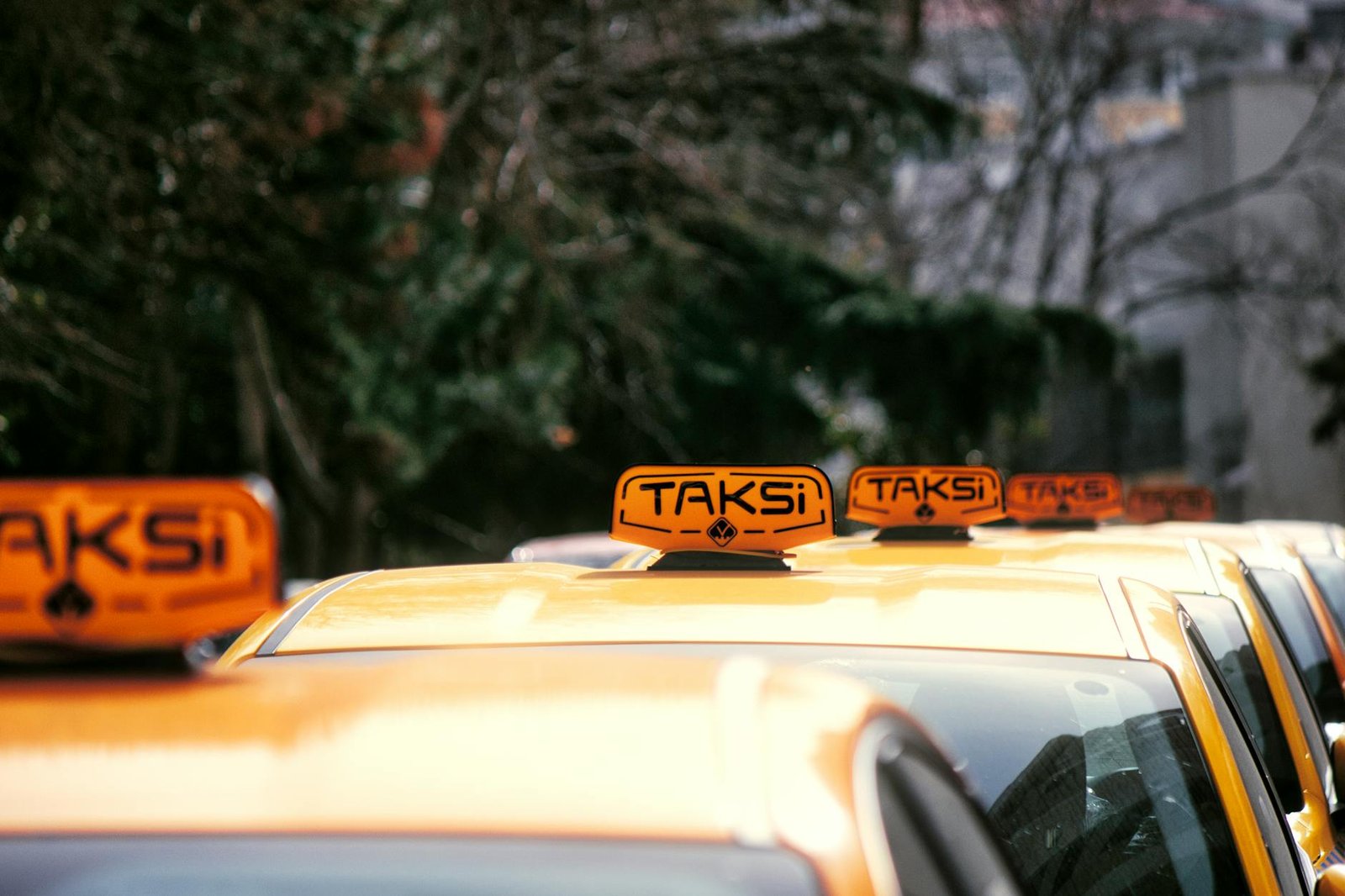
Traditional taxi companies still operate. Major Auckland taxi services:
- Auckland Co-op Taxis — biggest fleet
- Corporate Cabs — premium service
- Discount Taxis — claimed cheaper rates
- YourRide — newer, often offers flat rates
- Green Cabs — hybrid/electric fleet
You can pick a taxi up at a rank — Queen Street, Britomart, Aotea Square and SkyCity are the reliable ones in the city centre — phone the company, or book through YourRide, which aggregates several fleets and quotes an estimate first.
The old line that taxis cost double is worth retiring. Every New Zealand taxi carries an in-vehicle camera, drivers hold a passenger endorsement and are vetted, and fares are metered against a published rate. Auckland Airport’s list of licensed operators shows per-kilometre rates clustered between about NZ$2.15 and NZ$2.70, and fixed airport-to-city fares from roughly NZ$38 to NZ$75. On a quiet weekday a rideshare is usually cheaper; at 1am on a Saturday the taxi on the rank frequently is not, and it takes you straight away rather than cancelling twice.
Booking via App

- Uber — your existing account works here with no set-up; charges appear in New Zealand dollars
- Bolt — install and verify before you arrive, since registration needs a phone number
- YourRide — the taxi app, formerly Zoomy; useful nationwide, not just in Auckland
- An overseas mobile is fine for all three, but verify it on hotel wifi rather than at a kerb
All of them take Visa and Mastercard, Apple Pay and Google Pay, and charge your card automatically at the end of the trip. Rideshare drivers do not handle cash, so a card or phone wallet is essential; licensed taxis still take cash and Eftpos. Tipping is genuinely not expected in New Zealand.
Uber vs Public Transport in Auckland
- CBD to Newmarket: Train NZ$3.50, Uber NZ$10–18 — train wins for solo travellers
- CBD to Devonport: Ferry NZ$7.80 + scenic, Uber NZ$25–40 (via bridge) — ferry always wins
- CBD to Mt Eden Village: Bus NZ$3.50, Uber NZ$13–20 — bus better for solos, Uber for groups of 3+
- CBD to Auckland Airport: SkyDrive bus NZ$28, Uber NZ$45–65 — Uber wins for groups of 2+, also when in a rush
- Late night (after midnight): Public transport limited; Uber is the best option
Those fares move most years, so treat them as shape rather than gospel. Two changes have shifted the maths towards public transport. You no longer need an AT HOP card — tap a contactless Visa, Mastercard, Amex or UnionPay card, or a phone or watch, on any bus, train or ferry and tag off with the same one. And fares are capped automatically: NZ$20 a day on contactless, or NZ$50 across seven days with a registered HOP card, with transfers inside 30 minutes counting as one journey. Our public transport guide has the detail.
For a couple making four or five trips a day that cap is decisive: buses and trains by day plus one rideshare home at night comfortably beats an all-rideshare day, which is the approach I take to getting around Auckland by bus, train and ferry. The unbeatable exception is the water — no car reaches Devonport or Waiheke faster or more pleasantly than the ferry.
Auckland Uber for Specific Trips
Late night home from K Road or Viaduct
Most popular late-night use case. CBD to suburbs typically NZ$15–35 depending on suburb. Quick (3–8 min wait usually).
Group of 4–6 from a restaurant
UberXL is excellent value. NZ$25–40 for a 6-person van across the CBD. Beats public transport for groups.
To a wedding or event
Schedule your Uber in advance via the app. Auckland Uber supports scheduled rides up to 30 days ahead. Useful for early-morning airport runs.
Family with kids
This is where New Zealand law catches visitors out. Children under 7 must travel in an approved child restraint suited to their age and size, and a seatbelt on its own does not count. NZTA’s guidance is blunt: if you cannot put a child under 7 into an approved restraint, they must not travel in the vehicle. Seven-year-olds must use a restraint if one is available and a seatbelt if not, and children under 15 should sit in the back.
Rideshare drivers do not carry car seats — Uber’s own airport page says drivers are not guaranteed to have them and riders may bring their own. That leaves three options: travel with your own capsule and fit it yourself, hire one with a rental car, or book a taxi company that supplies child seats and request one with plenty of notice. Sort it before you fly, not in the arrivals hall at 11pm, and our wider guide to visiting Auckland with kids covers the rest of the family logistics.
Auckland Uber Tips
- Compare Uber, Ola and Zoomy before you book — prices vary by route and time
- Avoid peak surge times (Fri 5–7pm, Sat 11pm–2am)
- Walk a block to the next street if surge is high — sometimes the multiplier drops
- Use Uber Pool/Share if available — significantly cheaper
- Schedule airport rides in advance for peace of mind
- Keep your phone charged — battery dies and you’re stuck
- Tipping is not expected at all; if you want to, the app has a tip screen after the trip
- Auckland drivers are generally friendly and chatty if you want to talk
Auckland Uber Coverage
Auckland Uber covers all of Auckland’s main suburbs:
- CBD, Britomart, Viaduct, Wynyard Quarter, Auckland Domain
- North Shore: Devonport, Takapuna, Albany
- West: Henderson, New Lynn, Pt Chev
- South: Manukau, Penrose, Mt Wellington
- East: Mission Bay, St Heliers, Howick
- Inner suburbs: Newmarket, Parnell, Mt Eden, Ponsonby, Grey Lynn
Coverage extends to Hibiscus Coast and Pukekohe but expect longer wait times. Outside Auckland (e.g., Hamilton, Tauranga), Uber is also active. Coromandel Peninsula has limited rideshare — book well ahead, or consider renting a car for the trip.
Auckland Uber Driver Etiquette
- Sit in the back seat unless invited to the front
- Don’t smoke, eat, or be loud
- Auckland drivers are unaccustomed to tipping — feel free to keep the trip cost low
- Drivers are rated by passengers — be courteous, give 5 stars for good service
- If a driver behaves rudely, report via the app — Uber takes feedback seriously
- NZ drivers expect to chat conversation but won’t push if you’re quiet
Safety on Auckland Uber
- Auckland Uber is generally very safe, in line with Auckland’s wider safety record for tourists
- Always check the licence plate matches the app
- Verify the driver’s name and photo
- Use the app’s safety toolkit to share your trip with someone
- If you feel unsafe, ask the driver to stop in a public area and end the ride
- For solo travellers especially: always sit in the back, share your trip status
Two habits worth adopting. Let the driver tell you your name rather than volunteering it, which stops you climbing into the wrong car at a busy pick-up point. And remember that licensed taxis must carry in-vehicle cameras while rideshare cars need not. Every app has an emergency button that dials 111 and shows your live location.
Accessible Rides and Total Mobility
Auckland’s wheelchair-accessible vehicles sit with the taxi companies rather than the rideshare apps. If you need a hoist or a ramp, phone an accessible taxi operator directly or book through YourRide, which handles Total Mobility work, and give as much notice as you can — the fleet is small and demand bunches at the same times of day. Total Mobility itself is a subsidised door-to-door scheme run by Auckland Transport for people with an assessed, permanent inability to use buses, trains and ferries, so it is aimed at residents rather than visitors. Service animals are allowed in any ride and cannot be refused; for a folding wheelchair or a pram, request a larger vehicle and message the driver to check the boot.
Comparing Costs: Auckland Daily Transport
For a typical 3-day Auckland trip with 8–12 short trips:
- Uber-only approach: NZ$200–350 (3 days)
- HOP card public transport-only: NZ$60 (3 daily caps)
- Mixed (HOP card + Uber for late nights): NZ$110–180 (best balance)
For Auckland visitors, the "mixed" approach typically delivers the best balance of cost and convenience, and it is the figure I work from when putting together an overall Auckland trip budget.
Auckland Uber FAQs
Is Uber cheaper than taxis in Auckland?
Usually, but not by as much as people claim, and not always. On an ordinary weekday trip across town a rideshare is generally the cheaper option. Once demand pricing kicks in — Friday evening, after a concert, in heavy rain — a metered taxi from a rank can undercut it, and the airport’s own list shows licensed taxi fares into the city starting around NZ$38. Check both before you commit; it takes 30 seconds.
Does Uber work in Auckland?
Yes — Uber operates throughout Auckland and across NZ. Your home Uber account works in NZ without any changes.
How much is Uber from Auckland Airport to CBD?
It varies with demand and time of day, so the app is the only reliable quote. As a benchmark, Auckland Airport lists indicative taxi fares into the city of about NZ$38 to NZ$75 one way, and rideshare typically lands in the same broad territory, plus the airport’s NZ$5.50 access fee. A shared shuttle is cheaper for one person; a rideshare or taxi wins for two or more. Booking with Uber Reserve locks the price in advance.
Where do Ubers pick up at Auckland Airport?
At the international terminal, the pick-up zone is lane 1 outside door 11, in the arrivals hall next to McDonald’s. At the domestic terminal the zone has moved with construction work — the airport currently signs rideshare pick-ups near door 2 while Uber’s page still points UberX riders to the rear of the multi-storey car park. Request the ride, then follow the in-app directions, which reflect the arrangement on the day.
Should I tip Uber drivers in Auckland?
Tipping is not customary or expected. Optional 10–15% via the app for exceptional service.
Is Auckland Uber safe at night?
Yes — generally very safe. Verify the driver and licence plate, share trip with a friend, sit in the back. Auckland is one of the world’s safest big cities for rideshare.
What’s the difference between Uber and Ola?
There is no comparison to make any more: Ola closed its New Zealand and Australian ride-hailing business in 2024. The live comparison in Auckland is Uber against Bolt, with YourRide covering licensed taxis. Many drivers run more than one app at once, so the car that arrives may have all three on the windscreen mount.
Is Bolt available in Auckland?
Yes. Bolt launched in Auckland on 23 February 2026, its first New Zealand city, and works the same way as Uber — request in the app, upfront price, card payment. Coverage is best across the central suburbs. It is not licensed to pick up at the airport terminals, so keep Uber for arrivals and use Bolt to compare prices around town.
Do I need a car seat for a child in an Auckland Uber?
Yes, if the child is under 7. New Zealand law requires an approved child restraint appropriate for the child’s age and size, and a seatbelt alone does not satisfy it. Rideshare drivers are not required to carry seats and almost never do, so bring your own, hire one with a rental car, or book a taxi company that supplies them.
Final Take: Uber Is Auckland’s Most Convenient Transport
For most visitor scenarios a rideshare is still the most convenient way to move around Auckland: quicker than a bus, available at 2am, and priced up front. What has changed is that the price discipline now comes from Uber, Bolt and a taxi network that is more competitive than its reputation, rather than from three rideshare apps. The exceptions are unchanged — take the ferry to Devonport or Waiheke every time, take the train between the city and Newmarket, and if you are alone and on a budget, the bus and train to the airport is hard to beat.
Install Uber and Bolt before you arrive, add YourRide if you like the certainty of a meter, learn where door 11 is, and put a contactless card on your phone for the buses and ferries. If you would rather drive yourself, our guide to driving in Auckland covers the rules that surprise overseas visitors.


