NZeTA & the Traveller Declaration: Before You Fly to Auckland
NZeTA, the visitor levy and the Traveller Declaration explained: what each costs in 2026, when to apply, who is exempt, and the traps that stop people boarding.

This article contains advertising. Our booking links are routed through a partner that adds commission tracking automatically, so if you book through one we earn a commission from the provider, at no extra cost to you. It never affects what we recommend. Affiliate disclosure
The paperwork for New Zealand is genuinely simple, and it is also the thing that most often stops people boarding. Not because it is complicated, but because it is invisible: there is no visa sticker, no appointment, no embassy, nothing that feels like an application. You fill in a form on your phone, you pay, and three days later something you cannot see is attached to your passport number. Then an airline check-in agent in Los Angeles or Singapore looks for it, and if it is not there you do not fly. That is the entire risk profile of the NZeTA, and the way to manage it is to do it early.
This guide covers the three pieces of pre-departure paperwork most visitors need — the NZeTA, the International Visitor Conservation and Tourism Levy, and the New Zealand Traveller Declaration — what each costs, when to do it, who is exempt, and the traps. Fees and timings were checked in September 2026 and are in New Zealand dollars. Immigration fees change, sometimes at short notice, so confirm the current numbers at immigration.govt.nz before you pay.
The Three Documents at a Glance
| Document | Who needs it | Cost | When |
|---|---|---|---|
| NZeTA | Visa-waiver nationals, plus most transit passengers | NZ$17 in the official app, NZ$23 on the website | At least 7–10 days before you fly. Valid up to 2 years, multiple entries |
| IVL | Most visitors, paid alongside the NZeTA or visa | NZ$100 | Same application. Valid for the life of the NZeTA |
| Traveller Declaration | Everyone, including New Zealanders | Free | From 24 hours before your journey starts, and before you reach passport control |
For a typical visitor from the UK, Europe, North America or most of Asia, that is NZ$123 in total for the NZeTA and levy together, plus a free form you fill in the day before you fly. Australians are the notable exception: Australian citizens need neither, and Australian citizens and permanent residents do not pay the levy.
The NZeTA
What it is
The New Zealand Electronic Travel Authority is not a visa. It is an electronic pre-authorisation attached to your passport, confirming that you may travel to New Zealand under the visa-waiver arrangement. Nothing is stamped or stuck into your passport; the record sits in Immigration New Zealand’s system and is checked electronically by the airline at check-in and by the border on arrival.
Who needs one
Citizens of visa-waiver countries — a list that includes the United Kingdom, Ireland, all EU member states, the United States, Canada, Japan, South Korea, Singapore, Malaysia, Brazil, Argentina, Mexico and many more. Permanent residents of Australia also need one, though Australian citizens do not.
Transit passengers are the group most likely to be caught out. Most people transiting through Auckland need an NZeTA even if they never leave the terminal. There are limited exemptions. If your itinerary touches New Zealand at all, check.
Cruise passengers need one too, regardless of nationality, if they are arriving by ship.
Anyone not on the visa-waiver list needs an actual visitor visa instead, which is a longer and more expensive process. Our guide to New Zealand visa requirements covers who falls into which category.
What it costs, and the one trick worth knowing
The NZeTA costs NZ$17 through the official Immigration New Zealand app and NZ$23 through the website. That NZ$6 difference is small in absolute terms and worth taking simply because the app is also faster to use — it photographs your passport chip rather than making you type numbers.
The far more important saving is avoiding the third-party sites. Search for “NZeTA” and the first results are frequently commercial operators charging NZ$60, NZ$80 or more to fill in the same government form on your behalf. They are not scams in the legal sense — they do submit the application — but they are charging you three or four times the fee for typing your own details into a box. Apply only through immigration.govt.nz or the official app. If a site is charging you a “service fee” on top of the government fee, close the tab.
How long it takes
Most NZeTA applications are granted within 72 hours. Many come through in minutes. Some take considerably longer, particularly at peak periods or where an application triggers a manual check.
Apply at least seven to ten days before you fly. This is the single most useful sentence in this guide. The consequence of an NZeTA that has not been granted is not a delay at the New Zealand border — it is being denied boarding at your own departure airport, with a non-refundable ticket and an airline that is entirely within its rights.
How long it lasts
An NZeTA is valid for up to two years and covers multiple visits and transits within that period, provided your passport remains valid. If you get a new passport, you need a new NZeTA — the authority is tied to the passport, not to you.
The International Visitor Conservation and Tourism Levy
The IVL is NZ$100, charged at the same time as your NZeTA or visitor visa. It is not optional and it is not separable — you pay it as part of the same transaction.
What it funds is conservation and tourism infrastructure: track maintenance, huts, toilets, car parks, predator control and visitor facilities in the places international visitors actually go. If you have ever walked a boardwalk across a swamp in a national park and wondered who paid for it, the answer is increasingly this levy. Whether NZ$100 is the right number is a live political argument in New Zealand; that it exists and must be paid is not.
Exemptions apply to Australian citizens and permanent residents, to citizens of most Pacific Island Forum countries, to New Zealand citizens and residents, and to certain visa categories. The list is longer than it looks and it does change, so check immigration.govt.nz against your own situation rather than assuming.
The levy is valid for as long as the NZeTA it was paid with, so a two-year NZeTA covering three separate trips involves one NZ$100 payment rather than three.
The New Zealand Traveller Declaration
This is the one that everybody needs and almost nobody has heard of before they fly. It replaced the old paper arrival card that used to be handed out on the aircraft, and it is now a digital form completed before you reach passport control.
Who and when
Everyone travelling into New Zealand must complete one, including New Zealand citizens returning home and children — a parent or guardian completes it on a child’s behalf. It is free.
You can submit it from 24 hours before your journey to New Zealand begins, and it must be submitted by the time you reach passport control. In practice, that means doing it the day before you fly, or on the aircraft if you forgot. The official NZTD app works offline for filling the form in — you need connectivity only to submit — which is why a surprising number of declarations get completed somewhere over the Tasman.
What it asks
Your passport and flight details, where you will be staying in New Zealand, and then the substantive part: your customs and biosecurity declaration. It asks about food, plant material, animal products, used outdoor equipment and recent contact with farms or animals.
Answer honestly, and when in doubt tick yes. Declaring an item is free and never results in a fine even if the item is confiscated; failing to declare a biosecurity risk item carries an instant NZ$400 fine under a strict-liability regime where forgetting is not a defence. The full detail is in our guide to the New Zealand biosecurity rules.
Do it properly and it speeds you up
A completed, accurate declaration is what the eGate and the biosecurity officer are reading. Filling it in calmly at home, with your accommodation address to hand and time to actually think about what is in your luggage, produces a better declaration and a faster passage than doing it during descent on 4% battery. Our guide to arriving at Auckland Airport covers what happens next.

A Sensible Timeline
- Two to three months out: check whether you need an NZeTA or a visa. If it is a visa, start now — that process takes weeks, not days.
- Three to four weeks out: check your passport. It must be valid for at least three months beyond your intended departure from New Zealand, and if you renew it you will need a fresh NZeTA.
- Two weeks out: apply for the NZeTA and pay the IVL through the official app. NZ$123 all in, ten minutes.
- One week out: confirm the NZeTA has been granted. If it has not, chase it now rather than at the airport.
- Day before you fly: complete the Traveller Declaration. Have your first night’s accommodation address ready.
- Night before you fly: empty every pocket of every bag and clean your hiking boots. This is paperwork too, in the sense that matters.
What the Airline Checks Before It Boards You
The NZeTA is only one of four things a check-in agent looks at, and travellers who focus on it alone occasionally fail on one of the others.
Passport validity. New Zealand requires a passport valid for at least three months beyond your intended departure date, and most airlines apply a stricter reading of that to protect themselves. A passport expiring shortly after your return flight is a risk. Check the expiry date the same week you book, not the week you fly.
The NZeTA itself. Checked electronically against your passport number. Nothing appears in the passport, so there is nothing for you to show — which is why an unresolved application is invisible until the agent tells you about it.
An onward or return ticket. Visa-waiver visitors are expected to hold onward travel out of New Zealand. Airlines check this, sometimes strictly, and a one-way ticket without a plan can be enough to be refused boarding. If you genuinely intend to leave by another route, be ready to explain it and have documentation.
Enough funds. The formal expectation is roughly NZ$1,000 per month of your stay, or NZ$400 per month if your accommodation is prepaid. It is rarely asked about at check-in and occasionally asked about at the border. A bank statement on your phone settles it in seconds; an argument does not.
How Long You Can Stay
The NZeTA is an authority to travel, not a length of stay. What you get on arrival is a visitor entry, and for most visa-waiver nationals that is three months. Holders of British passports get six. Both are counted from the date you arrive.
The practical implication for anyone planning a long trip through Australia and New Zealand together: the clock is per visit, and leaving and returning does not reset it indefinitely — immigration officers take a view on visitors who appear to be living in New Zealand on rolling visitor entries. If you want longer than your entitlement, apply for a visitor visa in advance rather than planning to sort it out once you are here.
Extensions are possible but they are an application with a fee and a processing time, made from inside New Zealand, and they are not guaranteed. Our guide to New Zealand visa requirements covers the visitor visa route.
If Your NZeTA Is Declined or Delayed

Most applications are granted without incident. A minority are referred for manual assessment, which is where the 72-hour guideline stretches, and a small number are declined.
If it is simply taking a while, the usual causes are a name or date entered slightly differently from the passport, a passport that has recently been renewed, or a peak-season backlog. Check the application status in the app. Do not submit a second application in the hope of jumping the queue — a duplicate can complicate the first one and you will pay twice.
If it is declined, the common reasons are a previous immigration issue in New Zealand or elsewhere, a criminal conviction, or a previous deportation from any country. The NZeTA application asks about these directly, and answering dishonestly is a far worse problem than answering yes. A declined NZeTA does not necessarily mean you cannot come — it usually means you need to apply for a visitor visa instead, where the circumstances can actually be assessed by a person. That takes weeks, so the earlier you discover the problem the better.
If you are already at the airport, there is very little to be done. Apply again through the app while you speak to the airline desk, and be prepared to rebook. This is the scenario the whole “apply two weeks out” rule exists to prevent, and it is why it appears three times in this guide.
Doing It All on Your Phone
Both the NZeTA and the Traveller Declaration have official apps, and using them is genuinely easier than the web versions.
The NZeTA app reads the chip in your passport by holding the phone against it, which removes the most common source of application errors — a mistyped passport number or a date entered in the wrong format. It is also NZ$6 cheaper than applying on the website. Search for the Immigration New Zealand app specifically; several third-party apps with similar names charge a premium.
The NZTD app lets you complete the declaration offline and submit it when you have signal, which is why it is the standard tool for people who remembered somewhere over the Pacific. It also stores the completed declaration, so you have it if asked.
Download both before you leave home, alongside the AT Mobile app if you plan to use Auckland’s buses and trains. Our guide to SIM cards and wi-fi in Auckland covers getting connected once you arrive, and the public transport guide covers the rest.
The Traps
Third-party application sites. The most expensive and most common error. They rank well in search results, they look official, and they charge several times the government fee. Go direct.
Assuming transit does not count. Most transit passengers through Auckland need an NZeTA. Airlines enforce this at your departure gate.
A new passport. An NZeTA is tied to the passport number it was issued against. Renew the passport, reapply for the NZeTA. People with two-year NZeTAs who renew a passport in between are a recurring category of boarding-gate problem.
Leaving it to the last day. Seventy-two hours is the usual processing time, not the guaranteed one. There is no expedited option to rescue you.
Forgetting the declaration. It is separate from the NZeTA, it is free, it is required for everybody, and it must be done before passport control. Having an NZeTA does not mean you have declared.
Not checking passport validity. Three months beyond your intended departure date from New Zealand is the requirement most airlines apply. A passport that expires two months after your return flight is a problem you want to find in your kitchen, not at check-in.
The Honest Verdict
New Zealand’s entry paperwork is well designed and reasonably priced by international standards. NZ$123 for a two-year multiple-entry authority plus a conservation levy is not an outrage, the app works, and the declaration is a genuine improvement on a paper card filled in with a borrowed pen at 30,000 feet.
The whole system has exactly one failure mode: leaving it late. Do it a fortnight out through the official channels, check it has been granted a week out, fill in the declaration the night before, and none of this will ever be a story you tell. What to expect once you land is covered in our Auckland Airport guide, and if you are still deciding how long to stay, how many days in Auckland is a reasonable place to start.
Frequently Asked Questions
How much does an NZeTA cost?
NZ$17 through the official Immigration New Zealand app, or NZ$23 through the website, plus the NZ$100 International Visitor Conservation and Tourism Levy — NZ$123 in total for most visitors. Third-party sites charge considerably more for the same thing.
How long does an NZeTA take to process?
Usually within 72 hours, sometimes within minutes, occasionally longer at peak periods. Apply at least seven to ten days before you fly, because an NZeTA that has not come through means being denied boarding.
How long is an NZeTA valid for?
Up to two years, for multiple visits and transits, as long as the passport it is attached to remains valid. A new passport requires a new NZeTA.
Do I need an NZeTA to transit through Auckland?
Most transit passengers do, even without leaving the airport, though there are limited exemptions. Check immigration.govt.nz against your own nationality and itinerary before you fly.
Do Australians need an NZeTA?
Australian citizens do not need an NZeTA and do not pay the levy. Australian permanent residents do need an NZeTA but are exempt from the levy.
What is the New Zealand Traveller Declaration?
A free digital form that everyone travelling into New Zealand must complete before reaching passport control, covering your travel details and your customs and biosecurity declaration. It replaced the paper arrival card. Submit from 24 hours before your journey begins, via travellerdeclaration.govt.nz or the NZTD app.
Is the NZeTA the same as a visa?
No. It is an electronic authority to travel under the visa-waiver arrangement, with nothing physically added to your passport. If your nationality is not on the visa-waiver list, you need an actual visitor visa, which is a separate and lengthier process.
What happens if my NZeTA has not been approved before my flight?
The airline will not board you. There is no expedited process to fix it at the airport, which is why applying a week or two ahead rather than the night before matters so much.
What does the International Visitor Levy pay for?
Conservation and tourism infrastructure — track and hut maintenance, toilets, car parks, predator control and visitor facilities in the places international visitors use. It is NZ$100 and is charged alongside your NZeTA or visa.
Stopover passengers are the group this catches out most often, because a short visit feels like it should be a lighter process and it is not — leaving the airport for a night is a full entry to New Zealand. Our guide to planning an Auckland stopover puts the paperwork alongside the practicalities of luggage, transfers and departure buffers.
Related Auckland Guides
- New Zealand Visa Requirements
- New Zealand Biosecurity Rules
- Arriving at Auckland Airport
- Auckland Airport (AKL): The Complete Traveller’s Guide
- First Time in Auckland: The Complete Guide
- Auckland Travel Budget
- Best Time to Visit Auckland
Photo Credits
Auckland’s city centre and Sky Tower seen from the slopes of Maungawhau: Auckland, New Zealand (49152589687) by Pedro Szekely from Los Angeles, USA, CC BY-SA 2.0, via Wikimedia Commons.
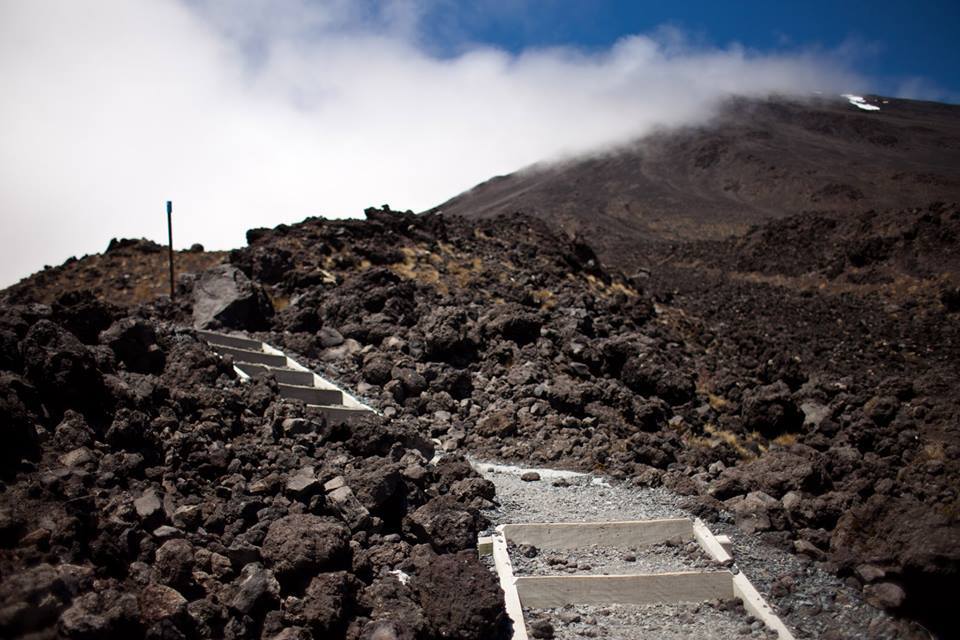
A built track across volcanic rock on the Tongariro Alpine Crossing: Tongariro Alpine Crossing, NZ by Ryancoke2020, CC BY-SA 4.0, via Wikimedia Commons.