Karekare Beach Guide: Auckland’s Wild West Coast (2026)
Karekare Beach guide: how to reach Auckland's wild black-sand coast, swim safety and rips, Karekare Falls walk, The Piano filming spot, parking and tips.
This article contains advertising. Our booking links are routed through a partner that adds commission tracking automatically, so if you book through one we earn a commission from the provider, at no extra cost to you. It never affects what we recommend. Affiliate disclosure
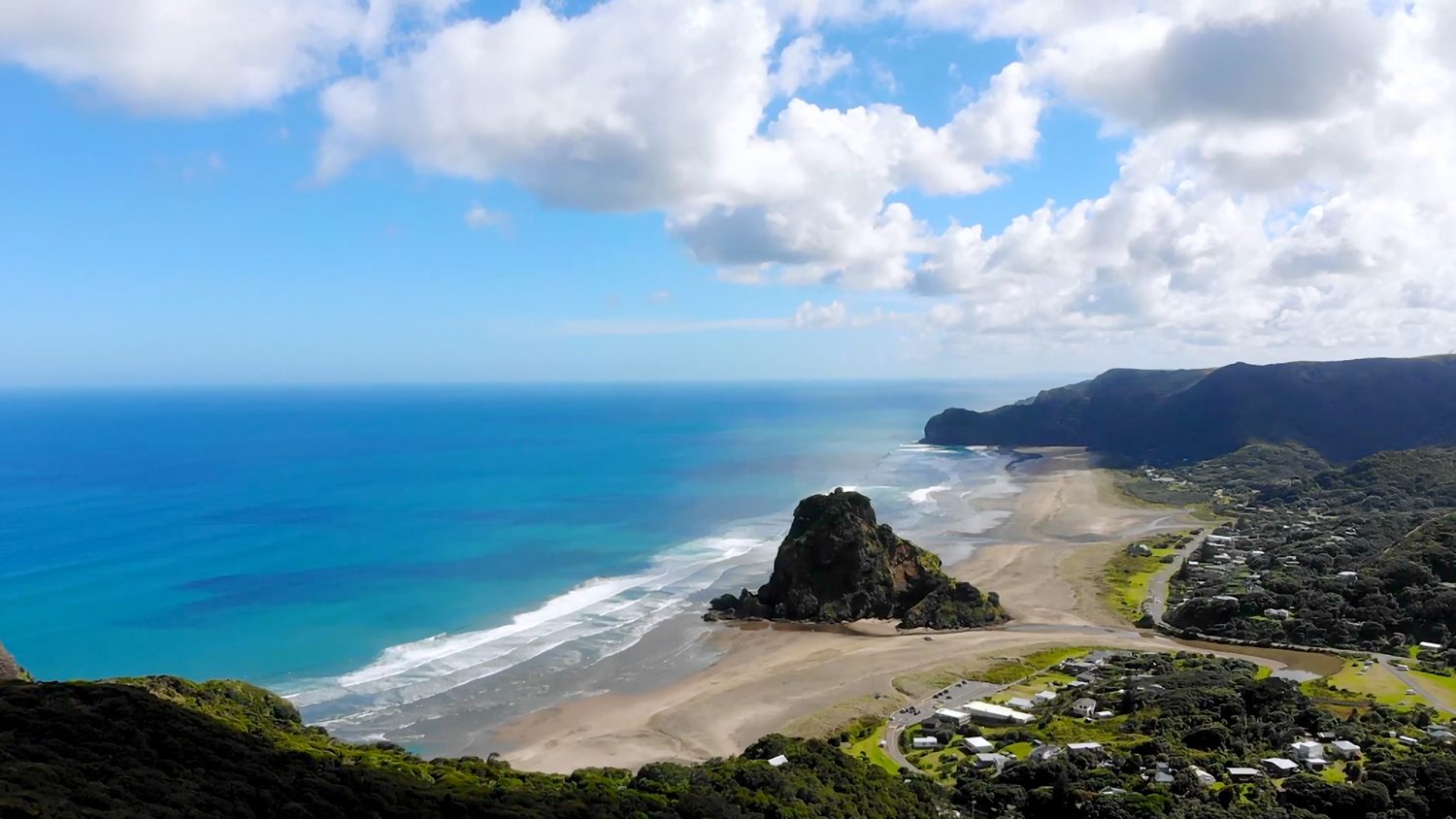
Karekare is the beach I send people to when they have already done Piha and want something wilder. You come off a narrow, twisting road, walk out through a lagoon and low dunes, and the land just opens: a vast sweep of black ironsand, headlands falling straight into the Tasman, and surf that never really stops. It is beautiful and genuinely untamed, and that second part matters, because Karekare is not a beach you treat casually.
Karekare Beach is a wild, black-sand beach on Auckland’s west coast, inside the Waitākere Ranges, roughly 40 minutes to an hour by car from the city centre. It is famous as a location in Jane Campion’s film The Piano, has a lovely short walk to Karekare Falls, and has powerful surf and rip currents, so swimming demands real caution.
Karekare Beach at a glance
| Detail | What to know |
|---|---|
| Location | West coast of Auckland, inside the Waitākere Ranges Regional Park |
| Distance from CBD | About 35 km, roughly 40 minutes to an hour’s drive |
| Public transport | None. You need a car or a tour |
| Sand | Black volcanic ironsand, gets very hot in summer |
| Swimming | Dangerous surf and rips; only swim if lifeguards have flags up |
| Famous for | The Piano (1993), Karekare Falls, sheer wildness |
| Facilities | Carpark and basic toilets only; no shops or cafes |
| Best short walk | Karekare Falls, a few minutes from the road on La Trobe Track |
What makes Karekare different
Karekare sits on the Tasman Sea side of the Waitākere Ranges, between its busier neighbour Piha to the north and remote Whatipu to the south. Where Piha has a café, a store, a surf school and steady crowds, Karekare has almost nothing built on it at all. There is a carpark, a stream and lagoon, a surf club perched on the dune, and then a huge expanse of dark sand. That emptiness is the whole appeal.
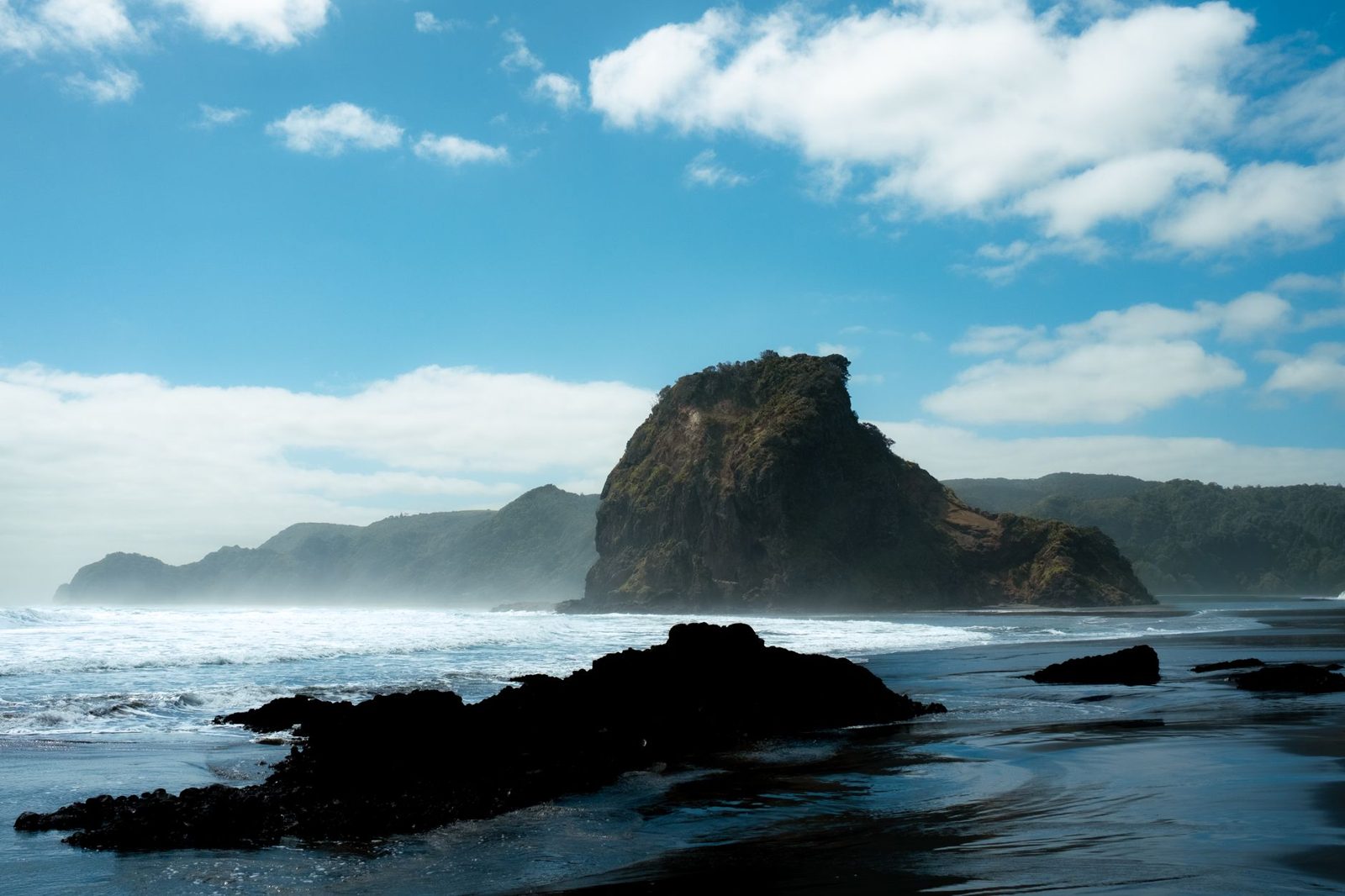
The black sand is volcanic ironsand, rich in iron eroded from volcanic rock and carried along the coast by the sea. It looks extraordinary, especially when it is wet and mirror-like near the tide line, but on a hot, clear day it can get fiercely hot underfoot. Wear jandals or sandals; bare feet on midsummer ironsand is a mistake you make exactly once.
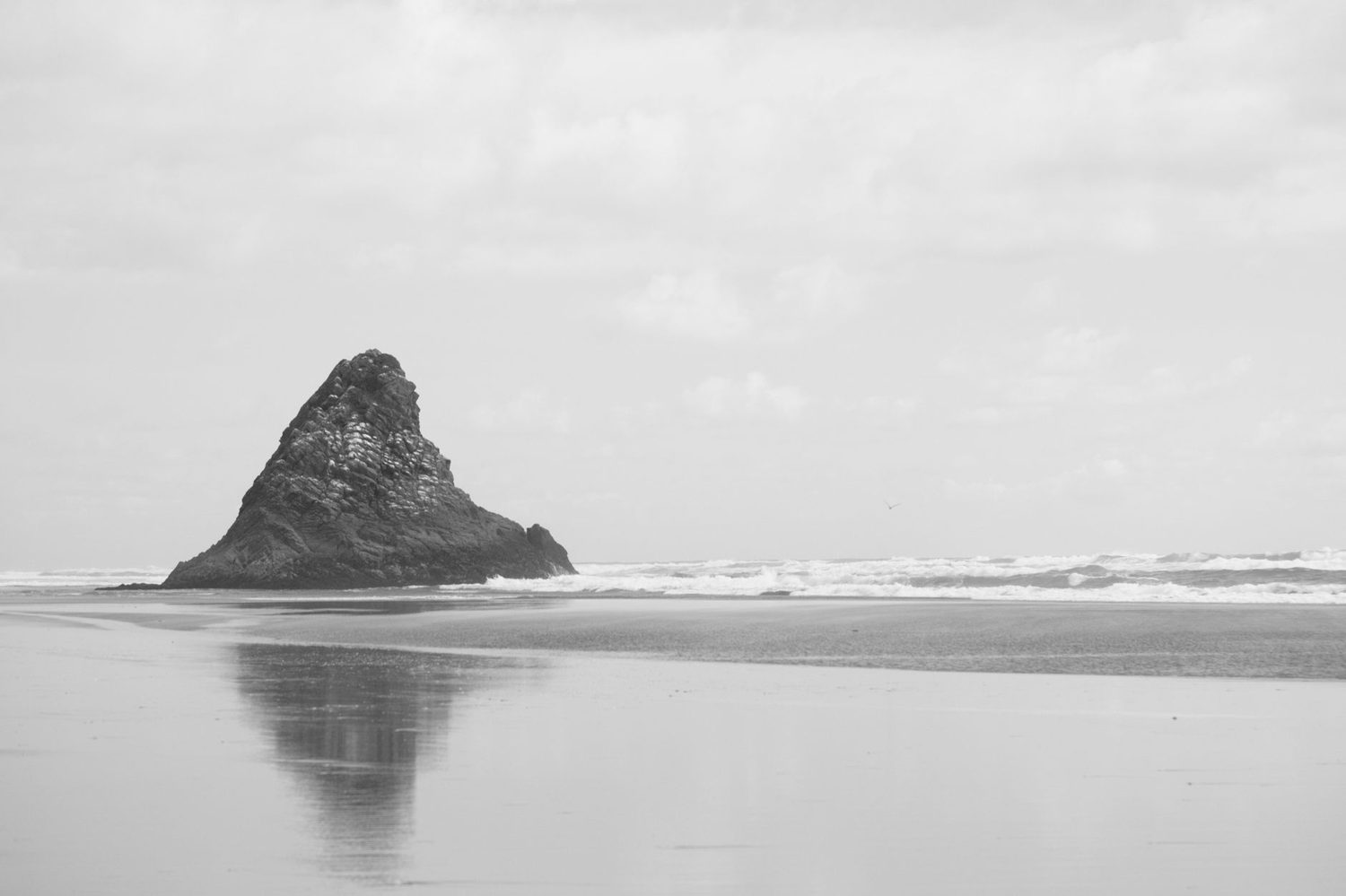
The beach shelves into open ocean with consistent swell and no shelter, which is what gives Karekare its heavy, photogenic surf and also its danger. This is a wild-coast beach in every sense, and it belongs in the same family as the other rugged breaks covered in the Auckland Beaches & Outdoor Adventures: The Complete 2026 Guide.
How to get to Karekare from Auckland
Karekare is about 35 km west of the city centre, and the drive usually takes somewhere between 40 minutes and an hour depending on traffic and how cautiously you take the last stretch. There is no public transport, so you will need your own car or a guided tour.
The route runs west out of the city toward Titirangi, then along Scenic Drive through the forest of the Waitākere Ranges, before turning down toward the coast. The final section on Karekare Road is narrow, steep and winding, with tight bends and few places to pass. Take it slowly, especially if it is wet, and be patient with oncoming cars.
A couple of practical notes from doing this drive more than once. It is well worth stopping at the Arataki Visitor Centre on Scenic Drive for the view over the ranges and current track information. And in summer, the small Karekare carpark fills early on fine weekends, so aim to arrive in the morning or you may find yourself circling. For ferries, buses and the wider transport picture, the Getting Around Auckland: The Complete 2026 Transport Guide is the reference, though out here it really is just the car.

Swimming safety: please read this first
This is the part I will not soften. Karekare has some of the most dangerous swimming conditions in the Auckland region. Strong rip currents, big waves and shifting sandbanks have caused drownings here, and the ocean can catch out strong, confident swimmers, not just beginners. Treat the water with respect every single time.
- Only swim between the red and yellow flags. Karekare has a volunteer surf lifesaving club that patrols in the summer season, typically on weekends and public holidays. When there are no flags, there is no patrol, and you should stay out of the water.
- Do not assume the beach is patrolled. Coverage is limited to the season and mainly weekends, and some sources describe the beach as effectively unpatrolled much of the time. If you cannot see lifeguards and flags, treat it as unpatrolled.
- Never swim alone, and keep well within your depth.
- If you are caught in a rip: stay calm, do not fight it, raise an arm to signal for help, and let it carry you until it eases, then swim parallel to the beach and back in on the breaking waves.
- Check Safeswim. Auckland Council’s Safeswim service publishes water-quality and hazard information for west-coast beaches. Look before you go.
The honest summary is that Karekare is best thought of as a beach for walking, photography and taking in the raw coast, not for a casual dip. If you specifically want to swim on the west coast, do it at a patrolled beach within the flags on a patrolled day, and read the flags, not the weather.
The Piano filming location
Karekare’s international fame comes from Jane Campion’s 1993 film The Piano, which won the Palme d’Or at Cannes. The film’s haunting opening, with Holly Hunter’s character landing on a wild beach beside her piano, was shot here, and the setting became part of what made the film so striking to look at, all brooding sky, black sand and pounding sea.
There is no plaque or marker, and honestly that suits the place. The scenes were filmed along the open beach and near the southern end, so if you walk out from the lagoon onto the sand and turn south, you are broadly in the landscape the film used. Do not expect a set piece; expect the same wide, moody beach the crew found, which is the point.
Karekare Falls: the short walk everyone should do
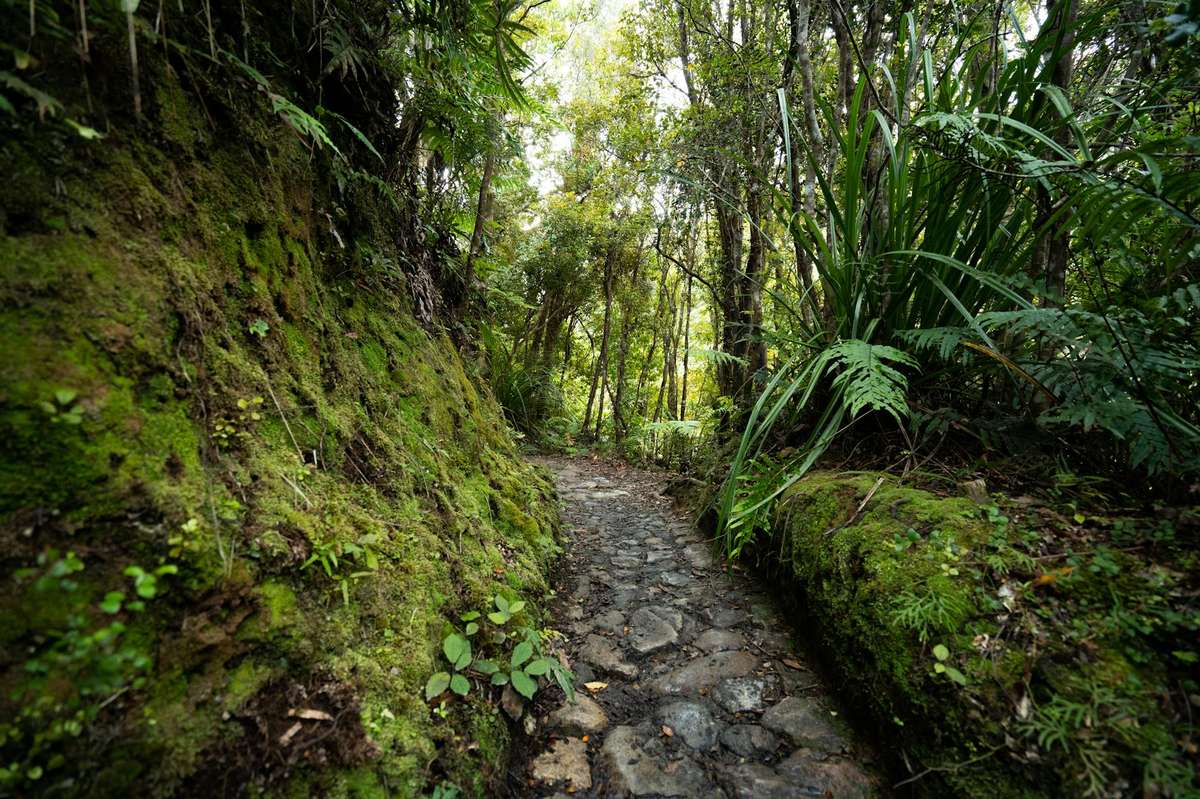
If you do one walk here, make it Karekare Falls, a roughly 30-metre cascade dropping through native bush into a pool. The track in is short and mostly flat, only a few minutes from the roadside on the well-signposted La Trobe Track, near the main carpark area. It is easy enough for most families, and you can even glimpse much of the falls from near the road, which is handy for anyone with limited mobility, and it earns its place on any shortlist of the best walking trails around Auckland.
One important caveat. The upper section of track that climbed toward the top of the falls has been closed to help stop the spread of kauri dieback, a soil-borne disease that is killing New Zealand’s kauri trees. The lower walk to the base of the falls is the one to do. After rain the falls run hard and the whole gully feels lush; in a dry summer the flow drops, but the bush setting is still worth the short stroll.
Other walks around Karekare
Karekare is the way in to a much larger network of Waitākere trails, set out in full in our guide to the best Waitākere Ranges hikes, though how much is open changes over time. A few options if the tracks are running:
- Comans Track: a forest walk climbing to viewpoints over the beach, around an hour return.
- Pohutukawa Glade: a short, flat walk beneath big pōhutukawa near the picnic area.
- Karekare to Whatipu: a long, committing cliff-top route south to Whatipu, for fit, well-prepared walkers only, and it needs transport arranged at the far end.
Because of kauri dieback, a number of Waitākere Ranges tracks have been closed or restricted in recent years, and the situation is updated as conditions change. Check the Auckland Council parks pages for the current status before you rely on any particular track, and always use the boot-cleaning stations at track entrances, scrubbing and spraying on the way in and out. It is a small effort that helps keep the forest alive.
The Karekare lagoon
Between the carpark and the open beach lies a shallow lagoon where the Karekare Stream spreads out before meeting the sea. At low tide it is a calm, shallow area that families and dogs enjoy, and it is far gentler than the surf beyond it. At high tide it deepens, so keep an eye on children. As with the ocean, check Safeswim, because after heavy rain, run-off can affect water quality here for a few days.
What to bring
Plan as if there is nothing here, because there very nearly is nothing. There are basic toilets at the main carpark and no shop, no café and no drinking water. Pack:
- Plenty of water, and food or a picnic
- Sunscreen and a hat; the open coast and reflective sand are harsh on a clear day
- Sandals or jandals for the hot black sand, plus proper shoes for the falls track
- A warm, windproof layer; the coast can turn cool and blustery fast
- A rubbish bag to carry out everything you bring in
- A camera, because you will want one
Best time to visit
Every season here has its mood. Here is how I would think about timing a trip:
- Summer (December to February): warmest weather and the best chance of lifeguard patrols on weekends, but also the busiest carpark. Arrive early.
- Autumn (March to May): my favourite, with settled days, thinner crowds and good walking weather.
- Winter (June to August): dramatic surf and near-empty sand. No swimming. Bring rain gear and expect the road to be greasy.
- Spring (September to November): changeable, but the falls run well after rain.
Whatever the season, sunset is the moment to be here. The beach faces due west, so the sun drops straight into the Tasman and the headlands turn to silhouettes. Give yourself time to walk back to the car afterwards, and carry a torch, because the bush and carpark get dark quickly once the light goes.
Karekare or Piha? And how to combine them
People often ask which of the two to choose, and the honest answer is that they do different jobs. Choose Karekare for solitude, photography and a wilder feel, accepting that there are no facilities. Choose Piha if you want a café and store, surf lessons, more people around and the famous Lion Rock, all of which the Piha Beach Guide: Auckland’s Iconic West Coast Beach (2026) covers in full.
Better still, do both. They sit only a short drive apart, so a classic west-coast day is Karekare in the morning for the falls and the empty beach, then over to Piha for lunch and an easier afternoon. If you have more time on this coast, the third of the wild trio is worth adding, and the Bethells Beach (Te Henga) Guide: Auckland’s Wild West Coast (2026) rounds out the set. The same volcanic forces that built these black-sand beaches shaped the whole isthmus, a story told in the Auckland Volcanoes: Geological History & 53 Volcanic Cones (2026).
Wildlife, plants and the wider park
Karekare is part of the Waitākere Ranges Regional Park, a large tract of regenerating native forest and coast. Keep an eye and ear out for tūī with their white throat-tuft and clicking song, and the heavy wingbeat of kererū, the big native wood pigeon. Down near the beach, pōhutukawa flower red around midsummer, and variable oystercatchers work the sand in their smart black-and-white plumage, though for sheer numbers the gannet colony up the coast at Muriwai Beach is the west coast’s big wildlife draw. In the gullies you will find nīkau, the country’s only native palm.
Making a day of it
Karekare rewards a slow visit rather than a quick tick-off, and it slots neatly into a broader west-coast plan. Here is a relaxed shape for a day:
- Late morning: drive out via Titirangi, pausing at Arataki for the view and track updates.
- Midday: walk to Karekare Falls, then out onto the beach and south toward the film locations.
- Early afternoon: picnic on the sand, or drive to Piha for lunch.
- Afternoon: explore Piha or head back toward town.
- Or, in summer, linger for the sunset before the drive home.
A day like this fits comfortably among the wider options in the 25 Best Day Trips from Auckland in 2026 (With or Without a Car), and if you are still shaping the trip, the 65 Best Things to Do in Auckland (2026): An Insider’s Guide and the overarching Auckland Travel Guide 2026: The Complete Visitor’s Handbook will help you fill the rest of it.
Frequently Asked Questions
Is Karekare Beach safe to swim?
Only with real caution, and only between the red and yellow flags when the volunteer surf club is patrolling, usually summer weekends and public holidays. The rips and surf are powerful, patrols are limited, and much of the year the beach is effectively unpatrolled. If there are no flags, do not swim. The lagoon is gentler for children at low tide, but still check Safeswim.
How far is Karekare from Auckland CBD?
About 35 km to the west, which is roughly a 40-minute to one-hour drive depending on traffic and how slowly you take the winding final stretch of Karekare Road.
Is there public transport to Karekare?
No. There is no bus service to Karekare, so you will need a car or a guided tour. Some operators run west-coast beach day trips that take in Karekare along with Piha.
How long is the Karekare Falls walk?
Short. The walk to the base of the falls on La Trobe Track takes only a few minutes each way on a mostly flat, well-formed path, and you can see much of the falls from close to the road. Note that the upper track toward the top of the falls is closed for kauri dieback protection.
Are there any facilities at Karekare?
Very few. There are basic toilets at the main carpark, and that is essentially it, with no shops, cafés, drinking water or ATMs. Bring everything you need for the day and take all your rubbish home with you.
Photographing Karekare
It is no accident that a film-maker chose this beach, or that photographers keep coming back. Karekare gives you scale, texture and mood in one frame, and a little planning turns a good visit into great images. A few things I have learned shooting here:
- Shoot the edges of the day. Low, warm light rakes across the ironsand and lights up the headlands; harsh midday sun flattens everything.
- Use the wet sand. After a wave retreats, the black sand turns to a dark mirror, catching sky and cliff in near-perfect reflection.
- Slow the water down. A tripod and a longer exposure make the falls silky and smooth the surf into mist. A polarising filter cuts glare off wet sand and leaves.
- Look for driftwood and pattern. Winter storms strew big logs across the beach, and wind and water etch the sand into ridges and fans that make strong abstract shots.
If you fly a drone, be aware that the Waitākere Ranges Regional Park has rules about where and when drones can operate, so check Auckland Council’s current guidance before you launch rather than assuming it is allowed.
The name, the community and a little history
People have known and used this coast for a very long time. The wider Waitākere area holds deep significance for Te Kawerau ā Maki and other west-coast Māori, and the coastline was a source of food and a route long before roads reached it. Reading the beach as empty misses that older presence; it is quiet now, not untouched.
Karekare today is a tiny settlement of only a few hundred residents, with no commercial strip at all, which is exactly why it stays so undeveloped. The volunteer surf lifesaving club, whose clubhouse stands on the dune, has been part of the fabric here since the 1930s and doubles as an informal community hub. That small-community feel is part of what you are visiting, so tread lightly: keep noise down, park sensibly on the narrow roads, and leave the place as you found it.
Eating and staying nearby
Because Karekare has no café or shop, plan your food around it. The nearest options are a short drive north at Piha, where the café and store handle brunch, burgers and ice cream, and back toward the city at Titirangi village, which has a cluster of cafés and a good weekend market. If you would rather pair the beach with a proper meal, plan it into the wider Auckland Food & Drink Guide 2026: Best Restaurants, Cafes & Bars.
There is no hotel or campground at Karekare itself, and wild camping is not permitted. Most visitors come as a day trip from the city or stay in a Piha holiday bach or a bush retreat around Titirangi and the Henderson Valley. For neighbourhoods and options closer in, the Where to Stay in Auckland: Best Neighbourhoods & Hotels for 2026 guide is the place to start. Our kayaking Auckland guide covers this in more depth.
Visiting with children
Karekare can be a wonderful family outing if you pitch it right. The falls walk is short and manageable for little legs, the lagoon at low tide is a safe place to splash, and the open beach is a huge natural playground for exploring driftwood and tide lines. What you must not do is let children near the surf unsupervised; the rips are unforgiving. Keep them in the lagoon or well up the beach, keep sun and hydration handled since there is no shop, and you have a great low-key day. For more in this vein, the Auckland with Kids 2026: Complete Family Travel Guide is full of similar ideas.
If your crew would rather have calm, swimmable water and easy facilities, the east-coast beaches are a better fit for young families, and the gentle Mission Bay Beach Guide: Auckland’s Seaside Playground (2026) or the sheltered sands and markets in the Takapuna Beach Auckland: Swim, Dine & Markets Guide (2026) are the ones I would point you to instead.
Final thoughts
Karekare is one of those rare places that feels genuinely remote despite sitting within an hour of a city of a million and a half people. Give it a morning, walk to the falls, wander the black sand, and let the size of the sea and the silence of the bush do their work. Just meet it on its own terms: check the flags and Safeswim before you go near the water, respect the kauri, carry out what you carry in, and this wild coast will give you a day you will remember for the right reasons.
Last updated: July 2026. Written by the Auckland Tourism Guide team.
Photo credits
- Photo: Amanda Brabant via Pexels
- Photo: Amanda Brabant via Pexels