Auckland Stopover: What to Do With 1-3 Days Between Flights
An Auckland stopover done properly: NZeTA and IVL costs, biosecurity, luggage, what one, two or three nights holds, and how much airport buffer to leave.

This article contains advertising. Our booking links are routed through a partner that adds commission tracking automatically, so if you book through one we earn a commission from the provider, at no extra cost to you. It never affects what we recommend. Affiliate disclosure
Auckland is where the Pacific makes you stop. Fly between Europe or North America and Australia, or between the Americas and Asia by the southern route, and there is a decent chance the aircraft comes down here — and a very good chance the airline will let you break the journey for a night or three at no extra fare. Treated as an inconvenience, an Auckland stopover is a lost day in a hotel near a runway. Treated deliberately, it is a free short holiday in a city with a volcanic field, forty islands and a coastline on both sides of it.
This guide is about the deliberate version: one, two or three days between flights, with luggage, jetlag and an immovable departure time to work around. It covers what New Zealand requires of you before you can leave the airport, what each duration realistically holds, where to sleep, and the mistakes that turn a good stopover into a stressful one. Prices and journey times were checked in September 2026 — treat them as the right order of magnitude and confirm anything time-critical, particularly entry fees, on the official sites.
At a glance: what each stopover length holds
| Length | Realistically | Stay | Verdict |
|---|---|---|---|
| Under 8 hours | Stay at the airport. This is a layover, not a stopover | Terminal or lounge | Do not attempt the city |
| 8-12 hours, daytime | City centre, waterfront, one ferry or one hill | Nowhere | Worth doing, with a hard buffer |
| 1 night | An afternoon and an evening, or a morning and a flight | City centre | The minimum that feels like a visit |
| 2 nights | A full city day plus a gulf island or the west coast | City centre | The sweet spot |
| 3 nights | City, island and coast — a real short trip | City centre, self-catering | Genuinely worthwhile |
First: a stopover is not a layover
The distinction matters because it changes what you can do and what the airline calls it. A layover is a connection — you stay inside the airport, usually under a day, and you may never formally enter New Zealand. A stopover is a deliberate break in the journey, usually overnight or longer, where you clear immigration, collect your bags and leave.
Many airlines flying Pacific routes permit a free stopover in Auckland on a through ticket, and some actively market it. The mechanics vary by carrier and fare class, so check when you book rather than assuming — a stopover added afterwards is usually a change fee, while one built into the original booking is often free.
If your break is genuinely short and you are not sure whether to leave the airport at all, our Auckland Airport layover guide works through what is achievable hour by hour and where the cut-off sits. The rest of this page assumes you are leaving.
Before you can leave the airport
New Zealand has entry requirements that catch stopover passengers out more than any other group, because people assume a short visit is a lighter process. It is not — a stopover is a full entry.
NZeTA and the IVL
If you are from a visa-waiver country, you need an NZeTA (New Zealand Electronic Travel Authority) and you will pay the IVL (International Visitor Conservation and Tourism Levy) alongside it. As at September 2026:
- NZeTA: NZ$17 through the official Immigration New Zealand app, NZ$23 on the website. The app is cheaper for the same thing.
- IVL: NZ$100 per application, paid at the same time. Combined: NZ$123.
- Usually processed within 72 hours, sometimes longer at peak. Apply 7 to 10 days ahead.
- Valid for up to two years and multiple visits.
The important catch: transit passengers who stay airside may need an NZeTA too, depending on nationality — and anyone leaving the airport certainly does. Australian citizens do not need one, and Australian citizens and permanent residents are IVL-exempt, as are citizens of most Pacific Island Forum countries. Check the current exemption list on immigration.govt.nz; fees and exemptions do change. Our guides to the NZeTA and traveller declaration and New Zealand visa requirements have the detail.
The New Zealand Traveller Declaration
Everyone travelling into New Zealand must complete an NZTD before reaching passport control — it replaced the paper arrival card and covers both customs and biosecurity. You can submit it from 24 hours before you start your trip, online at travellerdeclaration.govt.nz or in the NZTD app. Do it on the ground before your last flight; doing it at 3am in the arrivals queue on airport wifi is a bad experience.
Biosecurity — the thing that actually costs people money
New Zealand’s biosecurity regime is strict, actively enforced and does not care that you are only here for a night. The instant fine for an undeclared risk item is NZ$400, it is a strict-liability offence, and forgetting is not a defence. Declaring an item never results in a fine, even when the item is confiscated.
What to declare: fruit, vegetables, meat, honey, cooking ingredients, herbs, seeds and spices; anything made of plants or wood; and used outdoor equipment, including dirty boots. All fresh fruit is prohibited, as are honey and bee products. The most common interception is a pair of muddy hiking boots in a bag — if you have been walking somewhere before this flight, clean them.
The other stopover trap: the apple or snack the airline gave you on the inbound flight. Eat it or bin it before you disembark. See our biosecurity guide, and use MPI’s own item checker rather than any list on a travel site.
eGates
If you are 10 or over with an ePassport from one of the 59 eligible countries and territories — all EU member states plus recent additions including Argentina, Brazil, Chile, Mexico, Hong Kong, Malaysia, Taiwan, Thailand, the Philippines, Seychelles and San Marino — you can use the automated eGates at Auckland, which is considerably faster. Check customs.govt.nz for the current list.
Getting into the city
Auckland Airport sits about 20 km south of the city centre, and the journey is 45 minutes to an hour depending on traffic. The options, in the order most stopover passengers should consider them:
- AirportLink bus to Puhinui station, then train. The orange AT bus runs every ten minutes from roughly 4:30am to 12:40am, seven days. Puhinui to the domestic terminal is 13-17 minutes and to international 18-20. Airport to the city centre is a three-zone journey, about NZ$6.50 adult on AT HOP or contactless. Cheapest and immune to motorway traffic.
- Rideshare or taxi. Uber, Bolt and DiDi all serve the airport: Uber has dedicated pick-up zones, while Bolt and DiDi use the “Rideshare (Other)” zones. Ola left New Zealand in 2024 and Zoomy is now YourRide, so ignore older articles listing those. Expect a substantial fare to the centre and a longer journey in peak traffic.
- Hotel shuttle, if you are staying at an airport hotel. Many run free shuttles; confirm the schedule when you book, because overnight coverage varies.
Our airport to city centre guide compares them properly, including which makes sense at 5am. Note that the airport is midway through a NZ$3.9 billion redevelopment and the international departures sequence is being reordered — follow the signage on the day rather than a remembered layout. The full airport guide covers what to expect.
Your luggage
This is the question that determines whether a short stopover works.
- On a through ticket with checked bags, your luggage is usually tagged through to the final destination — but on a stopover it is not, because you are formally entering New Zealand. Expect to collect it, clear customs with it, and check it in again for the onward flight. Confirm with your airline before you land.
- Left luggage is available at Auckland Airport if you would rather not drag bags into the city on a day-only stopover. Check hours and rates on the airport’s site.
- Hotel bag storage is the better answer overnight. Almost every city hotel will hold bags before check-in and after check-out, which effectively gives you two extra half-days.
The one-night stopover
You land in the afternoon or evening and leave the next day. Realistically this is one half-day plus an evening, or an evening plus a morning.
If you land in the afternoon
Go straight to a city-centre hotel, drop the bags, and walk. The waterfront from Britomart west through the Viaduct to Wynyard Quarter is flat, continuous and about fifteen minutes without stopping. Then eat early — Auckland’s kitchens start service around six and many stop taking orders around nine — and sleep. Do not attempt the Sky Tower jetlagged; you will pay for a view you are too tired to take in.
If you land in the morning and fly out the next morning
This is the better version. Bags to the hotel, then the single best two and a half hours available: the ferry to Devonport, twelve minutes across the Waitematā, and the fifteen-minute walk up Mount Victoria / Takarunga. From the top you get the harbour, the skyline, the bridge, Rangitoto and the gulf in one sweep — which is the fastest way to understand where you are that exists.
Back across, lunch on the waterfront, and then either the Art Gallery — free for the permanent collection, ninety minutes — or a wander through Britomart and up to K Road, now one stop on the train since the City Rail Link opened on 13 September 2026.
The honest verdict on one night
Worth doing, and better than the alternative. But it is a taste rather than a visit, and you will spend a meaningful share of it moving between the airport and the city. If you can turn one night into two at no extra fare, do.
The two-night stopover
The sweet spot, and where a stopover stops being a chore. Two nights gives you one full day plus the edges either side.
Day one: the city
The waterfront walk, the Auckland War Memorial Museum on the ridge above the Domain — the most significant collection of Māori and Pacific taonga anywhere, with a daily cultural performance worth timing your visit around — and dinner in Parnell or Ponsonby. Entry to the Museum is tiered by residency, so check the overseas visitor rate.
Day two: get on the water, or get out west
This is what the second night buys you, and it is the whole point.
- Waiheke — about forty minutes on the fast ferry, twenty-five-plus wineries, good swimming beaches and a proper village. The default, and the right one for most people.
- Rangitoto — a six-hundred-year-old volcano with an hour’s walk to the summit over sharp black lava. Little shade, no shop, no water on the island. Only on a clear day, because the view is the entire reason.
- The west coast — Piha or Karekare, black iron sand under rainforest, about an hour each way. Needs a car, which on a stopover means a one-day hire and the associated faff. Swim only between the flags — the rips here are severe and patrols do not cover every beach every day.
The three-night stopover
At three nights you have stopped stopping over and started having a short holiday, and you should plan it as one. The city, a gulf island and the west coast all fit without doubling back — which is exactly the shape our 3 days in Auckland itinerary sets out. Read that instead of this section; the only stopover-specific advice is to keep the last day light and near the airport side of the city, and to leave a real buffer for the flight.
Where to sleep on a stopover
City centre — the default
Stay centrally unless there is a reason not to. The point of a stopover is to see something, and the city centre puts the waterfront, the ferries and the trains within walking distance. An hour each way to an airport hotel is a large fraction of a one-night stopover. See the best CBD hotels.
Airport hotels — for very early or very late flights only
Airport hotels make sense if your onward flight leaves before about 7am, if you land after midnight, or if you have very young children and the priority is sleep rather than sightseeing. Most run free shuttles. Be honest with yourself: if you book one for a two-night stopover, you will not go into the city on either day.
Sleeping in the terminal
If the break is too short to justify a hotel but too long to be comfortable, see sleeping at Auckland Airport, which covers where is actually tolerable and what is open overnight. Strata, the pay-per-use lounge open to anyone on any airline from around NZ$69 pre-booked, has showers and bookable rest rooms and is often the better answer — see the lounges guide.
Managing jetlag on a stopover
A stopover is usually the middle of a very long journey, and how you spend it affects the rest of the trip.
- Get outside in daylight as early as you can. It is the single most effective thing for resetting a body clock, and Auckland makes it easy — the waterfront and the cones are both free and both outdoors.
- Do not nap on arrival if you land in the morning. Push through to a normal bedtime. If you land in the evening, go straight to sleep.
- Eat on local time, even if you are not hungry. Auckland’s early dinner service helps here rather than hindering.
- Do not book anything demanding for the first four hours on the ground. A ferry is fine. A twelve-hour coach trip to Rotorua is not, and neither is a hire car on unfamiliar roads on the left.
- Sunlight is fierce. New Zealand’s UV is severe even under cloud. Sunscreen from October to March, and the harbour reflects it.
Buffers: the numbers that matter
The one genuine risk of a stopover is missing the onward flight. Some conservative arithmetic:
- Leave the city three and a half hours before an international departure. That is roughly an hour to the airport, plus the airline’s recommended check-in, plus slack.
- Add an hour if you are returning a rental car. Depots, fuel and shuttles all take longer than you expect.
- Add more in peak traffic — roughly 7-9am and 4-6:30pm on the motorway. The AirportLink and train combination sidesteps this entirely, which is a good reason to use it.
- Do not put a Waiheke day on the morning of your flight. Ferry timings plus the trip to the airport is a stressful combination and one cancellation ruins it.
- Do not put a regional day trip anywhere in a stopover. Hobbiton, Waitomo and Rotorua are ten to thirteen hours door to door. A stopover is not the place.
What an Auckland stopover costs
| Item | Notes | Rough cost |
|---|---|---|
| NZeTA + IVL | Per person, valid two years | NZ$123 |
| Airport to city, return | AirportLink + train, AT HOP | ~NZ$13 |
| One night, city centre | Mid-range hotel | NZ$180-320 |
| Food, one day | Café breakfast, lunch, dinner | NZ$80-160 |
| Waiheke ferry return | Plus what you spend there | Confirm current fare |
The entry fee is the one that surprises people — NZ$123 per person for a two-night stop is real money for a family, though it does cover you for two years of visits. Our Auckland budget guide covers the rest.
The mistakes that spoil stopovers
- Leaving the NZeTA until the last minute. It usually takes up to 72 hours and occasionally longer. Apply a week or more ahead.
- Not declaring something. NZ$400, instantly, and no appeal to good intentions. Declaring costs nothing.
- Booking an airport hotel and planning to sightsee. Pick one or the other honestly.
- Assuming your bags go through. On a stopover they usually do not. Ask the airline.
- Planning around a pre-September-2026 guide. The rail network changed shape when the City Rail Link opened; anything calling Britomart a terminus is out of date.
- Cutting the buffer. An hour to the airport is an hour in good traffic, not in all traffic.
- Trying to see everything. One ferry and one hill beats four attractions and three transfers, every time.
Frequently asked questions
Is an Auckland stopover worth it?
Yes, if it is a night or more and you stay in the city rather than at the airport. Auckland gives you a harbour crossing, a volcanic summit and a good dinner within a few hours of landing, which is unusually good value for a break in a long journey. Under about eight hours, stay at the airport instead.
Do I need a visa for an Auckland stopover?
Visa-waiver travellers need an NZeTA plus the IVL — NZ$17 via the official app or NZ$23 on the website, plus NZ$100 for the levy, so NZ$123 in total. Apply seven to ten days ahead; processing usually takes up to 72 hours. Australians are exempt from the NZeTA and from the IVL. Check immigration.govt.nz for the current position.
How long does an Auckland stopover need to be?
One night is the minimum that feels like a visit. Two nights is the sweet spot — a full city day plus a gulf island or the west coast. Three nights stops being a stopover and becomes a short holiday, which is a good thing if the fare allows it.
Can I leave the airport during a stopover in Auckland?
Yes, provided you have the required NZeTA or visa and have completed the New Zealand Traveller Declaration. You clear immigration and customs exactly as any arriving visitor does, collect your bags, and go. Allow real time for the process at busy arrival banks.
What can I do with one night in Auckland between flights?
Stay centrally, and take the twelve-minute ferry to Devonport followed by the walk up Mount Victoria. It is the fastest way to see what Auckland actually is, and it costs a ferry fare. Add the waterfront and an early dinner, and sleep.
Will my luggage be checked through on a stopover?
Usually not, because a stopover means formally entering New Zealand — expect to collect your bags, clear customs and check in again. Confirm with your airline. If you would rather not take them into the city, left luggage is available at the airport and most hotels will hold bags outside your stay dates.
Should I stay at an airport hotel for a stopover?
Only if your onward flight is very early, you land very late, or sleep matters more than sightseeing. Otherwise stay in the city centre — an hour each way is a large fraction of a short stopover, and the point of stopping is to see something.
Can I do a day trip to Hobbiton or Rotorua on a stopover?
No. Those are ten to thirteen hours door to door, which leaves no buffer against traffic before an international departure. Save them for a trip where a missed connection is not the consequence.
How early should I leave the city for my onward flight?
Three and a half hours before an international departure — about an hour to the airport, plus the airline’s recommended check-in, plus slack. Add an hour if you are returning a hire car, and more in weekday peak traffic. The AirportLink bus and train combination avoids motorway congestion entirely.
If Auckland is the start of a longer New Zealand trip rather than a break between flights, the rhythm changes: there is no onward flight to protect, and the priority becomes arriving in a fit state to enjoy the next fortnight. Our arrival-day plan for your first day in Auckland covers that version, including what jet lag feels like coming from the Americas, Europe, Asia and Australia.
Related Auckland Guides
- Auckland itineraries: how to plan your days
- Auckland Airport layovers: what fits in the hours you have
- The NZeTA and the traveller declaration
- New Zealand biosecurity: what to declare
- Auckland Airport to the city centre
- One day in Auckland: an hour-by-hour itinerary
- Auckland Airport hotels
- Auckland Airport: the complete guide
Photo Credits
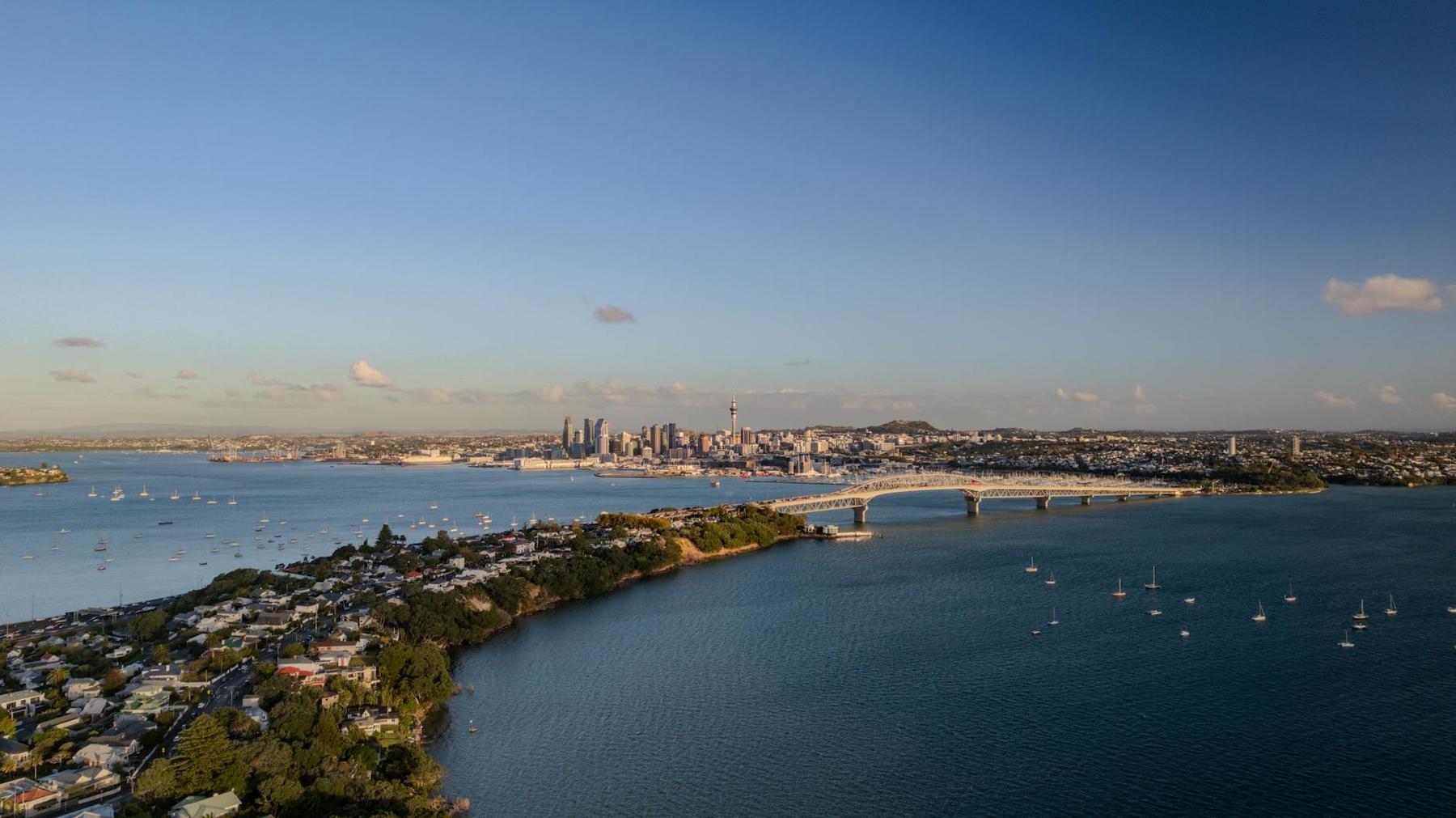
Auckland’s skyline from Mount Victoria, Devonport: Auckland City from Mt Victoria, Devonport by 111 Emergency from New Zealand, CC BY 2.0, via Wikimedia Commons.
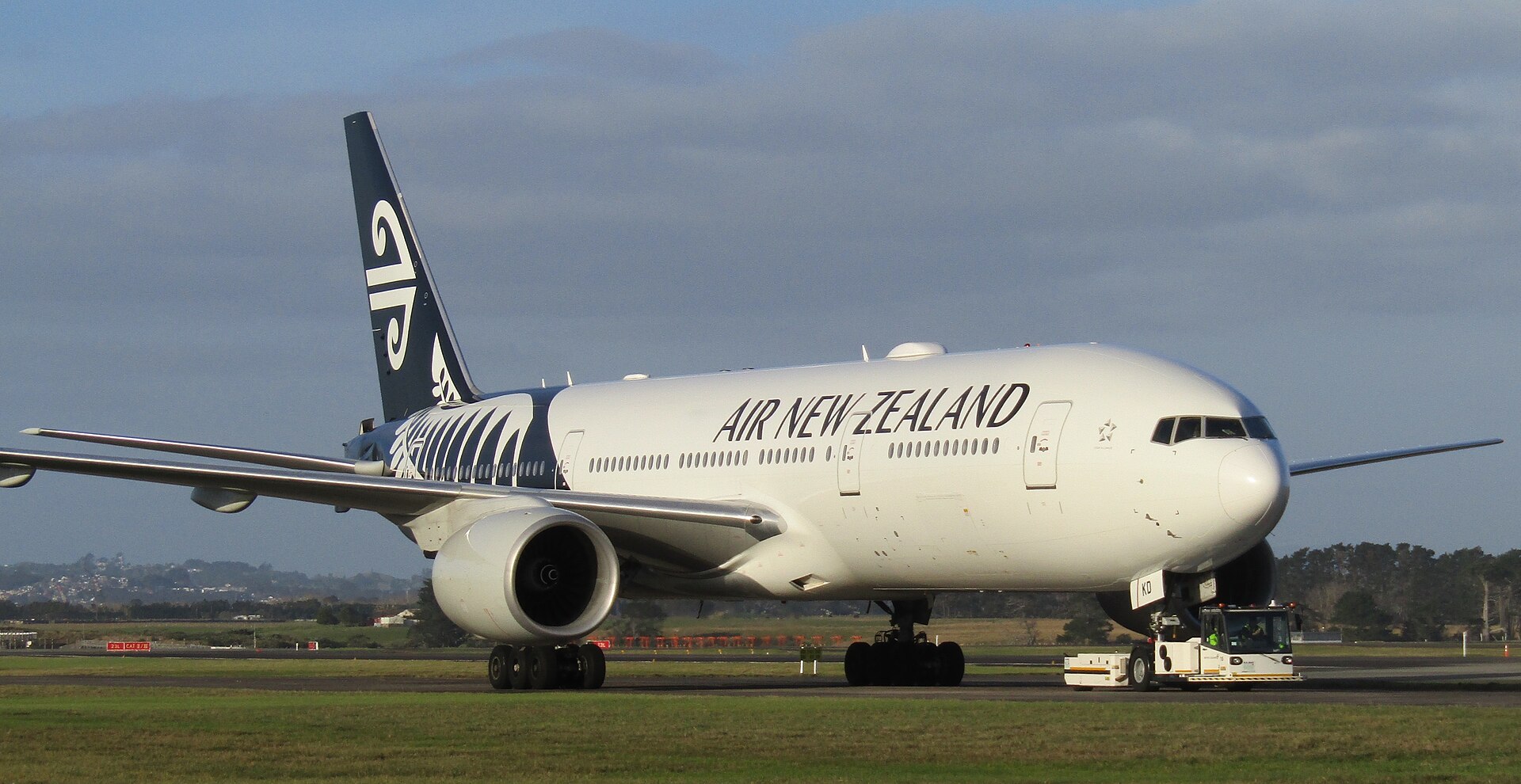
Air New Zealand Boeing 777 at Auckland: Air New Zealand 777-219ER ZK-OKD Auckland by Biponacci, CC BY-SA 4.0, via Wikimedia Commons.