Arriving at Auckland Airport: Customs, Biosecurity & What to Expect
Arriving at Auckland Airport, stage by stage: eGates, the Traveller Declaration, baggage, biosecurity, honest timings from landing to kerb, and what to do next.
This article contains advertising. Our booking links are routed through a partner that adds commission tracking automatically, so if you book through one we earn a commission from the provider, at no extra cost to you. It never affects what we recommend. Affiliate disclosure
You will know you are nearly there when the aircraft banks over the Manukau Harbour and the window fills with tidal mudflats, market gardens and the grey sheds of Māngere. It is not a glamorous approach. What comes next is the part that decides whether your first two hours in New Zealand are calm or fraught, and it is entirely manageable if you know the sequence. Arriving at Auckland Airport involves one of the world’s fastest immigration systems bolted onto one of its strictest biosecurity regimes, and the second of those is where the time goes.
This guide walks the arrival from the aircraft door to the kerb: what happens at each stage, how long each stage honestly takes, what you need to have done before you land, and what to do the moment you are through. Timings were checked in September 2026; they are averages, not promises, and the single most useful thing you can do is not book anything tight on the other side.
Arrival at a Glance
| Stage | Typical time | Worst case |
|---|---|---|
| Aircraft door to arrivals hall | 5–10 min | 15 min from a distant gate |
| Passport control (eGate) | Under 2 min | 10 min if the gates are queued |
| Passport control (staffed desk) | 10–20 min | 45 min in the early morning bank |
| Baggage reclaim | 15–25 min | 40 min from a full widebody |
| Biosecurity and customs | 5–15 min | 45 min with a bag search |
| Total, landing to kerb | 45–75 min | 90+ min |
Two numbers matter more than the rest. If you are eGate-eligible, travelling with hand luggage only and have nothing to declare, 25 minutes is achievable. If you land between 05:00 and 07:00 — when the long-haul services from Asia, the Middle East and North America all arrive within an hour of each other — add half an hour to everything above and do not plan around anything else.
Before You Land: The Two Things You Must Have Done
The New Zealand Traveller Declaration
Everyone travelling into New Zealand must complete a New Zealand Traveller Declaration before reaching passport control. It replaced the old paper arrival card, and it covers your customs and biosecurity declaration in one form. You can submit it from 24 hours before you start your journey, and it must be done by the time you reach the border.
Complete it online at travellerdeclaration.govt.nz or in the free NZTD app. Doing it at home, unhurried, with your accommodation address to hand, is far better than doing it on a phone with 3% battery during descent — though plenty of people do exactly that, and the app works offline for the form itself. Having it done in advance genuinely speeds you through, because it is what the eGate and the biosecurity officer are reading.
Fill it in honestly. It is not a trick, and the questions about food, outdoor gear and farm contact are asked because the answers matter. Declaring something costs you a conversation; not declaring it costs you an instant fine.
Your NZeTA or visa
Visa-waiver nationals need an NZeTA and the International Visitor Conservation and Tourism Levy, both requested online in advance. Everyone else needs a visa. Airlines check this at the departure gate before you fly, so a missing NZeTA is a problem at the start of your journey rather than the end of it — request it at least a week out, because while it is often granted within 72 hours, it is not guaranteed to be. Our guide to New Zealand visa requirements covers who needs which.
Stage by Stage
1. Off the aircraft and through the terminal
International arrivals disembark on level 1 and walk to arrivals processing. It is a longer walk than the aerobridge suggests — five to ten minutes from a mid-pier gate, more from the far end. Follow the crowd; there is only one way to go.
Special assistance, if you need it, is arranged with your airline in advance rather than requested on the day. Booked ahead it works well. Requested on arrival it is not reliably available, and this is not a walk you want to discover you cannot manage after a fourteen-hour flight.
2. Passport control
New Zealand’s eGates are among the better border systems anywhere. You need to be 10 years or older, hold an ePassport from one of the 59 eligible countries and territories, and that is essentially it. The system reads the chip in your passport, takes your photo, matches the two by facial recognition and checks you against immigration databases. Two minutes, no conversation, no stamp.
The eligible list is long and has been growing — it now includes every European Union member state, alongside additions such as Argentina, Brazil, Chile, Mexico, Hong Kong, Malaysia, Taiwan, Thailand, the Philippines, Seychelles and San Marino, on top of the traditional Australia, Canada, Ireland, Japan, Singapore, South Korea, the United Kingdom and the United States. Rather than trusting any list in a travel guide, including this one, check customs.govt.nz against your own passport before you fly — it changes.
If you are not eligible, you queue for a staffed desk. This is where the arrival experience diverges sharply. On a quiet afternoon it is ten minutes. In the morning bank, with four widebodies unloading simultaneously, it can be forty-five. There is nothing you can do about it on the day; the only lever is choosing an afternoon flight when the schedule offers one.
3. Baggage reclaim
The belts sit directly beyond passport control. Bags from a full widebody start appearing 15 to 20 minutes after the aircraft is on stand and take another 20 minutes or so to fully unload, so if you cleared an eGate quickly you will be waiting. Trolleys are free and plentiful, which is a small kindness this airport gets right and many do not.
If your bag does not appear, report it before you leave the baggage hall. The service desks are past the belts and before biosecurity. A claim opened there is straightforward; one opened by email two days later is not. Delayed bags are usually delivered within 24 to 48 hours, so give an address you will still be at — not a hotel you check out of in the morning.
4. Biosecurity and customs
Every arriving passenger passes a biosecurity check. What happens next depends on your declaration and on luck. You may be waved through. You may be directed to an X-ray machine. You may be sent for a bag search. And at any point in the queue you may be approached by a detector dog, which at Auckland is trained on food and plant material rather than drugs alone and is startlingly good at its job.
None of this is adversarial if you have declared honestly. Officers deal with hundreds of travellers a day who have a forgotten apple or a pair of muddy boots, and the response to a declared item is a conversation and, at most, a confiscation. The response to an undeclared one is an instant fine. The rule that keeps everyone out of trouble is the same one the declaration asks you to apply: if you are in any doubt about an item, declare it. The current lists of what is prohibited, what is restricted and what will simply be treated and returned are published by the Ministry for Primary Industries at biosecurity.govt.nz, and that is the only source that is never out of date.
The single best preparation is done before you leave home: clean your hiking boots. Soil in the tread is one of the most common interceptions at this border, and ten minutes with an old toothbrush at your kitchen door saves you a queue, a lecture and possibly the boots themselves.
Walking Out the Door
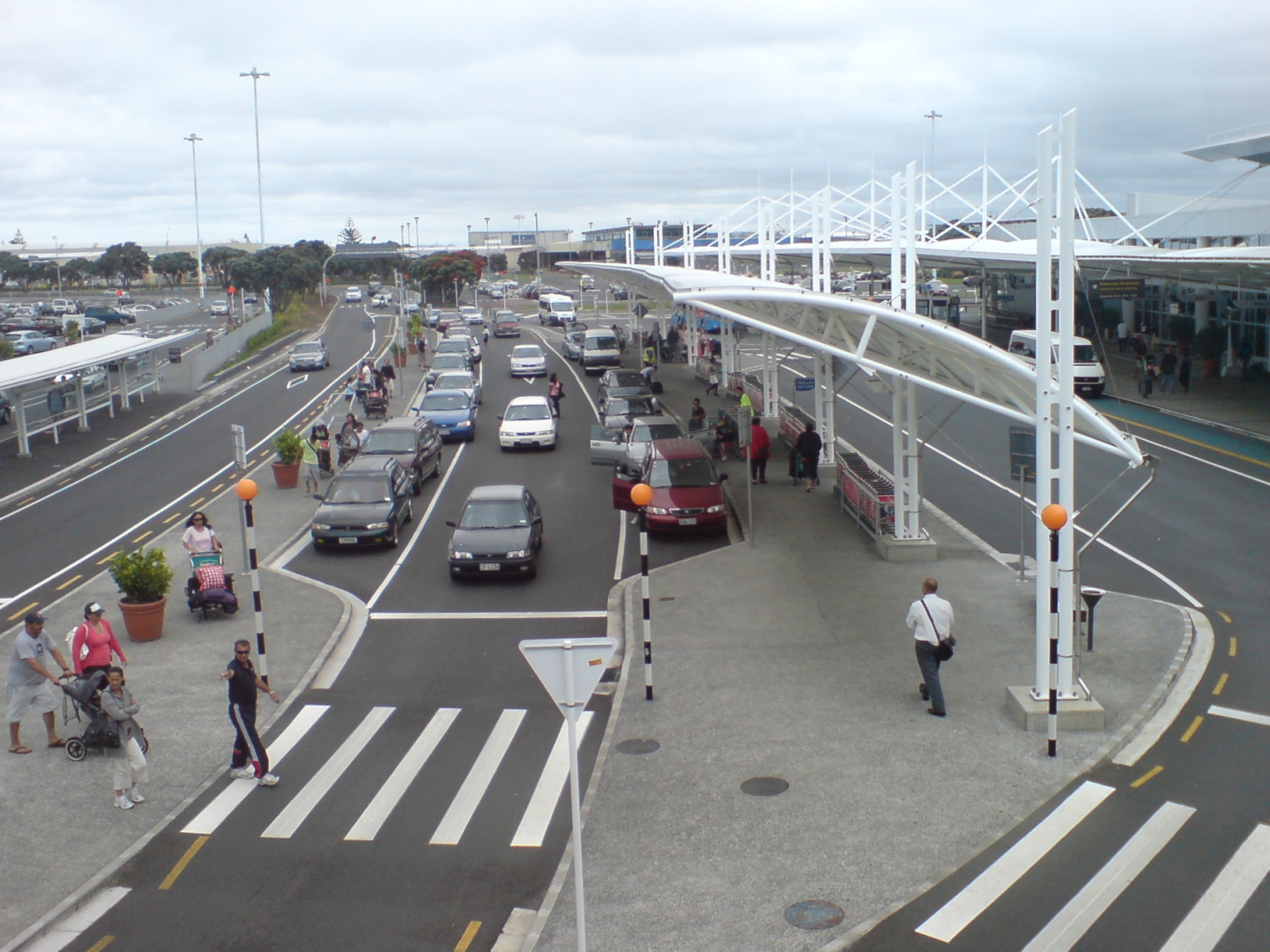
Arrivals opens into a covered forecourt with the transport options spread across it. In rough order of how many people use them:
- AirportLink bus to Puhinui Station, then train — about NZ$6.50 for an adult on AT HOP or a contactless card, roughly every 10 minutes from about 4:30 am to 12:40 am, 50 to 65 minutes to the city centre. The cheapest sensible option by a wide margin.
- Taxi from the rank — around NZ$75 to $95 to the city, 35 to 75 minutes depending on the motorway.
- Rideshare — Uber, Bolt and DiDi all serve the airport, with Uber on dedicated pick-up zones and Bolt and DiDi on the Rideshare (Other) zones, while YourRide books licensed taxis. Ola left New Zealand in 2024 and Zoomy became YourRide, so ignore older advice naming either. Pick-up is from a designated zone rather than the arrivals kerb, and that zone has moved more than once during construction — read the map in the app.
- Rental car and campervan — desks in and beside the terminal, most vehicles collected from depots a shuttle ride away.
- Free inter-terminal shuttle if you are connecting to a domestic flight, or the signposted green line walk.
Our Auckland Airport to CBD guide compares all of these properly, and getting around Auckland covers the city network once you are in it.
Money and SIM cards, in that order
New Zealand is close to cashless. Contactless bank cards work on buses, trains and in practically every shop and café, and a great many visitors get through an entire trip without touching a banknote. If you want some cash, take a small amount from an ATM in the terminal and get the rest in town — airport exchange rates are poor, as they are everywhere.
Tourist SIMs and eSIMs are sold in arrivals and are convenient rather than cheap. If you need connectivity immediately for a rideshare app or a booking confirmation, buy one; otherwise a supermarket or phone shop in town sells the same data for less. See SIM cards and wi-fi in Auckland and money in Auckland.
If You Are Connecting Onwards
Two versions of this, and they are very different.
To another international flight, both are in the same building and the transfer is straightforward. Whether you clear the border at all depends on your route and nationality, so ask your airline.
To a domestic flight, you are moving to a different building a kilometre away. Everyone entering New Zealand collects their bag for biosecurity, and on a single ticket you hand it straight back at the domestic transfer bag drop after customs. Then it is the free shuttle or the green line walk.
Allow two and a half hours minimum on one ticket and four hours on separate tickets. Airlines will sell you ninety minutes and it is not a plan. The detail is in our guide to the Auckland Airport terminal transfer.
Arriving in the Small Hours, or With Children
The dawn arrival
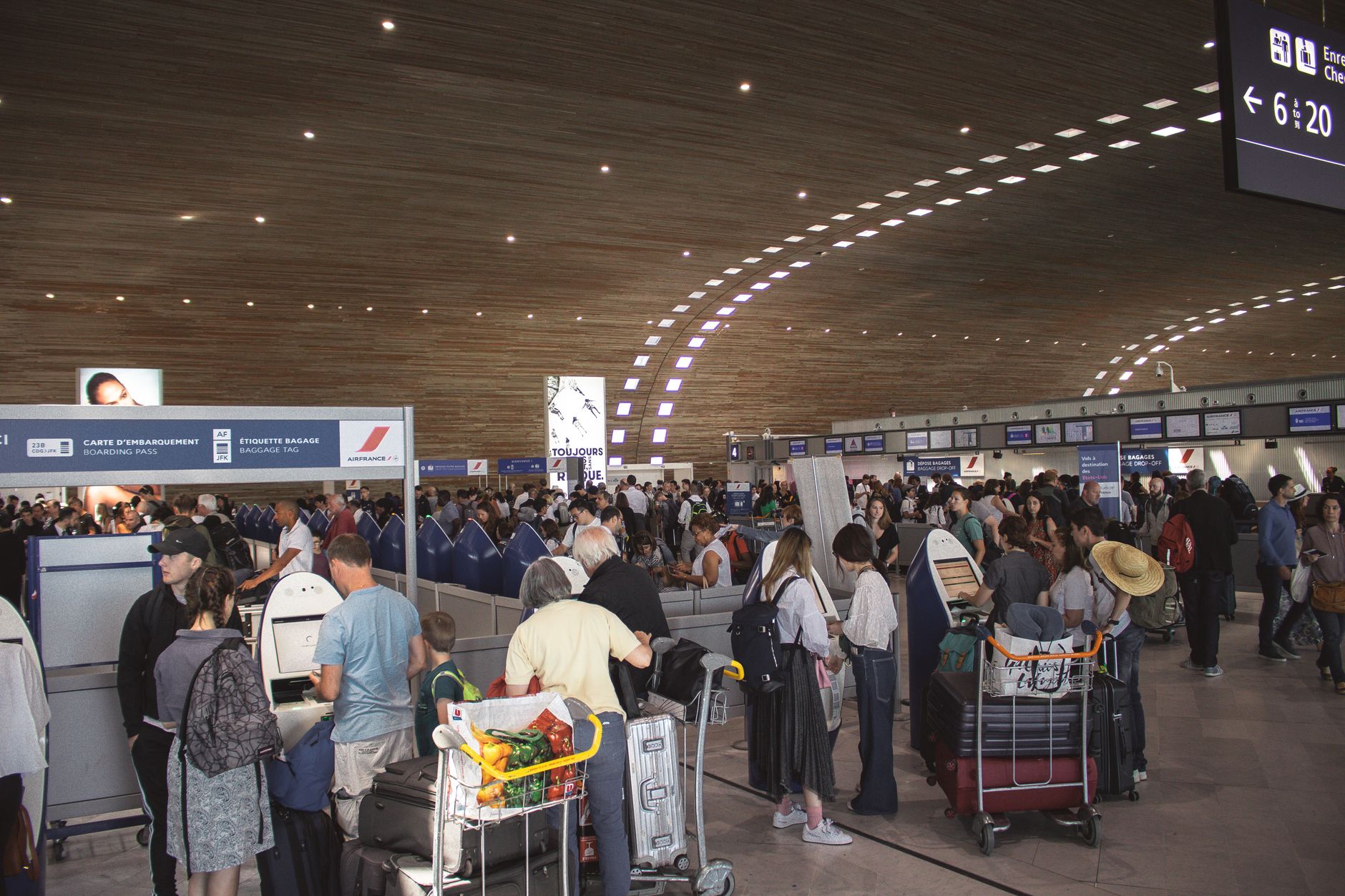
Most long-haul flights into Auckland land between five and seven in the morning, which is a difficult time to arrive anywhere. The airport is at its busiest, the city is not open, and hotel check-in is six hours away. Two practical responses: ask your accommodation about early check-in when you book, because many Auckland hotels will accommodate a dawn arrival for a fee or sometimes for nothing; or accept the day is a write-off, drop your bags, and spend it outdoors on a flat walk rather than trying to do anything that requires concentration.
Do not go to bed at 9 am. The single best thing you can do for jet lag on an eastward arrival is to stay up, get daylight on your face, and go to sleep at a normal New Zealand hour. Our first-time-in-Auckland guide has more on making a first day work.
With children
The arrival is long and the queues are unforgiving of small legs. Strollers are returned at the aircraft door by most airlines, so you will have yours for the walk to processing. Families are generally directed to staffed desks rather than eGates when children are under 10, which can mean the longer queue — allow for it. Parents’ rooms with changing and feeding facilities are available in the terminal. Our guide to Auckland with kids covers the rest of the trip.
What Happens If Something Goes Wrong
You are referred for a bag search
It is not a punishment and it is not personal. Referrals come from your declaration, from an X-ray image, from a dog, or simply from a randomised check. You are taken to a bench, your bag is opened in front of you, and the officer works through it. It typically takes ten to twenty minutes. Be polite, answer plainly, and do not attempt to explain away something you did not declare — the time to declare it was on the form, and the officer already knows what is in the bag.
If an item is prohibited, it is confiscated and disposed of. Some items — muddy boots, certain wooden goods — can be cleaned or treated and returned to you, sometimes for a fee. If you declared it, that is generally the end of the matter. If you did not, expect the fine.
Your NZeTA has not come through
This is a problem you will meet at your departure airport rather than in Auckland, because airlines check it before boarding. If it happens, the practical answer is to apply again immediately through the official app while you are at the airport and speak to the airline desk — approvals are often quick, but “often” is doing a lot of work in that sentence. The real fix is applying a week ahead rather than the night before.
You are questioned at immigration
Occasionally an arriving visitor is asked more about their plans: where they are staying, how long, how the trip is funded, whether they hold an onward ticket. This is routine, and answering directly and consistently ends it quickly. Having your accommodation booking and onward flight details accessible on your phone — not buried in an email account you cannot reach without wi-fi — makes it much shorter. Download or screenshot them before you fly.
You arrive on a delayed flight and the terminal is chaotic
When several long-haul services are pushed into the same window, the arrivals hall backs up and there is no fast lane out of it. What you can control is what happens after: if you had a shuttle or a transfer booked for a specific time, message the operator as soon as you have signal, because most will hold or rebook if told promptly and none will if you simply do not turn up.
Your First Hour in New Zealand
Assume you are through, standing in the forecourt at seven in the morning with a suitcase and a body clock in the wrong hemisphere. Three things are worth doing in the first hour.
Sort transport before you sort anything else. If you are taking the bus, walk to the AirportLink stop and tap on with a contactless card — no ticket machine, no queue, no decision. If you are being collected, text now. If you are renting, head for the desk knowing the car itself is probably a shuttle ride away and the whole process will take an hour.
Get outside and get daylight. The physiology is boring but real: light exposure in the New Zealand morning is the single most effective thing you can do about eastward jet lag, and the worst thing you can do is find a dark room. Even the walk between terminals counts.
Eat something at a normal New Zealand hour. Auckland’s cafe culture is genuinely one of the best things about the city and it starts early. A flat white and a proper breakfast at 8 am does more for your first day than anything you can buy airside. Our guide to food and drink in Auckland is a reasonable place to start, and how many days in Auckland helps you decide what to do with the rest of them.
The Mistakes People Actually Make
Booking a tight onward connection. The most expensive error available at this border, and the easiest to avoid. Nothing about a 45-to-75-minute arrival process is compatible with a 90-minute terminal-to-terminal connection.
Not declaring something small. An apple from the aircraft, a wooden carving from Fiji, a packet of seeds from a garden centre. Every one of these is fine if declared and a fine if not.
Arranging a fixed-time pick-up. A friend who agrees to be at the kerb at 6:30 because the flight lands at 5:50 will be circling for forty minutes. Tell whoever is collecting you to wait in the free waiting area and come when you text.
Assuming the pick-up zone is where it was. The rebuild has moved kerbside arrangements repeatedly. Read the signs, and if they contradict your memory, believe the signs.
Exchanging money at the airport. Take out NZ$100 if you want cash in your pocket and do the rest at a bank ATM in town, or simply use a card for everything, which is what New Zealanders do.
The Honest Verdict
Auckland is a good airport to arrive at and a slow one, and those two things are not in conflict. The immigration half is genuinely excellent — the eGates are fast, the officers are professional, the trolleys are free and nobody is trying to extract a fee from you. The biosecurity half is deliberately thorough, and the thoroughness is the point: it is the reason New Zealand still has the ecosystems people fly here to see.
So arrive with your declaration done, your boots clean, nothing tight booked on the other side, and an afternoon flight if the schedule allows one. Do that and the whole thing takes forty-five minutes and you will wonder what the fuss was about. The full picture of the airport, the rebuild and everything else it offers is in our Auckland Airport guide.
Frequently Asked Questions
How long does it take to get through Auckland Airport on arrival?
Typically 45 to 75 minutes from landing to walking out. As little as 25 minutes with an eGate, hand luggage and nothing to declare. Over 90 if you land in the 05:00–07:00 bank with checked bags and are sent for a biosecurity search.
Do I need to fill in an arrival card for New Zealand?
Not a paper one. Everyone must complete the digital New Zealand Traveller Declaration before reaching passport control, submitted from 24 hours before you start your journey via travellerdeclaration.govt.nz or the NZTD app.
Can I use the eGates at Auckland Airport?
If you are 10 or older and hold an ePassport from one of the 59 eligible countries and territories — which includes all EU member states, the UK, US, Canada, Australia, Japan, Singapore and many more. Check customs.govt.nz for your own passport, because the list changes.
What happens at New Zealand biosecurity?
Every arriving passenger is checked. Based on your declaration you may be waved through, X-rayed, searched, or screened by a detector dog. Declared items are handled with a conversation and at most a confiscation; undeclared prohibited items attract an instant fine.
What time do most international flights land in Auckland?
The heaviest bank is between 05:00 and 07:00, when the long-haul services from Asia, the Middle East and North America arrive together. That is the slowest time to clear the border by some distance.
Can someone meet me at the gate at Auckland Airport?
No — meeters and greeters wait in the public arrivals area beyond customs. Ask whoever is collecting you to use the free waiting area rather than the kerb, and to come when you text, because arrival times are unpredictable.
Do I get a passport stamp on arrival in New Zealand?
Not through an eGate, which is entirely electronic. If you need a stamp for any reason, ask a Customs officer after you have gone through.
Is there an ATM at Auckland Airport arrivals?
Yes, and there is currency exchange too, though the rates are poor. New Zealand is close to cashless, so a contactless card covers almost everything including buses and trains.
What the officer is actually looking for, and which of the things in your bag need a yes on the declaration, is a longer subject than the arrival process itself. Our guide to the New Zealand biosecurity rules sets out what is banned outright, what must simply be declared, how the NZ$400 instant fine works, and the four habits that get you through in minutes.
Both of the things you need before you land have their own quirks — the authority is tied to your passport number rather than to you, and the declaration is separate and free. Our guide to the NZeTA and the Traveller Declaration covers costs, timings and exemptions in detail.
If someone is collecting you, tell them not to time it off the arrival board. Clearing the border takes 45 to 75 minutes, and the free Wait Zone two minutes from the terminals exists for exactly this — our guide to Auckland Airport parking explains how it works.
Worth knowing before you reach the baggage hall: there is a duty free store on the arrivals side, positioned before Customs, so you can buy your alcohol allowance here rather than carrying bottles through a connection. That is usually the smarter move. Our Auckland Airport food, shopping and duty free guide sets out the current New Zealand allowances alongside it — and repeats the point that duty free food is still food, and still has to be declared.
Getting through the terminal is only half of arrival day. Once you are out through the doors, our first day in Auckland plan picks up where this guide stops: the most sensible way into the city on a tired body, what to do with the hours before your hotel room is ready, and an hour-by-hour schedule built to reset your body clock rather than fill it.
Related Auckland Guides
- Auckland Airport (AKL): The Complete Traveller’s Guide
- Auckland Airport Terminal Transfer Explained
- Auckland Airport to CBD: Bus, Train, Taxi & Uber
- New Zealand Visa Requirements
- First Time in Auckland: The Complete Guide
- Auckland Packing List
- Where to Stay in Auckland
Photo Credits
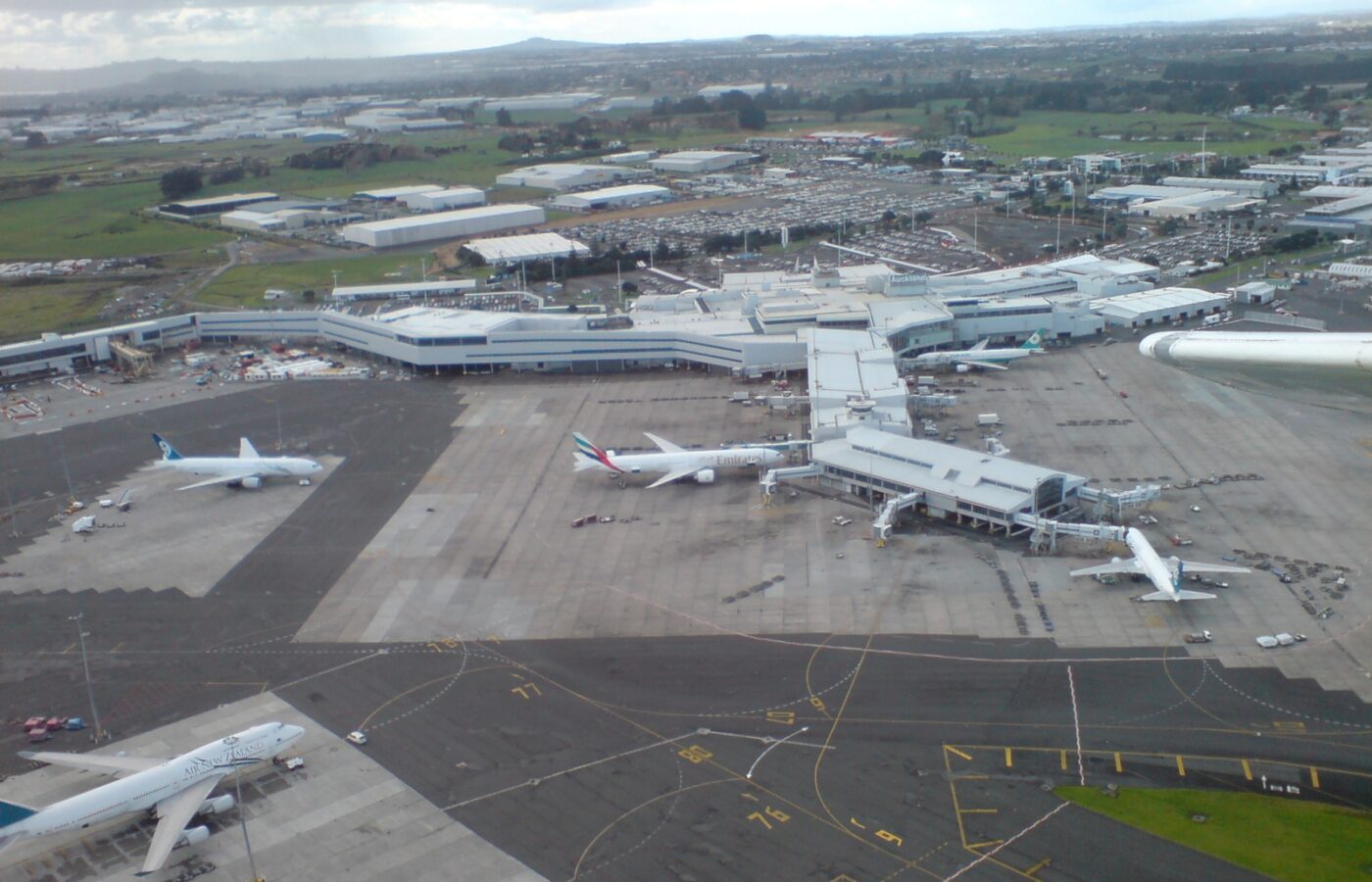
Auckland Airport’s international terminal and apron from the air: Auckland Airport Seen From Light Plane 02 by Ingolfson, Public domain, via Wikimedia Commons.
The kerbside forecourt at Auckland Airport’s international terminal: Auckland Airport International Section by Ingolfson, Public domain, via Wikimedia Commons.