65 Best Things to Do in Auckland (2026): An Insider’s Guide
The best things to do in Auckland, from the Sky Tower and Waiheke Island to volcanoes, beaches, museums and free ideas. A local, thematic 2026 guide.

This article contains advertising. Our booking links are routed through a partner that adds commission tracking automatically, so if you book through one we earn a commission from the provider, at no extra cost to you. It never affects what we recommend. Affiliate disclosure
I’ve lived with Auckland long enough to have an opinion about almost everything on this list, and the thing I want you to understand first is that this city is not one place. It’s a string of volcanoes, two harbours, a scatter of islands and a set of very different neighbourhoods, all pretending to be a single city. So instead of dumping a flat numbered list on you, I’ve grouped the best things to do in Auckland the way I’d actually plan a trip: by what you’re in the mood for. Our free things to do in Auckland guide covers this in more depth.
The short version: the best things to do in Auckland are riding the Sky Tower lift for your bearings, walking the Viaduct and Wynyard waterfront, climbing a volcano like Mt Eden or Rangitoto, ferrying to Waiheke Island for wine or Devonport for fish and chips, and getting to the Auckland Museum for the Māori cultural performance. Everything below builds on those. If you want more on that side of things, see our Auckland hidden gems guide.
Prices and opening hours change constantly here, especially post-2024 when several operators reshuffled their ticketing. I’ve given rough costs in New Zealand dollars to help you budget, but check the official site before you book anything. I’d rather you arrive prepared than annoyed.
At a Glance: Auckland’s Top Attractions
If you want the headline options in one place, start here. This is the shortlist I hand to friends who land with a rental car and three days.
| Attraction | Area | Time needed | Rough cost (NZD) |
|---|---|---|---|
| Sky Tower | City centre | 1-2 hours | ~$32 adult entry |
| Auckland War Memorial Museum | Auckland Domain | 2-3 hours | ~$27 intl / free for locals |
| Auckland Art Gallery | City centre | 1-2 hours | Free general entry |
| Waiheke Island | Hauraki Gulf | Full day | ~$59 ferry return + wine |
| Rangitoto Island summit | Hauraki Gulf | Half to full day | ~$49 ferry return |
| Mt Eden (Maungawhau) | Central suburbs | 1 hour | Free |
| Auckland Zoo | Western Springs | Half to full day | ~$29 adult |
| Kelly Tarlton’s aquarium | Tamaki Drive | 2 hours | ~$41 adult |
| Devonport ferry + village | North Shore | Half day | ~$8 ferry each way |
| Piha Beach | West coast | Half to full day | Free (car needed) |
A First-Timer’s Top 10
Never been to Auckland and don’t want to overthink it? Do these ten, roughly in this order, and you’ll leave feeling like you actually understood the place rather than just photographing it.
- Go up the Sky Tower first. It’s the fastest way to make sense of a confusing, spread-out city. You’ll see the harbours, the volcanic cones and where everything sits.
- Walk the waterfront from Britomart through Viaduct Harbour to Wynyard Quarter. It’s flat, free and full of boats.
- Climb Mt Eden for the crater and the 360-degree view. Ten minutes up, and it costs nothing.
- Catch the Devonport ferry. Twelve minutes across the harbour for the best skyline shot you’ll get.
- Spend a morning at the Auckland Museum and time it for the 11am Māori cultural performance.
- Ferry to Waiheke Island for a long lunch and a couple of vineyards.
- Brunch on Ponsonby Road. This is where the modern New Zealand cafe was more or less invented.
- Take the boat to Rangitoto and hike the volcano that rose out of the sea 600 years ago.
- Swim at Mission Bay or Takapuna if it’s summer. City beaches, warm water, no fuss.
- End with a rooftop drink over the harbour at dusk. You’ve earned it.
That’s a genuinely full three or four days. If you’ve got longer, keep reading, because the good stuff goes a lot deeper than the top ten.
Icons and Landmarks You Shouldn’t Skip

Some things are famous for a reason. These are the sights that define the Auckland skyline and give a first-time visitor the lay of the land.
The Sky Tower
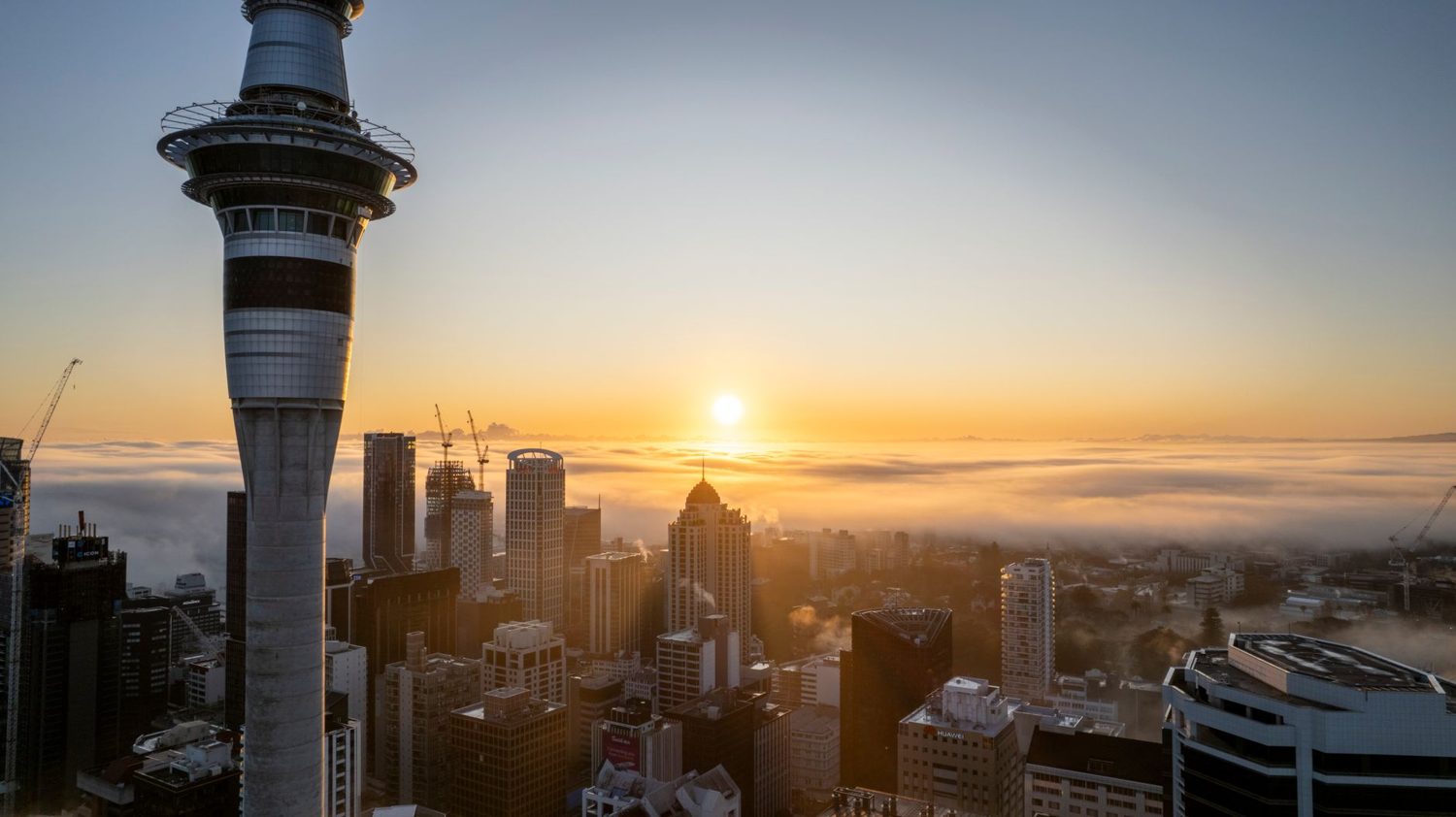
At 328 metres, the Sky Tower is the tallest structure in the Southern Hemisphere and the thing you’ll orient yourself by all week. There are three viewing levels: the main observation deck at 186 metres (with the famous glass floor panels you can stand on if your nerve holds), the Lookout at 192 metres, and the Sky Deck at 220 metres for the uninterrupted view.
General admission runs around NZ$32 for an adult at the time of writing, and it’s usually cheaper booked online than at the door. My honest advice: go up about 45 minutes before sunset. You get daylight, golden hour and the city lights coming on, all for one ticket. If you want the full rundown on ticket types, the revolving restaurant and the thrill add-ons, our Sky Tower Auckland guide covers it properly.
The Auckland Harbour Bridge
The 1,020-metre Harbour Bridge links the city centre to the North Shore and is a landmark in its own right. You get the best photos of it from Westhaven Marina, from Bayswater, or simply from the deck of any ferry. If you’d rather be on it than look at it, AJ Hackett runs a guided Bridge Climb to the summit and a bungy jump from a pod slung underneath, with an optional water-touch into the Waitematā. Both are around the NZ$160 to NZ$200 mark depending on the option and season. I’ll come back to those in the adventure section.
Viaduct Harbour and Wynyard Quarter
The waterfront is where I take everyone first, because it’s changed so completely and it shows off the “City of Sails” nickname better than anything. Viaduct Harbour was a working fishing wharf a generation ago; now it’s lined with superyachts, seafood restaurants and cocktail bars. Walk five minutes further and you’re in Wynyard Quarter, with Silo Park, weekend markets, the New Zealand Maritime Museum and the Karanga Plaza Harbour Pool, a free saltwater swimming spot that opened in 2024 right in the middle of downtown.
The whole waterfront loop from Britomart to Wynyard Point takes about 40 easy minutes on foot, and it costs nothing. Do it at dusk when the boats light up.
Britomart and Commercial Bay
Britomart is a cluster of restored Edwardian warehouses hiding some of the city’s best restaurants and shops, and it sits right on top of the main downtown train station. Next door, the Commercial Bay precinct has a rooftop dining level and the Harbour Eats food hall. It’s also worth knowing that Auckland’s City Rail Link, a major underground project, is opening new central stations around mid-2026, which will make getting between these spots noticeably faster.
Karangahape Road
Locals call it K’Road, and it’s the scruffier, more interesting counterpoint to the polished waterfront. This is the strip for late-night bars, vintage clothing, small art galleries, tattoo studios, drag brunches and some of the best cheap eats in the city, particularly ramen and Malaysian. It comes alive after 10pm. If you want to understand Auckland beyond the postcards, spend an evening here.
Volcanoes, Nature and Big Views

Here’s the fact that reframes the whole city: Auckland is built on a volcanic field of around 50 cones. Most are now grassy public parks with walking tracks and enormous views, and climbing them is free. You can summit three of the best in a single relaxed day.
Maungawhau / Mt Eden
Mt Eden is the highest natural point on the isthmus at 196 metres, with a deep grass-lined crater at the top and, I’d argue, the single best free view in the city. It’s a 10-minute walk up from the car park; vehicles can’t drive to the summit anymore, which has made the top far more pleasant. Go at sunrise if you can drag yourself out of bed, or sunset if you can’t. For the exact route and parking, we’ve written a step-by-step Mt Eden summit walk guide.
Maungakiekie / One Tree Hill and Cornwall Park
One Tree Hill sits inside Cornwall Park, 180 hectares of parkland that Sir John Logan Campbell gifted to the city in 1901. Sheep and cattle actually graze the slopes, which gives the climb a slightly surreal, pastoral feel for somewhere this close to a city centre. The summit is a sacred Māori pā site topped with an obelisk, and the walk up takes about 20 minutes. Down in the park there are free barbecues, heritage cottages and a genuinely good bistro. Our One Tree Hill guide has the full visit plan.
Rangitoto Island
Rangitoto is the young one, the perfectly symmetrical cone you see from almost everywhere on the waterfront. It erupted from the sea only about 600 years ago, which is recent enough to sit inside Māori oral history. A Fullers360 ferry from Pier 13 downtown gets you there in around 25 minutes, and a return ticket is roughly NZ$49.
The summit track is about 2.3 km each way and takes around an hour up, walking through lava fields and the largest pōhutukawa forest in the world, with a short detour to lava caves you can walk through with a torch. Allow two to three hours return with time at the top. Two warnings from experience: there is no shade and no shop, so carry water and sunscreen, and book your ferry in advance because same-day walk-on tickets aren’t a sure thing. The full plan is in our Rangitoto day-trip guide.
Auckland Domain and the Wintergardens
The Domain is the city’s oldest park, wrapped around the museum on the collapsed crater of an old volcano. The reason to go, beyond a picnic, is the Wintergardens: two free Victorian glasshouses filled with tropical and temperate plants, plus a cool fern-lined grotto. It’s the perfect thing to do on a grey Auckland afternoon when you want to be somewhere green and out of the drizzle.
The Waitākere Ranges
Forty-five minutes west of the city, the Waitākere Ranges are 16,000 hectares of native rainforest laced with walking tracks, waterfalls and lookouts, spilling down to the wild west-coast beaches. One important note: kauri dieback disease has closed or restricted some tracks to protect the trees, so check the Auckland Council or DOC website for what’s actually open before you drive out. Cleaning your shoes at the track stations is not optional here; it genuinely matters.
Islands and the Harbour

Auckland’s harbour is not scenery you look at, it’s a place you’re meant to get out onto. The ferries are cheap, frequent and half the fun. Between the islands and the crossings, I could happily fill a week.
Waiheke Island
If you do one day trip from the city, make it Waiheke. The ferry from downtown takes about 40 minutes, and a walk-up adult return is roughly NZ$59, though off-peak fares can be cheaper. The island has more than 30 boutique wineries producing some seriously good syrah and Bordeaux-style reds, and the big-name cellar doors like Mudbrick and Stonyridge pair tastings with long lunches and views back across the gulf. Tastings tend to run somewhere around NZ$30 to NZ$45 for a flight.
You don’t have to drink to love Waiheke, though. There are gorgeous swimming beaches at Oneroa and Onetangi, olive groves, art galleries and coastal walks. Get around by the hop-on-hop-off bus, an e-bike, or a booked wine tour if you’d rather not think about driving. For the deeper island breakdown, the food angle is covered in our Auckland food and drink guide.
Devonport
This is my favourite cheap half-day in Auckland. The ferry to Devonport is only 12 minutes and about NZ$8 each way, and it drops you in a Victorian seaside village that feels a world away from downtown. Walk up Mt Victoria for the classic skyline photo, then explore North Head, an old coastal-defence headland honeycombed with WWII tunnels and gun emplacements you can wander through with a torch, for free. Grab fish and chips and eat them on the grass by the water. The whole outing costs less than NZ$25 a person.
Tiritiri Matangi
For anyone who cares about birds, this open sanctuary island is the best thing to do in Auckland full stop. A predator-free reserve about 75 minutes out by ferry, it’s home to takahē, kōkako, tīeke and kiwi, many of them so used to people that you’ll see them in broad daylight on the guided walks. It’s not a secret to locals, but plenty of visitors never hear about it, and they’re missing out.
Getting out on the water
Beyond the scheduled ferries, you can sail on a retired America’s Cup yacht in the Hauraki Gulf, grinding the winches yourself, or take a fast harbour spin on a jet boat past the bridge. There are also whale and dolphin cruises running out of the gulf. Any of these turns the harbour from backdrop into main event.
Museums, Galleries and Māori Culture
A note before the museums: our guide to Māori cultural experiences in Auckland covers which of these are genuinely mana whenua-led, what they cost, and which parts of the Museum are currently closed.
Auckland takes its culture seriously, and two institutions in particular are unmissable. This is also the best place in the city to encounter Māori culture with the respect and context it deserves.
Auckland War Memorial Museum
The museum sits on a hill in the Domain, a grand neoclassical building that is both a memorial to New Zealand’s war dead and the keeper of the country’s most significant Māori and Pacific collection. On the ground floor you’ll find a meeting house and a carved war canoe that stops people in their tracks.
The thing to plan around is the Māori cultural performance, held twice daily (usually 11am and 1:30pm), where you’ll see haka and waiata up close, along with stories of endurance and migration. General entry for international visitors is around NZ$27, and it’s free for Auckland residents; the cultural performance is a separate ticket of roughly NZ$30. Give yourself two to three hours. Our Auckland War Memorial Museum guide tells you which galleries to prioritise if you’re short on time.
Auckland Art Gallery Toi o Tāmaki
This is the largest art institution in the country, holding more than 17,000 works across seven centuries, from Gottfried Lindauer’s 19th-century Māori portraits to big international contemporary names. General admission is free, with tickets only for special exhibitions, which makes it one of the best-value hours you can spend downtown. The building alone is worth the visit: a 2011 renovation grafted a soaring kauri-timber atrium onto the original 1887 façade. Full details are in our Auckland Art Gallery visitor guide.
Going deeper into Māori culture
The museum performance is a great start, but you can go further. Ngāti Whātua Ōrākei, the iwi with mana whenua over central Auckland, run guided walks on Maungawhau that reveal the Māori history written into the volcanic landscape: the terracing of the old pā, the karakia, the meaning of the place names you’ve been mangling all week. It completely changes how you see the maunga. Our Auckland Māori culture and history guide goes into the wider story.
Other cultural stops worth your time
The New Zealand Maritime Museum on the Viaduct tells the story of Polynesian voyaging waka through to the America’s Cup, and some tickets include a short heritage-yacht harbour sail. MOTAT, the Museum of Transport and Technology out at Western Springs, is a kid-magnet full of vintage trams and aircraft, and a heritage tram links it to the zoo next door. If you’re a film fan, Wētā Workshop runs an interactive experience at Commercial Bay where you handle real props from the studio behind The Lord of the Rings.
Animals: Zoo, Aquarium and Wildlife
For families, and honestly for anyone who likes animals, Auckland has a strong lineup that ranges from big-ticket attractions to free wildlife you can see in the wild.
Auckland Zoo
The zoo in Western Springs is genuinely good, spread over 17 hectares and home to well over a thousand animals. The headline is the South East Asia Jungle Track, the biggest development in the zoo’s century-long history at around NZ$62 million, with new habitats for tigers, orangutans, otters and a swamp forest. Don’t rush past Te Wao Nui, the native New Zealand zone, where you can see kiwi, tuatara and kea. Adult entry is around NZ$29, and the zoo is open roughly 9:30am to 5:30pm. Give it most of a day with kids. See our Auckland Zoo guide for the layout and feeding times.
Kelly Tarlton’s Sea Life Aquarium
Built inside old stormwater tanks under Tamaki Drive, Kelly Tarlton’s is best known for its perspex underwater tunnels and its colony of sub-Antarctic king and gentoo penguins, the only ones in New Zealand. There are sharks, rays and a decent amount of hands-on stuff for kids. Adult entry is around NZ$41 and a child ticket about NZ$29, and family bundles and online combos with the Sky Tower can knock a fair bit off. Our Kelly Tarlton’s Sea Life guide has the money-saving details.
Wild animals, for free
You don’t have to pay to see wildlife here. At Muriwai on the west coast, one of the most accessible gannet colonies in Australasia nests on a clifftop you can view from a platform, free and year-round, best from about August to March. Ninety minutes north at Leigh, Goat Island was New Zealand’s first marine reserve, and you can snorkel straight off the beach to see snapper and crayfish, or take a glass-bottom boat if you’d rather stay dry.
Adventure and Adrenaline
Queenstown gets the daredevil reputation, but Auckland quietly holds its own. If you like your sightseeing with a heart rate attached, take your pick.
SkyJump and SkyWalk
Off the Sky Tower you can do the SkyWalk, a harnessed stroll around a narrow platform at 192 metres with no handrail, or the SkyJump, a base-jump-by-wire straight down the side of the tower at speeds around 85 km/h. They land you (literally) right in the middle of the city, which makes for a surreal photo. Expect somewhere in the NZ$170 to NZ$290 range depending on which you choose, with a combo if you want both.
Harbour Bridge Climb and Bungy
AJ Hackett’s operation on the Harbour Bridge offers a guided climb to the 65-metre summit, with the story of how the bridge was built and its Japanese-engineered “clip-on” lanes, and a bungy from a pod underneath. The bungy has an optional water-touch, where you dip into the Waitematā at the bottom of the fall. Prices sit around NZ$160 to NZ$200. It’s open most days and it’s one of the more memorable things you can do here.
Sailing, jet boats and canyoning
The America’s Cup sailing experience puts you on a real former race yacht for a couple of hours on the gulf. If you want speed instead, jet boats do fast, spinning runs across the harbour. Further afield, canyoning trips in the rainforest south of the city have you abseiling and sliding down waterfalls, and there are beginner surf lessons at Piha and Muriwai if you’d rather ride the west-coast swell than jump off things. For more of the outdoor side, our Auckland beaches and outdoor adventures guide is the place to look.
Beaches and the Coast
There are more than a hundred beaches inside Auckland’s boundaries, and they split neatly into two moods: calm golden-sand coves in the east, and wild black-sand surf beaches in the west. Knowing the difference saves you from a nasty surprise.
Calm city beaches
Mission Bay is the closest swimmable beach to the city, about 15 minutes out along Tamaki Drive, with shallow water, a grassy reserve and a strip of gelato and fish-and-chip shops. Over on the North Shore, Takapuna Beach has golden sand and a direct view of Rangitoto across the water, plus an excellent Sunday market. Both are easy, family-friendly and lovely for an after-work summer swim.
Wild west-coast surf beaches
Piha, 45 minutes west, is the famous one: black iron sand, the hulking Lion Rock, and serious surf. The rips here are no joke, so only swim between the flags when the surf club is patrolling. Nearby Karekare is quieter and cinematic; Jane Campion filmed The Piano there. Bethells and Muriwai round out the west coast. These beaches are dramatic and worth the drive, but treat the water with respect.
A city swim without leaving downtown
If you just want a dip between other activities, the Karanga Plaza Harbour Pool in Wynyard Quarter is a free saltwater pool right on the waterfront, lifeguarded in summer, with tidal steps for a harbour swim next to it. It’s a genuinely unusual thing to be able to do in the middle of a city.
Food and Drink Experiences

Auckland has the best eating in New Zealand, powered by superb seafood, a deep Asian diaspora and serious wine a ferry ride away. You could plan an entire trip around it, and some people do. The full picture is in our Auckland food and drink guide, but here are the experiences I’d prioritise.
Brunch on Ponsonby Road
Auckland more or less invented the modern flat-white-and-poached-eggs brunch, and Ponsonby Road is its spiritual home. Ponsonby Central, a warren of food vendors under one roof, is the easy entry point, with spillover onto Richmond Road. Come hungry on a weekend morning and just wander until something pulls you in.
The Auckland Fish Market
Down at Wynyard Quarter, the Fish Market lets you buy sashimi, oysters or crayfish over the counter, or sit down at one of the on-site eateries. If you’re an early riser, the public seafood auction is a genuinely fun thing to witness.
Weekend markets
Auckland does markets well. The Britomart farmers’ market runs Saturday mornings in Takutai Square right in the city; La Cigale in Parnell is the go-to for French-style cheese and charcuterie; and the Takapuna market on Sundays is the best in the north. Out in the southern and eastern suburbs, the night markets serve up the city’s excellent Asian street food, from dumplings to roti.
Fine dining on Federal Street
If you want a proper dinner out, the pedestrianised block of Federal Street under the Sky Tower has the densest run of high-end restaurants in the city, several run by New Zealand’s best-known chefs. Book a week or two ahead for a Friday or Saturday, because these tables go fast.
Free Things to Do in Auckland
Auckland can be an expensive city, but a startling number of its best experiences cost nothing at all. If you’re travelling on a budget, you can still have a brilliant few days. Here’s my free shortlist, and there’s a longer version in our dedicated round-up of Auckland’s neighbourhoods and green spaces.
- Climb any of the volcanoes: Mt Eden, One Tree Hill, Mt Victoria, Mt Albert.
- Walk the whole Viaduct-to-Wynyard waterfront loop.
- Wander the North Head tunnels in Devonport with a torch.
- Visit the Auckland Art Gallery’s permanent collection.
- Sit in the Wintergardens glasshouses in the Domain.
- Watch the gannets at Muriwai.
- Swim at the Karanga Plaza Harbour Pool downtown.
- Walk Tamaki Drive from Mission Bay to St Heliers at sunset.
- Do the Coast to Coast Walkway, a 16 km cross-city route linking several volcanoes.
- Picnic and use the free barbecues in Cornwall Park.
- Catch the Silo Park sunset cinema on summer Friday nights.
- Time your visit for a free festival: Pasifika, the Lantern Festival, Diwali or Matariki events.
Auckland with Kids
This is one of the easiest big cities anywhere to travel with children: it’s safe, compact and packed with things that keep small people happy. The zoo and Kelly Tarlton’s are the obvious wins, and I’ve covered both above. Beyond them, MOTAT’s trams and planes are a hit, and Butterfly Creek near the airport is handy for jet-lagged families on their first or last day.
Honestly, though, the beaches and parks do a lot of the heavy lifting for free. Mission Bay and Takapuna have gentle water and playgrounds; the Domain has endless lawn for running off energy. On a wet day, thermal pools with hydroslides north of the city, an indoor ski slope, or an indoor climbing and trampoline centre will save your sanity. We’ve packed dozens more ideas into our Auckland with kids family travel guide.
Rainy-Day Ideas
Auckland’s weather has a reputation for four seasons in one day, so have a wet-weather plan ready. It rarely ruins a trip if you’re flexible.
The two big museums and the art gallery are all excellent under cover, and you could fill most of a day between them. Kelly Tarlton’s is entirely indoors. The Wintergardens keep you warm and green. Wētā Workshop’s prop experience is indoors and genuinely fun. And if all else fails, the food-and-drink scene, from a long Federal Street lunch to a K’Road bar crawl, is a perfectly good way to wait out a downpour. Where to eat is all in the food and drink guide.
What to Do by Season
Auckland has a mild, maritime climate, so there’s plenty to do year-round, but the highlights shift. Here’s roughly how the year breaks down.
- Summer (December to February): peak beach and harbour season. Swim at Mission Bay, surf at Piha, catch the Silo Park cinema, and watch the sailing on Anniversary weekend.
- Autumn (March to May): settled, warm weather and the vineyard harvest on Waiheke. Great for walking and the Pasifika and Lantern festivals in early autumn.
- Winter (June to August): cooler and wetter, but this is Matariki season, the Māori new year, with events across the city, plus rugby at Eden Park and the annual Restaurant Month.
- Spring (September to November): gannet chicks fledging at Muriwai, gardens waking up, and the buzz of Diwali and the marathon.
For a proper month-by-month rundown, our Auckland events and festivals calendar is the one to bookmark.
Best Day Trips from the City
One of Auckland’s underrated strengths is what’s within a couple of hours’ drive. You can see glowworms, a famous movie set or geothermal geysers and be back for dinner. Waiheke and Rangitoto I’ve already covered; here are the mainland ones.
Hobbiton, the Lord of the Rings movie set near Matamata, is about two hours south and only visitable on a guided tour, which sells out in peak season. The Waitomo glowworm caves are a little further and often combined with Hobbiton on a single long day. Rotorua, three hours south, delivers geothermal geysers, mud pools and evening hāngī. And east on the Coromandel you’ll find Cathedral Cove and Hot Water Beach, where you dig your own hot pool in the sand at low tide. The full menu, with and without a car, is in our guide to day trips from Auckland.
How to Get Around to All of This
Central Auckland, the ferries and the inner beaches are easy on public transport using an AT HOP card, which works across buses, trains and ferries and is cheaper than paper tickets. The new City Rail Link stations opening around mid-2026 will speed up cross-city trips considerably.
For the west-coast beaches, the northern regional parks and mainland day trips like Hobbiton, though, you’ll want a rental car or an organised tour, because public transport doesn’t reach them well. Our guide to getting around Auckland lays out the options, and if you’re still deciding where to base yourself, the where to stay in Auckland guide pairs neighbourhoods with the things you most want to do. For the big-picture trip planning, start with our complete Auckland travel guide.
Frequently Asked Questions
What is the number one thing to do in Auckland?
The Sky Tower is the most-visited single attraction and the smartest first stop, because the 360-degree view helps you make sense of a spread-out city. Pair it with the Māori cultural performance at the Auckland Museum and a waterfront walk, and you’ve covered the essentials in a single day. Everything else builds from there.
How many days do you need in Auckland?
Three days is the sweet spot for first-timers: one for the city itself, one for Waiheke Island, and one for the west-coast beaches or a Hobbiton day trip. With five days you can add Rangitoto, the zoo or aquarium, and a Waitākere Ranges walk without ever feeling rushed. Two days works if you focus on the top ten.
Are there free things to do in Auckland?
Plenty. Every volcano climb, most of the beaches, the waterfront loop, the Auckland Art Gallery’s main collection, the Wintergardens, the North Head tunnels, the Muriwai gannets and the summer Silo Park cinema are all free. You can fill several excellent days here without paying for a single attraction if you’re budgeting carefully.
What can families do in Auckland with kids?
The zoo and Kelly Tarlton’s aquarium are the reliable favourites, backed up by MOTAT, Butterfly Creek near the airport, and gentle beaches like Mission Bay and Takapuna. On wet days there are thermal pools, an indoor ski slope and indoor climbing. Almost everything is close together and easy with a pushchair, which is half the battle.
What’s the best thing to do in Auckland at night?
Walk the Viaduct and Wynyard waterfront at dusk, then choose your mood: a rooftop cocktail over the harbour, live music at a mid-size venue, or the grittier bars of K’Road after 10pm. In summer, the free Silo Park sunset cinema on Friday nights is a lovely, low-key way to spend an evening outdoors.
Is Auckland worth visiting on a short stopover?
Absolutely. On a six-hour stopover you can do the Sky Tower, lunch in the city and a Devonport ferry, all close to the airport bus route. With a full day, add Mt Eden and the Auckland Museum. Auckland rewards even a brief visit, so don’t write it off as just an airport.
Final Thoughts
The mistake I see visitors make is treating Auckland as a one-day box to tick before the “real” New Zealand starts. It isn’t. Give it a few days, let the ferries and volcanoes do their work, and you’ll find a city that quietly gets under your skin. Pick a couple of things from each section above, leave room to be spontaneous, and check current prices and hours before you go. The rest looks after itself.
Last updated: July 2026. Written by the Auckland Tourism Guide team.
Photo credits
- Photo: Ollie Craig via Pexels
- Photo: Christopher Solly via Pexels
- Photo: Ryan Fatalla via Pexels
- Photo: Miguel Cuenca via Pexels
- Photo: Juliano Baby via Pexels
Some visitors only ever get a few hours here, wedged between two long flights. That is enough for one thing done properly — the museum, the Viaduct, or the ferry to Devonport — provided you know how much of the window the travelling eats. Our Auckland Airport layover guide sets out what actually fits.
Deciding what to do is the easy half. Fitting it into days that do not exhaust you is the other half, and it depends more on Auckland’s geography than on any individual attraction. If you are turning this list into an actual plan, our guide to building an Auckland itinerary covers how to cluster things, when to rent a car and when not to, and why the island day should stay flexible until you have seen a forecast.