Auckland Packing List: 2026 Travel Essentials
Complete 2026 Auckland packing list — seasonal essentials, weather-appropriate clothing, family kit, hiking gear and what NOT to pack.
This article contains advertising. Our booking links are routed through a partner that adds commission tracking automatically, so if you book through one we earn a commission from the provider, at no extra cost to you. It never affects what we recommend. Affiliate disclosure
Packing for Auckland is unlike packing for most cities — NZ’s notoriously variable weather, intense UV, and outdoor-leaning culture mean a few specific items make a real difference. The right Auckland packing list saves you from buying overpriced rain jackets at the airport, sunburn on your second day, or shivering through an unexpected cold front. This complete 2026 Auckland packing list covers seasonal variations, must-bring items, what NOT to pack, and the practical kit that turns Auckland from frustrating to brilliant, and it pairs with our complete Auckland travel guide. Our tipping in Auckland guide covers this in more depth.
| Detail | What to know |
|---|---|
| Climate | Temperate and maritime. Roughly 8-15°C in winter, 16-24°C in summer, rain possible in any month |
| The one thing to bring | A properly waterproof hooded rain jacket. Auckland rain arrives sideways |
| Sun protection | Non-negotiable September to April. Peak summer UV index here regularly reaches 11-12, which is rated extreme |
| Plug and voltage | Type I plug, two flat angled pins, 230V and 50Hz. Same as Australia |
| Shoes | One pair you can walk 15,000 steps in, one pair you would wear to dinner |
| Swimwear | Pack it year-round for hotel pools and hot pools |
| Do not bring | Fresh food, plants, seeds, honey, untreated wooden items, boots caked in soil |
| Bag size | Carry-on plus a daypack covers a week if you will do one load of washing |
| Buy on arrival | Sunscreen, insect repellent, merino layers |
Auckland’s Weather Reality
Aucklanders use the phrase "four seasons in one day" — and it’s literal. Even in summer, you can experience sun, wind, and rain within a single day, as our month-by-month Auckland weather guide spells out. Pack for layers and changeable conditions:
- Summer (Dec–Feb): 18–24°C average, hot sunny days plus cooler evenings, occasional thunderstorms, and peak season in our best time to visit Auckland guide
- Autumn (Mar–May): 14–20°C, settled mostly, periodic rain
- Winter (Jun–Aug): 8–14°C, frequent rain, mild compared to NZ South Island
- Spring (Sep–Nov): 12–18°C, variable, blooming foliage
UV is intense year-round, and it is the thing visitors underestimate most. Cloud does not save you — plenty of UV comes straight through light cloud, and on a bright overcast Auckland day the index still sits above the burn threshold. There is more on this below, because it changes what you pack rather than just how you behave.
Wind is the other thing to plan for. The city sits on a narrow isthmus with water on both sides, and the westerlies coming off the Tasman make an umbrella close to useless on the waterfront — a hood that stays up beats an umbrella nine days out of ten. Rain here also tends to arrive in short heavy bursts rather than all-day drizzle, so the useful skill is ducking into a cafe for twenty minutes, not being armoured against eight hours of weather. Winter is the wettest stretch, with July typically the rainiest month, but there is no dry season. For the month-by-month numbers, our Auckland weather guide breaks the year down properly.
The Auckland Packing List Essentials
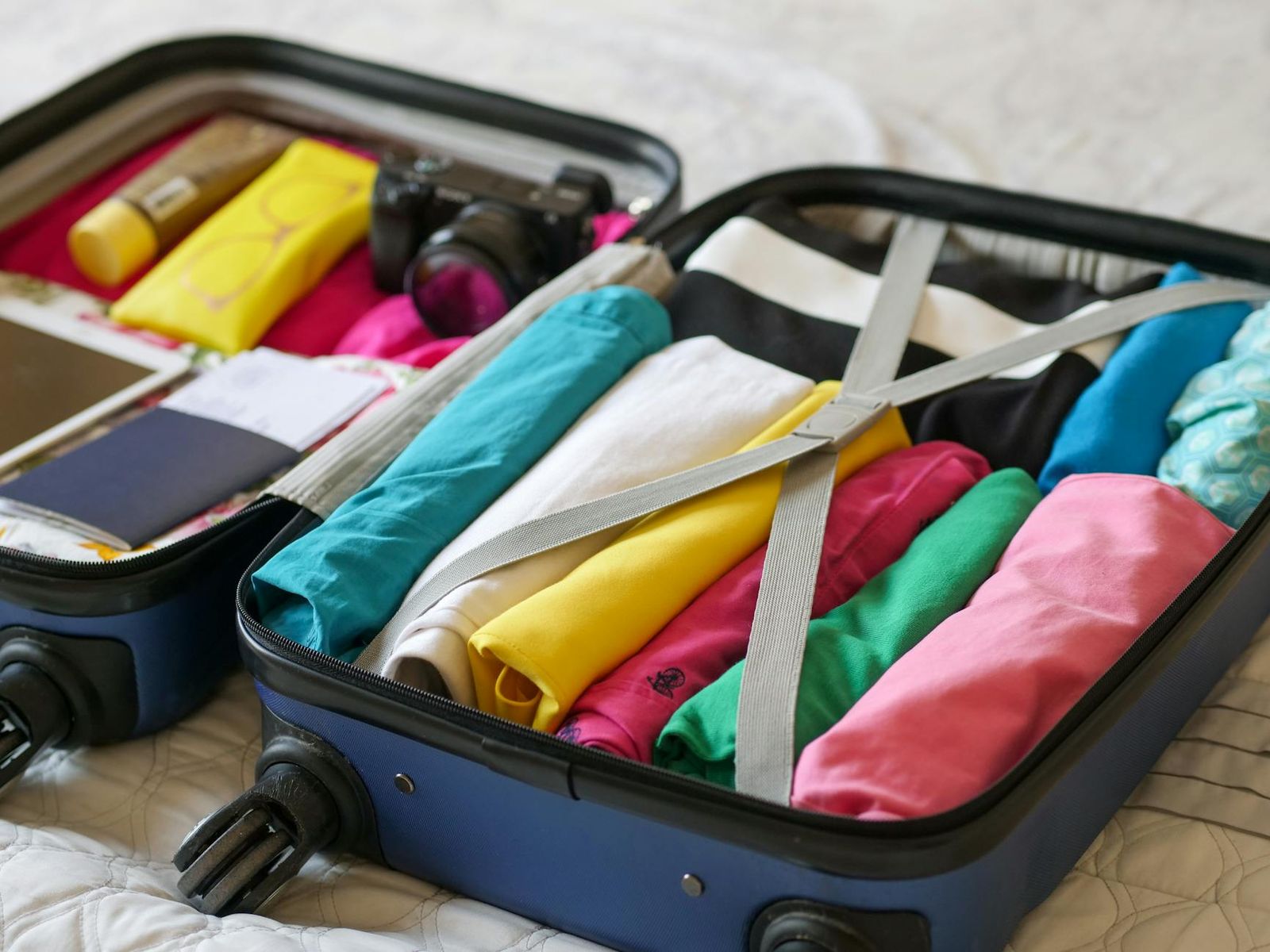
Clothing essentials
- Quality rain jacket — essential year-round, even in summer
- Light layers — t-shirts, long-sleeve shirts, light jumpers/cardigans
- 1–2 warm layers — fleece, sweater, or warm jacket (winter especially)
- Comfortable walking shoes — Auckland is walkable but hilly
- 1 pair smart-casual shoes for restaurants/evenings
- Jeans/casual pants — Auckland is generally casual
- 1 set of nicer clothes for a smart restaurant or theatre night
- Underwear & socks — at least 1 pair per day
- Sleepwear
Sun protection (year-round)
- SPF 30+ sunscreen — NZ UV is intense
- Hat with brim — for sun protection
- Sunglasses
- Lip balm with SPF
Make that SPF 50+ between September and April, and bring a bottle big enough that you will actually reapply — a 50ml travel tube is roughly one full-body application for one adult.
Practical day-bag items
- Reusable water bottle — Auckland tap water is excellent
- Compact umbrella — for unexpected rain
- Day backpack/tote — essential for hiking, beach days, walking
- Phone & charger
- NZ travel adapter — Type I plug (Australia/NZ)
- Power bank — for long day trips
Why New Zealand’s UV Deserves Its Own Packing Plan
New Zealand’s peak summer UV runs around 40 per cent stronger than at comparable latitudes in the northern hemisphere, for three reasons: ozone over this part of the world is thinner in spring and early summer, the Earth’s orbit brings the southern hemisphere roughly seven per cent closer to the sun in January, and the air over Auckland carries very little of the haze that quietly filters sunlight over most large cities.
The translation is this: on a clear late-December day the UV index in Auckland commonly reaches 11 or 12, which is the extreme band, and fair skin can start to burn in well under fifteen minutes. Local advice is to cover up between 10am and 4pm from September through April, and locals actually follow it — you will notice New Zealand children in rash tops and school hats that look faintly ridiculous. Copy them.
- Broad-brim or legionnaire hat — caps leave your ears and the back of your neck exposed, which is where people burn
- Rash top or long-sleeve swim shirt — worth more than any amount of sunscreen over a long beach day
- Sunglasses rated UV400 — glare off black sand and off the water is genuinely fierce
- Light long sleeves for hiking — cooler than you would expect, and it removes the reapplication problem
You do not need to bring much sunscreen from home. Anything sold in a New Zealand supermarket or pharmacy meets the joint Australian and New Zealand standard, and a 200ml bottle of own-brand SPF 50+ costs less than most airport travel tubes. Bring a small tube for the first day, then buy properly here — and take double what you think you need for the black ironsand at Piha, because the sand throws heat and light straight back at you.
Auckland Seasonal Packing Variations
Summer (December–February)
- Light cottons, breezy fabrics
- Swimwear (definitely)
- Sandals or jandals (NZ flip flops)
- Lightweight rain jacket
- Day-walking shoes
- Sun hat with chin strap (Auckland wind)
- Aftersun lotion
- Insect repellent (sandflies in some bush areas)
Autumn (March–May)
- Layered clothing
- Closed walking shoes
- Quality rain jacket
- Light scarf
- 1 warm layer for evenings
- Camera (autumn light is gorgeous)
Winter (June–August)
- Warm layers (sweater, fleece)
- Quality waterproof rain jacket
- Closed walking shoes (waterproof preferable)
- Beanie/scarf/gloves for cold mornings
- Long pants (jeans work fine)
- 1 nice outfit for indoor restaurants
- Trolley/wheeled luggage for paved Auckland streets
Spring (September–November)
- Layered clothing for variable weather
- Light rain jacket essential
- 1 warm layer
- Closed walking shoes
- Allergy meds if you’re prone (NZ pollen)
Hiking & Beach-Specific Packing
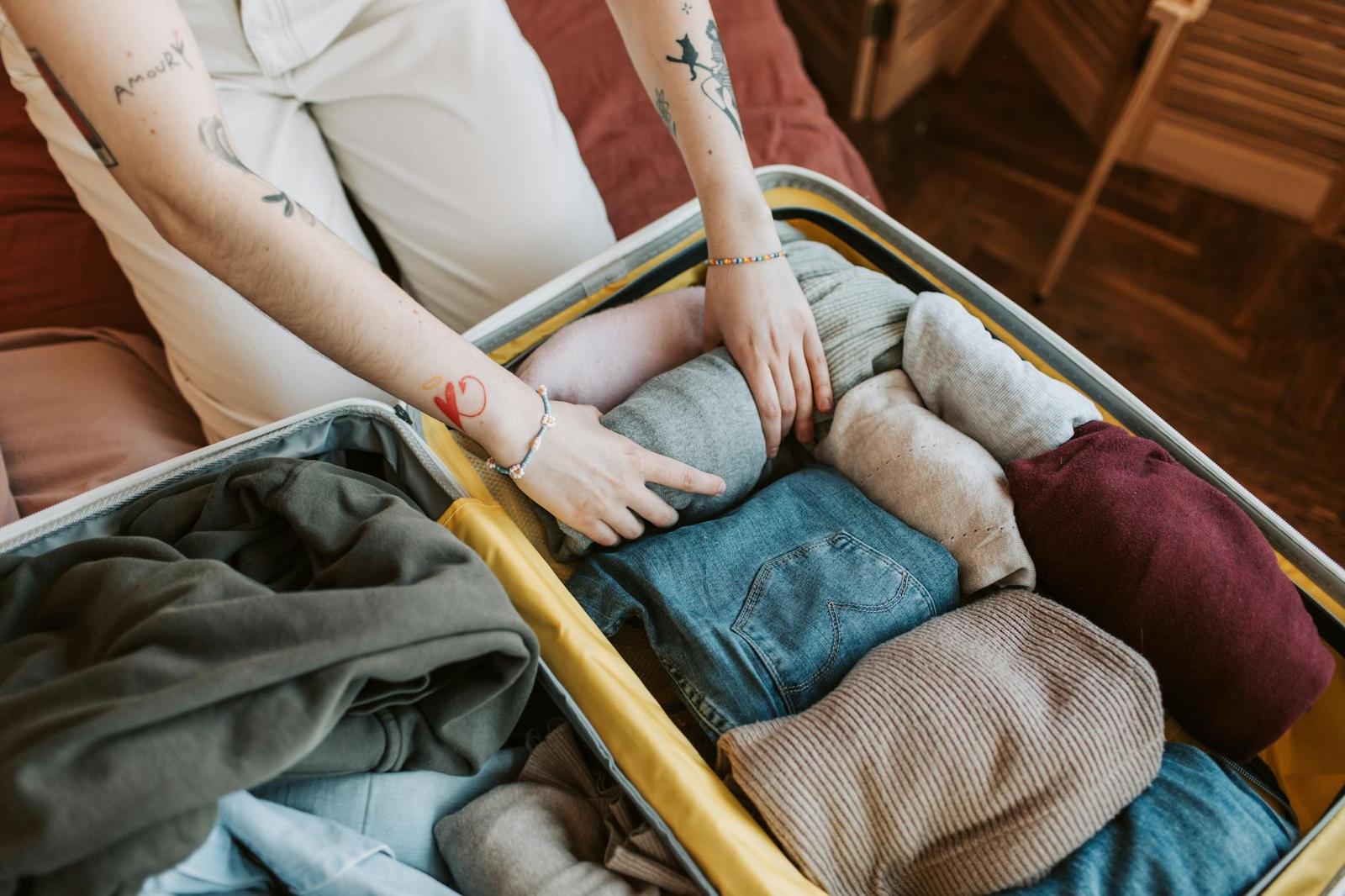
For hiking trips (Waitākere, Coromandel, Tiritiri)
- Sturdy walking shoes (waterproof for winter)
- 1L water bottle minimum
- Snacks/lunch
- Quick-dry hiking pants
- Headlamp (for short winter days)
- First aid kit
- Map (offline phone version)
- Sunscreen (UV intense even in bush)
- Insect repellent (sandflies in some areas)
For beach days (Mission Bay, Devonport, west coast)
- Swimwear
- Towel
- Reef-safe sunscreen
- Beach hat
- Sandals or jandals
- Cooler bag for picnic
- Reusable water bottle
- Spare clothes for after swim
What NOT to Pack for Auckland
- Fresh fruit, vegetables, plant material — NZ biosecurity will confiscate
- Drugs of any kind without prescription documentation
- Bear spray, knives, weapons
- Items declared on duty-free over allowance
- Excess cash (NZ$10,000+ requires declaration)
- Cheap waterproof gear — Auckland will wear it out fast; better quality saves money
- Heavy formal wear — Auckland is generally casual
- Excessive shoes — NZ walking shoes are mostly enough
- Voltage converters — pointless for anything modern. New Zealand runs 230V and almost every phone, laptop and camera charger handles 100-240V, so all you need is the cheap plug adapter
- Drones, if the plan was the Waitākere Ranges or a regional park — permission is required and enforcement is real
New Zealand Biosecurity: What Gets Taken Off You at the Border
New Zealand runs one of the strictest border biosecurity regimes anywhere, and it is not theatre — the farming economy and the remaining native ecosystems are both unusually vulnerable to introduced pests. Before you fly you complete the New Zealand Traveller Declaration online or in the official app, generally within about 24 hours of departure; it replaced the old paper arrival card. That is where you tick the boxes about food, plants, animal products and outdoor equipment. Declaring is free and costs you nothing worse than a short conversation. Not declaring carries an instant fine of NZ$400, with far larger penalties for deliberate cases.
- Any food at all — the sandwich in your bag, the apple off the plane, snacks, spices, honey, herbal remedies. Sealed and labelled food is usually fine once declared; fresh produce almost never is
- Plants, seeds, flowers, wooden souvenirs and woven items — untreated wood and straw goods count as risk goods
- Animal products — feathers, shells, bone, some leather, anything containing meat or dairy
- Used outdoor gear — hiking boots, tent pegs, golf shoes, waders, bikes and camping equipment
- Anything you are unsure about — declaring is never an offence, failing to declare is
The boots point matters more than people expect. Soil carries pathogens, including the one behind kauri dieback in New Zealand’s own forests, so muddy walking boots straight off a farm track will get a very close look. Scrub them at home, let them dry, and you are through in a minute. The same habit is expected here — there are cleaning stations at the entrance to most kauri forest tracks in the Waitākere Ranges, and you are expected to use them going in and coming out.
Duty-free is separate. At the time of writing the allowance is three bottles of spirits of up to 1.125 litres each, plus 4.5 litres of wine or beer, and 50 cigarettes or 50 grams of tobacco. Goods carried in for personal use are generally duty-free up to NZ$700 in value, and NZ$10,000 or more in cash, in any currency, must be declared.
Documents & Money
- Passport (valid for 3+ months beyond stay)
- NZeTA approval email (see our NZ visa requirements guide)
- Travel insurance documents
- Driver’s licence (if planning to rent a car)
- International Driving Permit (only if licence not in English)
- Credit cards (Visa & Mastercard widely accepted)
- Backup credit card from a different network
- NZ$100 cash for first-day arrival expenses, with more detail in our Auckland money, currency and ATMs guide
- Travel money card (Wise, Revolut for best rates)
- Copies of all documents (in phone or cloud)
Two of those need more explanation. The NZeTA is the electronic travel authority visa-waiver travellers need before boarding a flight to New Zealand; Australian citizens are exempt, Australian permanent residents are not. Request it through the official Immigration New Zealand app or website, allow at least 72 hours, and it covers multiple visits over two years. At the time of writing it costs around NZ$17 through the app or NZ$23 online, plus the separate International Visitor Conservation and Tourism Levy of NZ$100. Fees change, so check first, and only ever pay on the official government site — lookalike agency sites charge several times the real price. Our guide to New Zealand visa requirements works through who needs what.
On money, New Zealand is close to cashless. Contactless payments work on buses, in taxis and in the smallest cafes, though many businesses add a surcharge of around 2 per cent for contactless credit. Carry a little cash for honesty boxes at rural produce stalls and no more, and note that tipping is not expected anywhere — see our guide to money in Auckland. Prescription medication is the one category worth real care: keep it in original labelled packaging, carry the prescription or a doctor’s letter, pack it in hand luggage, and check Medsafe’s rules if you take anything controlled.
Tech Essentials
- Phone & charger — universal
- NZ travel adapter — Type I (Australia/NZ standard)
- Camera — phone is fine for most travellers; bring a real camera for landscape photography
- Headphones — for ferry rides, day trips
- Power bank — long day trips can drain phone battery
- SIM card or eSIM — buy NZ SIM at airport (Skinny, 2degrees, Spark) or international eSIM (Airalo, Holafly)
- Laptop/tablet — only if working remotely
On connectivity, an eSIM is the least painful option if your phone supports one, because you land already connected. A local physical SIM is cheaper for stays over a couple of weeks — prepaid packs at the airport or any supermarket run around NZ$20-40 for a month with a usable data allowance. Coverage in central Auckland is excellent but falls away fast on the west coast, and at Piha, Karekare and across much of the Waitākere Ranges you should assume no signal at all, so download offline maps first. One more small thing: bring a multi-port charging block rather than four separate plugs, because Auckland hotel rooms and older apartments are not generous with sockets.
Family Packing for Auckland
Babies/toddlers (additional)
- Stroller (or rent at airport)
- Baby carrier (great for ferries, hikes)
- Sun cream specifically formulated for babies
- Sun hat with neck protection
- Wet bag for soiled clothes
- Spare nappies/diapers (also widely available NZ)
- Snack containers
- Beach toys (or buy NZ$5 at Pak’nSave)
Older kids/teens (additional)
- Day bag for each kid, packed for the outings in our Auckland with kids guide
- Reusable water bottles (one each)
- Sunscreen they’ll actually use
- Sturdy walking shoes
- Swimwear (essential)
- Phone charger they actually have
- Activity backpack with snacks for long ferry/drive trips
Auckland-Specific Items Worth Buying There
- Sunscreen — NZ brands (Sunsense, Banana Boat) excellent quality
- Insect repellent — DEET-based for sandflies (Off!, Bushman’s)
- Wet weather gear — NZ outdoor stores (Kathmandu, Bivouac, Macpac) are top quality
- Wool/merino layers — Icebreaker, Mons Royale, Macpac, all of which double as the NZ gifts worth taking home
- Hiking gear — Kathmandu, Bivouac for last-minute purchases
- Reusable shopping bags — NZ supermarkets charge for plastic
Auckland Health & Medication
- Prescription medications (with copies of prescriptions)
- Travel insurance for healthcare costs
- Pain relief (paracetamol, ibuprofen)
- Bandages/plasters
- Antihistamine (NZ pollen can affect new visitors)
- Hand sanitizer
- Personal hygiene items (widely available in NZ)
Auckland Packing List by Trip Length
Long weekend (3-4 days)
Carry-on suitcase plus a daypack, no checked bag. Three days of clothing, one smarter outfit, the rain jacket, one pair of walking shoes and one you can wear to dinner. Skip the hiking kit — over a long weekend you will realistically do Maungawhau, the waterfront and perhaps a ferry, none of which need boots, and our guide to how many days you need in Auckland sets out what genuinely fits into three or four. Swimwear still goes in.
1 week stay
Medium suitcase plus a daypack, or carry-on plus one load of washing halfway through. Five to seven days of clothing, the full layering system, shoes you can walk a bush track in, and beach gear. A week is the point at which a day trip to the west coast or the Hauraki Gulf becomes likely, so the sturdy shoes and the extra sunscreen start earning their space.
2+ weeks (NZ tour)
Large suitcase plus a daypack. If Auckland is the first stop on a wider New Zealand trip, pack for the country rather than the city: the South Island in February can be colder than Auckland in July, and alpine areas need a real insulating layer and a genuinely waterproof shell. Merino base layers are the best-value thing to buy once you arrive. Laundry is easy everywhere, so pack about a week of clothing however long the trip is — you are packing for the washing machine cycle, not the calendar.
Auckland Laundry Options
- Hotel laundry services — NZ$20-50 per load, a cost our Auckland trip budget guide factors in
- Auckland coin laundromats — NZ$8-12 per load
- Self-service at apartment hotels — included with most apartment rentals
- Drop-off laundry services — most CBD locations, NZ$25-40 per load
Prices move but the ranking rarely does: hotel laundry is the expensive convenience, a machine in an apartment-style hotel is free or close to it, and a coin laundromat is the cheap middle ground. Most Auckland laundromats take card, and a wash-and-dry cycle runs about 90 minutes. If you are in a CBD apartment hotel, check whether there is a laundry on your floor before paying for anything — plenty of buildings have one and never advertise it.
How I’d Pack a Carry-On-Only Week in Auckland
This is the version I actually use, and it fits a 40-litre cabin bag plus a daypack in any season. If a road trip is part of the plan, our guide to renting a car in Auckland covers that side of it.
- Step 1 — pick the shell first. One hooded, seam-sealed rain jacket. Everything else gets organised around it, and if it is bulky you wear it on the plane
- Step 2 — build one layering system, not three outfits. Two merino t-shirts, one long-sleeve merino, one light fleece. Merino because you can wear it three days running and nobody notices
- Step 3 — two bottoms. Jeans or chinos, plus quick-dry trousers or shorts depending on season
- Step 4 — two pairs of shoes, one worn. Walking shoes on your feet, one flatter pair in the bag. In summer, jandals count as the second pair
- Step 5 — the Auckland extras. Swimwear, quick-dry towel, hat, sunglasses, a one-litre bottle and a small dry bag
- Step 6 — leave out and buy here. Sunscreen, insect repellent, shampoo
- Step 7 — book one laundry slot. Day four, while you are out doing something else. That is the whole trick
The one exception is winter travel with a hire car and a plan to hike: wet boots and a wet jacket need somewhere to live that is not your clean clothes, so add a large dry bag or a plastic crate for the boot.
Auckland Packing Mistakes to Avoid
- Underestimating UV — NZ sun is more intense than equivalent latitudes
- Skipping the rain jacket because "it’s summer" — Auckland still rains in summer
- Bringing only fashion shoes — Auckland is walkable, you’ll need real walking shoes
- Not bringing a swimsuit even in winter — hot pools, indoor pools, hotel pools all work
- Bringing too much fancy gear — Auckland is generally casual
- Forgetting NZ travel adapter — Type I plug is Australia/NZ specific
- Not bringing reusable water bottle — Auckland tap water is excellent
- Forgetting insect repellent for hiking — sandflies are real
Two more, both of which I have watched visitors get wrong. The first is packing for the temperature rather than the wind: 16°C with a forty kilometre an hour southwesterly coming up the harbour feels nothing like 16°C somewhere sheltered, and a windproof layer does more for you than a thick one. The second is bringing a full-size umbrella and no hood — on the waterfront it inverts within a minute, which is why locals almost never carry them. On insects, Auckland’s usual summer nuisance is mosquitoes at dusk near still water rather than sandflies, and one supermarket bottle of repellent covers both.
Frequently Asked Questions
What’s the most important item for Auckland?
A quality rain jacket. Auckland weather changes quickly year-round, and a good rain jacket saves you from buying one mid-trip.
Do I need warm clothes for Auckland in summer?
Yes — even summer evenings can drop to 14°C. Pack one warm layer.
Can I drink Auckland tap water?
Yes — Auckland tap water is excellent. Reusable water bottle saves on plastic and money.
What plug adapter does Auckland use?
Type I (Australia/NZ). Two flat angled pins. Buy adapter before arrival.
Do I need to pack hiking gear?
Sturdy walking shoes are enough for most Auckland day hikes, and our Auckland hikes and walking trails guide covers the tracks themselves. Specialist hiking gear can be bought at Kathmandu/Bivouac/Macpac if needed.
Should I bring formal clothes to Auckland?
One smart-casual outfit for special restaurants or theatre. Auckland is generally casual; full formal wear is rarely needed.
Can I bring food into Auckland?
NZ biosecurity is strict. Declare any food, plant or animal products. Sealed packaged food is generally fine; fresh produce is not.
What sunscreen SPF do I need for New Zealand?
SPF 50+ broad spectrum from September to April, SPF 30+ the rest of the year. New Zealand’s peak summer UV runs roughly 40 per cent stronger than equivalent northern hemisphere latitudes, so an SPF you get away with at home may not be enough. Buy it locally — anything sold in a New Zealand pharmacy or supermarket meets the joint Australian and New Zealand standard.
Can I bring hiking boots into New Zealand?
Yes, but clean them thoroughly and declare them on your traveller declaration. Soil on footwear is a biosecurity risk and boots are routinely inspected. Clean boots take a minute at the border; dirty ones get cleaned for you, which takes longer and can cost a fee. The same applies to tent pegs, bikes and fishing gear.
Final Take: Layered Packing Wins
Auckland packing is straightforward once you accept the "four seasons in one day" reality. Pack layers, a quality rain jacket, sun protection, comfortable walking shoes, swimwear (year-round) for Auckland’s beaches and outdoor days, and a day bag — and you’re set.
Skip the heavy formal wear, oversized luggage, and unnecessary specialised gear. Auckland is casual, walkable, and well-stocked with shops if you do need something. The only items genuinely worth bringing from home are your prescription medications, a quality rain jacket, and your travel adapter.
One packing decision has consequences at the border rather than in your hotel room: hiking boots with soil still in the tread are among the most common biosecurity interceptions in New Zealand. Clean them before you leave, and read our guide to arriving at Auckland Airport for what else gets declared.
Two items on this list have consequences at the border rather than in your hotel room: hiking boots with soil in the tread, and any food you meant to eat on the plane and did not. Our guide to the New Zealand biosecurity rules explains what to clean, what to declare and what simply cannot come.
If your trip includes the Tongariro Alpine Crossing, pack for a mountain day as well as a city break: proper walking shoes, a warm layer, a windproof jacket, a hat and gloves even in summer, and a way to carry two to three litres of water. Our Auckland to Taupō and Tongariro guide has the full kit list and the logistics.