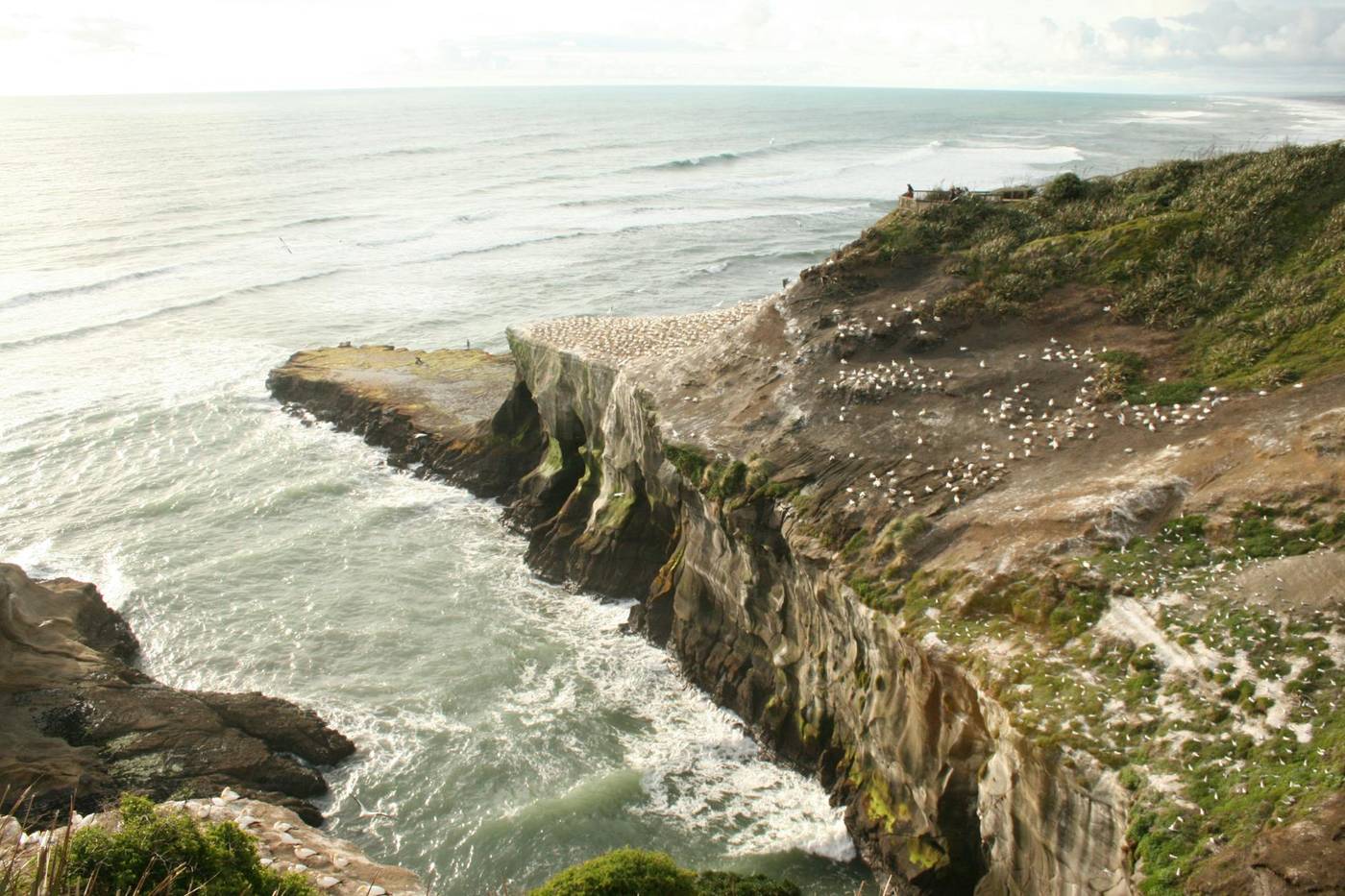
Rangitoto Island Day Trip from Auckland (2026)
Complete 2026 Rangitoto Island day trip guide — Auckland's youngest volcano summit walk, lava caves, pohutukawa forest, ferry details and tips.
This article contains advertising. Our booking links are routed through a partner that adds commission tracking automatically, so if you book through one we earn a commission from the provider, at no extra cost to you. It never affects what we recommend. Affiliate disclosure
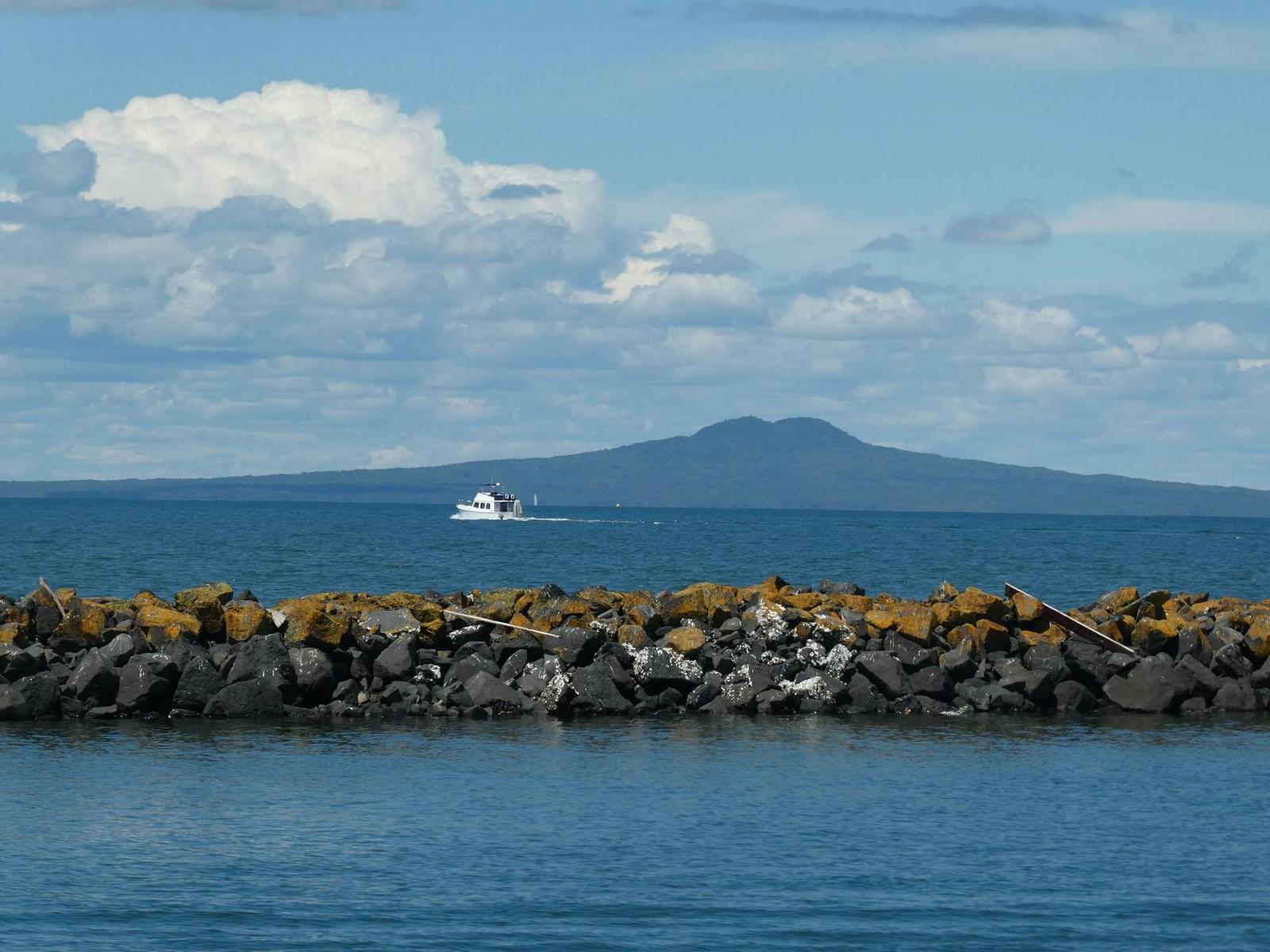
Rangitoto Island is Auckland’s most iconic natural landmark — the youngest volcano in the Auckland Volcanic Field, erupted just 600 years ago, dominating the skyline view from the city’s CBD. Now a pest-free Department of Conservation island, Rangitoto offers a unique day trip with summit hike, lava caves, the world’s largest pohutukawa forest, and panoramic Hauraki Gulf views. Just 25 minutes by ferry from Auckland CBD, a Rangitoto Island day trip is one of Auckland’s most rewarding half-day adventures. This complete 2026 guide covers the ferry, the summit hike, lava caves, what to bring, and how to plan a perfect visit, plus where it ranks among the best things to do in Auckland.
| Detail | What to know |
|---|---|
| Getting there | Fullers360 ferry from Piers 13 and 14, Downtown Ferry Terminal, 99 Quay Street. Around 25 minutes |
| Fares | NZ$60 adult return on October 2026 dates. Check Fullers360 for current child and family fares |
| Sailings | Very limited — off-peak, one weekday departure and two at weekends. Walk-on tickets are not sold |
| Island entry | Free. Rangitoto is a Department of Conservation scenic reserve |
| Summit walk | 7km and about two hours return to a 260m summit (DOC). Allow extra time for the lava caves |
| Facilities | Toilets at the wharf. No shop, no cafe, no bins and no drinking water on the island |
| Biosecurity | Compulsory bag and footwear check before boarding. No dogs, no open bags, no soil or seeds |
| Best months | December and January for the pōhutukawa bloom, March to May for settled weather |
Quick Facts: Rangitoto Island
- Distance from CBD: 8km (25 minutes by ferry)
- Summit height: 260 metres
- Age: ~600 years (last erupted around 1450 AD)
- Type: Basalt lava shield volcano
- Status: Dormant, but the wider Auckland Volcanic Field is active
- Size: 23 sq km
- Pest-free since: 2011
- Day trip cost: NZ$60 adult ferry return (October 2026 dates), child fares on Fullers360’s site; island access is free
Why Rangitoto Is Auckland’s Best Half-Day
Five reasons Rangitoto deserves a half-day:
- Iconic Auckland skyline view — return ferry crossing
- Walking on raw lava field — unique among Auckland day trips
- Lava caves — explorable underground tunnels
- World’s largest pohutukawa forest — blooming red Dec/Jan
- Pest-free wildlife sanctuary — native bird species thrive
How to Get to Rangitoto

- Ferry operator: Fullers360 — the only scheduled passenger service
- Departure: Downtown Ferry Terminal, 99 Quay Street, Piers 13 and 14
- Crossing: about 25 minutes direct, roughly ten minutes longer via Devonport
- Adult return: NZ$60 on October 2026 dates
- Child and family fares: check Fullers360 when you book
- Frequency: limited. Off-peak there is one weekday sailing out and one back, and two each way at weekends and on public holidays. Summer adds departures
- Booking: essential. Tickets are date and time specific, and same-day walk-on tickets are not sold
- AT HOP card: not accepted — Rangitoto is not part of the Auckland Transport network
The ferry is a dramatic ride in itself — sweeping views of Auckland CBD as you depart, then Rangitoto looming larger as you approach.
Booking the Ferry: The Bit That Catches People Out
Rangitoto is not a turn-up-and-go island, and this is where most spoiled day trips begin. Unlike the Devonport and Waiheke runs, which go every half hour or so, Rangitoto gets a handful of sailings — and on the off-peak timetable in force at the time of writing, a weekday means one boat out in the morning and one back in the afternoon. Miss the return and there is no next one, and no accommodation on the island either.
- Book online before you go. Tickets are tied to one sailing on one date, and walk-on tickets are not sold at the pier
- Arrive 20 to 30 minutes early. Everyone goes through a biosecurity check, and that queue is why people miss the boat
- Check which pier. The Downtown Ferry Terminal is a long row of piers; Rangitoto sailings leave from Piers 13 and 14, at the Britomart end
- Check the operator’s travel alerts on the morning. Rangitoto sailings are cancelled for weather more often than harbour routes, because the crossing is exposed once you clear North Head
- Note the Devonport stop. Some sailings call at Devonport, adding about ten minutes but letting you join from the North Shore
Plan the day around the boat rather than the walk, and treat the summit as your turnaround point rather than the halfway point. Our Auckland ferries guide covers the rest of the harbour network.
The Rangitoto Summit Walk

The summit walk is the day trip’s main event:
- Distance: 7km return, according to the Department of Conservation
- Time: about two hours return (DOC). Allow extra time for the lava caves
- Elevation gain: 260m, spread fairly evenly along the climb
- Difficulty: moderate. The track is formed, but the surface is loose scoria and broken lava rather than smooth gravel, and the final section is a boardwalk with around 300 steps
- Suitable for: most reasonable fitness levels and children from about six. Not suitable for pushchairs or wheelchairs
The walk experience
From the wharf, the track climbs through pohutukawa forest, then opens onto raw black lava field with sparse vegetation. The contrast between Auckland’s green isthmus visible across the harbour and Rangitoto’s stark lava landscape is dramatic. The summit has a viewing platform with 360° views — Auckland CBD, North Shore, the Coromandel Peninsula on clear days.
What nobody tells you is how the surface feels. This is not a bush walk with a soft floor. Rangitoto is a 600-year-old lava flow with barely any soil on it, so for long stretches you are walking on black clinker that clatters underfoot and radiates heat back at you. On a still February afternoon the lava field is markedly hotter than the ferry deck was twenty minutes earlier, and there is little shade above the treeline — which is why the standard advice is a hat, sunscreen and more water than seems reasonable.
The last section is a wooden boardwalk of roughly 300 steps around the crater rim. The crater surprises most people: a deep, bush-filled bowl rather than the bare cone the postcard silhouette suggests. Walk the rim loop before the platform — it is quieter and gives a better sense of what you are standing on. The concrete observation post at the top is a relic of the Second World War harbour defences, and Motutapu’s farmland rolls out immediately behind it.
The Lava Caves

Rangitoto’s lava caves are hidden treasures — formed when surface lava cooled while still-molten lava flowed beneath, leaving tunnels. Several caves are accessible from the main track:
- The Lava Caves Track — a signposted loop off the summit track, roughly 200 metres below the top on the eastern side. Allow about 30 minutes
- Bring a torch — the tubes are pitch dark and a phone light is marginal. A head torch leaves your hands free on the uneven floor
- Expect to stoop, and do not squeeze into unmarked openings or climb down collapsed roof holes
- The longest known tube runs to around 120 metres, though the signposted sections are shorter
- Not accessible — the entrances involve loose rock and steps, and no cave suits wheelchairs or pushchairs
The caves are lava tubes: the outside of the flow crusted over while the molten interior kept running, and when the eruption stopped the tube drained and left a hollow. In several places the roof has collapsed, which is why one tube can have three or four entrances, and pōhutukawa roots hang down through the cracks in ropes. The floor is uneven and often damp, so trainers with grip beat sandals by a wide margin.
The Pohutukawa Forest

Rangitoto’s pohutukawa forest is the world’s largest — over 200 hectares of NZ’s iconic "Christmas tree." The pohutukawa is the first tree species to colonise raw lava, sending roots through cracks. Each December and January, the forest blooms a brilliant red — visible from Auckland CBD. Visiting Rangitoto in late December is a magical pohutukawa experience.
Wildlife on Rangitoto
Rangitoto became pest-free in 2011, and native bird species are returning. Look for:
- Tūī — large green-blue honeyeater
- Bellbird — green honeyeater
- Pīwakawaka (fantail) — small acrobatic native
- NZ pigeon (kererū) — large iridescent green pigeon
- Saddleback (tieke) — black bird with chestnut saddle
- Not tuatara — despite what a good many guides claim, Rangitoto has no tuatara population. If that is what you came for, Tiritiri Matangi is the Hauraki Gulf island to book
- NZ skink — small native lizards
Temper your expectations, though. Rangitoto is a thinner wildlife experience than its reputation suggests, and the lava is the reason: almost no soil, no streams and little fresh water, so the forest is young and the bird population is nowhere near as dense as on the older Gulf sanctuaries.
The plant life is the remarkable part. More than 200 species of trees and flowering plants have colonised the raw rock, including over 40 ferns and several orchids, alongside northern rātā and rātā-pōhutukawa hybrids unusual anywhere else. Botanists have studied Rangitoto for a century because you can watch primary succession in slow motion here — bare lava at one end of a slope, closed canopy at the other. If you want birds rather than geology, Tiritiri Matangi is the better day out.
Connected Motutapu Island
Rangitoto is joined at Islington Bay by a wartime causeway to Motutapu Island, a roughly 1,500-hectare reserve that could hardly be more different: no lava at all, but rolling farmland and one of the richest archaeological landscapes in the region. Depending on the loop, adding Motutapu puts another two to four hours on your day, so it only works if you have checked the return sailings carefully. Most day-trippers stay on Rangitoto, and on the current timetable that is the sensible call.
Sample Rangitoto Day Trip Itinerary
- 8:45am — Arrive at the Downtown Ferry Terminal, Piers 13 and 14. Scrub your soles and join the biosecurity queue
- 9:15-9:30am — Ferry departs. Off-peak this is the only morning sailing on a weekday
- Around 10am — Arrive Rangitoto Wharf. Use the toilets, because there are none on the track
- 10:15am — Start the summit track. The first twenty minutes are shaded pōhutukawa forest
- 11:15am — Reach the summit boardwalk. Walk the crater rim, then the old observation post
- 12:00pm — Lunch at the top, out of the wind. Everything you eat is what you carried
- 12:45pm — Head back down and take the signposted Lava Caves loop with your torch
- 1:45pm — Back at the wharf with time in hand. Walk the flat coastal track to the old baches
- 2:30pm or 3:30pm — Return sailing, depending on the day of the week
- 3:00-4:15pm — Back in the CBD, salty and slightly sunburnt
These times follow the off-peak timetable in force at the time of writing; the summer schedule adds sailings, so check the current one. And keep the hour of slack between finishing the caves and boarding, because almost everyone underestimates the descent.
What to Bring
- Water — minimum 1.5L per person; no taps on island
- Lunch/snacks — no café on Rangitoto, only basic kiosk
- Closed walking shoes — lava is sharp, sandals not suitable
- Sun protection — exposed lava field, intense reflected UV, as flagged in our Auckland packing list
- Hat and sunglasses
- Light layers — windy on summit
- Torch — for lava caves
- Camera
- Insect repellent — mosquitoes in pohutukawa forest
The water line is not a suggestion. There is no drinking water anywhere on Rangitoto — no taps, no springs, no streams, because the porous lava swallows rainfall before it can pool. On a hot day 1.5 litres a head is a floor rather than a target. There is no shop, cafe or kiosk either, so if you have not brought lunch you are not having lunch.
- A rubbish bag — there are no bins and you must carry everything out
- A head torch — better than a hand torch in the caves, and it weighs nothing
- A windproof layer — the summit feels several degrees cooler than the wharf
- Shoes with a real sole — sharp lava chews soft-soled shoes, and jandals are a bad idea here
- Sealed food containers — part of the biosecurity rules
Biosecurity Rules
Rangitoto is pest-free — strict biosecurity protects this status. Before boarding:
- Inspect bags and shoes for stowaway pests (rats, mice, ants, seeds)
- Brush off mud and seeds from boots
- Don’t bring soil, plants, or fresh produce
- Stay on tracks at all times
- Take all rubbish back with you
This is more formal than that wording suggests. Rangitoto and Motutapu were declared pest-free in August 2011 after a major eradication programme, and everything since has been about keeping them that way. Every passenger is checked before boarding: crew inspect bags and footwear, there are shoe cleaning stations at the departure pier, and bags must be fully zipped. Rats get through a 12mm gap and mice through 7mm, so an open tote bag is a real risk rather than a technicality.
- Zip everything. No open bags or loose shopping bags
- Scrub your soles at the cleaning station on the pier. Seeds and soil are the commonest stowaways, and weeds are the island’s biggest problem
- Watch for plague skinks and Argentine ants in your gear if you have them where you live
- Report anything you find — tell the crew, or ring the DOC hotline on 0800 362 468 from the island
- No dogs, no pets, no exceptions
Best Time to Visit
- December–January — pohutukawa in bloom, summer warmth
- February — peak summer, busiest crowds
- March–May (autumn) — perfect — settled weather, fewer crowds
- June–August (winter) — quietest, dramatic light, full ferry schedules continue
- September–November (spring) — variable weather, returning native birds active
Sunrise and sunset hikes are spectacular but require special arrangement (most day trippers do daytime).
Rangitoto Photography
- Summit panorama — Auckland CBD across the harbour
- Lava field with pohutukawa — dramatic foreground
- Pohutukawa flowering (Dec/Jan) — red against black lava
- Ferry approach — Rangitoto looming as you near the wharf
- Lava cave interior — long exposures
- Sunrise from CBD — Rangitoto silhouetted at dawn
Rangitoto With Kids
Rangitoto is excellent for families with kids 6+:
- Ferry crossing alone is a hit
- Lava field walking is novel and exciting
- Lava caves are pure adventure for kids
- Summit views reward the climb
- Wildlife — chance of seeing unique native birds
- Bring snacks and plenty of water
- Younger kids (under 6) may struggle with the 4km return walk, so gentler family day trips from Auckland may suit better
Rangitoto’s Geological Significance
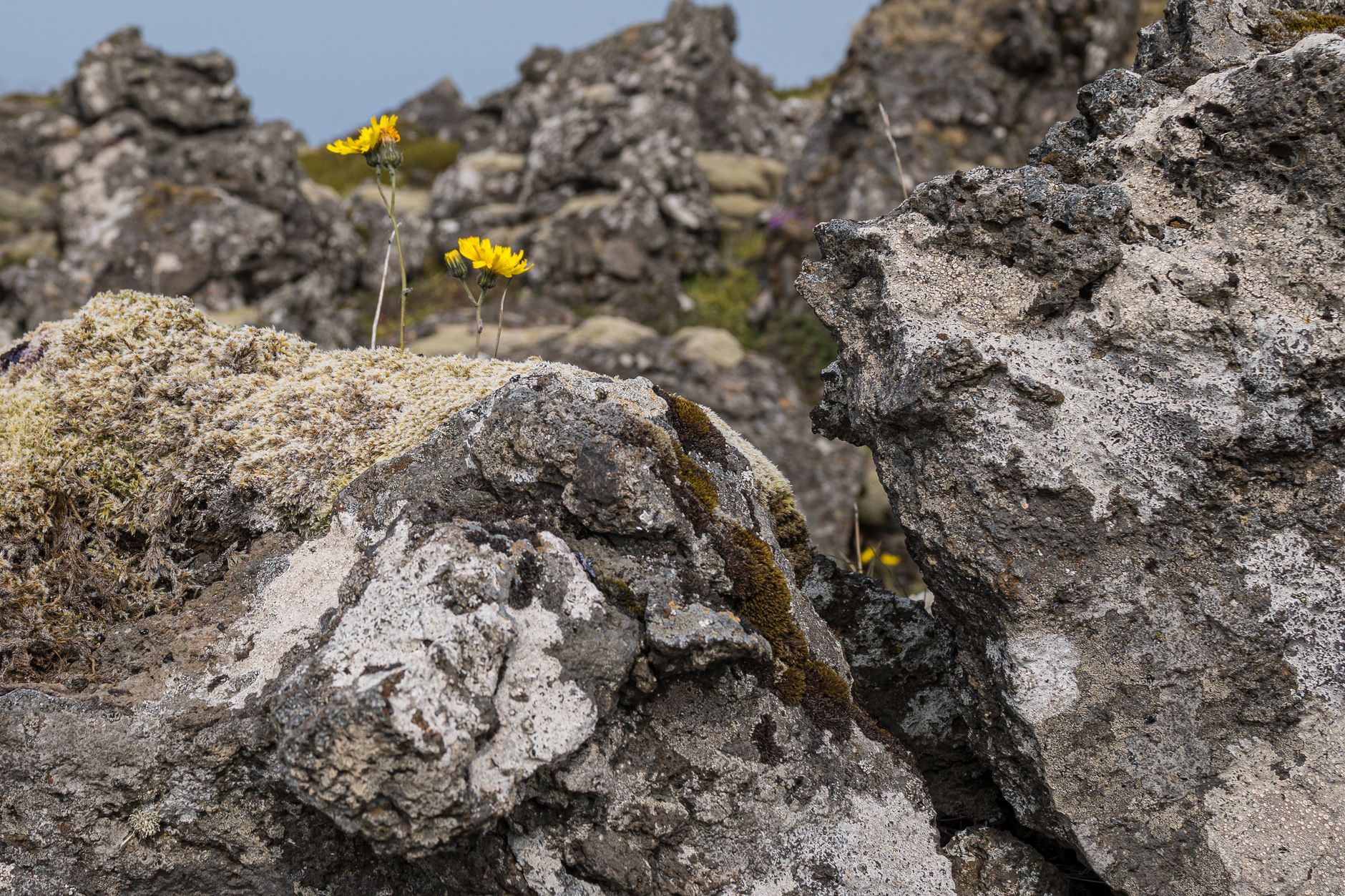
Rangitoto is the youngest volcano in the Auckland Volcanic Field at just 600 years old. It erupted in two events around 1450 AD. The Tāmaki Māori living on the Auckland isthmus witnessed the eruption — there are oral histories of the event preserved.
Rangitoto’s lava field is geologically young and largely unweathered. Walking through it gives a clearer picture of recent volcanic activity than other Auckland cones like Maungawhau / Mt Eden (which have been weathered down over thousands of years).
The scale lands once you are standing on it. Rangitoto erupted something in the order of 2.3 cubic kilometres of material — very nearly as much as every other eruption in the Auckland volcanic field put together, spread across roughly 200,000 years. It is also unusual for going up in two phases decades apart: a wet, explosive opening that dusted Motutapu in ash, then a drier phase of fire-fountaining that built the shield and the cones you climb today. Human footprints survive on Motutapu between layers of that ash, which puts people on the doorstep when it happened.
Ngāi Tai ki Tāmaki and Ngāti Paoa both hold ancestral connections here. The name is a shortening of Ngā Rangi-i-totongia-a Tama-te-kapua, the days of the bleeding of Tama-te-kapua, after a chief wounded in battle at Islington Bay. The field is not extinct, which is the point most visitors miss: the next Auckland eruption will most likely be a new vent somewhere else. Our guide to Auckland’s volcanoes covers the cones you can walk up without a ferry ticket.
Connected Day Trips
- Rangitoto + Motutapu (full day) — connected by causeway, 4-5 hour additional hike
- Rangitoto + Auckland Museum — geological context plus on-island experience, with the volcano displays covered in our Auckland War Memorial Museum guide
- Rangitoto + Sky Tower observation deck — see Rangitoto from CBD then up close, using our Sky Tower tickets and timing guide
- Rangitoto + Hauraki Gulf cruise — premium combo with Fullers360
Rangitoto’s Historic Beaches
Rangitoto’s coastline still carries a small community of 1920s and 1930s holiday baches — the New Zealand word for a rough, self-built holiday shack. At the peak there were around 140 of them and several hundred people out here each summer. Their legal footing was always shaky, new building was banned in 1937, and most were removed once the island became a scenic reserve.
Around 30 survive, clustered near Rangitoto Wharf and around Islington Bay, and several are being restored by a volunteer trust. They sit on the flat coastal tracks rather than the summit route, which makes them the obvious way to fill a spare hour before the return ferry, or an option for anyone in the group who does not fancy the climb.
Accessibility
Rangitoto has limited accessibility:
- The summit track is too steep and uneven for wheelchairs, and the boardwalk steps rule out pushchairs
- The wharf area and the flat coastal paths around it are the accessible part of the island
- The lava caves are not accessible — the entrances involve loose rock and awkward steps
- A tractor-drawn land train runs under a Department of Conservation concession, timed to the ferries, and carries visitors up to a boardwalk a short way below the summit. Fullers360 sells it as an add-on, it does not run every day, and the last stretch is still on foot
- Contact Fullers360 well in advance for accessible travel, and confirm whether the land train is running on your date
Rangitoto vs Tiritiri Matangi
- Rangitoto — geology and views, a 25-minute crossing, NZ$60 adult return, a half-day walk the timetable stretches into most of a day
- Tiritiri Matangi — wildlife and birdsong, a much longer crossing, NZ$110 adult return, and a full day with guided walk options
Choose based on interests: Rangitoto for the volcanic experience and shorter day; Tiritiri for serious birdwatching.
Frequently Asked Questions
How long is the Rangitoto Island day trip?
Half-day total — 25-min ferry each way + 3-4 hours on the island for the summit walk and lava caves.
Is Rangitoto Island worth visiting?
Yes — uniquely Auckland, only 25 mins by ferry from CBD, walking on a 600-year-old lava field is unforgettable.
How much is the ferry to Rangitoto?
Fullers360 adult returns are NZ$60 on October 2026 dates; check Fullers360 for current child and family fares. AT HOP cards are not accepted. Book online in advance, because tickets are tied to a specific sailing and walk-on tickets are not sold.
Is Rangitoto Island family-friendly?
Yes for kids 6+. The 4km return walk and uneven lava paths can be challenging for younger kids.
Can I camp on Rangitoto?
No — day visits only on Rangitoto. Camping is permitted on connected Motutapu Island via DOC bookings.
Is there food on Rangitoto?
No. There is no shop, cafe or kiosk anywhere on Rangitoto, and no drinking water either — the porous lava means the island has no streams at all. Bring lunch, at least 1.5 litres of water per person, and a bag to carry the wrappers home in, because there are no bins.
Are dogs allowed on Rangitoto?
No — Rangitoto is pest-free, no domestic animals permitted. Service animals only with prior arrangement.
Can you get to Rangitoto without booking a ferry?
Only with your own boat or on a guided kayak trip. There is no bridge or causeway from the mainland, and the Fullers360 ferry is the only scheduled service. Guided sea kayak trips cross from the eastern bays and usually include the summit walk, but they are a full day and heavily weather dependent.
How hard is the Rangitoto summit walk really?
Moderate rather than hard. It is a steady 260m climb with no scrambling, on a 7km return track that the Department of Conservation puts at about two hours. What makes it feel harder than the numbers suggest is the surface — loose, sharp lava rather than a smooth path — plus the heat off the black rock and the lack of shade.
Final Take: Auckland’s Best Half-Day
Rangitoto Island delivers what most Auckland day trips can’t — walking on raw 600-year-old lava, exploring underground caves, climbing to a 260m summit with spectacular harbour views, and surrounding yourself with the world’s largest pohutukawa forest. It’s free to enter, easy to access, and uniquely Auckland.
Book the morning ferry, bring water and lunch, wear sturdy walking shoes, and prepare for one of Auckland’s most unforgettable half-days. Rangitoto is the city’s defining natural landmark — and the closest you can get to walking on volcanic origin without leaving Auckland.
Rangitoto is the cheaper and more active alternative to a Waiheke day, and on a clear morning it is the better one. Our 2 days in Auckland itinerary pairs the summit walk with an afternoon in Devonport, and is blunt about when the visibility makes the climb pointless.