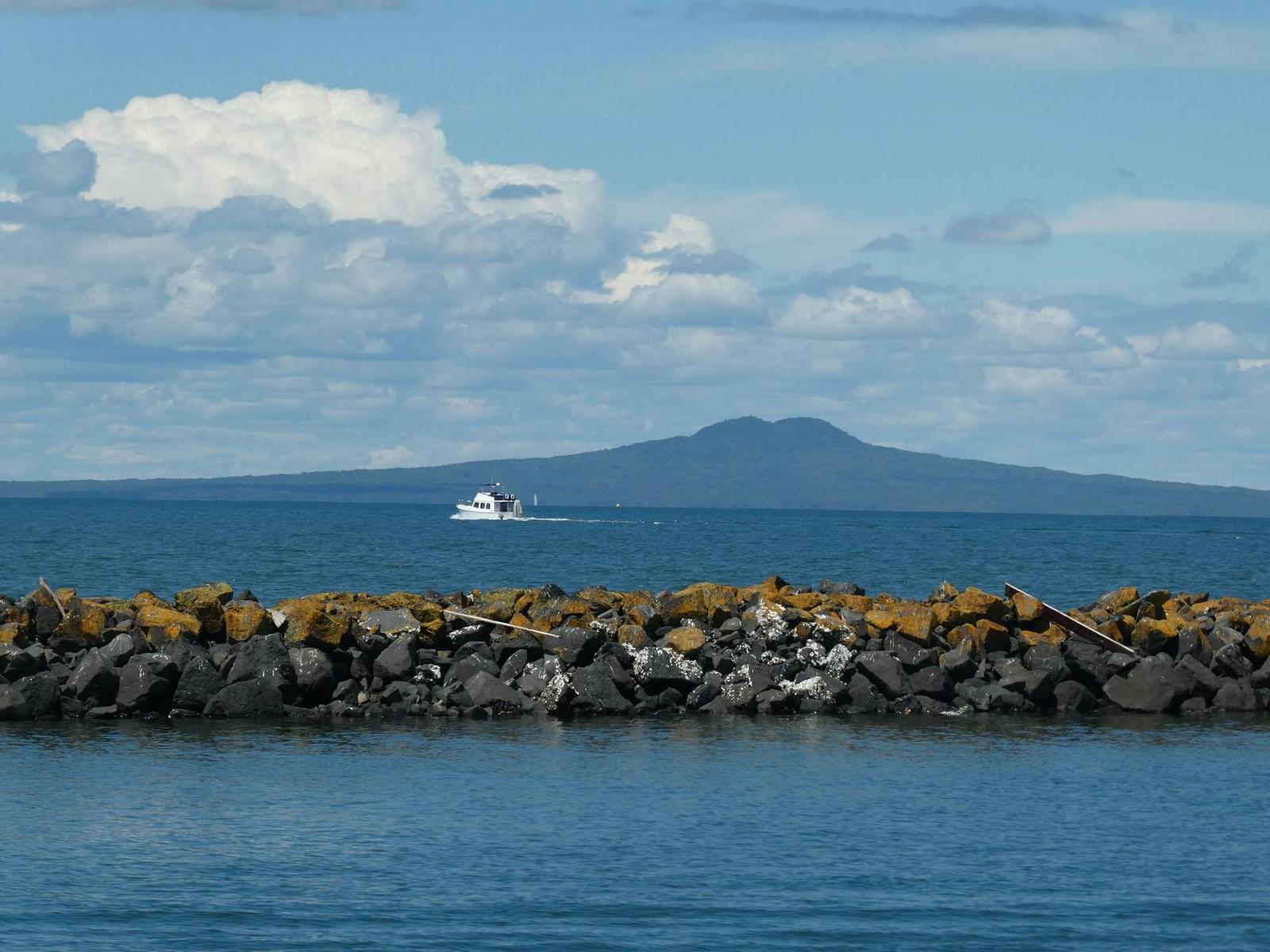
Muriwai Beach Guide: Gannet Colony & Wild West Coast (2026)
Complete 2026 Muriwai Beach guide — Auckland's Australasian gannet colony, wild west coast surf, Goldie Bush walk, and how to plan a perfect day trip.
This article contains advertising. Our booking links are routed through a partner that adds commission tracking automatically, so if you book through one we earn a commission from the provider, at no extra cost to you. It never affects what we recommend. Affiliate disclosure
Muriwai Beach is one of Auckland’s most distinctive west coast beaches — a wild, 60km black-sand stretch home to a thriving Australasian gannet colony, dramatic clifftop viewing platforms, and pounding Tasman Sea surf. Just 50 minutes northwest of the CBD, Muriwai delivers what other Auckland beaches don’t: live wildlife encounters with thousands of nesting gannets you can watch from metres away. This complete 2026 Muriwai Beach guide covers the gannet colony, the beach, swim safety, surfing, the walking tracks that are actually open, and how to plan a perfect day. Our surfing in Auckland guide covers this in more depth.
| Detail | What to know |
|---|---|
| Where | Muriwai Regional Park, 458 Motutara Road — 42km northwest of the CBD |
| Getting there | About 50 minutes by car via SH16. There is no bus to Muriwai |
| Cost | Free, including all parking. Roughly 360 spaces |
| Park gates | 6am to 9pm in summer, 6am to 7.30pm in winter — not 24 hours |
| Gannet season | Birds present roughly August to March. Empty rock May to July |
| Gannet track | Maukatia Gannet Track, 1.3km and about 25 minutes return |
| Swimming | Only between the flags. Volunteer patrols weekends, Labour Weekend to Easter |
| Facilities | Three toilet blocks, BBQs, playground, tennis courts, skate park |
| Food | No permanent cafe since 2024. Mobile vendors on Motutara Road in summer only |
| Time needed | Half a day minimum. A full day with a Kumeu winery lunch |
Two things to sort before you leave. Check the Maukatia Gannet Track status on the Auckland Council site — short repair closures still crop up, including 3 to 7 August 2026. And fill the tank and buy lunch before you turn off SH16: the last supermarket, petrol station and ATM are at Westgate, Kumeu or Waimauku.
Why Muriwai Stands Out
Three reasons Muriwai earns its place on the Auckland day trip shortlist:
- The Australasian gannet colony — 1,200 breeding pairs nest on the cliff tops from August to March, viewable from purpose-built clifftop platforms metres above the action
- The black-sand wilderness — the coastline runs roughly 60km north from Ōtakamiro Point towards the South Head of the Kaipara Harbour, one of the longest continuous wild beaches in the country. Te Henga / Bethells is the other way, about 8km south
- Easy access — at 50 minutes from the CBD on sealed roads, Muriwai is one of Auckland’s most accessible wild beaches
The park covers about 380 hectares and is Auckland Council land rather than a DOC reserve, so track closures, dog rules and permits all live on the council’s regional parks pages. Our guide to Auckland’s beaches and outdoors puts Muriwai in context with the rest of the coast.
How to Get to Muriwai
Muriwai Beach is 42km northwest of Auckland CBD — a 50-minute drive on sealed roads. There is no public transport to Muriwai, so you’ll need a rental car or a tour. Driving directions:
- Take SH16 (Northwestern Motorway) west
- Continue past Kumeu and Waimauku
- Turn onto Muriwai Road, signposted
- Free parking at the main beach carpark
- Separate clifftop carpark for gannet viewing — signposted
Allow 60 minutes total drive time including breaks. The route passes through Kumeu wine country — many travellers combine Muriwai with a winery lunch (Soljans, Coopers Creek, Kumeu River, Hunting Lodge).
The last turns catch people out, because Muriwai has more than one car park and they serve different things.
- Beach and surf club: end of Motutara Road. Toilets, playground, tennis courts, skate park, emergency phone at the surf tower
- Gannet colony: Waitea Road car park at Maukatia, where the Maukatia Gannet Track starts
- Timing: about 50 minutes off-peak, closer to 75 leaving the CBD between roughly 3.30pm and 6.30pm on a weekday
Parking is free, but the gates are locked overnight. Anyone hiring a vehicle should read our Auckland car rental guide first, since some agreements exclude beaches entirely.
The Muriwai Gannet Colony
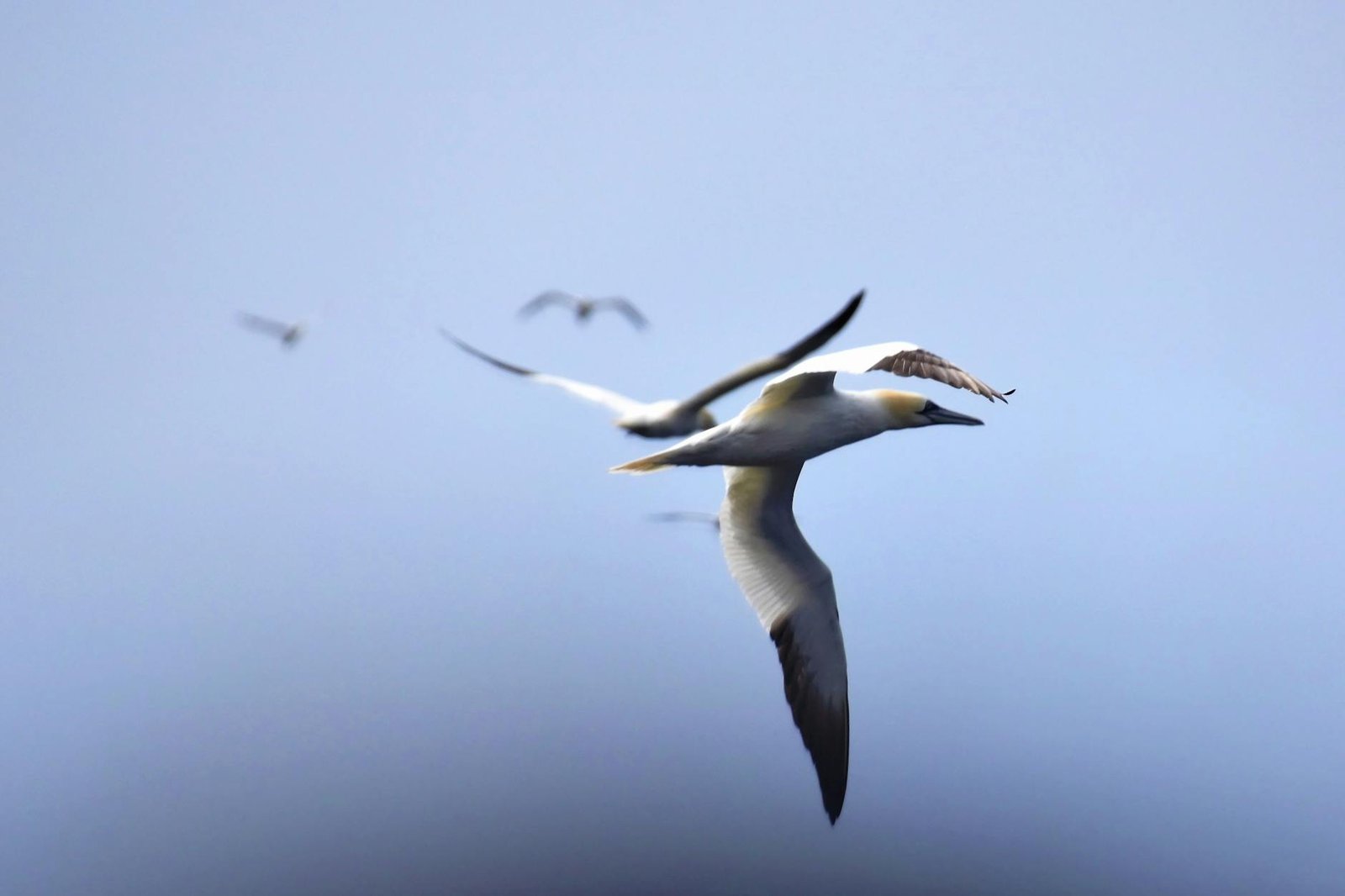
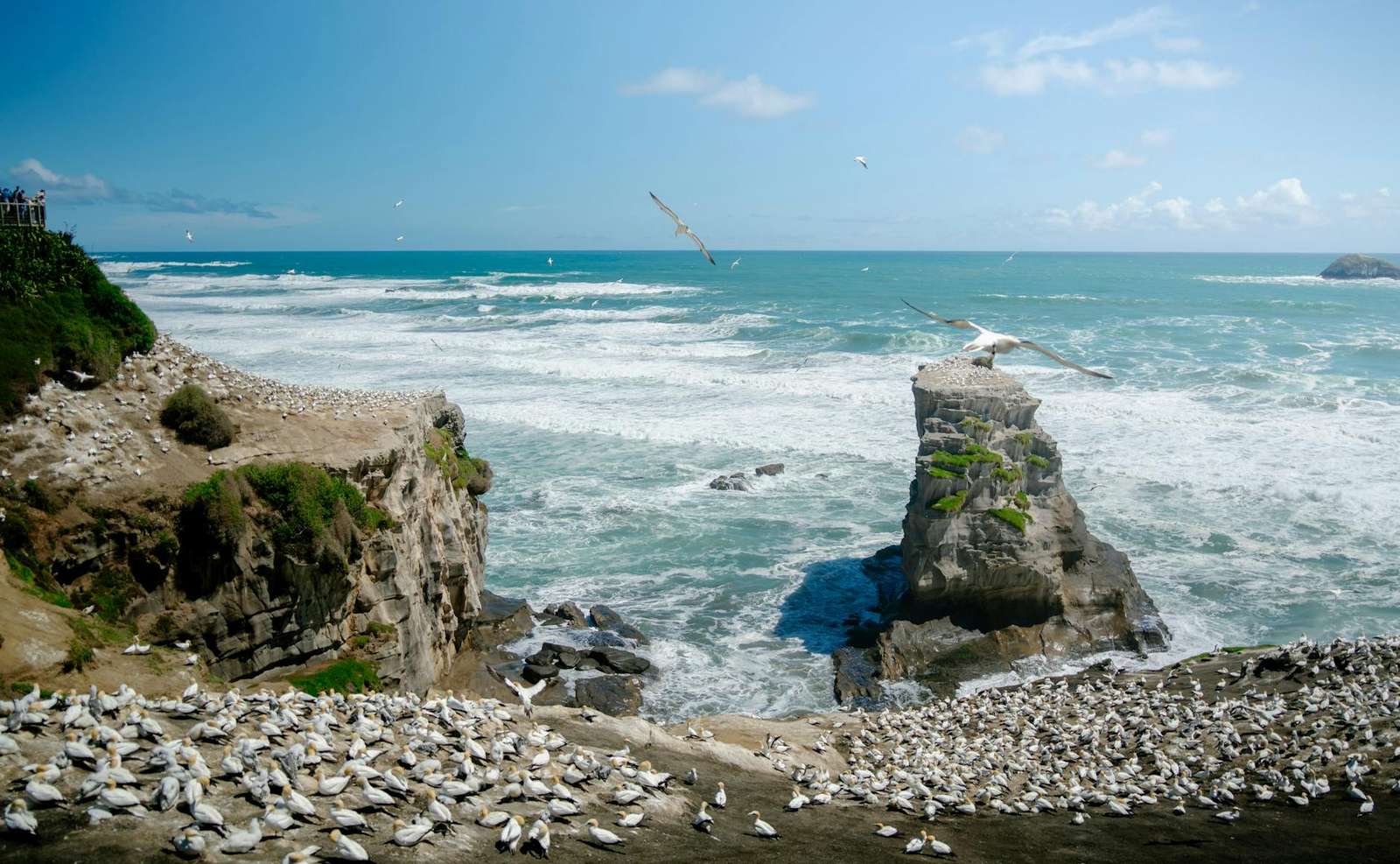
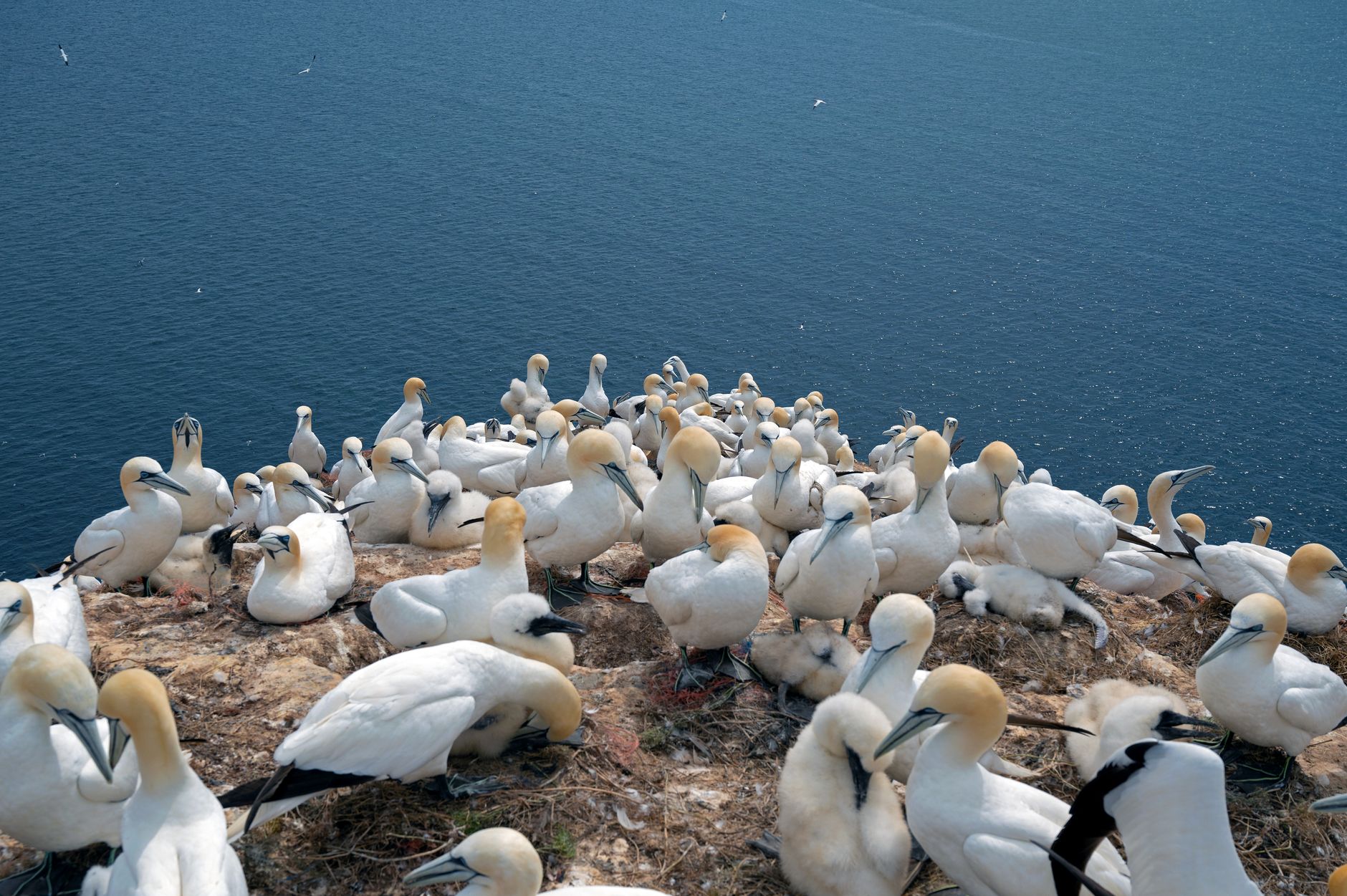
Muriwai’s gannet colony is the most easily accessible mainland gannet colony in NZ. Around 1,200 breeding pairs of Australasian gannets (Morus serrator) nest on the rocky promontory at the south end of the beach, and on adjacent Otakamiro Point. Two purpose-built viewing platforms allow visitors to observe from metres away without disturbing the birds.
This is one of only three mainland Australasian gannet colonies in New Zealand. Cape Kidnappers is far bigger at around 5,000 breeding pairs. What makes Muriwai the one people actually visit is proximity: 50 minutes from the CBD, no ticket, no tractor ride, no guide.
What surprises first-timers is how unbothered they are. You stand ten to twenty metres away and they carry on — pairs clashing bills in a rapid fencing motion, birds about to take off pointing skyward to clear a runway. Be ready for the noise and the smell, in that order. Auckland Council also runs a live YouTube stream from the colony, useful for checking whether the birds are back before you drive out in August. For more on the birds, see our Muriwai gannet colony day trip guide.
Gannet season
- August: Gannets return from their winter migration
- September–October: Pair-bonding, nest-building, courtship displays
- November–December: Egg-laying and incubation
- December–February: Chick-rearing — peak season for visiting
- February–March: Chicks fledging
- March–April: Migration to Australia
- May–July: Colony empty
For visitors, December and January are the peak experience — chicks visible, adults busy fishing, dramatic plunge dives off the cliffs.
How to access the gannet colony
- Park at the Waitea Road car park at Maukatia / Māori Bay, signposted off Motutara Road
- Follow the Maukatia Gannet Track — about 1.3km and 25 minutes return, on sealed path, steps and boardwalk
- Free admission and free parking, but park gates close at 9pm in summer and 7.30pm in winter
- Stay behind the rails and off the rock — a gannet defending an egg will go for you
- Dogs are prohibited on this track and everywhere seaward of Waitea Road
- Allow 30 to 60 minutes for proper viewing
One access note that trips people up: the northern entrance from Motutara Road was closed for safety reasons, with stairs, boardwalk and pathways upgraded from March 2026 once nesting finished and the northern platform repositioned uphill to give the colony room to expand. The rebuild was due to finish by mid-June 2026.
On accessibility: the paved viewing area at the northern end is the flat, wheelchair-friendly part, while the route in from Waitea Road involves timber steps and boardwalk. If step-free access matters, ring the council on 09 301 0101 first. Drones need a permit, and with avian influenza an ongoing concern, report sick or dead birds rather than touching them.
Muriwai Beach Itself

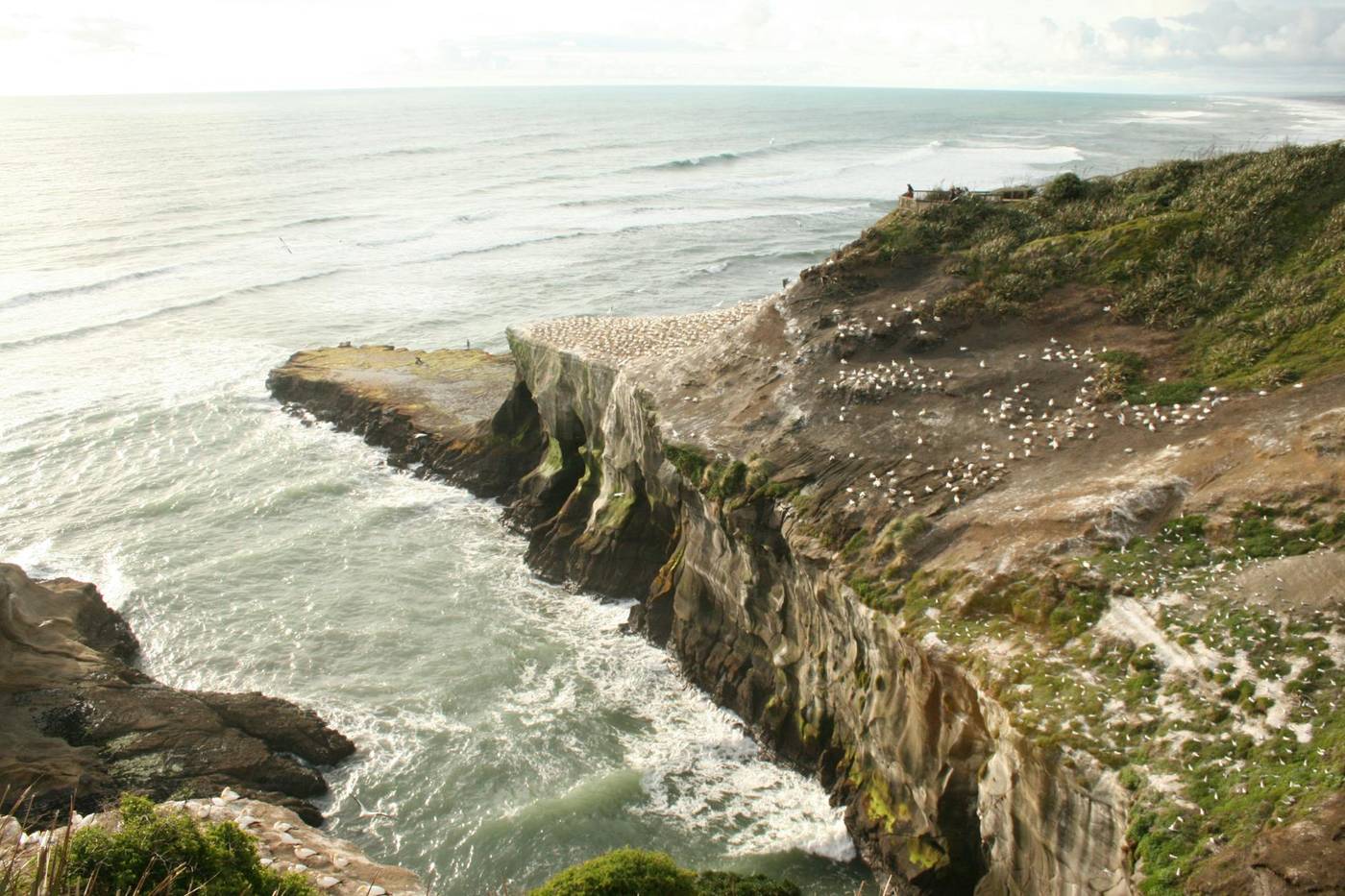
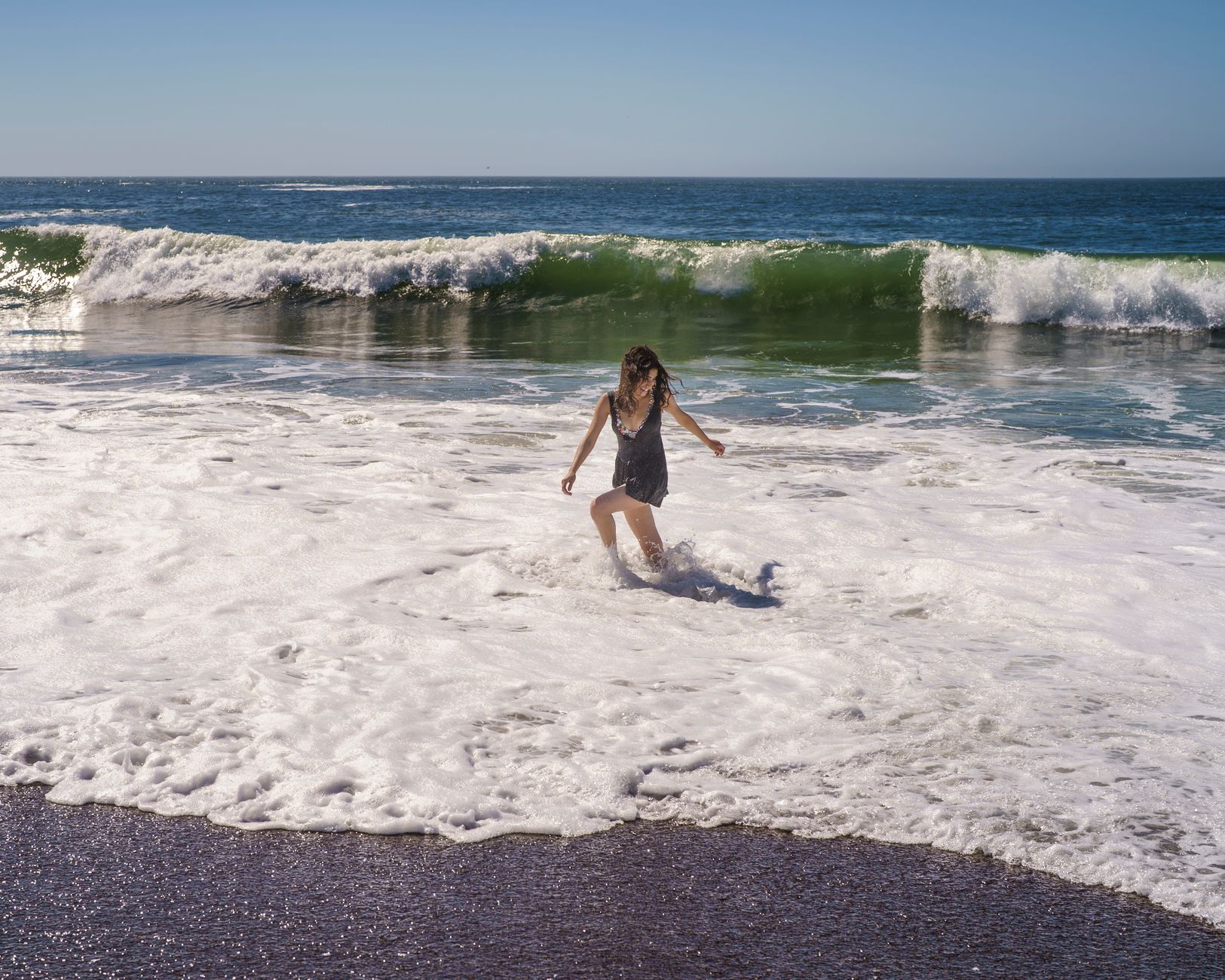
Muriwai’s main beach extends 3km from the carpark area, becoming progressively wilder as you head north. The black volcanic ironsand stretches to the horizon, with the gannet colony rocks visible at the southern end and the Tasman Sea pounding the shore.
Vehicle access
Muriwai is one of the few Auckland beaches where you can legally drive on the sand, but the rules have tightened and most visitors get this wrong. You must hold an Auckland Council beach driving permit, your vehicle needs a current warrant of fitness and registration, and you may only drive between the mean low and high water lines. The access roads are Coast Road and Wilsons Road.
Both gates close at peak times. Te Oneone Rangatira / Muriwai Beach has been vehicle-free over the New Year holiday period every year since 2020, typically from about 31 December to the second week of January, and closes again for a week around Guy Fawkes to cut fire risk. Access on foot and on horseback stays open, and fires, fireworks and camping are prohibited along this coastline at all times.
Walking north along Muriwai
You can walk Muriwai north for hours. The coastline runs roughly 60km up to the South Head of the Kaipara Harbour, backed by Woodhill Forest. Most visitors manage 2–3km, which is about right — there is no shade or water past the car park, and the wind is almost always onshore, so the walk back is the hard half.
Heading the other way, Te Henga / Bethells is roughly 8km south, not north — a common mix-up in older guides. It is a separate beach, covered in our Bethells Beach guide, and you cannot currently walk the coast between the two.
Muriwai Swim Safety
Muriwai is patrolled by the Muriwai Volunteer Lifeguard Service in summer. Like all west coast beaches, Muriwai has dangerous Tasman Sea rips. Rules:
- Only swim between the red and yellow flags, and only when lifeguards are on duty
- The Muriwai Volunteer Lifeguard Service patrols every weekend from Labour Weekend to Easter. Outside that window nobody is watching
- Do not swim alone, and do not swim on an outgoing tide
- Maukatia / Māori Bay is not the safe alternative — Auckland Council rates the surf there as dangerous too
- Rip currents here have killed people. That is not a cautious travel-guide phrase
- If caught in a rip, do not fight it: float, raise one arm, and swim parallel to the beach to get out of the channel
- Check Safeswim before you leave home for live lifeguard status, water quality and hazard warnings
Lifeguards pick the safest patch of water on the day and move the flags as conditions change, because west coast sandbars reshape constantly. The practical version for a visiting family: if you arrive and there are no flags, treat the water as off limits and make the day about the beach, the headland and the birds instead. There is an emergency phone at the surf tower. Two west coast specifics — the black ironsand gets painful underfoot on a hot afternoon, so bring jandals, and the sun is fierce even under cloud.
Surfing Muriwai
Muriwai delivers consistent year-round Tasman Sea surf. The breaks are powerful and the rips are serious, so it is not a beach to teach yourself on. The southern end near the gannet colony is more sheltered; the open beach further north picks up the bigger swell.
Beginners do not have to go to Piha, though. Muriwai Surf School has run here for more than twenty years out of a shack a minute’s walk from the sand. Group lessons go daily at 10.30am and 3pm, cost around NZ$70 per person for two hours with board and wetsuit included, and take surfers from age nine; private lessons run about NZ$140 for 90 minutes. Those were the prices at the time of writing. If you are comparing west coast options, our Piha Beach guide covers the learner corners there.
Goldie Bush & Muriwai Walks
- Maukatia Gannet Track — 1.3km and about 25 minutes return from the Waitea Road car park to the colony lookouts. The one everybody comes for
- Maukatia / Māori Bay — the small dark-sand bay below the colony, worth 30 minutes for the pillow lava in the cliffs behind it
- Muriwai Beach Loop Track and Mitchelson Lookout Track — easy graded walks through the dunes and coastal forest above the village
- Te Henga Walkway — from Constable Road, 1.2km and about 45 minutes one way to the clifftop viewpoint, or 1.8km and 65 minutes to Tirikohua Point
One correction to what you may read elsewhere: Te Henga Walkway can no longer be walked in full. The section from Tirikohua Point south to Bethells was destroyed by cliff collapses in the severe weather of early 2023 and remains closed, so what is left is an out-and-back of an hour or two rather than a point-to-point.
And the Goldie Bush Walkway and Mokoroa Falls Track, which appear on almost every Muriwai itinerary online, are currently closed to manage the spread of kauri dieback. Do not plan a day around them. Large sections of the Waitākere Ranges are shut for the same reason and closures change, so check the Auckland Council site first and use the cleaning stations. Our roundup of the best Waitākere Ranges hikes flags which tracks are currently walkable.
Eating at Muriwai
- Mobile food vendors — coffee, pastries, gelato, Mexican and Mediterranean street food, parked on Motutara Road near the old cafe site. Summer only
- Muriwai Surf Club — limited and irregular. Do not build a lunch plan around it
- The Hunting Lodge — winery restaurant at Waimauku, about ten minutes back inland
- Soljans Estate Winery — winery cafe at Kumeu, about fifteen minutes away, long-running and family-friendly
- Bring a picnic — the most reliable option, and there are electric BBQs and picnic tables in the park
Muriwai’s food situation changed and most guides have not caught up. The Sand Dunz cafe building closed in 2024 and was left unusable, so since November 2025 the council has approved a rotating group of local mobile vendors near the old site. They run through summer only, so treat them as a bonus. There is no shop, no ATM and no petrol station in the village.
Muriwai sits in the heart of Kumeu wine country. Combining the gannet colony with a winery lunch is one of Auckland’s classic day trip combinations.
Best Time to Visit Muriwai
- December–January (peak gannet season) — chicks visible, dramatic adult diving, busiest crowds
- October–November — courtship displays, fewer crowds
- February–March — fledging chicks, still active colony
- April–July — beach only, gannets gone (still beautiful for hiking and photography)
Sunset is magic at Muriwai — the west-facing beach catches the sun setting over the Tasman, with the gannet colony silhouetted dramatically.
That calendar does not tell you what each window looks like. October and November give the best behaviour of the season — bill-fencing, sky-pointing, long bouts of mutual preening. December and January mean fat grey chicks everywhere, the most dramatic window and the busiest. February and March you get juveniles working up the nerve to launch off the cliff edge.
For time of day, arrive before 9.30am on a summer weekend or after 3pm. And mind the gates when planning a sunset: summer closing is 9pm, winter 7.30pm.
Muriwai Photography
- Gannet colony close-ups — bring a 200–400mm telephoto lens for best results
- Otakamiro Point at sunset — gannets silhouetted against the Tasman
- Black sand patterns — wave-washed ironsand textures
- Maori Bay below the colony — offshore islets and sea stacks
- Long beach panoramas heading north
What to Bring
- Water (1.5L per person)
- Snacks or picnic lunch
- Sunscreen — west coast UV is intense
- Hat and sunglasses
- Walking shoes for gannet colony track
- Towel and swimwear (if patrolled flags up)
- Camera with telephoto lens
- Light jacket — west coast can be windy
- A little cash for the summer food vendors — parking is free and there is no ATM in the village
- Binoculars, which beat a camera if you are only bringing one thing
- Jandals for the hot black sand, plus grippy shoes for the boardwalk, which goes slick in drizzle
On cost: entry, parking and the colony are free, so the only real spend is fuel. A return trip from the CBD is about 84km, which with 91 octane running above NZ$3 a litre through 2026 is roughly NZ$20 to NZ$25 in a small petrol car.
Muriwai vs Piha vs Karekare
- Muriwai — wildlife focus (gannets), longest beach, permit-only beach driving, wineries nearby
- Piha — most popular, has cafés, surf lessons, Lion Rock
- Karekare — wildest, most isolated, The Piano filming location
Choose Muriwai if you want wildlife and don’t mind less infrastructure than Piha. Pair with a Kumeu winery for a perfect day.
Sample Muriwai Day Trip
- 9am — Leave Auckland CBD via SH16
- 9:45am — Coffee stop at Kumeu
- 10:30am — Arrive Muriwai, gannet colony viewing platforms
- 11:30am — Walk on the beach south of the colony
- 1pm — Lunch at The Hunting Lodge winery
- 2:30pm — Return to Muriwai for beach time or Goldie Bush walk
- 4:30pm — Sunset on the beach
- 5:30pm — Drive back to Auckland
- 6:30pm — Arrive Auckland CBD
Muriwai With Kids
- Gannet colony fascinates kids 4+ — birds at touching distance behind the platforms
- The walk to the colony is short and easy (10 mins)
- Walking on the beach is fun and safe (don’t enter the water without flags)
- 4WD beach drive is exciting for kids who can sit safely
- Picnic on the dunes is an Auckland classic, and the whole outing ranks with the best family day trips from Auckland
The facilities are better than the wild setting suggests, which is what makes Muriwai work with young children: three toilet blocks, a playground, tennis courts, a small skate park, electric BBQs, picnic tables and a drinking fountain — far more than Karekare or Bethells offers.
Dogs need care, because the rules change halfway along the beach. They are prohibited at all times south of the surf tower and everywhere seaward of Waitea Road, including the gannet colony, but can run off-leash north of the surf tower. And Muriwai village was badly hit by fatal landslides during Cyclone Gabrielle in February 2023, with homes bought out and removed, so you will notice cleared sections and ongoing works.
Wildlife & Plants
- Australasian gannets — main attraction, 1,200 breeding pairs
- NZ pied stilts — wading birds at the shore
- Variable oystercatchers — black-and-white shorebirds
- NZ fur seals — occasional rocky outcrop sightings
- Pohutukawa — flowering red Dec/Jan
- Native sand binders — Spinifex and pingao on the dunes
Camping & Accommodation
- Muriwai Beach Campground — formerly the Muriwai Motor Camp, beside the beach inside the regional park. Sixty-seven powered sites from around NZ$60 a night for two, sixty-six unpowered sites at roughly NZ$24 per adult and NZ$12 per child, and nine cabins, with kitchen, showers and accessible facilities. Pets in the campground only
- Bach rentals — a good supply through the usual booking sites, and they go quickly for January
- Kumeu and Waimauku — rural B&Bs and vineyard stays ten to fifteen minutes inland
- Drive 50 minutes back to the city — what most visitors do
Combining Muriwai With Kumeu Wineries
Auckland’s premier wine region surrounds Muriwai:
- Soljans Estate Winery — long-running, family-friendly
- The Hunting Lodge — boutique winery and restaurant
- Coopers Creek Vineyard — established producer
- Kumeu River Wines — internationally renowned Chardonnay producer
- West Brook Winery — boutique, scenic
The order that works best is colony first, winery lunch second, beach last: do the headland while the birds are active and the car parks are empty, then come back for the afternoon light. Designate a driver before you leave — there is no train, the buses stop well short of Muriwai, and rideshare coverage is unreliable out here. Several cellar doors keep short winter hours, so ring ahead between May and September. Our guide to the best wineries near Auckland covers who is open when.
Frequently Asked Questions
How far is Muriwai from Auckland?
42km northwest, a 50-minute drive on sealed roads.
When is the best time to see the Muriwai gannets?
December–January for chick-rearing. October–November for courtship displays. The colony is empty May–July.
Is the gannet colony free to visit?
Yes, and parking is free too. But it is not open 24 hours: the park gates close at 9pm in summer and 7.30pm in winter.
Can you swim at Muriwai?
Only between the flags during summer lifeguard patrols. Outside those hours, the rip currents are dangerous.
Is Muriwai suitable for kids?
Yes — for the gannet colony walk, beach walking, and 4WD beach driving (with proper precautions). Don’t swim outside flags.
Is there a café at Muriwai?
Not a permanent one. The Sand Dunz cafe closed in 2024 and its building is unusable, so summer food comes from council-approved mobile vendors on Motutara Road. Outside summer, bring a picnic or eat in Kumeu.
Can you drive on Muriwai Beach?
Yes — 4WD vehicles can access designated zones at low tide. Follow Auckland Council rules. Stick to firm sand. Stay away from gannet colony.
Is the Goldie Bush walk open?
No. The Goldie Bush Walkway and the Mokoroa Falls Track are closed to manage the spread of kauri dieback, with no announced reopening date, though plenty of older articles still recommend them. The open alternatives near Muriwai are the Maukatia Gannet Track, the Muriwai Beach Loop Track and the Mitchelson Lookout Track.
Can you walk from Muriwai to Bethells Beach?
Not any more. The Te Henga Walkway used to link the two, but the section from Tirikohua Point south to Bethells was destroyed by cliff collapses in the early 2023 storms and remains closed. From the Constable Road end you can still walk 1.2km to a clifftop viewpoint or 1.8km to Tirikohua Point and return the same way.
How long should I allow at Muriwai?
Four hours is the realistic minimum once you count the drive: an hour at the colony, an hour on the beach and two hours in the car. A full day works better, with a Kumeu winery lunch in the middle.
Final Take: A Wildlife Day Trip Like No Other
Muriwai Beach delivers something most Auckland day trips don’t — a thriving wildlife colony at touching distance, set against one of NZ’s most striking coastlines. Combined with Kumeu wine country, dramatic black-sand vistas, and the option of long-beach walking or surfing, Muriwai is one of Auckland’s most rewarding excursions.
For best experience, visit during gannet breeding season (Aug–Mar), arrive by 10am to avoid crowds, allow at least 4 hours, and pair with a winery lunch nearby. The combination is hard to beat anywhere in NZ.