Devonport Auckland Day Trip Guide (2026)
Complete 2026 Devonport Auckland day trip guide — 12-min ferry, Victorian village, Mt Victoria summit, North Head WWII tunnels, beaches and where to eat.

This article contains advertising. Our booking links are routed through a partner that adds commission tracking automatically, so if you book through one we earn a commission from the provider, at no extra cost to you. It never affects what we recommend. Affiliate disclosure
Devonport Auckland is one of the city’s most charming day trips — a 12-minute ferry ride from the CBD lands you in a Victorian seaside village of weatherboard buildings, fish-and-chip shops, two volcanic cones, and harbour beaches. With cafés, boutiques, naval history, WWII tunnels, and Auckland’s best low-key foreshore, Devonport delivers everything a visitor wants from a half-day or full-day Auckland excursion. This complete 2026 Devonport Auckland guide covers the ferry, what to see, where to eat, the best walks and the perfect itinerary, one of the simplest day trips from Auckland to pull off without a car.
| Detail | What to know |
|---|---|
| Getting there | Ferry from Downtown Ferry Terminal Pier 1, 12 minutes, every 15–30 minutes |
| Ferry fare | NZ$7.80 adult one way with AT HOP or contactless; NZ$12 paper ticket; NZ$4.69 child |
| Best-value ticket | Day-trip return from the Downtown terminal machines, around NZ$23 adult / NZ$13 child |
| Time needed | Half a day for the village and one maunga; a full day to add North Head and the Navy Museum |
| Free to do | Takarunga and Maungauika summits, the North Head tunnels, all four beaches |
| Paid entry | Almost nothing — the Navy Museum is free for NZ residents, NZ$15 for international adults 18+ |
| Watch out for | Cheltenham goes a long way out at low tide, and the village winds down early |
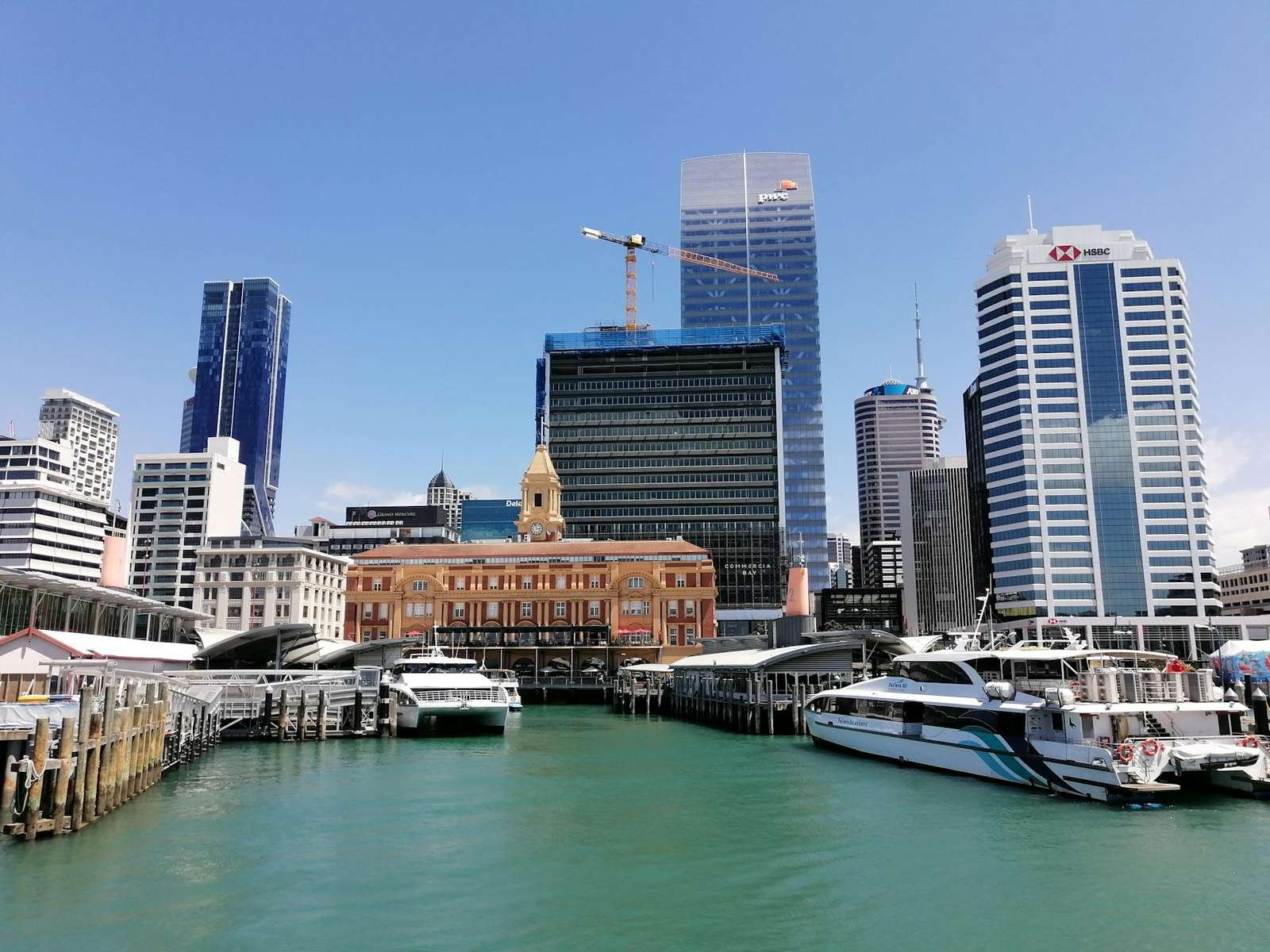
Devonport is unusual among Auckland day trips in that the transport is part of the attraction rather than a cost you tolerate. The crossing gives you the Waitematā, the working port, Rangitoto and the city skyline from the water for the price of a bus fare, and it lands you at the foot of the main street. Sit on the right-hand side heading over.
Why Devonport Is Worth a Day
Devonport delivers six distinct attractions in one easy ferry-accessible package:
- The 12-minute ferry crossing — one of Auckland’s most spectacular harbour experiences in itself
- Victoria Road’s heritage village — Victorian and Edwardian timber buildings, boutiques, cafés
- Mount Victoria (81m) — Devonport’s volcanic cone, panoramic views back to the CBD
- North Head (Maungauika, 65m) — coastal cone with WWI/II military tunnels
- Cheltenham Beach & Narrow Neck Beach — calm-water family swimming
- The Royal NZ Navy Museum — fascinating naval history museum
And it is all free or low-cost. The ferry works out at NZ$15.60 return at the adult AT HOP or contactless fare, or around NZ$23 for a day-trip return ticket bought at the Downtown terminal. Both maunga walks are free and open every day, the North Head tunnels are free, and the Royal NZ Navy Museum charges New Zealand residents nothing and international visitors aged 18 and over NZ$15. The Devonport Museum asks only for a donation. A family of four can do the whole day for the cost of the ferry and lunch.
How to Get to Devonport
- Ferry from CBD (best option) — Auckland Downtown Ferry Terminal Pier 1 to Devonport Wharf, 12 minutes, every 15–30 minutes 6:15am to 11:45pm. NZ$7.80 adult one-way with HOP card or contactless tap.
- Drive over Auckland Harbour Bridge — 25 minutes from CBD. Free parking on Devonport’s residential streets.
- Bus — limited services, slower than ferry
- Walking from CBD — not feasible (no pedestrian access on the harbour bridge)
The ferry detail that matters, current as of the February 2026 Auckland Transport fare round:
- Fares: NZ$7.80 adult one way with an AT HOP card or a contactless card or phone, NZ$12 for a paper ticket, NZ$4.69 for a child aged 5–15 on a registered HOP card. Under-5s travel free with a paying adult.
- Free rides worth knowing: children aged 5–15 travel free at weekends and on public holidays with a registered HOP card, and seniors with a concession travel free after 9am on weekdays and all day at weekends.
- Caps: NZ$50 per week on AT HOP and NZ$20 a day on contactless, both of which include the Devonport route.
- Day-trip tickets: around NZ$23 adult and NZ$13 child from the machines at the Downtown Ferry Terminal. Buy before boarding and keep it for the return leg the same day.
- Bikes: carried free on all Auckland ferries, so Devonport is an easy cycling day.
- Timetable shape: every 15–30 minutes through the day, first city departure around 5.45am on weekdays, last back from Devonport near 11.45pm Monday to Thursday and later on Friday and Saturday. Public holidays run the Sunday timetable, which starts later and finishes earlier — the most common way people get caught out.
If you are combining Devonport with other harbour trips, our guide to Auckland ferry routes and schedules covers the network and the AT HOP card guide explains which payment method saves most. Driving is the fallback rather than the plan: parking on Victoria Road is time-limited and enforced, the free residential streets fill by mid-morning at weekends, and you swap a 12-minute crossing for 25 minutes of harbour bridge.
The ferry is dramatically more pleasant than driving, and the Auckland ferry routes and timetables are worth a quick check before you head down to the terminal. Take the ferry.
Devonport Village & Victoria Road
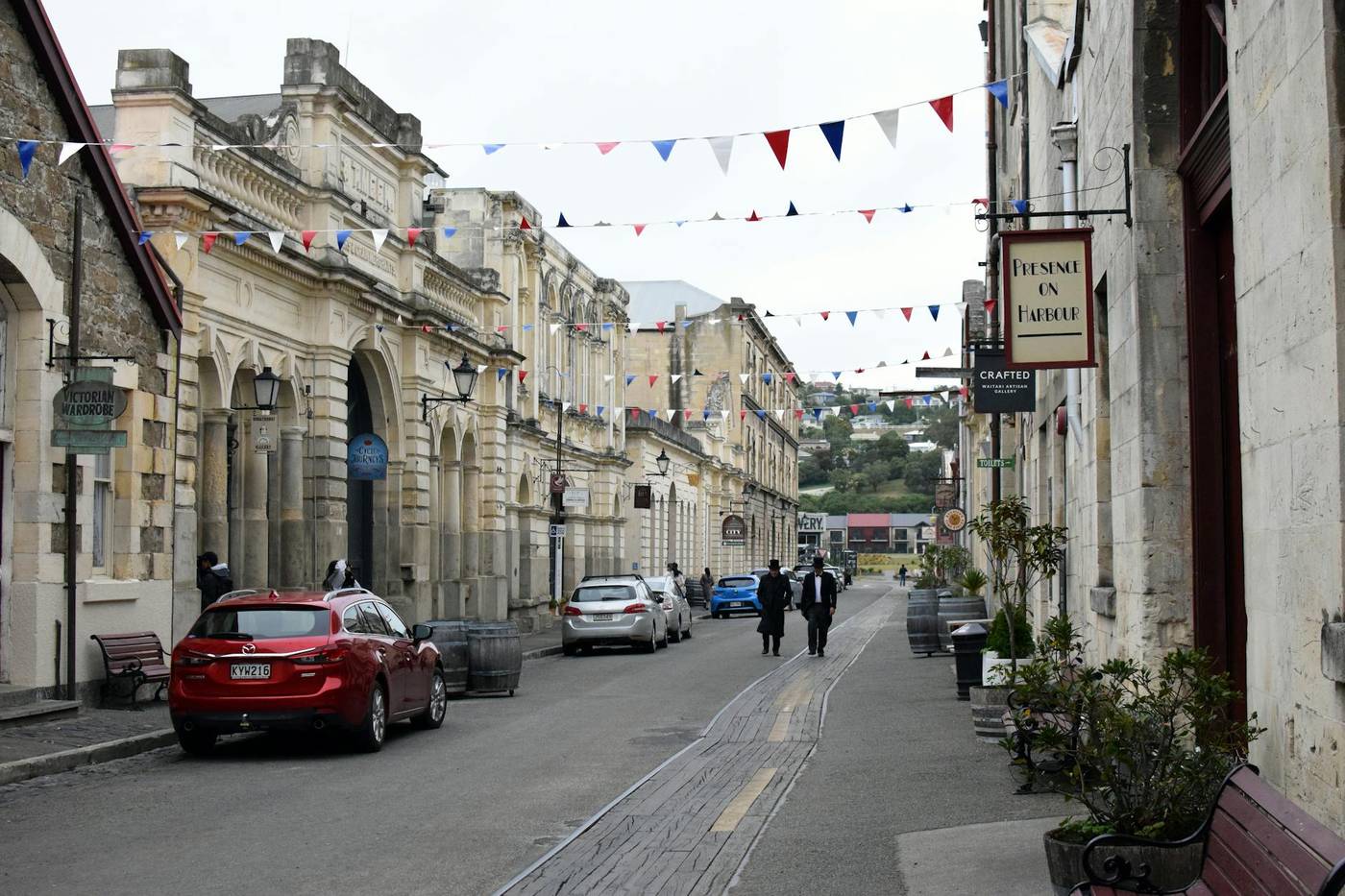
Victoria Road runs from the wharf inland past the village’s commercial heart. The street is lined with restored Victorian and Edwardian timber buildings — you’ll find independent boutiques, gift shops, antique stores, fish-and-chip shops, cafés and the Devonport Museum. Allow 1–2 hours to wander the strip.
Top Devonport shops
- Devonport Old Stamp Office — historic post office building, gift shop
- Living Stones — pounamu (greenstone) jewellery
- Bookmark — Devonport’s much-loved independent bookshop
- Devonport Chocolates — local artisan chocolatier
- French Bakery — pastries on Victoria Road
- Antiques and vintage stores — multiple along the strip
Two places on that strip deserve singling out. The Vic on Victoria Road opened in 1912 and is the oldest purpose-built cinema in the Southern Hemisphere still running as one — blockbusters, arthouse, live events — and a rainy afternoon session there is one of the better things you can do here. The Devonport Museum, up on Mount Cambria Reserve, is a charming volunteer-run local history collection, but it opens Sunday afternoons only, roughly 2pm to 4pm, entry by donation.
Timing matters more here than in the CBD. Most Devonport shops open around 9.30am and start shutting from 4.30pm, and the village empties fast on a winter evening. If shopping is the point, come in the morning.
Mount Victoria (Takarunga, 81m)
Devonport’s main volcanic cone, named after Queen Victoria. The summit walk takes 25 minutes from the wharf and rewards with one of Auckland’s premier panoramic views — looking south across the harbour to the CBD and Sky Tower, north to North Shore beaches, east to Rangitoto Island. The summit has a war memorial, viewing platform with binoculars, and bench seating.
- Walk up Victoria Road from the ferry, turn onto Kerr Street, follow signposts
- Path is paved and easy — suitable for prams and most fitness levels
- Free, open 24/7
- Particularly stunning at sunset
Two things to know before you walk up. Takarunga is one of Auckland’s fourteen Tūpuna Maunga, and its summit road has been permanently closed to private vehicles since March 2018 — so walking is the only way up unless you have limited mobility, in which case you can request an access code at the automated gate. Visitor parking is inside the Kerr Street entrance and is time-limited.
The other thing is what you are standing on. This was a substantial pā, and the terracing you cross on the way up is the earthworks of that settlement rather than landscaping. The mushroom-shaped structure near the top is a Victorian-era disappearing gun emplacement, part of the same coastal defence scheme as North Head. Our guide to Auckland’s volcanic field puts Takarunga in context, and Maungawhau / Mt Eden is the obvious second cone of a two-maunga day.
North Head (Maungauika, 65m)
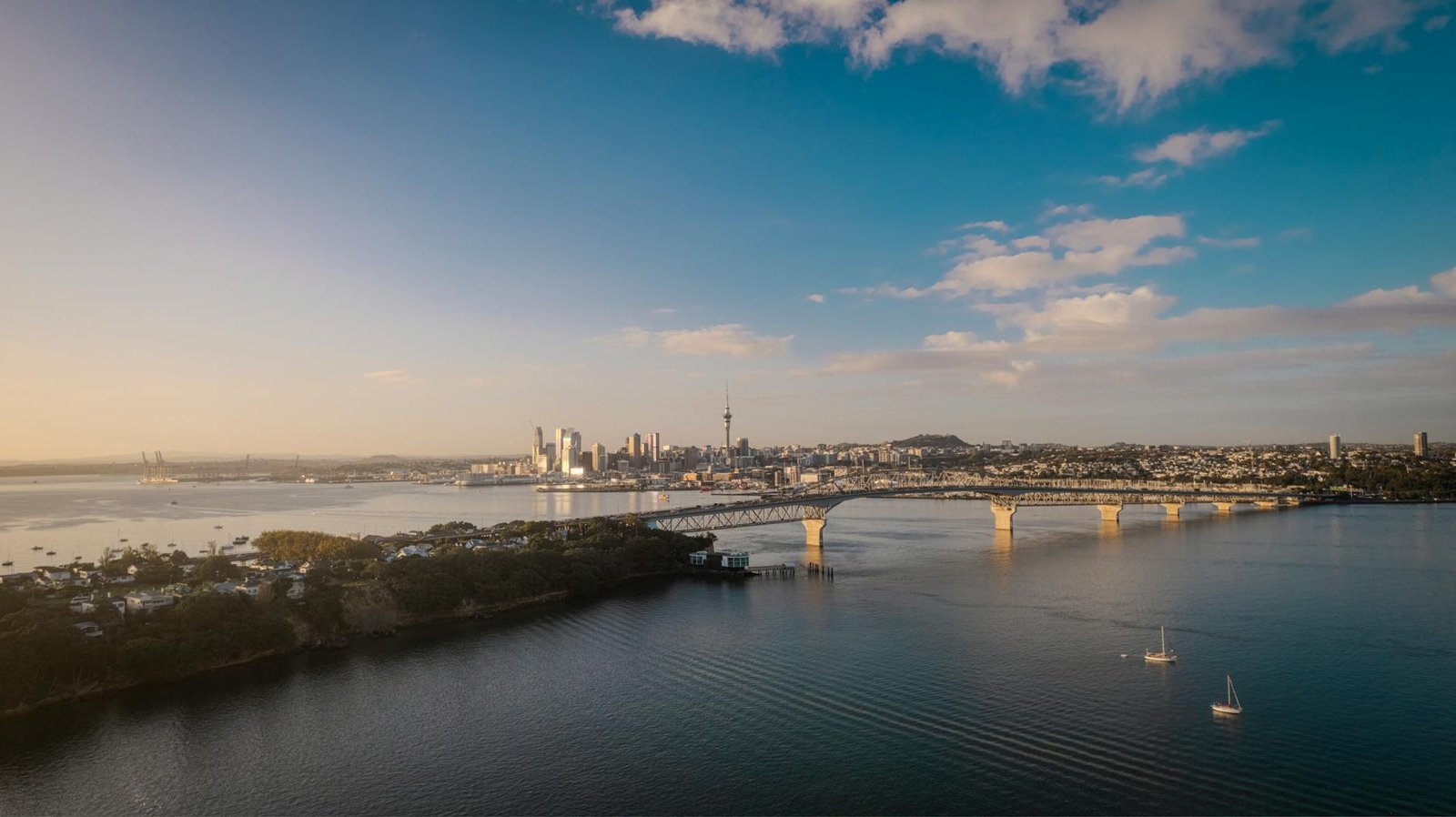
Devonport’s other cone, on the eastern point at the entrance to Waitematā Harbour. The cone served as a military fortification from the 1880s through to WWII. The tunnel system riddles the inside of the maunga — open to public exploration, free admission. Bring a torch (some tunnels are dark).
- 20 minutes walk from the wharf
- Tunnels open daylight hours
- Free admission, free walking
- Spectacular harbour entrance views
- Disappearing gun emplacements still in place
- Most kids absolutely love the tunnels
Maungauika is also a Tūpuna Maunga, free and open every day of the year. Gate times shift with daylight saving: in summer the pedestrian gate is generally open 6am to 10pm and the vehicle gate 6am to 8pm, in winter roughly 7am to 8.30pm on foot and 7am to 7pm by car. It is about 2km from the wharf along King Edward Parade.
The tunnels are the draw and genuinely dark in places, so bring a torch rather than a phone on 12% battery. Wear shoes with grip — the floors are damp concrete — and expect low ceilings in the connecting passages. The fortifications date from 1885, when a Russian invasion scare prompted a rush of coastal defence building around New Zealand’s main harbours, and stayed in military use through both world wars.
Devonport Beaches
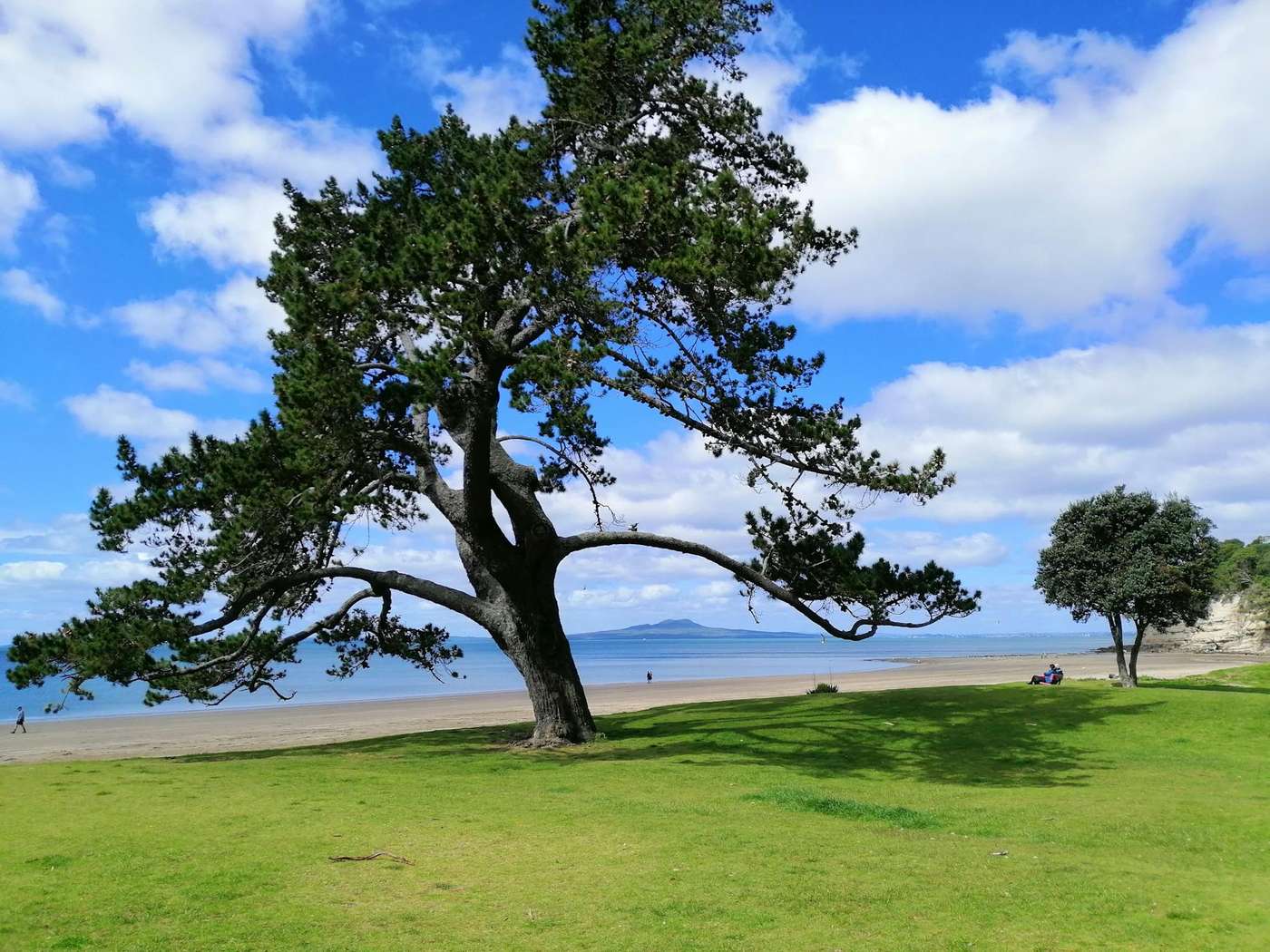
- Cheltenham Beach — Devonport’s main family beach, calm tidal waters, sand-and-shell surface, pohutukawa-shaded foreshore
- Narrow Neck Beach — north of Cheltenham, slightly quieter, similar calm-water swimming
- Devonport Beach (foreshore) — small swimming spot near the ferry wharf, popular with kayakers
- Torpedo Bay — small east-facing beach near the Navy Museum
All Devonport beaches are calm-water harbour beaches — much safer for kids than the wild west coast. No rip currents, no big surf.
The one thing nobody tells you about Cheltenham is how tidal it is. At low water the sea retreats a very long way across firm sand, which is wonderful for small children with buckets and useless if you came to swim, so check the tide before you commit to a swimming afternoon. The reward at low tide is the walk out towards the point with Rangitoto square in front of you, which is the classic Devonport photograph.
None of these beaches are lifeguard-patrolled, and it is worth checking Safeswim for water quality after heavy rain — Auckland’s harbour beaches can carry temporary warnings for a day or two after a big downpour. If Rangitoto keeps drawing your eye from the sand, our Rangitoto Island day trip guide covers getting out to it.
Royal NZ Navy Museum
Located at 64 King Edward Parade on Torpedo Bay, this is the National Museum of the Royal New Zealand Navy and it is much better than its low profile suggests. It covers naval history from the early colonial era to the present, with ship models, period uniforms, medals, oral histories and standout exhibits on HMNZS Leander and the Pacific campaigns. Allow at least 90 minutes. It opens 10am to 5pm seven days, closing only on Good Friday, Christmas Day and Boxing Day. Admission is free for New Zealand residents and NZ$15 for international visitors aged 18 and over. The Torpedo Bay Cafe next door has harbour views, a children’s menu and a Navy-themed playground, which makes it one of the easiest lunch stops in Devonport with young children.
Where to Eat in Devonport
Cafés and brunch
- Coxy’s Café — Devonport family favourite, big breakfasts, harbour views
- The Esplanade Hotel café — classic Victorian hotel café
- Manuka Cafe — popular brunch spot
- Macy’s Cafe — coffee and cakes
- Stone Oven Bakery & Cafe — wood-fired bakery
Restaurants
- Nautilus Restaurant — Devonport’s top seafood restaurant on Victoria Wharf, and a strong contender among Auckland’s best seafood restaurants
- The Cheese Cellar — wine and cheese specialist
- Indian Pavilion — long-running family Indian
- The Sapphire Room — fine dining at the Esplanade Hotel
Fish & chips (the Devonport classic)
- Devonport Fish & Chips on Victoria Road — Auckland’s most famous
- The Wharf Fish Shop — eat on the foreshore
Take fish & chips down to the wharf or Cheltenham Beach for the quintessential Auckland experience.
Budget roughly NZ$14–20 a head for fish and chips, NZ$22–30 for a cafe brunch and NZ$40–70 for dinner at the better restaurants. The village cafes are busiest between 9am and 11.30am at weekends and you will queue; dinner bookings are worth making for Friday and Saturday because the number of seats in Devonport is small. And the gulls at the wharf are organised and shameless, so eat with your back to a wall.
Devonport Half-Day Itinerary (4 hours)
- 10am — Ferry from Auckland Downtown Ferry Terminal
- 10:15am — Coffee and brunch at Coxy’s Café
- 11:15am — Walk Victoria Road, browse shops
- 12pm — Walk up Mount Victoria for views
- 1pm — Fish & chips at Devonport Fish & Chips, eat on the wharf
- 2pm — Ferry back to CBD
Devonport Full-Day Itinerary (8 hours)
- 9:30am — Ferry from CBD
- 9:45am — Coffee at Manuka Cafe
- 10:30am — Walk Victoria Road shops
- 11:30am — Walk up Mount Victoria summit
- 12:30pm — Lunch at Nautilus or Coxy’s
- 2pm — Walk to North Head, explore tunnels
- 3:30pm — Royal NZ Navy Museum
- 5pm — Cheltenham Beach swim or stroll
- 6pm — Dinner at the Esplanade or Nautilus
- 7:30pm — Sunset ferry back to CBD
Devonport in Winter and in the Rain
Devonport is one of the few Auckland day trips that survives bad weather, which is why locals keep going in July. The crossing is enclosed and the village is compact enough that you are never more than a couple of minutes from cover. A wet-day version: mid-morning ferry, long brunch, an hour in the Navy Museum, a session at The Vic, fish and chips, and the 4pm boat home. Total walking in the rain, about ten minutes.
Winter also gives you the village at its best in one specific way: the summit of Takarunga at 5pm in June, with the city lights already on across the water and nobody else up there. Take a torch for the walk down.
Devonport With Kids
Devonport is exceptional for families:
- The ferry ride alone is a hit with kids of all ages
- North Head’s tunnels are pure adventure for kids 4+
- Cheltenham Beach has calm waters perfect for paddling
- Fish & chips on the wharf is a quintessential family meal
- The summit walks are short enough for kids 4+
- Free playgrounds at Cheltenham Beach
- Devonport Museum is small but engaging for primary-school kids
Where to Stay in Devonport
Devonport offers a quieter, more village-like alternative to CBD hotels and the busier central city precincts:
- The Esplanade Hotel — historic 1903 hotel right opposite the wharf, NZ$280/night
- Peace & Plenty Inn — restored Victorian boutique B&B, NZ$320/night
- Devonport Sea Cottage — restored historic cottage rental
- Multiple Airbnbs — heritage villas and harbour-view apartments
Best Time to Visit Devonport
- Summer weekends — busiest, most vibrant, longest ferry hours
- Weekday mornings — quietest, best photography
- Sunset — Mount Victoria summit at sunset is magical
- Saturday morning — Devonport Wharf Market opens early
Devonport Markets & Events
- Devonport Wharf Market — Saturday morning, fresh produce
- Devonport Christmas Festival — annual December community event
- Devonport Heritage Walks — during Auckland Heritage Festival (late September to early October)
- Devonport Food & Wine Festival — Easter weekend
Worth correcting one detail that trips people up: the Devonport Market is monthly rather than weekly. It runs on the first Saturday of the month, indoors at the ferry terminal building and outdoors on Windsor Reserve beside the wharf. Turning up on any other Saturday expecting a market is a common disappointment. Windsor Reserve is worth knowing about regardless — good playground, plenty of grass, and where half of Devonport ends up on a fine Sunday.
Devonport Photography
- Mount Victoria summit — Auckland CBD skyline back across the harbour
- The ferry approach — wooden wharf and Victorian buildings ahead
- Victorian timber architecture on Victoria Road
- Sunset over Cheltenham Beach
- North Head fortifications — silhouettes against the harbour
Devonport History
Devonport was established as a colonial settlement in the early 1840s — among Auckland’s earliest European settlements, alongside Parnell on the city side of the harbour. Originally called Flagstaff (after the signal flagstaff on Mount Victoria), it was renamed Devonport in 1859 after the Royal Navy’s Devonport in England. The Royal NZ Navy maintains a base on Devonport’s eastern shore — Devonport’s naval history continues today.
The longer history starts well before that. Takarunga and Maungauika were both occupied pā, and the terraced slopes you walk over on the way to either summit are the remains of those settlements. Devonport’s European chapter began with a ferry almost immediately — a regular crossing was running from the 1860s, which is why the village grew as a commuter suburb rather than an industrial one, and why its Victorian and Edwardian housing survived largely intact — the reason I send anyone interested in Auckland’s colonial heritage sites across the harbour first.
Torpedo Bay takes its name literally: the Royal Navy installed a torpedo boat station there in the 1880s as part of the same defensive scheme that produced the North Head tunnels, and the buildings now housing the Navy Museum are part of that complex. For how Devonport sits within the wider city, our Auckland neighbourhoods guide maps out the alternatives.
Devonport Walking Routes
- The Devonport Heritage Walk — 90-minute self-guided walk past the village’s heritage buildings
- Mount Victoria summit — 25 minutes from wharf
- North Head loop — 1 hour with tunnel exploration
- Cheltenham Beach foreshore walk — 30 minutes return from Devonport wharf
- Devonport Coastal Walk to Takapuna — 2-hour one-way coastal route that finishes in Takapuna village on the North Shore
Combining Devonport With Other Auckland Activities
- Devonport + Mt Eden — both volcanic cones in one day, pairing Mount Victoria with the Maungawhau summit walk
- Devonport + Auckland Museum — heritage and naval history pairs well with the collections covered in our Auckland War Memorial Museum guide
- Devonport + Sky Tower — both panoramic Auckland viewpoints
Devonport Accessibility
The Devonport ferry has level access for wheelchairs and prams. Victoria Road is mostly flat with good footpaths. North Head has some uneven sections but the main views are accessible. Mount Victoria’s summit walk is paved and accessible. Cheltenham Beach is pram-friendly.
Two additions. Both maunga have automated gates on their summit roads with an access code available to people with limited mobility — call the Tūpuna Maunga Authority when you arrive. And while the Takarunga summit road is sealed and walkable with a pram, the gradient is real. If you want to extend the day up the coast, Devonport connects to the rest of the North Shore by bus in about 20 minutes, and our Takapuna and North Shore guide covers what is at the other end.
Frequently Asked Questions
How long is the Devonport ferry from Auckland?
12 minutes from Auckland Downtown Ferry Terminal to Devonport Wharf.
How much is the Devonport ferry?
NZ$7.80 adult one way with an AT HOP card or a contactless card or phone, NZ$12 for a paper ticket bought at the terminal, and NZ$4.69 for a child aged 5–15 on a registered HOP card. Under-5s are free. A day-trip return ticket from the Downtown terminal costs around NZ$23 for adults and NZ$13 for children, and children aged 5–15 travel free on weekends and public holidays with a registered HOP card. Fares were last adjusted on 1 February 2026, so check Auckland Transport if you are reading this much later.
Is Devonport worth visiting?
Absolutely yes. Devonport is one of Auckland’s most charming and accessible day trips, blending heritage village, volcanic walks, naval history, beaches, and dining.
How long should you spend in Devonport?
Half day (4 hours) covers the village, summit, and a meal. Full day (8 hours) covers all the highlights including North Head and the Navy Museum.
Are dogs allowed on the Devonport ferry?
Yes — leashed dogs are welcome on the inner harbour ferries.
Where do Devonport ferries depart from?
Auckland Downtown Ferry Terminal Pier 1, on Quay Street. 5-minute walk from Waitematā Station (Britomart).
Can you swim at Devonport beaches?
Yes — Cheltenham Beach and Narrow Neck are calm-water family beaches with no rip currents. Suitable for kids of all ages.
Can you drive up Mount Victoria in Devonport?
No. The summit road on Takarunga / Mount Victoria has been closed to private vehicles since March 2018 under the Tūpuna Maunga Authority. Visitor parking is inside the Kerr Street entrance and the walk up takes about ten minutes. If you cannot manage the climb, call the authority at the automated gate for an access code.
Is the Royal NZ Navy Museum free?
It is free for New Zealand residents. International visitors aged 18 and over pay NZ$15, and under-18s are free. It opens 10am to 5pm seven days, closing only on Good Friday, Christmas Day and Boxing Day.
What is the best day to visit Devonport?
A weekday morning if you want the village quiet and the light good for photographs, or the first Saturday of the month for the Devonport Market. Sundays are pleasant but some shops keep shorter hours, and public holidays run the Sunday ferry timetable, which finishes earlier.
Final Take: Auckland’s Best Half-Day
Devonport Auckland is the perfect Auckland half-day. The 12-minute ferry crossing, the heritage village strip, the volcanic summit walks, the WWII tunnels, the calm beaches, the fish-and-chip wharf experience — all combine into a day that feels both completely Auckland and worlds away from the CBD’s bustle.
Take the morning ferry, walk Victoria Road, climb Mount Victoria, lunch at the wharf, explore North Head’s tunnels, swim at Cheltenham Beach, and ferry back at sunset. There’s no better introduction to suburban Auckland, and our Auckland neighbourhoods guide covers where to head next.
Devonport is also the backbone of the best single-day plan in Auckland — the twelve-minute crossing and the walk up Mount Victoria give a first-time visitor the whole geography before lunch. Our one day in Auckland itinerary builds the morning around exactly this trip, then walks the waterfront back into the city.