Auckland in Summer: Beaches, Festivals & Long Evenings
Auckland in summer: what December to February is really like, with weather averages, beach safety, sunset times, holiday dates and the 2026/27 events.
This article contains advertising. Our booking links are routed through a partner that adds commission tracking automatically, so if you book through one we earn a commission from the provider, at no extra cost to you. It never affects what we recommend. Affiliate disclosure
Some time in December the pōhutukawa along Auckland’s coastline burst into crimson flower, and you can more or less date the start of summer by them. By late morning on a fine weekend the beaches along Tāmaki Drive are filling up, the Waiheke ferries leave Downtown loaded with chilly bins and beach umbrellas, and the evenings stretch so far that a swim after dinner seems like a perfectly sensible idea. Auckland in summer is the city at its most relaxed and, at the same time, its most crowded: warm rather than scorching, often humid, now and then soaked by a subtropical downpour, and busier on its beaches and islands than at any other point in the year.
This guide covers what December, January and February are actually like here: the weather and the sun, which beaches suit which kind of day, the islands, the 2026/27 events with their dates, the long evenings, and how the school and public holidays shape the crowds. For the rest of the year’s calendar, see our guide to Auckland’s events and festivals. Dates and prices were checked in October and November 2026 against organisers’ and operators’ own sites; treat prices as the right order of magnitude and confirm them before you travel.
Summer 2026/27 at a glance
Seasons run opposite to the Northern Hemisphere, so summer means December, January and February. The climate figures below are 1991–2020 averages at Auckland Airport; the UV figures are NIWA’s mean daily maximums for Leigh, on the coast north of the city; sunset times are for the first day of each month.
| December | January | February | |
|---|---|---|---|
| Average daytime high | 22.0°C | 23.9°C | 24.4°C |
| Average overnight low | 15.0°C | 16.1°C | 16.6°C |
| Rainfall | 81.7 mm | 58.1 mm | 63.1 mm |
| Days with 1 mm or more of rain | 9.0 | 6.8 | 6.5 |
| Sunshine hours | 201.9 | 240.3 | 203.4 |
| Relative humidity | 76.6% | 76.8% | 80.1% |
| Typical daily peak UV index | 11.5 | 12.2 | 10.7 |
| Sunset on the 1st | 8:24pm | 8:43pm | 8:32pm |
And the dates that shape the season, from the government’s holiday tables, the Ministry of Education and the organisers:
| Date | What happens |
|---|---|
| Saturday 12 December 2026 | Christmas in the Park, Auckland Domain (free) |
| Friday 18 December | The latest day schools can finish Term 4; summer holidays run five or six weeks |
| Friday 25 December | Christmas Day (public holiday) |
| Saturday 26 December | Boxing Day (observed Monday 28 December by anyone who doesn’t normally work Saturdays) |
| Friday 1 January 2027 | New Year’s Day |
| Saturday 2 January | Day after New Year’s Day (observed Monday 4 January by anyone who doesn’t normally work Saturdays) |
| 4 to 16 January | ASB Classic tennis |
| 28 January to 3 February | Schools go back (each school picks its day within this window) |
| Monday 1 February | Auckland Anniversary Day and the Anniversary Regatta |
| Saturday 6 February | Waitangi Day (observed Monday 8 February) |
| 18 to 21 February | Auckland Lantern Festival, Manukau Sports Bowl |
| Sunday 21 February | Laneway Festival, Western Springs |
What the weather is really like
Auckland’s summer is warm and sticky rather than hot. The average daytime high climbs from 22.0°C in December to 23.9°C in January and 24.4°C in February, and overnight lows average 15 to 16.6°C, so evenings outdoors rarely need more than a light layer. The figure that tells you more is the humidity: relative humidity averages around 77% in December and January and 80% in February. On a still afternoon the air feels warmer than the thermometer suggests, and a cotton shirt does not stay crisp for long.
It is the drier half of the year without being dry. January averages 58.1 mm of rain over 6.8 days with at least a millimetre, and February 63.1 mm over 6.5 days; winter months have noticeably more. December is the wettest of the three summer months, with 81.7 mm over nine days. Now and then a subtropical low or the remains of a tropical cyclone reaches the upper North Island: Cyclone Gabrielle, in February 2023, did serious damage around Muriwai on Auckland’s west coast. If MetService has a heavy-rain or wind warning out, the west coast, the Gulf islands and anything on the water are the first plans to change.
The sea lags behind the air. It is at its warmest in February, which makes late summer the best swimming of the year; in early December the water still has a bite to it. For sunshine, January wins, with about 240 hours on average against about 200 in December and February. If you want the month-by-month detail beyond summer, our Auckland weather guide has it.
The sun is stronger than you think
The most useful thing to know about an Auckland summer is that the sun burns faster here than most visitors expect. NIWA puts New Zealand’s peak UV levels about 40% higher than at comparable latitudes in the Northern Hemisphere, and its mean daily peak UV index for Leigh is 11.5 in December and 12.2 in January. At a UV index of 12, NIWA notes, fair skin can be damaged in less than 15 minutes. SunSmart puts it at as little as 12 minutes for light-coloured skin when UV is high, and reminds people that UV gets through cloud.
That last point is where visitors get caught. A grey, breezy day on a ferry deck or a cloudy afternoon at Piha does as much damage as a blue one, and you don’t feel it until the evening. The local routine is SunSmart’s Slip, Slop, Slap and Wrap: slip on a shirt, slop on sunscreen, slap on a hat and wrap on sunglasses. Take it literally, reapply after swimming, and put the hat on the children even when they protest. Shade matters too, and it is not always there: Rangitoto’s lava fields and the open west-coast beaches have very little.
Beaches: calm on the east, wild on the west
Auckland sits on a narrow isthmus between two harbours, so it has two completely different coastlines, about an hour apart. Which one you pick depends on whether you want to swim and lie on the sand or watch the Tasman throw itself at black cliffs. Our guide to Auckland’s beaches and outdoors covers every major beach; here is how they behave in summer.
Harbour and east-coast beaches
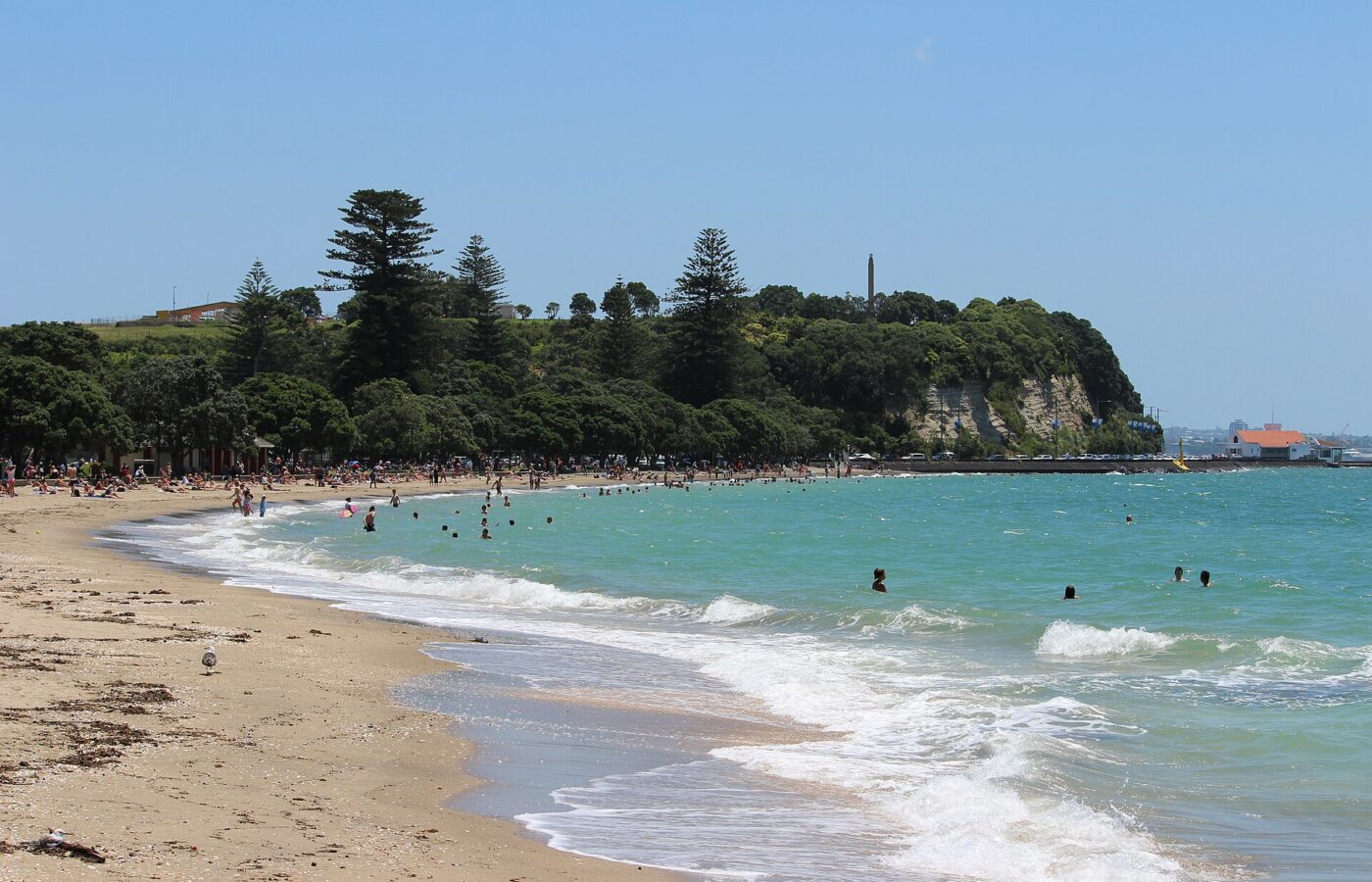
The beaches inside the Waitematā Harbour and the Hauraki Gulf are the ones most visitors mean when they say “Auckland beaches”: gentle water, pale sand, pōhutukawa shade and an ice cream never far away. Mission Bay, along Tāmaki Drive, is the classic city beach, with a big grassy reserve and a strip of restaurants across the road; Kohimarama and St Heliers continue along the same waterfront and are usually a little calmer. Our Mission Bay beach guide covers the stretch in detail.
On the North Shore, Takapuna looks straight across the channel to Rangitoto, and Cheltenham, about 20 minutes’ walk from the Devonport ferry terminal, is a quieter, sheltered option that suits families. Further north, Long Bay Regional Park has a broad sandy beach backed by lawns and trees that soak up a lot of people without feeling packed. On a hot weekend, parking along Tāmaki Drive and at Takapuna fills early; arrive before 10am or come by bike. For a shortlist that works with small children, see our family beaches guide.
West-coast surf beaches
Piha, Karekare, Te Henga (Bethells Beach) and Muriwai are black-sand beaches facing the open Tasman Sea, and they are spectacular. They are also dangerous for anyone who doesn’t know surf: rips form and move quickly, and the waves are far bigger than they look from the car park. Lifeguards here are busy every summer. Piha’s surf club ranked second in the country for rescues in the 2025–26 patrol season.
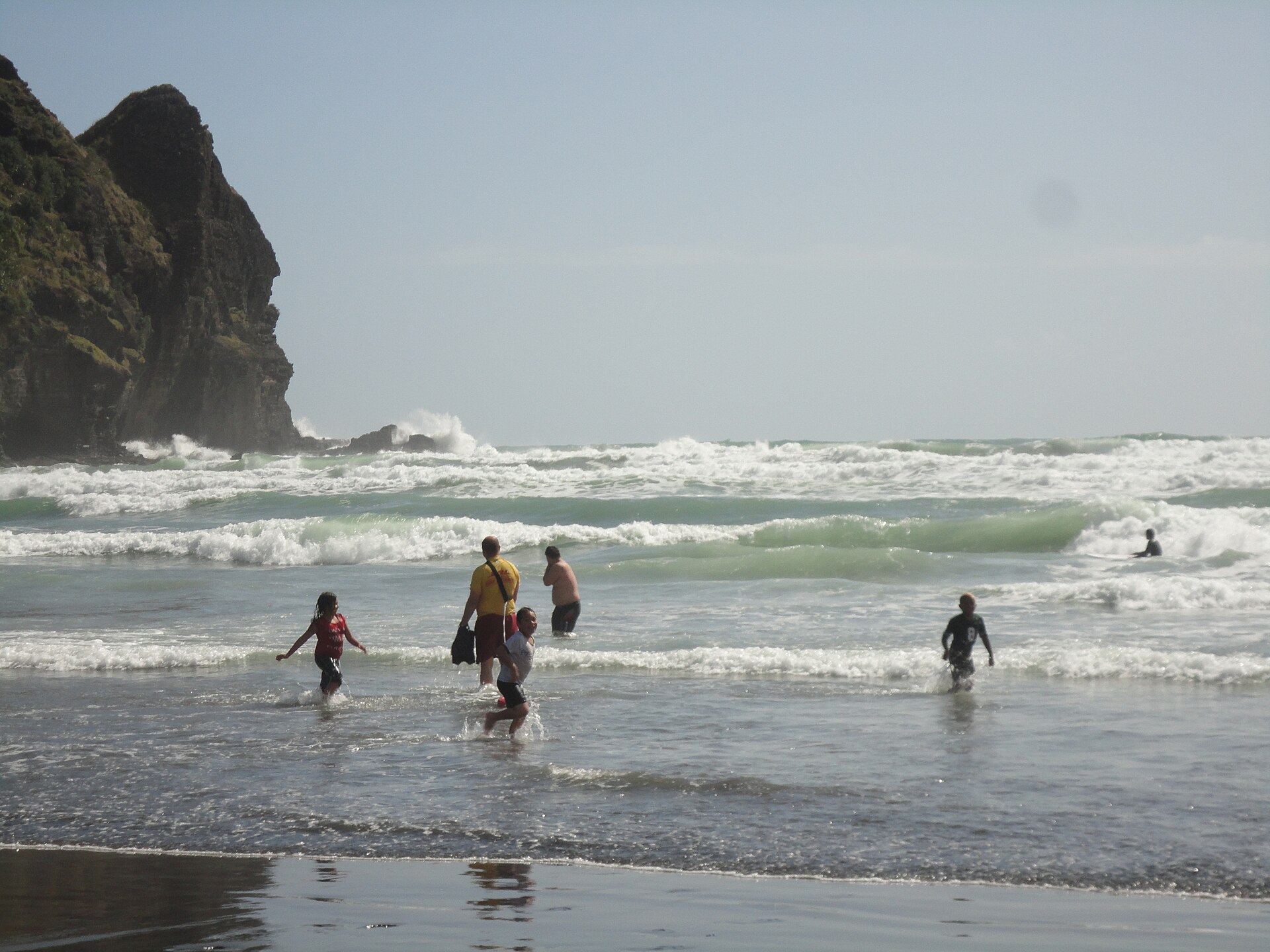
The rule is simple: swim only between the red-and-yellow flags, and only when lifeguards are on duty. Surf Life Saving New Zealand’s patrol season runs from late October to April, but coverage varies by beach and day. Karekare is patrolled by volunteers on weekends and public holidays from Labour Weekend to Easter. Bethells has volunteer patrols on weekends and public holidays from October to April, with paid lifeguards on weekdays over the peak Christmas period. For Piha and the rest, check the day’s patrol times on Safeswim (below). The black sand also gets very hot underfoot on a sunny afternoon, so bring jandals.
Two Piha notes for the 2026/27 season. The Piha Domain Campground is open for the 2026/27 season, on a month-by-month basis with a flood-alert plan, after closing for part of 2026. And the summit track on Lion Rock and the Tasman Lookout Track are both closed, so admire the rock from the beach. Our Piha beach guide has the rest, and surfers should read our guide to surfing in Auckland.
Check Safeswim before you get in
Safeswim is the site to bookmark. It maps water quality at Auckland’s beaches with coloured pins: green for a low risk of illness, red for a high risk, and black where a wastewater overflow has been detected nearby, with predictions updated at least every 15 minutes. It also shows lifeguard patrol dates and times, and hazard warnings uploaded by the lifeguards themselves, such as rips, big waves, jellyfish or sharks. Overflows are more common in wet weather, so after a heavy downpour check the city beaches before you swim and have a back-up beach in mind.
The islands and the Hauraki Gulf
Summer is island season, and the Gulf is Auckland’s great luxury. It is also where advance booking matters most.
Waiheke
Waiheke is about 40 minutes from Downtown on the direct Fullers360 ferry (sailings via Devonport take about ten minutes longer). In late 2026 a standard walk-up return cost NZ$65 for an adult, NZ$29 for a child aged 5 to 15 and NZ$138 for a family of four; off-peak returns, leaving Auckland from 1pm and coming back from 7pm, were NZ$48.50 for an adult. Fullers360 accepts AT HOP cards but not contactless bank cards. Departures are not evenly spaced, with hourly gaps through much of the day, so check the timetable rather than turning up and hoping.
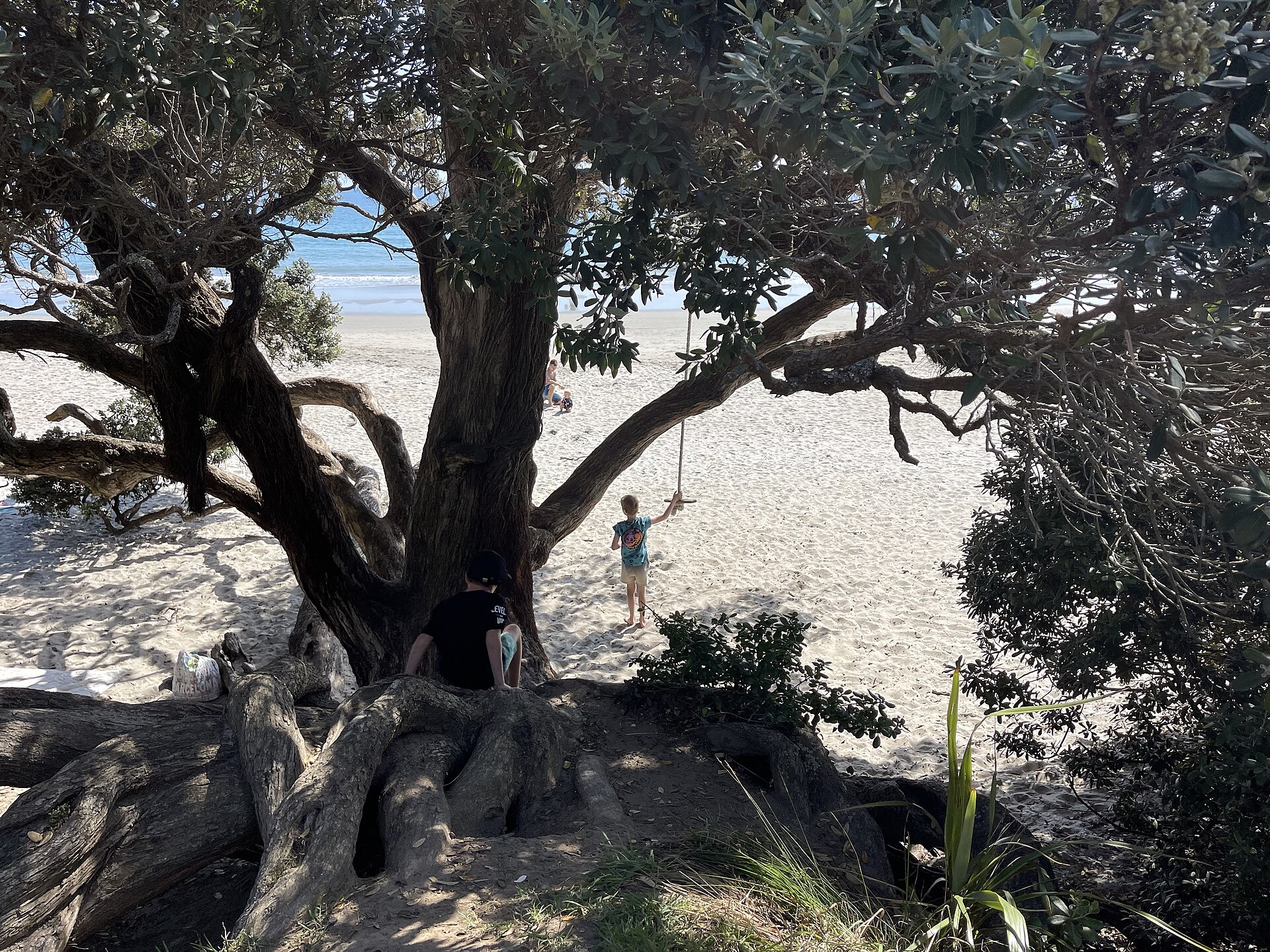
Once there, AT buses link the wharf at Matiatia with Oneroa, Palm Beach and Onetangi, and the island’s official visitor bureau counts about 30 wineries and vineyards. Summer weekends are the busiest days on the island, so book the ferry and any vineyard lunch ahead. Art lovers should note that Sculpture on the Gulf, the biennial outdoor sculpture walk, returns to Matiatia Bay from 26 February to 29 March 2027. Our Waiheke day trip guide has a full plan.
Rangitoto
Rangitoto, the young volcano that fills the view from the eastern and North Shore beaches, is about 25 minutes from Downtown by ferry, and sailings should be booked ahead. DOC describes the island’s forest as the world’s largest pōhutukawa forest, and around Christmas much of it flowers red against the black lava. It is also one of the hottest walks near the city in summer. The Summit Track is 7 km return, takes about two hours and climbs 250 m over rough volcanic ground with little shade, and DOC warns that heat reflecting off the ground can be intense. There are toilets at the wharf and near the summit, but no shops, food or drinking water anywhere on the island, so carry plenty of water. Fullers checks bags and footwear for pests, soil and seeds before boarding, because Rangitoto is pest-free. Our Rangitoto day trip guide covers the walk and the lava caves.
Tiritiri Matangi and the outer Gulf
For birdlife, Tiritiri Matangi is the summer trip that stays with people. Explore Group’s ferry leaves Auckland at 9am Wednesday to Friday and 8:30am on weekends and public holidays, and the crossing via Gulf Harbour takes about 80 minutes. See our Tiritiri Matangi guide, or our Hauraki Gulf island-hopping guide for the bigger picture.
Festivals and events, summer 2026/27
Auckland’s summer calendar is built around the outdoors and the holidays: free events in parks, big concerts at the stadiums, sport most weekends, and a run of cultural festivals from late January. These are the ones with confirmed dates for 2026/27.
December
The season opens just before summer with the Farmers Santa Parade on Sunday 29 November 2026, starting at 1pm (the postponement date, if the weather intervenes, is 6 December). The parade began in 1933. The big free event of December is Christmas in the Park on Saturday 12 December 2026 at the Auckland Domain: a family concert in its 32nd year that ends with fireworks. It is alcohol-free, no ticket is needed, and there is no rain date; if the weather is severe, it is cancelled. The dress rehearsal on Friday 11 December, from 7:30pm to 10pm, is a quieter way to see it.
For bigger crowds, Guns N’ Roses play Eden Park on Thursday 17 December, and the domestic Super Smash Twenty20 cricket arrives there on Sunday 27 December, with Auckland’s Aces and Hearts playing Northern Districts. Then comes New Year’s Eve, when the waterfront fills for the midnight fireworks; book any ticketed party early and plan to get home by public transport. Our New Year’s Eve guide has the details.
January
January belongs to tennis and cricket. The ASB Classic runs its women’s week from 4 to 10 January 2027 and its men’s week from 11 to 16 January at the Manuka Doctor Arena on Stanley Street, a 10 to 15-minute walk from Waitematā Station (Britomart). Ground passes cost NZ$15 to NZ$28 plus a service fee, depending on the day, and cover Grandstand Court and Court 2 but not a Centre Court seat. Super Smash cricket continues at Eden Park on 4, 14, 17 and 21 January, and the Foo Fighters bring their Take Cover Tour to Western Springs on Friday 22 January.
February
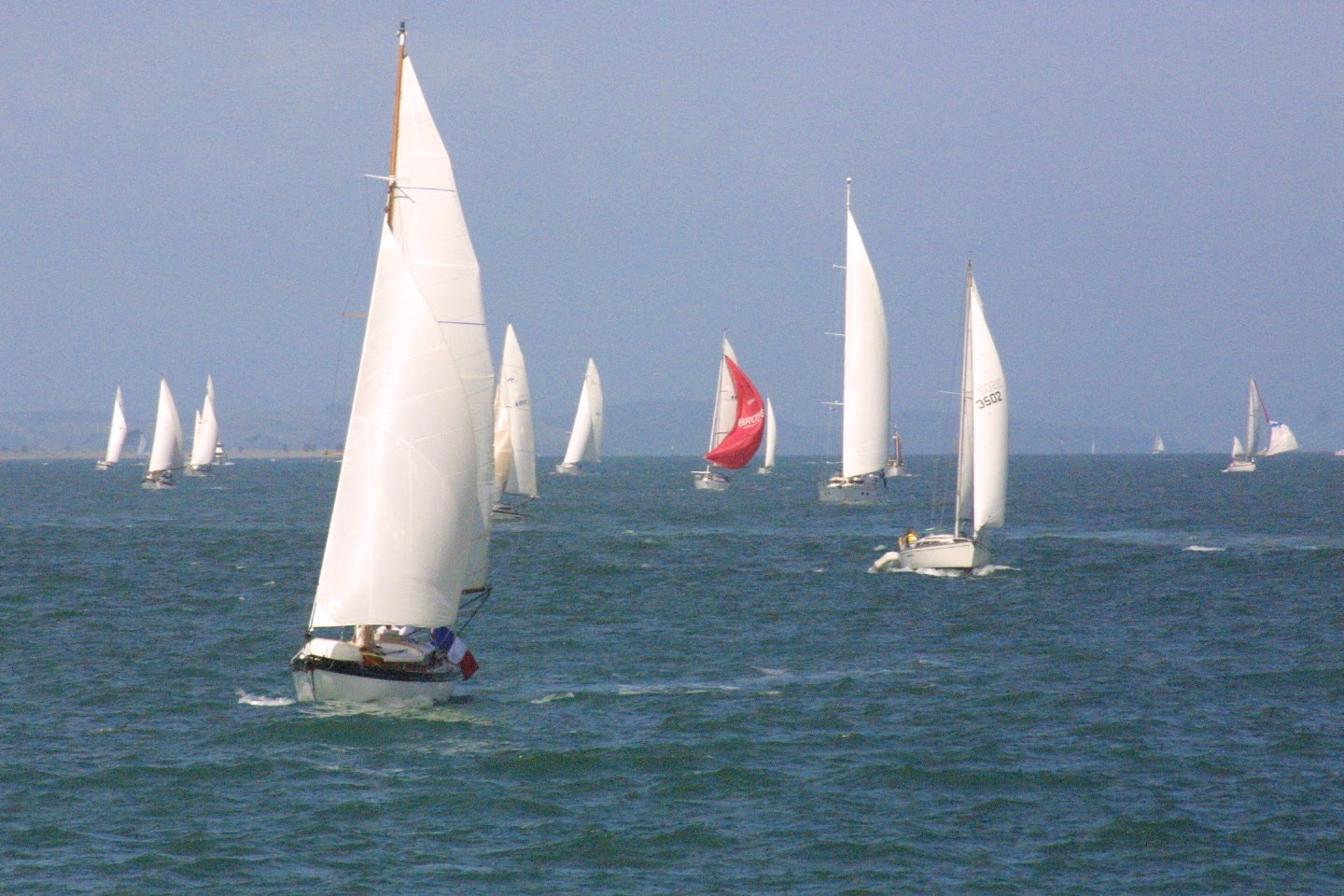
February is one of the busiest months of the year for events. It starts with the Auckland Anniversary Regatta on Monday 1 February, Auckland Anniversary Day. The organisers call it one of the world’s biggest and most historic one-day regattas, and the fleet runs from restored classic yachts and launches to racing keelers, dinghies, dragon boats, waka ama, radio-controlled yachts and racing tugboats; the shoreline from Westhaven to North Head makes a free grandstand.
Waitangi Day, Saturday 6 February (observed on Monday 8 February), marks the signing of the Treaty of Waitangi. In 2026 the council supported free celebrations at Manukau Sports Bowl, Point England Reserve and Parrs Park, where Waitangi @ Waititi was held; check OurAuckland nearer the day for the 2027 programme. Auckland Pride Festival ran through February in 2026, with the Big Gay Out on 15 February; check aucklandpride.org.nz for the 2027 programme.
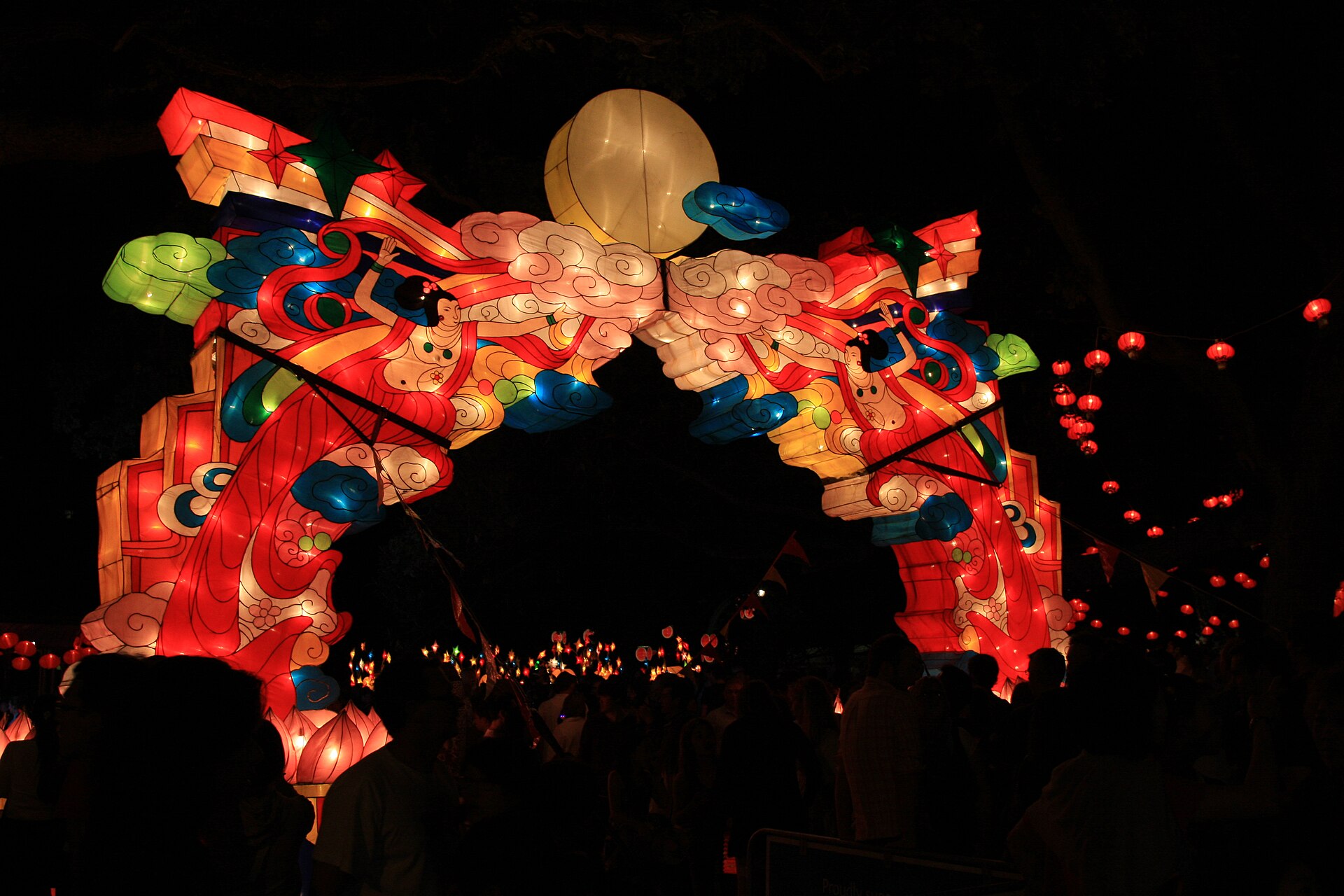
Mid-month, Super Rugby Pacific returns to Eden Park with the Blues against the Hurricanes on Saturday 13 February (the Crusaders follow on Sunday 28 February), and domestic one-day cricket in the Ford Trophy is at Eden Park on 3, 10 and 16 February. Then comes a big weekend. The Auckland Lantern Festival runs from 18 to 21 February 2027 at Manukau Sports Bowl, celebrating the Year of the Goat with more than 500 handmade lanterns and 65-plus street stalls. Entry is free but tickets are required, and it opens 5pm to 10:30pm Thursday and Friday and 4pm to 10:30pm Saturday and Sunday. On Sunday 21 February, Laneway Festival takes over Western Springs (18 and over only).
Just after summer
Two of the city’s biggest cultural events land in early autumn, when the sea is still warm. Pasifika Festival is on 13 and 14 March 2027 at Western Springs Park, free, and the organiser describes it as Auckland’s largest Pacific cultural festival. The Auckland Arts Festival runs for 18 days in March, and its full programme is on aaf.co.nz. Bruno Mars plays Eden Park on 13, 14 and 16 March. One event not to plan around: SailGP has confirmed that Auckland won’t feature on its 2027 schedule.
For the full monthly listings, see our December events guide and January events guide.
Long summer evenings
The long evenings may be the best thing about an Auckland summer. The sun sets after 8pm right through December and January (8:24pm on 1 December, 8:43pm on 1 January), and between New Year’s Eve and about 12 January it doesn’t go down until 8:43pm. Even at the end of February it sets at 8:02pm. Daylight saving runs until Sunday 4 April 2027, and the light lingers for a good while after sunset, so a full day out can still end with a walk.
A few ways to use them:
- A west-coast sunset. At Piha and Muriwai the sun goes down over the Tasman. Leave the city mid-afternoon, swim between the flags while the lifeguards are on, then eat fish and chips on the sand.
- A volcano at golden hour. The view from Maungawhau / Mount Eden at the end of the day is the city at its most photogenic. Check gate times on the Tūpuna Maunga Authority’s site before you plan a sunset: Maungawhau’s main entrance gate hours are 7am to 8:30pm in summer. Our Mt Eden summit walk guide has the route.
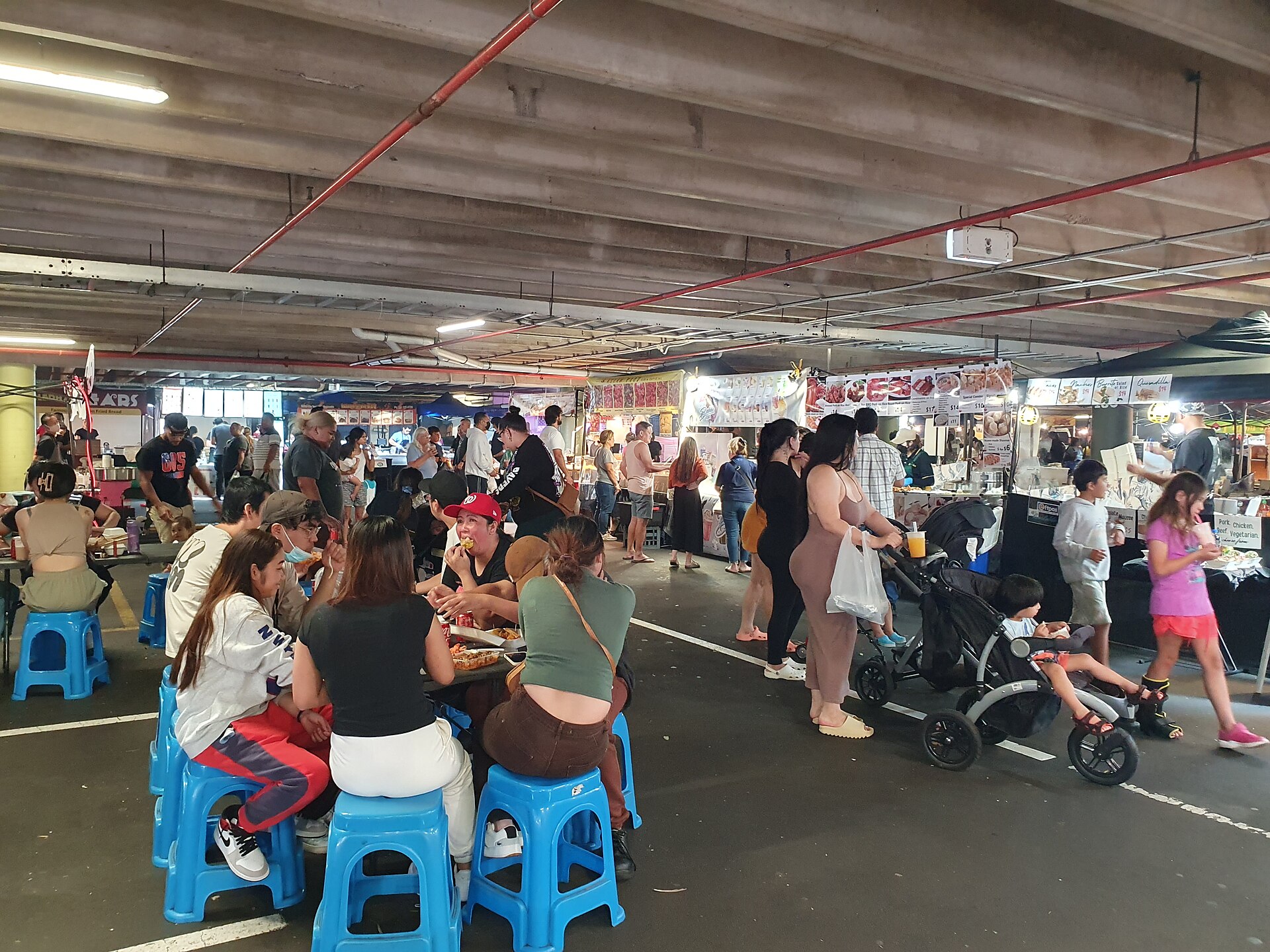
- A night market. Auckland Night Markets run in suburban car parks every night of the week, all from 5pm: Monday Kelston, Tuesday Albany, Wednesday Botany and Highbury, Thursday Henderson, Friday Papatoetoe, Saturday Pakuranga and Sunday Silverdale. See our night markets guide.
- Dinner across the water. The Devonport ferry takes about 12 minutes from Downtown, and an adult inner-harbour fare is NZ$7.80 with AT HOP or a contactless card. Eat in the village and come back as the city lights up.
- The waterfront. The Viaduct and Wynyard Quarter are made for warm evenings, with outdoor tables along the water. Check Wynyard Quarter’s own site for its summer events programme. Our Wynyard Quarter guide covers the area.
- A drink with a view. Our rooftop bars guide lists the best places to watch the sky change over the harbour.
Holidays, crowds and what it costs
Summer is New Zealand’s main holiday season, and Auckland’s crowds follow the school calendar. State schools must finish Term 4 by Friday 18 December 2026, the summer holidays run for five or six weeks, and Term 1 starts between Thursday 28 January and Wednesday 3 February 2027, depending on the school. Layer the public holidays on top: Christmas Day and Boxing Day, New Year’s Day and the day after (which falls on a Saturday this time and is observed on Monday 4 January), then two long weekends in a row in February, with Auckland Anniversary Day on Monday 1 February and Waitangi Day observed on Monday 8 February.
What that means in practice:
- Christmas to mid-January is peak domestic holiday time. Coastal campgrounds, holiday parks and baches go first, so book as early as you can if you want to stay by the beach. Our holiday parks guide has options. The city centre itself can feel unusually quiet in the week between Christmas and New Year, while the beaches and islands are at their busiest.
- Rental vehicles cost most in summer. Cars and campervans are at peak prices and book out on popular dates, so reserve early; see our campervan hire guide and car rental guide.
- Expect public-holiday surcharges. Consumer NZ notes that many cafés and restaurants add a surcharge on public holidays, including New Year’s Day, the day after and regional anniversary days.
- Christmas Day is the one day a lot of places shut. Auckland Zoo and MOTAT both close on 25 December, and the Arataki Visitor Centre in the Waitākere Ranges closes on Christmas Day and Boxing Day. Some smaller cafés and shops close for longer over the break, so check before making a special trip.
- Event weekends fill hotels. The Lantern Festival and Laneway share the weekend of 21 February 2027, and the two February long weekends are busy too. Book central accommodation early if your dates overlap; our where to stay guide breaks down the areas.
Summer day trips worth the drive
Summer is the season for getting out of the city, and some trips are better now than at any other time. The gannet colony at Muriwai is one: the campground there recommends visiting between August and March, and on a summer afternoon the clifftop platforms are a spectacle; see our Muriwai gannet colony guide. North of the city, Goat Island, in the marine reserve near Leigh, is where Aucklanders take their children snorkelling for the first time, and it pairs naturally with lunch in Matakana; our Matakana day trip guide covers the wine country.
Further afield, the Coromandel’s beaches are at their best in summer, though so is the traffic; our Coromandel day trip guide is honest about how much you can fit into a day. In the Waitākere Ranges, many forest tracks are still closed to protect kauri from dieback, so check Auckland Council’s track status before you go and use the cleaning stations at every track entrance. Whichever way you head, leave early: Friday afternoons and the start and end of long weekends are the worst times to be on the motorways. Our day trips guide has the full list.
Practical tips for a summer trip
- Pack for humidity and showers. Light, breathable clothes, swimwear, a sunhat, sunglasses and a light rain jacket cover most days. Our Auckland packing list has the details.
- Carry water. Rangitoto has no drinking water at all, and you will get through more than you expect on any summer walk.
- Clean your shoes for kauri. DOC says there is no known cure for kauri dieback; stay on tracks and clean footwear and gear at every cleaning station.
- Check before you light anything. Fire restrictions change through summer. Fire and Emergency’s checkitsalright.nz shows the current status for any location, and Auckland Council sets its own rules for beaches and parks.
- Expect biosecurity checks on the way to pest-free islands. Brush soil and seeds off shoes and check bags before boarding ferries to Rangitoto and Tiritiri Matangi.
- Use AT HOP or contactless on public transport. AT buses, trains and most ferries take both; the Waiheke ferry takes AT HOP but not contactless.
Is summer the best time to visit Auckland?
For beaches, islands and outdoor events, yes. No other season comes close for swimming, sailing, island-hopping or simply being outside until 9pm. But it is not the best time for everyone, and which part of summer you pick matters more than people think.
February is the sweet spot for most visitors. It has the warmest days (24.4°C on average), the fewest rainy days (6.5) and the warmest sea, and once schools go back the beaches are noticeably quieter on weekdays. The trade-offs are the highest humidity of the summer and busy event weekends, especially the Lantern Festival and Laneway weekend. January is the sunniest and driest of the three, with the latest sunsets, but it is also peak holiday season, when the islands and coastal towns are at their busiest and prices at their highest. December has the pōhutukawa, Christmas in the Park and a festive mood, but it is the wettest and coolest of the three months, and the one most likely to wash out a beach day.
If crowds and costs matter more than beach time, consider March instead: the days are still warm, the sea is warm, and Pasifika and the Arts Festival are on. Our best time to visit Auckland guide compares every month.
Frequently asked questions
Is Auckland hot in summer?
Warm rather than hot. Average daytime highs are 22.0°C in December, 23.9°C in January and 24.4°C in February, with overnight lows of 15 to 16.6°C. Humidity averages 77 to 80%, so it often feels warmer and stickier than those numbers suggest.
Does it rain a lot in Auckland in summer?
Less than in winter, but it does rain. January averages 58.1 mm over 6.8 rainy days and February 63.1 mm over 6.5; December is wetter, at 81.7 mm over nine days. Now and then a subtropical low brings a day or two of heavy rain.
Is the sea warm enough to swim in December?
Yes, though it is at its coolest of the summer then and warms through to February, when it is at its warmest. Lifeguard patrols start in late October at many beaches. Swim between the flags and check Safeswim for water quality, especially after rain.
When are the school holidays in summer 2026/27?
State schools finish Term 4 no later than Friday 18 December 2026, and Term 1 2027 starts between Thursday 28 January and Wednesday 3 February, with each school choosing its own day. The Ministry of Education publishes the full term dates.
What time is sunset in Auckland in summer?
Between about 8pm and 8:45pm. It is 8:24pm on 1 December, 8:43pm (the latest of the year) from New Year’s Eve to about 12 January, 8:32pm on 1 February and 8:02pm on 28 February.
Is Auckland busy over Christmas and New Year?
The beaches, islands, campgrounds and holiday towns are, but the city centre can feel quiet in the week between Christmas and New Year. Book ferries, island tours, campgrounds and rental vehicles ahead, and check opening hours: many attractions, including Auckland Zoo and MOTAT, close on Christmas Day.
Should I visit Auckland in January or February?
February, for most people. It is the warmest month, with the warmest sea and the fewest rainy days, and the beaches are quieter once schools go back. Choose January for the most sunshine and the latest sunsets, and book further ahead.
Do I need sunscreen if it is cloudy?
Yes. UV gets through cloud, and SunSmart says light-coloured skin can be damaged in as little as 12 minutes when UV levels are high. Peak UV in January averages above 12 on the coast north of Auckland.
Spending the holidays here? Our guide to Christmas in Auckland covers the Santa Parade, Christmas in the Park, the best lights and what is open on Christmas Day.
Related Auckland Guides
- Auckland Events and Festivals
- Best Time to Visit Auckland
- Auckland Weather
- Auckland Events in February
- Auckland Beaches and Outdoors
- Takapuna Beach Guide
- Bethells Beach (Te Henga) Guide
- Hauraki Gulf Island Hopping
- Free Things to Do in Auckland
Photo Credits
A Piha lifeguard in the surf: Piha Surf Life Saving Club Lifeguard Directing Swimmers in to the Flagged Area by Waitamata, CC BY-SA 3.0, via Wikimedia Commons.
Pōhutukawa shade at Onetangi Beach, Waiheke: Onetangi Beach pōhutukawa by Tahatai, CC0, via Wikimedia Commons.
Yachts at the Anniversary Day Regatta: 2001 Auckland Anniversary Day Regatta 03 by Ewhite31, CC BY-SA 4.0, via Wikimedia Commons.
A summer day at Mission Bay: Mission Bay Beach 2014 by Researchassistent102, CC BY-SA 3.0, via Wikimedia Commons.
Auckland Lantern Festival archway: Auckland Lantern Festival (4467959167) by russellstreet (Flickr), CC BY-SA 2.0, via Wikimedia Commons.
An Auckland Night Market on a summer evening: 20230216 182130 Auckland Night Market by Prosperosity, CC BY 4.0, via Wikimedia Commons.