Auckland Itineraries: How to Plan Your Days
Auckland itinerary planning that works: the six clusters the city splits into, the day-shapes to build from, and the sequencing mistakes to avoid.
This article contains advertising. Our booking links are routed through a partner that adds commission tracking automatically, so if you book through one we earn a commission from the provider, at no extra cost to you. It never affects what we recommend. Affiliate disclosure
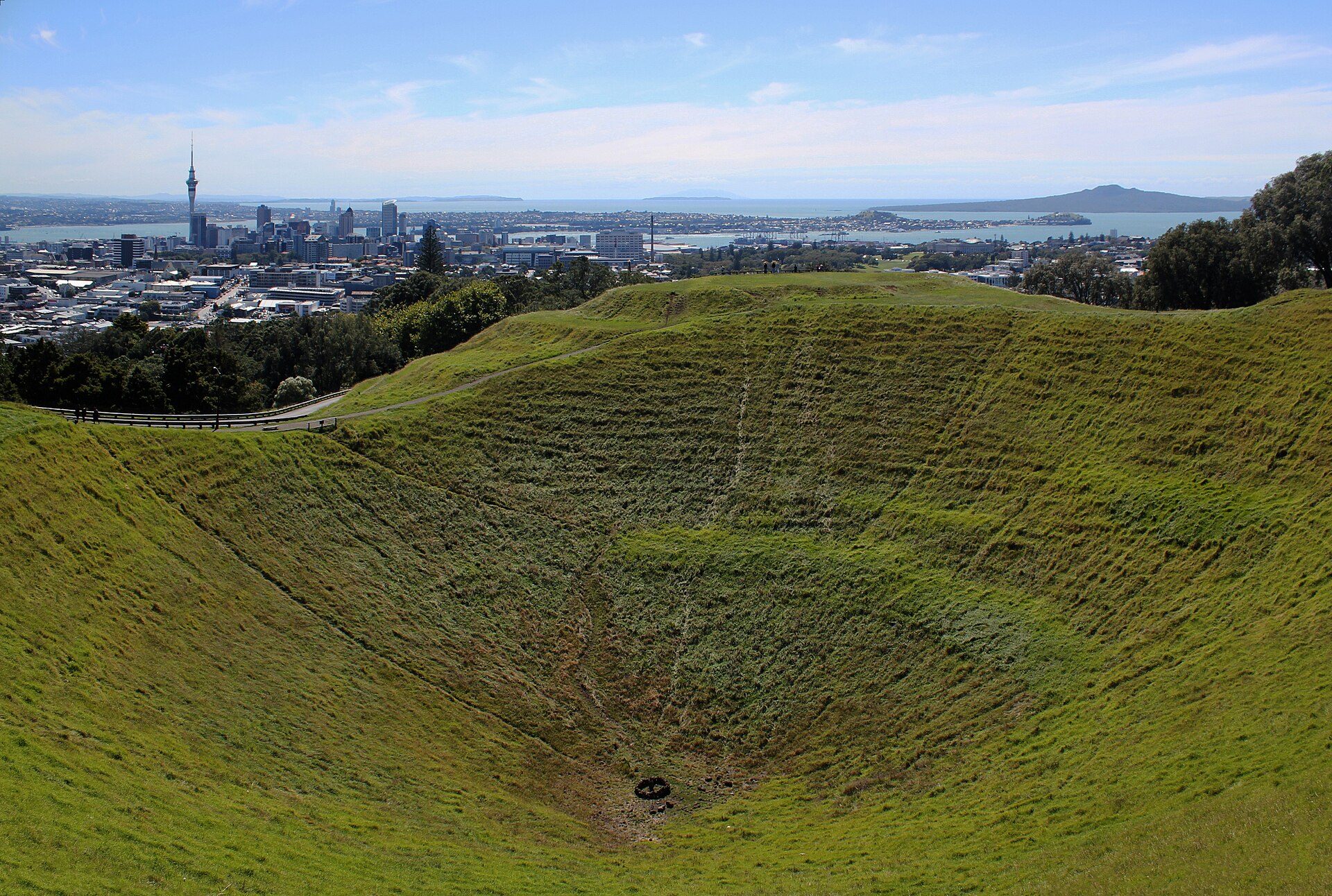
Stand at the top of Maungawhau on a clear morning and the whole problem lays itself out in front of you. There is the harbour to the north, another harbour to the west, a scatter of green cones across the suburbs, islands sitting out in the gulf, and a very small cluster of towers in the middle that most people mistake for the city. Building a good Auckland itinerary is not about finding things to do — there is more here than a fortnight can hold. It is about understanding that Auckland is a set of separate places connected by water and motorway, and that the single biggest determinant of whether your days feel spacious or frantic is how many times you cross between them.
This page is the planning framework rather than a day-by-day script. It covers how Auckland’s geography actually works, the four or five day-shapes that everything else is assembled from, how to sequence them so you are not doubling back, what changed in September 2026 when the City Rail Link opened, and the specific mistakes that turn a good trip into a tiring one. Prices and journey times were checked in September 2026; treat them as the right order of magnitude rather than a timetable, and confirm anything time-critical with the operator before you travel. If your question is simply how long to stay, that is answered properly in our guide to how many days you need in Auckland — this page assumes you have already decided and now need to fill them.
At a glance: the day-shapes an Auckland itinerary is built from
| Day type | Roughly how long | How you get there | Weather-dependent? | Best placed |
|---|---|---|---|---|
| City centre and waterfront | Half to full day | On foot, plus trains | Barely | Day one, while you are jetlagged |
| Volcanic cones and inner suburbs | Half day | Bus, train, or a short drive | Somewhat — views need clarity | Any clear morning |
| Hauraki Gulf island | Full day | Ferry from Downtown or Viaduct | Yes, and sailings can cancel | Your best forecast day |
| West Coast beaches and ranges | Full day | Car, realistically | Yes, and dramatic either way | Mid-trip, with a car |
| North or east coast beaches | Half to full day | Ferry to Devonport, or car | Yes | A warm afternoon |
| Regional day trip (Waitomo, Hobbiton, Rotorua, Bay of Islands) | Very full day, 10-13 hours | Tour coach or a long drive | Not much | Never on your last day |
First, the geography — because everything follows from it
Auckland sits on an isthmus barely a couple of kilometres wide at its narrowest, with the Waitematā Harbour on one side and the Manukau on the other. It is built across roughly fifty volcanic cones, it sprawls for something like eighty kilometres north to south, and about a third of what visitors come for is not on the mainland at all. Tāmaki Makaurau, the Māori name, is usually rendered as something close to “Tāmaki desired by many” — and the reason it was desired is the same reason it is awkward to sightsee: water everywhere, and land that funnels.
What this means practically is that Auckland does not reward the European city-break instinct of wandering until you find something. The good things are clustered, and the clusters are separated by twenty to sixty minutes of travel. An itinerary that hops between clusters twice a day will spend three hours in transit and feel busy without covering much. An itinerary that commits to one cluster per half-day feels unhurried and sees more.
The six clusters
- The city centre and waterfront. Queen Street, Britomart, the Viaduct, Wynyard Quarter, the Sky Tower, the Art Gallery, the Domain and the Museum on the ridge above. All walkable from each other, all reachable by train now that the City Rail Link has opened. This is the densest cluster and the only one you can genuinely do on foot.
- The inner suburbs. Ponsonby, Grey Lynn, K Road, Parnell, Newmarket, Mount Eden village. Each a strip of cafés, bars and independent shops, each about fifteen minutes from the centre, each worth an evening rather than a day.
- The volcanic cones. Maungawhau (Mount Eden), Maungakiekie (One Tree Hill) and Cornwall Park, Mount Victoria in Devonport, North Head. Free, quick, and the best views in the city.
- The Hauraki Gulf. Waiheke, Rangitoto, Tiritiri Matangi, Motutapu, Great Barrier. All ferry-only, all full-day commitments, all weather-dependent.
- The west. Piha, Karekare, Bethells, Muriwai and the Waitākere Ranges. Black sand, serious surf, rainforest. Effectively car-only.
- North and east. Devonport and Takapuna over the bridge, Mission Bay and the eastern bays along Tāmaki Drive, and further out, Matakana and Goat Island.
Our neighbourhoods guide goes through each of these in detail. For the purposes of planning, the useful thing is simply to note that they are six separate decisions, not one.
What the City Rail Link changed
This matters more than any guide written before September 2026 will tell you. The City Rail Link opened on 13 September 2026, adding three underground stations and turning Britomart from a dead-end terminus into a through station. The three new stops are Te Waihorotiu in the middle of Queen Street — expected to become the country’s busiest station — Karanga-a-Hape, with entrances at Mercury Lane and Beresford Square for K Road, and Maungawhau at Uptown, which is the main interchange. The network now runs as three services: East West, South City and Onehunga West.
For a visitor, the practical effect is that the city centre finally has a metro. Getting from Britomart to K Road, or from Newmarket to mid-Queen Street, used to mean a bus or a hill. It is now a train. If you are staying centrally, this substantially widens what counts as “walking distance plus five minutes”, and it makes an evening in Karangahape Road or Mount Eden village a much easier proposition than it was even a year ago.
Practical notes: fares are zone-based, you tap on and off with an AT HOP card or a contactless card, and the AT Mobile app’s journey planner reflects the new network. Fares moved during 2026, so check current values on at.govt.nz rather than trusting a number in an article. The public transport guide and the trains guide have the detail.
The core question: do you need a car?
This decides the shape of everything. The honest answer has three parts.
No car needed
If your trip is the city centre, the inner suburbs, the cones, Devonport, Mission Bay and one or two gulf islands, you do not need a car and you will be better off without one. Central parking is expensive and the one-way system is unfriendly. Trains, buses and ferries cover all of it, and ferries in particular are not a compromise — arriving at Devonport or Waiheke by water is the good version of the experience, not the budget one.
Car strongly recommended
If you want the west coast — Piha, Karekare, Bethells, the Waitākere Ranges — you need a car or a tour. Public transport to these places is either non-existent or so infrequent as to be useless. The same goes for Muriwai’s gannet colony, for the Hunua Ranges, and for anything past Matakana.
The hybrid, which is usually right
The move most people should make: do the city days car-free, then rent a car for the two or three days you need it, and return it before your last city night. You avoid paying for parking on days the car sits idle, you avoid driving in the city centre, and you get the west coast anyway. Our guides to renting a car in Auckland, driving here and parking cover the mechanics. Note that petrol has run above NZ$3 a litre through 2026, so a long west coast day is not a trivial cost.
Building the days: sequencing rules that actually help
1. Put the ferry day on your best forecast
Everything on the water is weather-contingent. Waiheke in sun is one of the great days out in New Zealand; Waiheke in horizontal rain is a wet walk between wineries. Rangitoto’s summit view is the entire point of Rangitoto, and in cloud there is no view. Ferries do get cancelled in a strong blow. So: do not fix your island day in advance. Keep it floating, look at the forecast on your second morning, and commit then. Auckland’s weather changes fast enough that a bad Tuesday is often a good Thursday — our weather guide explains the patterns, including why “four seasons in one day” is not entirely a joke here.
2. Do the city on day one, deliberately
Most visitors arrive off a very long flight. Day one is not the day for a 6am ferry or a three-hour drive. It is the day for the waterfront, a cone, a long lunch and an early night. The city cluster is forgiving: it is walkable, it has shelter if the weather turns, and nothing in it is ruined by you being slow. Save the demanding days for when you have slept.
3. Never put a regional day trip last
Waitomo, Hobbiton, Rotorua and the Bay of Islands are all doable as day trips from Auckland, and all of them are long — ten to thirteen hours door to door. Putting one the day before you fly out is a gamble on traffic, and it means your last memory of the trip is a coach on State Highway 1 at nine at night. Put them mid-trip. Our day trips guide ranks them by how much of the day they actually consume.
4. Cluster your evenings with your days
If you have spent the day in the west, do not come back into the city for dinner and then go out again. If you are in Devonport in the afternoon, eat there. If your day ends at the Domain, walk down into Parnell. The itineraries that feel exhausting are usually the ones that return to base between every activity.
5. Leave one afternoon genuinely empty
Not “flexible”, empty. Auckland rewards it — a beach you did not plan on, a market someone mentioned, an extra hour at a winery, or simply a nap. Every itinerary that is full at the planning stage is over-full in reality.
The building blocks in detail
Block A: city centre and waterfront
Allow a half day at minimum, a full day if you go into the Museum. The natural walking line runs from Britomart along Quay Street past the Viaduct to Wynyard Quarter, then back up through the city to the Art Gallery and Albert Park, and on to the Domain and the Auckland War Memorial Museum on the ridge. That is a comfortable day with lunch in it.
The Sky Tower is the obvious set-piece and is worth doing once, ideally in the last hour of daylight so you get the city in both light states for one ticket. Kelly Tarlton’s sits east along Tāmaki Drive and pairs naturally with Mission Bay rather than with the city centre.
Honest verdict: Queen Street itself is not the attraction people expect. It is a functional shopping street. Britomart, the K Road end, and Wynyard are all more interesting places to spend an hour.
Block B: a volcanic cone
Half a morning, and the best free thing in Auckland. Maungawhau / Mount Eden gives you the deepest crater and the classic view; Maungakiekie / One Tree Hill sits in Cornwall Park with sheep, an obelisk and more space. Both are steep-ish but short. Note that vehicle access to the summits is restricted at both — you walk the last part, which is the right way round.
Two things worth knowing: Cornwall Park has no playground inside the park, which catches families out, and dogs are welcome on a lead. The volcanic field guide explains why there are fifty of these and what that means for a city built on top of them.
Block C: a Hauraki Gulf island
This is the day most people remember, and the one most worth protecting from bad weather.
- Waiheke — about 40 minutes on the Fullers360 fast ferry from Downtown, or 45 to 80 minutes on the SeaLink car ferry from Half Moon Bay or Wynyard Quarter. Twenty-five-plus wineries, good beaches, a proper village. The default choice, and deservedly so.
- Rangitoto — the symmetrical cone you see from everywhere. A summit walk over black lava, roughly an hour up, no shade and no shops. Bring water. Combine it with Motutapu if you want a longer walk.
- Tiritiri Matangi — an open sanctuary where genuinely rare birds walk past you. The ferry is Explore Group from Viaduct Harbour, not Fullers from Downtown, which trips people up. Around NZ$110; confirm before booking. Sailings are limited and it sells out.
- Great Barrier / Aotea — the world’s first Dark Sky Sanctuary, about 30 minutes by light aircraft or four and a half hours by SeaLink ferry from Wynyard Quarter. Not a day trip. Two nights minimum.
The island hopping guide and the ferry routes and schedules cover departure points, which is the thing most worth getting right — the gulf ferries do not all leave from the same wharf.

Block D: the west coast
Black iron sand, cliffs, and surf that kills people every year. Piha is the famous one, Karekare the quieter and more cinematic, Bethells the wildest, and Muriwai has the gannet colony, which is a genuinely extraordinary thing to stand next to between roughly August and March.
Swim only between the flags, and only where there are flags. These beaches have severe rips and the surf lifesaving patrols do not cover every beach every day. This is not a formality.
Two planning constraints. First, the road out is winding and slower than the map suggests — allow 45 minutes to an hour from the city to Piha, more on a summer weekend. Second, several Waitākere tracks are closed for kauri dieback control and storm damage, including Goldie Bush and Te Henga. Check the Auckland Council track status page the week you go rather than relying on any guide, including this one. The Waitākere hikes guide flags which routes are usually open.
Block E: north shore and the eastern bays
Devonport is the easiest good half-day in Auckland: twelve minutes on the ferry, a Victorian village at the other end, and two small volcanic headlands — Mount Victoria and North Head — with views back across the harbour. Takapuna is ten minutes further and has the better beach.
Eastward, Tāmaki Drive runs from the city along the water to Mission Bay and the eastern bays. It is flat, it has a cycleway, and on a warm evening it is where half the city goes. Good by bike, good by bus, unnecessary by car.
Block F: a regional day trip
If you have five days or more, one of these earns its place: Hobbiton, Waitomo, Rotorua, the Coromandel, or the Bay of Islands. Closer in, Matakana is an hour north and does not eat the whole day, with Goat Island’s marine reserve about 25 minutes further on.
Honest verdict: the Bay of Islands as a day trip from Auckland is too much driving for what you get. It deserves an overnight. Waitomo and Hobbiton combine well as a single long day because they are close to each other. Rotorua as a day trip is fine but tight.
Matching the itinerary to the trip you are actually on
If it is your first time in New Zealand
Do not try to make Auckland representative of the country. It is not — it is the biggest, most multicultural, most urban part of a country whose reputation is built on emptiness. Give it the city, one island and one west coast day, and save the landscape ambitions for the South Island. The first-timer’s guide covers the orientation, and Auckland vs Wellington vs Queenstown is worth reading before you allocate nights between them.
If you are travelling with children
Shorten every block and halve the number of transitions. Ferries are an activity in themselves for small children, which is useful. Auckland Zoo and Kelly Tarlton’s are the two reliable set-pieces; note the zoo has tiered resident and non-resident pricing and is free for under-fours rather than charging a flat fee. See Auckland with kids, and with toddlers or with teens depending on the ages you are working with.
If you are on a budget
Auckland is expensive, but the best of it is free: every cone, every beach, the Domain, the coastal walks, the Art Gallery’s permanent collection. A day-pass on public transport plus a packed lunch is a genuinely good day here. The free things to do guide is not a consolation prize, and the travel budget guide has realistic daily numbers.
If you are here for work with two spare afternoons
Cone plus waterfront on one, Devonport on the other. Both are short, both are close, neither requires a car or a booking.
Seasonality: what actually changes
Auckland’s seasons are mild and its weather is unreliable in all of them. Summer runs December to February and is when the beaches, the gulf and the outdoor everything are at their best — it is also when Waiheke is busiest and accommodation is dearest. Autumn, March to May, is arguably the best compromise: warm sea, settled spells, smaller crowds. Winter is wet and windy rather than cold, and it is when the city’s indoor culture earns its keep. Spring is volatile.
Two calendar notes worth building around. Matariki, the Māori New Year, was Friday 10 July in 2026 and falls on 25 June in 2027 — it is a public holiday and the surrounding week has real programming, which is worth catching if your dates are near it. And the summer school holidays from late December through January change the character of everything: beaches busy, city quiet, some businesses closed. The best time to visit guide goes month by month, and the events and festivals guide covers what is on when.
The mistakes that spoil Auckland itineraries
- Treating it as a one-day stopover city and then resenting it. Auckland does badly out of a rushed day. If you genuinely have one day, spend it on the water rather than trying to see everything — you will like the city more.
- Booking the Waiheke ferry weeks ahead for a fixed date. Book the day, not the month. Weather decides this one.
- Underestimating the west coast drive. An hour each way, on roads that make people carsick, plus the walking. It is a full day, not an afternoon.
- Renting a car for the whole stay. You pay for city parking on days you do not drive, and you drive in a city with an unhelpful one-way grid.
- Assuming the beaches near the city are swimming beaches in the way west coast beaches are. Mission Bay and Takapuna are calm and family-friendly. Piha and Karekare are not, and the difference has cost lives.
- Planning around a guide written before 13 September 2026. The rail network changed shape. Anything describing Britomart as a terminus, or omitting Te Waihorotiu and Karanga-a-Hape, is out of date.
- Scheduling the Museum and the Zoo on the same day. They are on opposite sides of the city centre and both deserve two or three hours.
- Not checking track closures. Kauri dieback closures in the Waitākeres are real, enforced and change. Check before you drive out.
A worked example: how the logic assembles
To make the framework concrete, here is how four days might fall out of it — not as a script to follow, but as an illustration of the sequencing rules working together.
| Day | Block | Why it sits here |
|---|---|---|
| 1 | City centre and waterfront, finishing at the Sky Tower at dusk | Jetlag-proof, walkable, weather-tolerant |
| 2 | Cone in the morning, inner suburbs and an evening in Ponsonby or K Road | Short, close, and now easy by train |
| 3 | Gulf island — chosen the previous evening from the forecast | The floating day, placed on the best weather |
| 4 | West coast with a rental car, back for dinner in the west or Titirangi | Car day isolated; evening clustered with the day |
Note what the shape does: one transition per day, the weather-sensitive day left unfixed, the car confined to a single day, and the evening always near where the day ended. Stretch it to five or seven days and you add a regional day trip and an empty afternoon rather than compressing more into the existing ones.
The rhythm of an Auckland day
Cities have a tempo, and getting it wrong is why some visitors feel permanently out of step. Auckland’s is early at both ends.
Mornings are the good part
Aucklanders get up. Cafés open at seven and are busy by eight, the cones are at their clearest before the day’s cloud builds, and the harbour is usually flattest in the morning. If you are a late riser on holiday, this is the one habit worth breaking here — an 8am start on a cone and a 9am breakfast afterwards is a genuinely better morning than the same two things at eleven and one.
Lunch is early and dinner is early
Kitchens fill from noon and thin out by two. Dinner service starts around six and many kitchens stop taking orders around nine, earlier on a Sunday or Monday. If you are coming from southern Europe or Latin America, this is the biggest adjustment — turning up hungry at nine thirty will narrow your options sharply. Plan the evening around a 6:30 or 7pm table and you will eat far better.
Sundays and Mondays close things
A meaningful number of good restaurants close Sunday evening, Monday, or both, and some suburban shops keep short Sunday hours. Museums and attractions are generally open seven days. If your itinerary has a Monday in it, weight that day towards outdoors and attractions rather than towards a specific restaurant you read about.
Peak times to route around
- Motorway traffic: roughly 7-9am and 4-6:30pm, and worse on the Harbour Bridge. If your west coast day starts at eight you will spend the first half hour of it stationary. Leave at nine.
- Ferries: the Devonport and Waiheke services carry commuters, so mid-morning and mid-afternoon crossings are far more pleasant than 8am or 5:30pm.
- Waiheke: the middle of a summer Saturday is the busiest the island gets. A weekday is a different island.
- The cones: sunset at Maungawhau is popular enough that the walk up can feel like a queue. Sunrise is empty.
Building meals into the plan
Auckland’s food is one of the genuine reasons to spend time here — it is the most multicultural city in New Zealand and the eating reflects that far more than the tourist-facing waterfront suggests. But it needs to be planned into the geography rather than bolted on.
- Breakfast and brunch is the meal Auckland does best. It is a serious local institution rather than a hotel obligation. Build it into the morning near where you are starting — see the best brunch spots and the best cafés.
- Lunch should be wherever your block is, not a special trip. The exception is a market day: Auckland’s food markets are worth building a morning around, and several are weekend-only.
- Dinner is where the clustering rule matters most. Ponsonby, K Road, Britomart and Parnell all have depth; the Viaduct has views and prices to match. For the food that actually defines the city, Auckland’s Asian food — much of it in Sandringham, Dominion Road, Ōtara and the eastern suburbs — is worth a deliberate trip.
- Do not save the good meal for the last night if the last night follows a thirteen-hour day trip. You will not enjoy it.
Two practical notes: tipping is not expected in New Zealand and there is no obligation to leave anything, though it is increasingly offered on card terminals — our tipping guide explains the etiquette. And cash has largely disappeared; contactless works everywhere, sometimes with a small surcharge that is legal and signposted. The money guide covers it.
Planning for a slower pace
Not every itinerary should be built around hills and ferries. If you are travelling with limited mobility, with very young children, or simply with no appetite for a summit walk, Auckland still works — it just needs different blocks.
- The waterfront from Britomart to Wynyard is flat, paved and continuously interesting, with plenty of places to sit.
- Ferries are step-free at the main terminals and are an activity in their own right; Devonport at the other end is flat through the village, even if the headlands are not.
- Cornwall Park has gentle paths and open lawns well before you commit to the climb up Maungakiekie.
- The Domain, the Museum and the Art Gallery make an unhurried indoor-outdoor day with a short flat walk between two of the three.
- Mission Bay and Tāmaki Drive are flat, bus-served and pleasant for as long or short a stretch as you want.
Auckland’s cones are its best free attraction, but they are genuinely steep in places, and the summit roads at both Maungawhau and Maungakiekie are closed to general vehicles — so there is no drive-to-the-top option. Plan around that rather than being surprised by it on the day.
Booking: what to lock in and what to leave
- Book ahead: accommodation, any tour with a fixed departure (Hobbiton, Waitomo, Bay of Islands), Tiritiri Matangi, dinner at anywhere well-known on a Friday or Saturday, and a rental car in summer.
- Book a day or two out: Waiheke wineries, harbour cruises, anything on the water.
- Do not book: the Devonport ferry, cones, beaches, walks, most museums. Turn up.
Where you sleep shapes the itinerary more than people expect. Staying centrally makes the city and ferry blocks trivial and the west coast a drive; staying on the North Shore flips that. Our where to stay guide and best areas to stay are worth reading before you book, because changing your base mid-trip costs you half a day.
Frequently asked questions
How do I plan an Auckland itinerary that does not feel rushed?
Limit yourself to one geographic cluster per half-day and one major transition per day. Auckland’s attractions are separated by water and motorway, so the time cost is in the moving rather than the doing. Two well-chosen blocks a day is a full day here.
What should I do on my first day in Auckland?
The city centre and waterfront. It is walkable, it has indoor options if the weather turns, and nothing in it is spoiled by jetlag. Save the ferries, the drives and the early starts for once you have slept.
Do I need a car for an Auckland itinerary?
Not for the city, the inner suburbs, the cones, Devonport or the gulf islands — public transport and ferries cover all of it well. You do need one for the west coast beaches and the Waitākere Ranges. The best approach for most visitors is to rent for the two or three days you actually need it.
Which day should I go to Waiheke?
Whichever has the best forecast. Do not fix it in advance. Waiheke, Rangitoto and Tiritiri Matangi are all substantially better in clear weather, and gulf ferries can be cancelled in a strong wind.
Has the City Rail Link changed how to get around Auckland?
Yes, significantly. It opened on 13 September 2026 with three new underground stations — Te Waihorotiu on Queen Street, Karanga-a-Hape for K Road, and Maungawhau at Uptown — and Britomart now runs as a through station. The city centre effectively has a metro, which makes the inner suburbs much easier to reach in an evening.
Can I do a regional day trip like Hobbiton or Waitomo from Auckland?
Yes, but budget ten to thirteen hours door to door and do not schedule one for the day before you fly out. Waitomo and Hobbiton combine reasonably well into one long day. The Bay of Islands is better as an overnight than a day trip.
How many things should I put in one day in Auckland?
Two substantial things, or one substantial thing plus an evening. Three works only if all three are in the same cluster. The most common planning error here is counting attractions rather than counting transitions between them.
Is Auckland worth more than a couple of days?
It depends entirely on whether the gulf and the west coast appeal to you. If you only want a city, two days covers it comfortably. If you want islands, black sand beaches and the volcanic field, four to five days is the point where the trip stops feeling like a selection and starts feeling complete.
What is the best free thing to build a day around?
A volcanic cone. Maungawhau and Maungakiekie both cost nothing, take under an hour, and give you the single best view in the city — which is also the clearest way to understand the geography you are about to spend a week navigating.
If the number you are working with is one, the framework collapses to a single rule: cross the harbour once, climb something once, and stay on foot for the rest. We have written that day out hour by hour in one day in Auckland, including a wet-weather version and variants for jetlag, cruise calls and anyone staying outside the centre.
Two days is the shortest stay where the framework really works, because it lets you spend one day on the isthmus and one day off it — which is the split that matters. Our 48-hour Auckland itinerary sets out that shape in full, with the three genuinely different ways to spend the second day and a rule for choosing between them the night before.
Three days is where the choosing stops. It is the shortest stay that holds the city, one gulf island and the west coast without ever crossing between clusters twice in a day — which is the whole point of the framework above. Our 3 days in Auckland itinerary lays that out day by day, and is honest about what happens if you give day three to Hobbiton instead.
Past three days the framework changes shape: you stop sequencing and start choosing what a base is for. Five days holds the city, two gulf islands, the west coast and either a regional trip or a night away — with a deliberately slow day in between. Our 5 days in Auckland itinerary sets out four honest versions of days four and five, including the case for not spending all five here.
A stopover is its own planning problem: an immovable departure, luggage to deal with, jetlag, and entry requirements that a short visit does not exempt you from. Our guide to what to do on an Auckland stopover works through one, two and three nights between flights, and where the cut-off sits below which you should simply stay at the airport.
A weekend is its own planning problem rather than a shortened version of a longer trip: markets that only run on Saturday, restaurants that close on Sunday evening, and motorway traffic that moves at different times from the weekday pattern. Our long weekend in Auckland itinerary works through Friday evening to Sunday the way locals actually use the city, with a Monday version if a public holiday gives you one.
The car question is the one that shapes everything else here, and since the City Rail Link opened the answer has moved. For a city trip, going without one is now the better option rather than the frugal one — and the gap it leaves is narrower than it was. Our guide to Auckland without a car maps what the network reaches, sets out a three-day car-free itinerary, and is honest about the handful of places you still cannot get to.
Every Auckland trip of more than three days contains a write-off, and the plan above assumes you will simply move the weather-sensitive day. When you cannot — when the whole day is gone — our guide to a rainy day in Auckland for adults covers the substitutions worth making, including the two or three places that are genuinely better wet than dry.
Every plan on this page assumes you arrive in reasonable shape, which after a long-haul flight is optimistic. If you are landing at dawn from North America or coming off the long haul from Europe, start with our first-day arrival plan: it bridges the gap between a 6am landing and a 3pm check-in, shows what jet lag feels like from each part of the world, and keeps day one gentle enough that day two actually works.
Related Auckland Guides
- How many days do you need in Auckland?
- The best things to do in Auckland
- First time in Auckland: the complete guide
- The best day trips from Auckland
- Getting around Auckland
- Where to stay in Auckland
- The best time to visit Auckland
- What Auckland actually costs
Photo Credits
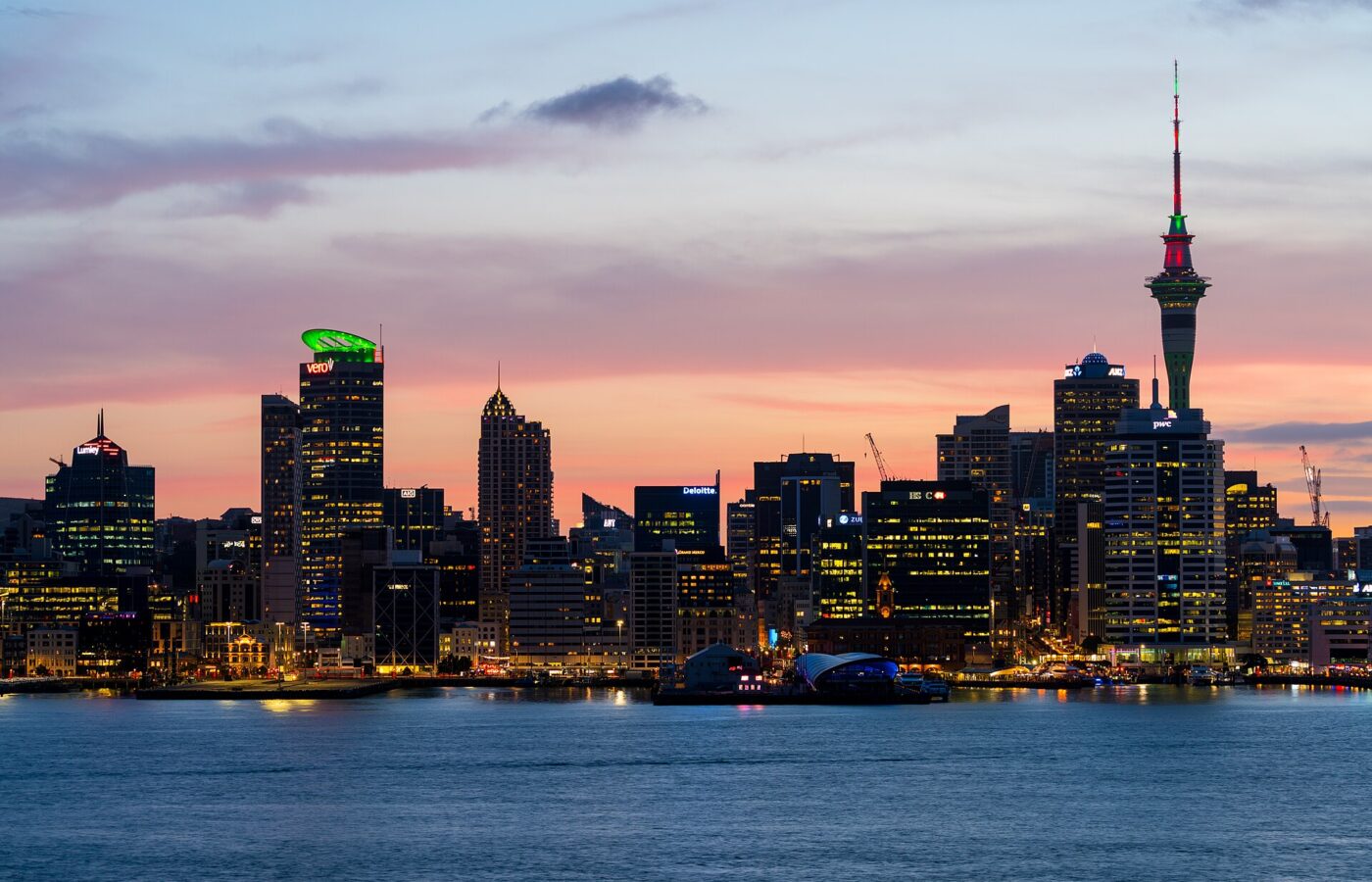
Auckland’s city skyline at dusk: Auckland Skyline 383495 by Ssiyamalan, CC BY-SA 4.0, via Wikimedia Commons.
The crater of Maungawhau / Mount Eden: Mount Eden crater with Auckland CBD and Rangitoto skyline by Avenue, CC BY-SA 3.0, via Wikimedia Commons.