3 Days in Auckland: The Complete Itinerary
Three days is where you stop choosing: the city, a gulf island and the west coast, one cluster a day, with the car confined to a single afternoon.
This article contains advertising. Our booking links are routed through a partner that adds commission tracking automatically, so if you book through one we earn a commission from the provider, at no extra cost to you. It never affects what we recommend. Affiliate disclosure
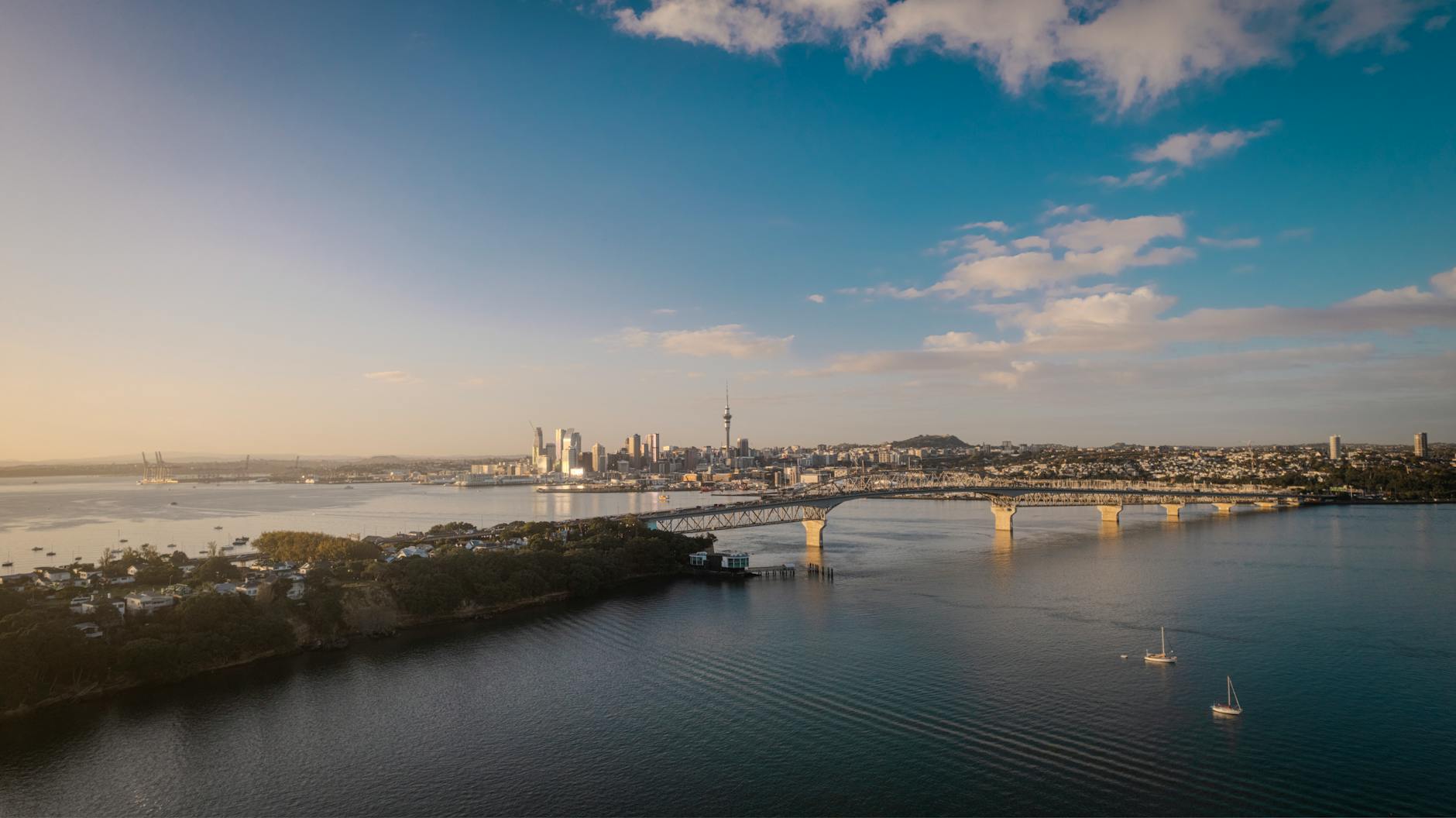
Three is the number where you stop choosing. With two days in Auckland you have to decide between an island and the west coast; with 3 days in Auckland you take both, and you still have a full day left for the city. That is the whole argument for the third day, and it is a strong one — because the gap between Waiheke’s sheltered vineyards and Piha’s black iron sand is what makes this a genuinely varied place rather than a harbour city with some suburbs attached.
This is a three-day plan that covers the isthmus, the gulf and the Tasman coast without ever asking you to cross between clusters twice in a day. It comes with a version for people who would rather spend the third day on a regional trip, a wet-weather substitution for each day, and a section on the specific things three days lets you do that two days does not. Prices and journey times were checked in September 2026 — treat them as the right order of magnitude, and confirm fares and sailings before you travel, because Auckland Transport’s fares moved during the year.
At a glance: the three-day shape
| Day | Cluster | Morning | Afternoon | Evening |
|---|---|---|---|---|
| 1 | City and waterfront | Quay Street to Wynyard, Art Gallery | Museum and the Domain | Britomart or Parnell |
| 2 | The gulf | Waiheke — ferry, two cellar doors, a beach | Back in the city, or stay for dinner on the island | |
| 3 | The west | Cornwall Park and Maungakiekie | Piha or Karekare, with a rental car | Titirangi, Ponsonby or K Road |
One transition per day. One weather-sensitive day left unfixed. The car confined to a single day. If you take nothing else from this page, take that shape.
Day one: the city, unhurried
Three days means day one does not have to be efficient. Use it to get oriented and to shake off the flight.
Morning: the waterfront and the gallery
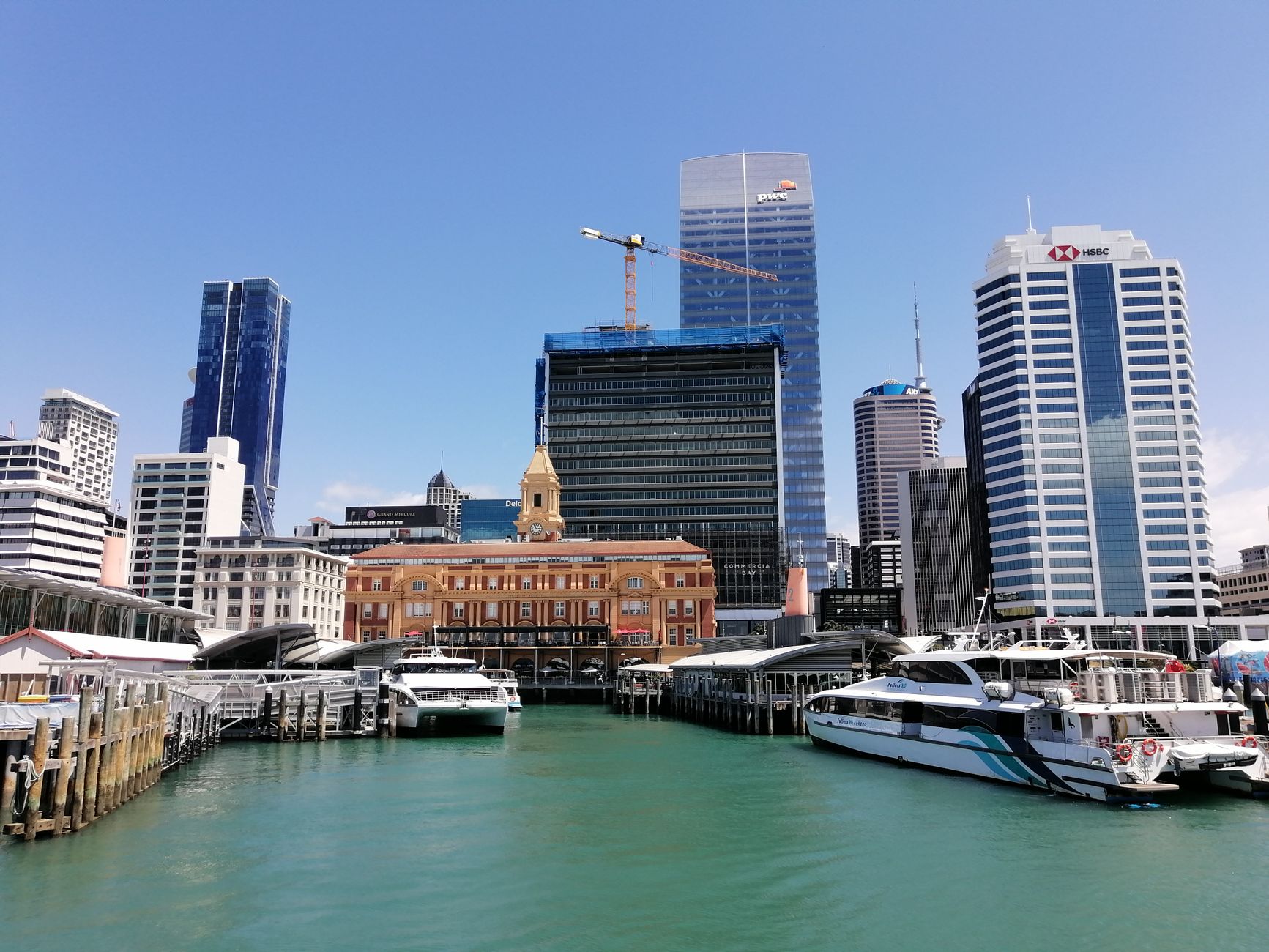
Breakfast in Britomart or Commercial Bay — Auckland’s cafés open around seven and brunch is the meal the city does best. Then walk west along Quay Street past the 1912 Ferry Building and the cruise berth into the Viaduct, and on over the Wynyard Crossing into Wynyard Quarter. It is flat, it is about fifteen minutes end to end without stopping, and stopping is the point.
Turn inland and climb gently back through the city to Albert Park and the Auckland Art Gallery Toi o Tāmaki, which is free for its permanent collection. An hour is enough: the Lindauer portraits, the Māori and Pacific holdings, and a building that grafts a kauri-canopied modern atrium onto a French Renaissance original.
Afternoon: the Museum and the Domain
The Auckland Domain sits in the crater of a volcano and is the city’s oldest park; the Auckland War Memorial Museum stands on the ridge above it holding the most significant collection of Māori and Pacific taonga anywhere in the world. There is a daily cultural performance worth timing your visit around, entry is tiered by residency so overseas visitors pay more, and two to three hours is realistic. On the way down, the Domain’s Edwardian Wintergardens are free and are the rare Auckland attraction that improves in rain.
Evening: eat near where you ended
Walk downhill into Parnell rather than trekking back across the city. If you would rather be in the middle of things, the City Rail Link — open since 13 September 2026, with new underground stations at Te Waihorotiu on Queen Street, Karanga-a-Hape for K Road and Maungawhau at Uptown — puts Karangahape Road one stop from Britomart. Kitchens here start service around six and many stop taking orders around nine.
Day two: the gulf
Waiheke, about forty minutes on the fast ferry from the Downtown Ferry Terminal. Twenty-five-plus wineries, several good swimming beaches, olive groves, art studios and a proper village at Oneroa.
How to spend it without wasting it
- Take an early-ish ferry, around nine or ten, not the first one. You want the island in its own rhythm rather than alongside the commuters.
- Book lunch at one winery and a tasting at another. Two, not five. These are destinations with kitchens and views, not tasting rooms to tick off.
- Build in a beach. Onetangi is the long one, Oneroa the closest to the wharf, Palm Beach the sheltered one. All are genuinely swimmable, which the west coast is not.
- Use the buses — they meet the ferries and cost a fraction of a tour. Hop-on-hop-off tours are worth it only if you intend to drink and cannot be bothered with timetables.
- Do not drive after tasting. Enforcement is serious and the roads are narrow.
The three-day version has one advantage over the two-day version: you can stay for dinner. The last ferries run late enough that an evening meal on the island, watching the light go over the gulf, is a realistic option — check the final sailing before you commit to it. See the full Waiheke guide.
If the weather is wrong for Waiheke
Swap in Rangitoto if it is clear but cold or windy — the summit walk does not care about temperature, only visibility, and the view is the entire point. Swap in Devonport and Takapuna if it is genuinely wet: twelve minutes on the ferry, a Victorian village, Mount Victoria for the view, and a good beach ten minutes further north.
And if you want the rarest thing in the gulf rather than the most popular, Tiritiri Matangi is an open sanctuary where genuinely rare birds walk past you on the track. The ferry is Explore Group from Viaduct Harbour, not Fullers from Downtown — this catches people out — it runs around NZ$110, sailings are limited and it sells out. Confirm before booking.
Day three: the west
This is the day three days buys you, and it is the one that surprises people most.
Morning: a volcanic cone and a working farm
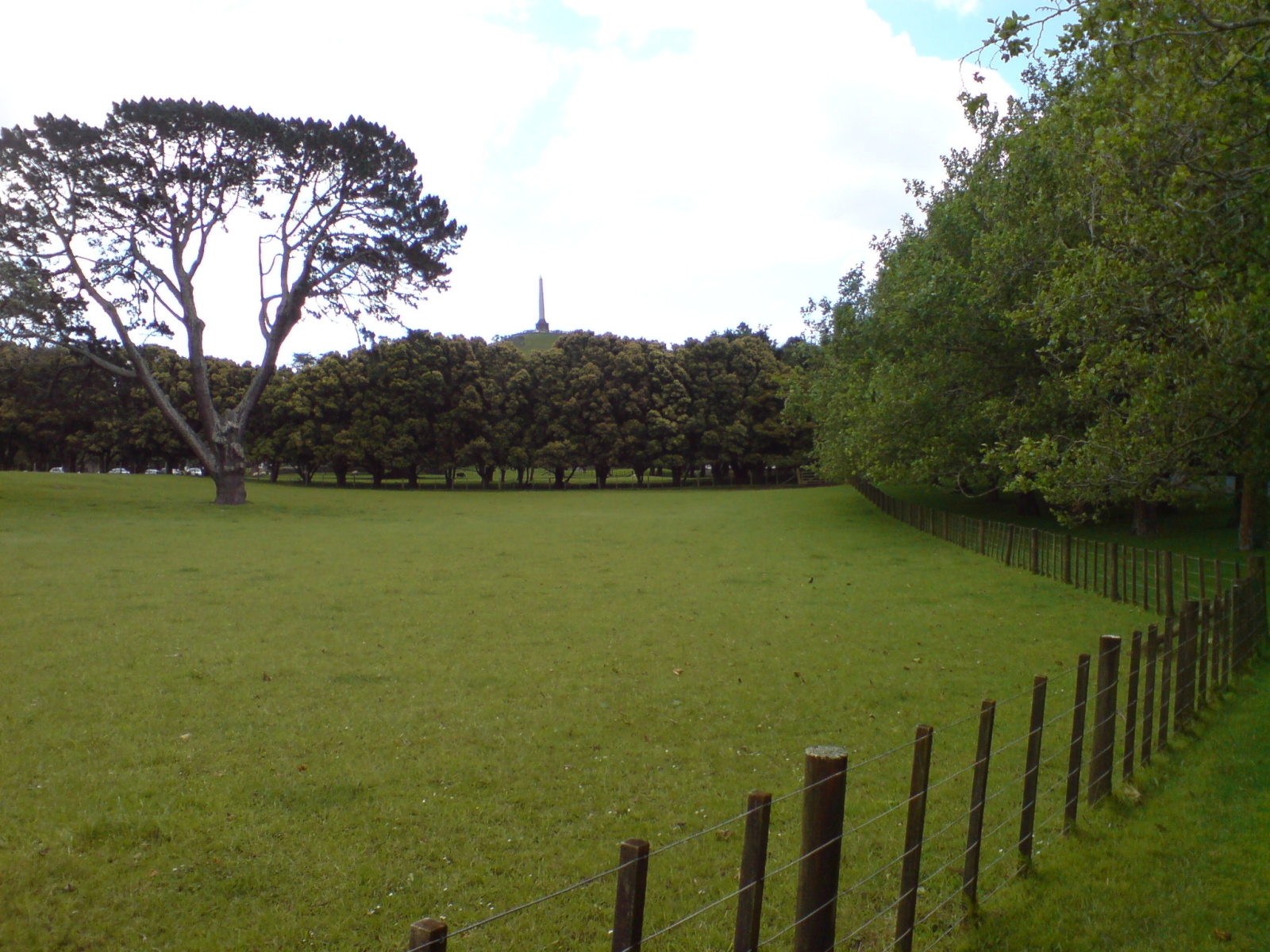
Start at Maungakiekie / One Tree Hill and Cornwall Park. It is on the way west, it is free, and it is one of the strangest good things about Auckland: a working sheep and cattle farm inside a city of 1.7 million, with an obelisk on a volcanic summit above it and a view that takes in both harbours. The walk up is gentle and the summit road is closed to general vehicles, so you climb the last stretch on foot.
Two things people get wrong: there is no playground inside Cornwall Park, which catches families out, and dogs are welcome on a lead.
Afternoon: black sand
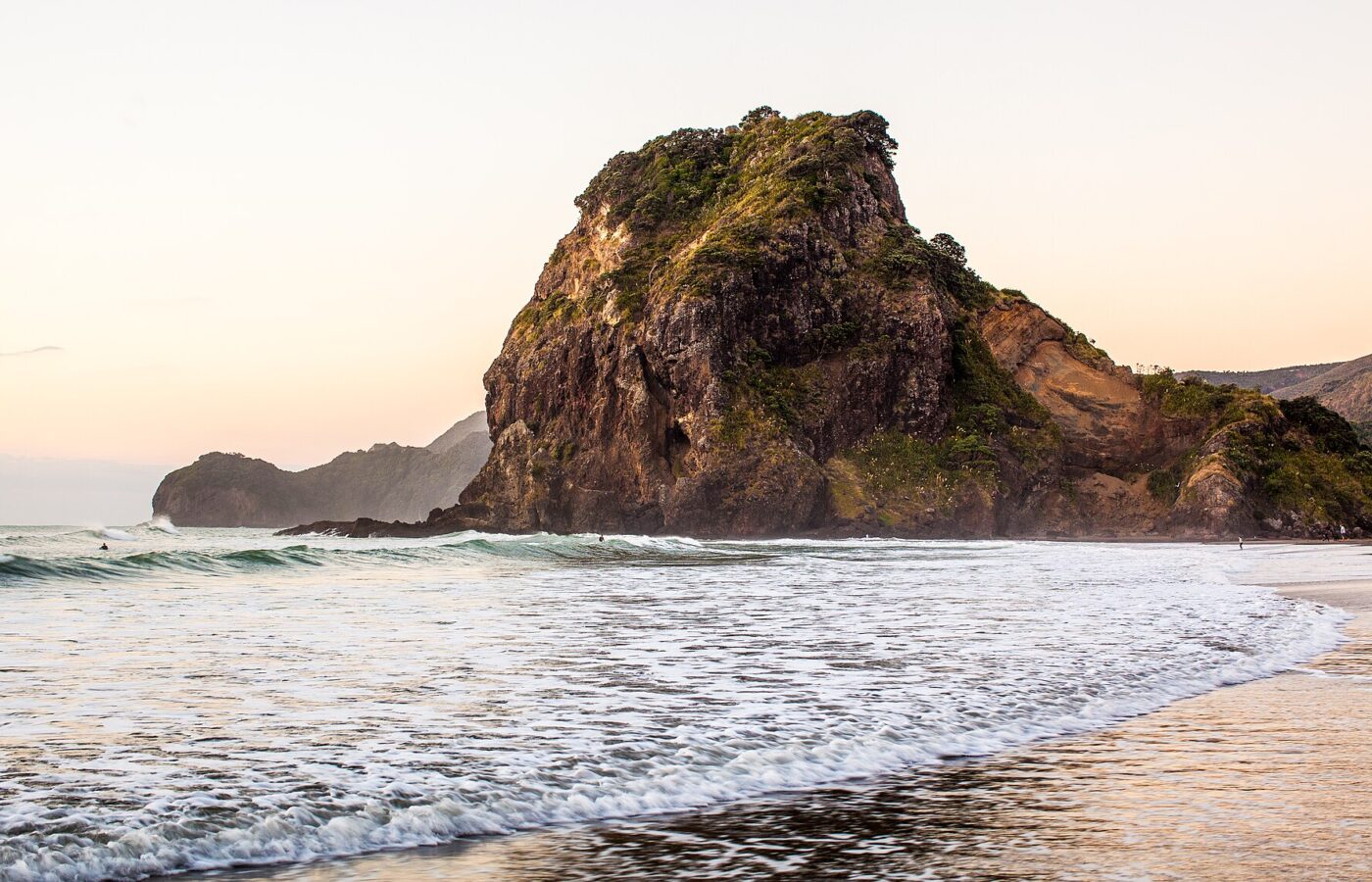
Then head west. Forty-five minutes to an hour on winding road brings you through the Waitākere Ranges to the Tasman coast, where the land drops into the sea in iron-sand beaches backed by rainforest.
- Piha — the famous one, with Lion Rock in the middle of the bay and a surf culture that is genuinely part of the city’s identity.
- Karekare — quieter, wilder, more cinematic, with a waterfall a short walk from the car park.
- Bethells / Te Henga — the emptiest, with big dunes and a lake walk.
- Muriwai — further north, and home to a gannet colony you can stand a few metres from between roughly August and March. If you do one thing on the west coast that is not a beach, do this.
Swim only between the flags, and only where flags are flying. These beaches have severe rips, patrols do not cover every beach every day, and people drown here every year. It is the single most important sentence on this page.
Check the Auckland Council track status page before you go — several Waitākere tracks are closed for kauri dieback control and storm damage, Goldie Bush and Te Henga among them, and the closures change. And note that petrol has run above NZ$3 a litre through 2026, so the driving is a real cost. Our Waitākere hikes guide flags what is usually open and the car rental guide covers picking up for a single day.
Evening: come back slowly
Titirangi, on the way back in, is a small village on the edge of the ranges with cafés and a good arts centre — a civilised decompression from the coast. Otherwise carry on to Ponsonby, which is roughly on the route and where a lot of the city’s best eating is. Do not drive back into the centre, park expensively and then go out again; that is the mistake this itinerary is designed to prevent.
The alternative day three: a regional trip
Three days is the first point at which a regional day trip is defensible, and for some people it is the right call — particularly if Auckland is the only New Zealand stop on a longer trip and you want to see something of the country beyond it.
| Trip | Door to door | Worth it? |
|---|---|---|
| Hobbiton | ~10-11 hours | Yes if the films mean anything to you; a well-run film set if they do not |
| Waitomo | ~10-11 hours | Yes — genuinely remarkable, and combines well with Hobbiton |
| Rotorua | ~12 hours | Fine but tight; geothermal and Māori cultural experiences both deserve longer |
| Coromandel | ~11-12 hours | Beautiful, but the driving is the day |
| Bay of Islands | ~13 hours | No. It deserves an overnight and suffers badly as a day trip |
The trade-off, stated plainly: a regional day trip replaces the west coast, not the island. You will have seen Waikato or Bay of Plenty, and you will not have seen the thing that makes Auckland’s setting unusual. If you are coming back to New Zealand, do the west coast. If this is your only visit and Hobbiton is the reason you came, take the coach — but put it on day two or three, never the day before you fly, and read the day trips guide first.
A middle option worth knowing about: Matakana is about an hour north, has a very good Saturday farmers’ market, and does not consume the entire day. Goat Island’s marine reserve — properly Cape Rodney-Ōkakari Point — is roughly twenty-five minutes further on and has snorkelling with actual fish in it.
What the third day actually adds
Beyond the west coast, three days quietly unlocks several things two days cannot hold:
- A market morning. Auckland’s food markets are among the best things it does and most are weekend-only. La Cigale in Parnell, Ōtara on a Saturday morning — the clearest window there is into the largest Polynesian city in the world — and Avondale on a Sunday.
- A second neighbourhood evening. One night in Ponsonby and one on K Road are genuinely different evenings, and both are better than two nights on the waterfront.
- A proper meal. Two days rarely leaves room for a booking that matters. See fine dining in Auckland, or, more interestingly, the city’s Asian food, much of it on Dominion Road, in Sandringham and out east.
- A Māori cultural experience that is more than a museum case — see the options in and around Auckland.
- An empty afternoon. Genuinely leave one. Every itinerary that is full at the planning stage is over-full in reality.
Making room for Tāmaki Makaurau
Three days is the shortest stay where you can do more than glance at the thing that actually distinguishes Auckland from other harbour cities: it is a Māori place and the largest Polynesian city in the world, and almost nothing in a standard sightseeing loop tells you that.
The name is the starting point. Tāmaki Makaurau is usually rendered as something close to “Tāmaki desired by many” — a reference to how fiercely contested this isthmus was, which the fortified terracing still visible on Maungakiekie and Maungawhau makes concrete. Once you have seen the terraces on one cone you cannot unsee them on the others. Our guides to the name Tāmaki Makaurau and Auckland’s Māori place names are worth twenty minutes before you travel; they change what you are looking at.
Practical ways to build this into three days without adding a fourth:
- The Museum’s Māori Cultural Experience is already on day one, and the performance is short and well done. The Māori Court and Pacific galleries are currently closed, so check what is open on the Museum’s website before you go. Give the cultural experience more of your two hours than the natural history floors.
- The cones on day three carry the archaeology in the landscape itself. Maungakiekie’s terracing is extensive and clearly visible from the walk up.
- A Saturday morning at Ōtara market, if your dates include one, is the most direct experience of Pacific Auckland available to a visitor — food, music, language, and none of it staged. See our guide to Pacific Auckland.
- A dedicated cultural experience if you want depth rather than context — the options in and around Auckland range from guided walks on the maunga to full evening experiences.
Honest verdict: the large commercial “Māori village” evening experiences are mostly a Rotorua phenomenon, and doing one as a day trip from Auckland means a very long day for a heavily packaged version. The guided walks on Auckland’s own maunga, led by people from the iwi connected to them, are a better use of two hours than a coach is of twelve.
Wet-weather substitutions, day by day
- Day one barely changes — it is already half indoors. Add the Wintergardens and Commercial Bay’s covered laneways, and give the Museum three hours instead of two.
- Day two is the one to move. Swap the island for the inner suburbs: brunch and shopping in Newmarket or Ponsonby, then Kelly Tarlton’s or the Zoo, which is largely outdoors but quieter and perfectly workable in light rain.
- Day three is arguably better in bad weather, not worse. Wind and surf make Piha more dramatic, and the rainforest in the Waitākeres is at its best wet. You have a car to shelter in. Skip the swimming, keep the day.
Auckland’s weather turns fast enough that a written-off Tuesday is often a good Thursday, which is exactly why the island day should stay unfixed until you have seen a forecast. Our weather guide explains the patterns.
Variations
With children
Keep day one and day two, shorten both, and replace the west coast with a calm beach. Ferries count as entertainment at that age, which helps enormously. Day three works better as the Zoo plus a playground, or Butterfly Creek near the airport if the weather is poor. See Auckland with kids.
Without a car at all
Replace day three’s afternoon with a second island or a long coastal walk. The coastal walks along the eastern bays and around the North Shore headlands are flat, bus-served and genuinely good. You lose the west coast, which is a real loss — but a bad day out there with a hire car you resent is worse than a good day you can reach.
If you are here for a long weekend
Weight Saturday towards markets and Sunday towards the island, and accept that Waiheke on a summer Saturday is the busiest it gets. Monday, if you have it, is a good day for the west coast — the beaches empty out and the roads are quiet. Note that a number of good kitchens close Sunday evening or Monday.
If you are extending beyond three
Day four is where a regional trip stops displacing anything, and day five is where you can add a second island or simply slow down. Our itinerary framework covers how the shape changes as days accumulate.
Practicalities for three days
- Transport: tap on and off with AT HOP or a contactless card; fares are zone-based. Rent a car for day three only — you avoid paying central parking on days it would sit idle. See the public transport guide and parking guide.
- Rideshare: Uber and Bolt both operate; Ola left New Zealand in 2024 and Zoomy is now YourRide. See the rideshare guide.
- Sun: New Zealand’s UV is severe, including on cloudy days, and the harbour and the black sand both reflect it. Sunscreen from October to March is not optional.
- Layers: a sheltered laneway and the top of Maungakiekie in a southerly are two different climates. See the packing list.
- Cash: largely unnecessary. Card surcharges exist, are small, legal and signposted.
- Booking: lock in accommodation, any fixed-departure tour and Tiritiri Matangi. Leave the island day, the wineries and most restaurants until a day or two out.
What three days costs
| Item | Budget | Comfortable |
|---|---|---|
| Food, three days | NZ$160 | NZ$420 |
| Public transport and ferries | NZ$60 | NZ$110 |
| Car for one day, incl. fuel | NZ$90 | NZ$150 |
| Attractions and tastings | NZ$50 | NZ$200 |
| Three-day total | ~NZ$360 | ~NZ$880 |
Accommodation is on top. A regional coach day trip instead of the car adds roughly NZ$180 to NZ$300 per person depending on the operator and what is included. The budget guide goes further, and free things to do covers how much of this itinerary costs nothing at all — every cone, every beach and every coastal walk on it is free.
Frequently asked questions
Is 3 days in Auckland enough?
It is the point at which Auckland feels complete rather than sampled. Three days covers the city, one gulf island and the west coast without doubling back — the three things the region actually offers. A fourth day adds a regional trip; a fifth adds slack. Three is the sweet spot for most visitors.
What is the best order for a three-day Auckland itinerary?
City first, island second, west coast third — but keep the island day flexible and swap it with day three if the forecast demands. The city day is the most weather-tolerant, which is why it goes first, and the west coast is the least affected by rain, which is why it can float.
Should I use day three for Hobbiton or Rotorua instead?
Only if this is your one trip to New Zealand and those places are the reason you came. A regional day trip is ten to thirteen hours and it replaces the west coast, which is the part of Auckland most visitors do not expect and most remember. If you are returning to New Zealand, keep the coast.
Do I need a car for 3 days in Auckland?
For one day of the three. The city and the island run on trains, buses and ferries; the west coast effectively does not. Renting for a single day is cheaper than three days of central parking and avoids driving in the city centre entirely.
Can I do Waiheke and Rangitoto in three days?
Yes, if you give up the west coast. They are separate full days rather than a combined one — different wharves, different timetables, different kinds of day. Most people are better served by one island plus the coast than by two islands.
What should I do on a rainy third day?
Keep it. The west coast is one of the few Auckland days that is arguably better in bad weather — the surf is bigger, the rainforest is at its best wet, and you have a car. Skip the swimming and keep everything else.
Is Waiheke worth a whole day?
Yes, and it does not work as half a day — the ferry each way plus getting around the island eats too much of a morning. With three days you can also stay for dinner and take a late ferry back, which is the version most people prefer.
How much does 3 days in Auckland cost?
Roughly NZ$360 per person on a tight budget or around NZ$880 comfortably, excluding accommodation — food, transport, a car for one day and a few paid attractions. Swapping the car day for a coach trip to Hobbiton or Waitomo adds NZ$180 to NZ$300 instead.
Where should I stay for a three-day trip?
Centrally. Two of the three days start at the ferry terminal or on foot in the city, and the third only needs a car park you can collect from. Ponsonby and Parnell are good alternatives with more character; the airport is a poor base for a trip this short.
Two more days changes the calculus entirely: a regional trip stops displacing the west coast, a second island becomes possible, and you can afford an afternoon that is not doing anything at all. Our 5 days in Auckland itinerary keeps these three days as the foundation and works through what to do with the rest.
Related Auckland Guides
- Auckland itineraries: how to plan your days
- 2 days in Auckland: a 48-hour itinerary
- One day in Auckland: an hour-by-hour itinerary
- The Waiheke Island day trip
- Piha and the west coast beaches
- Maungakiekie / One Tree Hill and Cornwall Park
- The best day trips from Auckland
- What Auckland actually costs
Photo Credits
Lion Rock at Piha Beach: Lion Rock, Piha Beach by russellstreet, CC BY-SA 2.0, via Wikimedia Commons.
Cornwall Park and Maungakiekie / One Tree Hill: Cornwall Park One Tree Hill I by Ingolfson, Public domain, via Wikimedia Commons.